🦐 Introduction: The Ultimate Finger-Licking Seafood
If you have ever dined at an authentic Cantonese seafood restaurant or a bustling late-night Dai Pai Dong (open-air food stall) in Hong Kong, you have undoubtedly experienced the messy, chaotic, and utterly glorious joy of eating Salt and Pepper Shrimp (椒盐虾 - Jiāoyán Xiā).
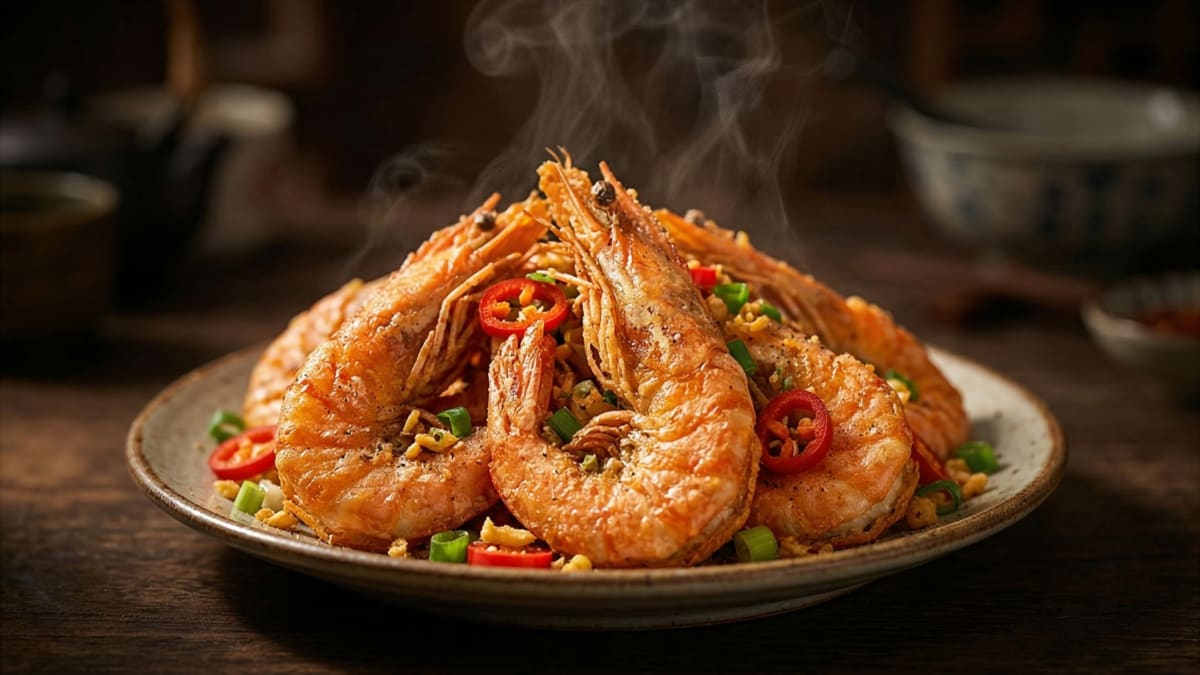
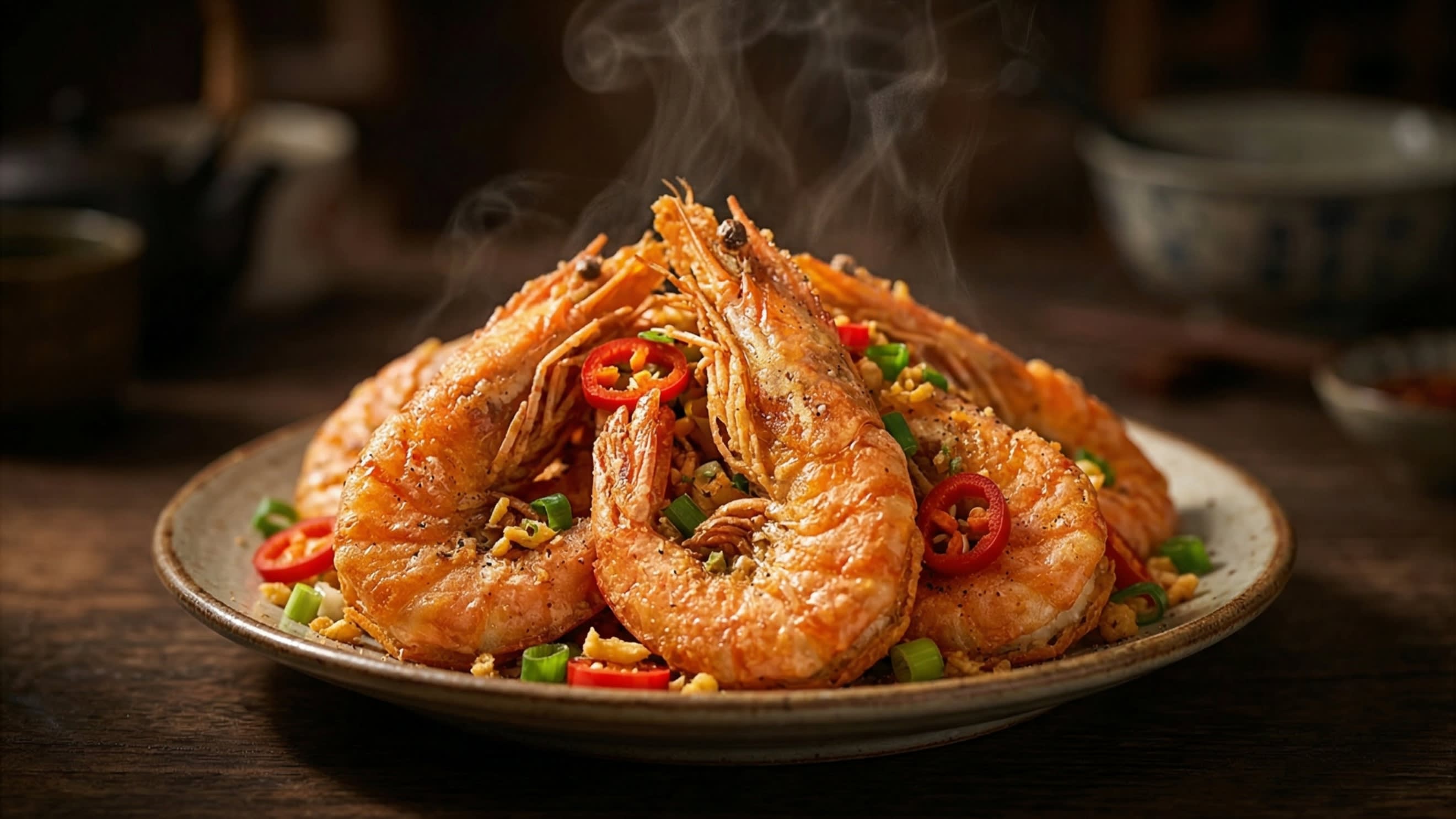
When a plate of this legendary dish hits the table, the aroma alone is enough to make your mouth water. It smells of toasted spices, sizzling garlic, fiery chilies, and the deep, savory essence of the ocean. The shrimp themselves are coated in a microscopic, shatteringly crisp crust that clings to the shell, carrying an explosive, savory, and slightly numbing spice blend. You eat them with your hands, licking your fingers clean, savoring the incredible contrast between the aggressively seasoned, crunchy exterior and the sweet, buttery, tender shrimp meat inside.
However, when Western home cooks try to recreate this dish, they almost always make one fatal, catastrophic mistake before they even turn on the stove: They peel the shrimp.
If you use peeled, naked shrimp for this dish, the delicate meat will instantly overcook in the hot oil, turning into tight, rubbery, flavorless erasers. Furthermore, wet shrimp meat cannot hold the dry salt and pepper seasoning properly.
Today, we are going to change the way you cook seafood forever. We will explain the culinary science of cooking shell-on shrimp, teach you the professional knife techniques to prep them safely, and reveal the authentic, roasted spice blend that elevates this dish from “okay” to “mind-blowing.”
🔬 The Science of the Shell (带壳 - Dàiké)
To truly master this dish, you must embrace the shell. In Chinese cooking, frying shell-on seafood is not a sign of laziness; it is a highly deliberate culinary strategy.
1. The Flavor Vehicle
Shrimp shells are made of chitin. When chitin is subjected to high-heat deep frying (around 400°F / 200°C), all the moisture evaporates rapidly. The shell transforms into an incredibly porous, brittle structure that acts exactly like a potato chip. This crispy, blistered shell becomes the ultimate “flavor vehicle,” trapping the cornstarch, the toasted spices, the fried garlic, and the chili oils in its microscopic crevices.
2. The Meat Protector
Shrimp meat cooks in literally seconds. By leaving the shell on, you are providing the delicate meat with a biological suit of armor. The hot oil blasts the shell, crisping it up instantly, while the meat inside gently steams in its own natural juices, remaining impossibly plump, sweet, and tender (外酥里嫩 - Wàisū lǐnèn).
But how do you eat it? You have two choices: If fried correctly, the shell becomes so shatteringly crisp and delicate that many Chinese food lovers simply eat the entire shrimp—shell, tail, and all! If you prefer not to eat the shell, you peel it at the table with your fingers, sucking the incredible spices off the shell before devouring the juicy meat inside.
🔪 The Prep: “Kai Bei” and Trimming the Armor
You might be wondering: “If I leave the shell on, how do I remove the dirty digestive vein?” Chinese chefs have an elegant solution that not only solves this problem but makes the shrimp look beautiful.
Cutting the Back (开背 - Kāibèi)
Using a sharp pair of kitchen scissors or a paring knife, you cut a deep slit straight down the back of the shrimp, slicing right through the shell and about halfway through the meat. This exposes the dark digestive vein (虾线 - Xiāxiàn), allowing you to easily rinse it away under cold water. More importantly, when the shrimp hits the hot oil, this deep cut causes the meat to flare outward and butterfly open. This exposes more surface area for the crispy cornstarch and spices to cling to!
Snipping the Spear (剪虾枪)
If you are cooking whole shrimp with the heads still attached (which provides the most flavor!), you must take a pair of scissors and snip off the sharp, sword-like spike on the top of the head called the rostrum (虾枪 - Xiāqiāng), as well as the long antennae. This prevents you and your guests from poking the roofs of your mouths while enthusiastically eating!
🧂 Decoding the Authentic “Jiao Yan” (椒盐)
The name of the dish literally translates to “Peppercorn Salt.” If you use standard Western black pepper and table salt, you will completely miss the authentic flavor profile.
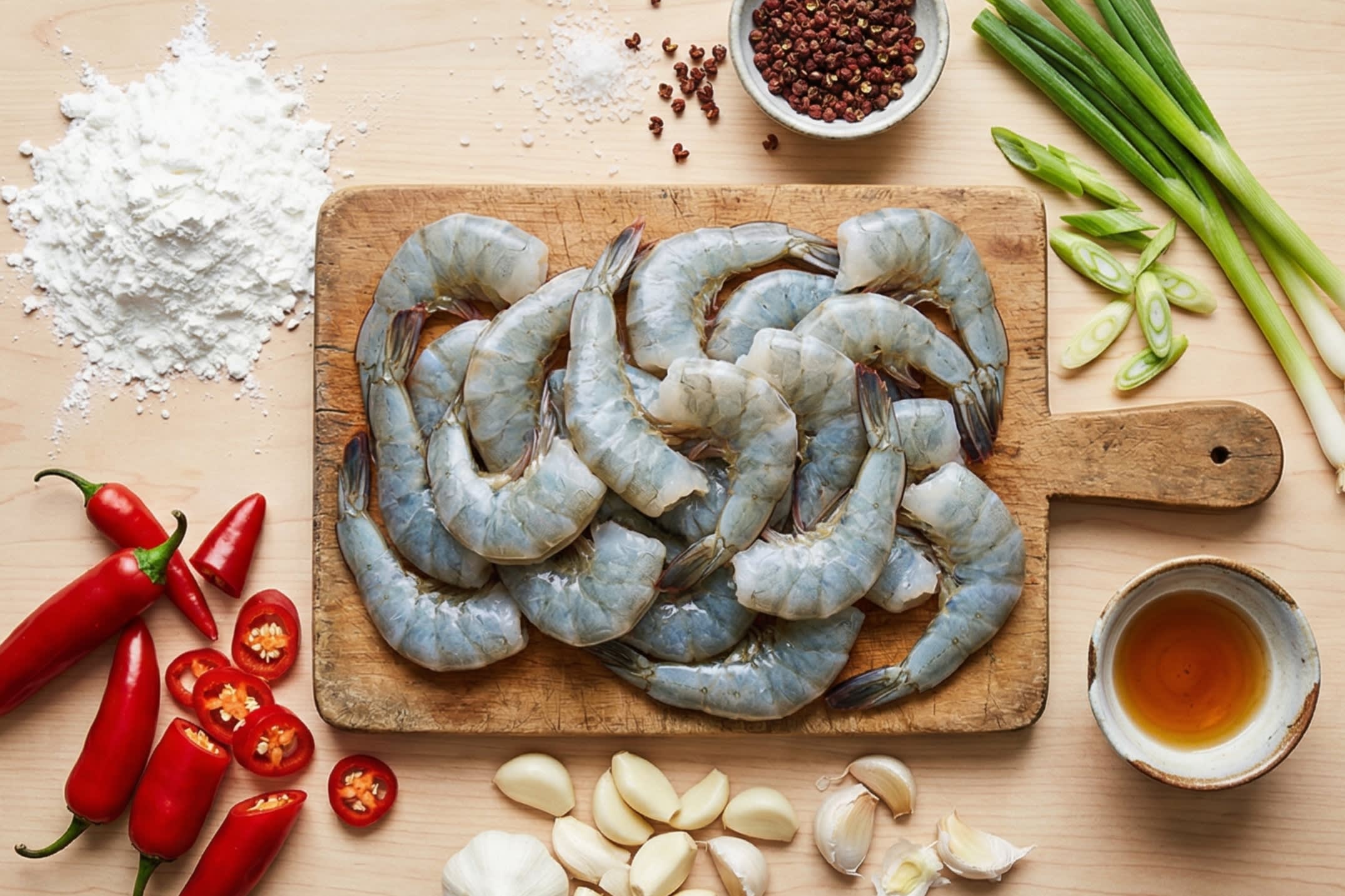
Traditional Jiāoyán (椒盐) requires you to dry-toast coarse sea salt and whole Sichuan Peppercorns (花椒 - Huājiāo) in a wok until the salt turns slightly yellow and the peppercorns release their citrusy, smoky, and slightly numbing essential oils. You then grind this mixture into a fine powder, mixing it with a pinch of white pepper and five-spice powder. This roasted, complex spice bomb is the true heart and soul of the dish.
🛒 Ingredients List
The Authentic “Jiao Yan” Seasoning (椒盐):
- 1 tbsp Whole Sichuan Peppercorns (花椒)
- 1 tbsp Coarse Sea Salt or Kosher Salt
- 1/2 tsp White Pepper powder (白胡椒粉)
- 1/4 tsp Five-Spice Powder (五香粉)
The Shrimp & Marinade:
- 1 lb (450g) Large, Raw Shell-On Shrimp (带壳虾). Heads on or heads off, both work perfectly.
- 1 tbsp Shaoxing Cooking Wine (绍兴酒)
- 1/2 tsp Salt
- 1/4 tsp White Pepper
The Crispy Coating & Frying:
- 1/2 cup Cornstarch (玉米淀粉) or Sweet Potato Starch. Do not use a wet batter!
- 4 cups high-heat Cooking Oil (peanut, canola, or vegetable oil)
The Explosive Aromatics:
- 5 cloves Garlic, very finely minced (蒜末) - You want a lot of garlic!
- 1-2 fresh Red Chilies or Jalapeños (红辣椒), thinly sliced into rings
- 2 stalks Scallions (葱花), finely chopped
🍳 Step-by-Step Instructions
1. Make the Authentic Jiao Yan (椒盐): Heat a dry wok or skillet over medium-low heat. Add the coarse salt and whole Sichuan peppercorns. Toast them continuously for 3 to 5 minutes until the salt takes on a slightly yellowish hue and the peppercorns smell incredibly fragrant and smoky. Let it cool, then grind the mixture into a fine powder using a spice grinder or mortar and pestle. Stir in the white pepper and five-spice powder. Set aside.
2. Prep the Shrimp (开背去虾线): Use kitchen scissors to cut a deep slit down the back of each shell-on shrimp, from the head down to the tail. Rinse out the dark digestive vein under cold water. If using heads-on shrimp, snip off the sharp spike on the head and the long antennae. Crucial: Pat the shrimp completely dry with paper towels! Water is the enemy of a crispy crust.
3. Marinate and Dust: Place the dry shrimp in a bowl. Add the Shaoxing wine, salt, and white pepper. Toss well. Sprinkle the 1/2 cup of cornstarch over the shrimp. Use your hands to toss the shrimp vigorously until every single shell is coated in a thin, dry, powdery layer of starch. Make sure the starch gets inside the cut on the back! Shake off any excess powder.
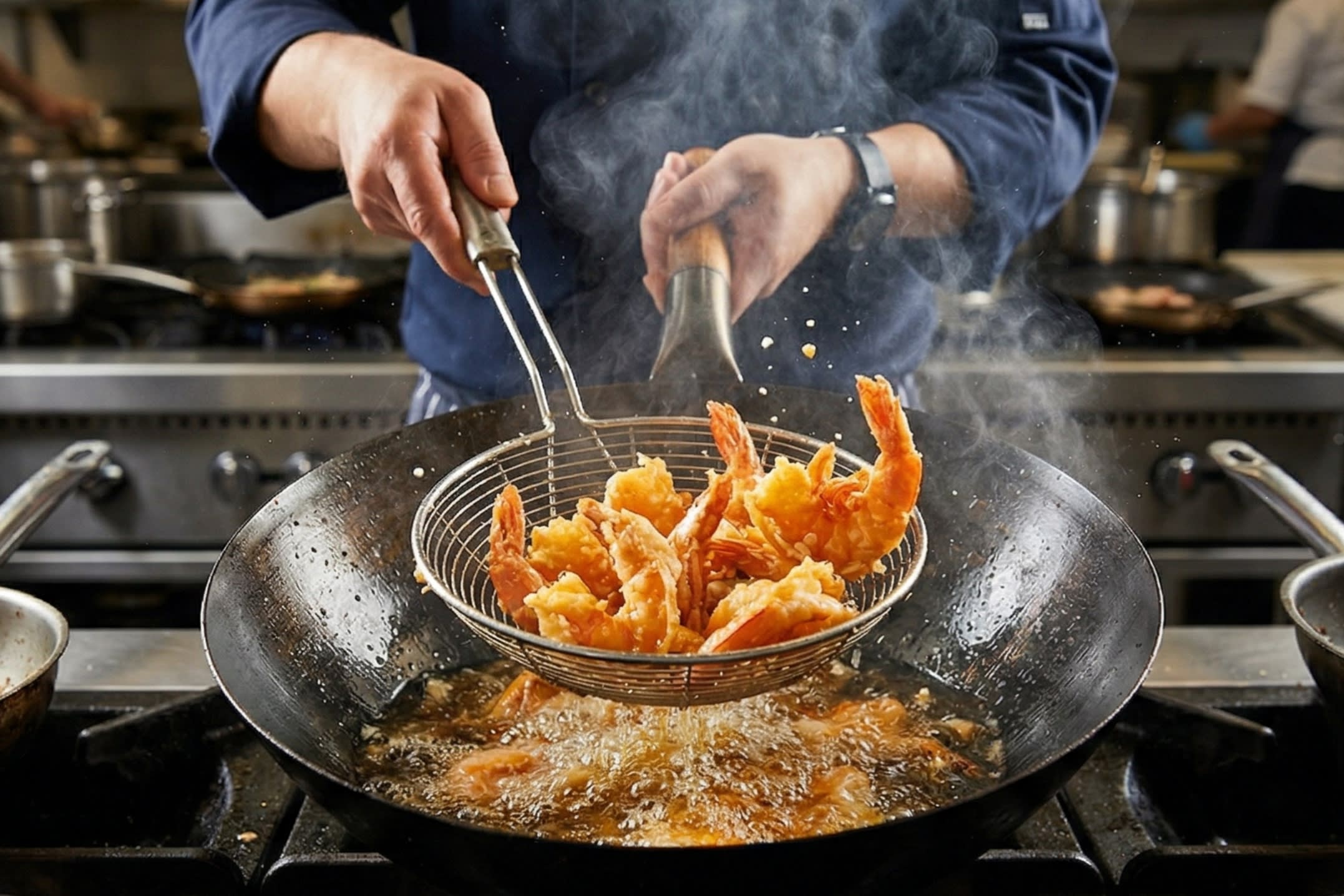
4. The Flash Fry (First Fry): Heat your oil in a wok or Dutch oven to 375°F (190°C). Carefully drop the dusted shrimp into the hot oil in two batches so you don’t drop the oil temperature. Fry them for only 60 to 90 seconds. The shells will instantly turn bright orange and the backs will butterfly open. Remove them with a spider strainer and let them rest on a wire cooling rack.
5. The Second Fry (复炸 - Fùzhá): To make the shells truly shatteringly crisp, turn the heat to maximum and let the oil hit 400°F (200°C). Drop all the rested shrimp back into the screaming hot oil for exactly 30 seconds. Watch the shells blister and turn a gorgeous, deep golden-orange. Remove and drain well.
6. The Aromatic Toss (炒香): Carefully pour all the hot frying oil out of the wok, leaving just 1 tablespoon of oil. Turn the heat down to medium. Add the finely minced garlic and sliced red chilies. Stir-fry aggressively for 15 seconds until the garlic turns golden and extremely fragrant. Do not let the garlic burn, or it will turn bitter!
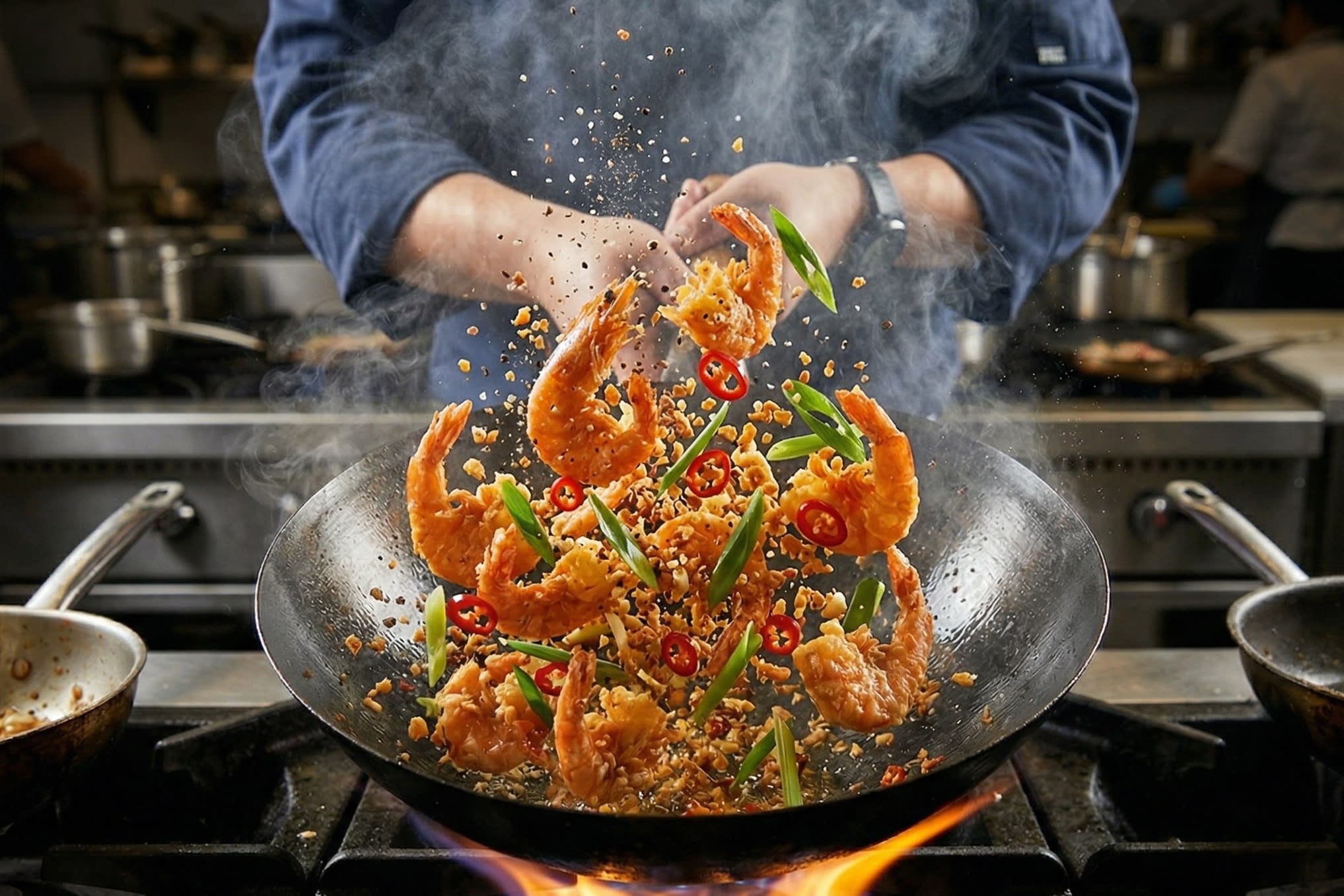
7. Season and Serve: Dump your crispy, double-fried shrimp into the wok with the garlic and chilies. Turn off the heat entirely! Immediately sprinkle 2 to 3 teaspoons of your prepared Jiao Yan (Salt and Pepper) spice mix evenly over the shrimp, along with the fresh scallions. Toss everything aggressively for 10 seconds so the residual heat and oil bind the roasted spices to the craggy, crispy shells.
8. Plate and Devour: Plate immediately. Serve piping hot, straight out of the wok, accompanied by ice-cold beer. Dig in with your hands, lick the explosive spices off the shells, and enjoy the ultimate Cantonese seafood experience!
💡 Troubleshooting & Pro Tips
- Why is my crust soggy and falling off? You likely didn’t dry the shrimp thoroughly before tossing them in the cornstarch. If the shrimp are wet, the cornstarch turns into a gummy paste rather than a light, dry crust. Pat them completely dry with paper towels!
- The garlic burned and tastes bitter. Minced garlic burns incredibly fast in a hot wok. When you pour the oil out for the final aromatic toss, make sure the heat is on medium-low, and only fry the garlic for 10-15 seconds before immediately adding the shrimp back in to cool down the pan.
- Can I use an Air Fryer? Yes, you can make a healthier version! After dusting the shrimp in cornstarch, generously spray them with cooking oil on all sides. Air fry at 400°F (200°C) for 8-10 minutes, shaking the basket halfway, until the shells are crispy and orange. Then, toss them in a pan with the sautéed garlic, chilies, and your spice blend.
📦 Shop Authentic Dim Sum Essentials
To capture the authentic, shatteringly crisp texture and the explosive flavor profile of a Hong Kong seafood stall, these specific ingredients and tools are absolute game-changers. (As an Amazon Associate, ChinaCurator earns from qualifying purchases.)
- Premium Whole Sichuan Peppercorns (花椒) - Essential for toasting your own authentic "Jiao Yan" salt blend. The citrusy, smoky aroma is completely irreplaceable.
- Asian Stainless Steel Spider Strainer - The mandatory tool for safely scooping delicate, crispy shrimp out of boiling hot oil in seconds without losing the coating.
- Traditional Carbon Steel Wok - The ultimate vessel for flash-frying and rapidly tossing the crispy seafood in the aromatic spices.