🥬 Introduction: The Low-Carb Asian Sensation
If you have ever dined at a popular Asian-American restaurant chain like P.F. Chang’s, you know that the absolute undisputed star of the menu is not the main course. It is the appetizer: Chicken Lettuce Wraps (生菜包鸡 - Shēngcài Bāojī).
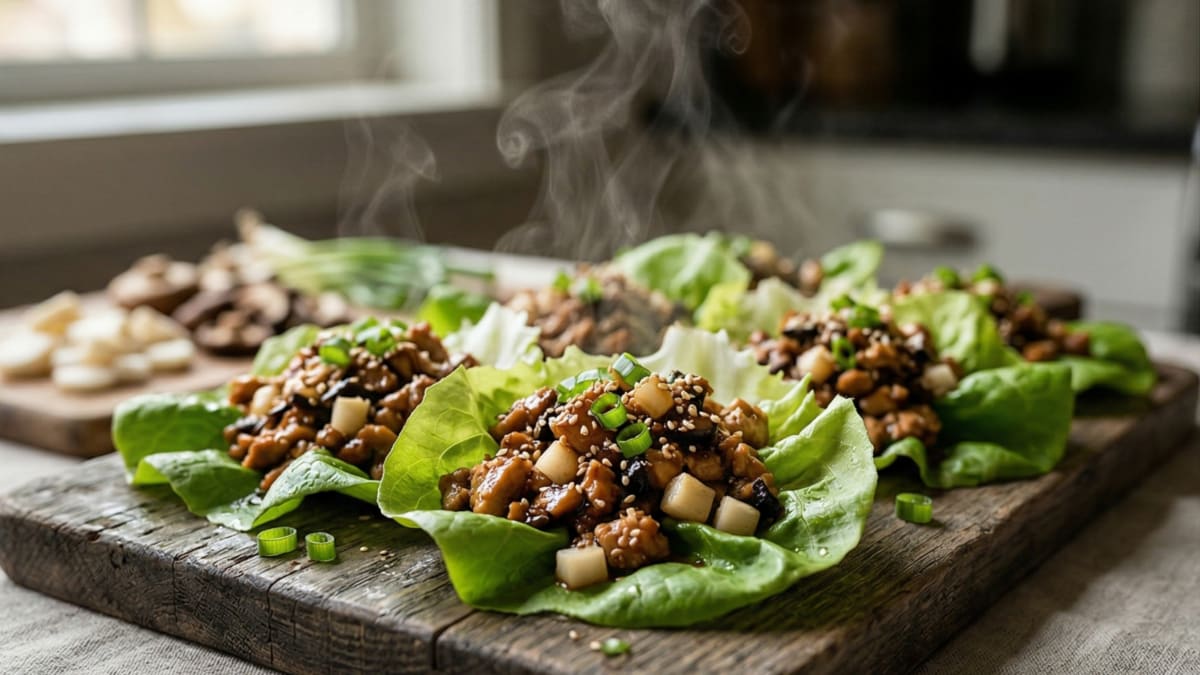
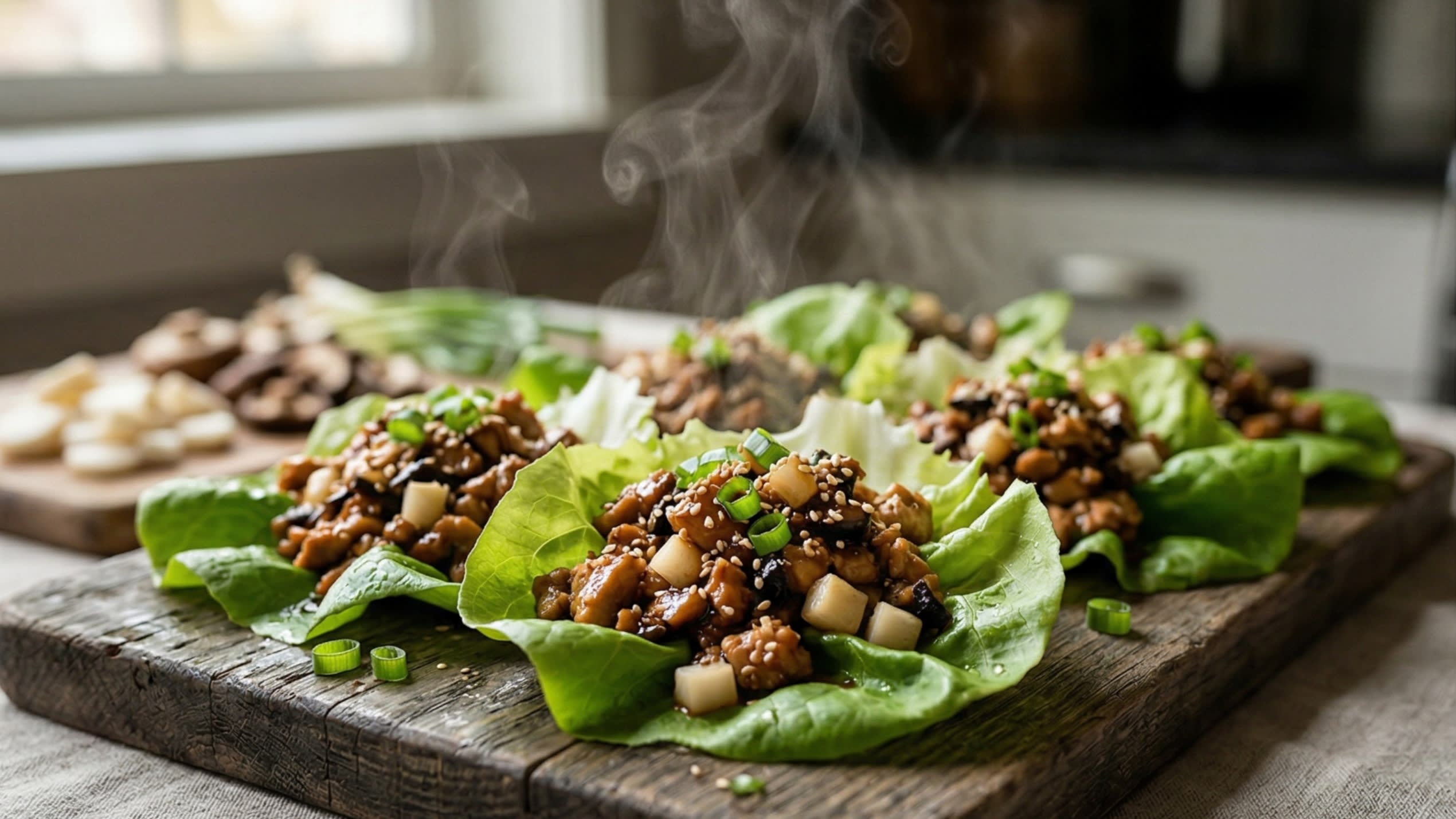
This brilliant dish is a masterclass in culinary contrast. You take a piping hot, intensely savory, sweet, and garlicky mixture of deeply caramelized minced chicken and earthy mushrooms, punctuated by the loud, refreshing crunch of water chestnuts. You then spoon this glorious, steaming mixture into an ice-cold, vibrant green, incredibly crisp lettuce cup. When you take a bite, the contrast of hot and cold, soft and crunchy, savory and fresh creates an absolute explosion of flavor and texture in your mouth.
Because it ditches the heavy carb load of rice or noodles in favor of a fresh vegetable wrapper, it has become the ultimate guilt-free, low-carb comfort food.
However, when Western home cooks try to recreate this magic in their own kitchens, it often turns into a frustrating disaster. The chicken mixture turns into a grey, watery, boiled soup. The sauce lacks that distinct, addictive restaurant “punch.” And the lettuce tears the second you try to pick it up, leaving a messy pile on your plate.
Today, we are going to fix all of that. We will unveil the specific physical technique required to achieve beautifully caramelized meat, decode the mysterious “Hoisin” sauce that forms the soul of the dish, and teach you the restaurant secret to preparing indestructible, shatteringly crisp lettuce cups.
🔬 The Science of the Sizzle: Banishing the “Watery Meat”
The number one mistake home cooks make with this dish is treating the wok like a boiling pot. When you buy ground chicken from the supermarket, it is packed with water. If you just toss it in a pan, stir it a few times, and immediately pour in your sauce, the meat will literally boil in its own juices. You will end up with a bland, grey, soggy mess.
To achieve that dark, intense restaurant flavor, you must practice the ancient art of Biānchǎo (煸炒 - Dry Stir-Frying).
When the raw minced meat (肉沫 - Ròumò) hits the hot oil, you must spread it out and leave it alone for a minute so it can sear. As you stir-fry, the water will begin to evaporate. You must keep frying past the point where the meat turns white. You want the water to completely disappear until the meat begins to fry in its own rendered fat. This is when the magic happens. The edges of the chicken will begin to turn a deep golden-brown, a chemical process known as the Maillard reaction. Only when the meat is intensely caramelized and slightly crispy should you even think about adding the sauce!
Chef’s Secret: For the absolute best texture, do not buy the mushy, paste-like pre-ground chicken breast in a tube. Buy boneless, skinless chicken thighs and mince them by hand with a cleaver. The tiny, distinct chunks of dark meat provide a far superior, juicier bite!
🦪 Decoding the Soul of the Sauce: What is “Hoisin”?
If you want your lettuce wraps to taste exactly like the famous restaurant version, you cannot rely solely on soy sauce. The deep, complex, sweet-and-savory barbecue flavor profile comes almost entirely from one magical ingredient: Hoisin Sauce (海鲜酱 - Hǎixiān Jiàng).
Here is the funniest culinary paradox: The Chinese characters Hai Xian literally translate to “Seafood.” Yet, there is absolutely zero seafood in authentic Hoisin sauce!
It is actually a thick, dark, fragrant paste made from fermented soybeans, garlic, vinegar, sesame oil, sugar, and Chinese five-spice powder. It is essentially the Southern Chinese equivalent of BBQ sauce. When this thick, sugary paste hits the hot wok and mixes with the savory umami of oyster sauce and soy sauce, it caramelizes instantly, wrapping every single piece of chicken and mushroom in a glossy, irresistible, sticky glaze.
🧊 The Ice Water Shock: Perfecting the Lettuce Cup
Your lettuce is just as important as the filling. If you use a flat, warm, flimsy piece of lettuce, the entire experience is ruined.
- The Best Lettuce: Avoid Romaine (too long and narrow). You want Butter Lettuce (奶油生菜) or Iceberg Lettuce (圆生菜). Butter lettuce is tender and naturally cup-shaped. Iceberg provides the ultimate loud, watery crunch.
- The Preparation: Carefully peel the whole leaves off the head. Use kitchen scissors to trim the ragged edges into a perfect, round “cup” shape.
- The Ice Bath (冰水激): This is the ultimate restaurant secret. Submerge your trimmed lettuce cups in a large bowl of ice-cold water for 10 to 15 minutes. This thermal shock causes the plant cells to gorge on water, making them incredibly firm, structured, and shatteringly crisp (脆爽 - Cuìshuǎng). Dry them thoroughly with paper towels right before serving!
🛒 Ingredients List
The Crisp Wrappers:
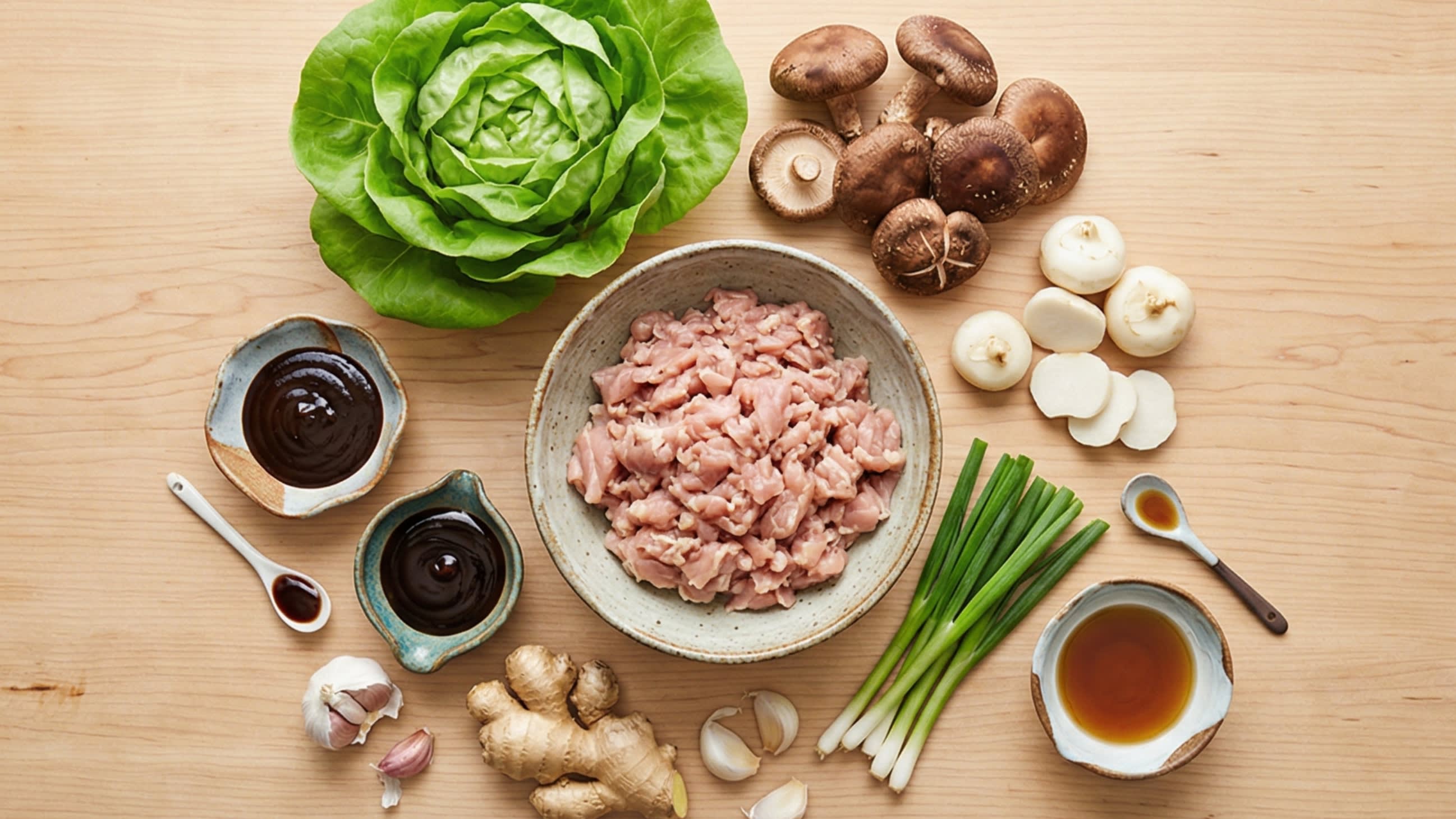
- 1 large head of Butter Lettuce or Iceberg Lettuce
- A large bowl of ice water
The Savory Filling:
- 1 lb (about 450g) Ground Chicken (preferably dark meat/thighs, minced by hand)
- 4 fresh Shiitake Mushrooms (香菇), finely diced. (These act as savory sponges for the sauce!)
- 1/2 cup canned Water Chestnuts (马蹄 - Mǎtí), finely diced. Mandatory for that iconic crunch! Do not substitute with soft vegetables.
- 3 cloves Garlic, finely minced (蒜末)
- 1 thumb-sized piece of fresh Ginger, finely minced (姜末)
- 3 stalks Scallions (葱花), finely chopped (separate the white and green parts)
- 2 tbsp Cooking Oil
The Ultimate Secret Sauce (碗汁):
- 3 tbsp Hoisin Sauce (海鲜酱) - The sweet, complex BBQ soul of the dish.
- 1.5 tbsp Oyster Sauce (蚝油) - For deep, savory umami.
- 1 tbsp Light Soy Sauce (生抽)
- 1/2 tsp Dark Soy Sauce (老抽) - Purely for that beautiful, dark restaurant color.
- 1 tbsp Rice Vinegar (米醋) - To cut through the sweetness.
- 1 tsp Toasted Sesame Oil (芝麻油)
- 1/2 tsp White Pepper powder (白胡椒粉)
🍳 Step-by-Step Instructions
1. Prep the Lettuce Cups (The Ice Bath): Carefully separate the lettuce leaves. Use scissors to trim them into uniform, round cups. Submerge them completely in a large bowl of ice water. Let them sit while you cook the filling. (Remember to pat them completely dry with a paper towel before serving!)
2. Mix the Secret Sauce: In a small bowl, whisk together the Hoisin sauce, oyster sauce, light soy sauce, dark soy sauce, rice vinegar, sesame oil, and white pepper. Set it aside near your stove.
3. Sear the Chicken (煸炒肉沫 - The Most Crucial Step): Heat a large wok or skillet over high heat until it is smoking. Add the 2 tablespoons of cooking oil. Drop in the ground chicken. Do not stir it immediately! Let it sear undisturbed for 45 seconds to develop a crust. Then, use your spatula to aggressively break the meat apart into tiny crumbles. Continue to stir-fry over high heat. The chicken will release a lot of water. Keep cooking for 3 to 5 minutes until all the water evaporates, the oil separates, and the edges of the chicken turn a beautiful, deep golden-brown.
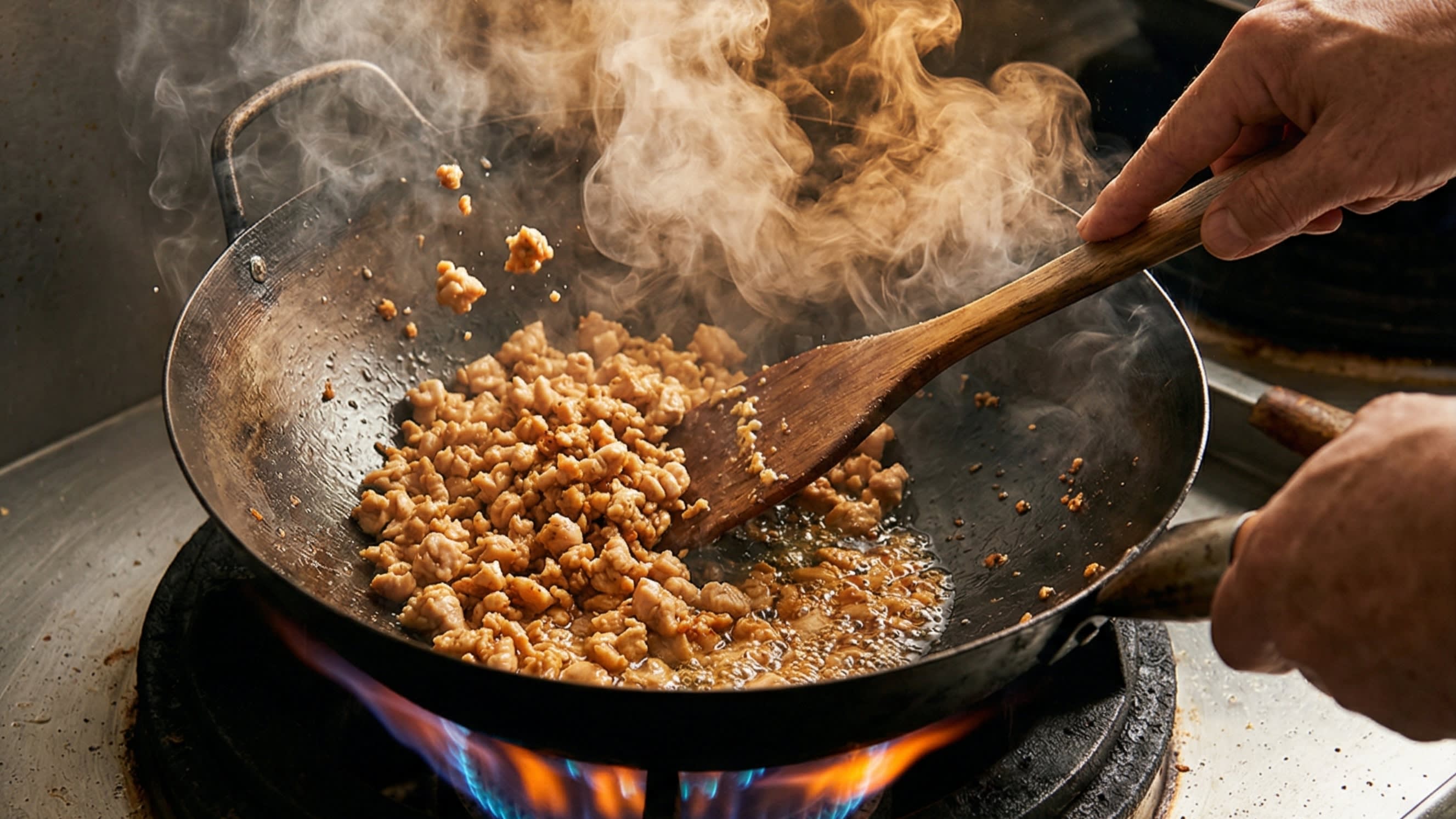
4. Sauté the Aromatics: Once the chicken is caramelized, push it to the side of the wok. In the center, add the finely diced shiitake mushrooms, the minced garlic, the minced ginger, and the white parts of the scallions. Stir-fry them in the residual chicken fat for 1 to 2 minutes until the mushrooms are soft and the aromatics are incredibly fragrant.
5. Caramelize the Sauce: Mix everything in the wok together. Give your prepared sauce bowl a quick stir and pour it evenly over the chicken and mushroom mixture. Turn the heat down to medium. Stir-fry aggressively for 1 to 2 minutes. The sugars in the Hoisin sauce will quickly reduce and caramelize, coating every single piece of chicken in a thick, sticky, highly glossy, dark mahogany glaze.
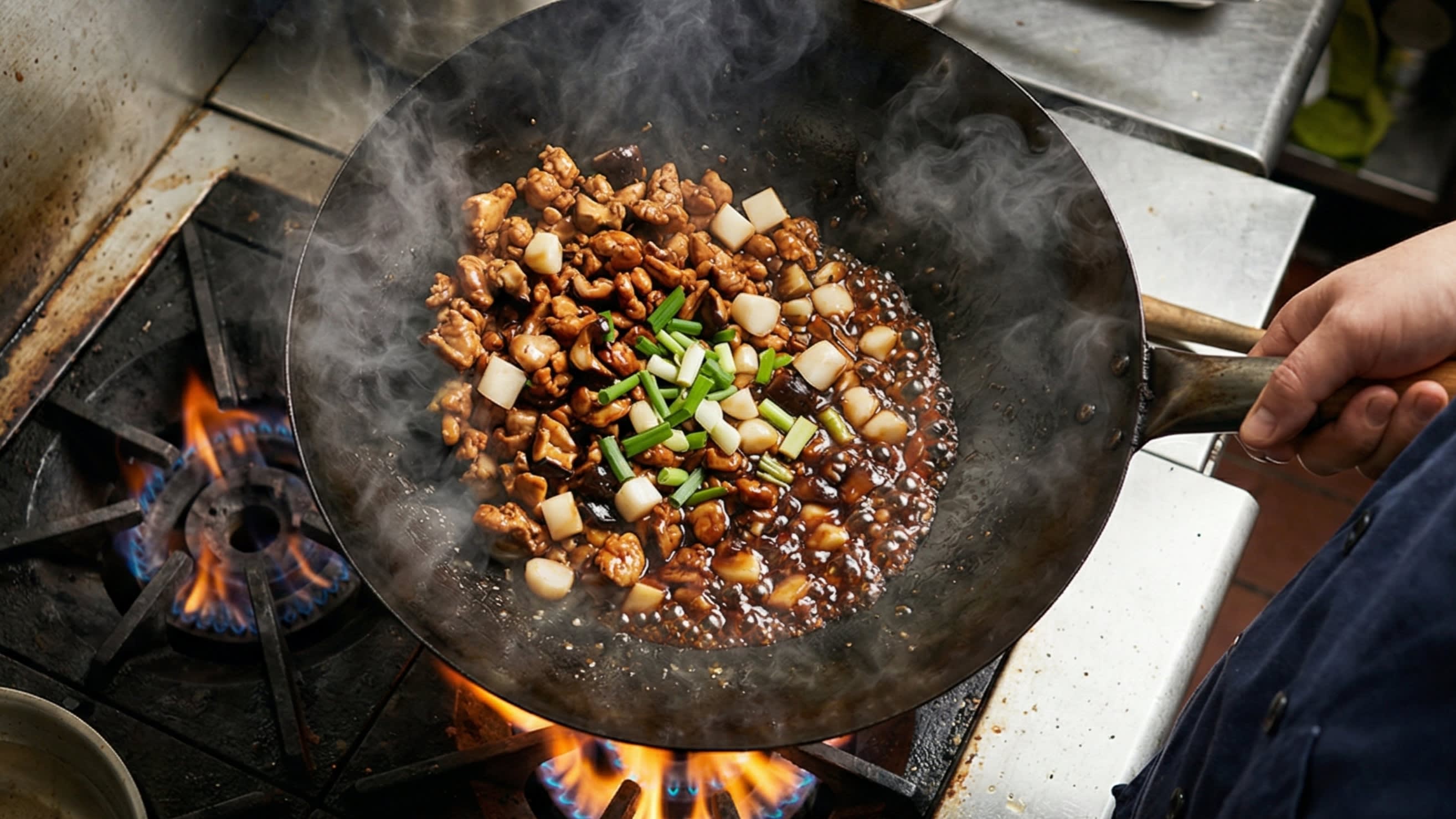
6. The Final Crunch (断生): Turn off the heat entirely! Add the finely diced water chestnuts (马蹄) and the green parts of the scallions into the hot wok. Toss everything together for 15 seconds. You add the water chestnuts off the heat because you want them to remain raw, crisp, and refreshing (脆爽) to contrast the soft meat.
7. Assemble and Serve: Transfer the dark, steaming, intensely savory chicken filling to a beautiful serving bowl. Serve immediately alongside a platter of your ice-cold, dried, crisp lettuce cups. Let everyone at the table spoon the hot filling into the cold lettuce cups, wrap them up, and experience the ultimate crunch!
💡 Troubleshooting & Pro Tips
- My filling is too watery and falling out of the lettuce! You made one of two mistakes. First, you didn’t dry-fry (煸炒) the chicken long enough in Step 3 to evaporate its natural water. Second, you added the water chestnuts while the flame was still on, causing them to release their water into the sauce. Always add water chestnuts off the heat!
- The sauce is too sweet or too salty. Hoisin sauce brands vary wildly in their sweetness and sodium levels. If you find the mixture too sweet, add an extra splash of rice vinegar. If it’s too salty, a tiny pinch of sugar will balance it out. Always taste the sauce before pouring it into the wok.
- Can I make this vegetarian/vegan? Absolutely! This dish is a legendary vegan option. Simply swap the ground chicken for a block of crumbled Extra Firm Tofu (press the water out first!). Swap the Oyster Sauce for a Vegan Mushroom Sauce. The cooking method remains exactly the same!
📦 Shop Authentic Asian Pantry Essentials
To capture the authentic, complex, sweet-and-savory BBQ flavor profile of a high-end Asian restaurant appetizer, these specific ingredients are absolutely mandatory. (As an Amazon Associate, ChinaCurator earns from qualifying purchases.)
- Lee Kum Kee Hoisin Sauce (海鲜酱) - The absolute, non-negotiable soul of the dish. This sweet, complex, fermented soybean paste creates the iconic dark, sticky glaze.
- Canned Sliced Water Chestnuts (马蹄) - Essential for providing that loud, refreshing, watery crunch that contrasts the soft, savory chicken. Do not substitute!
- Kadoya 100% Pure Toasted Sesame Oil (芝麻油) - A tiny dash elevates the entire flavor profile with a deep, nutty, roasted aroma.
- Traditional Carbon Steel Wok - The ultimate vessel for rapidly evaporating the moisture from the chicken and caramelizing the sticky Hoisin sauce.