
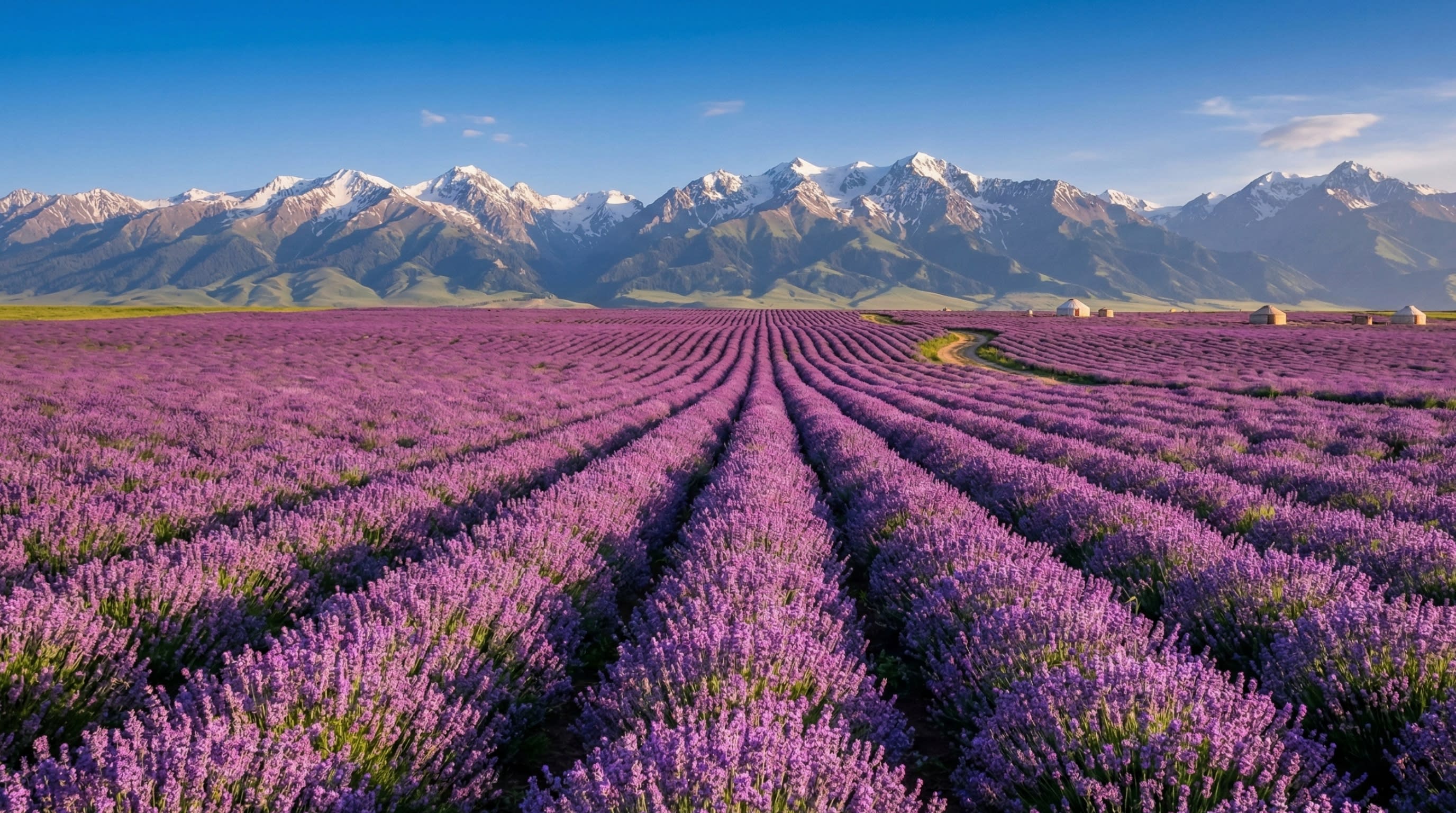
“When July arrives, the major cities of Central and Eastern China—often nicknamed the Sì Dà Huǒlú (四大火炉 - Four Ovens)—begin to sizzle under the relentless summer sun. For the savvy traveler, this is the cue to head west. In the high-altitude plateaus of Xinjiang, Qinghai, and Tibet, July isn’t about heat; it is about endless fields of lavender, yellow rapeseed blossoms reaching the horizon, and the crisp, cool air of the ‘Roof of the World.’ In 2026, the Year of the Horse, the call of the open wild feels stronger than ever.”
⛅ July Weather: Escaping the “Ovens”
While the rest of the country deals with humidity and soaring temperatures, the Western frontiers offer a sanctuary of mild days and chilly nights. However, traveling at high altitudes requires a different kind of preparation—sun protection becomes even more critical than heat management.
| Region (地区) | Avg Temp | What to Expect |
|---|---|---|
| Northwest (Xinjiang, Qinghai) | 12°C - 26°C | Strong UV rays, dry air, and cool breezes. |
| Tibet (Lhasa, Shigatse) | 10°C - 23°C | The rainy season brings lush green valleys and rainbows. |
| Eastern China (Shanghai, Beijing) | 28°C - 38°C | Peak summer heat (Sānfútiān) and humidity. |
Native Tip: In July, the most important word in your vocabulary should be Bìshǔ (避暑 - escaping the heat). While your friends are sweating in the city, you will be wearing a light jacket in the evening. Don’t forget that Western China is on a different “solar time” despite using Beijing Time—the sun might not set until 10:30 PM in Xinjiang!
📍 Top 3 Destinations for July
1. Ili, Xinjiang (伊犁): The Provence of the East
If you want to see the world turned purple, head to the Yīlí River Valley. July is the peak season for lavender, and the scale is vast. The scent in the air is so thick you can almost taste it.

- The Lavender Sea: Visit the Huocheng area, which sits at the same latitude as Provence in France. Thousands of acres of purple lavender create a stunning contrast against the backdrop of the snow-capped Tianshan Mountains.
- Kalajun Grassland: While in the area, visit the Kalajun Grassland. In July, it isn’t just green; it is an “Alpine Meadow” filled with wildflowers of every color imaginable. It is arguably the most chūpiàn (出片 - photogenic) spot in Xinjiang.
- Local Flavor: Try the local Xìnjiāng Náng (新疆馕 - flatbread) topped with fresh mutton skewers. In the dry July heat of the valley, a cold glass of Kǎwǎsī (卡瓦斯 - a local fermented honey drink) is the ultimate refresher.
2. Qinghai Lake (青海湖): The Turquoise Mirror
At over 3,200 meters, Qīnghǎi Hú is China’s largest inland lake. In July, it offers a visual feast that is almost surreal: a massive turquoise lake bordered by a thick, golden belt of rapeseed flowers.

- The Rapeseed Belt: While Southern China sees these yellow flowers in March, they only bloom in the cool Qinghai July. The bright yellow against the deep blue water and the white clouds creates a perfect primary-color palette.
- Bird Island: Although the peak bird-watching season is spring, July is when the young birds are active, and the surrounding wetlands are lush and full of life.
- Altitude Warning: Take it slow. Many travelers experience slight Gāofǎn (高反 - altitude sickness) here. Avoid alcohol for the first 24 hours and stay hydrated.
3. Lhasa, Tibet (拉萨): The Spiritual Sanctuary
July is part of the “rainy season” in Tibet, but don’t let that discourage you. In Tibet, rain usually falls at night, leaving the days clear, fresh, and surprisingly green.
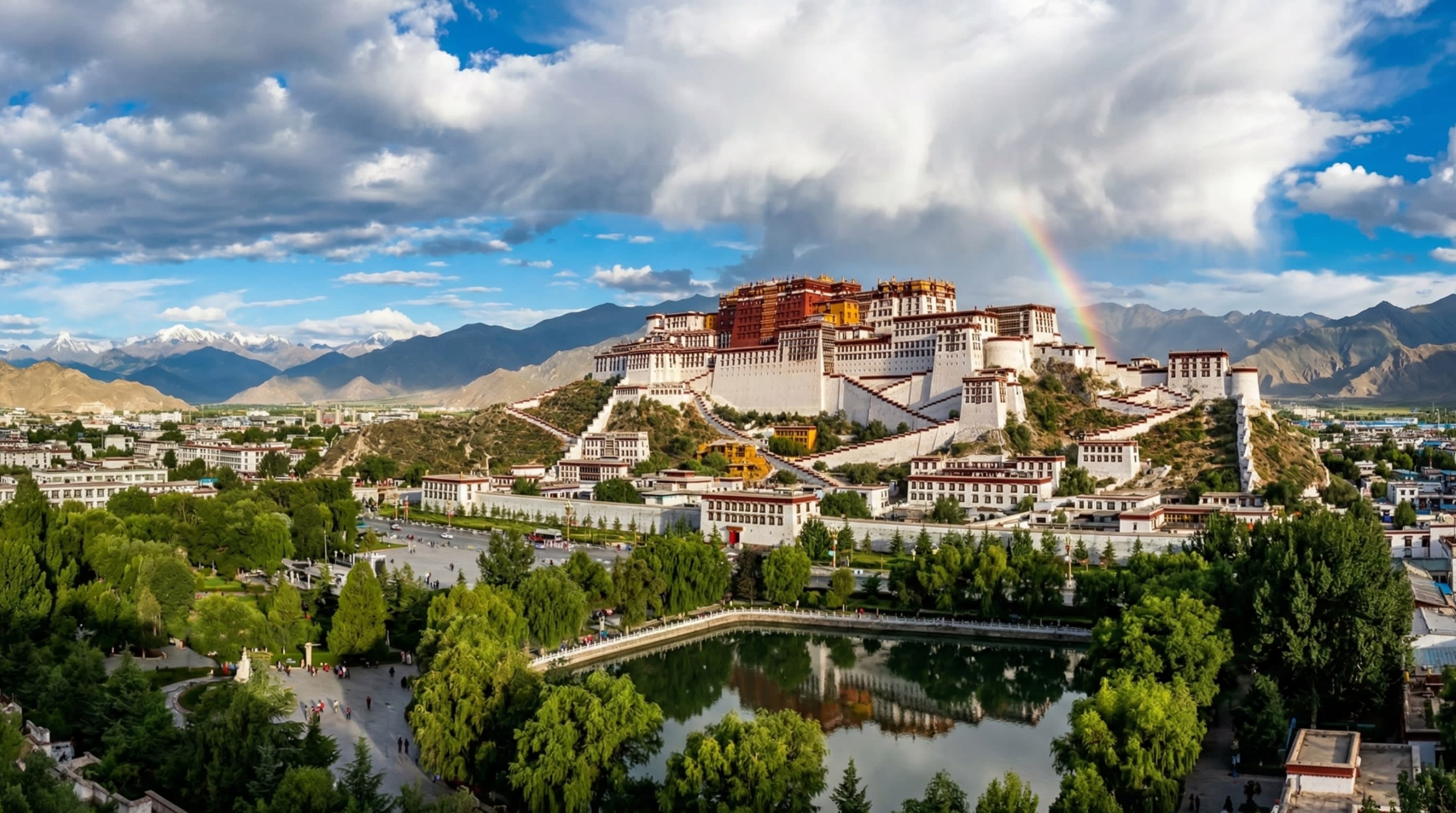
- The Potala Palace: Standing under the deep blue Tibetan sky, the red and white walls of the Potala Palace are awe-inspiring. In July, the oxygen levels are slightly higher due to the increased vegetation, making it the most comfortable time for first-timers.
- Namtso Lake: A few hours from Lhasa, this “Heavenly Lake” is a must. At 4,700 meters, the air is thin but the view of the snow-capped Nyainqentanglha mountains reflecting in the crystal water is a spiritual experience.
- Native Insight: July is the time for the Línkǎ (林卡) season—Tibetans love to have picnics in the parks, bringing rugs, butter tea, and music to celebrate the brief, beautiful summer.
🍲 What to Eat: Summer Coolers
In July, Chinese food culture shifts toward Qīngrè (清热 - clearing internal heat). Even in the cool West, these summer staples are everywhere.
- Watermelon (Xīguā 西瓜): Xinjiang watermelons are legendary for their sweetness due to the intense sun and temperature gaps between day and night.
- Liangpi (凉皮 - Cold Noodles): These chewy wheat starch noodles tossed in vinegar, garlic, and chili oil are the perfect light lunch when you don’t want a heavy, hot meal.
- Lotus Root (Ǒu 藕): Often served as a cold appetizer with vinegar, lotus root is believed to be naturally “cooling” for the body.
- Mung Bean Soup (Lǜdòu tāng 绿豆汤): You will find this simple, sweet soup served in almost every household and restaurant to prevent heatstroke.
🏮 Cultural Connection: The Summer Gourd
For enthusiasts of traditional culture, July presents a unique challenge and opportunity for Wenwan gourds. As an owner of such a collectible, you’ll find that the mid-summer “sweat” is actually a vital part of the process.
- The Summer “Pan”: In the traditional art of Pán (盘 - meditative handling), the natural oils and moisture from your hands during the warm July days help accelerate the coloring of the gourd.
- Maintenance Tip: While the warmth is good, be careful of the extreme dryness in places like Xinjiang. If you are traveling with your Wenwan gourd, ensure it is stored in a way that prevents sudden temperature or humidity shocks, which could cause the wood or organic shell to crack.
🚆 Travel Logistics for July 2026
- The Peak Season Struggle: July is the start of the “Summer School Break.” This means that flight and high-speed rail prices are at their highest. Book your Gaotie tickets exactly 15 days in advance on the 12306 app.
- Regional Flights: For Xinjiang and Tibet, flying between cities (e.g., Urumqi to Yining) can save you 10+ hours of driving. These smaller regional flights fill up months in advance for July.
- ID & Permits: Remember that Tibet requires a special Tibet Travel Permit for international passport holders. Similarly, many areas in Xinjiang require your physical passport for frequent check-points.
💬 Essential July Phrases
| English | 中文 | Pinyin |
|---|---|---|
| I have altitude sickness. | 我有高反。 | Wǒ yǒu gāofǎn. |
| The sun is very strong. | 太阳很晒。 | Tàiyáng hěn shài. |
| This watermelon is so sweet! | 这西瓜真甜! | Zhè xīguā zhēn tián! |
Final Thoughts from Xing
July is a month that belongs to the pioneers. While others are hiding in air-conditioned rooms, you will be breathing the thin, sacred air of the mountains and wandering through purple fields of lavender. It is a time for adventure, for wide-open spaces, and for discovering the “cool” side of a Chinese summer.
㊗️ Wishing you a refreshing and epic July journey!
📱 For more live updates on Tibet permits and Xinjiang blossom dates, follow our latest News section.

