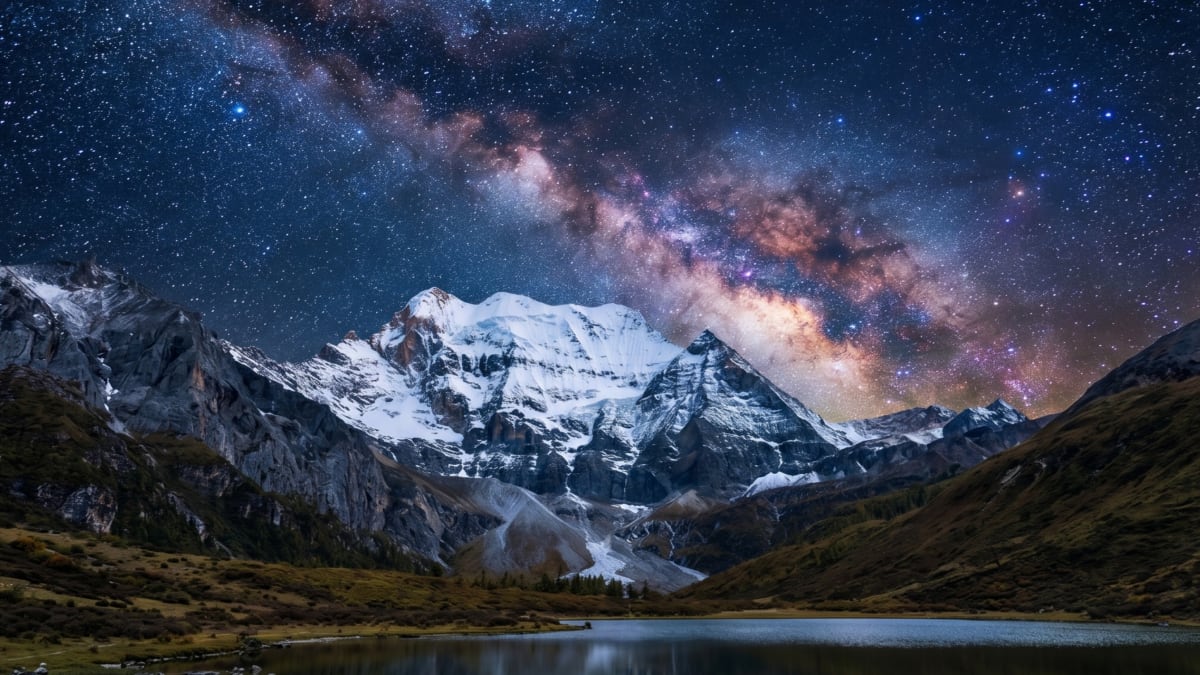
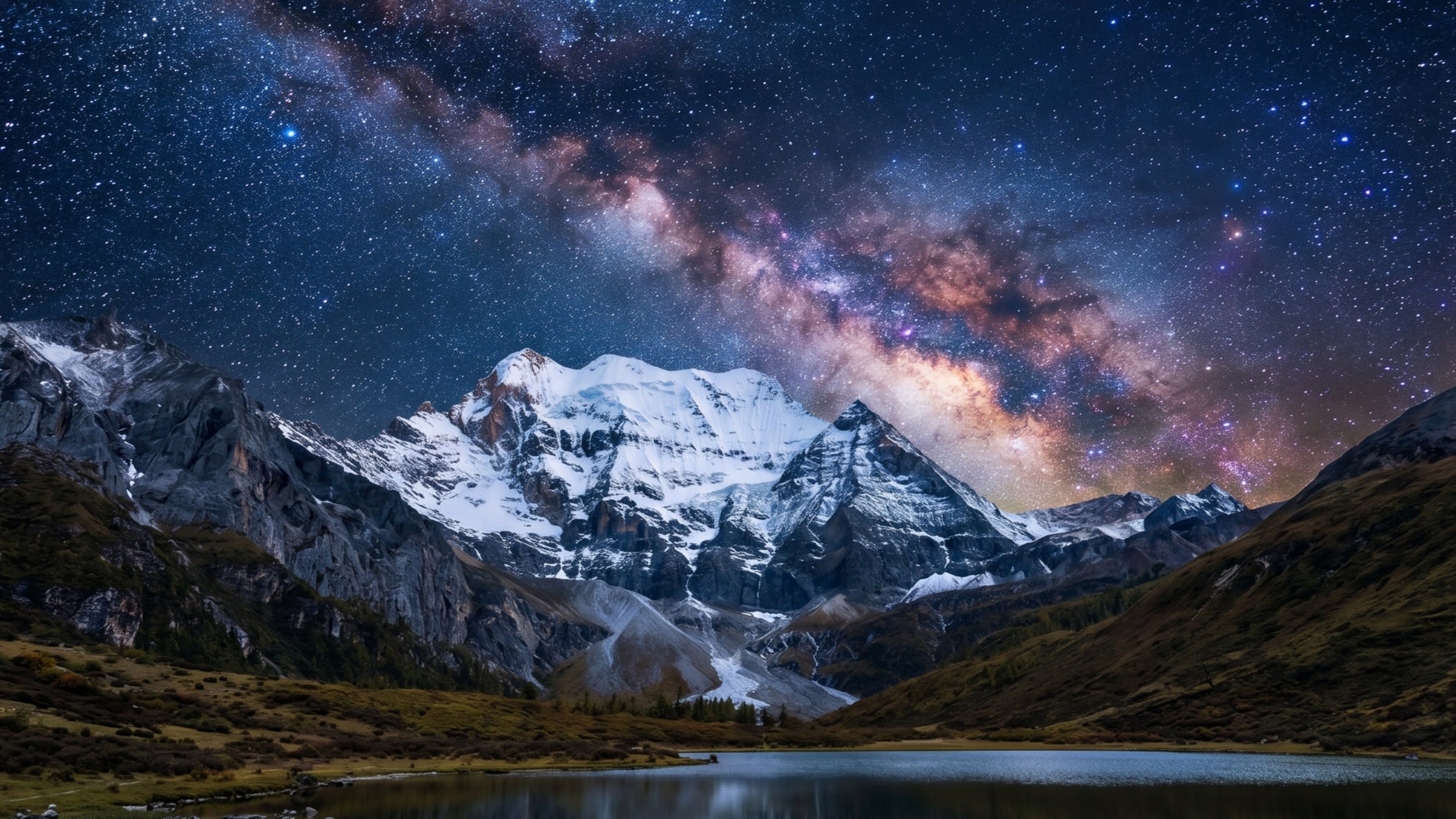
In 2026, the most profound luxury isn’t found in a high-end hotel lobby or a bustling shopping district; it is found in the silence of a deep, ink-black night. High-altitude China offers some of the last “True Dark” skies remaining on Earth. When you stand at 4,000 meters in a 5A National Park (5A级景区 - 5A jí jǐng qū), the universe ceases to be a distant, flat backdrop. Instead, the Milky Way arches over you like a living, breathing river of light.
As a curator of these landscapes, I have spent countless nights shivering in the thin, biting air of the plateau. I’ve learned that capturing the stars is not just about having the latest gear—it’s about patience, respect for the elements, and knowing how to listen to the mountains.
The 2026 Astrophotography Evolution
Technological leaps in 2026 have fundamentally changed the game. Modern mirrorless sensors, combined with sophisticated AI Denoising (AI去噪 - AI qùzào) software, mean you no longer need a small fortune to produce professional-grade shots of the Milky Way (银河 - yínhé). If you’re still sticking to city lights, you’re missing the “ultimate dream” (终极梦想 - zhōngjí mèngxiǎng) of modern photography.
The rapid expansion of the Western HSR Network (西部高铁网 - xībù gāotiě wǎng) has effectively “shrunk” the map. Destinations like Daocheng Yading (稻城亚丁 - dàochéng yàdīng) are now accessible in a fraction of the time they once took. However, while the journey has become easier, the environment remains wild and indifferent. The air is razor-thin, the temperatures drop instantly once the sun dips below the horizon, and the stars are brilliant enough to cast their own shadows.
If you are planning your own pilgrimage to the clouds, I highly recommend cross-referencing your routes with our guide on the best time to visit China in 2026 to ensure you avoid the monsoon clouds that can obscure your view.
Top 3 Hubs for the “Heavenly Shot”
1. Daocheng Yading: The Soul of the Plateau
Known as the “Last Pure Land on Earth,” Yading features three sacred, snow-dusted peaks that serve as the perfect anchor for your composition. Because the altitude here is extreme, oxygen levels are low; you will feel your heart thumping against your ribs even while sitting still. Yet, the transparency of the air is unmatched. Many local Star-Watching Campsites (观星营地 - guānxīng yíngdì) now offer heated photography platforms, allowing you to wait for the galactic core to rise without losing your toes to frostbite.
2. Mount Siguniang: The Oriental Alps
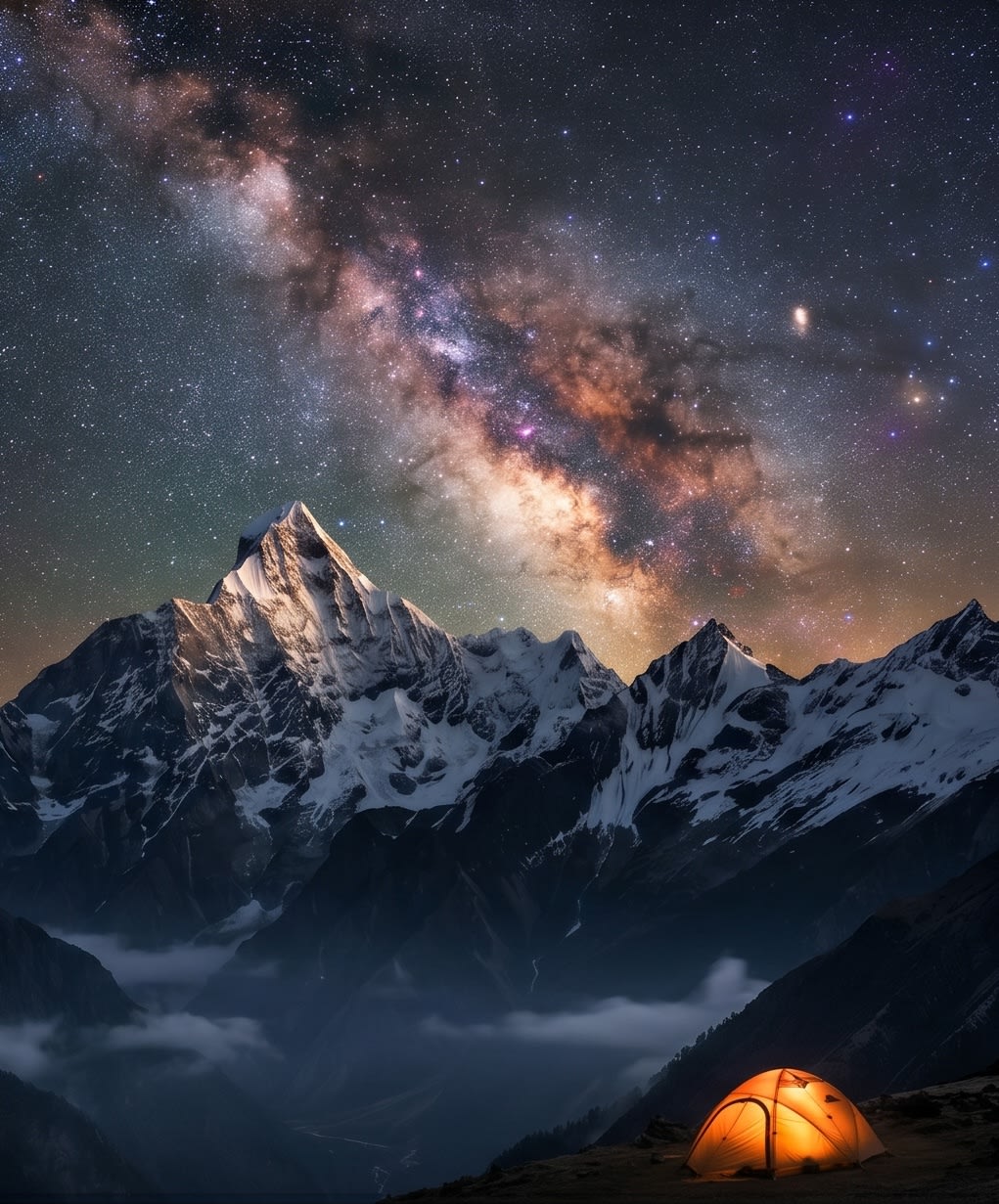
Located within a few hours’ travel from Chengdu, Siguniang (四姑娘山 - sìgūniáng shān) is a 5A marvel that feels worlds away from urban life. For the most dramatic shots, head to Shuangqiao Valley (双桥沟 - shuāngqiáogōu). The vertical, jagged granite walls here provide a stark, monolithic contrast to the swirling celestial spheres above. If you’re interested in more mountain experiences, check out our insights on climbing China’s 5A mountains.
3. Dunhuang: The Gobi Starlight
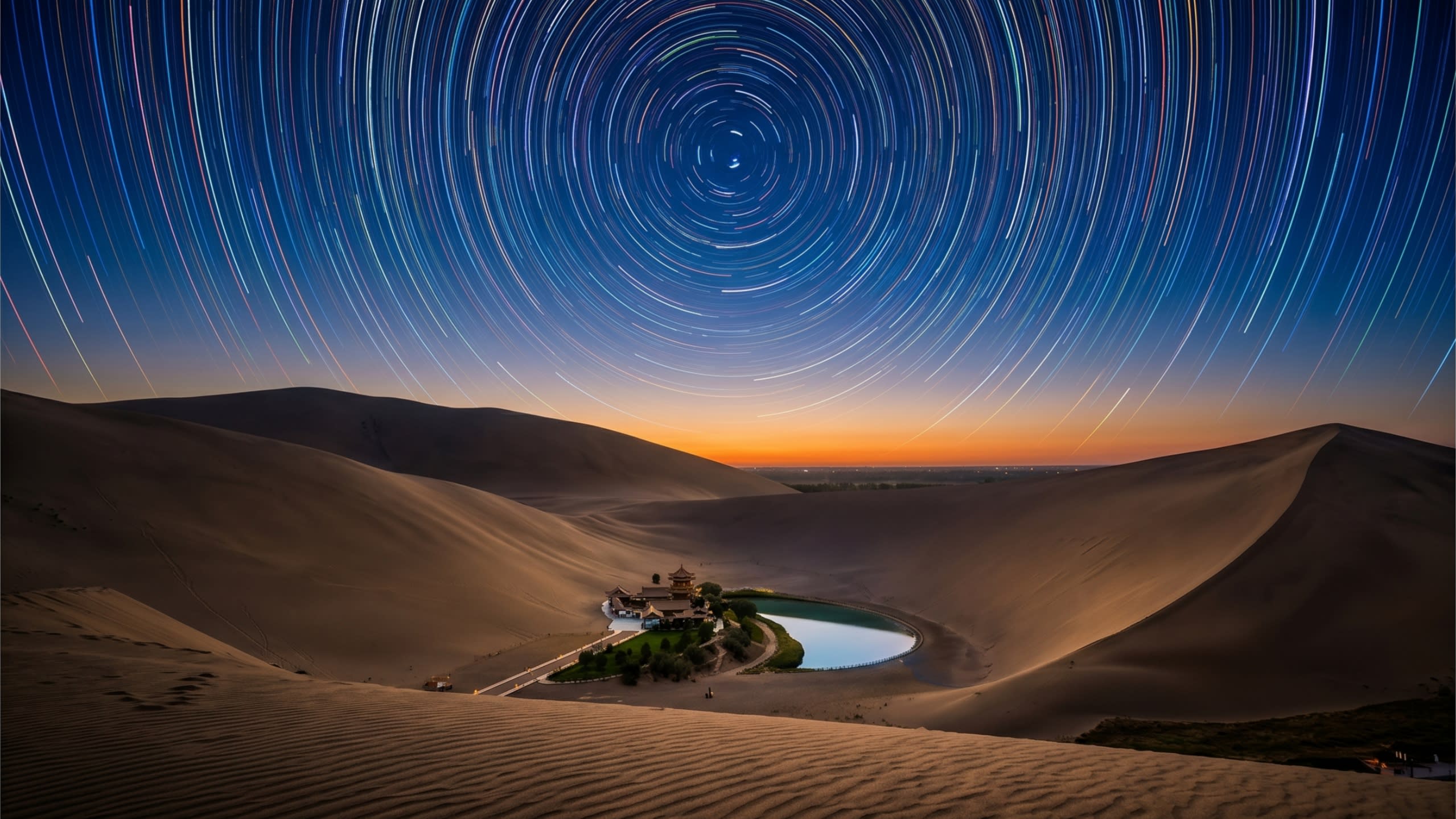
If mountain peaks feel too confining, the Mingsha Mountain (鸣沙山 - míngshāshān) in Dunhuang provides a vast, golden canvas. The desert air is bone-dry, meaning zero moisture interference. Capturing Star Trails (星轨 - xīngguǐ) over the Crescent Moon Spring is a bucket-list experience for any 2026 traveler. For those keen on the history behind the stars, see our Dunhuang Insider Guide.
Technical Breakdown: The “500 Rule” in 2026
Long exposure is an exercise in balancing light and motion. To capture pin-sharp stars, use the “500 Rule” (dividing 500 by your focal length to determine your max shutter speed).
| Setting | Target Value | Professional Reason |
|---|---|---|
| Aperture (光圈) | f/1.4 - f/2.8 | Crucial for letting in maximum "Weak Light." |
| ISO (感光度) | 3200 - 6400 | Optimal balance between brightness and digital noise. |
| Shutter Speed (快门) | 15s - 25s | Prevent star trailing while capturing the Milky Way core. |
| Focus (对焦) | Manual (Infinity) | Autofocus is useless at night. Use Live View to fine-tune. |
The Gear: 2026 Essentials
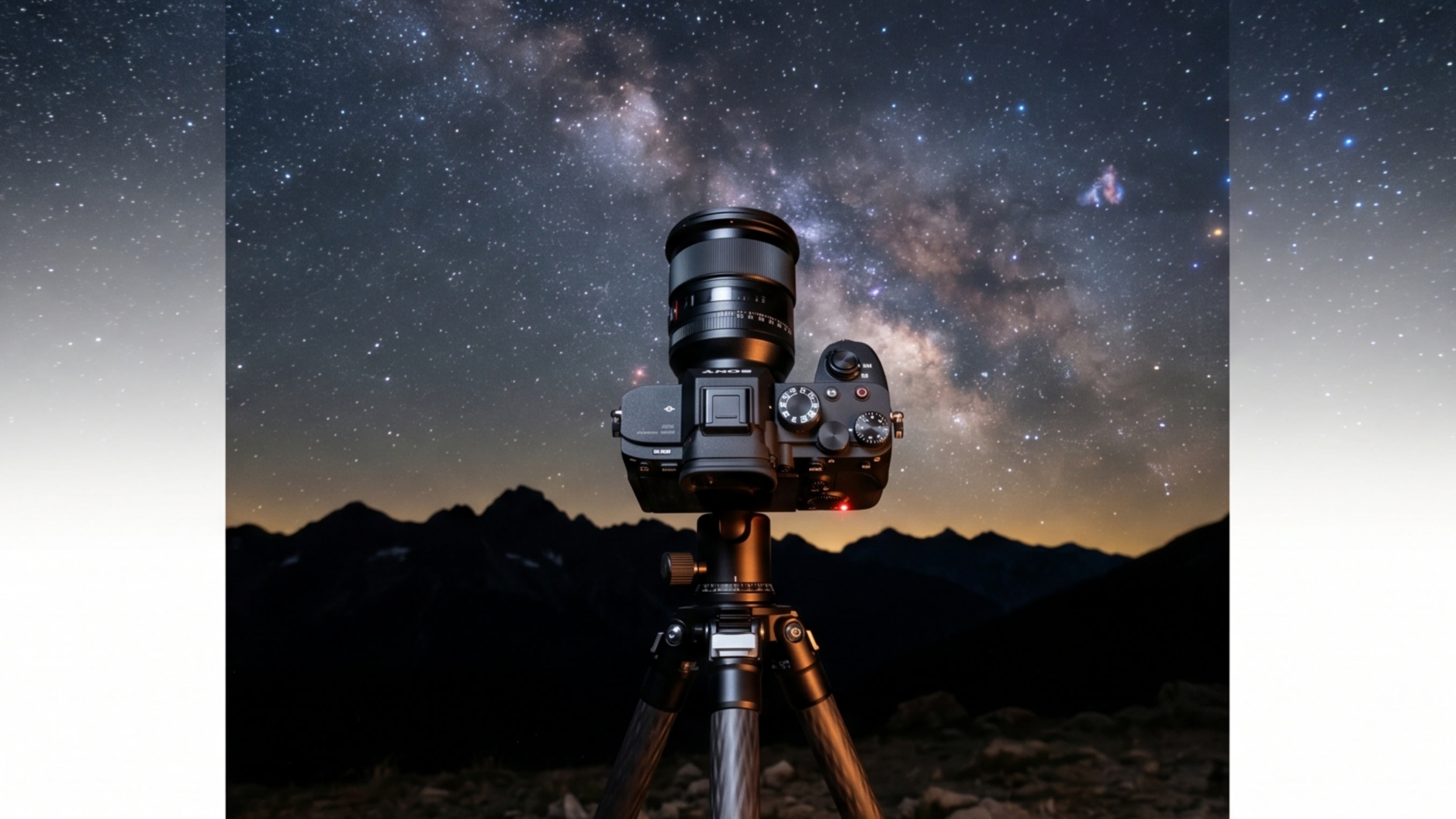
In 2026, I treat my camera kit as a “Dark Sky System.” First, a carbon fiber tripod is mandatory; lugging a heavy steel one up a 4,500-meter peak is a recipe for physical disaster. Second, don’t overlook condensation (雾气 - wùqì). High-altitude nights are humid in their own way; a simple USB-powered lens heater will keep your glass clear while others spend their night wiping off frost.
Cultural Connection: The Yak and the Star
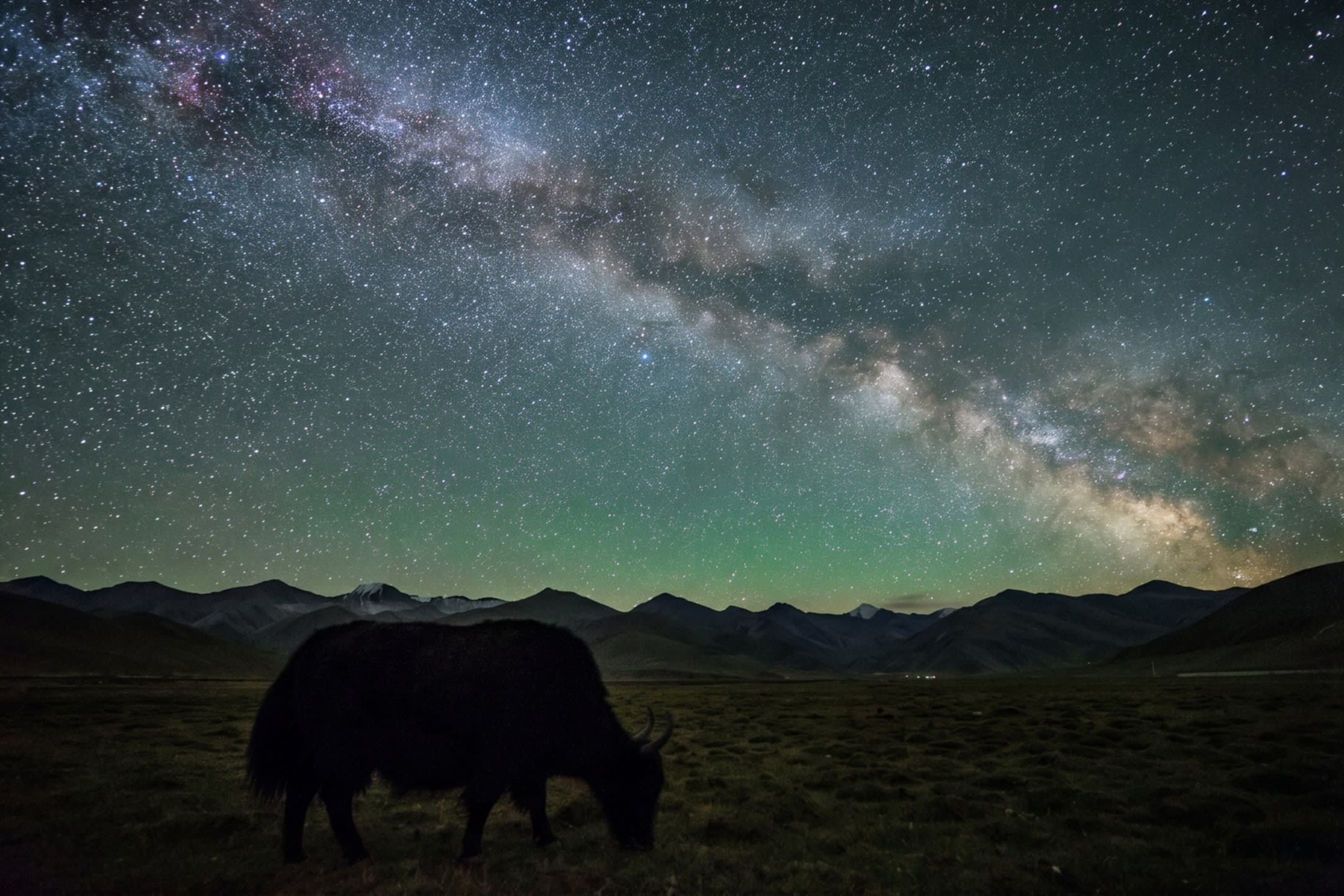
The best photos are those with a human—or animal—story. The contrast between a massive, silent Yak (牦牛 - máoniú) grazing in the dark and the cosmic chaos of the galaxy provides a sense of scale that pure landscapes often lack.
“In the highlands, the biggest mistake is shooting the sky in isolation,” I often tell fellow travelers. “Find a foreground that speaks to the land. A local tent, a stone pagoda, or even a grazing yak gives your image a heartbeat.”
Photography Survival Phrases (High-Altitude Edition)
| English | Chinese & Pinyin |
|---|---|
| When will the Milky Way appear? | 银河什么时候出来? (Yínhé shénme shíhòu chūlái?) |
| Is there a good spot for star trails? | 这里拍星轨合适吗? (Zhèlǐ pāi xīngguǐ héshì ma?) |
| The light pollution is very low here. | 这里的光污染非常低。 (Zhèlǐ de guāngwūrǎn fēicháng dī.) |
Final Thoughts from Haoran
Astrophotography is, above all, a lesson in humility. When you trigger that 25-second exposure, you are recording light that has been traveling for millennia. Once you’ve set your intervalometer, stop staring at the screen. Grab a thermos of hot butter tea, lean back, and look up. The best resolution isn’t on your camera—it’s in your eyes.
Astrophoto Survival Checklist
- Altitude Prep: Spend at least 48 hours at 2,000m before hitting the 4,000m+ marks. Altitude sickness (高原反应 - gāoyuán fǎnyìng) is the ultimate photography killer.
- Battery Life: Cold saps power. Keep your camera batteries in an inside pocket pressed against your warmth.
- Digital Tools: Use Stellarium to track the core and Caiyun (彩云天气) for precise, hyper-local cloud predictions.
Disclaimer: As an Amazon Associate, ChinaCurator earns from qualifying purchases.