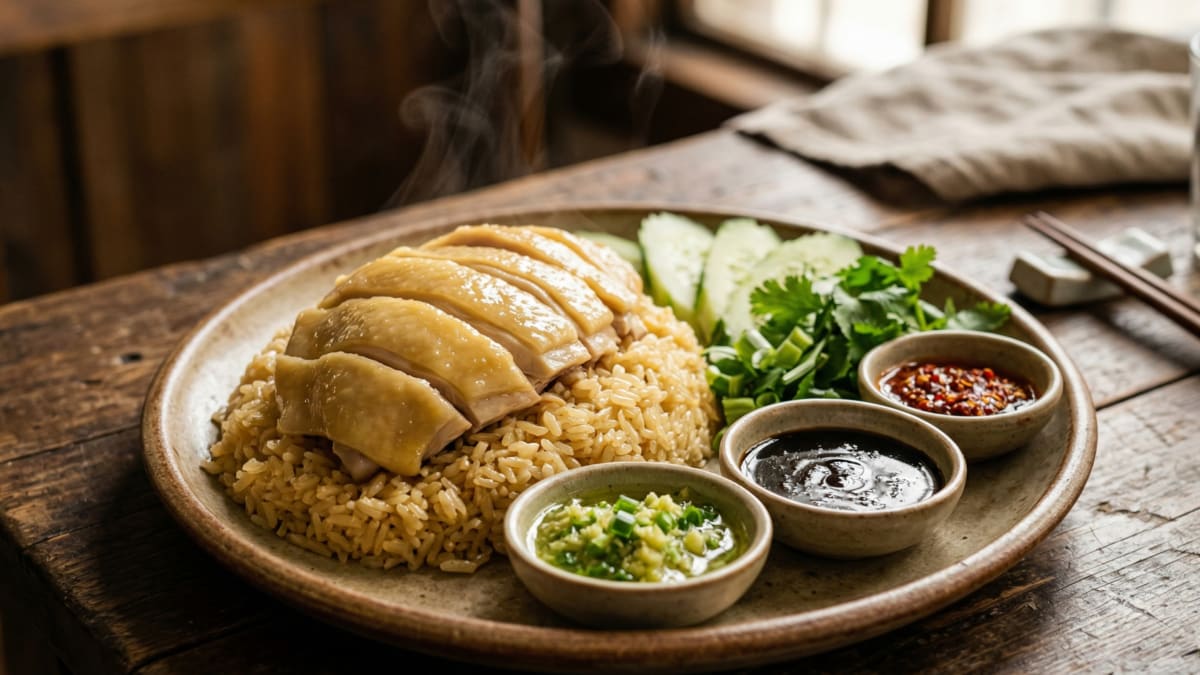
🐓 Introduction: The Masterpiece of Subtlety
In the global landscape of Asian cuisine, many dishes rely on the drama of Sichuan peppercorns or the aggressive crunch of deep-fried batter to capture your attention. But then, there is Hainan Chicken Rice (海南鸡饭 - Hǎinán Jī Fàn). It is a dish that commands respect through sheer restraint, purity, and a level of culinary precision that borderlines on the obsessive.
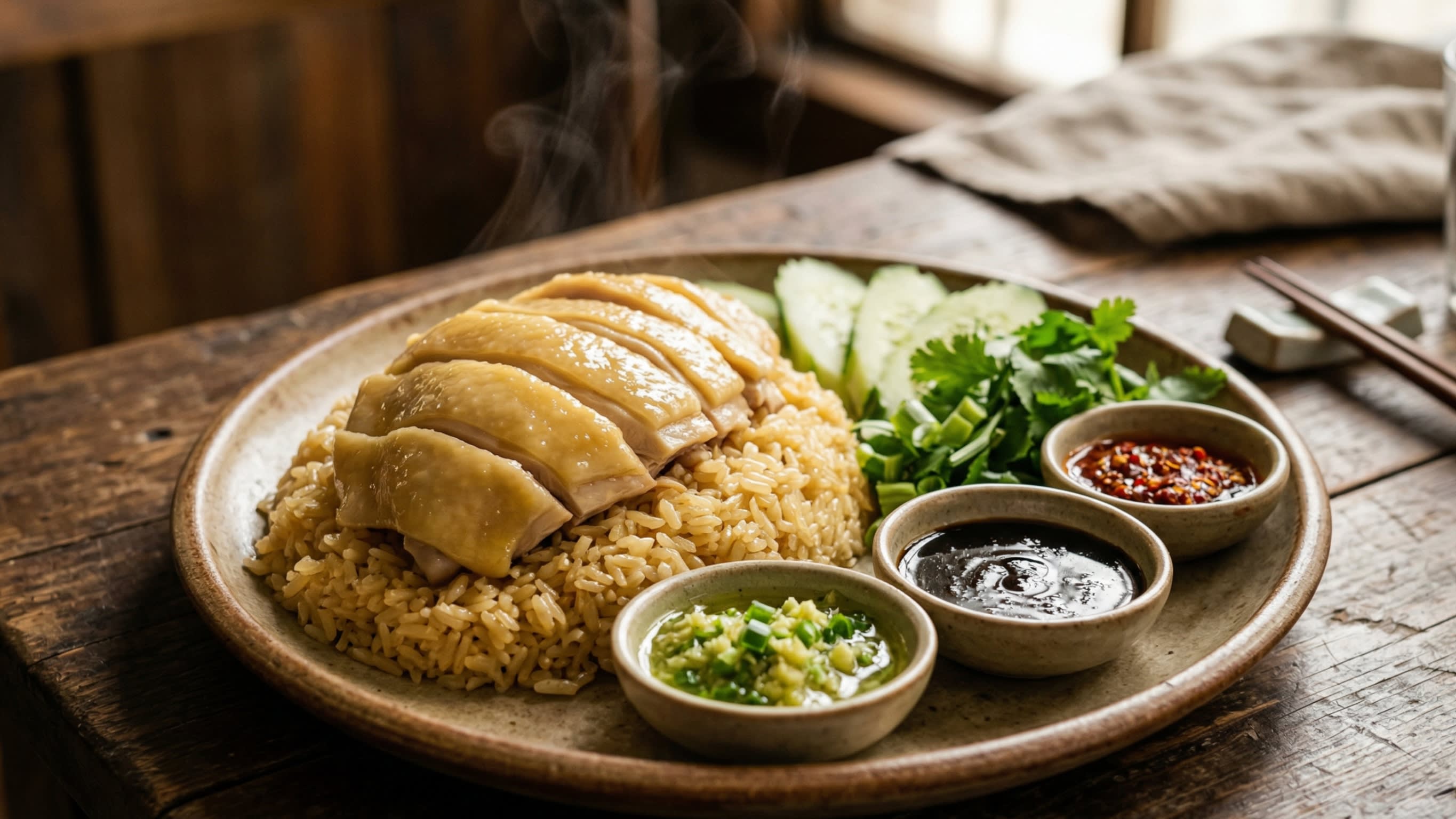
Originating from Wenchang in China’s Hainan province, this dish traveled across the sea with early immigrants, finding its spiritual home in the bustling hawker centers of Southeast Asia. To the uninitiated, it looks like a simple plate of boiled chicken and plain rice. But when done correctly, it is a revelation. The chicken must possess a silky, almost pudding-like texture, while the skin—thanks to a specific technique—should be snappy and gelatinous.
The rice, often referred to as “schmaltzy” rice by fans, is the true anchor of the meal. It isn’t just boiled; it’s infused with the deep, savory essence of rendered chicken fat. If you’ve been struggling to recreate that elusive “takeout” texture at home, you aren’t alone. Today, I’m sharing the “steep and shock” method used by masters of the craft, along with tips on how to build a flavor profile that feels like it’s been simmering for days.
🔬 The Science of Velvety Chicken: “Jin Shu” and the Ice Bath
A common mistake at home is treating this bird like a typical roast. Boiling it vigorously creates tough, rubbery fibers. To achieve that legendary restaurant texture, we use two specific techniques.
1. Poaching via Residual Heat (浸熟 - Jìn shú)
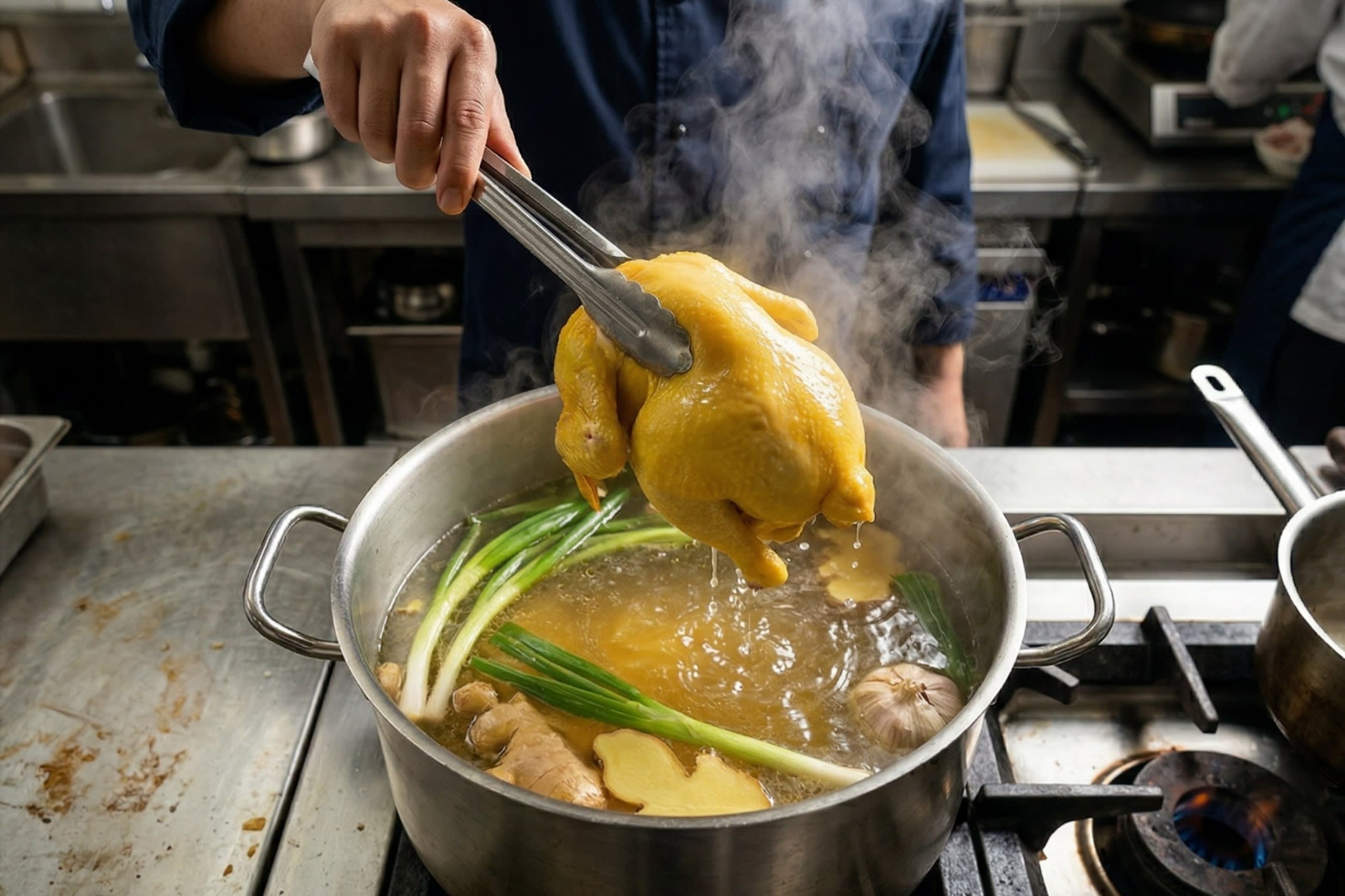
Chinese culinary tradition favors Jìn shú (浸熟 - Steeping to cook). Instead of a boil, we bring the water to a boil, add our aromatics, and then kill the heat or drop it to the absolute lowest setting. The chicken effectively “steeps” in the hot broth. Pro-tip: You must perform the “dunking” ritual—lift the chicken by its neck and let the water drain from the cavity before plunging it back in. This ensures the internal temperature rises gradually and evenly, preventing the breast meat from drying out while the legs finish cooking.
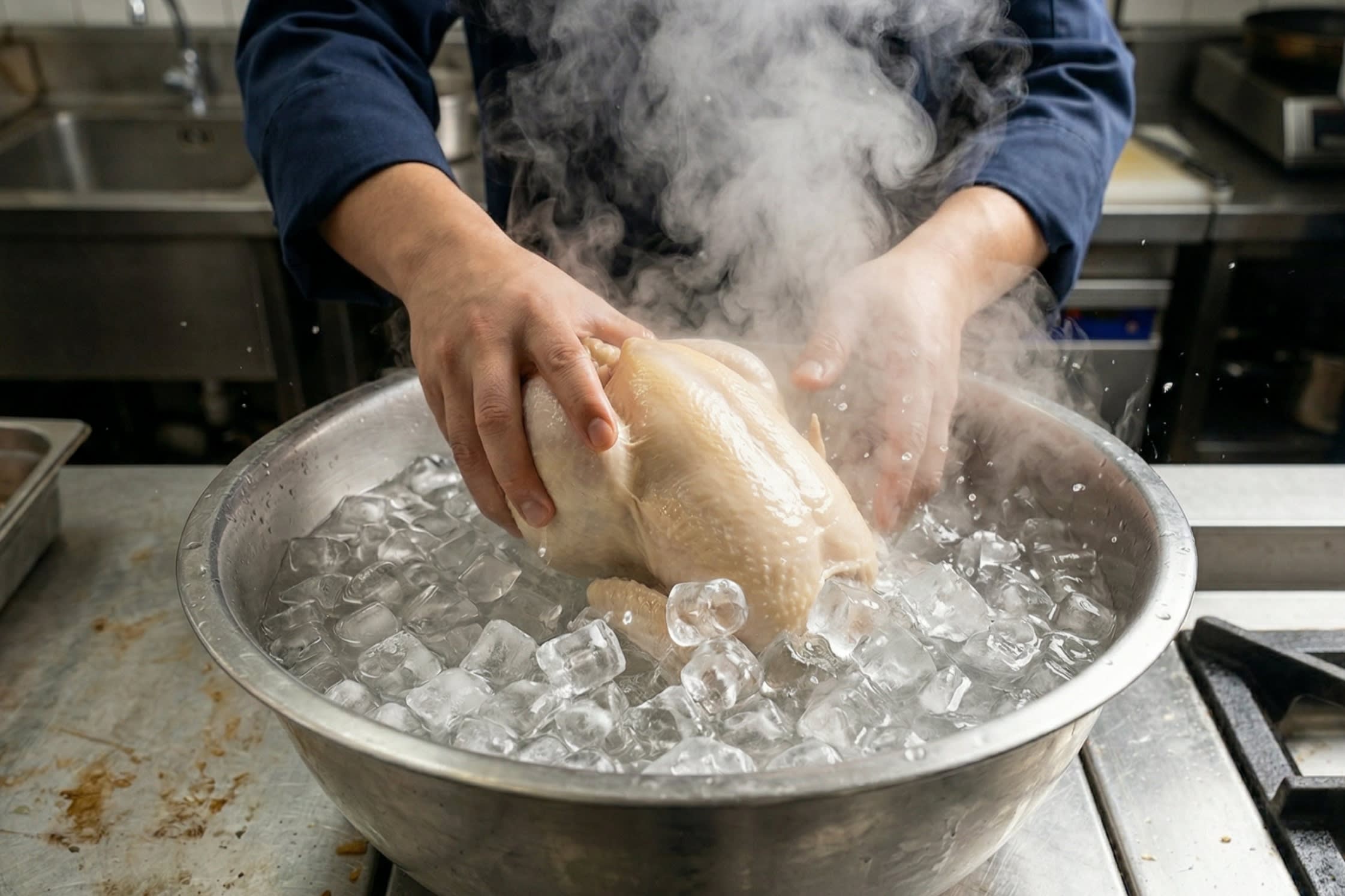
2. The Ice Bath Shock (过冰水 - Guò bīng shuǐ)
This is non-negotiable. The moment the bird leaves the pot, it must vanish into a bowl of ice water. This thermal shock does two things: it stops the residual heat from “cooking” the meat into a dry mess, and it causes the collagen in the skin to tighten. The result? A firm, snappy finish that feels like a decadent jelly (果冻般的鸡皮 - guǒdòng bǎn de jī pí).
🍚 The Soul of the Dish: Chicken Fat Rice (鸡油饭)
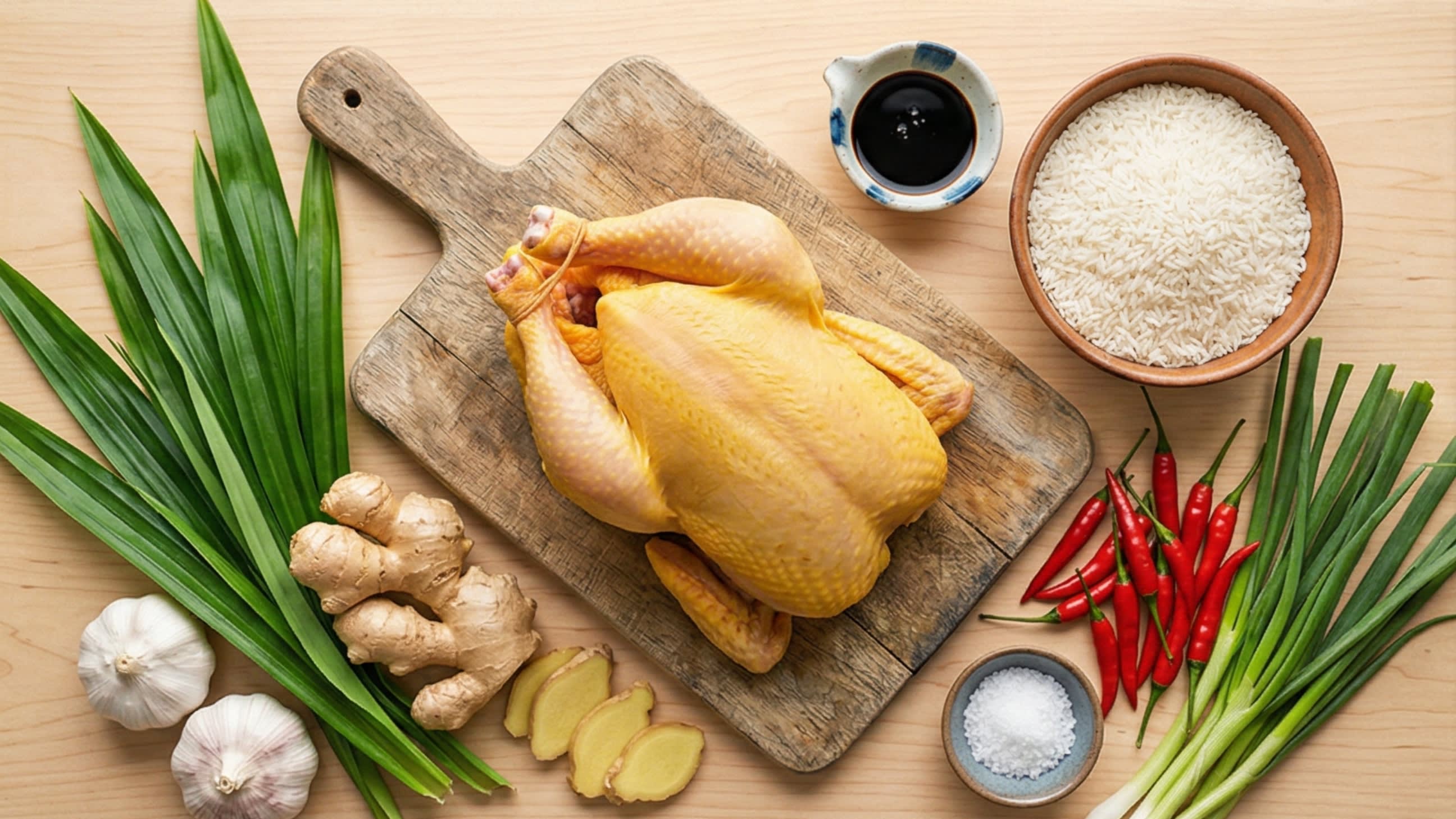
A true Hainan Chicken Rice expert judges a stall by their rice. It should be fragrant enough to stand alone. We make Jīyóufàn (鸡油饭 - Chicken Fat Rice) by rendering the excess fat from the chicken cavity into a golden liquid gold (鸡油 - Jīyóu). We use this to sauté aromatics until they are fragrant and golden before tossing in our high-quality Jasmine rice. The finishing touch? A knot of Pandan leaves (斑斓叶 - Bānlán yè), which adds an earthy, vanilla-like floral scent that defines the dish’s identity.
🛒 Ingredients List
The Chicken & The Poach:
- 1 Whole Free-Range or Organic Chicken (3.5 - 4 lbs). Try to source a bird with yellow skin for better fat.
- 2 tbsp Coarse Kosher Salt (the essential exfoliating agent)
- 4-inch piece of fresh Ginger, thickly sliced
- 4 stalks of Scallions, halved
- A massive bowl of Ice and Cold Water
The Chicken Fat Rice (鸡油饭):
- 2 cups Jasmine Rice, washed until water runs clear
- Reserved Chicken Fat (trimmed from the raw bird)
- 4 cloves Garlic, minced
- 2 Shallots (红葱头), minced
- 1 inch fresh Ginger, minced
- 2 knotted Pandan Leaves
- 1/2 tsp Salt
- 2 cups Reserved Chicken Poaching Broth
The Holy Trinity of Sauces:
- Ginger-Scallion Oil (姜葱酱): 3 tbsp minced ginger, 3 tbsp minced scallions, salt, sugar, and 3 tbsp of smoking hot oil.
- Chili Garlic Sauce (辣椒酱): 5 red Thai chilies, 3 cloves garlic, 1 inch ginger, 1 tbsp lime juice, 1 tbsp broth, salt.
- Sweet Dark Soy Sauce (甜酱油): Kecap Manis, thinned with a splash of hot broth.
🍳 Step-by-Step Instructions
1. Prep the Chicken: Exfoliate the bird with coarse salt—it sounds funny, but it removes impurities and ensures smooth, bright skin. Rinse it, and stuff the cavity with ginger and scallions.
2. The Gentle Poach (浸熟): Bring a large pot of water to a boil with ginger and salt. Dunk the bird three times, then submerge it completely. Drop the heat to the absolute lowest setting. Cover and let it bathe for 45–50 minutes.
3. The Ice Bath (过冰水): Move the cooked bird directly into a bowl of ice and water for 15 minutes. This creates the signature gelatinous skin.
4. Make the Rice: Render your saved chicken fat in a wok until it turns into a clear liquid. Add your aromatics, then toast the washed rice until translucent. Finally, transfer to a rice cooker with the poaching liquid and pandan leaves.
5. Serve: Use a heavy carbon steel cleaver to chop the chicken through the bone. Serve with the three dipping sauces and your fragrant rice.
💡 Pro-Tips for Success
- The Pink Bone Rule: Don’t panic if the marrow near the bone is slightly pink. That’s a sign of a perfectly poached bird. If it’s grey, you’ve overcooked it.
- Drain Your Rice: The most common cause of mushy rice is water remaining on the grains before they hit the wok. Shake them dry!
- Want more variety? If you love the techniques here, you might also enjoy mastering Authentic Cantonese Char Siu (Chinese BBQ Pork) or even The Ultimate Chinese Steamed Whole Fish for a full dim sum experience at home.
| Element | Secret |
|---|---|
| Skin Texture | Immediate ice bath shock |
| Rice Flavor | Toasted in rendered chicken fat |
| Aroma | Pandan leaves infusion |
🎥 Watch the Restaurant Technique
Disclaimer: As an Amazon Associate, ChinaCurator earns from qualifying purchases.