
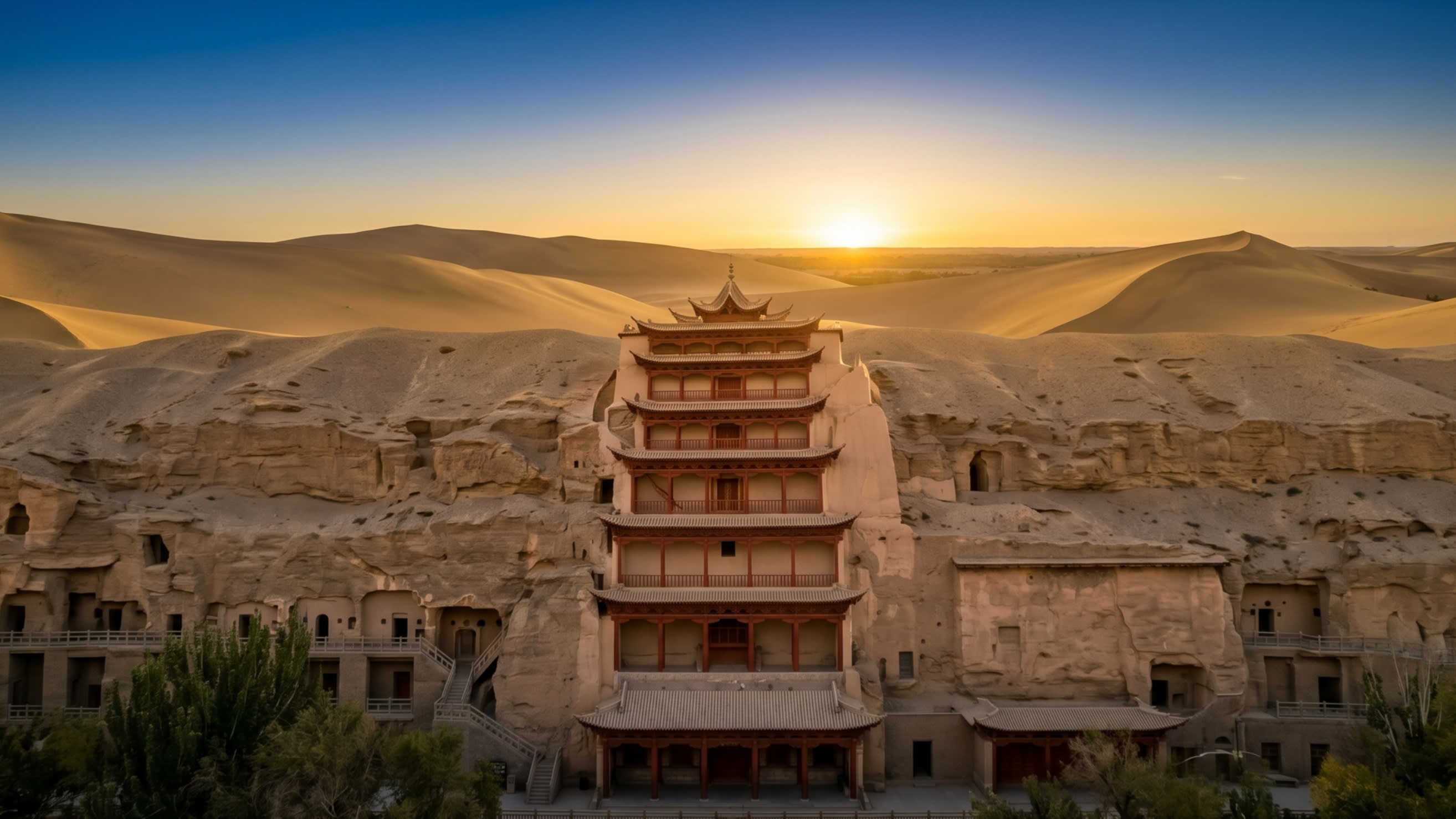
Deep in the heart of the Gobi Desert lies a place where time seems to have folded in on itself. Dunhuang is not merely a destination; it is a profound, dusty whisper from the past. For centuries, this oasis served as the ultimate crossroads of the world, a place where exhausted merchants, devout monks, and ambitious warriors traded silk, spices, and—perhaps most importantly—the blueprints of their gods.
In 2026, the allure of the Silk Road has not faded. If you are preparing to chase the “Flying Apsaras” or to stand atop a dune and hear the sands hum, you are embarking on a journey that feels less like a vacation and more like a pilgrimage through history. But be warned: the desert is as demanding as it is beautiful.
Phase 1: The “Booking War” – Securing Your Mogao Ticket
The Mogao Caves (莫高窟 - Mògāo kū) represent a 5A-rated UNESCO masterpiece, home to some of the world’s most exquisite Buddhist art. However, they are also the most elusive “Golden Ticket” in China. Because the pigments inside the caves are so sensitive to carbon dioxide and humidity, visitor numbers are strictly capped.
- Ticket Types: You will encounter two distinct tiers. “A Tickets” grant you the full experience—eight caves plus the two must-see digital films. “B Tickets” offer a truncated tour of four caves. If you are a history buff, the A Ticket is non-negotiable.
- The 30-Day Rule: Tickets go live exactly 30 days in advance via the official WeChat mini-program. In the peak summer months, A Tickets routinely vanish in seconds.
- My Pro-Tip: Do not rely on third-party “tourist agents” or scalpers. The identity verification process at the entrance is now more rigorous than international airport security. If you miss the window, check the official site daily for cancellations—they do happen. For those needing gear for the trek, consider bringing a sturdy daypack to keep your water and essentials organized.
Phase 2: The Art of the Divine – The Mogao Experience
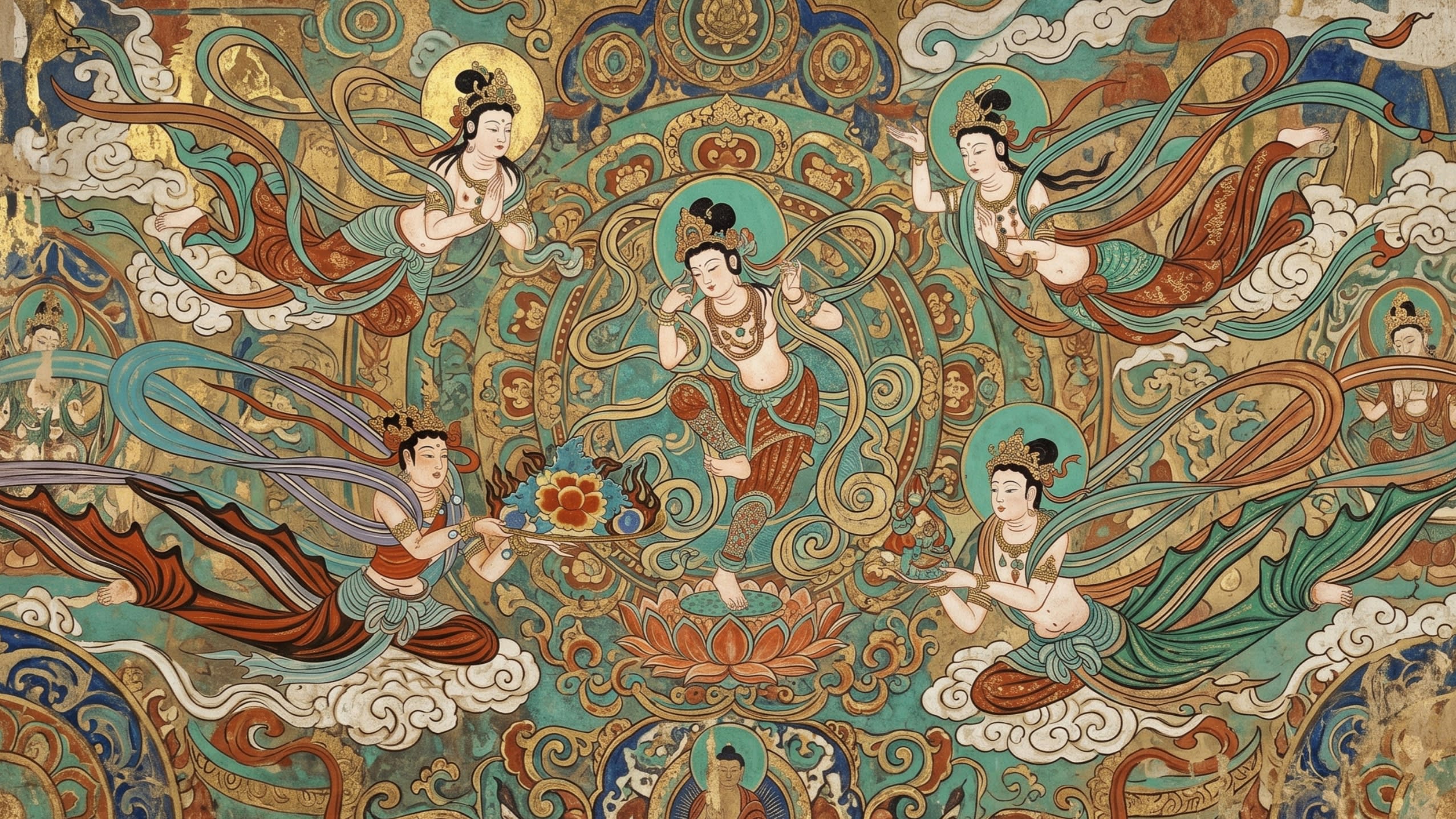
Stepping into a Mogao cave is a sensory shock. The air is cool, dry, and smells faintly of ancient earth and stone. The Flying Apsaras (飞天 - Fēitiān)—those elegant, ribbon-trailing celestial beings—seem to dance across the walls as you move your flashlight.
- The Immersive Prelude: Before entering the grottoes, you’ll visit the digital center for an 8K dome screening. It provides the context you need to appreciate the silent art ahead.
- AR Integration: In 2026, technology has bridged the gap between decay and restoration. Many caves now offer AR tablets that allow you to hold the device up to a faded, 1,500-year-old mural and see it “miraculously” restored to its original, vibrant pigment levels.
- A Note on Etiquette: Photography is strictly forbidden inside the caves. The cameras’ flashes—and even the humidity from your breath—can damage the ancient layers. Please respect the prohibition. The souvenir shop near the exit offers high-resolution, authorized prints that are a much better keepsake than a blurry, forbidden phone photo.
If you’re interested in more historical deep-dives, you might enjoy my guide on real-life Black Myth: Wukong and the ancient temples of Shanxi.
Phase 3: Romance in the Dunes – Mingshashan & Crescent Spring
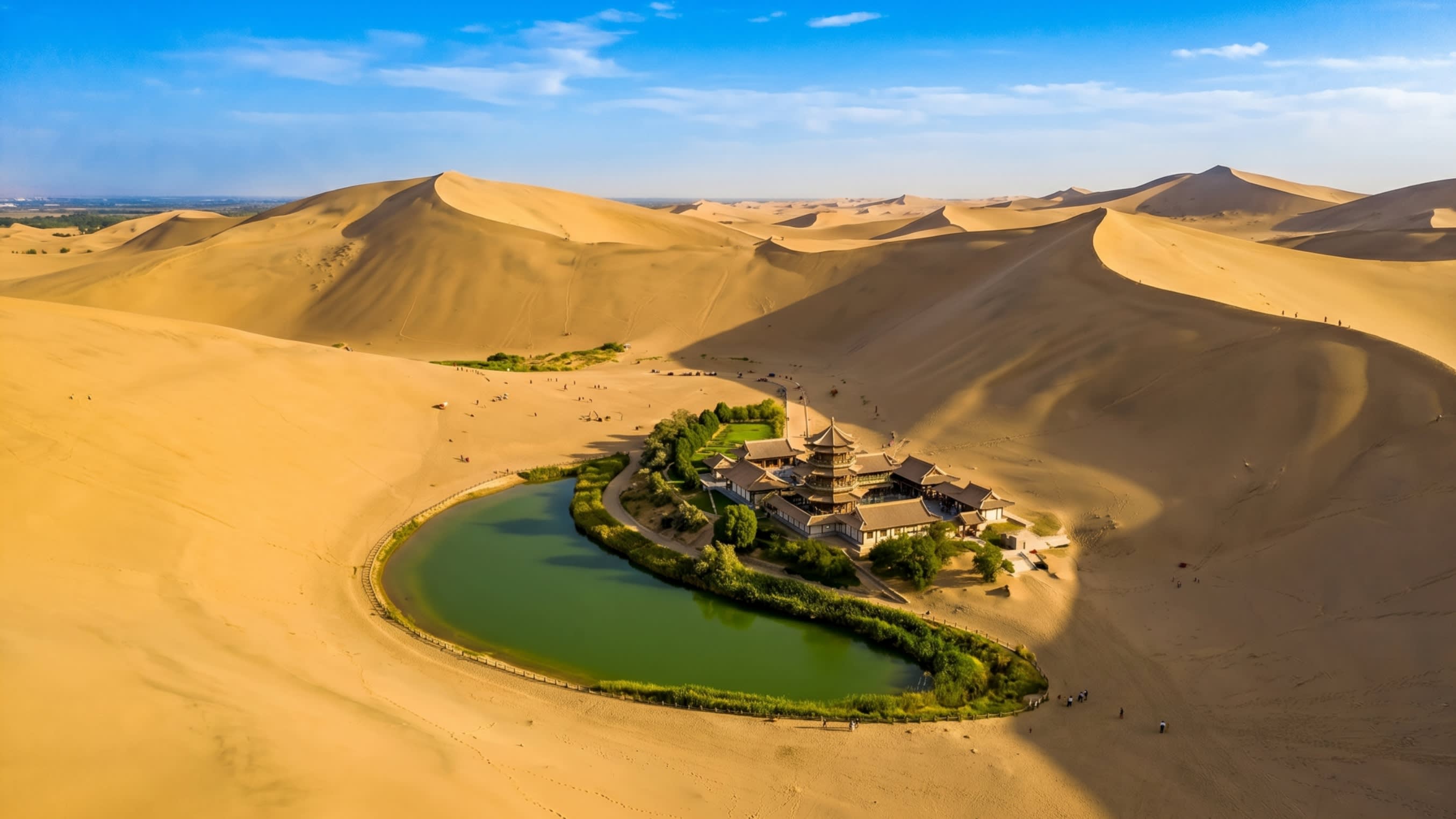
Just a short ride from the city center lies the Echoing Sand Mountain (鸣沙山 - Míngshā shān) and the legendary Crescent Moon Spring (月牙泉 - Yuèyá quán).
The locals call them “Singing Sands” because, when the desert wind hits the dunes at the perfect angle, the mountain emits a low, haunting hum. It is a surreal experience that feels almost otherworldly.
- The Sunset Ritual: In 2026, the local standard for a “perfect evening” involves renting a pair of neon orange sand-boots (to keep the grit out of your shoes) and hiking to the highest ridge. Watching the sun plummet behind the undulating waves of sand, while the Crescent Moon Spring begins to glow under the desert dusk, is the peak of desert romance.
- Survival Tip: “Always arrive after 5 PM,” a local guide told me during my last visit. “Otherwise, you won’t be a tourist; you’ll be a sun-dried ingredient.” He was right. The heat is deceptive, and your skin will thank you for the shade.
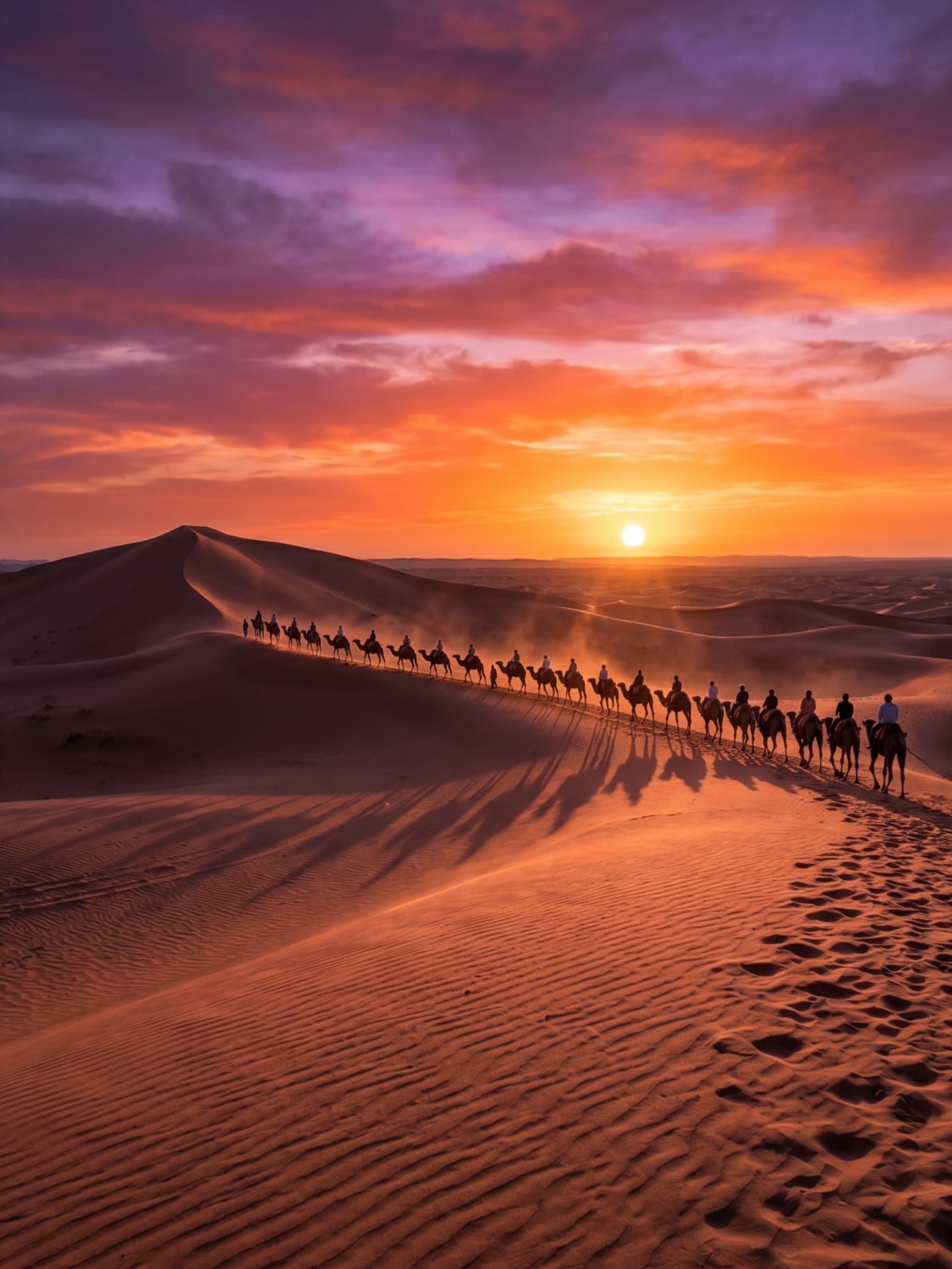
For a similar sense of vast, epic landscapes, consider exploring Inner Mongolia’s grasslands next.
Phase 4: Logistics – Getting to the Oasis
Dunhuang is no longer the isolated outpost it once was.
- High-Speed Rail: You can now reach Dunhuang via HSR from Lanzhou or Xi’an. Watching the landscape shift from the lush greenery of central China to the stark, dramatic cliffs of the Hexi Corridor is a highlight in itself.
- Air Travel: The Dunhuang Mogao Airport (DNH) is well-serviced by major hubs.
- Desert Living: If you want to experience the Gobi, consider one of the “glamping” sites in the dunes. They offer sturdy tents with modern portable power banks and high-speed Wi-Fi, allowing you to gaze at the Milky Way without sacrificing 21st-century comfort.
A Taste of the Gobi: Yellow Noodles & Apricot Juice
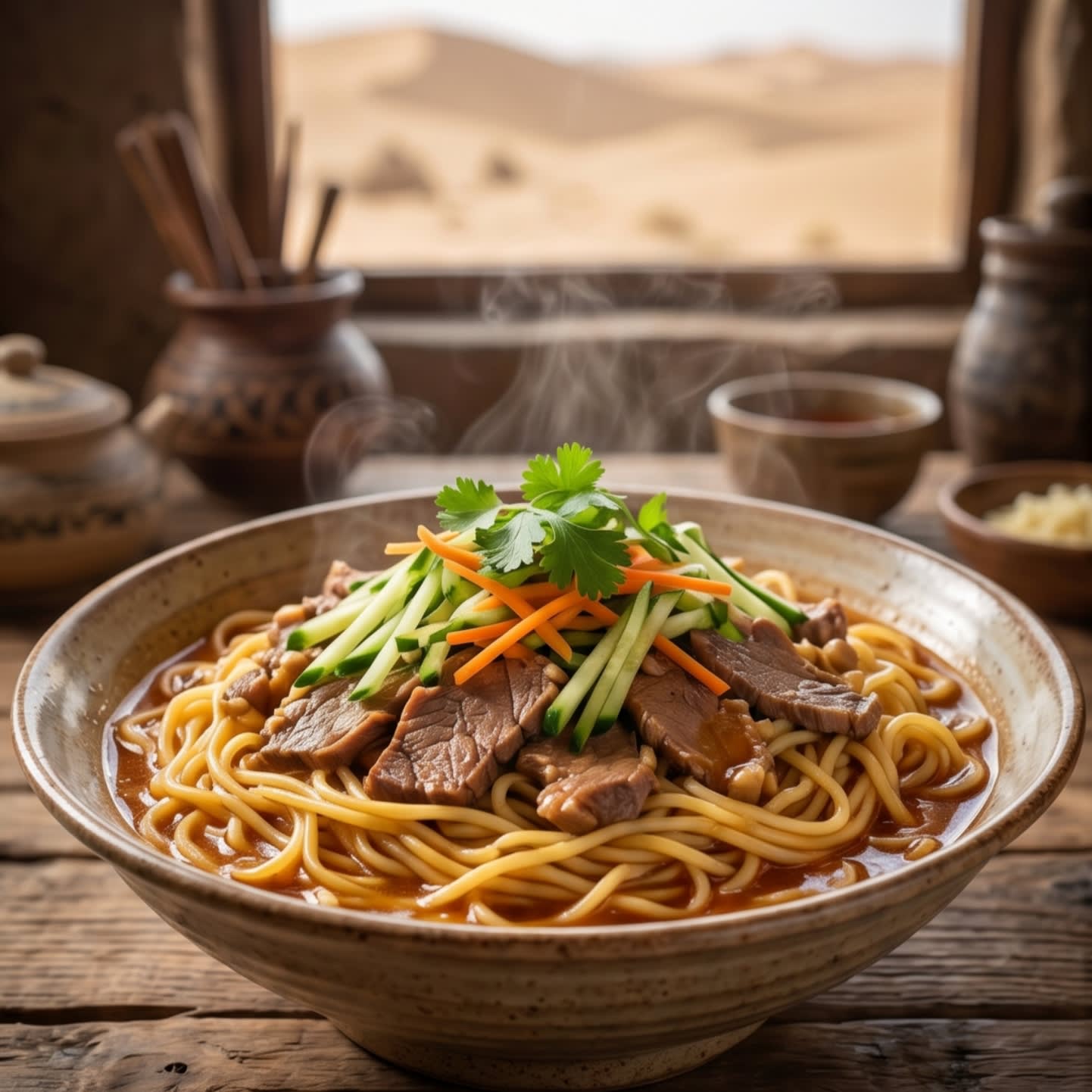
You cannot leave Dunhuang without trying Donkey Meat Yellow Noodles (驴肉黄面 - Lǘròu huángmiàn). The noodles are hand-stretched until they are as thin as thread and possess a beautiful, golden hue. The donkey meat is braised until it practically melts off the bone.
Wash it down with Apricot Peel Juice (杏皮水 - Xìngpíshuǐ). This is the local equivalent of Coca-Cola—a sweet, tart, and deeply refreshing elixir made from dried desert apricots. It’s the perfect antidote to a day spent trekking across the dunes.
Traveler’s Language Survival Table (Dunhuang Edition)
| English | Chinese | Pinyin |
|---|---|---|
| One glass of iced apricot juice, please. | 请给我一杯冰镇杏皮水。 | Qǐng gěi wǒ yībēi bīngzhèn xìngpíshuǐ. |
| What time is the sunset? | 几点看日落? | Jǐdiǎn kàn rìluò? |
| Are there still tickets for Mogao? | 莫高窟还有票吗? | Mògāo kū háiyǒu piào ma? |
| I want to ride a camel. | 我想骑骆驼。 | Wǒ xiǎng qí luòtuó. |
Final Thoughts from the Curator
Dunhuang is a place that demands much from your senses. It is gritty, arid, and perpetually bustling with pilgrims. But when the sunlight hits a 1,500-year-old mural, or when you sit atop a dune and watch the Silk Road stars emerge, the exhaustion vanishes.
Take it slow. Do not treat the Mogao Caves like a checklist item. Spend an extra night in the desert, drink an extra glass of apricot juice, and let the romance of the Gobi seep into your bones. Dunhuang is not merely a destination; it is a profound, enduring feeling.
- Sun Protection: The desert sun is unforgiving. Bring polarized sunglasses and a hat with a chin strap.
- Sand Proofing: If you are bringing a DSLR, keep it in a protective wrap. A simple waterproof pouch for your phone is essential.
- Hydration: You won't feel the sweat evaporating, but it is. Carry a reusable insulated water bottle everywhere.
Disclaimer: As an Amazon Associate, ChinaCurator earns from qualifying purchases.