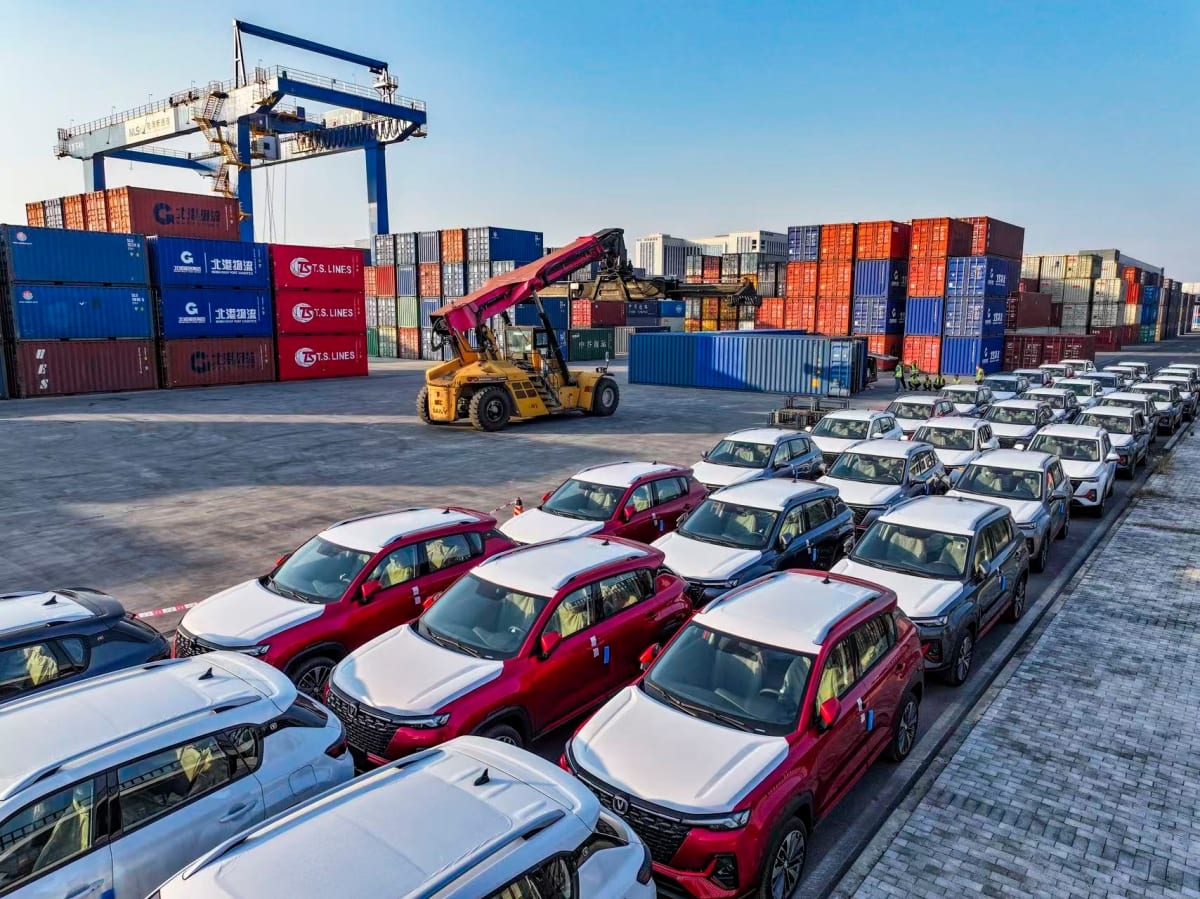
Standing on the damp, oil-scented gravel at the edge of Chongqing’s sprawling Tuanjiecun (Tuánjiécūn 团结村) logistics hub, I watched the morning fog rise from the surrounding valleys. The air in late January was bitingly cold, carrying a sharp, industrial mix of diesel exhaust, wet asphalt, and the distant, rhythmic clanging of heavy steel containers. Before me sat a massive train, painted in the deep, signature blue of the China-Europe Railway Express (Zhōng-Ōu Bānliè 中欧班列).
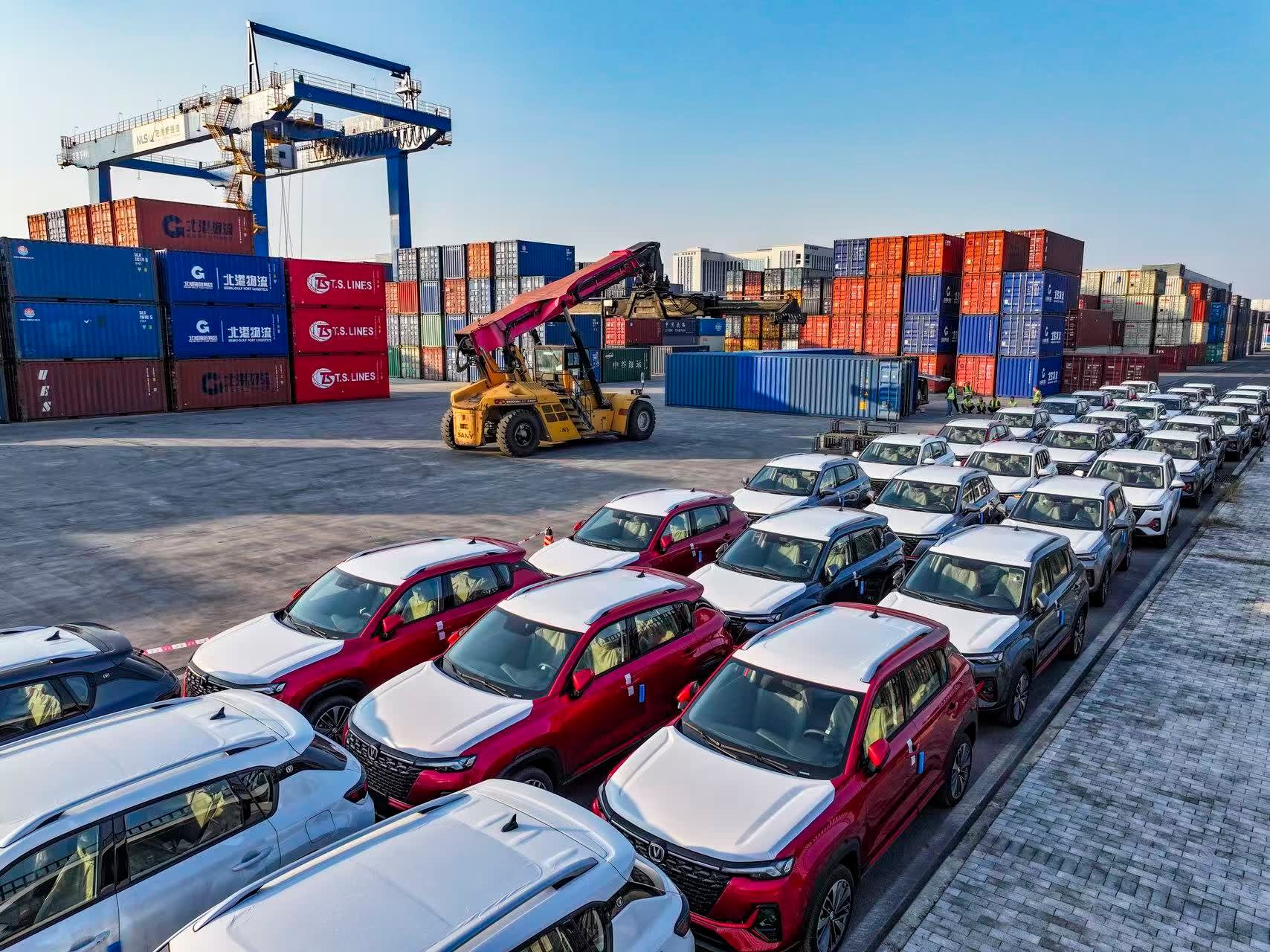
On January 26, 2026, I witnessed the departure of the fifth specialized automotive cargo train of the year from this terminal. Loaded to capacity with gleaming, domestically manufactured vehicles, its destination was Duisburg, Germany—the industrial heartland of Europe. This departure marked the successful completion of the initial phase of a landmark logistics project, sending a total of 900 Chinese-branded vehicles across the Eurasian continent via the New Silk Road.
Coming right alongside the chaotic travel season when the China Spring Festival travel rush was breaking massive national transport records, this seamless movement of industrial cargo proved that while the nation paused to celebrate the Lunar New Year (Chūnjié 春节), its global supply chain never slept.
The New Automotive Silk Road: Bridging Chongqing and Duisburg
This historic dispatch is not merely a single logistics success story; it represents a highly coordinated, long-term strategic partnership between China Logistics Huamao Rail Transport and Yuxinou (Chongqing) Supply Chain Management (Yú-Xīn-Ōu 渝新欧). The name Yuxinou itself is a geographical portmanteau: Yu (渝) is the classical abbreviation for Chongqing, Xin (新) refers to the Xinjiang Uyghur Autonomous Region where the train exits China, and Ou (欧) represents Europe.
I’ve spent years tracking the development of this trans-Eurasian railway corridor, and seeing it transition from carrying low-margin plastics to sophisticated high-tech machinery and automobiles is nothing short of incredible.
Westbound: Unleashing Chinese EV and ICE Giants
The primary cargo of this corridor consists of both electric vehicles (EVs) and traditional internal combustion engine (ICE) models. The partnership handles complete vehicles and Knock-Down (KD) kits for major Chinese automotive pioneers, most notably Changan (Cháng’ān 长安) and Geely (Jílì 吉利).
These brands have shifted their focus from merely supplying budget-friendly domestic models to competing directly with Europe’s heritage automakers on their home turf.
To see these cars loaded is a masterclass in industrial packaging. Whether you are protecting your own vehicle with a premium car detailing kit or preparing 900 pristine vehicles for a 10,000-kilometer overland crossing, safety and quality control are paramount. Inside each shipping container, vehicles are loaded onto specialized metal car racks, suspended at precise angles to maximize space while ensuring that no metal ever touches paint.
Eastbound: Balancing the Scales of Eurasian Trade
For years, critics argued that the China-Europe railway was a one-way street, with trains returning from Europe virtually empty. However, during my tour of the yards, logistics managers showed me import manifests that tell a different story.
The westbound automotive trains return packed with premium European goods and bulk industrial commodities. Returning trains regularly carry high-grade potash fertilizer, industrial asphalt, and carbon black—essential raw materials that feed Chongqing’s voracious industrial manufacturing plants.
Impressive Growth Metrics
The scale of this logistics corridor is best understood through its numbers. Despite global economic headwind and evolving trade dynamics, the intermodal rail network in Chongqing has demonstrated explosive growth.
Below is a detailed breakdown of the freight volume managed by this specific automotive logistics initiative, showcasing the massive jump in activity from late 2025 into early 2026:
| Timeframe | Westbound Exports (TEU) | Eastbound Imports (TEU) | Logistical Achievements & Milestones |
|---|---|---|---|
| 2025 Full Year | 4,746 TEU | 368 TEU | Established highly stable weekly departures; standardized multi-car container loading protocols. |
| January 2026 | 500+ TEU | 500+ TEU | Achieved near-perfect 1:1 import-export balance; completed the landmark 900-car Germany export project. |
| Total Project Value | 1,000+ TEU Combined in Jan 2026 Alone | Highest single-month trade volume recorded since project inception. | |
*TEU = Twenty-foot Equivalent Units, the standard industry measure for cargo capacity.
The Mechanics of Crossing Borders: Overcoming the Gauge Challenge
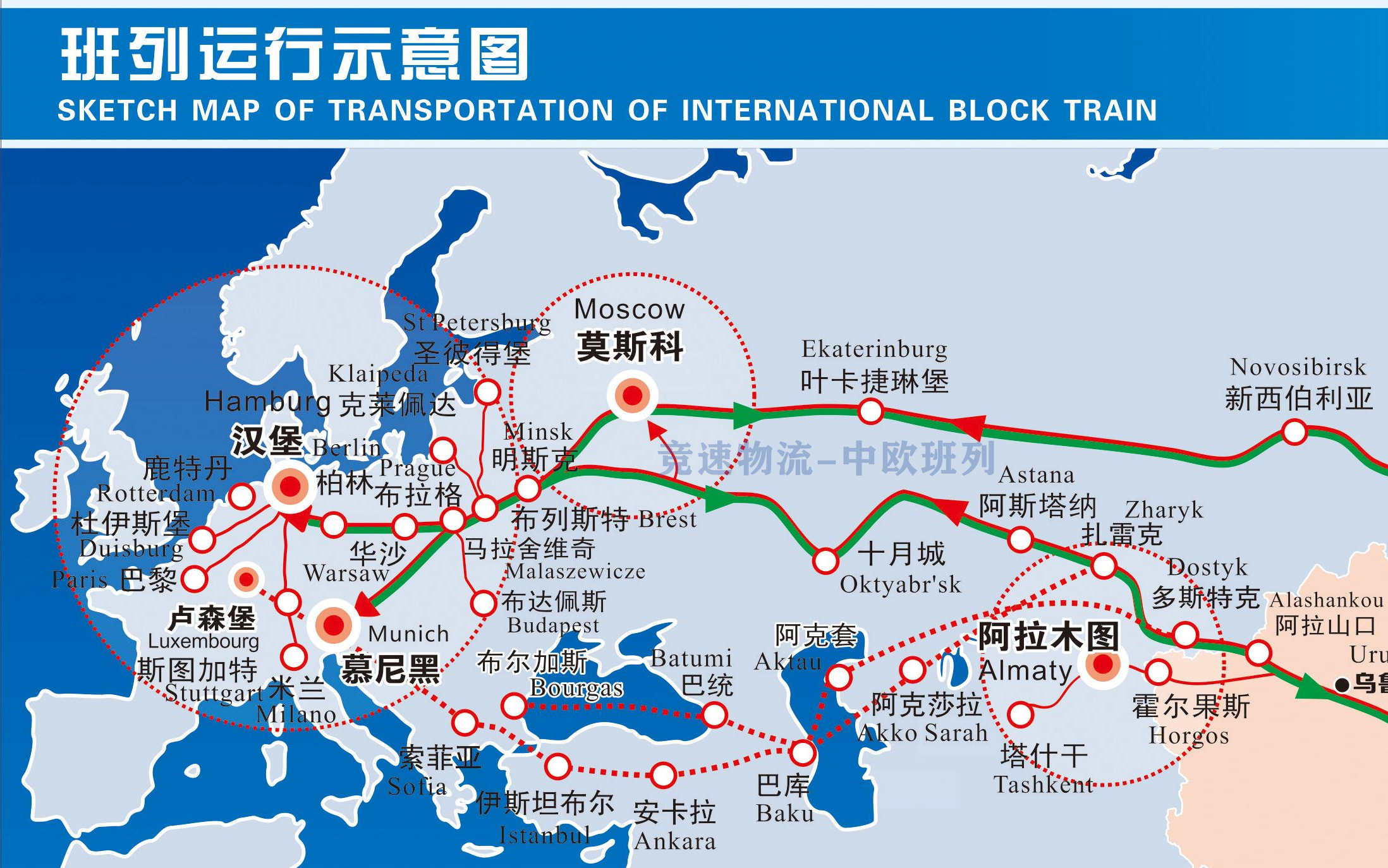
As I looked at the map tracing the route from Southwestern China to Germany, I realized that very few people appreciate the sheer engineering and logistical wizardry required to make this journey possible.
A train cannot simply roll from Chongqing to Duisburg on a single set of tracks. The journey spans roughly 11,000 kilometers and crosses multiple borders, presenting a major technical hurdle: railway gauge incompatibility.
China and most of Western Europe use the standard international track gauge of 1,435 mm. However, the countries of the former Soviet Union—including Kazakhstan, Russia, and Belarus—utilize a broader Russian gauge of 1,520 mm.
When the trains carrying our 900 vehicles reach the border crossing at Alashankou in Xinjiang, they must undergo transshipment. Massive, high-speed gantry cranes lift entire 40-foot containers off the Chinese standard-gauge railcars and lower them onto broad-gauge railcars in a highly choreographed dance.
The process is repeated in reverse some ten days later when the train crosses from Belarus into Poland at the Małaszewicze terminal. Despite these gauge changes, the entire journey takes just 12 to 15 days.
Why the Inland Rail Bridge Beats the Ocean
For global automotive companies, this overland route is no longer just an alternative; it has quickly become a necessity. I discussed the advantages of this rail corridor with a local logistics manager, and he broke down the three pillars of rail superiority:
1. Unmatched Speed
Shipping cars by sea from China’s coastal ports to Hamburg or Rotterdam takes anywhere from 35 to 45 days under normal circumstances. The railway slashes this transit time by more than half. For automakers, reducing transit time means cars arrive at European dealerships faster, freeing up immense amounts of working capital and improving cash flow.
2. Immunity to Geopolitical and Climate Bottlenecks
Maritime shipping is notoriously fragile. From Houthi rebel activity disrupting the Suez Canal in the Red Sea to severe droughts restricting daily transits through the Panama Canal, ocean freight has faced continuous hurdles.
The rail land-bridge operates entirely independently of marine geopolitics. It is an all-weather, land-locked system that keeps moving regardless of winter storms at sea or military conflicts in maritime choke points.
3. A Drastic Reduction in Carbon Footprint
As European consumers and regulators demand greener supply chains, rail transport has emerged as a clear winner. Rail cargo produces a fraction of the greenhouse gas emissions associated with air freight and significantly lower emissions per ton-kilometer than oceanic mega-freighters. It allows automotive brands to market their vehicles as having a “green transport” pedigree before they even turn their wheels on European roads.
Chongqing: The Cyberpunk Inland Port City
To truly understand how this logistics miracle happens, you have to understand Chongqing itself. Tucked deep within the rugged, mountainous interior of Southwestern China, Chongqing is far from the coastal manufacturing powerhouses of Shenzhen or Shanghai. Yet, this geographical isolation has forced the city to become one of the most innovative logistics hubs on earth.
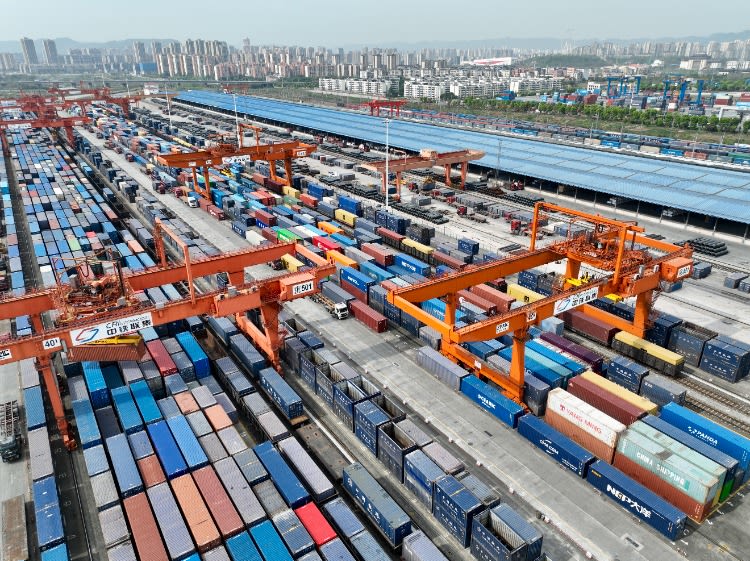
The city is a fascinating place of dramatic contrasts. It is a vertical megacity where monorails glide directly through high-rise apartment buildings and roads are stacked five stories high over the churning waters of the Yangtze and Jialing rivers.
This geographical audacity is why photographers flock here, capturing the neon-drenched layers of cyberpunk Chongqing’s vertical city architecture where modern highways wrap around ancient cliffs.
After a long morning observing the train loading operations at the terminal, I found comfort in a steaming bowl of Chongqing’s famous spicy hotpot (huǒguō 火锅). The fiery heat of the Sichuan peppercorn (huājiāo 花椒) and the thick, aromatic layer of beef tallow did more than just cut through the damp winter chill of the river city—it felt like a perfect metaphor for the city itself. Chongqing’s local culture is bold, intensely energetic, and stubborn.
It is this exact spirit that drove local planners in the early 2010s to look at their landlocked mountains and declare that they didn’t need a coastline to reach Europe. They would simply build an iron river across the desert.
Redefining Global Industrial Integration
The successful shipment of these 900 vehicles is a clear indicator that China’s Belt and Road Initiative (Yīdài Yīlù 一带一路) has matured beyond basic infrastructure development. It is now a highly sophisticated, end-to-end global trade network.
By integrating domestic road transport, inland rail hubs, and international railway corridors, Chongqing has effectively leveled the playing field, allowing inland manufacturers to compete on equal terms with coastal exporters.

As the final blue locomotive blew its horn—a deafening, metallic chime that echoed off the concrete retaining walls of the terminal—I watched it slowly pull out of Tuanjiecun.
Heading north toward the cold steppes of Mongolia and the long, snowy expanses of Siberia, it carried more than just steel, lithium batteries, and rubber tires. It carried Chongqing’s relentless ambition, rolling quietly but irresistibly toward the markets of Europe.
Disclaimer: As an Amazon Associate, ChinaCurator earns from qualifying purchases.