
When most people picture Chinese exports, they often envision the neon-lit hustle of Shenzhen’s electronics markets or the endless garment racks of Guangzhou. Yet, in the first quarter of 2026, I’ve been watching a quieter, more profound shift emerging from what we call the “Roof of the World.”
According to a recent report by CCTV News (央视新闻), Qinghai Province has achieved a stunning “Counter-trend Breakthrough” (逆势突围 - nìshì tūwéi). By harnessing its abundant “Cold Resources” (冷资源 - lěng zīyuán), this highland province has flipped the script, turning the challenges of high-altitude isolation into a booming, high-end global trade advantage.
The Rise of the Highland “Cold Economy”
Standing in Qinghai, the air is thin, crisp, and carries a biting purity that stays with you long after you leave. For generations, the province’s extreme climate was viewed primarily as a barrier to development. However, in 2026, global demand for organic, sustainably sourced, and pristine products has turned these environmental “hurdles” into a competitive edge.
The core of this success is the “Highland Characteristic Trade” (高原特色贸易 - gāoyuán tèsè màoyì). Rather than engaging in the race-to-the-bottom world of mass manufacturing, the province is focusing on niche, high-value markets that demand the ultra-clean conditions found only above 3,000 meters. This isn’t just about trade statistics; it is a fundamental shift in how we perceive remote, rugged geography.
1. The “Salmon” of the Yellow River: A Culinary Revolution
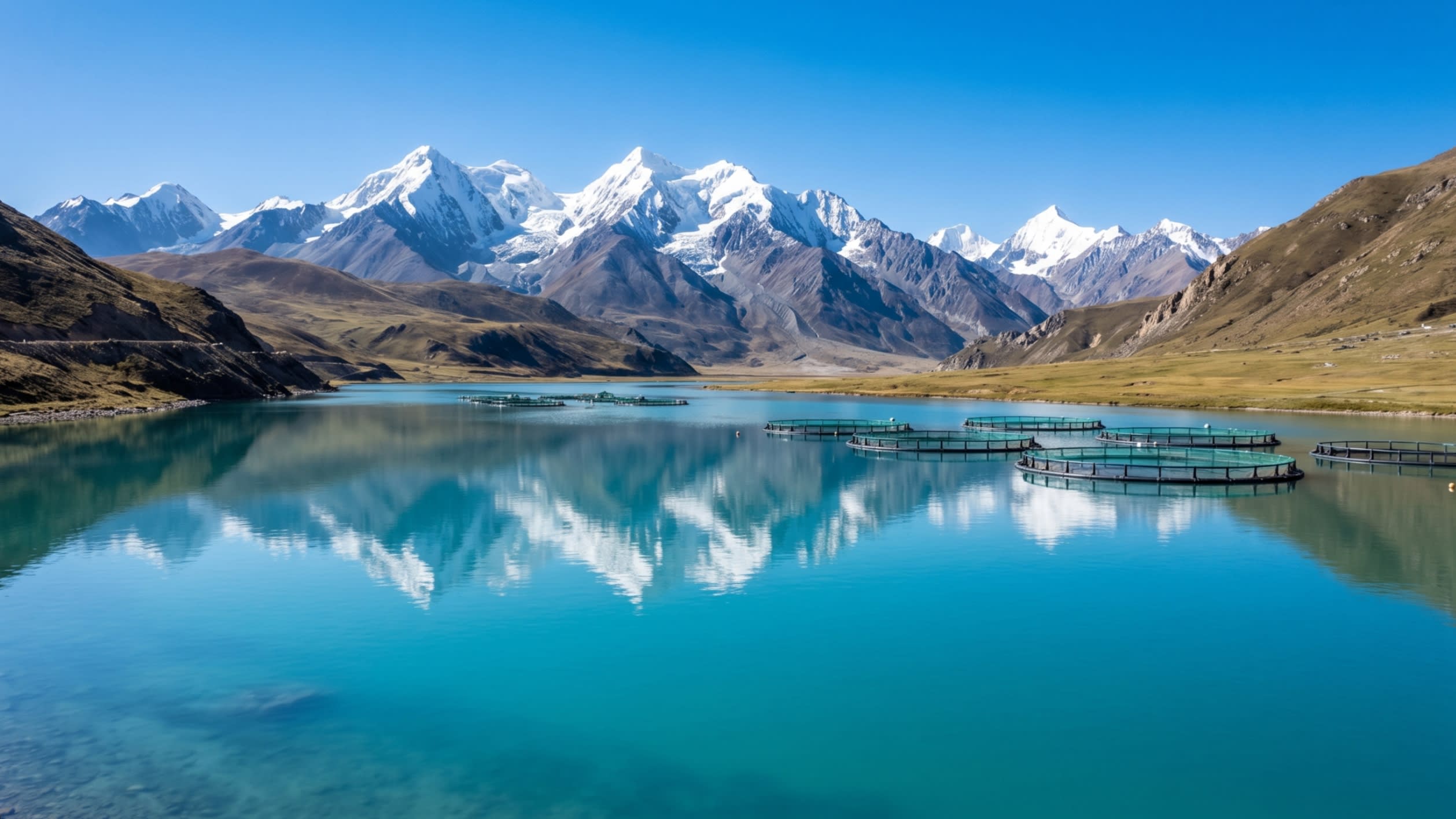
The most captivating story is undoubtedly the rise of high-altitude aquaculture. During my own travels through the region, I’ve seen how the headwaters of the Yellow River—fed by glacial melt—create water so clear it looks like liquid glass. This environment, kept at a constant, biting cold, is a paradise for cold-water species like Rainbow Trout (虹鳟鱼 - hóngzūn yú).
Why This Matters for Global Palates
In Q1 2026, exports of these cold-water fish soared, making their way onto menus in Tokyo and even as far as European capitals.
- Purity: Because the water is sourced from high-altitude glaciers, the fish are remarkably free from the common parasites often found in lowland aquaculture.
- Efficiency: Local producers have implemented “Intelligent Cages” (智能化网箱 - zhìnénghuà wǎngxiāng). These systems monitor water quality and oxygen levels in real-time. When I watched the harvesting process, the “silk-smooth” (丝滑 - sīhuá) logistics chain stood out to me; these fish are processed and moved with such speed that the freshness is locked in, meeting even the most demanding international food safety standards.

If you’re inspired to bring this restaurant-quality freshness home, remember that the secret to a perfect fish dish often lies in the gear. For example, if you are preparing a Chinese Steamed Whole Fish, using a high-quality steamer basket can make a world of difference in texture and presentation.
2. Organic “Superfoods”: From the Chaidamu Basin to Your Kitchen
Beyond the water, Qinghai’s unique climate—blessed with intense solar radiation and massive temperature swings between day and night—creates ideal conditions for specific superfoods. The land here, once thought to be barren, is now providing high-density nutrients that are becoming staples in the global health market.
| Product Name | Chinese Term | Why it's Special |
|---|---|---|
| Organic Wolfberries | 有机枸杞 (yǒujī gǒuqǐ) | High nutrient density due to high UV exposure. |
| High-Altitude Quinoa | 高海拔藜麦 (gāo háibá límài) | Grown without synthetic pesticides at 3,000m+. |
These products aren’t just commodities; they represent a significant “Quality Upgrade” (质量升级 - zhìliàng shēngjí) for China’s agricultural sector. When shopping for these, look for packages that emphasize high-altitude cultivation, as the environmental stress the plants undergo actually increases their antioxidant content.
3. Rail Links: The “Iron Silk Road”
Logistics is usually the “silent killer” of remote trade, but the expansion of the China-Europe Freight Train (中欧班列) network has changed everything. By connecting Qinghai directly to Central Asia and Europe, the province has bypassed the long, uncertain transit times of sea shipping.
For a fan of cooking, this is a game-changer. When I use fresh ingredients, I want to know they are handled correctly. With these new cold-chain logistics, a premium trout from Qinghai can reach a restaurant kitchen in Moscow while remaining as fresh as if it were caught that morning. It’s a logistical ballet that involves precise temperature control and lightning-fast transfer stations.
4. The New Wave of Reverse Tourism
As Qinghai’s reputation grows, I’ve noticed a spike in “Reverse Tourism” (反向旅游 - fǎnxiàng lǚyóu). Travelers exhausted by the relentless crowds at the Great Wall or the Bund are instead flocking to the northwest. It’s a pursuit of the untouched.
For those looking to escape the “Golden Triangle,” Qinghai offers a profound sense of “Security” (安全感 - Ānquángǎn) and quietude. It is the perfect antidote to the high-pressure lifestyle of the megacities. You can read more about this trend in our guide on Escaping the Crowds in China’s Underrated Cities.

The landscapes here are rugged and vast. If you do plan to trek out to these high-altitude spots, please ensure you have the proper travel camera gear and plenty of layers, as the wind off the glaciers can cut through anything lighter than a technical windbreaker.
5. What This Means for You
Whether you are a global business observer or someone who simply enjoys the finer things in life, Qinghai’s breakthrough signals a broader, more sophisticated direction for China’s economy. It is no longer just about mass production; it is about the “Yan Huo Qi” (烟火气)—the lived, soulful experience of the land—and the intelligent stewardship of our environment.
How to Engage with This Trend:
- Source Your Ingredients: Look for labels originating from Qinghai or the Chaidamu Basin when buying superfoods. If you are preparing a dish like Authentic Jiaozi, the quality of the filling ingredients makes all the difference.
- Plan Your Journey: If you’re considering a visit, aim for the shoulder seasons. April and May provide the most incredible views before the summer crowds descend. Our 2026 Travel Guide breaks down the best times to go.
- Stay Informed: Follow local agricultural developments. You might be surprised at what other “cold” treasures emerge from this region in the coming years.
Final Thoughts from the Curator
The story of Qinghai’s trade in 2026 is a reminder that value can be found in the most unlikely places. By transforming its “cold” environment into a “hot” global commodity, Qinghai has proven that even the most remote regions can define the future of high-end, sustainable trade.
As the Chinese proverb goes, “The fragrance of plum blossoms comes from the bitter cold” (梅花香自苦寒来 - méihuā xiāng zì kǔhán lái). It’s a beautiful sentiment, and one that is now literally manifesting on dinner tables around the world. As we look toward the future of global supply chains, perhaps we should look less at the neon centers of commerce and more at the quiet, high-altitude plateaus where nature still dictates the terms of quality.
Data Source: CCTV News (April 14, 2026) & Qinghai Provincial Department of Commerce Q1 Report.
Disclaimer: As an Amazon Associate, ChinaCurator earns from qualifying purchases.