

We have all been there: the sudden, itching desire to escape the daily grind, followed immediately by the crushing reality of travel logistics. You open twenty browser tabs, compare hotel prices, obsess over flight connections, and by the time you reach the “book” button, you are too exhausted to even enjoy the idea of the trip. In 2026, the tech industry promises that this specific brand of modern anxiety is being deleted.
“I genuinely despise the legwork of planning,” says Feige, a travel vlogger whose content I’ve been following for years. “I just vented my frustrations to my new AI assistant, and in sixty seconds, it handed me a polished, color-coded, and perfectly logical itinerary.” This is the rise of the “AI Travel Buddy” (旅行搭子 - lǚxíng dāzi). From automating complex bookings to acting as a 24/7 digital companion, AI is aggressively inserting itself into every mile of our journeys. But as the hype cycle spins faster, we must ask the uncomfortable question: are we actually gaining a travel genius, or are we just following a digital hallucination into a glorified, high-tech tourist trap?
1. The 60-Second Itinerary: Efficiency or Illusion?
The primary allure of AI in 2026 is its raw, unbridled speed. What once demanded a weekend of “comparing three shops” (货比三家 - huò bǐ sān jiā) and cross-referencing user reviews now happens at lightning pace.
Moving Beyond “Special Forces” Travel
The era of the “Special Forces Style Travel” (特种兵式旅游 - tèzhǒngbīng shì lǚyóu)—that grueling, hyper-caffeinated race to tick off ten landmarks in a single day—is finally losing its appeal. Modern travelers are shifting toward depth, not volume. We want nuance.
- Precision Planning: I’ve seen friends use apps like “Yuanzhou Luji” (圆周旅迹) to build hyper-specific itineraries. One user recently planned a trip for an elderly relative with dietary restrictions and a young sibling who is a picky eater, and the AI handled the constraints with surprising grace.
- Finding the Niche: When venturing deep into rural areas, conventional search engines are often useless. One user told me that the AI “Doubao” (豆包) helped them navigate a business trip (出差 - chūchāi) to a remote mountain village by identifying a reliable local motorcycle taxi service—a hidden detail that no mainstream travel blog had ever documented.
The Statistical Shift
The data from the recent holiday season is staggering. During the 2026 Spring Festival, transaction volumes through AI assistants surged by over 800%, and bookings for scenic spots via these digital agents increased by 24 times compared to the previous year.
2. Reality Check: Why You Shouldn’t Fire Your Human Agent Just Yet
Despite the “silky smooth” (丝滑 - sīhuá) marketing pitches, the current AI infrastructure still suffers from “ghosts in the machine” that can turn a dream vacation into a logistical nightmare.
The Information Lag
AI models are trained on what has happened, not what is happening right this second. Yu Haiyan, a veteran consultant in the travel industry, puts it bluntly: “AI is a mirror of the past. It captures the ‘vibe’ of a location, but it lacks the pulse of the present.”
- Dynamic Reality: A human agent can call a restaurant to see if they are closed for a private event or monitor a flight’s real-time delay status. An AI might rely on a cached version of a webpage from six months ago, sending you to a closed door or an empty departure gate.
- Accuracy Errors: I’ve seen models hallucinate train routes that look entirely plausible on a map but simply do not exist in reality. If a specific route hasn’t been heavily documented online, the AI often just “fills in the blanks” with dangerous confidence.
The Price Premium
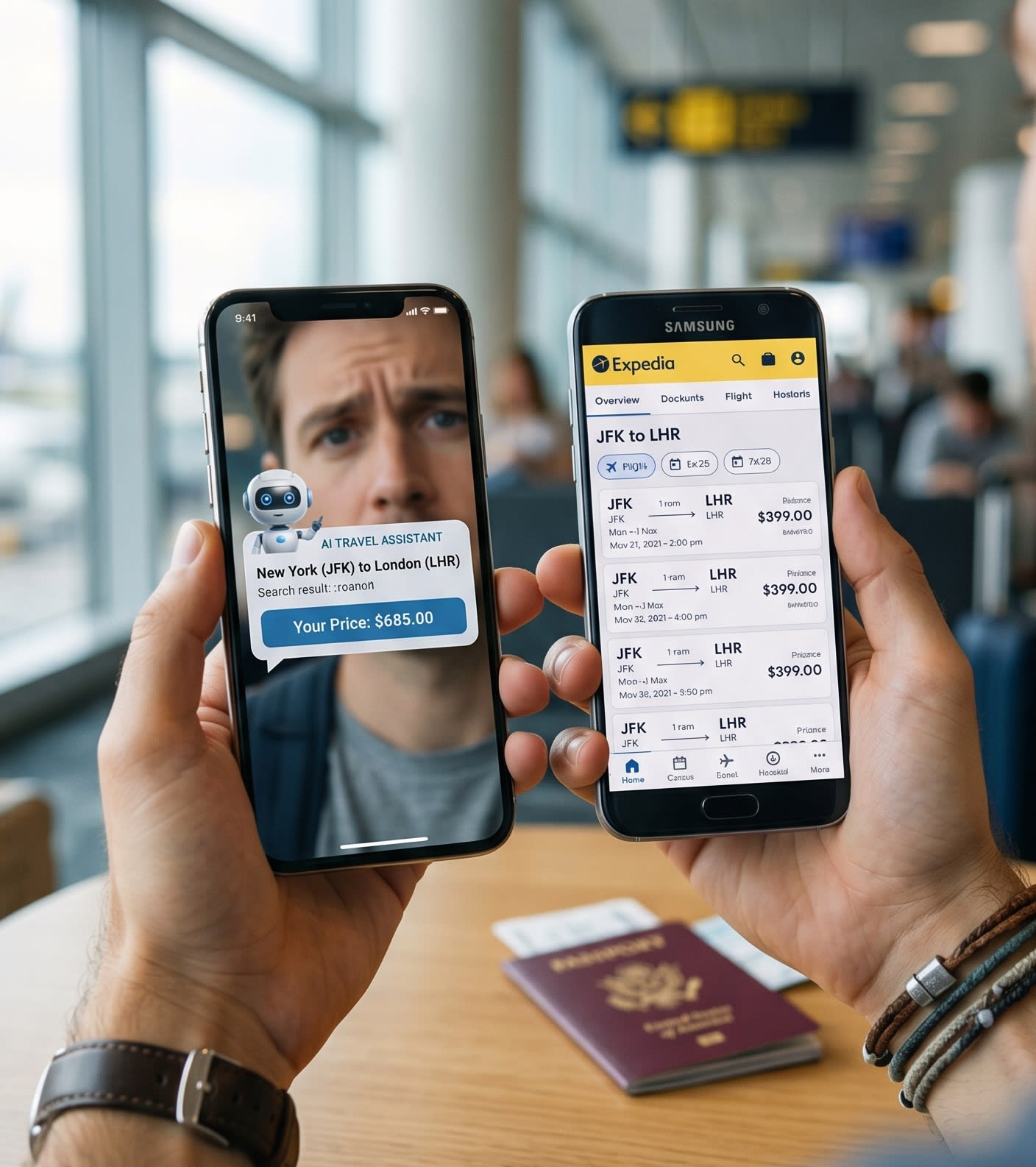
If you are trying to travel on a budget, relying solely on AI might result in a “convenience tax.” In a recent, unscientific test, I compared an AI-recommended flight from Shenzhen to Kunming against a manual search. The AI route was about 10 RMB more expensive. It seems that “frictionless” planning often funnels you into premium-priced partner channels.
3. The Algorithm Trap: Is Your “Buddy” Actually a Salesman?
This is the shadiest corner of the AI travel revolution. Many users interact with their AI as if it were a neutral, unbiased friend, failing to realize that “buddies” have business quotas.
Professor Yin Jie of Huaqiao University has noted that AI bias can be far more subtle and deceptive than a standard pop-up advertisement.
- Stealth Marketing: Platforms often tweak their weighting algorithms to prioritize “Paying Partners” or merchants that offer higher commissions.
- The Conversational Lure: Because the advice feels like a natural dialogue, our psychological defenses are down. You feel like you’re receiving a personalized suggestion from a peer, when in reality, you are being steered toward a specific link in a corporate supply chain.
4. The 10-Trillion Yuan Frontier: The Future of “AI + Travel”
Despite the bugs, the industry is funneling astronomical sums into the “AI + Travel” ecosystem. By the end of the “15th Five-Year Plan,” the scale of this industry is projected to hit 10 trillion yuan.
A Vertical Intelligence Boom
Major players are shifting from general-purpose bots to highly specialized vertical models:
- Ctrip (携程): Their “Ctrip Wenda” (携程问道) model is designed specifically to parse massive travel databases for nuance.
- DeepSeek Integration: Platforms like Tongcheng and Tuniu are folding the powerful DeepSeek model into their backends to provide better natural language understanding.
- Regional Specialization: Apps like “AI You Guizhou” (AI游贵州) are integrating data from nine different cities to provide a one-stop-shop for transport and dining.
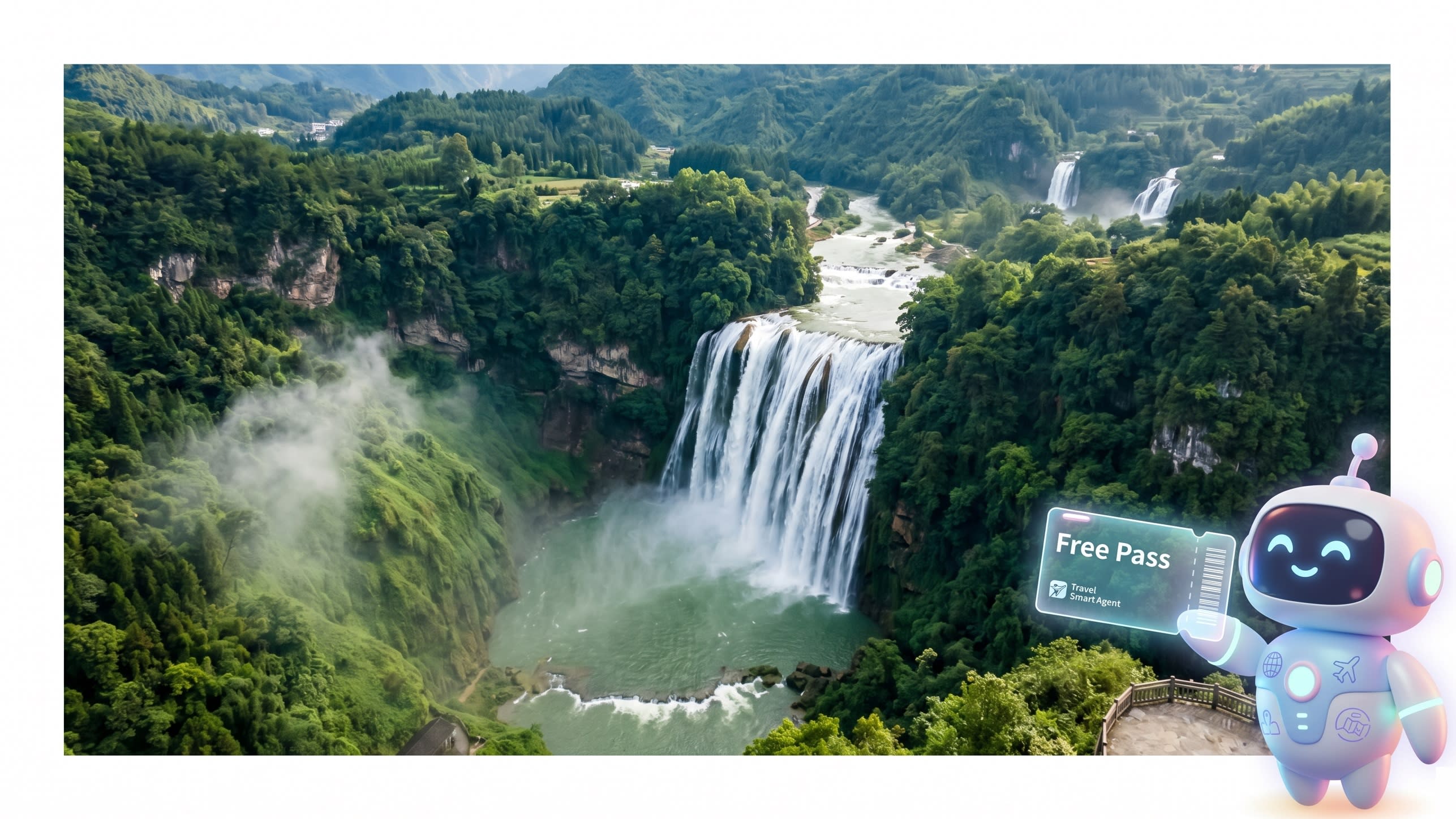
Even historical sites are integrating AI. The Huangguoshu Waterfall, for instance, now employs an AI assistant named “An’an Shunshun” to help tourists navigate ticket queues and local weather patterns in real-time.
Comparison of Popular AI Travel Assistants
| AI Assistant | Best For | Key Strength |
|---|---|---|
| Ctrip Wenda | Flight & Hotel Booking | Data accuracy & reliability |
| Doubao | Local & Niche Recommendations | Conversational fluidity |
| AI You Guizhou | Regional Tourism | Real-time park info |
5. Survival Tips: How to Be a “Smart Human” in the Loop
If you intend to use AI for your 2026 travels, you must approach it with a healthy dose of skepticism. You are the architect; the AI is merely the drafting pen.
- Treat AI as a “Draft”: Let the AI build your skeleton itinerary, but always perform a “Reality Check” (核实 - héshí). Use a mapping app to check distances and official tourism websites to confirm opening hours.
- Verify the Price: If an AI suggests a booking, take that information and run a manual search on the primary booking platform. You might find a better deal by cutting out the middleman.
- Prompt for Objectivity: Instead of asking, “Where should I stay in Dali?”, ask, “Give me three distinct accommodation options at different price points, and list one major drawback for each.” Forcing the AI to be critical usually exposes its hidden biases.
Final Thoughts from Yǔhán
AI is a genuine game-changer, but it is not a psychic. In 2026, the most memorable travel experiences—the ones that stick with you—are still built at the intersection of high-tech efficiency and human intuition. The AI can point you to the village, but it cannot know if your soul needs the peace of that particular mountain path.
As the industry pushes toward that 10-trillion mark, we will see these tools grow more honest and more integrated. But for now? Use the AI to save your time, but keep your eyes on the map.
If you are just getting started with your digital travel setup, make sure to read my guide on Staying Connected in China: eSIM vs. Physical SIM to avoid unnecessary roaming headaches. And if you are still learning the ropes of local navigation, brush up on these essential apps for China travel to keep your journey moving smoothly.
Data Source: CCTV News & Worker’s Daily (April 12, 2026).