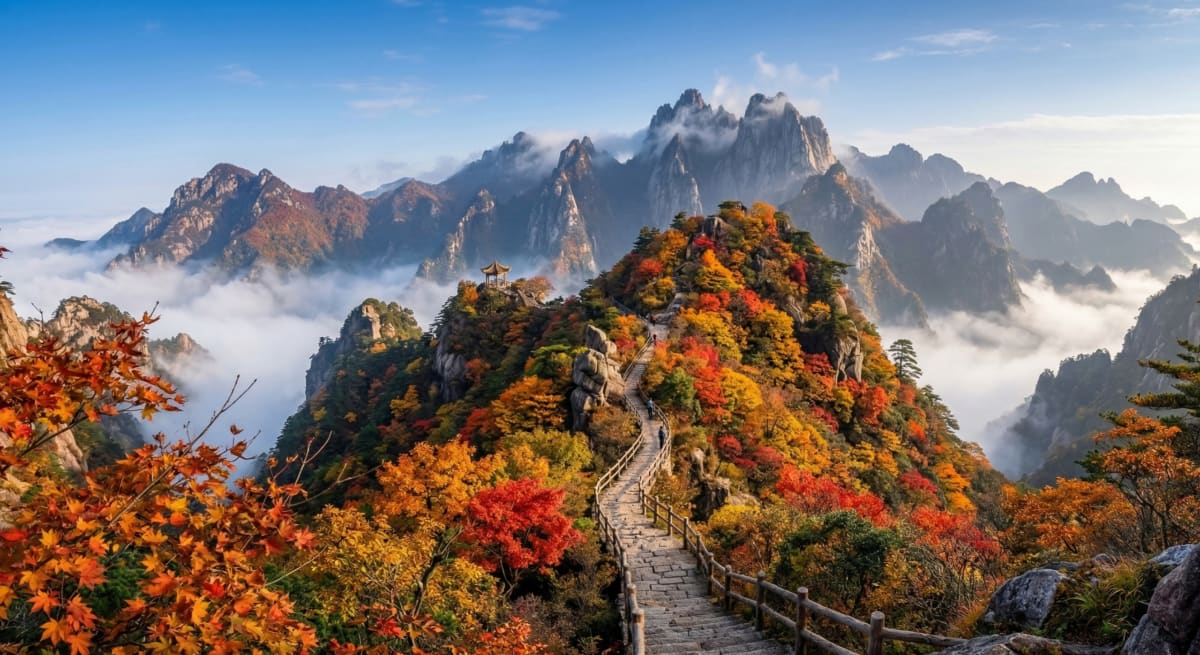
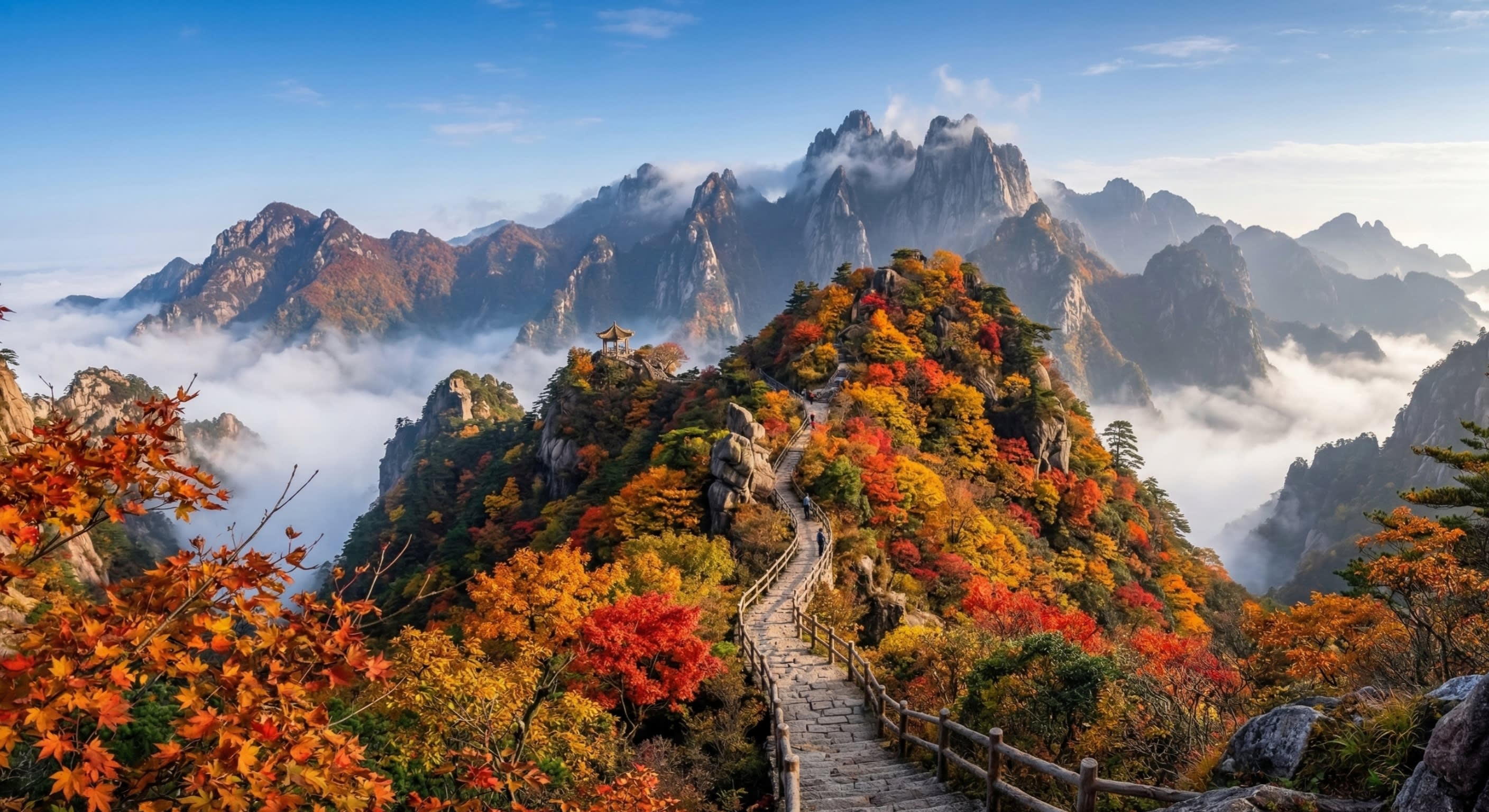
In the traditional Chinese calendar, there is a day when the entire nation looks upward. As the sweltering heat of summer finally retreats, yielding to the sharp, bracing air of autumn, millions of us—myself included—set out to conquer the nearest mountain peaks. This is the Chóngyáng Jié (重阳节), or the Double Ninth Festival.
While the Spring Festival is a chaotic, joyous explosion of new beginnings and the Mid-Autumn Festival is a quiet, reflective gathering for the family, the Double Ninth is something different entirely. It is a day defined by high altitudes, the scent of crushed herbs, the bite of golden wine, and, most importantly, a profound cultural promise to cherish the wisdom of those who have walked the path before us.
🗡️ 1. The Warrior and the Plague: A Legend of Protection
The origins of the Double Ninth are woven from the threads of ancient folklore. I remember being told this story as a child: during the Eastern Han Dynasty, a plague monster reportedly haunted the Nu River, bringing sickness to villages whenever it reared its head.
A young man named Héng Jǐng (恒景), having lost his own parents to this calamity, was determined to end the suffering. He sought out an immortal living in the mountains, who trained him in the arts of the elements and gifted him a blade.
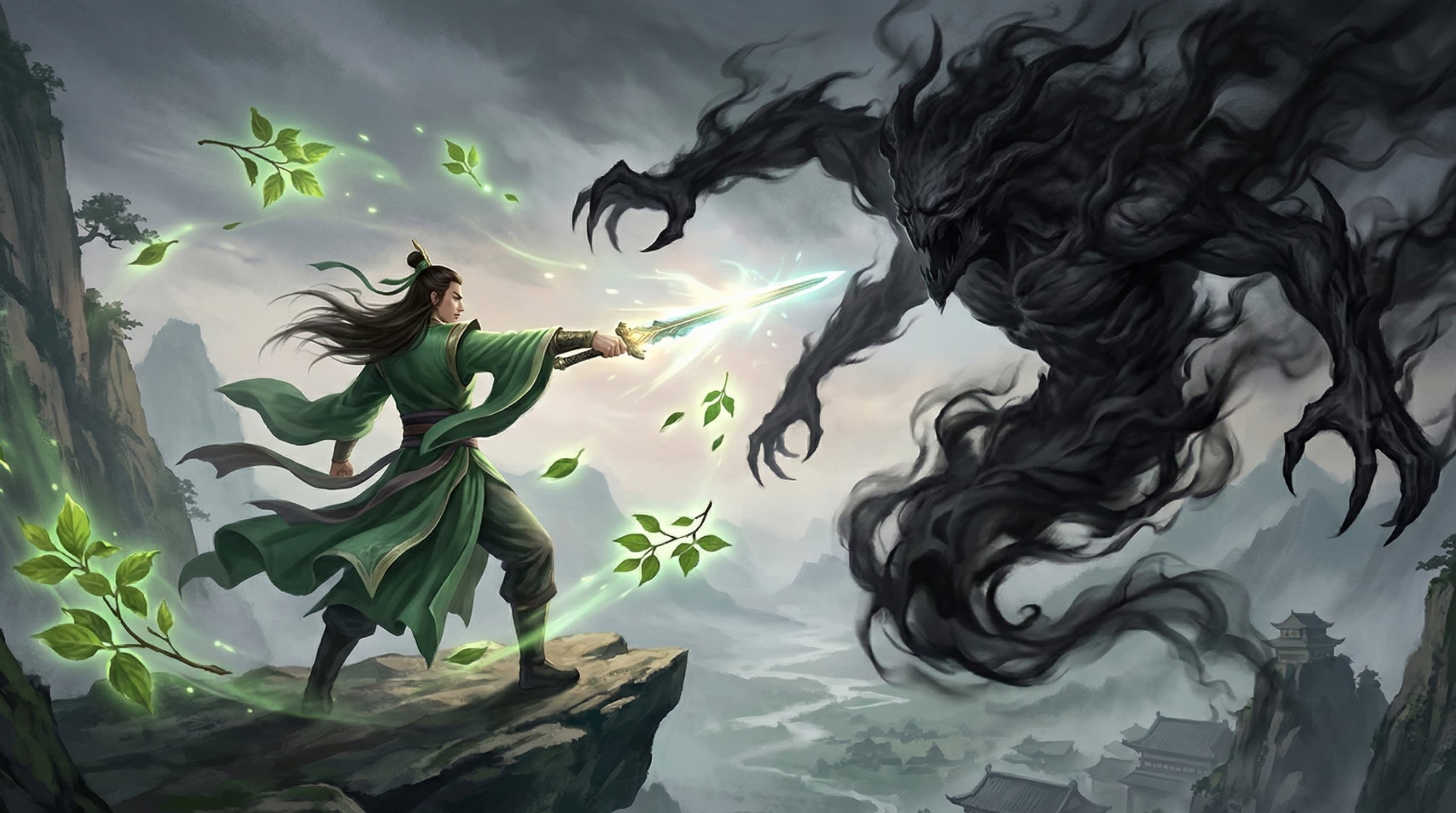
On the ninth day of the ninth lunar month, the monster was expected to strike. The immortal instructed Heng Jing to lead his village to the highest peak, arming them with the pungent, medicinal leaves of Zhùyú (茱萸—cornelian cherry or dogwood) and a supply of chrysanthemum wine. When the beast emerged, the overwhelming, spicy scent of the dogwood and the potent, herbal infusion of the wine left it disoriented. Heng Jing struck, and the village was saved. This is why, to this day, the act of climbing and the ritual use of herbs are inextricably linked to warding off misfortune.
🔢 2. The Power of Nine: Why “Double Ninth”?
To truly understand Chóngyáng (重阳), we have to delve into the ancient I Ching (Book of Changes). In this system, numbers are classified as either Yin (cold, feminine, even) or Yang (hot, masculine, odd).
The number nine is the ultimate Yang—the peak of fire, energy, and intensity. Having two nines on the ninth day of the ninth month creates a “Double Yang” energy. While powerful, the ancients believed such extreme energy required balancing. Climbing to high, cooler altitudes, drinking bitter chrysanthemum wine, and wearing protective plants were all intentional acts to ground that intense, soaring energy.
Interestingly, the word for “nine” in Chinese, Jiǔ (九), is a homophone for “long-lasting” or “longevity” (Jiǔ 久). This linguistic overlap transformed a festival of defense into one of celebration, specifically for the endurance of life. We often wish for Chángcháng jiǔjiǔ (长长久久), a life that is steady, stable, and deeply rooted, much like the mountains we climb.
🏔️ 3. Dēnggāo (登高): My Personal Pilgrimage to the Heights
The heart of the festival is Dēnggāo (登高), or “climbing high.” Living in China, I have found that you cannot truly understand this holiday until you find yourself on a trail, surrounded by the rustle of autumn leaves and the chatter of multi-generational families.
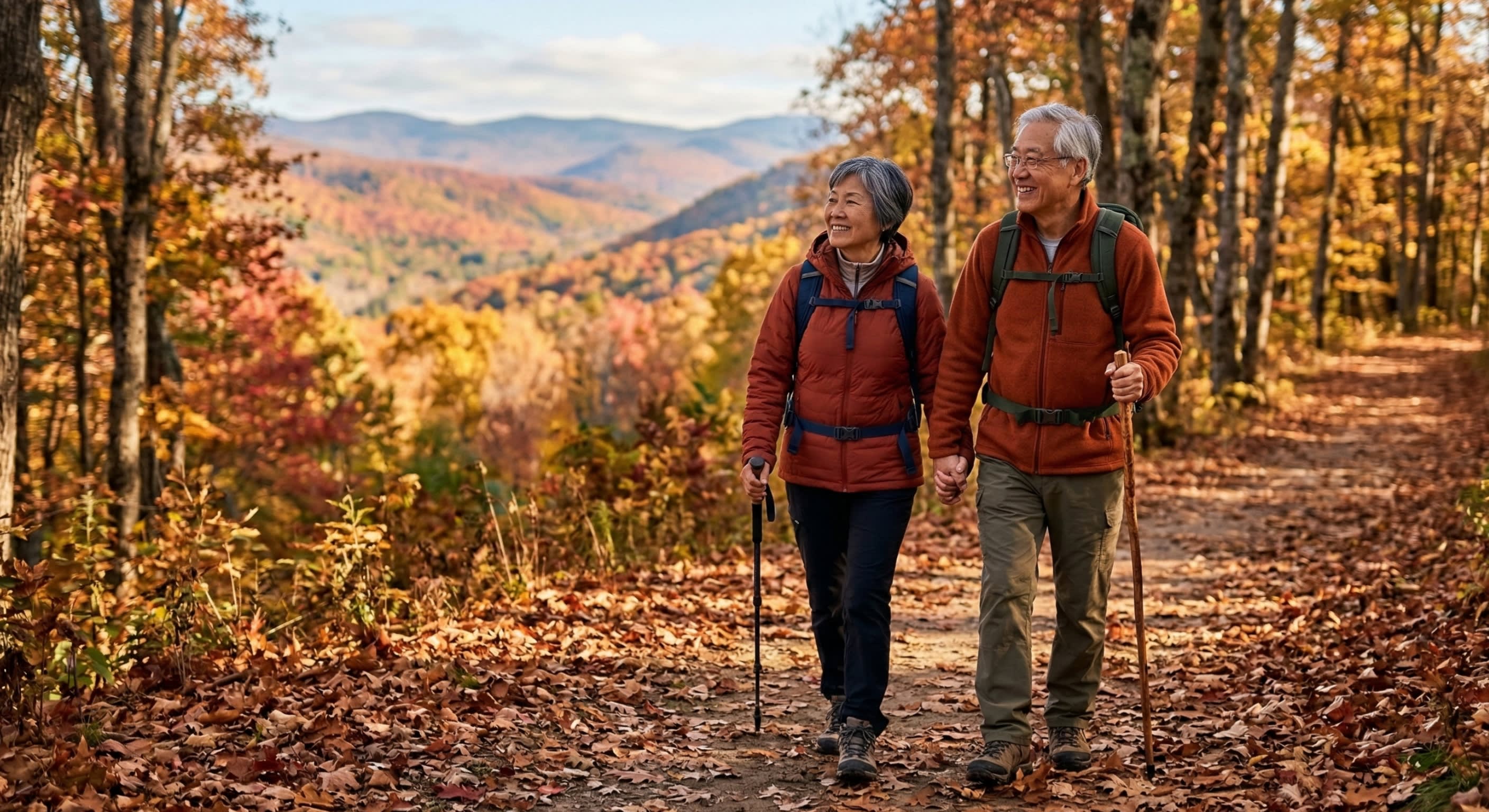
Why the climb matters:
- The “Clear Sky” Air: There is a distinct crispness to autumn in China. We call it Tiāngāo qìshuǎng (天高气爽)—the sky is high and the air is refreshing. By physically ascending, we distance ourselves from the lowlands and feel closer to the heavens.
- Symbolism of Growth: Many of my friends use this day to pray for Bùbù gāoshēng (步步高升), a blessing for rising step-by-step in one’s career or personal development.
- Zen Reflection: Autumn scenery in the mountains is unparalleled. Looking down from a peak, watching the maples turn from green to fiery, heart-stopping red, provides a moment of perspective that is harder to find in the concrete rush of the city. For a deeper look at finding peace in nature, I often suggest exploring the meditative rhythms of Nature’s Rhythm: A Simple Guide to the 24 Solar Terms.
🎂 4. Cakes and Wine: The Flavors of the Season
No festival is complete without specific foods. For the Double Ninth, the menu is designed to nourish the body against the cooling temperatures.
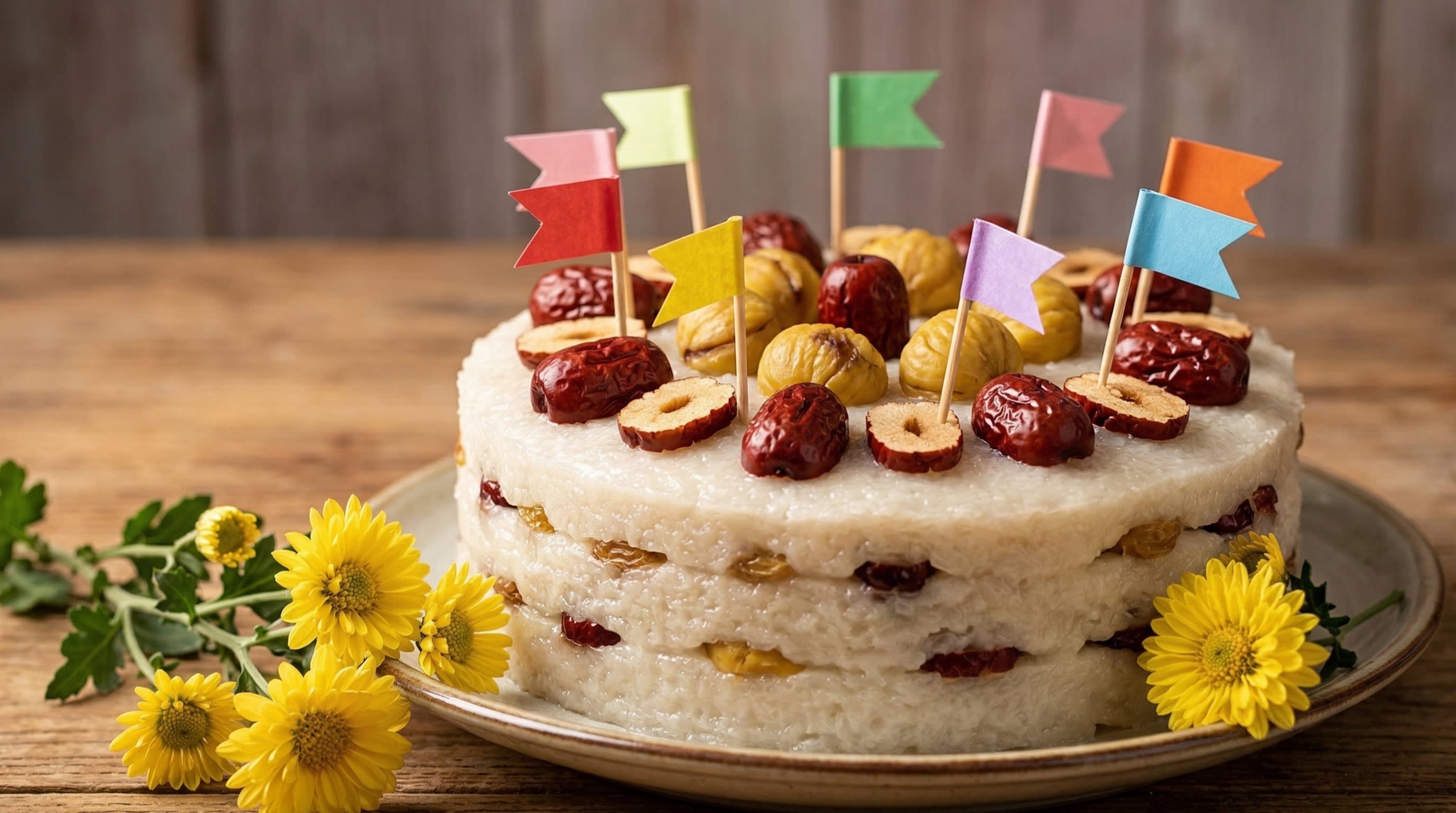
Chongyang Cake (重阳糕)
Since “climbing a mountain” (denggao) shares a pronunciation with the word for “cake” (gao), eating Chóngyáng gāo (重阳糕) has become the perfect substitute for those who cannot hike. It is a multi-layered steamed sponge, typically enriched with organic red dates and fragrant chestnuts.
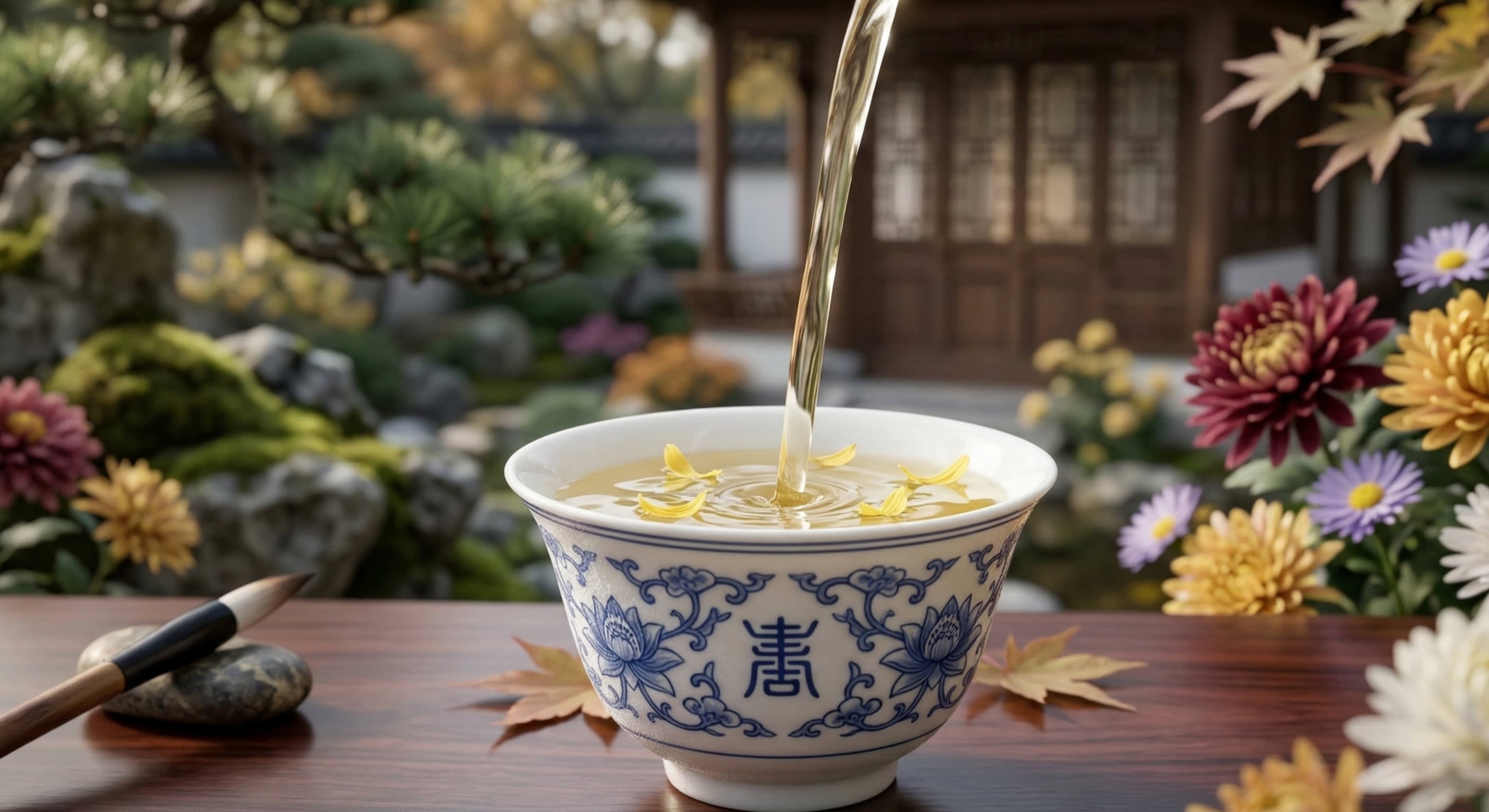
Chrysanthemum Wine (菊花酒)
Chrysanthemums are the only flowers that thrive in the frost, symbolizing the resilience of the elderly. Drinking Júhuā jiǔ (菊花酒)—a wine infused with these blossoms—is said to aid the eyes and soothe the joints. I find the taste slightly bitter but remarkably floral, a distinct reminder of the season’s transition.
👵 5. Modern Soul: Senior Citizens’ Day
In 1989, the Double Ninth was officially designated as Jìnglǎo Jié (敬老节), or Senior Citizens’ Day. It perfectly bridges the gap between ancient folklore and modern social ethics, emphasizing Jìnglǎo zūnxian (敬老尊贤)—respecting the elderly and honoring their wisdom.
In cities like Shanghai or Beijing, I often see students visiting local community centers or nursing homes. It is a time when the hurried pace of modern life stops to acknowledge that our own strength is merely a legacy of those who walked before us. If you’re interested in how traditions are maintained, you might find my guide to Chinese Stress Relief: The Meditative Art of Bead Rubbing (Panwan) a fascinating look at another way we honor our elders’ pastimes.
💬 6. Essential Double Ninth Vocabulary
If you find yourself in a mountain park this October, these terms will help you connect with the locals:
| The Term | Characters & Pinyin | Meaning & Context |
|---|---|---|
| Climbing High | 登高 Dēnggāo |
The primary activity. "Let's go denggao this weekend!" |
| Respecting the Elderly | 敬老 Jìnglǎo |
The moral theme of the festival. |
| Longevity | 长长久久 Chángcháng jiǔjiǔ |
A blessing for a long, enduring life. |
| Double Ninth Cake | 重阳糕 Chóngyáng gāo |
The traditional steamed seasonal snack. |
Final Reflections
The Double Ninth Festival remains my favorite cultural paradox. We look toward the highest peaks, yet our hearts are turned inward toward our elders. It teaches us that “height” is not merely about altitude; it is about the depth of the legacy we carry. Whether you are scaling a mountain or simply sharing a quiet moment with your grandparents, I encourage you to breathe in the crisp autumn air and celebrate the resilience that binds us together.
㊗️ Wishing you a healthy, high-reaching, and long-lasting Double Ninth Festival!
Inspired to conquer the peaks? Read our travel guide on the Best Mountains to Climb During the Double Ninth Festival or learn more about the seasonal wisdom of the 24 Solar Terms.
Disclaimer: As an Amazon Associate, ChinaCurator earns from qualifying purchases.