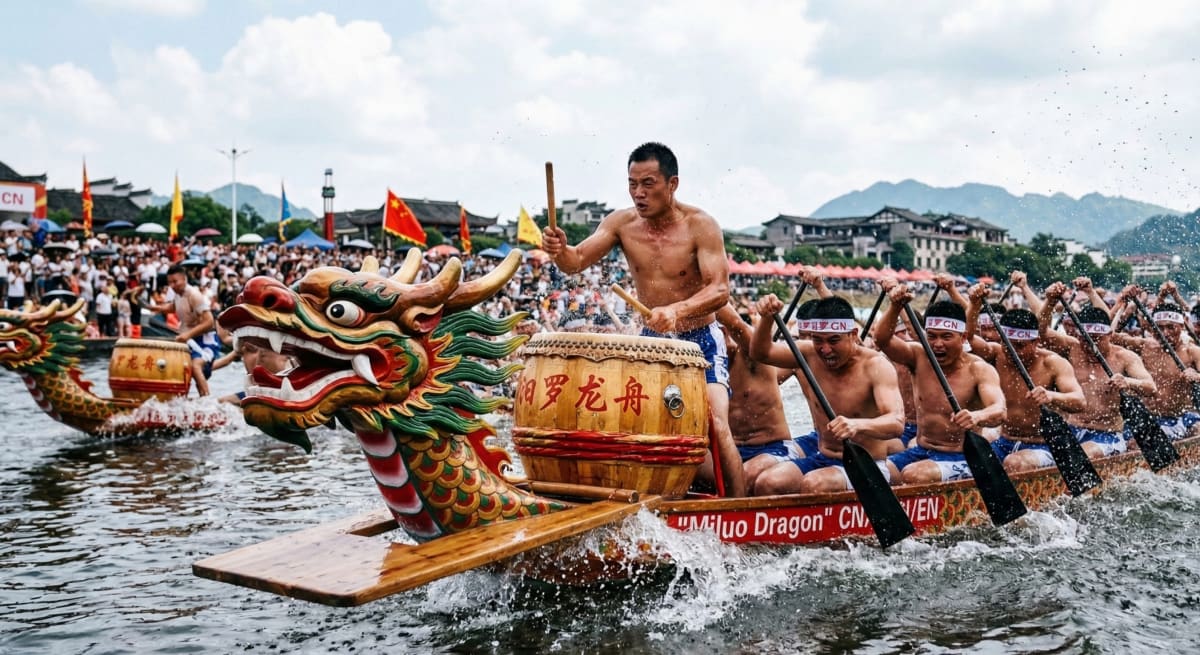
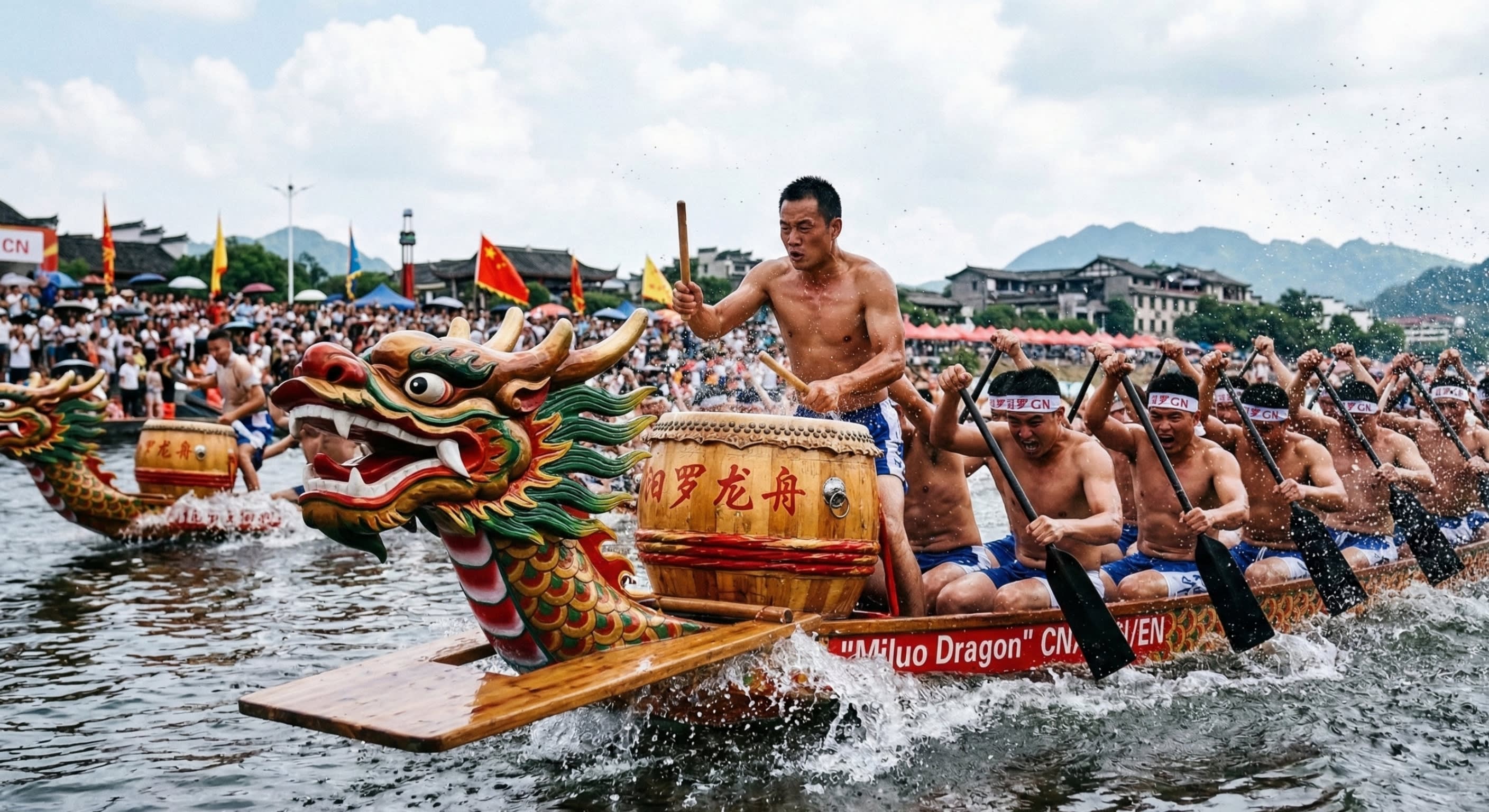
If you stand on the banks of any major river in southern China in the early days of June, you will feel the energy in your chest before you even see the boats. The relentless, primal thumping of massive wooden drums acts as a heartbeat, while the synchronized, guttural shouts of thirty muscular paddlers cutting through the water create a wall of sound that vibrates through the humid summer air.
This is the Duānwǔ Jié (端午节)—the Dragon Boat Festival. To an outsider, it looks like an incredible, adrenaline-fueled extreme sport. But as I’ve learned from my years of observing these traditions, it is a living, breathing memorial. It is a 2,000-year-old story of unyielding loyalty, a tragic suicide, a desperate rescue mission, and the brilliant ancient wisdom of surviving the most dangerous month of the year.
🐉 1. The Tragic Hero: The Ballad of Qu Yuan
To decode this festival, I find we must travel back to the Warring States period (around 278 BC), a time of endless, bone-weary military conflict between seven ancient kingdoms. The hero of our story is Qū Yuán (屈原), a brilliant poet and a high-ranking minister in the State of Chu.
Qu Yuan was fiercely patriotic. He famously urged his king to form alliances to resist the aggressive State of Qin. However, in a tale that feels as relevant today as it was then, corrupt rival politicians slandered him. The king, blinded by their deceit, banished his most loyal servant, exiling him to the remote, misty wilderness.
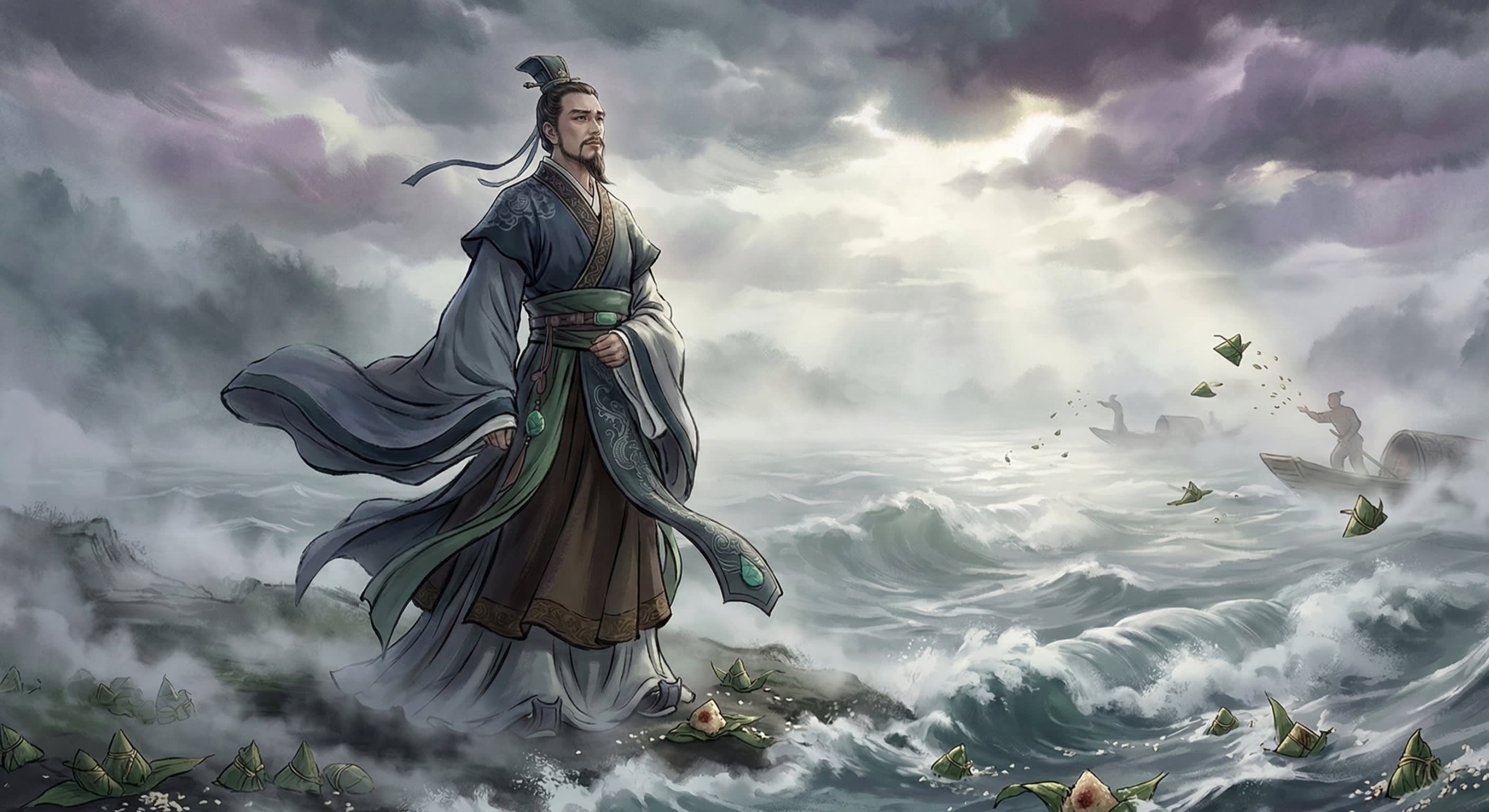
During his long exile, Qu Yuan wrote some of the foundational works of Chinese literature, most notably the Li Sao (The Lament), a poem that still carries a raw, heavy sense of longing for his home. When he heard the final news—that the capital of Chu had been burned by the Qin army—his heart simply gave out.
Unable to bear the agony of watching his homeland collapse, Qu Yuan walked to the banks of the Miluo River. He clasped a heavy stone to his chest and waded into the dark, churning waters. The day he died was the 5th day of the 5th lunar month, a date that would eventually be etched into the Chinese calendar forever.
🥁 2. The Desperate Rescue: Birth of the Dragon Boat
When the local villagers heard that Qu Yuan had thrown himself into the river, they panicked. They didn’t just stand by; they jumped into their fishing boats and paddled frantically into the turbulent current. They knew the river was filled with dangerous spirits, so they began beating drums and slapping their wooden paddles against the surface to scare off any creatures that might touch their beloved poet.
Though they never found him, that desperate act became the blueprint for the spectacle we see today. If you look closely at the Dragon Boat, you’ll notice it’s not just a boat; it’s an evolution of that rescue mission. The drummer at the front is the conductor of this chaos, and the team works in perfect lockstep, driven by the same urgency the villagers felt centuries ago.
🥢 3. Zongzi (粽子): The Sticky Rice Dumpling and the Great Culinary War
The legend goes that the villagers didn’t stop at just drumming—they threw rice into the water to keep the fish from attacking Qu Yuan. Later, it was said his spirit returned to ask for the rice to be wrapped in bamboo leaves, which the “river dragons” feared.
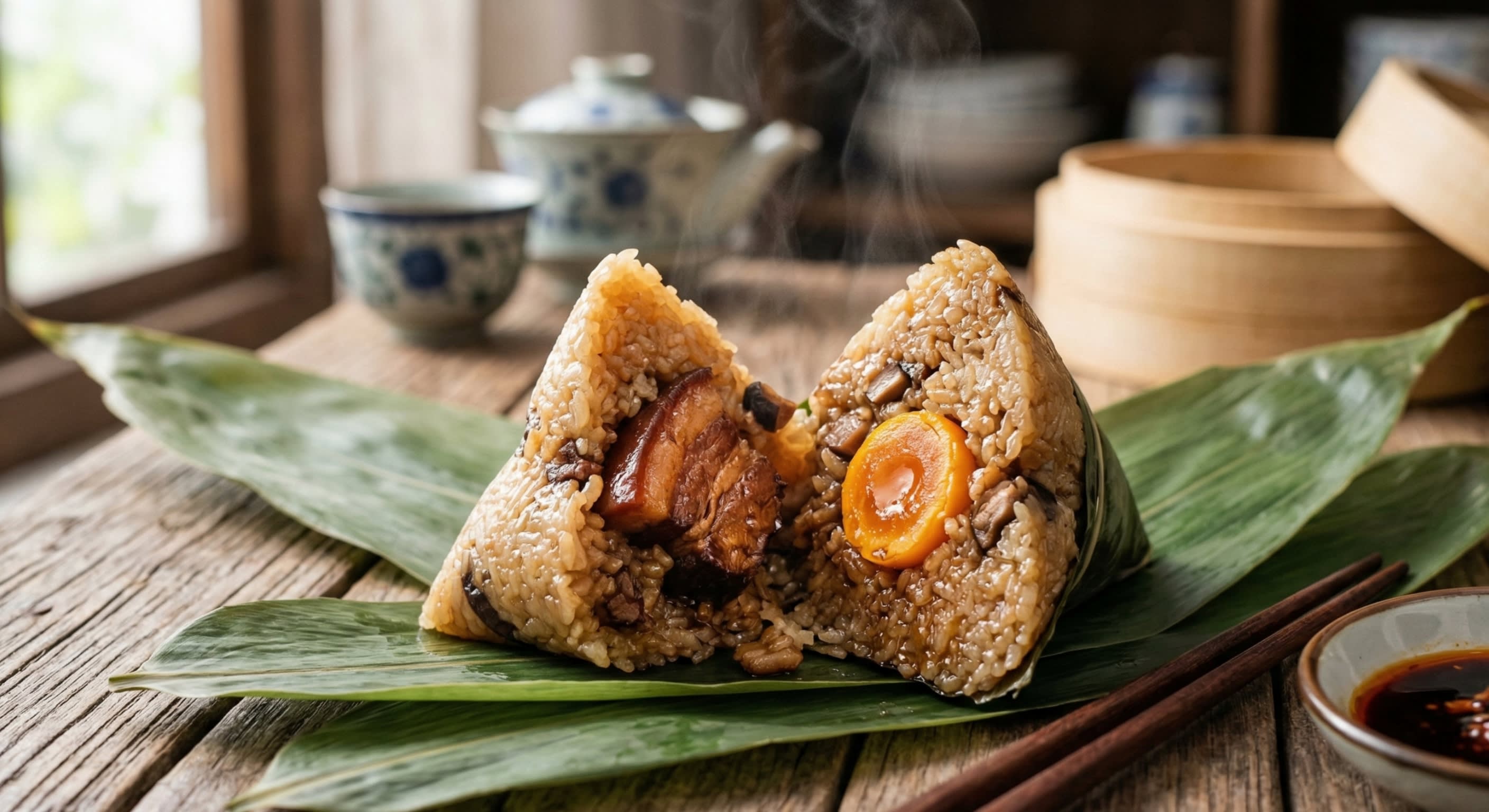
Making Zongzi is a meditative, labor-intensive process. You need high-quality glutinous rice and fresh bamboo leaves. When I visit my friends in China during this time, the scent of boiling leaves and ginger-infused pork filling the kitchen is intoxicating.
However, there is the famous Tián xián zhī zhēng (甜咸之争)—the Sweet vs. Savory War.
- The Northern Sweetness: In places like Beijing, these are dessert—filled with red bean paste or jujubes.
- The Southern Savory: In Shanghai or the south, it is a meal. They pack them with marinated pork belly, shiitake mushrooms, and salted duck eggs. The fat renders into the sticky rice, creating an umami bomb that is impossible to resist.
🌿 4. Surviving the “Poison Month”
Beyond the poetry, the festival was rooted in survival. The “Double Fifth” was historically seen as a dangerous time when the intense heat brought out the Wǔ Dú (五毒)—the Five Poisonous Creatures.
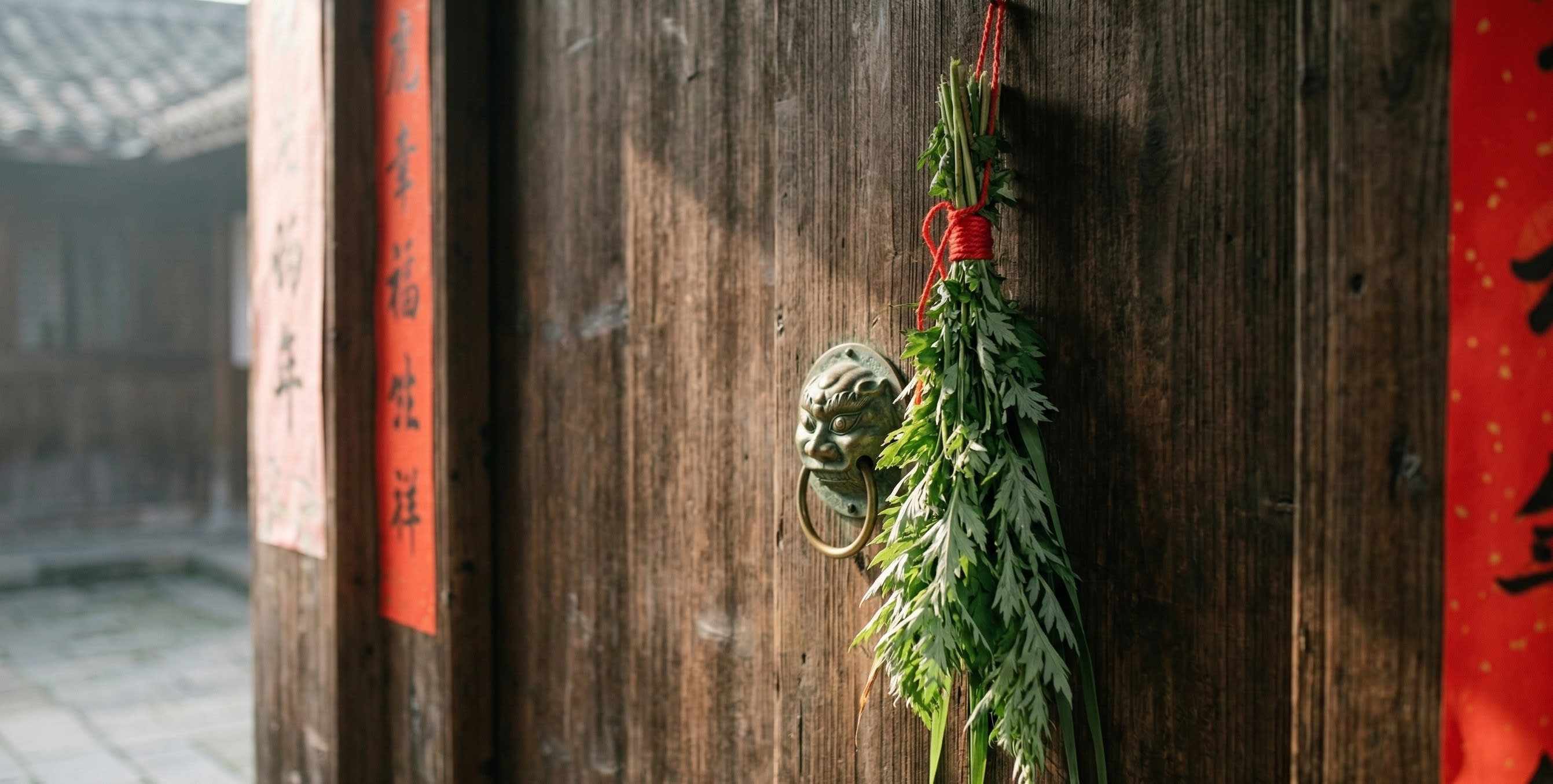
I always find it fascinating how people hung Àicǎo (Mugwort) and Chāngpú (Calamus) on their doors. It wasn’t just folklore; it was brilliant, ancient pest control. The pungent, herbaceous oils in these plants act as a natural shield against the summer’s encroaching bugs.
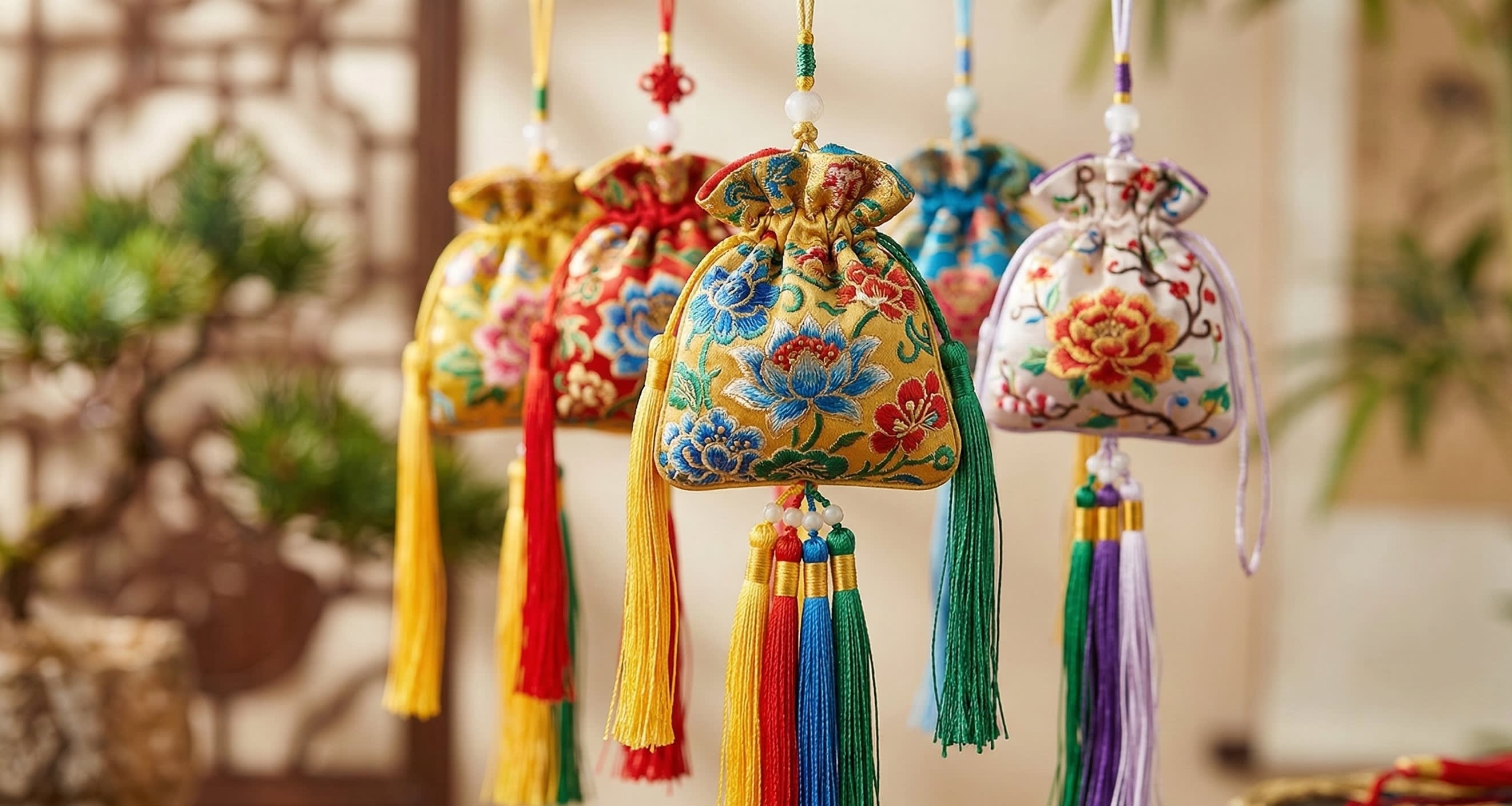
Children also wear Xiāngbāo (香包), small embroidered pouches filled with fragrant herbs. They smell heavenly—a mix of cloves, mint, and angelica—and serve as a wearable form of traditional aromatherapy that reminds me of the deep, practical love parents have for their children.
💬 5. Essential Duanwu Vocabulary
If you’re out grabbing a Zongzi or watching the races, try using these terms to sound more like a local.
| Term | Characters & Pinyin | Context |
|---|---|---|
| Dragon Boat Festival | 端午节 (Duānwǔ Jié) | Use "Duānwǔ ānkāng" to wish someone health. |
| Sticky Rice Dumpling | 粽子 (Zòngzi) | The must-eat food of the season. |
| Dragon Boat Race | 赛龙舟 (Sài lóngzhōu) | The high-energy sporting event. |
The Dragon Boat Festival is a masterpiece of cultural layering. It is a thrilling sport, a culinary debate, and a testament to ancient medical wisdom. But at its core, it is a 2,000-year-old promise to a poet who cared deeply: You threw yourself into the river, but we will never let you sink into oblivion.
㊗️ Wishing you a peaceful, healthy, and delicious Dragon Boat Festival!
Need help navigating more cultural nuances? Check out my guide on the 24 Solar Terms or read more about how to avoid cultural misunderstandings.
Disclaimer: As an Amazon Associate, ChinaCurator earns from qualifying purchases.