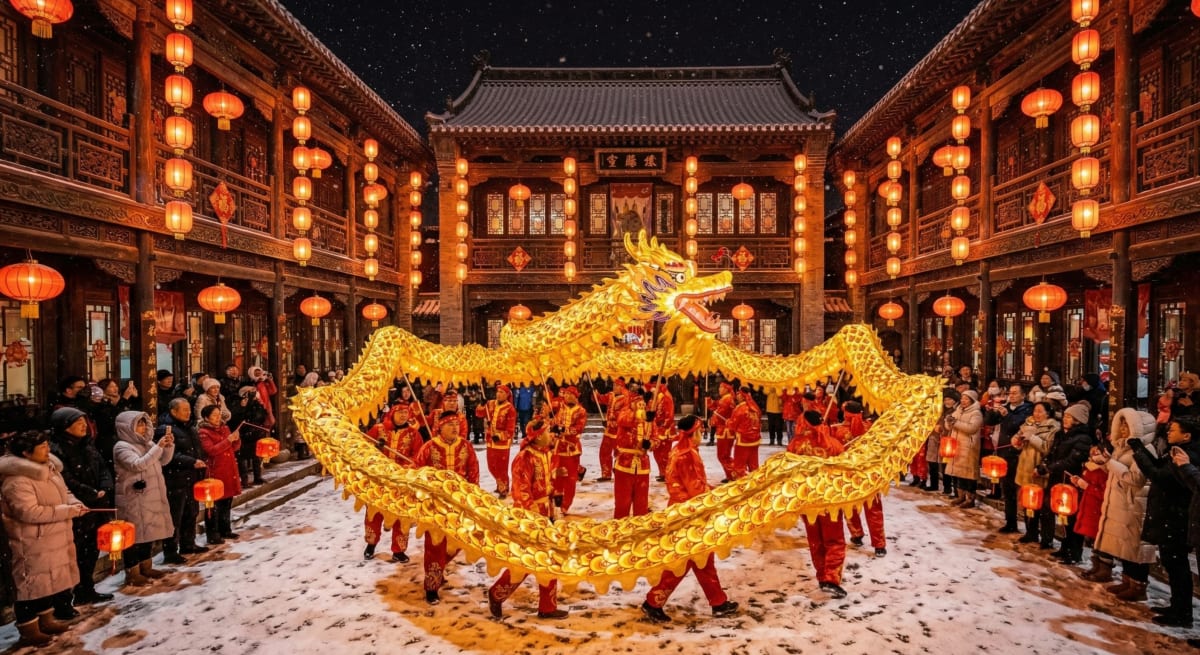
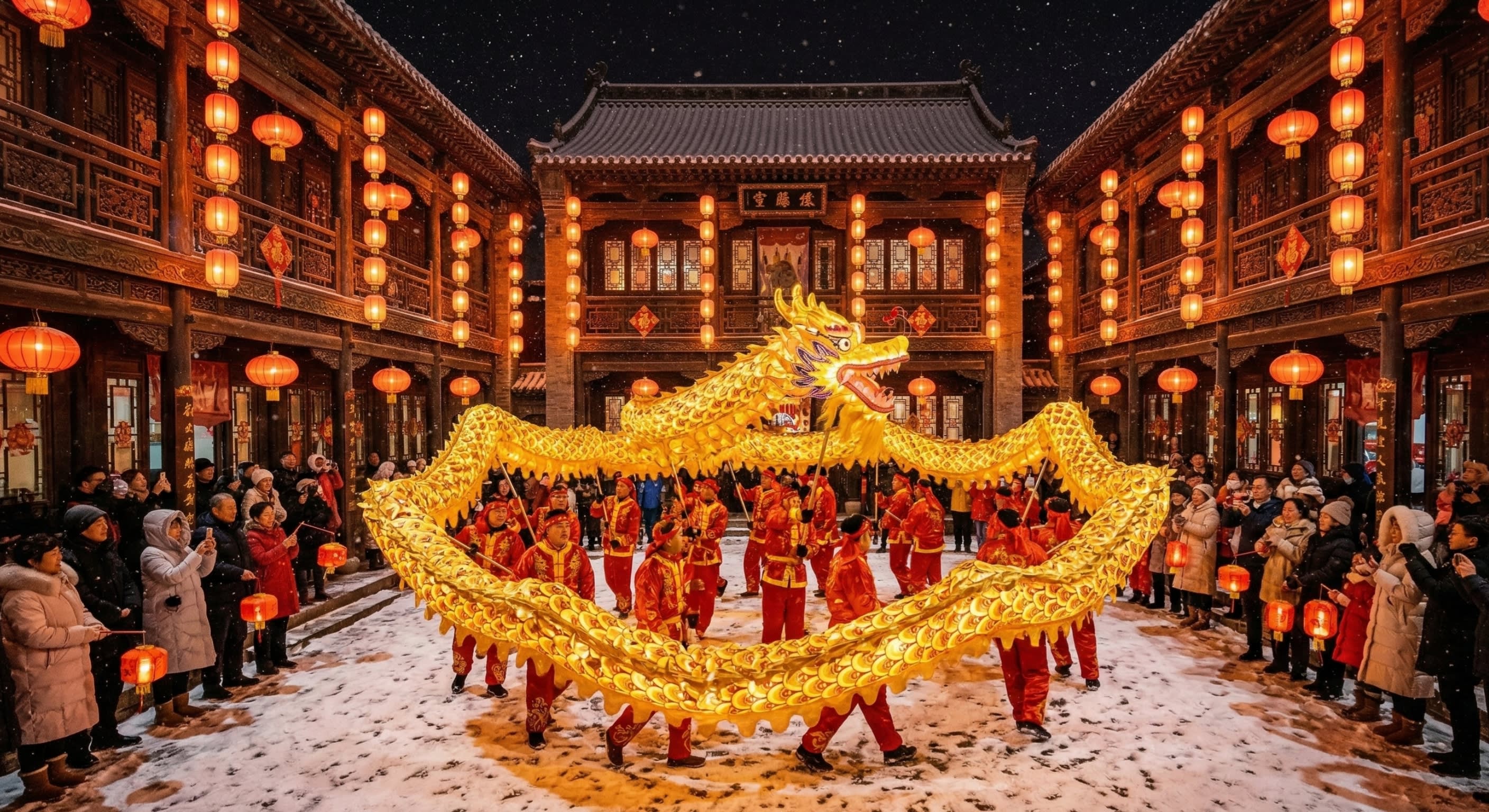
“To understand China, you must first understand the Spring Festival. It is not merely a holiday; it is the emotional anchor for over a billion people. It is a mass migration, a spiritual reset, and a 4,000-year-old promise of renewal. While the world sees the brilliant fireworks and the exchange of red envelopes, the true essence of Chūnjié (春节) lies far deeper in ancient mythology and the unbreakable bonds of family. As we celebrate the Year of the Horse in 2026, let us look beyond the surface and decode the ancient origins and the modern soul of the Chinese New Year.”
🐲 1. The Terrifying Origin: Surviving the “Nian”
If you ask a Chinese person what they are doing during the holiday, they won’t say “celebrating the New Year.” They will say they are Guònián (过年). To a beginner, this might just mean “passing the year.” But historically, it means “surviving the Nian.”
Legend has it that in ancient times, a terrifying mythological beast named Nián (年) lived at the bottom of the sea or up in the dark mountains. On the last night of the lunar year, when the winter was at its coldest and darkest, the Nian monster would emerge. It would storm into villages to devour livestock, destroy crops, and even eat villagers—especially children.
For centuries, the eve of the New Year was a night of absolute terror. Families would barricade their doors, eat what they thought might be their final meal together, and pray to survive until dawn.
However, one year, a wise old beggar arrived in a village and discovered the beast’s fatal weaknesses. The mighty Nian was terrified of three things: loud noises, bright fire, and the color red.
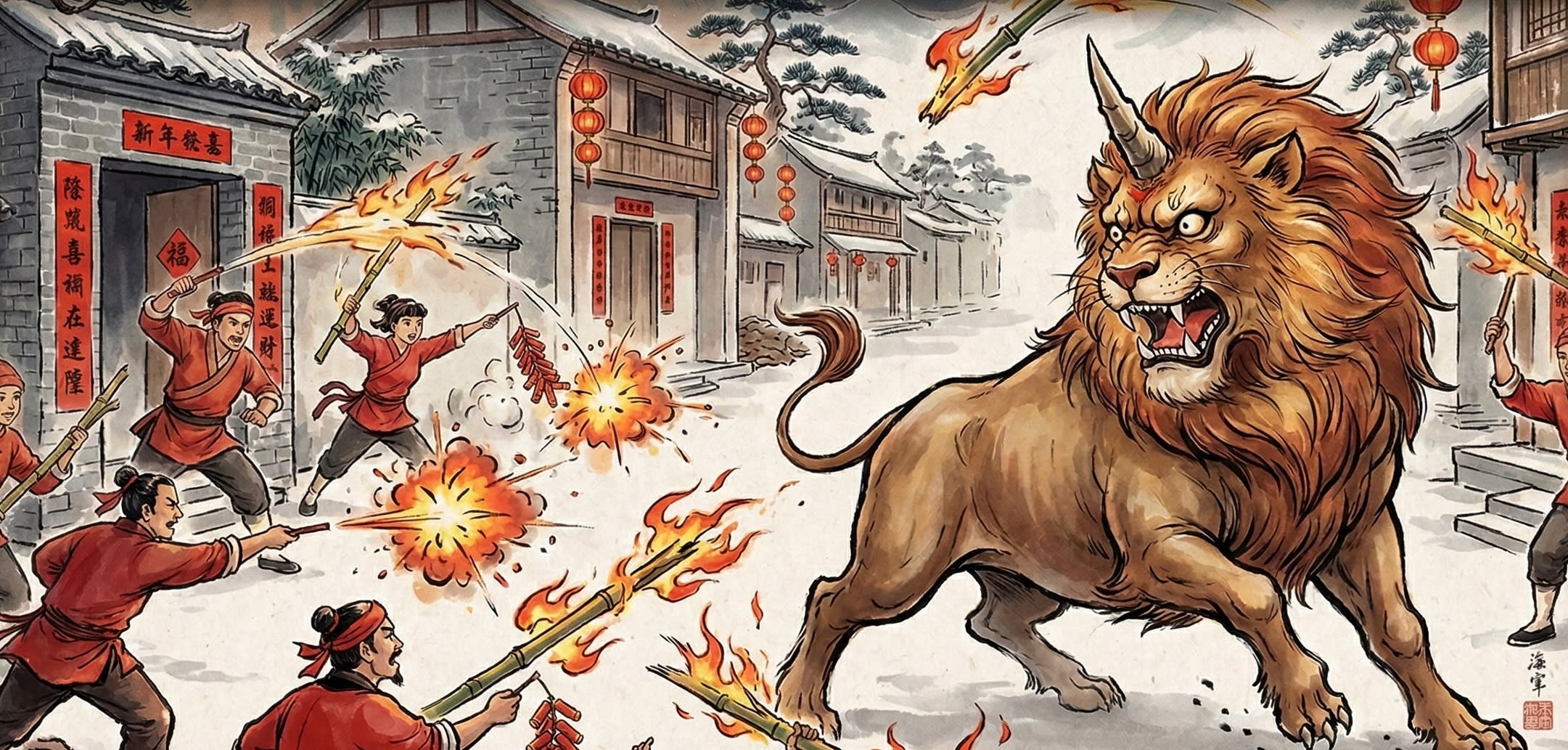
Armed with this knowledge, the villagers fought back. They painted their doors red, hung brilliant crimson lanterns, burned crackling bamboo (the precursor to modern firecrackers), and banged loud drums throughout the night. The beast fled in terror and never returned.
When the sun rose the next morning, the villagers walked out of their homes, saw that everyone had survived, and congratulated each other. This is the origin of the classic New Year greeting, Gōngxǐ gōngxǐ (恭喜恭喜 - Congratulations on surviving). Today, the red couplets on doors, the deafening fireworks, and the omnipresent red clothing are not just festive decorations; they are the ancient armor of a people who conquered the darkest night of the year.
🥢 2. The Eve: A Feast of Reunion and Symbolism
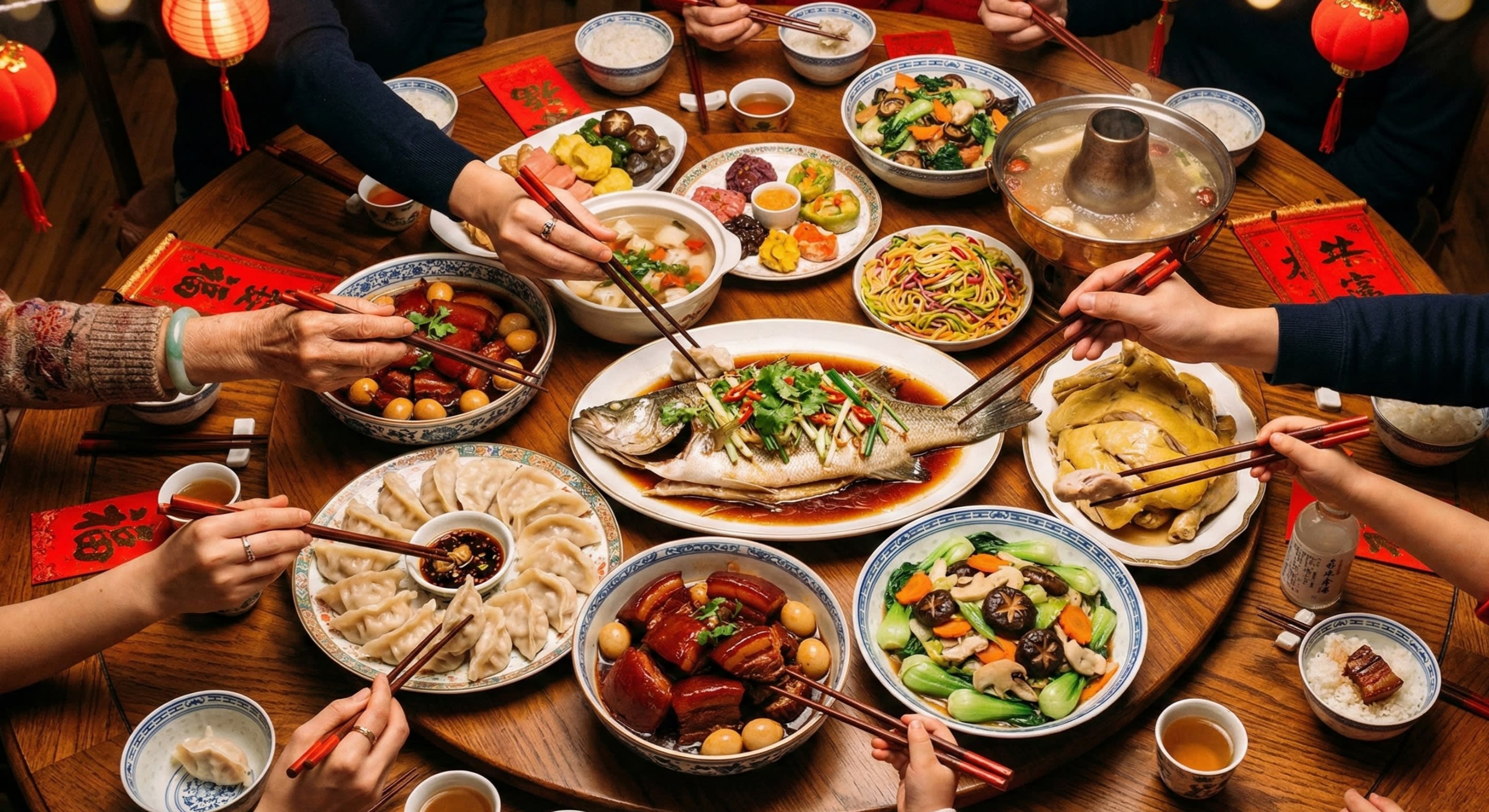
The climax of the entire holiday actually happens the night before the New Year begins. The Niányèfàn (年夜饭 - New Year’s Eve Reunion Dinner) is undoubtedly the most important meal of the year for any Chinese family. No matter how far away they live, family members will endure days of travel just to secure a seat at this table.
The menu is a masterpiece of edible symbolism, utilizing clever homophones (words that sound alike) to invoke blessings for the coming year.
- The Whole Fish (Yú 鱼): A fish is an absolute necessity. In Chinese, the word for fish (yú) sounds exactly like the word for “surplus” or “abundance” (余). The classic blessing is Nián nián yǒu yú (年年有余 - May you have abundance year after year). Crucially, the fish is never completely eaten; a small portion is left behind to ensure that the wealth carries over into the next year.
- Dumplings (Jiǎozi 饺子): Dominating the dinner tables in Northern China, dumplings are shaped like ancient Chinese silver ingots (yuánbǎo). Eating them is a literal consumption of wealth. Families will often hide a single clean coin inside one dumpling; the person who bites into it is guaranteed extraordinary luck for the year.
- Sticky Rice Cake (Niángāo 年糕): Popular in the South, this sweet, glutinous cake sounds like “Year High” (年高). It symbolizes a wish for rising prosperity, better grades for children, or a promotion at work in the coming year.
🧧 3. The True Meaning of the Red Envelope
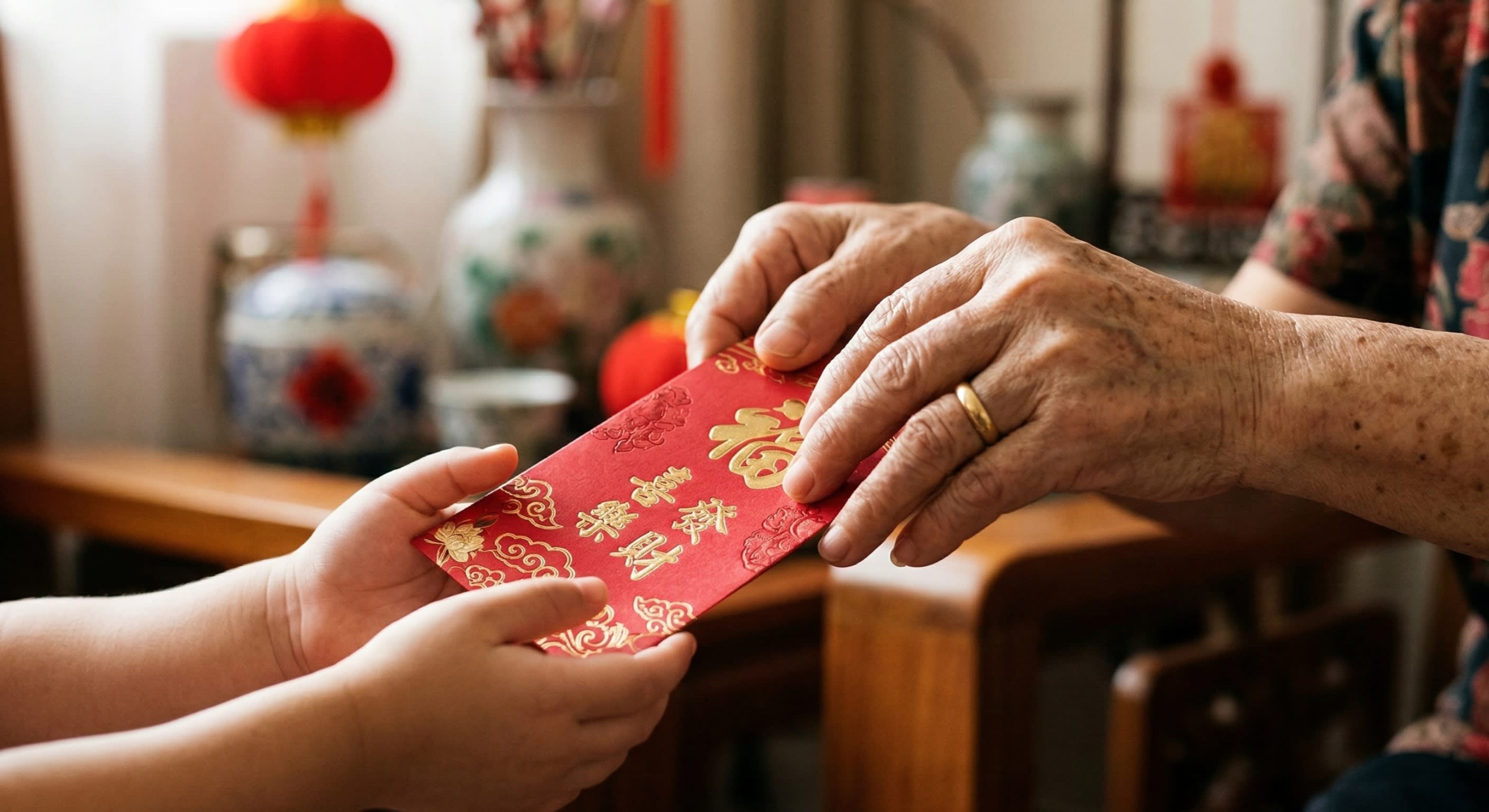
Perhaps the most famous export of Chinese New Year culture is the Hóngbāo (红包 - Red Envelope). Today, it is seen as a fun way to give cash gifts, but its origins are rooted in a deeply protective ritual.
The money inside a red envelope given to children is specifically called Yāsuìqián (压岁钱). According to folklore, there was a malicious demon named Sui (祟) who would come on New Year’s Eve to touch the heads of sleeping children, causing them to fall violently ill.
Parents were terrified of the Sui demon. One year, to keep their child awake and safe, parents gave him eight copper coins wrapped in red paper to play with. When the child finally fell asleep with the coins on his pillow, the Sui demon approached. Suddenly, a brilliant golden light flashed from the red-wrapped coins, blinding and terrifying the demon away. The coins were actually the Eight Immortals in disguise.
Thus, Yāsuìqián literally translates to “money that suppresses the Sui demon.” When grandparents hand a red envelope to a child today, they are not just giving them pocket money to buy toys; they are continuing a thousand-year-old ritual of wrapping their beloved descendants in magical protection.
📅 4. The 15-Day Timeline: A Structured Celebration
The Spring Festival is not a single-day event. It is a meticulously structured 15-day marathon of specific rituals, taboos, and visitations.
| The Day | The Tradition | The Rule / Taboo |
|---|---|---|
| Day 1: The Start | Bàinián (拜年 - New Year Greetings). Visiting the oldest and most senior members of the father's extended family. | Strictly NO sweeping or taking out the trash. Doing so means you are sweeping away the new luck that just arrived. |
| Day 2: The In-Laws | Married daughters return to their parents' home with their husbands and children to pay respects. | Gifts brought to the wife's family must be in even numbers (representing good luck). |
| Day 5: The Wealth | Welcoming the Cáishén (财神 - God of Wealth). Businesses set off firecrackers to invite prosperity into their shops. | The taboo of sweeping is finally lifted on this day. The "trash" can now be thrown out. |
| Day 15: The Finale | Yuánxiāo Jié (元宵节 - Lantern Festival). The first full moon of the year. People eat sweet rice balls and solve lantern riddles. | Marks the official end of the holiday. Life and work return to absolute normality. |
🚅 5. The Modern Soul: High-Speed Rails and Digital Envelopes
While the ancient legends remain the foundation, the soul of the Spring Festival has evolved to match China’s breathtaking modern pace.
Today, the desperate urge to return home for the Niányèfàn creates the Chūnyùn (春运 - Spring Festival Travel Rush). It is officially recognized as the largest annual human migration on the planet. Hundreds of millions of people board China’s vast network of high-speed bullet trains and airplanes to travel from the coastal mega-cities back to their rural hometowns. The sheer logistical miracle of Chunyun is a testament to the fact that family remains the ultimate core of Chinese society.
Technology has also transformed the Hongbao. Since the invention of the WeChat Red Packet, exchanging digital money has become a national sport. During the climax of the Chūnwǎn (春晚 - the CCTV New Year’s Gala, the most-watched television broadcast in the world), families will sit on their couches, rapidly tapping their smartphone screens to snatch digital envelopes sent into massive family group chats. It is chaotic, hilarious, and perfectly blends ancient generosity with cutting-edge tech.
💬 6. Essential New Year Phrases to Speak Like a Local
If you find yourself in China during this magical time, or simply want to impress your Chinese friends, forget “Happy New Year.” Use these authentic greetings to instantly win their hearts (and maybe a Red Envelope!).
| Greeting | Characters & Pinyin | Meaning & When to Use |
|---|---|---|
| The Classic | 新年好! Xīnnián hǎo! |
"Good New Year!" The safest, most common greeting for anyone you meet on the street. |
| The Wealth Wish | 恭喜发财! Gōngxǐ fācái! |
"Wishing you prosperity!" Essential when receiving a Red Envelope or greeting a business owner. |
| For the Elderly | 身体健康! Shēntǐ jiànkāng! |
"Wishing you good health!" Always say this to grandparents. It is deeply respectful. |
| Everything Smooth | 万事如意! Wànshì rúyì! |
"May 10,000 things go as you wish!" A beautiful, poetic blessing for friends and colleagues. |
Final Thoughts from Wei
The Chinese New Year is a paradox. It is incredibly loud, yet deeply intimate. It is rooted in a terrifying 4,000-year-old myth, yet celebrated on sleek smartphones. To experience the Spring Festival is to feel the heartbeat of China itself. Beneath the red decorations and the fireworks, the message has remained the same since the days of the Nian monster: We survived the cold winter, we are together, and the spring is finally here.
㊗️ Wishing you and your family a safe, warm, and profoundly prosperous New Year!
Curious about how the dates for the New Year are calculated? Explore our deep dive into the Chinese Lunar vs. Solar Calendars or check out our guide on Where to Travel During the Spring Festival.

