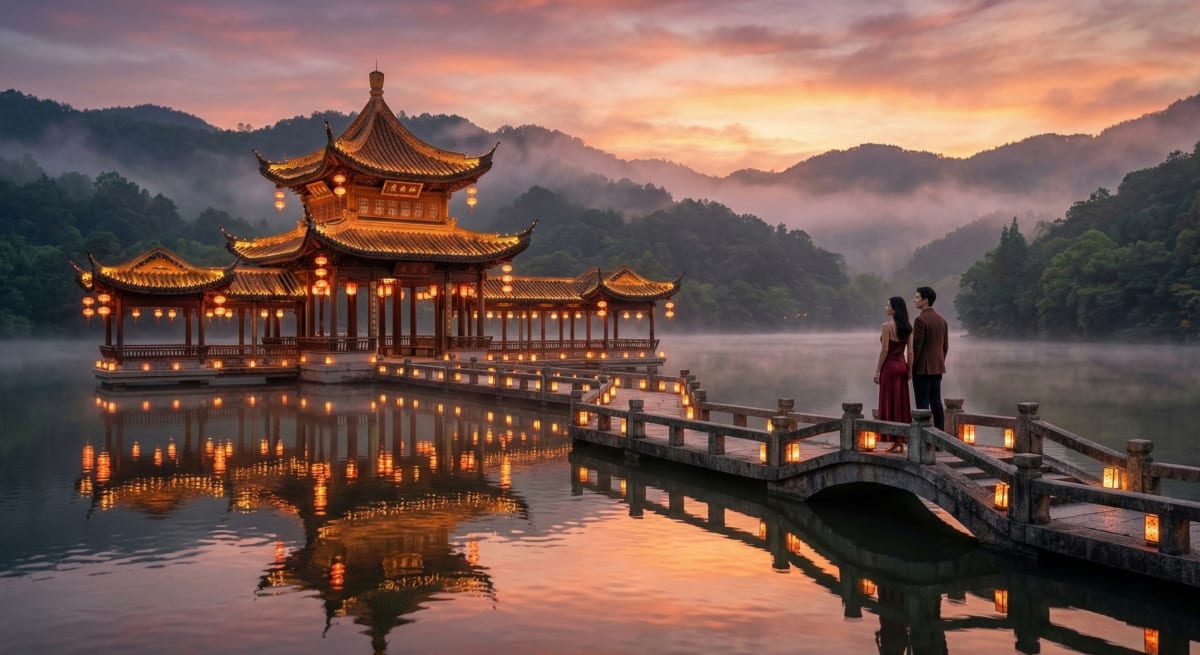
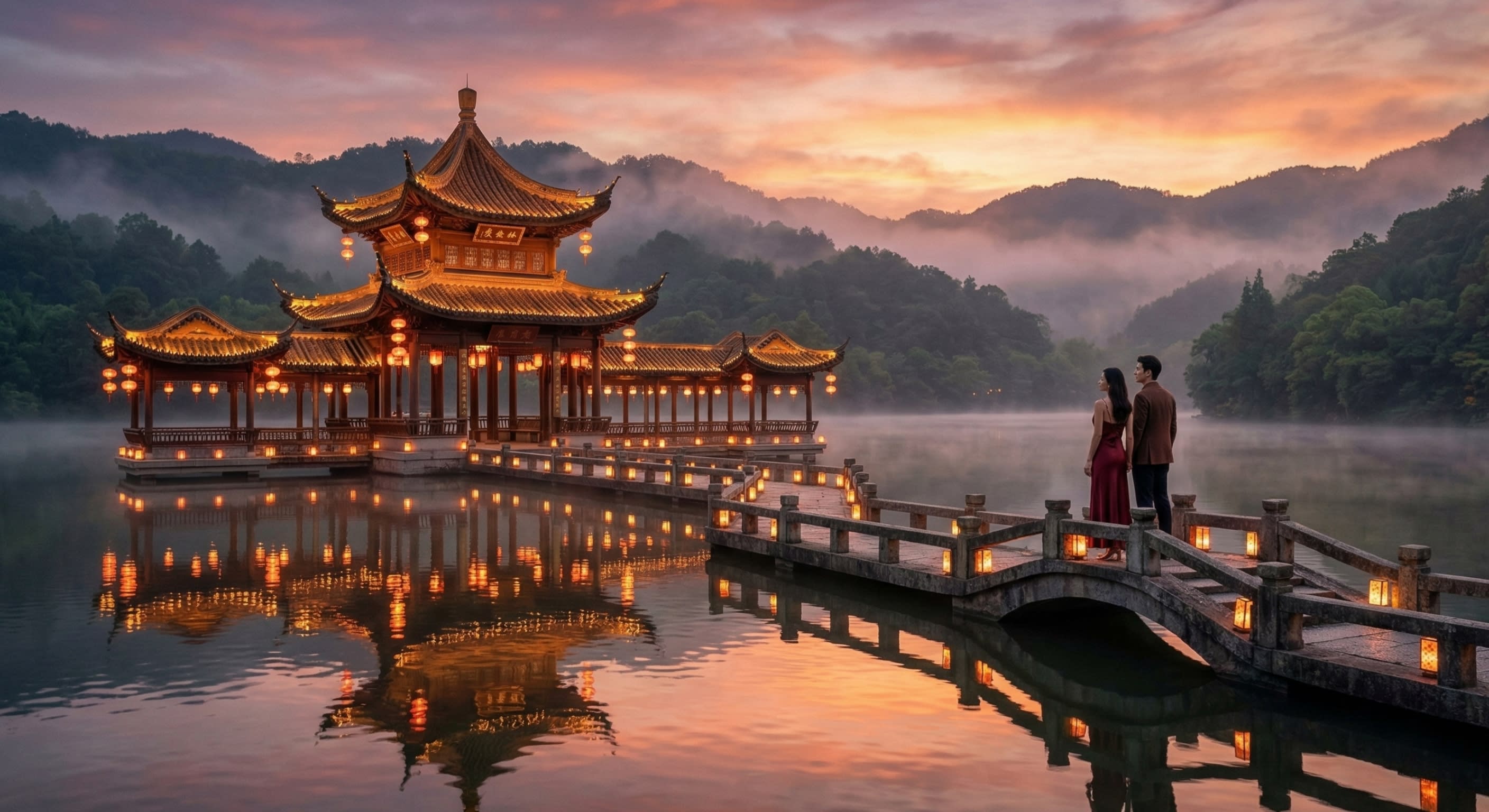
In our cultural deep-dive into the Romance of Qixi, we unraveled the cosmic heartbreak and devotion behind the Cowherd and the Weaver Girl. But beyond the celestial myth, Qixi—China’s traditional Valentine’s Day—is when the country’s most evocative landscapes truly come alive. In 2026, the legendary “Magpie Bridge” isn’t just a constellation; it’s a high-speed rail ticket to a misty water town, a secluded mountain teahouse, or a dizzying, neon-drenched rooftop overlooking a sprawling megacity.
If you are navigating China as a couple, these are the destinations where love—and the local Yìshìgǎn (仪式感, sense of ritual)—reigns supreme.
🌸 1. Hangzhou (杭州): The Classic “Broken Bridge” Romance
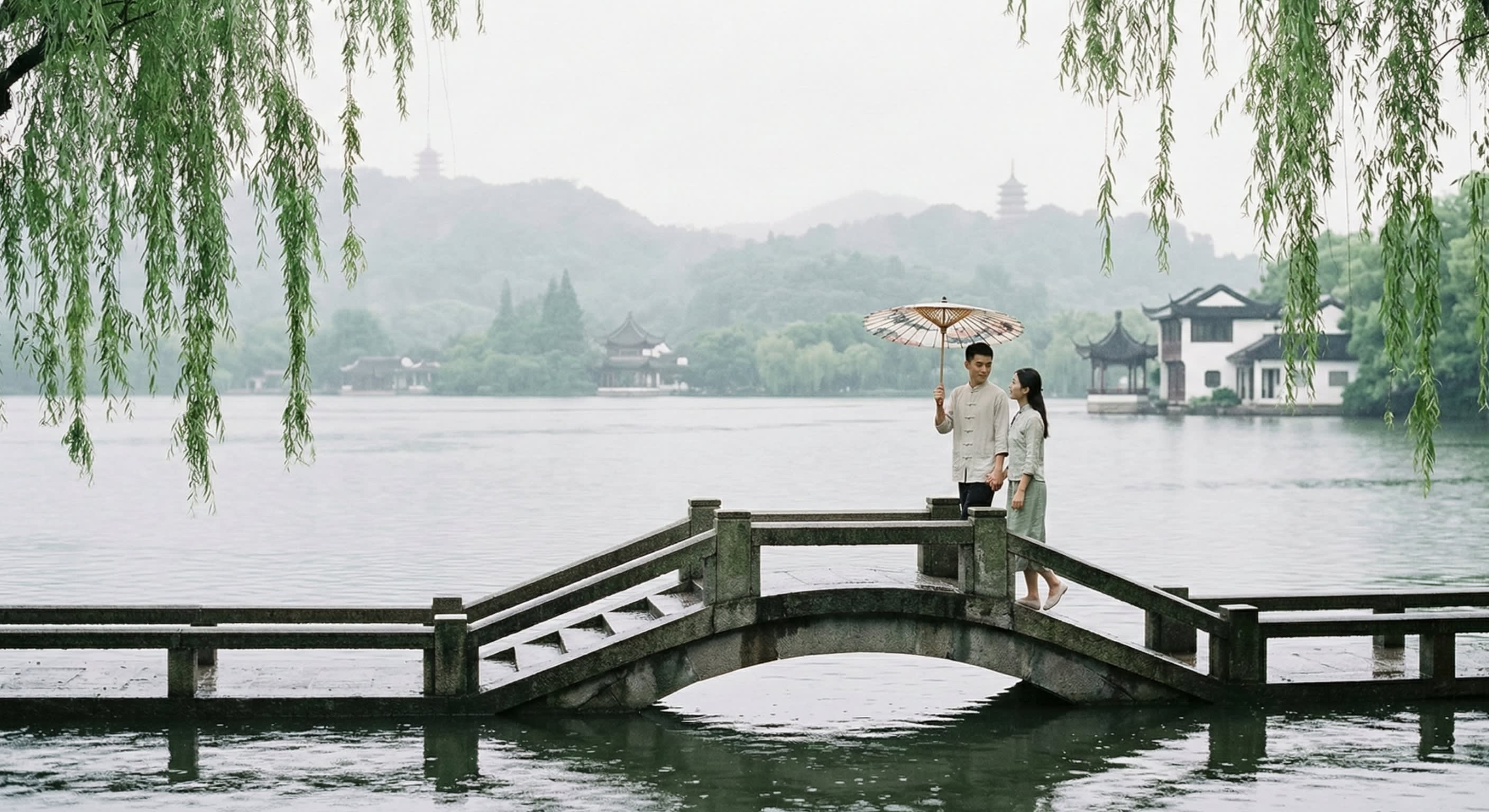
If there is a definitive capital of romance in China, it is Hangzhou. For centuries, poets have stood by the banks of the West Lake (Xīhú 西湖), attempting to capture its ethereal beauty in verse. The city’s very soul is woven into the Tale of the White Snake, a legend of a serpent spirit who descended from the heavens to experience human love.
- The Romantic Spot: The Duànqiáo (断桥), or “Broken Bridge.”
- The Experience: This is the fabled meeting point of the White Snake and her lover, Xu Xian. On the night of Qixi, the bridge is bathed in a golden, warm glow that dances across the surface of the lotus-filled water. I highly recommend shunning the crowded tour boats; instead, hire a private, hand-paddled wooden boat at sunset. As you drift silently through the massive, swaying lotus blossoms, the modern city skyline seems to dissolve, leaving only the sound of gentle oars and the distant, haunting silhouette of the Leifeng Pagoda.
- Why it’s special for Qixi: Hangzhou locals possess a refined approach to romance. You’ll find couples gracefully dressed in modern, understated Hànfú walking through the lakeside gardens, making the entire area feel like a living, breathing ink-wash painting.
🏔️ 2. Dali (大理): Slow Life by the “Ear-Shaped” Lake
If Hangzhou is about classical, structured poetry, Dali is about modern liberation. Nestled in Yunnan, this is the spiritual heart of the Màn shēnghuó (慢生活, slow life) movement. It’s where the hurried pace of urban China sheds its skin, replaced by a slower, more intentional rhythm.
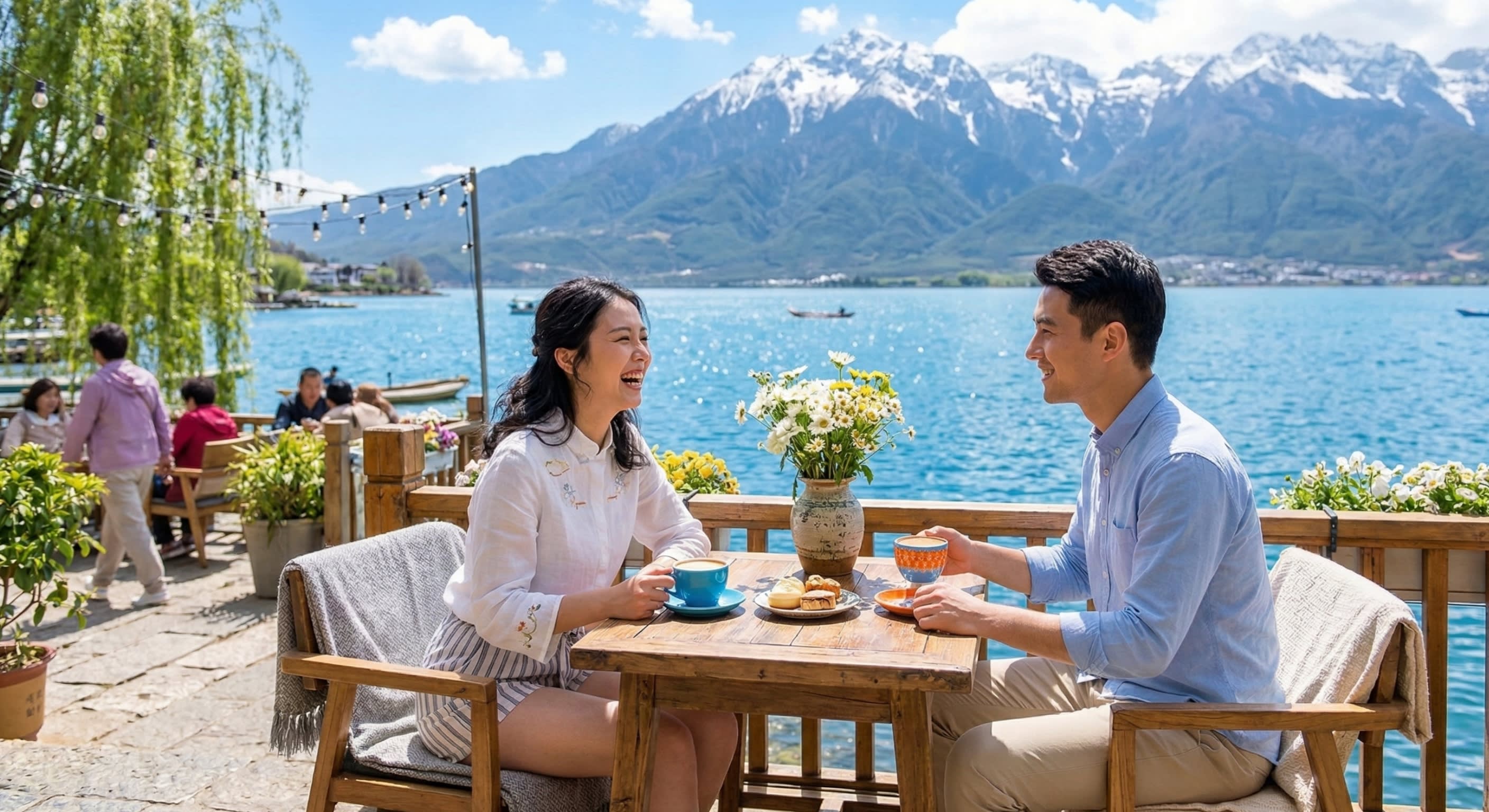
- The Romantic Spot: Ěrhǎi (洱海), the vast, crystalline “Ear-Shaped Lake.”
- The Experience: Rent a small electric vehicle or a vintage scooter and navigate the 130-kilometer loop circling the lake. The air here is crisp, carrying the faint scent of pine and wild herbs. Make sure to pull over in Xizhou (喜洲) to marvel at the intricate Bai architecture, or discover a “lakeside window” cafe in Shuanglang (双廊). Sipping locally roasted Yunnan coffee while staring at the sapphire water meeting the jagged, snow-dusted peaks of the Cāngshān (苍山) mountains is, quite simply, the height of luxury.
- Qixi Activity: Embrace the local trend of Lǚpài (旅拍, travel photography). Hiring a professional photographer for a few hours is a standard way for Chinese couples to capture their Qixi memories against the backdrop of the lake’s azure expanses. It’s a wonderful, stress-free way to ensure you don’t leave empty-handed.
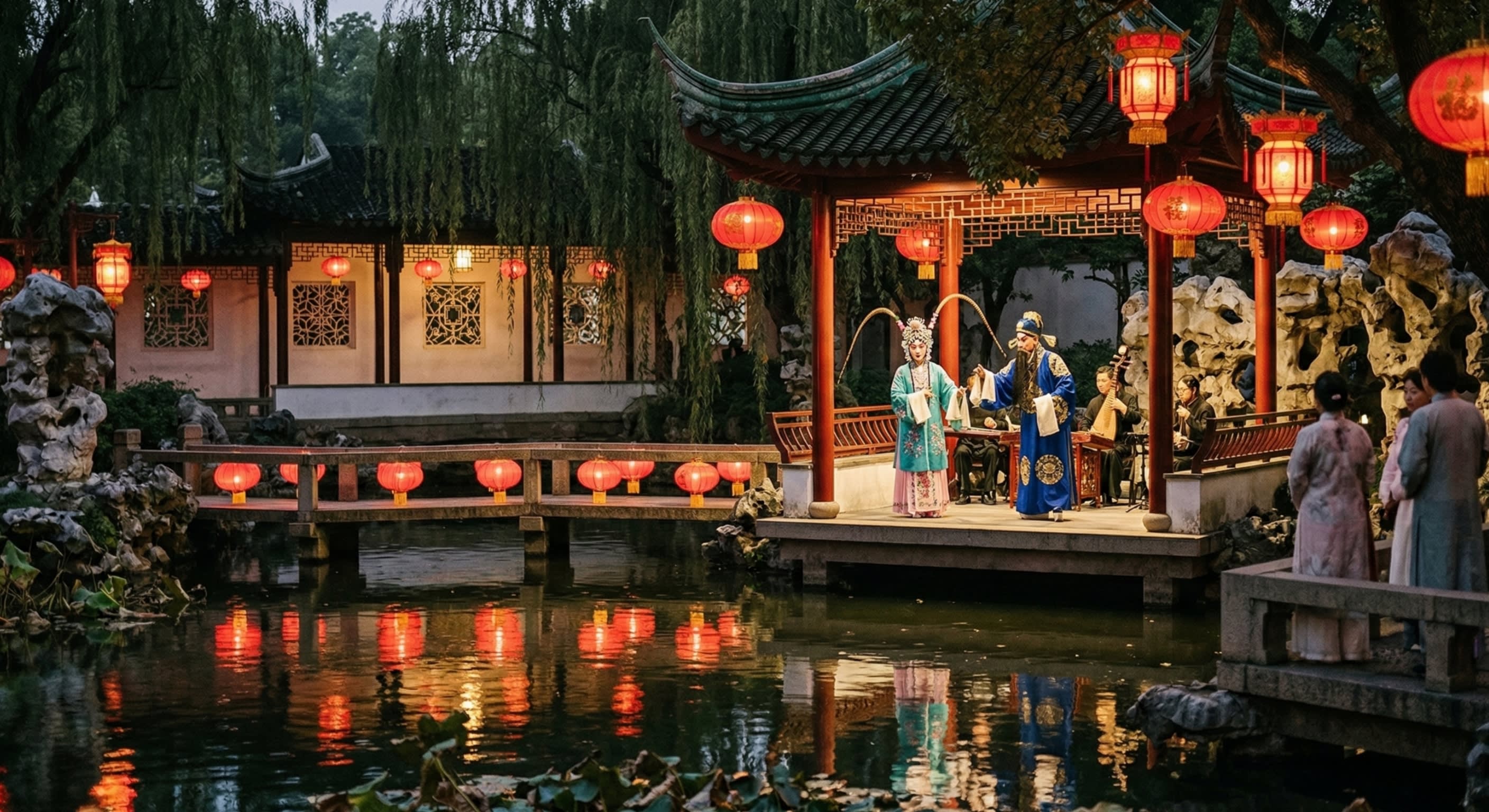
🎭 3. Suzhou (苏州): A Night of Opera and Private Gardens
Suzhou is often dubbed the “Venice of the East,” but its romantic appeal is far more private and architectural than its Italian counterpart. It is a city of hidden gardens, where every window frame and mossy stone path is engineered to create a perfect view.
- The Romantic Spot: The Master of the Nets Garden (Wǎngshī Yuán 网师园).
- The Experience: While the gardens are a daytime delight, they turn magical after sunset. During Qixi, the Master of the Nets Garden hosts intimate, moonlit performances. You’ll wander through dark, quiet corridors and over arched stone bridges to discover secret stages nestled in the corners of the garden. The highlight is the Kūnqǔ (昆曲) opera—the oldest, most delicate form of Chinese theater. Hearing a tragic, timeless love song performed by a soft, melodic voice while surrounded by ancient rockeries and glowing lanterns is an atmosphere that feels like time-travel.
- The Culinary Touch: Post-performance, find a quiet tea house on Pingjiang Road to share a plate of Sūshì yuèbǐng (苏式月饼, Suzhou-style savory mooncakes), which are flaky, buttery, and perfect for a light, romantic midnight snack.
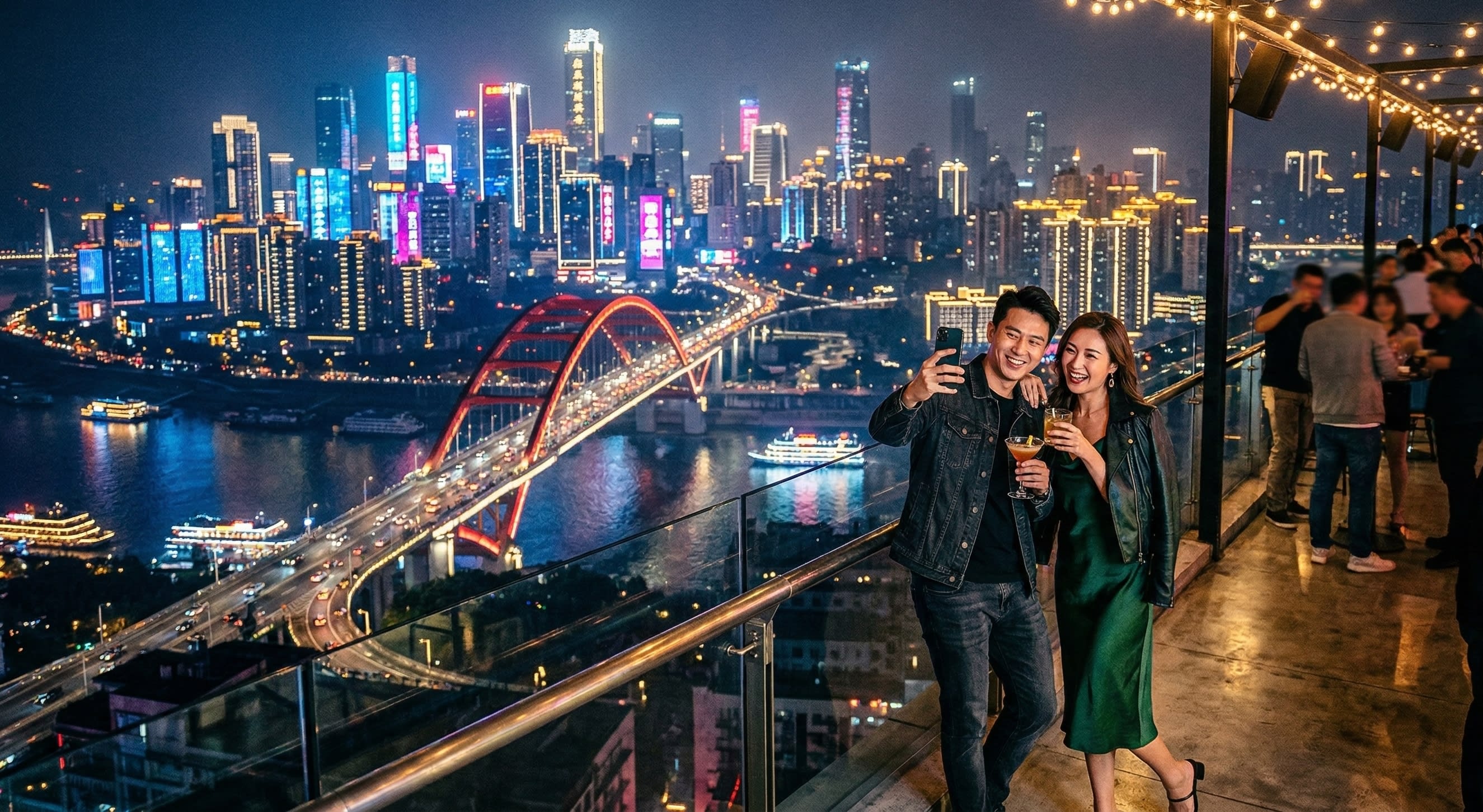
🌃 4. Chongqing (重庆): “Cyberpunk” Romance on the Rooftops
For the couple that finds solace in the electric energy of the future rather than the echoes of the past, Chongqing is unmatched. Built vertically across steep, winding mountains, this “Cyberpunk” city is a 3D labyrinth of neon lights and gravity-defying architecture.
- The Romantic Spot: A high-altitude rooftop bar in the Jiěfàngbēi (解放碑) or Jiangbeizui districts.
- The Experience: Chongqing truly wakes up after the sun sets. Take the iconic Liziba monorail—the one that threads its way directly through an apartment building—to grasp the sheer scale of the city, then ascend to a rooftop. Watching the thousands of amber and blue lights of the Hongya Cave (洪崖洞) flicker to life along the cliffside, with the Yangtze River churning below, feels like stepping into a sci-fi film.
- The Qixi Vibe: Romance here is “hot”—literally. It’s local custom to celebrate with a spicy Huǒguō (火锅, Hot Pot). The intense, bubbling red broth is the perfect culinary metaphor for the city’s passionate spirit. Sharing a piping hot pot is a local test of commitment: if you can sweat through the spice together, you can handle anything.
🎒 Practical Logistics for Qixi 2026
- The Date: Qixi falls on the 7th day of the 7th lunar month. In 2026, this lands on August 19th.
- The Crowd: It’s a major holiday, so restaurants will be packed. Use local apps like Meituan or Dianping to secure your dinner reservations well in advance.
- The Weather: August is sweltering. Unless you are heading to the mountains of Dali, prepare for high humidity. Pack breathable fabrics and stay hydrated.
- Transportation: If you’re hopping between cities, use the 12306 App to book your high-speed rail tickets exactly 15 days in advance, as Qixi weekend is peak travel time.
💬 Essential Romantic Vocabulary
| Term | Pinyin | Meaning |
|---|---|---|
| 仪式感 | Yìshìgǎn | Sense of ritual/occasion. |
| 情侣装 | Qínglǚ-zhuāng | Matching couple outfits. |
| 真爱 | Zhēn'ài | True love. |
| 旅拍 | Lǚpài | Professional travel photography. |
Final Thoughts from Ran
The beauty of traveling through China during Qixi is the dialogue between the ancient and the modern. You might be watching a centuries-old opera in a quiet Suzhou garden, only to see the same audience sharing the moment on their phones moments later. Whether you choose the misty mountains of Dali or the neon roar of Chongqing, the message is the same: in the vast, swirling “Silver River” of life, finding someone to cross the bridge with is the greatest journey of all.
㊗️ Wishing you and your loved one a romantic and unforgettable Qixi journey!
Curious about the folklore that inspired these romantic spots? Revisit our Cultural Guide to the Magpie Bridge or find the best month for your next adventure in our 2026 Ultimate Guide.
Disclaimer: As an Amazon Associate, ChinaCurator earns from qualifying purchases.