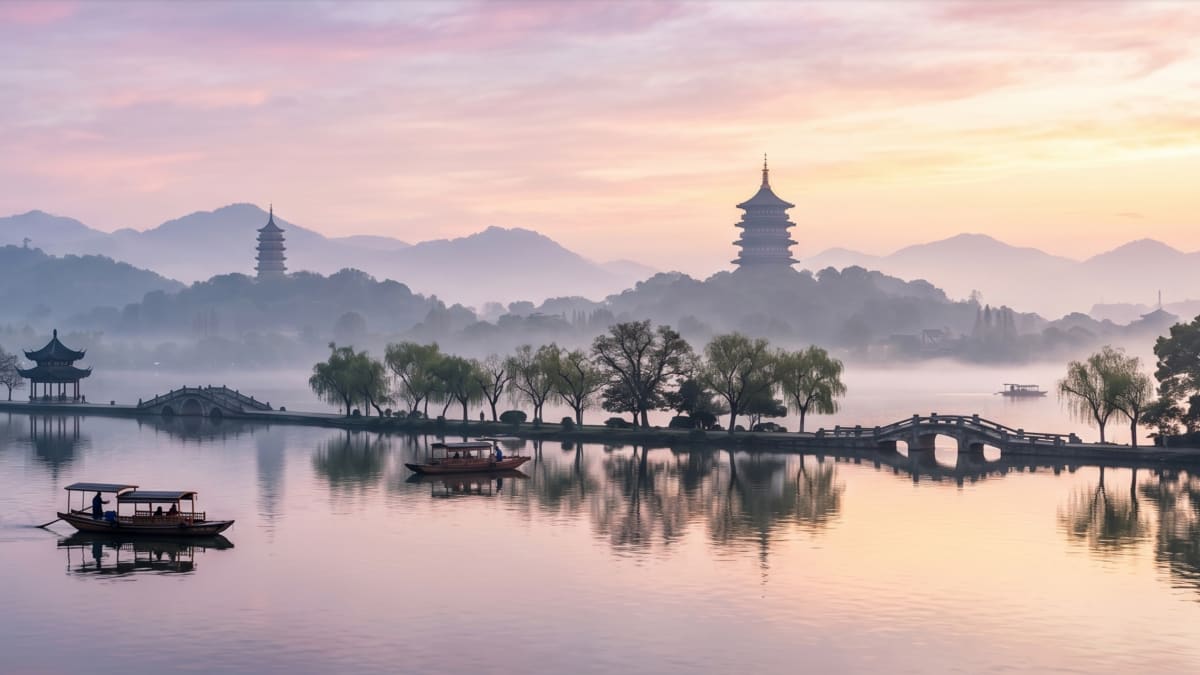
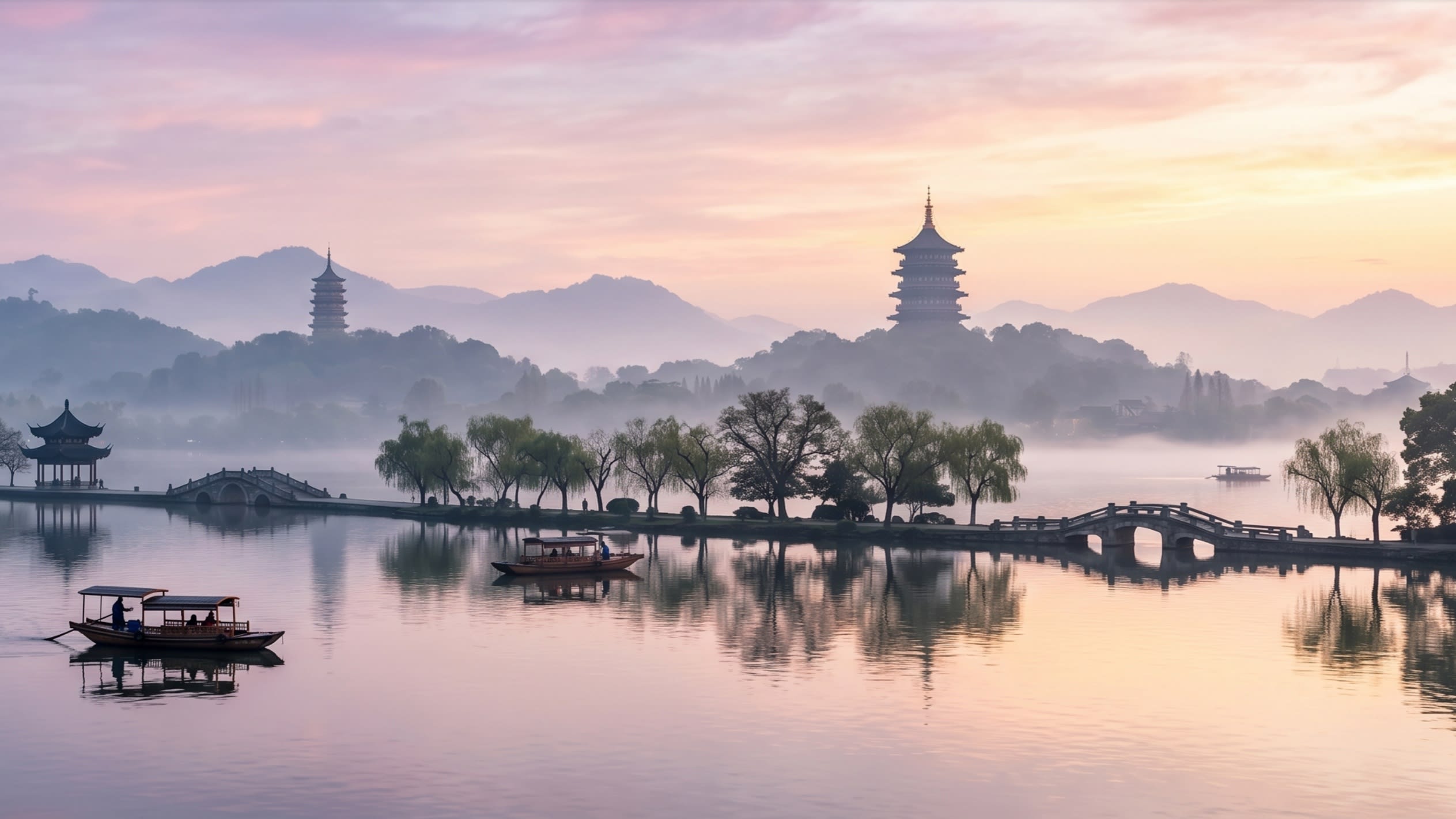
There is a timeless reason why Chinese poets have whispered for centuries that Hangzhou (杭州 - hángzhōu) is “Paradise on Earth.” It is a rare place where the mountains seem to lean in to converse with the water, and the omnipresent mist carries the hushed secrets of fallen dynasties. In 2026, as the world accelerates, the West Lake (西湖 - xīhú) remains a stubborn sanctuary of absolute stillness. This is not merely a pin on your map; it is an immersion into the Shanshui soul of China. Whether you are seeking a poetic retreat or a deep dive into China’s best 5A museums, Hangzhou is your primary stop.
The “Shanshui” Philosophy: More Than Just Scenery
To truly inhabit Hangzhou, you must embrace the concept of Shanshui (山水 - shānshuǐ). In Western art, a landscape is an object to be observed from a distance. In Chinese aesthetics, Shanshui is a mirror; it is something you look within. It demands a balance between the immovable, grounded mountain and the restless, flowing water—the Yin and the Yang of nature.
In 2026, Hangzhou protects this ancient balance with fierce urban discipline. You won’t find garish skyscrapers shattering the horizon here; the skyline is carefully curated so that the Broken Bridge (断桥 - duànqiáo) and the silhouette of the Leifeng Pagoda (雷峰塔 - léifēngtǎ) remain framed by the sky, not concrete. When the morning fog rolls in across the causeway, the lake ceases to be a body of water and transforms into a living, breathing ink-wash painting.
- A Local Insight: “西湖的‘山水’ (shānshuǐ) 是有灵气的。一定要在下小雨的时候去走走‘苏堤’ (sūdī),那种‘烟雨江南’ (yānyǔ jiāngnán) 的朦胧感,才是杭州真正的魅力所在。” (The Shanshui of West Lake has a genuine spirit. You must walk the ‘Su Causeway’ during a light drizzle; that hazy, ethereal sensation of ‘Misty Rain of Jiangnan’ is where the city’s true charm is hidden.)
The Rhythmic Waters: A Morning on a Hand-Rowed Boat

While the tourist ferries are efficient, they lack the soul of the lake. To “feel” Hangzhou in 2026, you must hire a Hand-Rowed Boat (手划船 - shǒuhuáchuán).
The experience is entirely auditory: the creak of the wooden oar, the rhythmic slap of water against the hull, and the distant temple bells. Ask your rower to navigate you toward the Three Pools Mirroring the Moon (三潭印月 - sāntán yìnyuè). If you arrive at the dock near the Hangzhou Hotel (杭州饭店码头) before 8:00 AM, you’ll find yourself floating in a world that feels untouched by the modern century.
The Verdant Escape: Longjing Tea Gardens (龙井茶园)
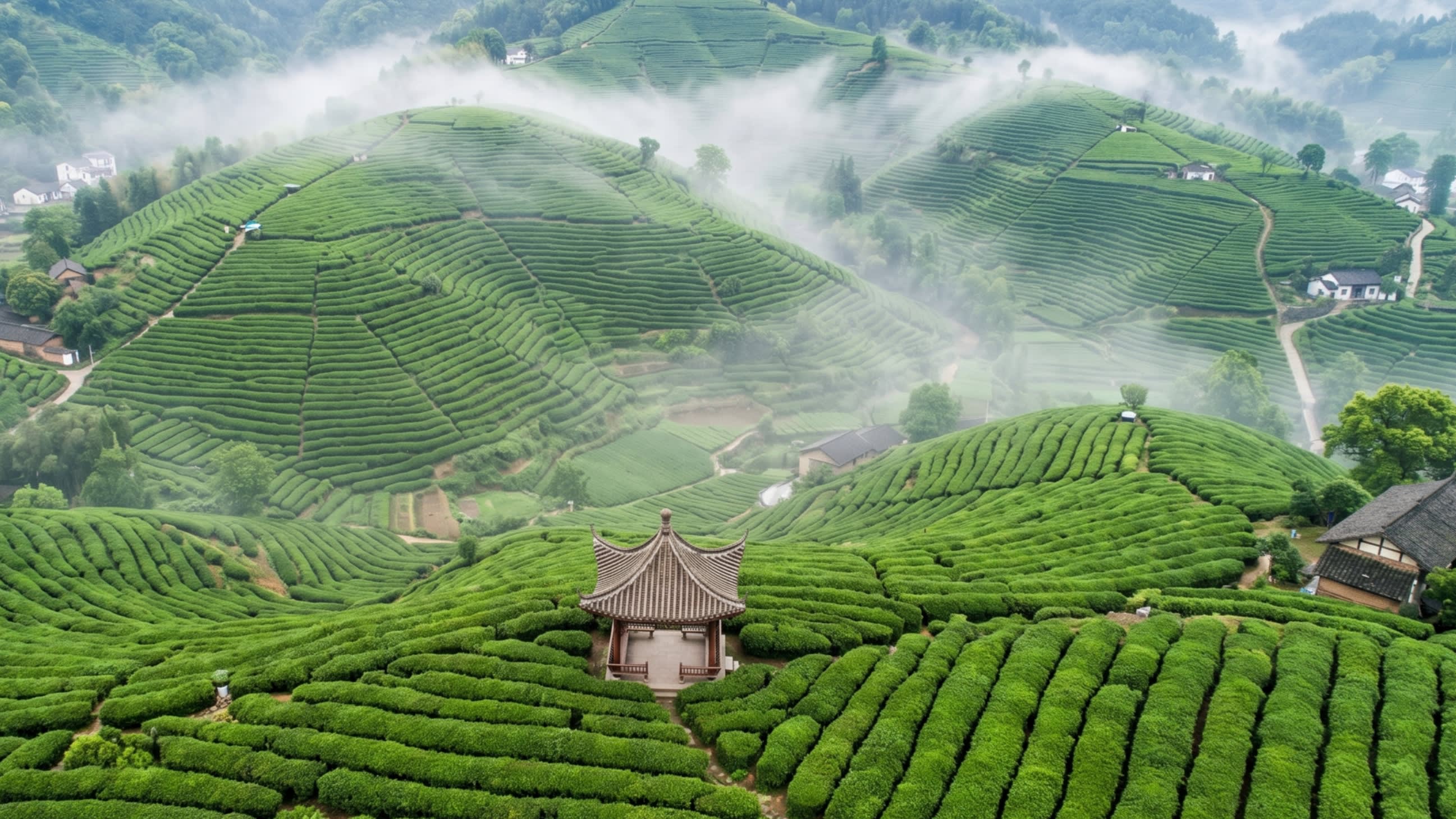
Rising west of the lake, the terrain transforms into the rolling, terraced hills of the Longjing Tea Gardens (龙井茶园 - lóngjǐng cháyuán). If you’ve ever wondered why tea culture is so foundational to understanding China’s tea heritage, the answer is found in the dirt here.
The air is cool, heavy with moisture, and smells intensely of chlorophyll and earth. My advice? Wander into the village of Meijiawu (梅家坞 - méijiāwù). Find a local farmer’s courtyard, sit on a weathered wooden stool, and order a pot of Longjing. It isn’t just a drink; it is the taste of the mountain itself—floral, vegetal, and clean. If you want to refine your palate, be sure you have a quality ceramic tea set ready for when you return home to recreate this ritual.
Ancient Echoes: Lingyin Temple and Feilai Feng
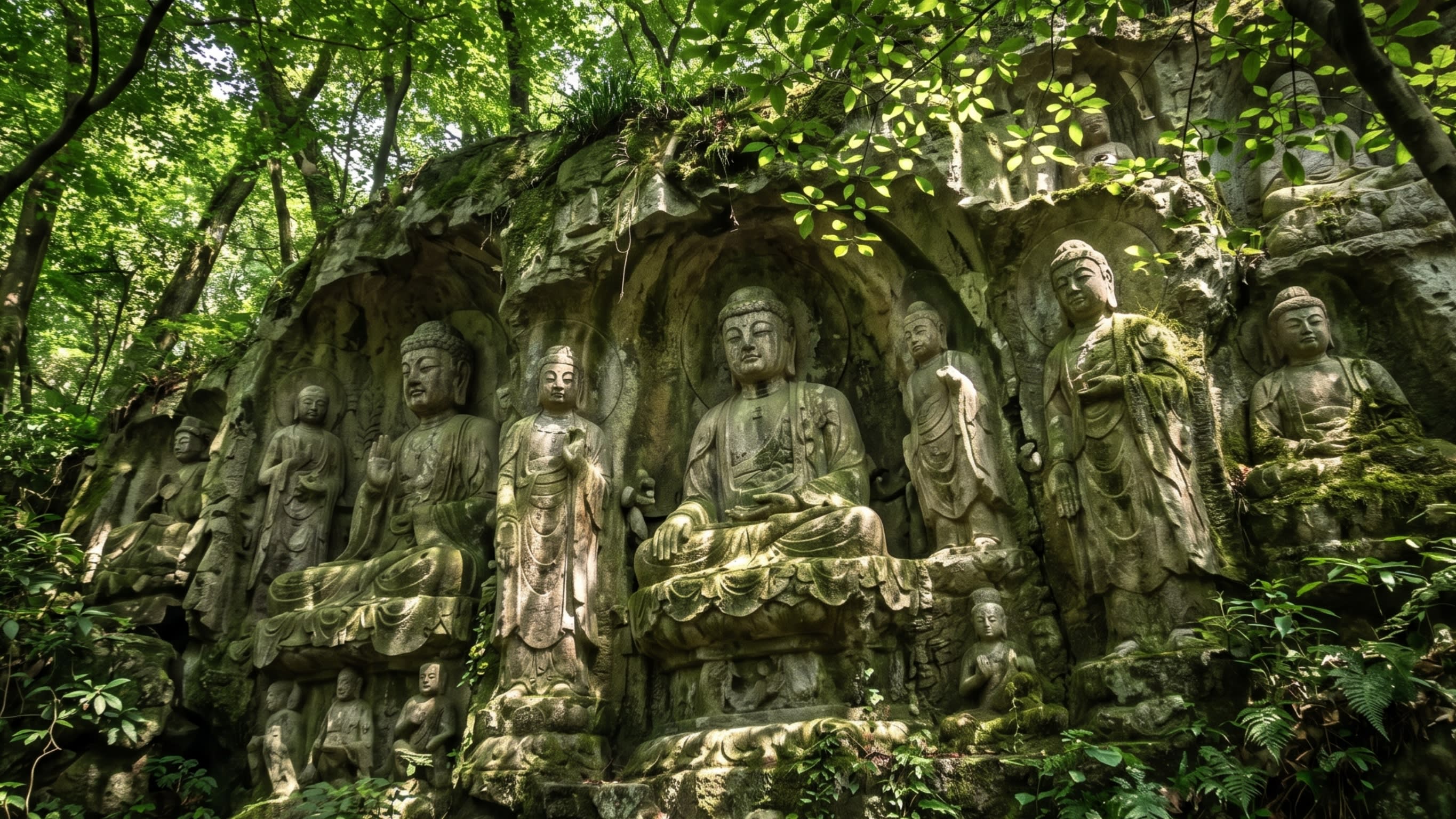
No Shanshui journey is complete without visiting Lingyin Temple (灵隐寺 - língyǐnsì), the “Temple of the Soul’s Retreat.” Tucked into the valley nearby, the Feilai Feng (飞来峰 - fēiláifēng) limestone crags house hundreds of Buddhist carvings that have stared out from the rock face for a millennium.
These carvings are covered in soft, velvet-like moss. Watching the sunlight filter through the canopy to illuminate the serene, moss-dusted faces of the stone Buddhas provides a sense of perspective that no high-tech attraction can match. It is a humbling reminder of human endurance.
The “Shanshui” Comparison Matrix (Scenic Districts)
Tasting the Landscape: Hangzhou’s Gastronomy
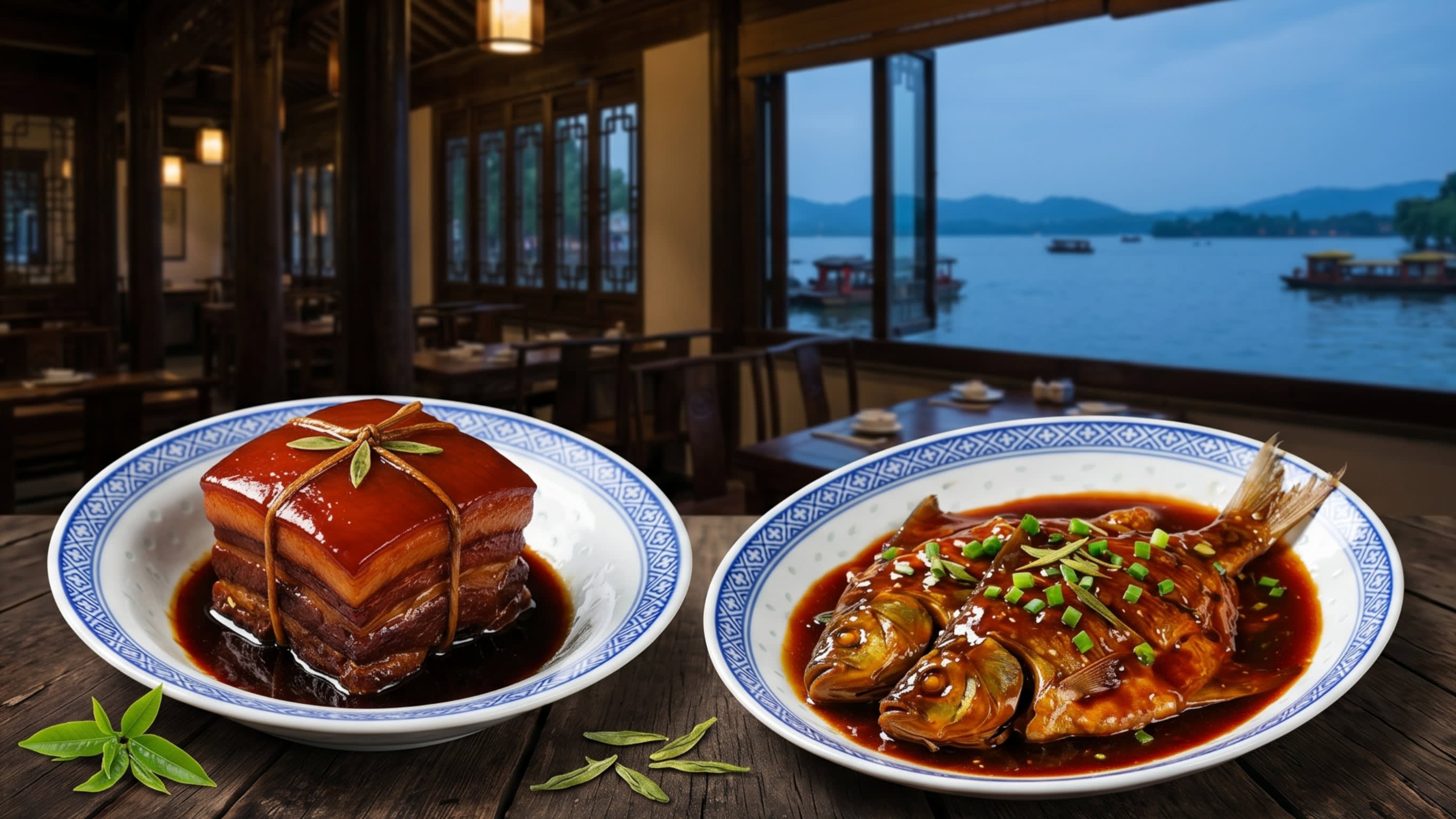
Hangzhou’s cuisine is essentially the garden on a plate. Zhejiang Cuisine (浙菜 - zhècài) is famous for its subtlety. You must try Dongpo Pork (东坡肉 - dōngpō ròu); legend claims the poet Su Dongpo invented this braised belly dish, which is so tender it dissolves instantly on the tongue.
When you seek out these traditional meals, look for small, independent “private kitchens” tucked away in historic lanes. They capture the yānhuǒqì (烟火气)—the “vibe of human life”—that truly defines the local experience. If you’re feeling inspired to cook, start with a high-quality clay pot to capture that slow-braised flavor.
Traveler’s Language Survival Table (Shanshui Edition)
Final Thoughts
Hangzhou is a city that invites you to breathe. In 2026, the greatest luxury isn’t speed, but the ability to slow your pulse to match the rhythm of the water. My best advice? Put the map away. Find a quiet pavilion, let the tea steep, and listen to the silence between the gusts of wind.
- Curator’s Note: Remember that access to landmarks like Lingyin Temple now requires booking via WeChat 3 days in advance. If you’re planning a longer trip, consider checking out my guide on how to master the bullet train in China to make your transit as serene as your destination.
Disclaimer: As an Amazon Associate, ChinaCurator earns from qualifying purchases.