🍜 Introduction: The Loudest, Most Satisfying Bowl of Noodles
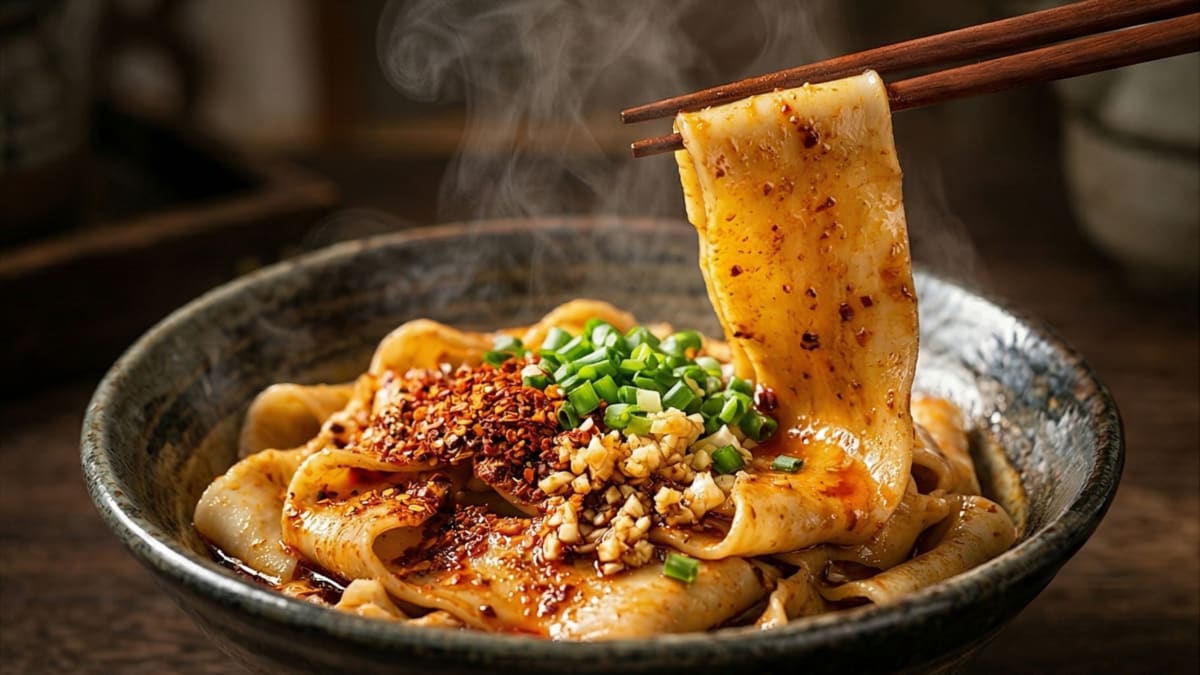
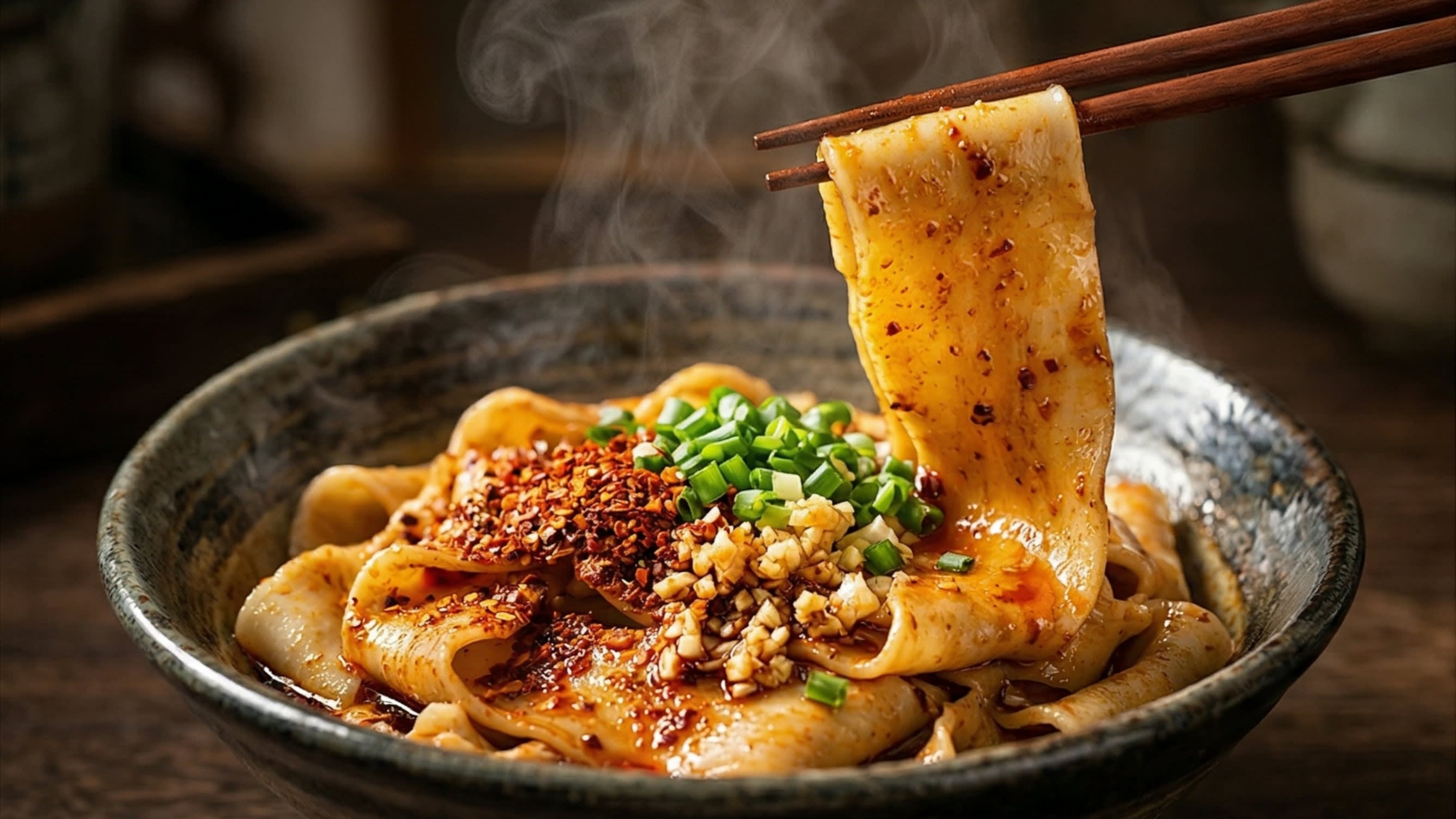
If you have spent any time on food social media lately, you have undoubtedly seen it—and more importantly, heard it. A bowl of massively wide, thick, rustic noodles topped with a mountain of garlic and bright red chili flakes. Then comes the climax: a ladle of smoking hot oil is poured directly over the spices, creating a violent, sizzling “whoosh” that instantly releases an intoxicating cloud of toasted garlic and chili aromas.
This sensory masterpiece is Yóupō Miàn (油泼面 - Hot Oil Seared Noodles), often served using the legendary, incredibly wide Biang Biang Noodles. Hailing from the Shaanxi province in northwestern China, this dish is the ultimate expression of rustic, carb-heavy comfort food. It requires no complex simmering of broths, no tedious chopping of a dozen vegetables, and no delicate meat velveting. It is a primal, aggressive dish that relies entirely on the magical alchemy of fresh dough, pungent aromatics, and searing hot oil.
If you have ever been intimidated by the idea of making hand-pulled noodles at home, do not panic. I have failed at this many times before finding the rhythm, so trust me when I say the process is incredibly forgiving and therapeutic. Today, we are going to dive into the cultural lore of this dish, decode the physics of a stretchy dough, and teach you how to master the ultimate hot oil splash.
📜 The Legend of “Biang”: The Most Complex Character in Chinese
Before we start kneading, we have to talk about the name. “Biang” is not a standard Chinese word. It is an onomatopoeia—a word created entirely to mimic a specific sound.
When street vendors in the ancient city of Xi’an make this dish, they take a thick piece of dough, grab it by both ends, and violently slap it against the stainless steel or wooden counter as they stretch it out. The sound the dough makes when it hits the table is a loud, resounding “Biang! Biang!”
The Chinese character invented for “Biang” is arguably the most complex character in the entire Chinese dictionary, boasting an astonishing 58 strokes. It is so complex that it cannot even be typed on a standard computer keyboard; you will usually only see it written on the hand-painted signboards of traditional noodle shops in Xi’an.
Furthermore, these noodles are famously known as Kùdàimiàn (裤带面 - Belt Noodles) because they are literally as thick, long, and wide as a leather belt. In local folklore, they are celebrated as one of the “Eight Strange Wonders of Shaanxi” (陕西八大怪), where locals proudly declare: “Noodles as wide as belts, and spicy chili is considered a main dish!” If you enjoy the art of traditional comfort food, you might also want to explore the history behind authentic Chinese Jiaozi.
🔬 The Science of the Stretch: “Che Mian” (扯面)
The biggest challenge home cooks face is making the dough. To make authentic hand-ripped noodles (扯面 - Chěmiàn), you must respect the science of gluten.
1. High-Protein Flour (高筋面粉)
You cannot use standard cake flour or cheap all-purpose flour for this. You need a strong gluten network to survive the aggressive stretching. You must use a high-quality bread flour, which has a protein content of at least 12%. The higher protein creates strong elastic bonds that act like rubber bands. Adding a generous pinch of salt further tightens this network.
2. The Oil Bath and Resting (涂油醒面)
This is the ultimate restaurant secret. Once you divide your kneaded dough into small logs, you must heavily coat them in vegetable oil, cover them, and let them rest (醒面 - Xǐngmiàn) for at least one hour. The resting period relaxes the tight gluten strands, preventing the dough from fighting back. The thick coating of oil ensures the dough stays supple and traps internal moisture, allowing you to pull the noodle to impressive lengths without tearing.
🔥 The Architecture of Flavor: The Hot Oil Splash (泼油)
The beauty of You Po Mian is that the sauce is constructed directly inside your serving bowl. It is a brilliant layering technique.
| Layer | Purpose |
|---|---|
| Liquid Foundation | Soy sauce and vinegar for salt and tang. |
| Fresh Noodles | Keeps the base warm for the oil splash. |
| Aromatic Tower | Garlic, scallions, and chili flakes bloom in hot oil. |
🛒 Ingredients List
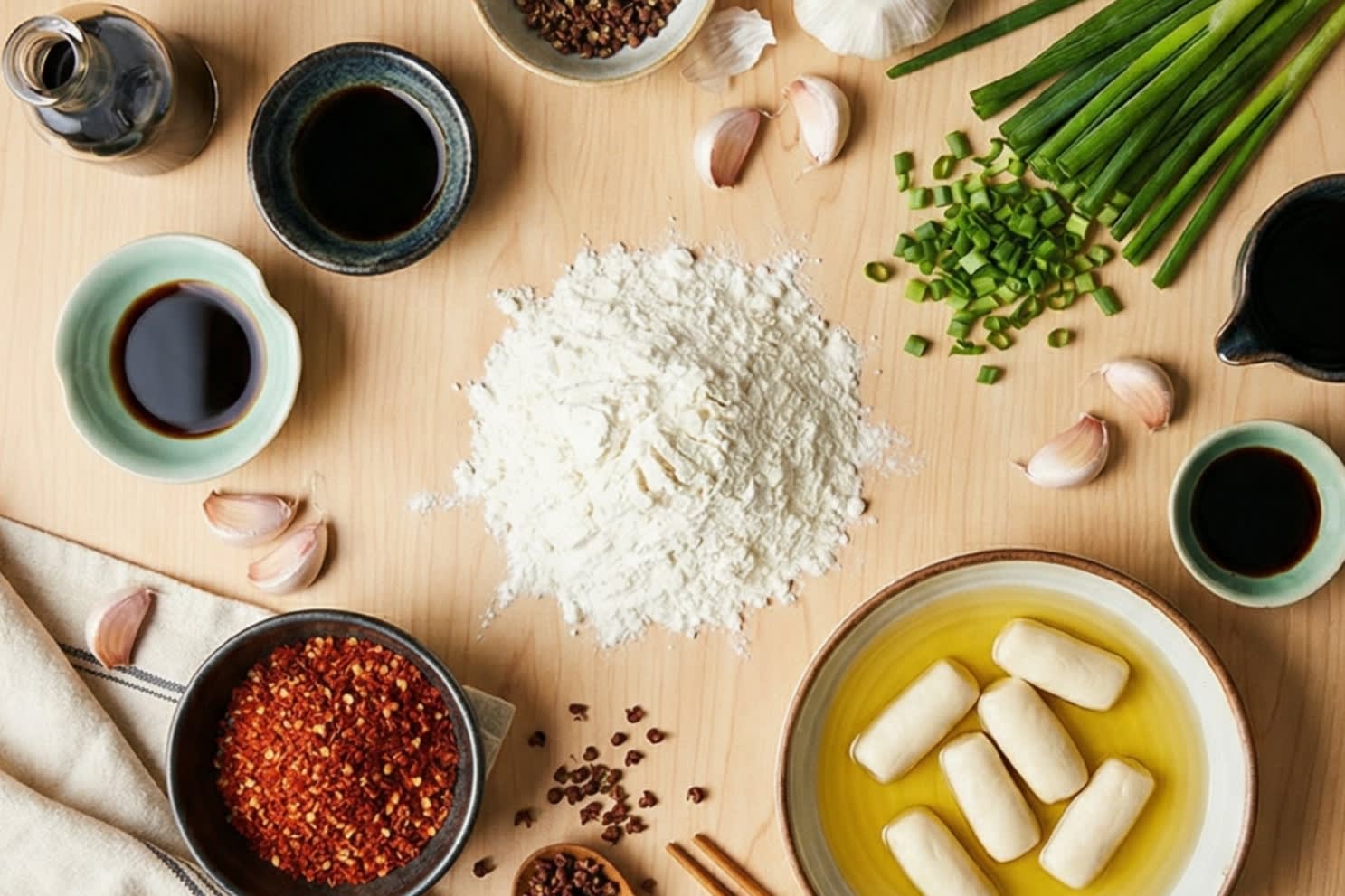
The “Belt Noodle” Dough (裤带面):
- 2 cups Bread Flour (高筋面粉)
- 1/2 tsp Salt
- 1/2 cup (plus 1 to 2 tbsp) Room Temperature Water
- 1/4 cup Cooking Oil (for coating)
The Aromatic Tower (Per Bowl):
- 2 tbsp Sichuan Chili Flakes (辣椒面)
- 2 cloves Garlic, finely minced (蒜末)
- 2 stalks Scallions (葱花), finely chopped
The Liquid Foundation (Per Bowl):
- 1.5 tbsp Light Soy Sauce (生抽)
- 1/2 tsp Dark Soy Sauce (老抽)
- 1 tbsp Chinkiang Black Vinegar (镇江香醋)
🍳 Step-by-Step Instructions
1. Make the Dough: Combine the flour and salt. Slowly drizzle in the water while stirring. Knead for 10 minutes until smooth. Cover and rest for 10 minutes, then knead again.
2. The Oil Bath: Divide the dough into 6 logs. Brush a dish with oil, place logs inside, and brush them heavily with more oil. Cover tightly and rest for 2 hours.
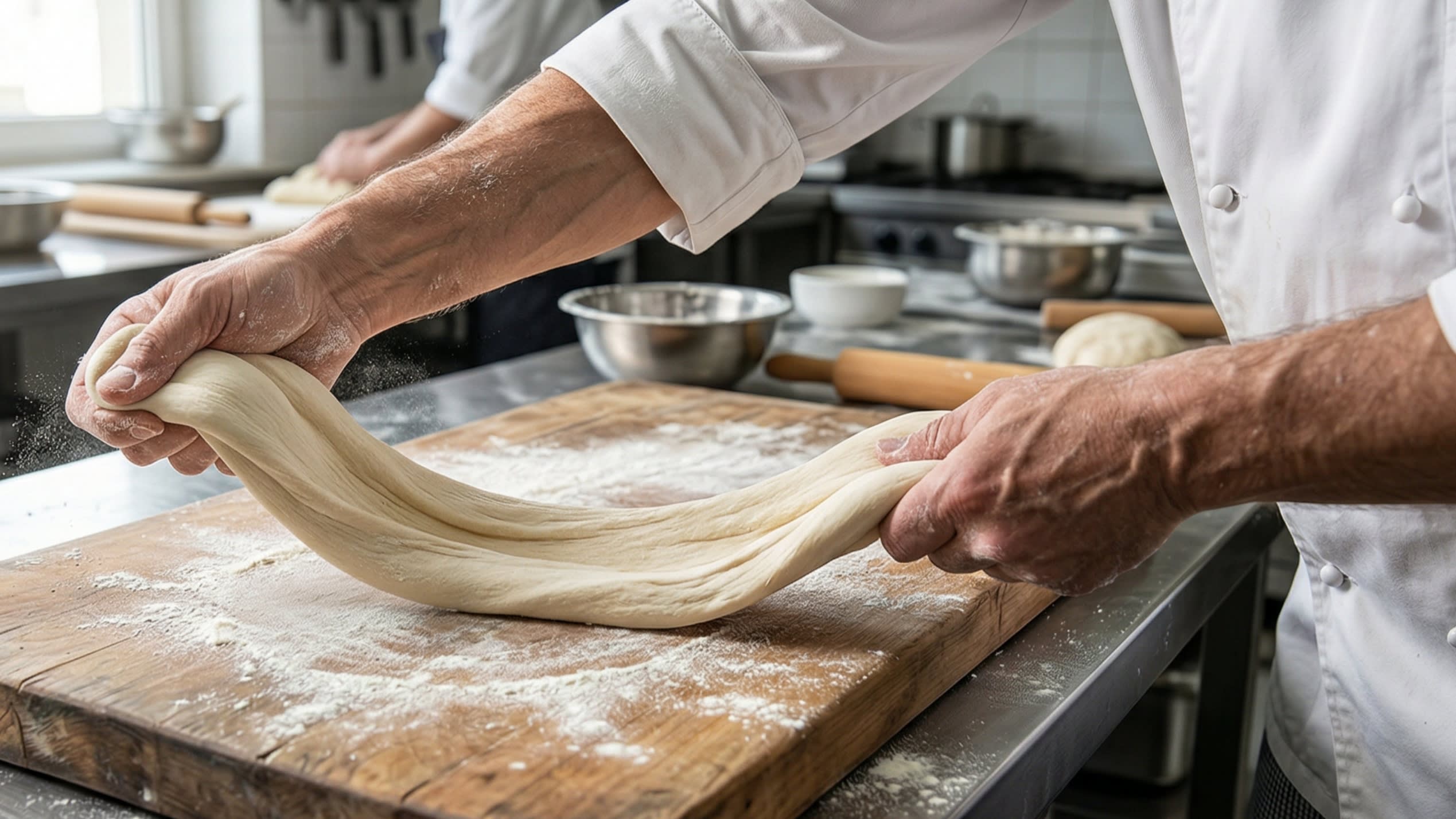
3. The “Biang” (Stretching): Flatten the log, press a line down the center with a chopstick, and pull both ends while slapping the middle against the counter. Tear along the line to create a loop.
4. Boil: Boil for 2–3 minutes with some bok choy.
5. Assemble: Place noodles over your soy sauce and vinegar mix. Top with garlic, scallions, and chili flakes.
6. The Sizzle (泼油 - The Climax): Heat oil to 375°F (190°C). Pour over the aromatics. The sizzle is the heart of the dish!
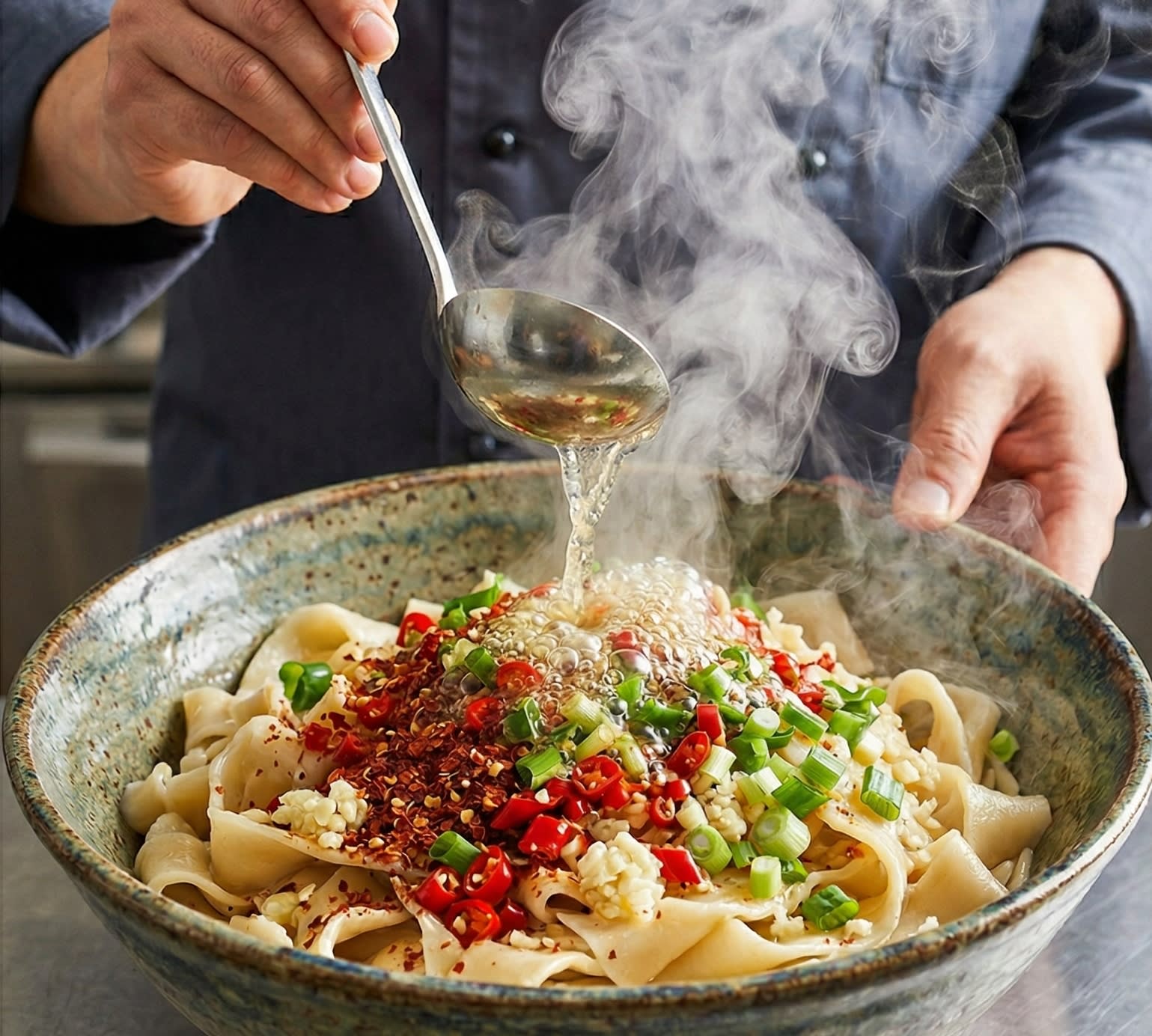
7. Mix and Devour: Toss everything together and enjoy immediately. If you love this, consider mastering authentic Chinese lo mein next!
💡 Troubleshooting
- Dough snaps? Rest it longer. Gluten needs time to relax.
- Burned chilies? Use coarser flakes, not fine powder.
- Still hungry? Maybe try pairing this with a refreshing smashed cucumber salad to cut through the richness.
🎥 Watch the Authentic Slapping Technique
Disclaimer: As an Amazon Associate, ChinaCurator earns from qualifying purchases.