
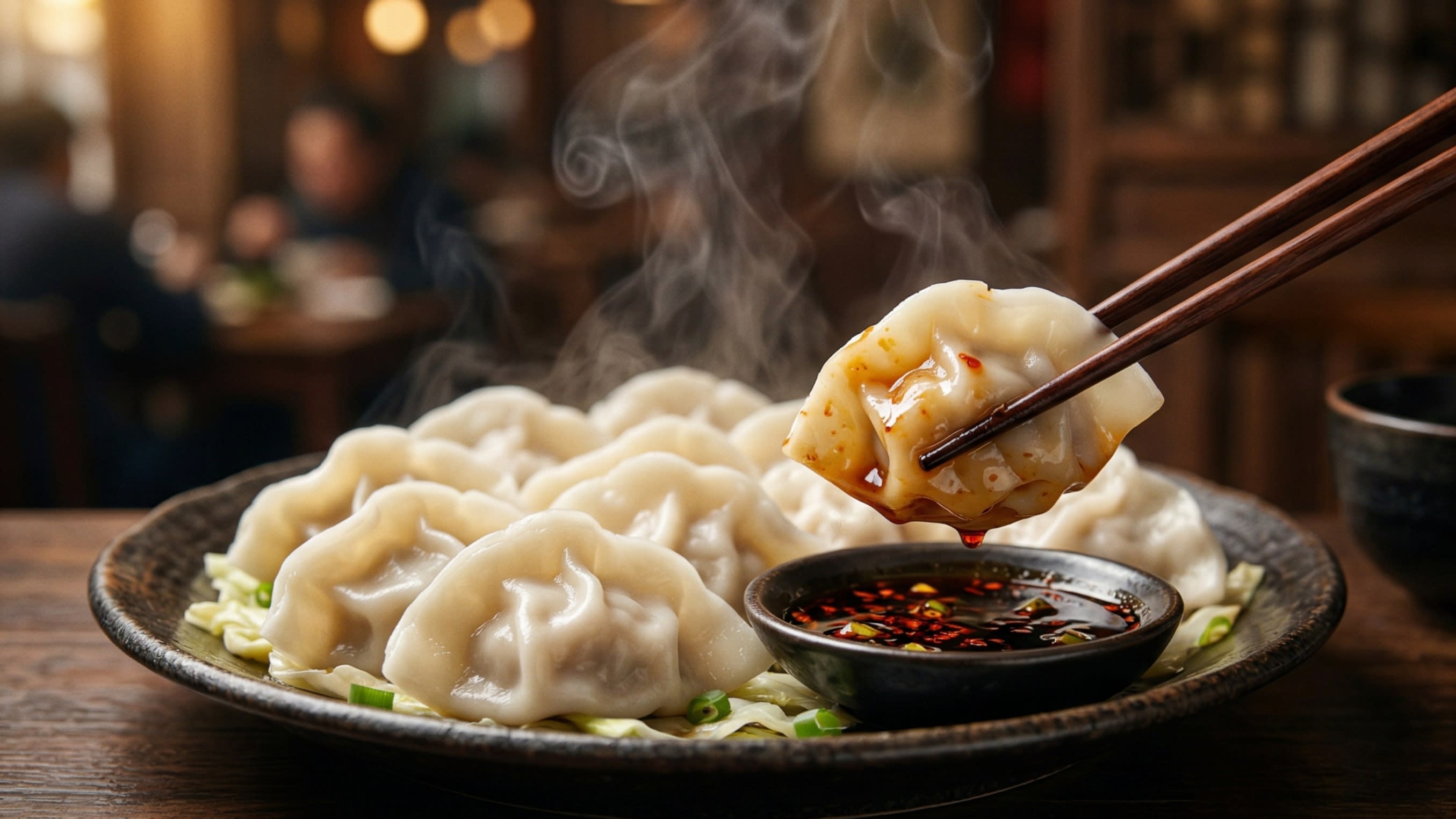
🥟 Introduction: The Taste of Reunion
In the vast and storied culinary landscape of China, no single dish carries as much emotional weight as Jiaozi (饺子)—the traditional boiled dumpling.
While many abroad view these as a simple takeout appetizer, for those of us who grew up in China, Jiaozi is the heartbeat of the home. On the eve of the Chinese New Year (除夕 - Chúxī), the scene is universal: generations gathered around a flour-dusted dining table. Grandmothers teach grandchildren the specific rhythm of the fold, fingers moving in a practiced dance while the television hums with the festivities of the Spring Festival Gala.
The shape of the dumpling is no accident; it is modeled after the Yuánbǎo (元宝), the ancient silver ingot that signifies wealth. Eating them is a ritual of inviting prosperity into the coming year. We even have a tradition of hiding a single clean coin or a peanut inside a dumpling—the “lucky” person who finds it is said to be blessed with a year of fortune.
Beyond the superstition, there is the craft. Making Jiaozi from scratch is a labor of love that rewards you with textures and flavors impossible to find in frozen supermarket bags. Today, I’m sharing the true craft: how to master a dough that remains chewy yet delicate, how to create a filling that stays succulent, and the essential boiling method that prevents these treasures from ever bursting in your pot.
🌾 The Science of the Dough: Cold Water is King
A great boiled dumpling wrapper (饺子皮 - Jiǎozipí) is a paradox: it must be thin enough to feel dainty on the tongue, yet elastic enough to withstand the turbulence of a boiling pot.
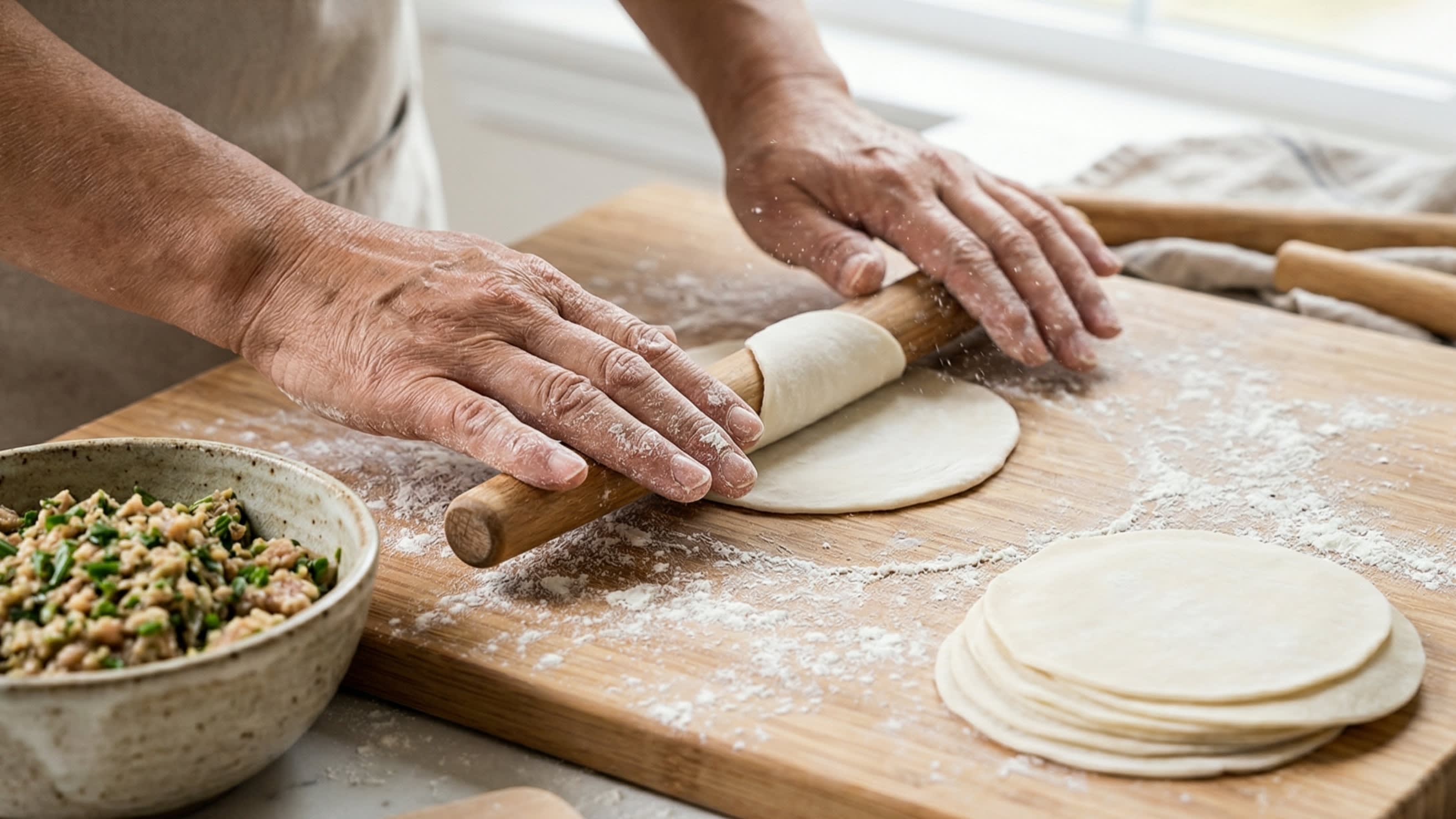
The secret is the Cold Water Dough (冷水面 - Lěngshuǐ miàn). Unlike dough for steamed or baked goods, where we might use warm water to soften the grain, Jiaozi dough demands cold, room-temperature water. This choice prevents the proteins from setting too early, allowing the gluten to develop into a tight, elastic web. The result is the texture we describe as Jìndào (劲道)—a satisfying, springy resistance that characterizes a high-quality dumpling.
Once the dough is kneaded, you must allow it to rest (醒面 - Xǐngmiàn). Think of this as the dough taking a nap; it lets the flour fully hydrate and the tight gluten strands relax, ensuring that when you roll it out, it doesn’t snap back like a rubber band.
🥬 The Legendary Filling: Pork and Chinese Chives
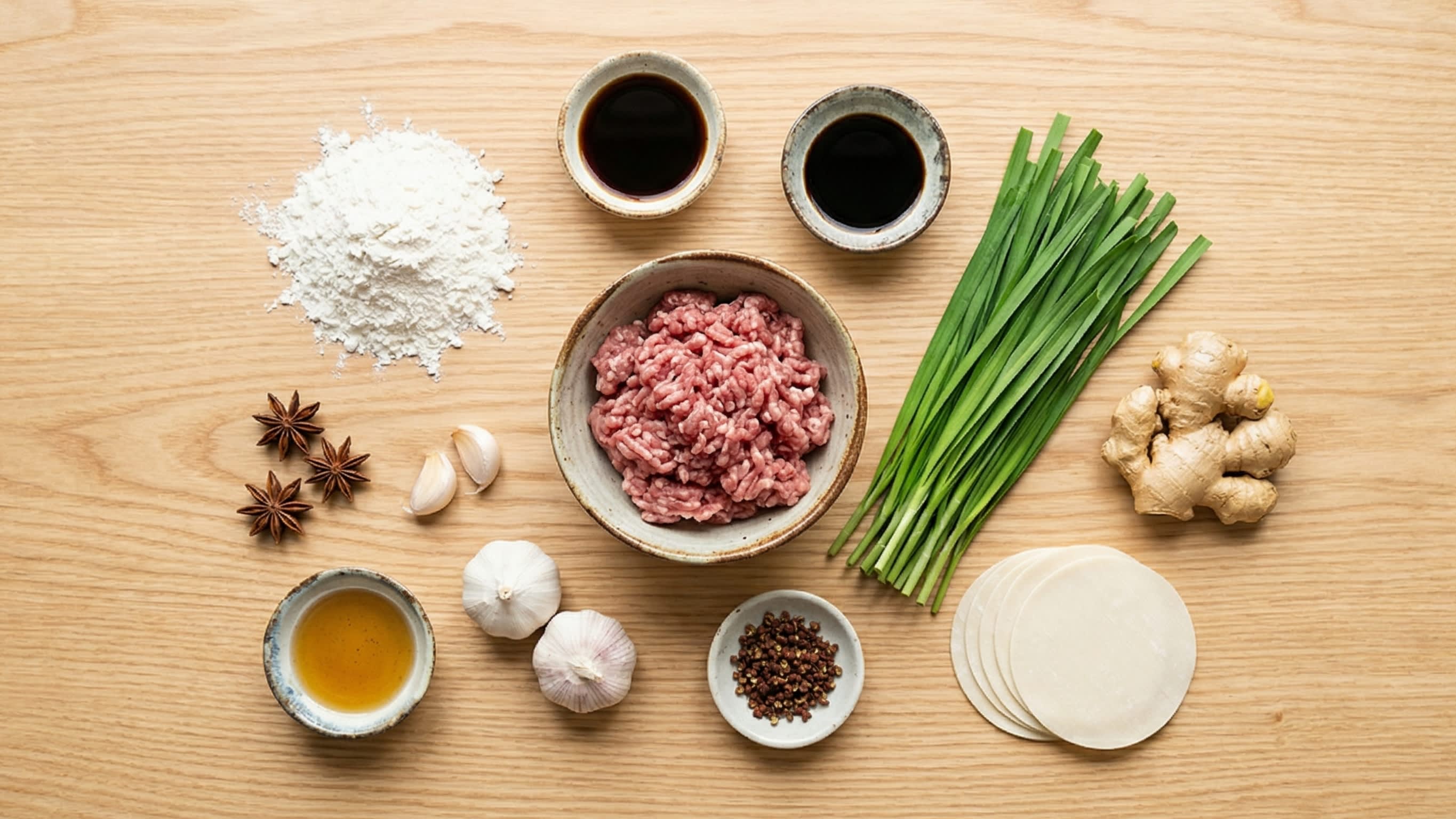
While my kitchen has seen fillings ranging from shrimp to wild mushrooms, the classic Pork and Chinese Chives (猪肉韭菜 - Zhūròu Jiǔcài) remains the absolute gold standard.
The Chinese chive (韭菜 - Jiǔcài) isn’t a delicate herb; it’s a robust, flat-leaf powerhouse with a pungent, garlicky kick that pierces through the richness of the ground pork.
The “Da Shui” Secret for Juiciness: If you’ve ever bitten into a dumpling and found a dry, crumbly meatball, you’ve skipped the most critical step: Dǎshuǐ (打水). This literally translates to “beating in water.” By slowly incorporating flavored liquid—such as ginger-infused water—into your ground pork, you force the meat proteins to absorb the moisture. As you stir in one single direction, the meat transforms from a loose grind into a sticky, bouncy paste that releases a river of flavor the moment you take that first bite.
| Ingredient | Role |
|---|---|
| Ground Pork (70/30) | Provides the rich fat content for moisture. |
| Chinese Chives | The aromatic soul that cuts the richness. |
| Ginger Water | Removes "porky" odor and adds brightness. |
🌊 The Boiling Secret: “Dian Shui” (点水)
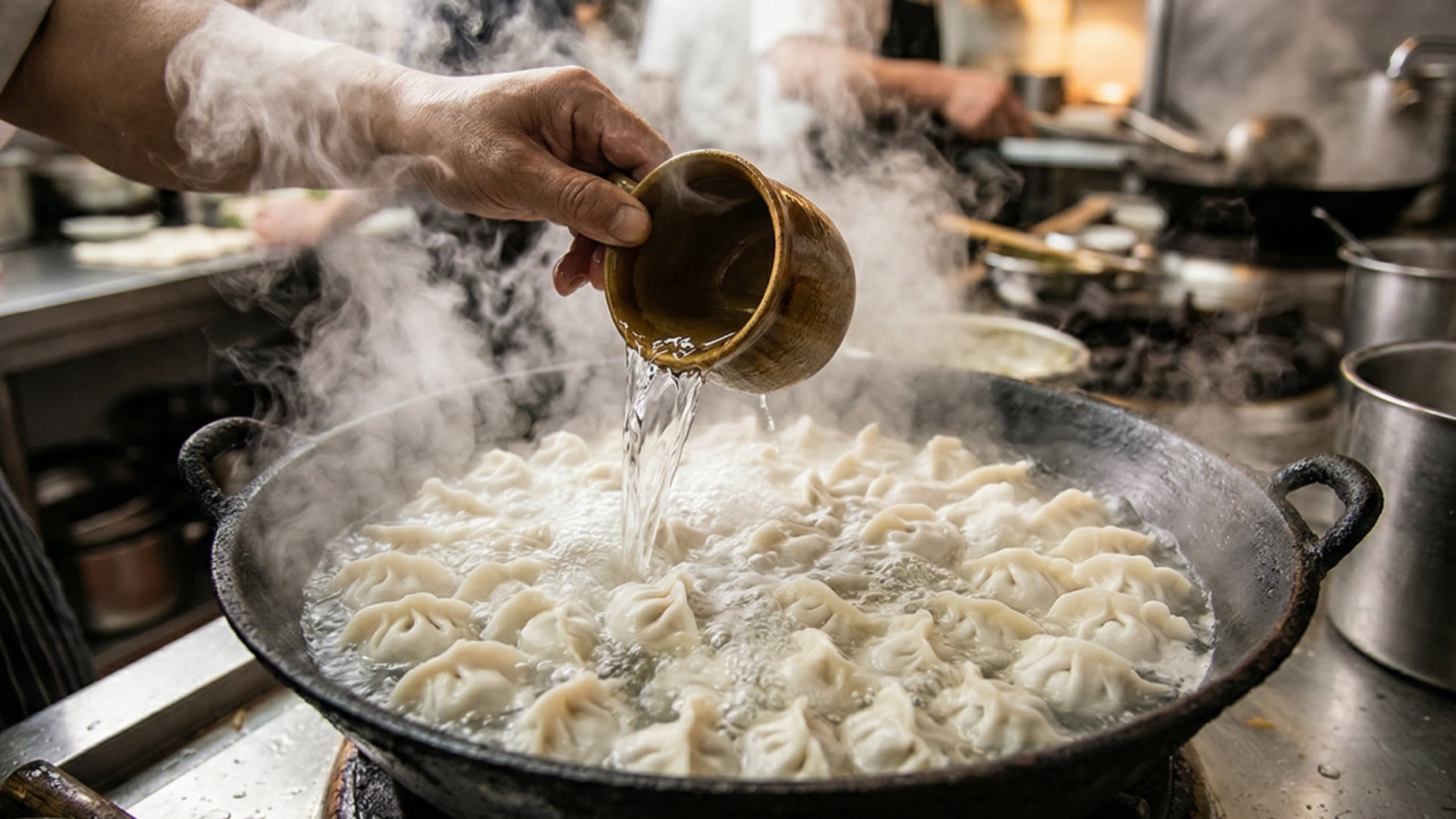
Most beginners treat dumplings like Italian pasta—throwing them in and hoping for the best. If you maintain a violent, rolling boil, the turbulence will tear your wrappers before the meat is cooked.
The ancient Chinese solution is Diǎnshuǐ (点水)—literally “dotting with water.” When the pot reaches a boil, we pour in a half-cup of cold water. This calms the surface, protecting the delicate skins while allowing the interior meat to cook gently through the residual heat. We repeat this three times, a process we call “Three Boils” (煮三开). By the final boil, the dumplings are perfectly plump, translucent, and floating on the surface like little clouds.
🍳 The Authentic Recipe
The Dough
- 3 cups All-Purpose Flour
- 1 cup Cold Water
- 1/4 tsp Salt
The Pork & Chive Filling
- 1 lb Ground Pork (70% lean)
- 1/2 lb Chinese Chives, finely chopped
- 1 tbsp fresh Ginger, grated
- 2 tbsp Light Soy Sauce
- 1 tbsp Dark Soy Sauce
- 1 tbsp Shaoxing Cooking Wine
- 2 tbsp Toasted Sesame Oil
- 3 tbsp Cold Water (for Da Shui)
Instructions
- Dough: Combine flour and salt, then stir in water to form a shaggy dough. Knead for 10 minutes until smooth. Cover and rest for 30 minutes.
- Filling: Mix pork with soy sauces, wine, ginger, and 3 tbsp cold water. Vigorously stir in one direction until sticky. Fold in chives and sesame oil last.
- Roll: Divide dough, cut into 10g pieces, and use a small wooden rolling pin to roll thin wrappers.
- Fold: Place filling in the center and pinch the edges firmly.
- Boil: Drop into a large pot of boiling water. Repeat the “Three Boils” method by adding cold water to keep the rolling boil in check.
💡 Pro Tips for Success
- Dipping Sauce: My favorite blend is Chinkiang black vinegar, a splash of soy sauce, and a generous spoonful of Lao Gan Ma chili crisp. The acidity cuts through the savory fat beautifully.
- Freeze Them: If you make a massive batch, freeze them uncooked on a floured tray before bagging them. They cook perfectly straight from frozen!
- Tools: While you can get by, a stainless steel spider strainer is worth its weight in gold to lift these out without tearing.
If you find yourself needing a little more practice with your dumpling technique, consider exploring the delicate Har Gow (Crystal Shrimp Dumplings) for a different, yet equally rewarding, challenge. Or, if you want to master more flavor-packed Sichuan comfort, my guide on Mapo Tofu is a must-try.
🎥 Watch How to Make It
Disclaimer: As an Amazon Associate, ChinaCurator earns from qualifying purchases.