
🥢 Introduction: The Miracle of Chinese Dim Sum
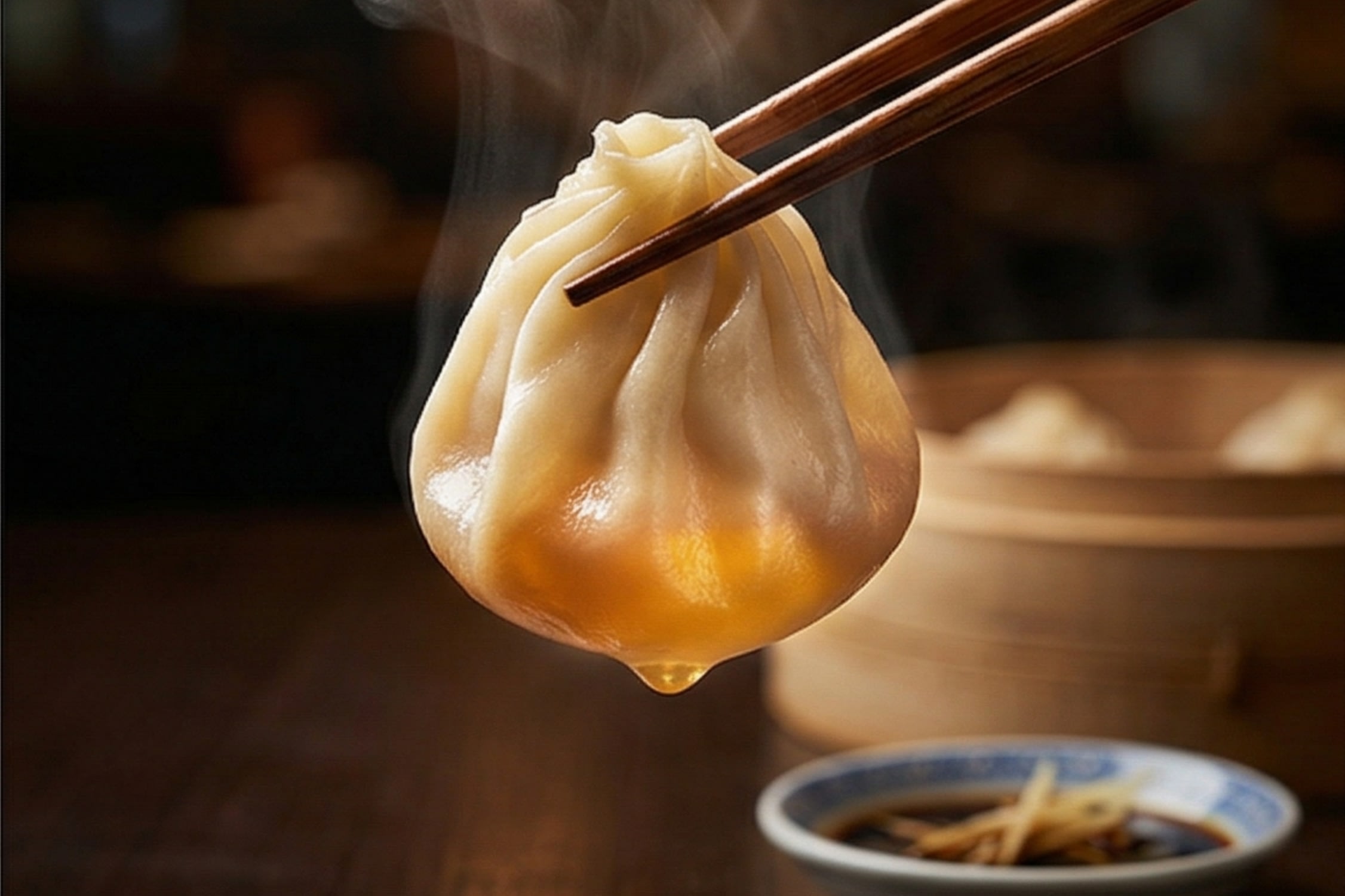
If there is a single dish that represents the pinnacle of Chinese culinary engineering, it is undeniably Xiao Long Bao (小笼包 - Xiǎolóngbāo), famously known in the West as Soup Dumplings.
Originating from the Jiangnan region of China, specifically the water towns surrounding Shanghai, these little parcels of joy have evolved into a global obsession. At famous restaurants, I’ve seen diners wait for hours just to experience that singular moment of magic: biting into a delicate, translucent dough wrapper and having a burst of rich, savory, steaming hot broth flood their palate. It is a sensory experience that balances the silky texture of the dough, the umami of the pork, and the warmth of the aromatics.
For years, the biggest mystery for many was a question of simple, elegant physics: “How do they get the liquid soup inside the dough?” Some guessed at syringes, others at frozen ice cubes. Today, I’m pulling back the curtain on this legend. We are going to explore the ancient Chinese technique of Pídòng (皮冻 - Pork Aspic), master the architecture of the dough, and perfect that elusive 18-pleat fold.
If you love these, you might also want to try mastering our Authentic Chinese Jiaozi or, for a different kind of soup-filled comfort, the Authentic Xiao Long Bao remains the gold standard of dim sum skill.
🔬 The Secret: The Magic of Aspic (皮冻)
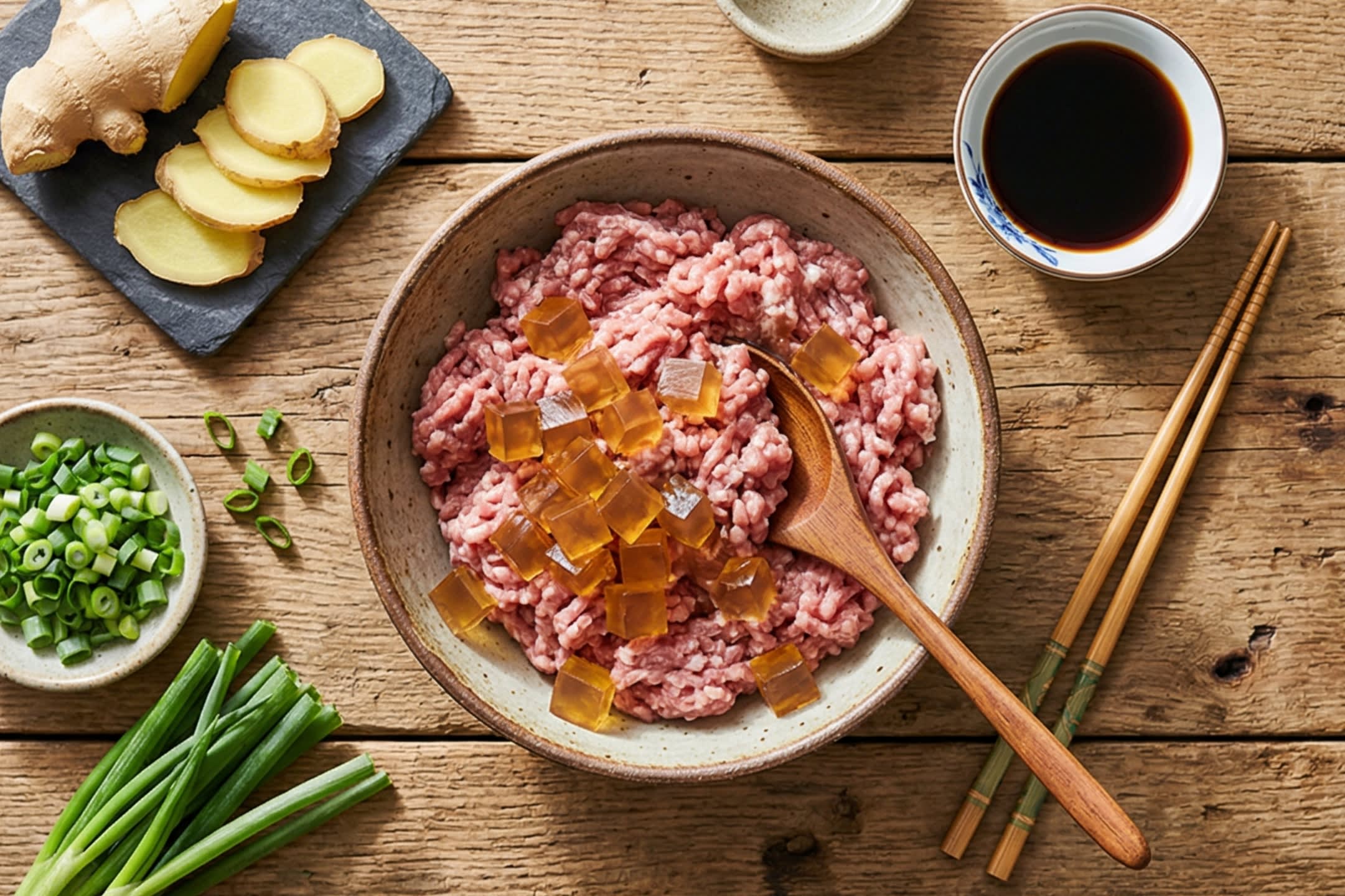
The true secret isn’t a modern gadget—it is the ancient culinary mastery of Pídòng (皮冻 - Pork Aspic). You do not inject the soup; you fold it into the meat as a solid, gelatinous cube.
In traditional kitchens, chefs boil pig skin, pork bones, ginger, and scallions for hours. The skin is a goldmine of collagen. When the broth cools, that collagen turns into a firm, jiggly jelly. We mince this jelly and fold it into our raw pork filling. When the dumpling hits the heat of a 蒸笼 (Zhēnglóng - Bamboo Steamer), the jelly melts instantly into the “explosive juice” (爆汁 - Bàozhī) we all crave.
🚨 The Home Chef Shortcut: Making traditional skin aspic takes hours of patient simmering. For a Sunday afternoon project, I use a high-quality chicken broth stabilized with unflavored gelatin powder. It delivers that luxurious, lip-smacking mouthfeel in a fraction of the time.
🏗️ The Architecture of the Dough
Making the wrapper for Xiao Long Bao is a test of patience. The dough must be thin enough to be ethereal, yet sturdy enough to hold a tablespoon of boiling liquid without rupturing.
We use a warm-water dough technique here. The warmth relaxes the protein in the flour, making the dough exceptionally pliable. When you begin rolling the wrappers (擀皮 - Gǎnpí), remember the “Thick Center Rule”: the center of your circle should remain slightly thicker than the edges. That center acts as the anchor, preventing the dumpling from bursting when it hangs heavy with soup.
| Step | Key Technique |
|---|---|
| Dough Mixing | Use warm water to denature gluten for a supple texture. |
| The Aspic | Must be fully chilled until firm before folding into meat. |
| The Pleat | Aim for 14-18 pleats; seal with a tight twist. |
🛒 Ingredients List
The “Shortcut” Soup Jelly (皮冻):
- 1 cup high-quality rich Chicken Broth
- 1 tbsp Unflavored Gelatin Powder
- 1 slice fresh Ginger
- 1 Scallion
The Dough:
- 2 cups All-Purpose Flour
- 3/4 cup Warm Water (120°F)
- 1 tsp Cooking Oil
The Pork Filling:
- 1 lb Ground Pork (30% fat content is essential for flavor!)
- 1 tbsp Grated Ginger
- 2 stalks Minced Scallions
- 2 tbsp Light Soy Sauce
- 1 tbsp Shaoxing Cooking Wine
- 1 tsp Toasted Sesame Oil
- 1/2 tsp Salt & 1/4 tsp White Pepper
The Dipping Sauce (姜丝醋):
- 3 tbsp Chinkiang Black Vinegar
- Fresh Ginger, julienned into needle-thin strips
🍳 Step-by-Step Instructions
1. The Aspic Foundation: Simmer your broth with ginger and scallions. Whisk in the gelatin until dissolved. Pour into a shallow tray and refrigerate until it sets into a bouncy, firm jelly. Once set, dice it into tiny 5mm cubes.
2. The Dough: Combine flour, water, and oil. Knead for 10 minutes until your hands feel the dough turn smooth and elastic. Let it rest for 30 minutes—this is non-negotiable, as it allows the gluten to relax for rolling.
3. Filling: Mix your pork with seasonings, stirring vigorously in one direction to create a sticky texture. Fold in the chilled aspic cubes right before you begin assembly so they stay solid.
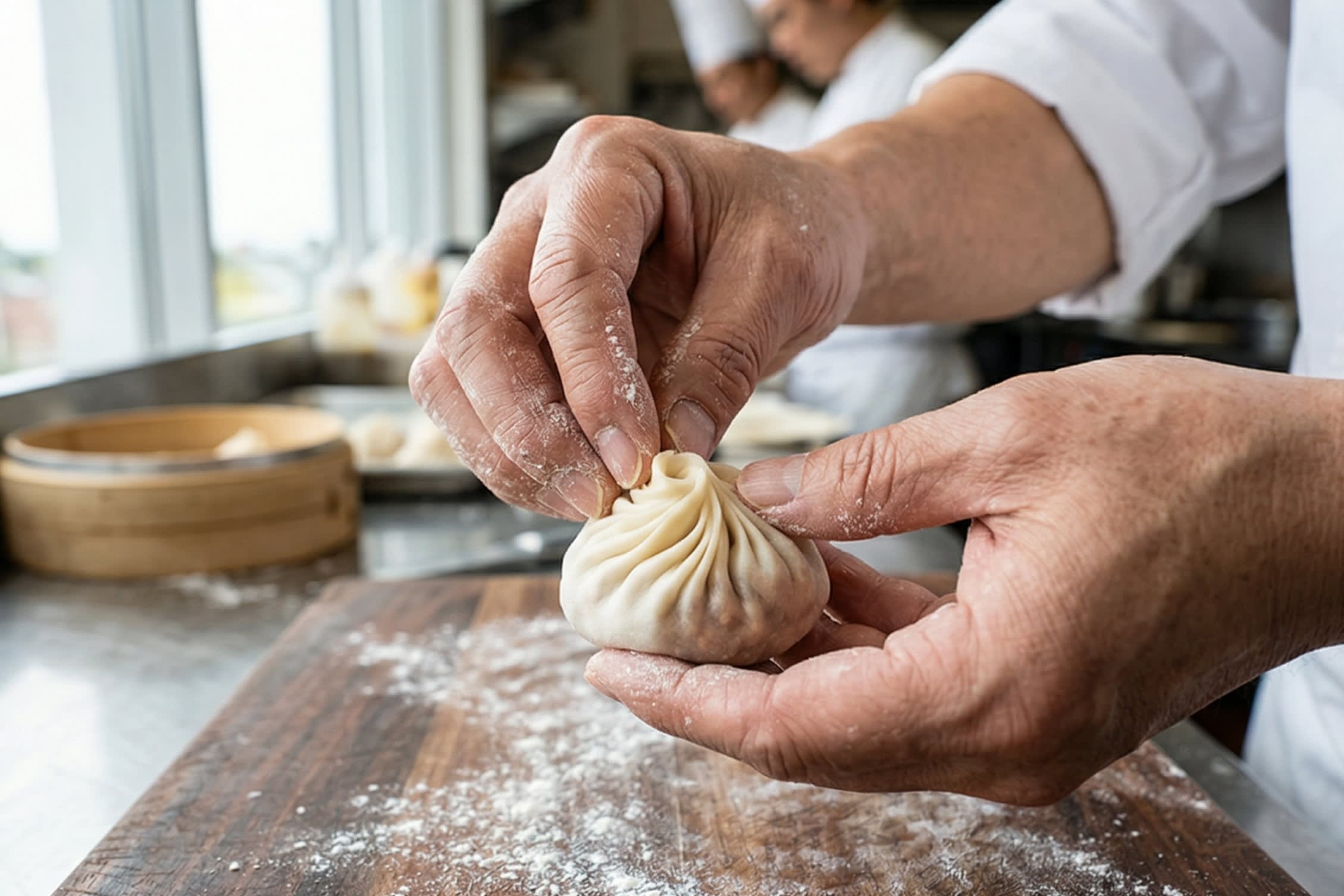
4. The 18-Pleat Technique: Roll a 10g piece of dough into a thin circle. Add a tablespoon of filling. Using your thumb and index finger, pinch the edge and rotate, creating fine pleats. Twist the top tightly to seal.
5. Steam to Perfection: Prepare your Bamboo Steamer with Perforated Liners. Steam over boiling water for 8-10 minutes. Watch for the wrappers to turn translucent—that is your visual cue that the aspic inside has transformed into liquid soup.
🥢 The Art of Eating Xiao Long Bao
Do not dive in blindly! If you ignore the technique, you will burn your tongue or lose all that precious broth to your bowl. Follow the mantra: 轻轻提,慢慢移,先开窗,后喝汤 (Gently lift, slowly move, open a window, then drink the soup).
- Lift: Use your chopsticks to grasp the knot.
- Move: Transfer to your spoon.
- Window: Nibble a tiny hole in the side to release the steam.
- Soup: Slurp the broth, then enjoy the meat and wrapper with the vinegary ginger.
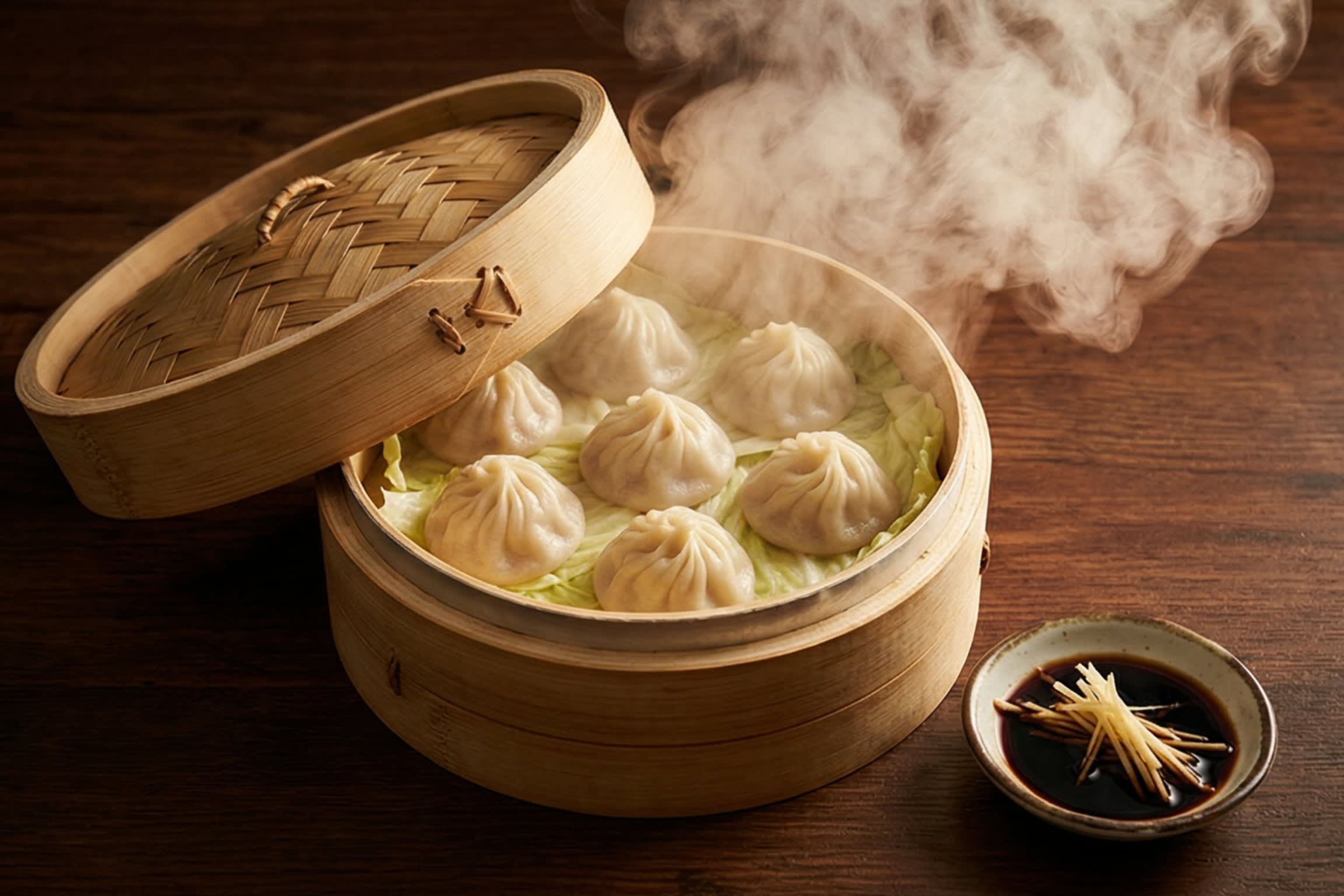
By taking the time to learn the geometry of the pleat and the chemistry of the aspic, you aren’t just making dinner; you are participating in a tradition that has spanned generations of Jiangnan families. Grab your steamer, get your ginger ready, and enjoy the process.
Disclaimer: As an Amazon Associate, ChinaCurator earns from qualifying purchases.