
🥟 Introduction: The Holy Grail of Chinese Dim Sum
If you want to test the true skill of a traditional Cantonese Dim Sum chef, I believe you should not order the spring rolls, and you certainly shouldn’t judge them by their fried rice. You order one thing, and one thing only: Har Gow (虾饺 - Xiājiǎo).
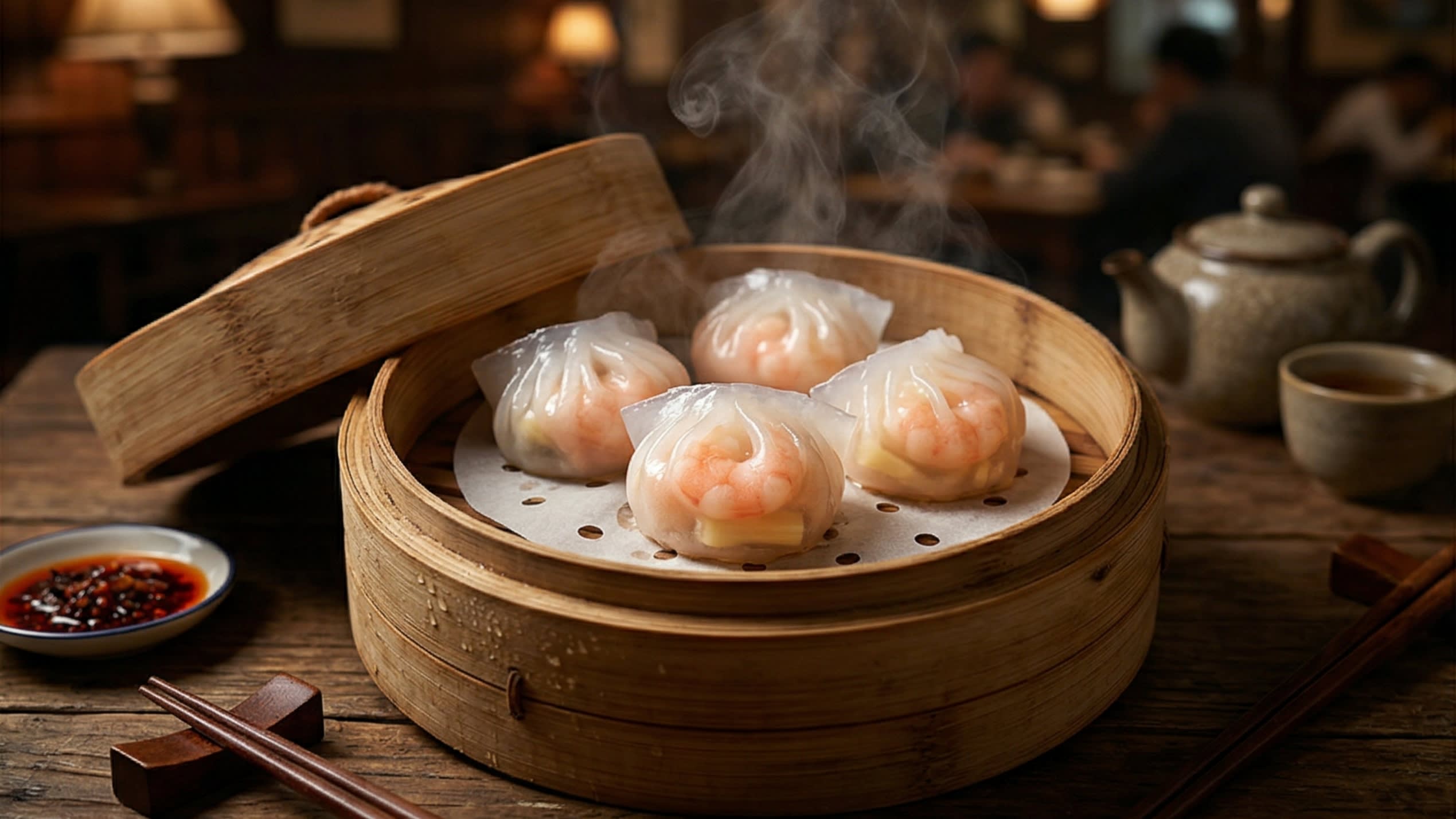
When I first attempted to master these at home, I failed miserably. My wrappers were thick, cloudy, and tore apart the moment I tried to pleat them. It took years of observing the masters in Guangzhou to understand that Har Gow isn’t just a snack; it’s an edible jewel. When executed flawlessly, the wrapper must be breathtakingly translucent (晶莹剔透 - Jīngyíng tītòu), impossibly thin, yet structurally sound.
The classic requirement is 9 to 13 delicate, precise pleats—a technique that mimics the elegant curve of a spider’s belly. When you finally take a bite, the wrapper should offer a subtle, clean chew that gives way to a flavor explosion: succulent, juicy shrimp possessing that highly sought-after, springy, crisp texture known as Tányá (弹牙 - Bouncing against the teeth). This snap is perfectly balanced by the earthy, refreshing crunch of fresh bamboo shoots.
Today, I’m demystifying the intimidating science behind the Dim Sum kitchen. We’ll cover the specific starch matrix required for that “crystal” look, the mandatory chemistry of “scalding” the dough, and the secret, savory fat that transforms a simple shrimp into a culinary masterpiece.
🔬 The Science of the Wrapper: Cheng Fen (澄粉)
The most common fatal mistake I see beginners make is treating Har Gow dough like standard dumpling dough. You absolutely cannot use regular all-purpose wheat flour here. The gluten in regular flour is the enemy of translucency; it makes the wrapper opaque, heavy, and chewy in a way that distracts from the delicate shrimp.
To achieve that legendary glass-like finish, Cantonese chefs rely on a specific synergy of two refined starches:
- Wheat Starch (澄粉 - Chéngfěn): This is wheat flour that has had its gluten completely washed away. It provides the essential structure and the pristine, snow-white aesthetic.
- Tapioca Starch (木薯粉 - Mùshǔfěn): Wheat starch alone is brittle and would crumble during folding. Tapioca starch provides the magical elasticity, the gloss, and that signature, brilliant transparency.
The Chemistry of Scalding (烫面 - Tàng Miàn)
Because there is zero gluten, mixing this with cold water results in a sandy, unusable mess. You must employ the Tàng Miàn (烫面), or “scalding” technique. By pouring violently boiling water into the starch blend, the intense heat forces the starches to gelatinize instantly. This creates a natural, sticky matrix that becomes remarkably pliable once kneaded with a touch of oil or lard.
🍤 The Secret of the Bouncy Shrimp (打虾胶)
A beautiful wrapper is meaningless if the filling is rubbery or dry. Because shrimp is lean protein, it needs a little help to stay juicy.
The Fat Secret (猪板油): In the dim sum halls I frequent, chefs always incorporate a tiny amount of raw Pork Back Fat (猪油 / 猪板油) into the filling. As the dumpling steams, this fat liquefies, basting the shrimp from the inside and creating that glorious burst of savory juice. If you don’t eat pork, a very cold, high-quality butter works as a substitute, but the traditional lard is the gold standard for that silky mouthfeel.
The Whipping Technique (上劲): This is the step most home cooks skip, but it’s non-negotiable. After chopping the shrimp—not puréeing it, but smashing it with a heavy cleaver—you must stir the mixture vigorously in one single direction for three minutes. This aligns the proteins, creating the legendary, snappy Tányá (弹牙) bounce that separates a master chef’s work from a standard takeout dumpling.
🛒 Ingredients List
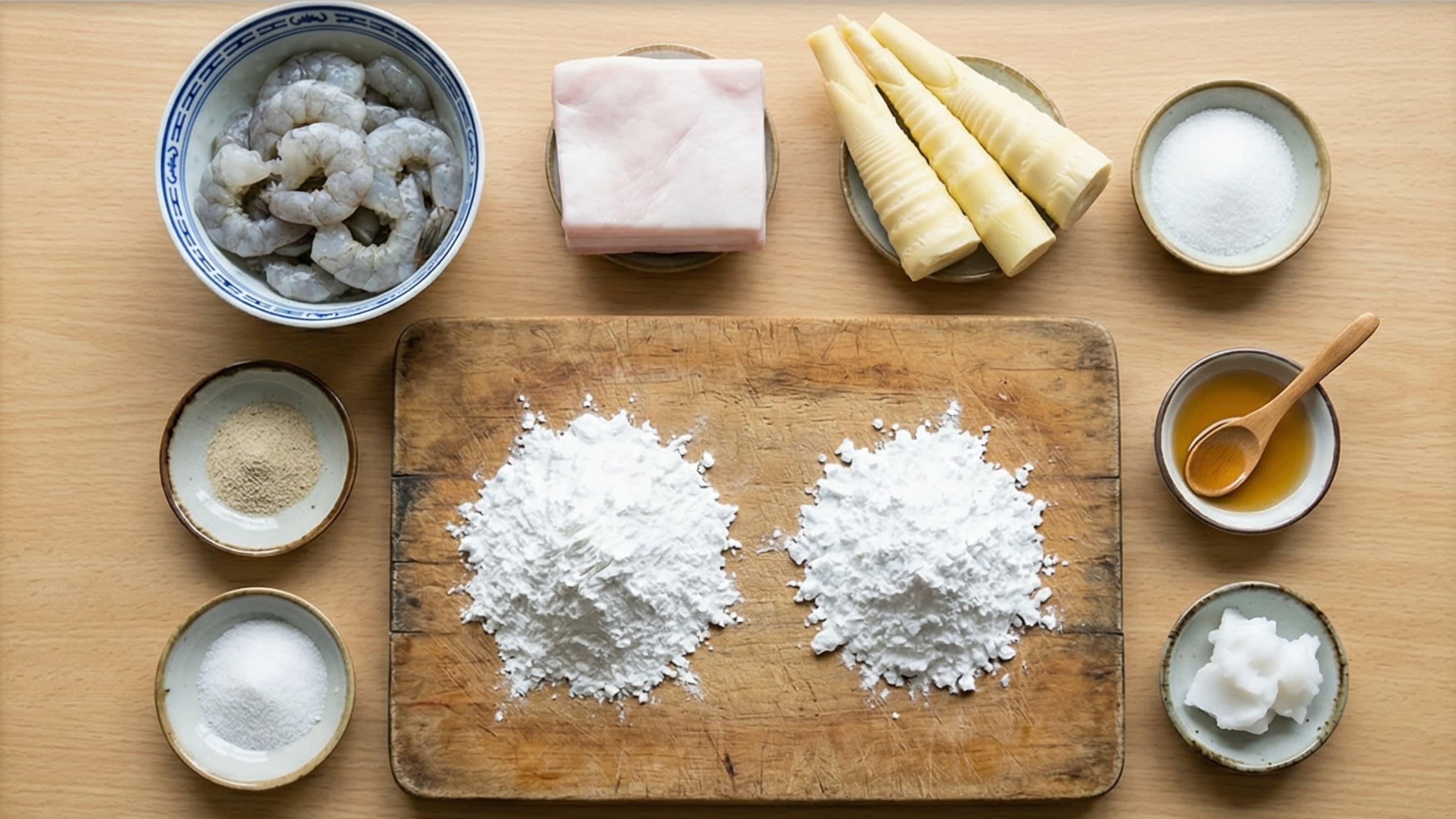
| Category | Ingredient |
|---|---|
| The "Crystal" Dough | 120g Wheat Starch, 40g Tapioca Starch, 180ml boiling water, 1 tbsp lard. |
| The "Bouncy" Filling | 350g fresh shrimp, 60g minced pork fat, 60g diced bamboo shoots, seasonings. |
🍳 Step-by-Step Instructions
1. Prepare the Bouncy Filling: After drying your shrimp thoroughly, use the flat side of a cleaver to gently smash them. This preserves the structural integrity of the meat better than a food processor. Add the minced pork fat, diced bamboo shoots, salt, sugar, white pepper, sesame oil, and cornstarch. Stir in one direction until the mixture looks sticky and elastic. Refrigerate for 30 minutes; cold shrimp is much easier to wrap.
2. Scald the Dough: Whisk the starches and salt. Pour in the boiling water and stir immediately. It will form a clumpy, translucent mass. Let it rest, covered, for 5 minutes.
3. Kneading: Add the lard, and knead the dough on a clean surface until smooth and glass-like. Keep the dough covered with a damp cloth at all times, as the wheat starch loses moisture rapidly.
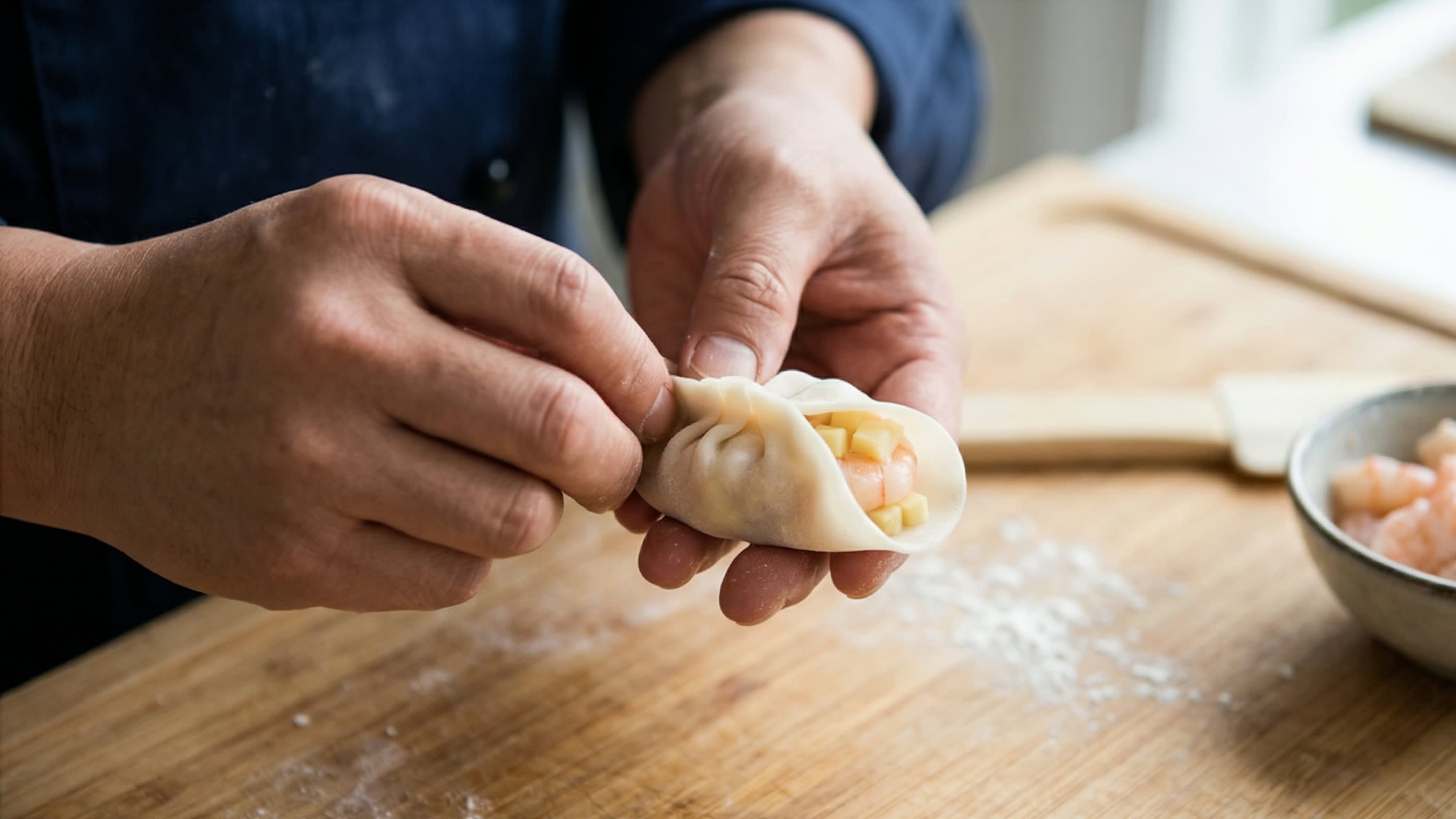
4. Pleating: Roll or press the dough into thin circles. Place a teaspoon of filling in the center, and start your pleats. If you are interested in refining your dim sum skills further, I highly recommend learning how to make Authentic Xiao Long Bao as a contrast to these steamed beauties.
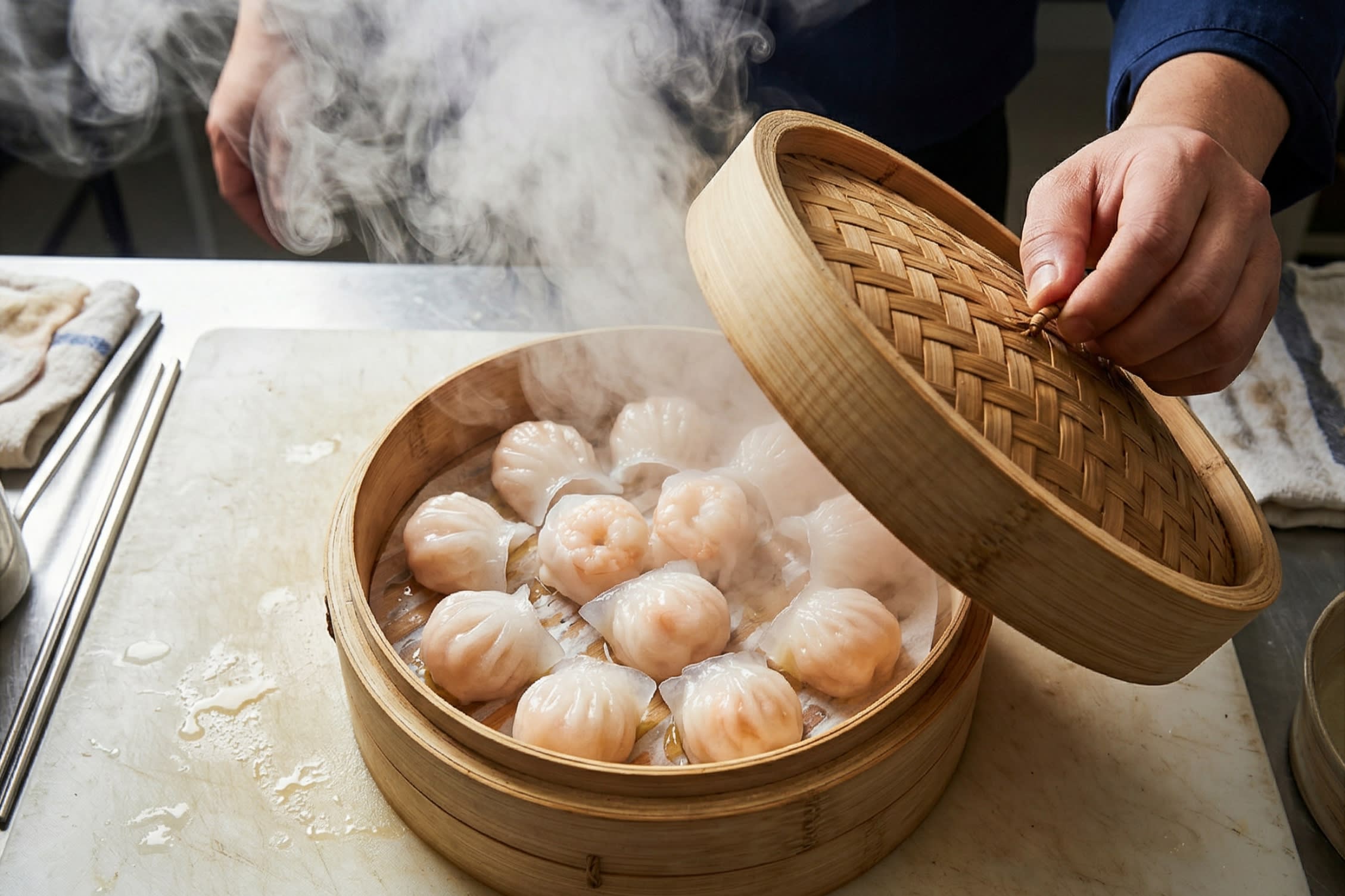
5. Steaming: Steam over high heat for exactly 6 to 8 minutes. The dumplings will transform from matte white to glossy and translucent as they cook. If you enjoyed this delicate steaming process, you might also find the secrets to the ultimate Chinese steamed fish equally fascinating.
💡 Troubleshooting & Pro Tips
- Dough Cracking: If your dough cracks while rolling, it’s a sign that the water wasn’t hot enough during the scalding step, or you exposed it to air too long. Keep a damp cloth over your dough ball at all times.
- Cloudy Wrappers: This is usually a sign of using standard wheat flour or failing to roll them thin enough. Always ensure your starch ratio favors the wheat starch for structure and tapioca for that signature sheen.
- Texture: If the filling feels tough, you skipped the “whipping” process. Stirring the shrimp in one direction builds the structural protein network that gives it that characteristic “bounce.”
By following these steps, you are not just making a dumpling; you are honoring a legacy of Cantonese culinary excellence. Enjoy your hard-earned, crystalline creations!
Disclaimer: As an Amazon Associate, ChinaCurator earns from qualifying purchases.