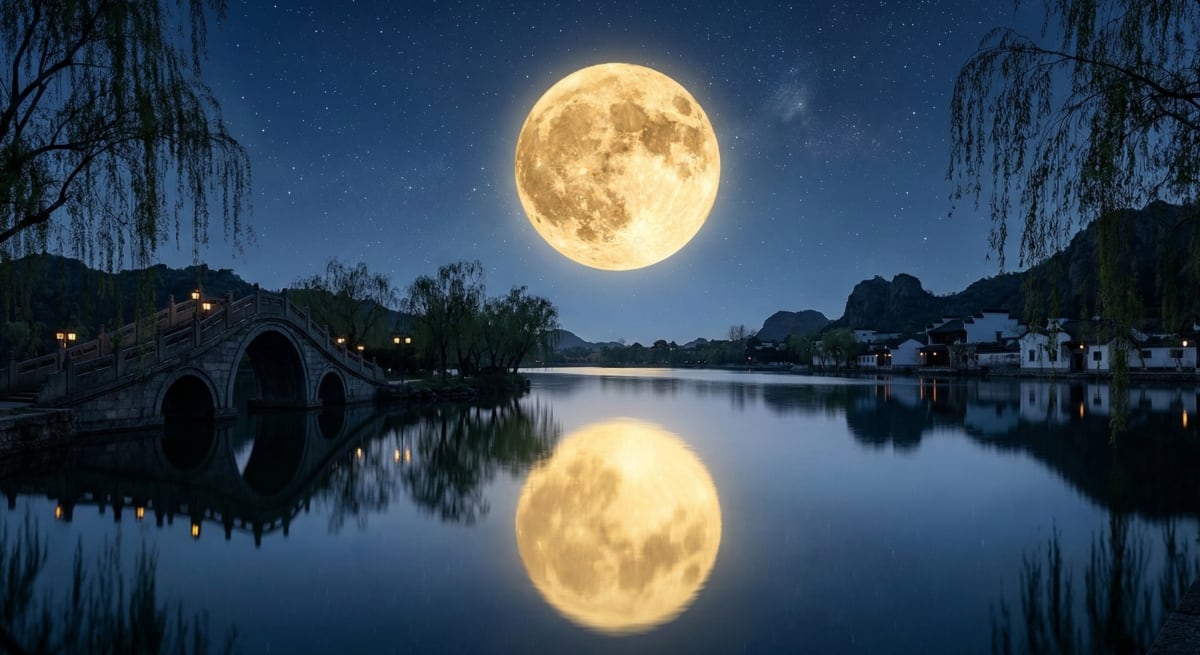
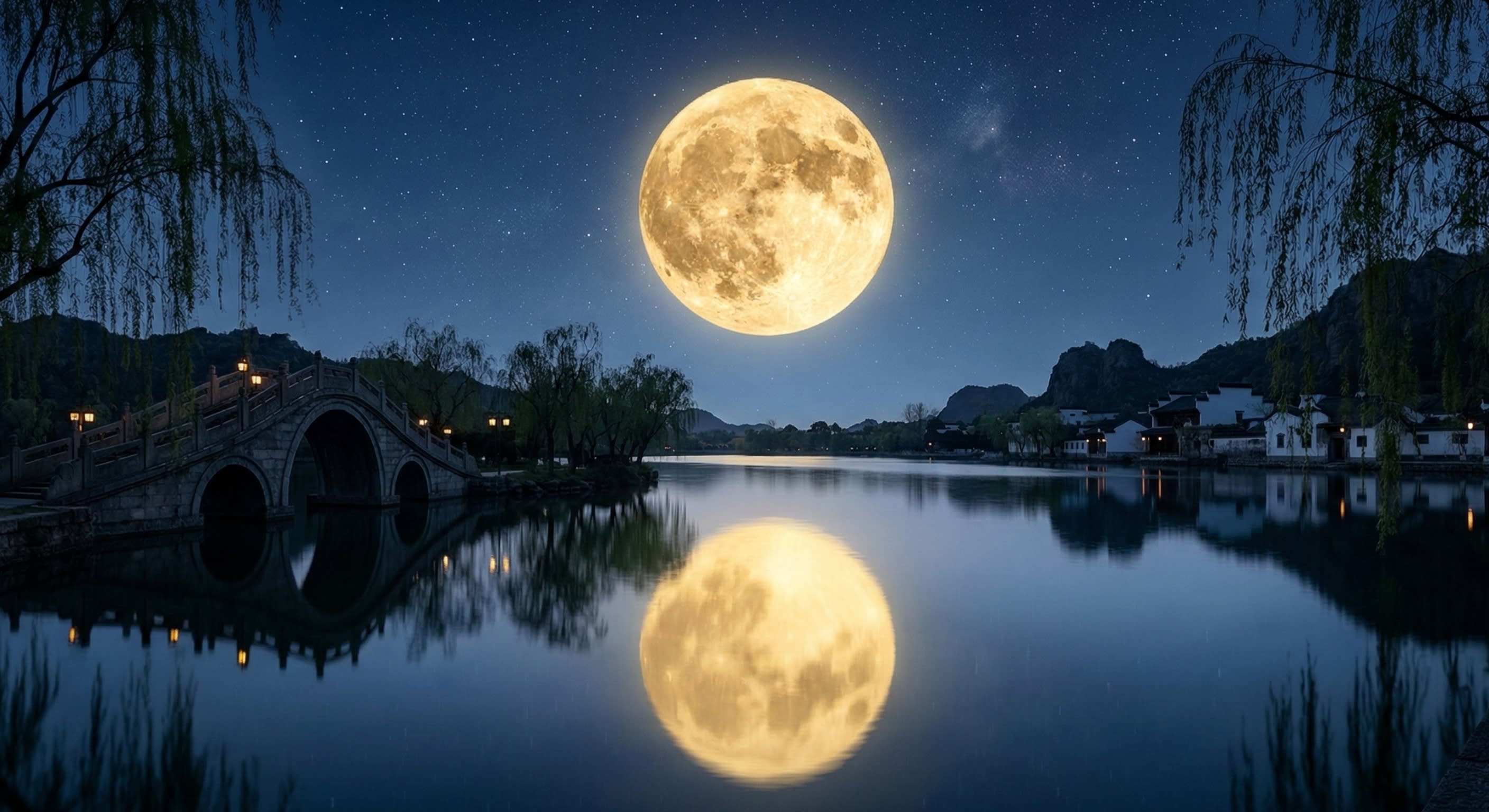
“In our cultural deep dive into the history of the Mid-Autumn Festival, we learned that the moon is the ultimate symbol of unity and family. But in China, not all moons are created equal. For millennia, poets and travelers have debated which city offers the most ‘incandescent’ view of the night sky. In 2026, as the nation stops to celebrate on October 1st (coinciding with National Day this year), the search for the perfect Shǎngyuè (赏月—Moon Gazing) spot will reach a fever pitch. Whether you want a quiet, ancient lakeside or a futuristic skyscraper view, here is your curated guide to the best ‘Magpie Bridges’ to the moon.”
🏮 The Art of Choosing a “Shangyue” Spot
To a local, a good moon-watching spot needs three things: Shuǐ (水—Water), Jìng (静—Tranquility), and Fènwéigǎn (氛围感—Atmosphere).
We believe the moon looks most beautiful when it is doubled—once in the sky and once as a shimmering reflection on water. Furthermore, because Mid-Autumn is a time for reflection and Tuányuán (团圆—Unity), the environment should allow for conversation and a sense of ‘ritual’ (Yíshìgǎn 仪式感).
Here are the four most iconic destinations to experience a world-class 2026 Mid-Autumn night.
📍 1. Hangzhou (杭州): The Poetry of “Three Pools Mirroring the Moon”
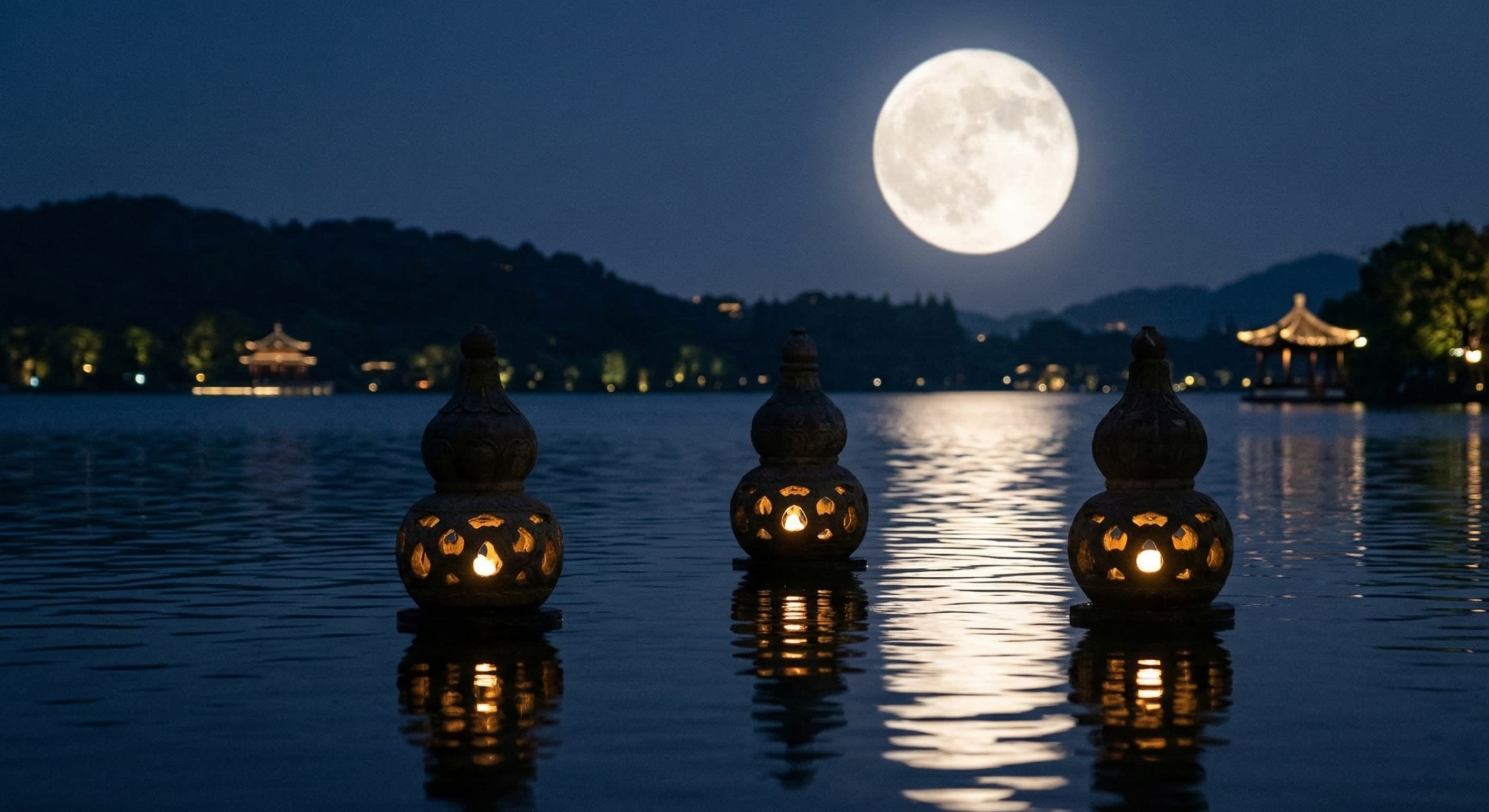
If you look at the back of a Chinese one-yuan bill, you will see three small stone pagodas in a lake. This is Sāntán Yìnyuè (三潭印月), located in the heart of Hangzhou’s West Lake. For over 800 years, this has been the gold standard for Chinese moon-watching.
- The Vibe: Pure classical poetry. It is soft, misty, and deeply historic.
- The Experience: On the night of Mid-Autumn, workers row out to the three stone pagodas and place a small candle inside each of the five round holes on every pagoda. When the full moon rises, the combination of the candles, the true moon, and the reflections on the water creates a visual illusion where it looks like there are 33 moons dancing on the lake.
- Pro Tip: Don’t just stand on the shore. Book a “Moon-Watching Boat” (Shǎngyuè Chuán 赏月船) in advance. Drifting through the lotus leaves with a box of local Hangzhou-style savory mooncakes while the pagodas glow in the distance is a bucket-list experience.
📍 2. Dali (大理): The “Silver Moon” over Erhai Lake
In Yunnan Province, the locals have a famous four-word phrase to describe their city: Fēng Huā Xuě Yuè (风花雪月). It refers to the wind of Shangguan, the flowers of Xiaguan, the snow of Cangshan, and—most importantly for us—the moon of Ěrhǎi (洱海).
- The Vibe: “Slow life” (Màn shēnghuó 慢生活), romantic, and crystal clear.
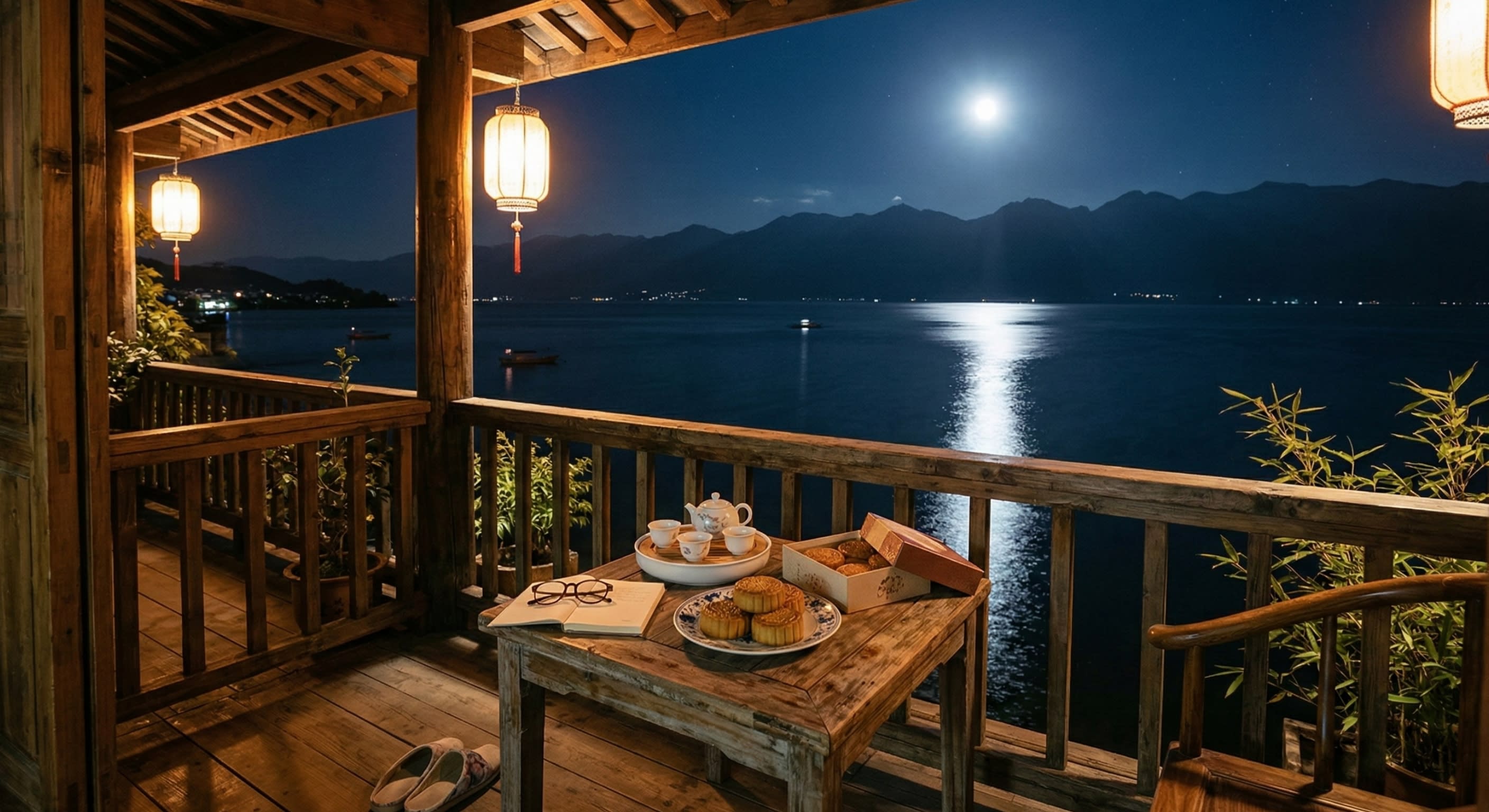
- The Experience: Because Dali is located on a high plateau, the air is incredibly thin and clean. This makes the moon look significantly larger and brighter than in the coastal cities. The tradition here is to watch the moon from a traditional Bai-style courtyard or a seaside wooden deck in Shuanglang (双廊).
- The Reflection: The water of Erhai is so still that the moon’s reflection looks like a solid disc of silver floating on the surface. Locals call this the “Erhai Moon.” Pairing this view with a cup of local Yunnan Pu-erh tea and a “Flower Mooncake” (Xiānhuā Bǐng 鲜花饼) made from real rose petals is the ultimate sensory reset.
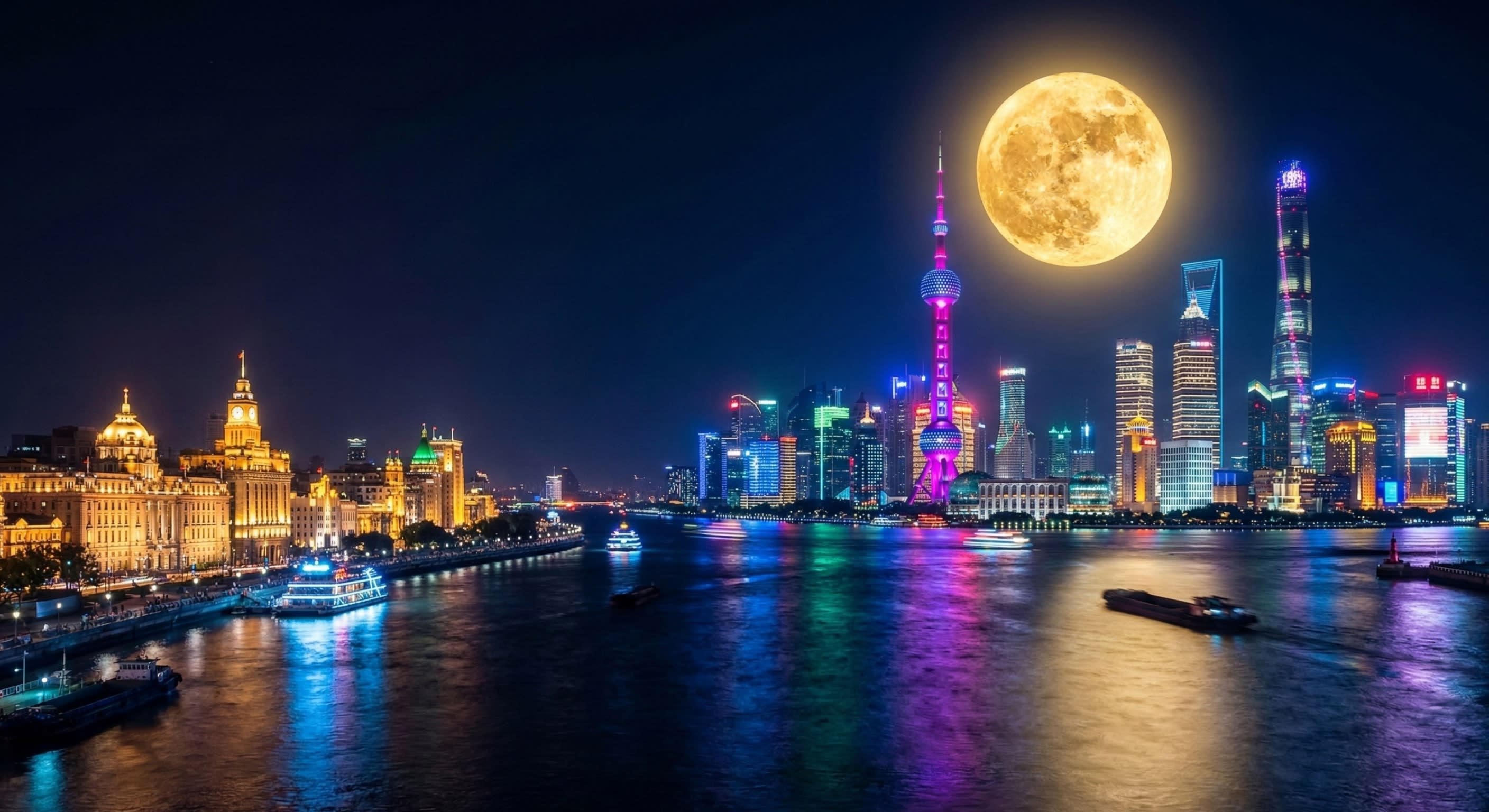
📍 3. Shanghai (上海): The Cyberpunk Moon at the Bund
If you find ancient pagodas too “quiet,” Shanghai offers a Mid-Autumn experience that is loud, vibrant, and staggeringly modern. Watching the moon rise over the Wàitān (外滩—The Bund) is a study in the juxtaposition of old and new.
- The Vibe: Electric, futuristic, and high-energy.
- The Experience: Stand on the historic Puxi side of the river, surrounded by 1920s European-style architecture, and look across the water at the Pudong skyline. Seeing the perfectly natural, ancient full moon hanging right next to the neon-purple Oriental Pearl Tower is a visual metaphor for modern China.
- The Rooftop Strategy: The Bund is home to some of the world’s most spectacular rooftop bars. Places like VUE Bar or Pop offer a panoramic view of the Huangpu River. Being high up on a terrace, with a cocktail in one hand and a modern “Snow Skin” mooncake (Bīngpí Yuèbǐng 冰皮月饼) in the other, is how the new generation of Shanghai “curators” celebrates the festival.
📍 4. Pingyao (平遥): Time Travel by Moonlight
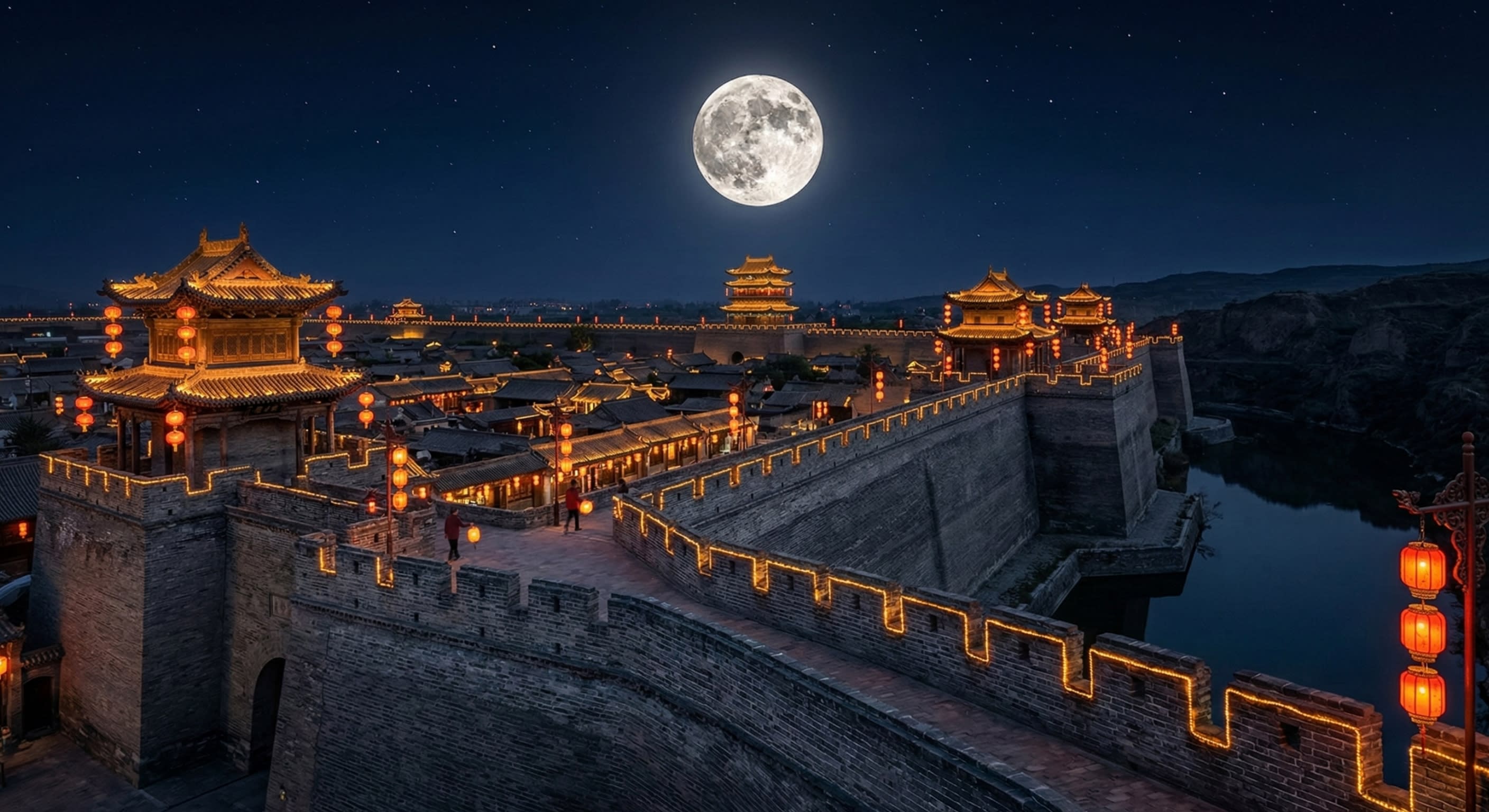
For those who want to feel the “weight of history,” head to the ancient walled city of Pingyao in Shanxi.
- The Vibe: Nostalgic, grand, and cinematic.
- The Experience: Pingyao is a 2,700-year-old living museum. On Mid-Autumn night, the massive grey brick city walls are lined with thousands of traditional red lanterns. Walking along the top of the wall under the full moon, you can look down into the dark, narrow alleys of the ancient city where families are gathered in their courtyards.
- The Atmosphere: The lack of modern skyscrapers and excessive neon in the old city means the moonlight is the primary source of illumination. It feels like you have stepped back into a Ming Dynasty painting. It is the perfect place to appreciate the “Unity” of the holiday, as the architecture itself has remained unified for centuries.
🎒 Practical Logistics for Mid-Autumn 2026
- The Double Holiday Trap: In 2026, the Mid-Autumn Festival (Oct 1) falls exactly on China’s National Day. This creates a “Super Golden Week.” Expect extreme crowds. You must book flights and hotels at least 3-4 months in advance.
- Weather Check: Mid-Autumn is the start of the “Golden Autumn” (Jīnqiū 金秋). The weather is usually dry and cool across China, but check the forecast for the “Plum Rain” remnants in the south. You want a “Cloudless Night” (Qínglǎng zhī yè 晴朗之夜) for the best view.
- Mooncake Etiquette: If you are visiting a Chinese friend during this time, bringing a box of high-quality mooncakes is mandatory. It’s not about the cake; it’s about the respect and the wish for their family’s “completeness.”
💬 Essential Moon-Watching Vocabulary
When you are sharing the moonlight with locals, these phrases will help you blend in perfectly:
| The Term | Characters & Pinyin | What It Means / Context |
|---|---|---|
| Moon Gazing | 赏月 Shǎngyuè |
The act of admiring the full moon. "Where is the best place for shangyue?" |
| Full Moon | 圆月 Yuányuè |
Literally "Round Moon," symbolizing the completeness of the family. |
| Atmosphere / Vibe | 氛围感 Fènwéigǎn |
A very popular modern term to describe a place with a great "vibe." |
| Sense of Ritual | 仪式感 Yíshìgǎn |
Doing something meaningful to celebrate. "Drinking tea under the moon adds yishigan." |
Final Thoughts from Yuning
There is a famous Chinese proverb: “The moon in one’s hometown is always the brightest.” While I have recommended these beautiful destinations, the truth is that the “best” spot is wherever you feel most connected to the people you love. Whether you are on a high-speed train, a quiet balcony in Dali, or a crowded bridge in Hangzhou, look up. In 2026, we are all looking at the same moon, sharing the same wish for peace and reunion.
㊗️ Wishing you a clear night and a brilliant Mid-Autumn journey!
Fascinated by the legends behind the mooncakes? Read our Cultural Deep Dive on Chang’e and the Jade Rabbit or plan your next move with our Guide to Booking High-Speed Trains in China.

