
🥩 Introduction: The Greatest Name Deception in Culinary History
If there is one beef dish that commands absolute loyalty at Chinese-American takeout restaurants, it is Mongolian Beef (蒙古牛肉 - Měnggǔ Niúròu).
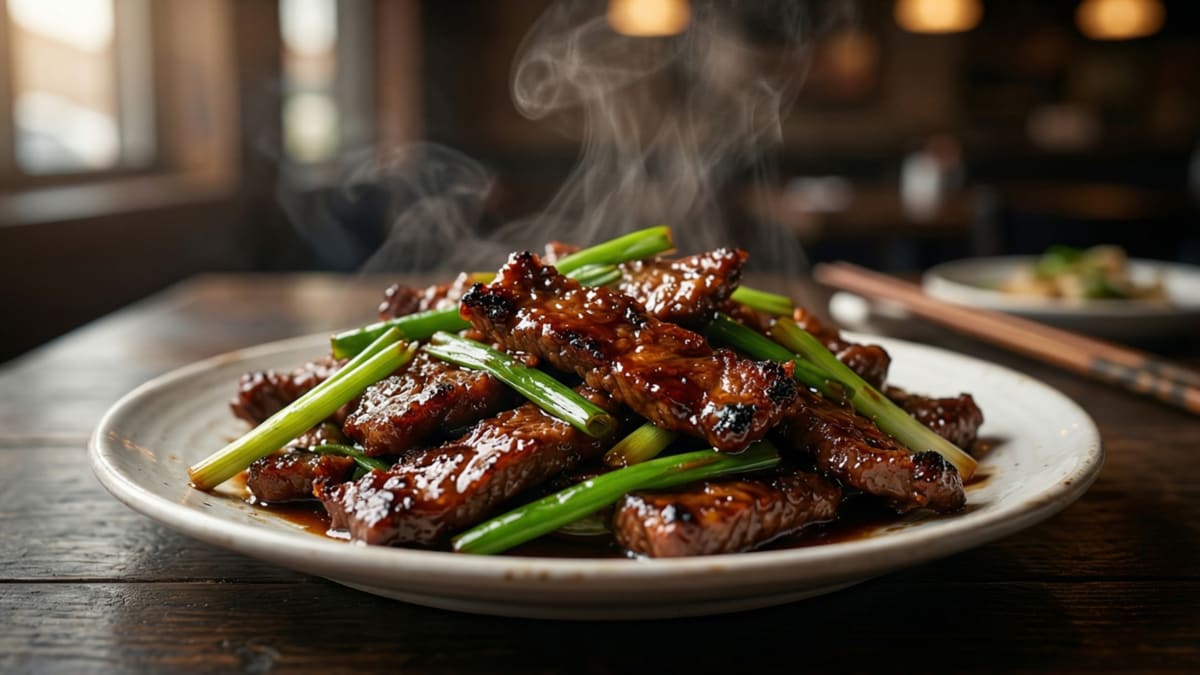
Famously popularized by restaurant chains, this dish is a masterpiece of contrasting textures and intense flavors. It features incredibly tender, velvety strips of beef with slightly crispy, caramelized edges. The meat is smothered in a dark, sticky, savory-sweet soy and garlic glaze, and tossed with massive handfuls of crisp, fresh green scallions.
But before we fire up the wok, we have to expose the greatest culinary illusion in the Asian food world: Mongolian Beef has absolutely nothing to do with Mongolia.
You will not find this dish in Ulaanbaatar, and it was not invented by nomadic horsemen on the steppes. The dish was actually conceptualized in Taiwan in the 1950s. During a boom of Chinese barbecue restaurants, chefs wanted to create an exotic, exciting marketing name for their new stir-fried beef dish. “Mongolian” sounded rugged, meaty, and adventurous. When Taiwanese chefs later emigrated to the United States, they brought the dish with them, added a bit more brown sugar to suit the American palate, and created a legendary fusion classic.
If you enjoy this style of restaurant-at-home cooking, you should also try my Ultimate Beef Chow Fun or the crowd-pleasing Ultimate Beef and Broccoli. Both rely on the same fundamental techniques we are going to master today.
🔬 The Science of Tenderness: Cutting and Velveting
To make restaurant-quality Mongolian Beef, you do not need expensive cuts like ribeye. In fact, traditional recipes use Flank Steak (牛腹肉 - Niúfùròu), which is notoriously tough. How do Chinese restaurants make it melt in your mouth? It all comes down to two steps.
1. Slicing Against the Grain (逆纹切 - Nì wén qiē)
Look at a raw piece of flank steak. You will see long muscle fibers running across the meat. If you slice parallel to these lines, you will be chewing for hours. You must practice Nì wén qiē (逆纹切)—slicing your knife perpendicular to those lines. By physically cutting the long fibers into tiny segments, the beef becomes exponentially easier to eat.
2. The Velveting Technique (上浆 - Shàngjiāng)
This is the ultimate restaurant secret. Once the beef is sliced, you must coat it in a mixture of soy sauce and cornstarch. Unlike wheat flour, cornstarch has no gluten. When you massage it into the beef, it creates a microscopic, gelatinous barrier. When the beef hits the hot oil, this barrier locks all the natural juices inside and prevents the high heat from seizing the proteins.

Troubleshooting Common Texture Issues
| Problem | Likely Cause | Solution |
|---|---|---|
| Chewy meat | Slicing with the grain | Always look for the muscle lines and cut at 90 degrees. |
| Watery sauce | Insufficient reduction | Boil the glaze on high heat until it coats the back of a spoon. |
| Soggy beef | Low cooking temp | Ensure your oil is smoking hot before adding the beef. |
🔥 The Crispy Edges: The “Guo You” Method
In authentic Chinese kitchens, Mongolian Beef is not just boiled in sauce. The beef goes through a process called Guòyóu (过油 - passing through oil). After the beef is coated, it is shallow-fried in smoking hot oil for 60 seconds. The intense heat reacts with the starch, creating beautiful, slightly charred, crispy edges (焦边 - Jiāobiān). You then create your garlic glaze, toss the crispy beef back in, and serve immediately.
🛒 Ingredients List
The Beef & Velveting Marinade:
- 1 lb Flank Steak (牛腹肉), sliced 1/4-inch thick against the grain
- 1/4 cup cornstarch
- 1 tbsp Light Soy Sauce (生抽)
- 1 tbsp Shaoxing Cooking Wine (绍兴酒)
- 1 tbsp Cooking Oil
The Aromatic Vegetables:
- 1 large bunch of Scallions, cut into 2-inch sections (葱段 - Cōngduàn)
- 4 cloves Garlic, minced (蒜末 - Suànmò)
- 1 thumb-sized piece of fresh Ginger, minced (姜末 - Jiāngmò)
The Sticky Mongolian Glaze:
- 1/3 cup Water
- 1/3 cup dark brown sugar
- 1/4 cup Light Soy Sauce (生抽)
- 1 tbsp dark soy sauce (老抽)
- 1/2 tsp toasted sesame oil (芝麻油)
🍳 Step-by-Step Instructions
1. Slice and Velvet (上浆): Place the sliced beef in a bowl. Add soy sauce and wine. Massage well. Add cornstarch and press it into the meat until it feels tacky. Finally, add the tablespoon of cooking oil to prevent sticking. Let it sit for 15 minutes.
2. Whisk the Glaze: Combine the water, sugar, both soy sauces, and sesame oil. Ensure the sugar is dissolved.
3. Shallow Fry (过油): Heat 1/2 cup of cooking oil in a carbon steel wok until shimmering. Drop the beef in. Don’t stir for 30 seconds to allow the crust to form. Fry for another 60 seconds until crispy. Remove and drain.

4. Fry Aromatics: Pour out most of the oil, leaving just a tablespoon. Sauté the ginger and garlic until fragrant.
5. Caramelize: Pour in the glaze. Boil on high heat until it reduces into a glossy syrup.
6. Final Toss: Add the beef back in and toss with the scallions.

7. Serve: Turn off the heat and plate immediately. Serve with plenty of steamed rice to soak up the leftover sauce.
🎥 Watch the Restaurant Technique
💡 Beyond the Wok: The Philosophy of Chinese Takeout Comfort
It is fascinating how dishes like this cross borders. Whenever I travel through China, I often find myself explaining to locals why we crave these specific, intensely flavorful dishes back home. It isn’t just about the food—it’s about the memory of the local takeout place where the owners knew your name and your regular order.
The art of Chinese cooking often surprises people when they realize it isn’t about complexity; it’s about preparation. By “velveting” the meat, you aren’t just cooking; you are using a technique that has been practiced for generations in professional Chinese kitchens to ensure that even the cheapest cuts of meat can provide a luxurious experience. When I first learned to master this at home, it transformed my understanding of what a quick weeknight meal could be. Instead of relying on a menu, I started seeing the potential in every grocery store run.
If you find yourself enjoying the process of mastering these takeout classics, consider exploring some of our other guides. The cultural history behind these recipes, like the story of the Qixi Festival, reminds us that every meal served in a Chinese household or restaurant has a story tied to tradition, family, and the celebration of life.
Cooking is a meditative act, much like the practice of Panwan, where the focus on the immediate task—slicing, marinating, and tossing the wok—clears the mind. I hope this Mongolian Beef recipe serves as your gateway to deeper culinary adventures.
Disclaimer: As an Amazon Associate, ChinaCurator earns from qualifying purchases.