🥢 Introduction: The Beloved Cultural Bridge
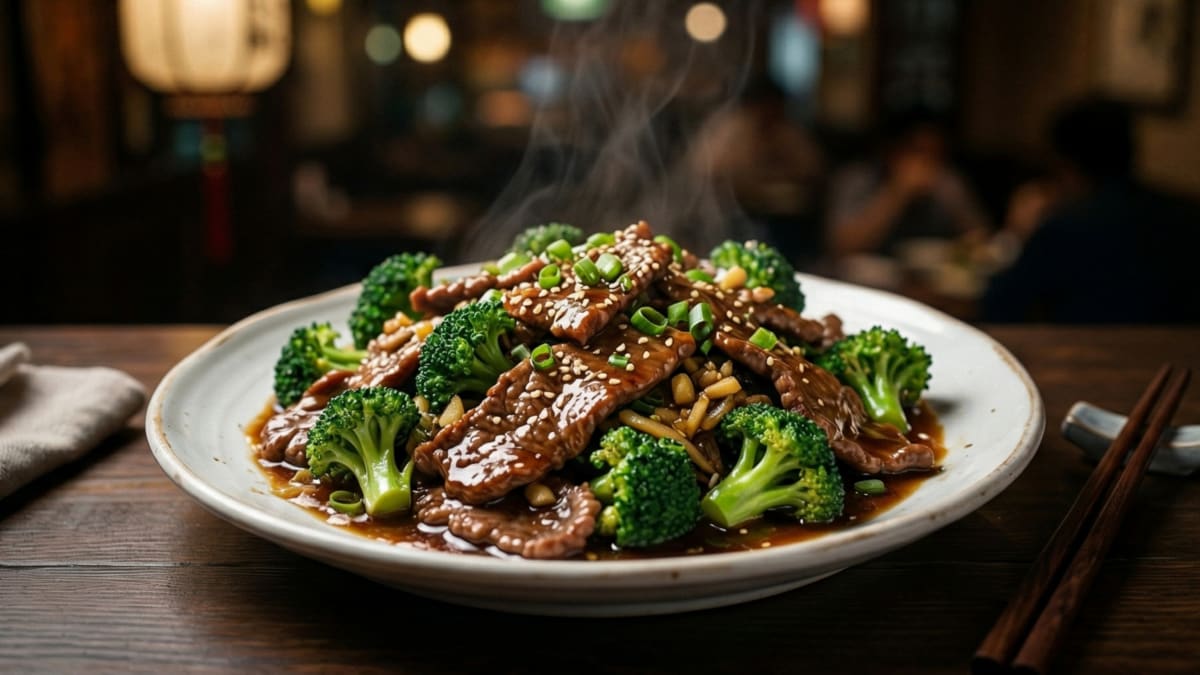
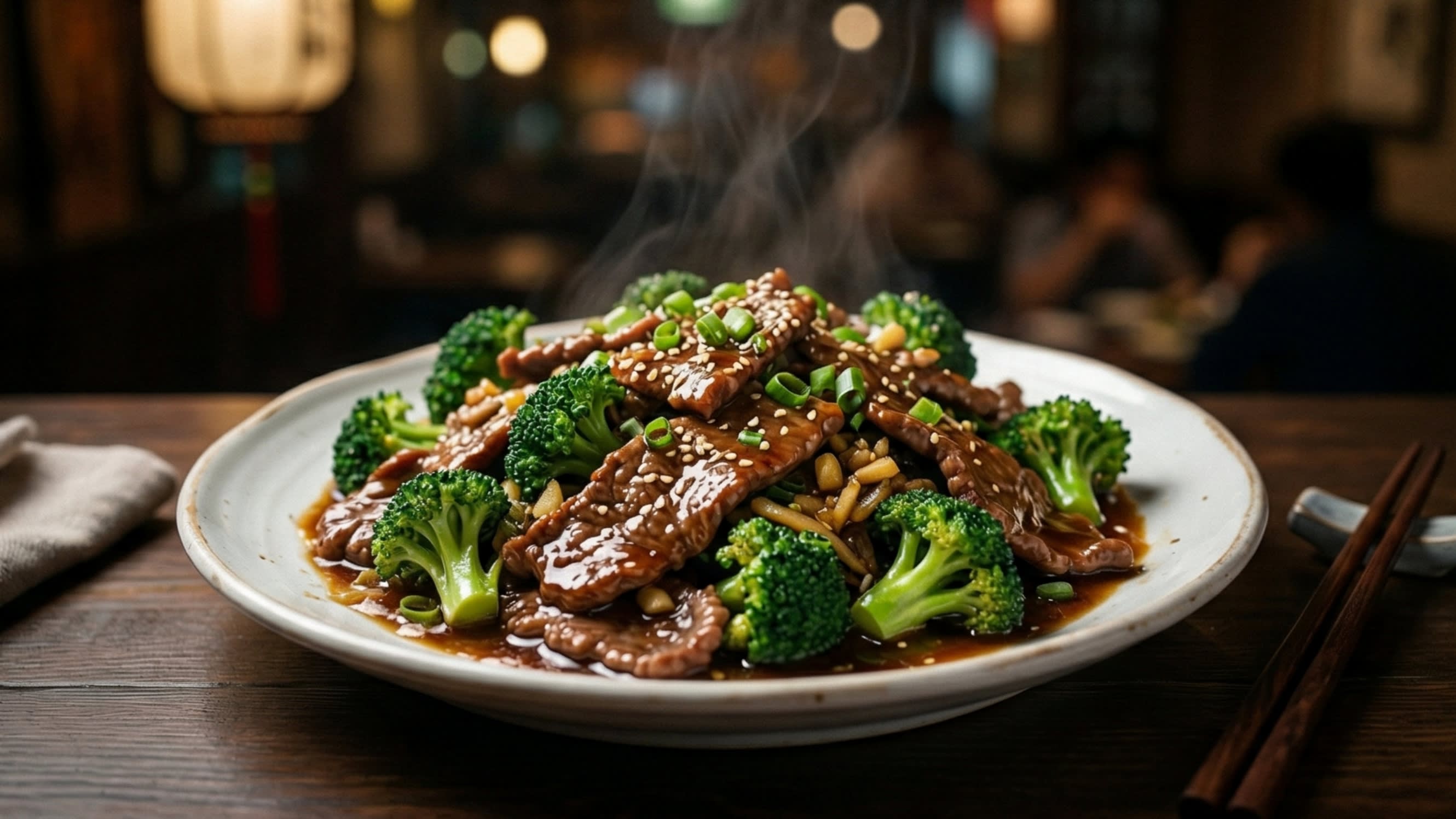
If you ask anyone outside of China to name a quintessential Chinese dish, Beef and Broccoli (西兰花炒牛肉 - Xīlánhuā chǎo niúròu) will almost certainly be at the top of the list. It is the undisputed king of takeout—a comforting, harmonious marriage of savory, umami-rich meat and crisp, vibrant vegetables, all held together by a glossy brown sauce that demands to be spooned over steamed white rice.
But here is a fascinating piece of culinary history: Beef and Broccoli, as you know it, does not actually exist in the traditional, historical canon of Chinese cuisine.
The broccoli we eat in the West, characterized by those dense, tree-like green heads, is a relative newcomer to the Chinese kitchen. In authentic Cantonese cooking, chefs traditionally use Gai Lan (芥兰 - Jièlán), or Chinese broccoli, which features long, elegant leafy greens and a thick, pleasantly crunchy stem. When early Chinese immigrants arrived in North America, they found that Gai Lan was not readily available in local markets. Ever resourceful, they adapted their time-tested stir-fry techniques to the locally sourced Western broccoli. Thus, this iconic Chinese-American dish was born out of necessity and ingenuity.
Today, this dish is globally beloved for its speed and reliability. But I often hear home cooks lamenting, “Why is my beef so chewy compared to the restaurant version?” If you have ever felt defeated by tough, rubbery steak, you are not alone. The secret isn’t in buying expensive cuts of meat; it’s in a foundational technique that every restaurant chef in China masters.
🥩 The Restaurant Secret: “Velveting” (上浆)
Why does the beef at your local takeout spot melt in your mouth, while your home-cooked version feels like chewing on a hiking boot? They aren’t secret-loading their woks with filet mignon; they are using economical cuts like flank steak. The magic happens during the preparation phase through a fundamental Chinese culinary process called Velveting (上浆 - Shàngjiāng).
Velveting is the essential technique of coating sliced meat in a precise mixture of seasonings and starch before it ever touches a hot pan. Here is the science behind why it works:
- The Baking Soda: A very small amount of baking soda acts as a tenderizer. It slightly raises the pH level on the surface of the meat, which relaxes the stubborn muscle fibers and prevents them from seizing up into a tough, leathery texture under intense heat.
- The Cornstarch Barrier: The cornstarch (玉米淀粉) creates a microscopic, protective gel-like coat around each slice of beef. When the meat hits the searing oil, this barrier locks in the natural juices and moisture, ensuring that the inside remains succulent while the outside develops a beautiful sear.
- The Oil Seal: Adding a tablespoon of cold, neutral cooking oil to the marinade acts as a “sealant,” ensuring that individual slices don’t clump together in the wok, allowing for even heat distribution.
If you have enjoyed this technique, you might also want to try applying it to other takeout favorites like my Ultimate Sesame Chicken or the stir-fry magic of Beef Chow Fun.
🔪 How to Cut the Beef (逆纹切 - Nì wén qiē)
Even with proper velveting, your knife work is paramount. You must practice Nì wén qiē (逆纹切), which means “cutting against the grain.” Examine your flank steak closely; you will see visible muscle fibers running in one direction. By slicing perpendicular to those lines, you physically shorten the fibers, making the meat dramatically easier to chew. If you cut with the grain, you are fighting physics—and you will lose.
🛒 Ingredients
| Category | Ingredients |
|---|---|
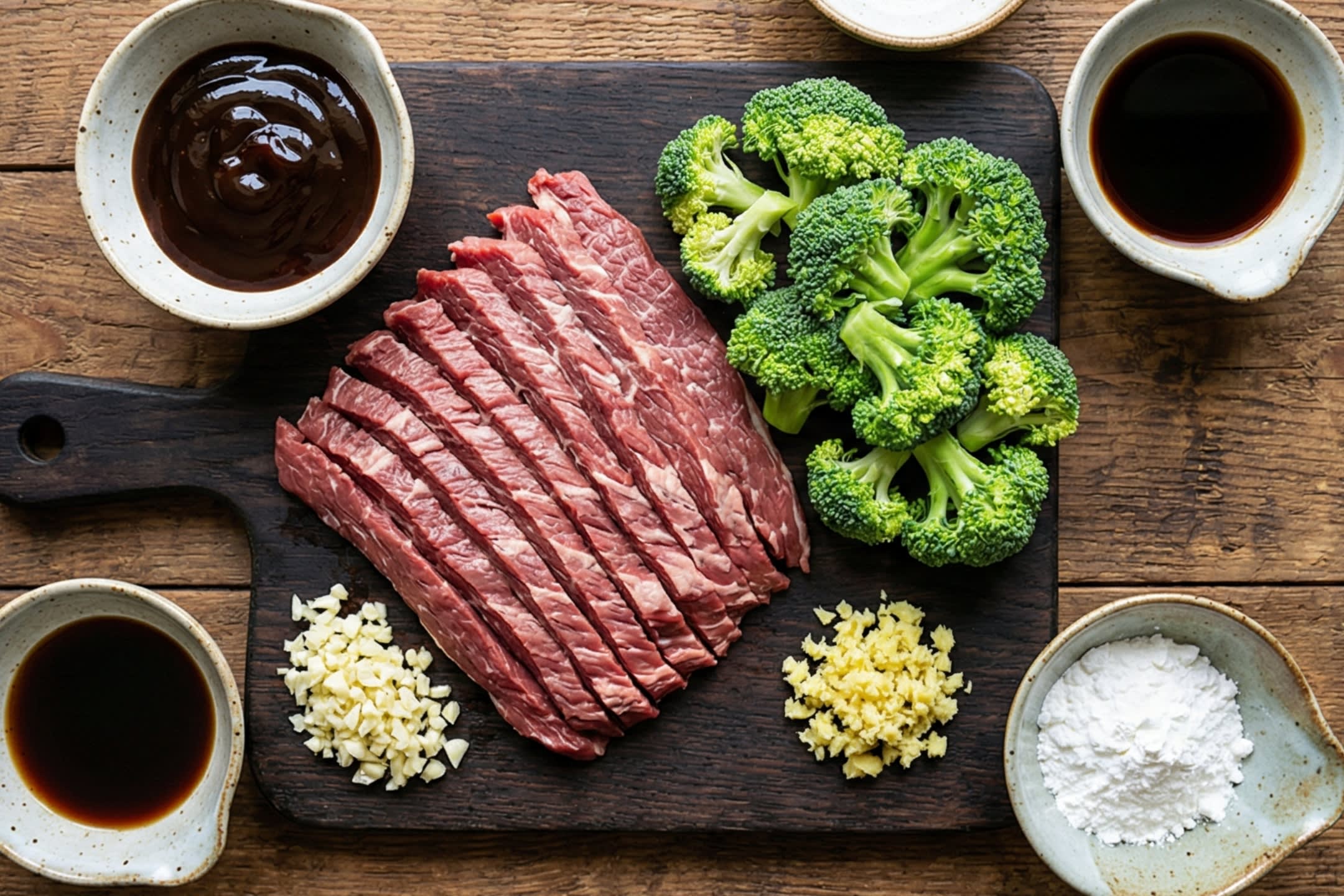
| Beef Marinade | 350g flank steak, 1 tbsp light soy sauce, 1 tbsp Shaoxing wine, 1 tsp cornstarch, 1/4 tsp baking soda, 1 tbsp water, 1 tbsp neutral oil. |
| Brown Sauce | 3 tbsp oyster sauce, 1 tbsp light soy sauce, 1 tsp dark soy sauce, 1 tbsp sugar, 1/2 tsp sesame oil, 1/4 cup chicken broth, 1 tbsp cornstarch. |
| Aromatics | 1 head broccoli, 3 cloves minced garlic (蒜末), 1 tsp minced ginger (姜末). |
🍳 Step-by-Step Instructions
1. The Velveting Process: After slicing your beef against the grain, combine it with the water, light soy sauce, Shaoxing wine, baking soda, and cornstarch. Massage this into the meat with your hands for a full minute—this manual labor helps the beef “drink” the marinade. Finally, add the tablespoon of oil to seal everything in. Let it rest for at least 15 to 20 minutes.
2. Blanching (焯水 - Cháoshuǐ): Bring a pot of water to a rolling boil. Add a pinch of salt and a drizzle of oil to ensure the broccoli retains a jewel-like green hue. Drop the florets in for exactly 60 seconds. We are looking for “tender-crisp”—if you overcook them now, they will turn mushy in the wok later. Drain and set aside.
3. The “Liquid Gold” Sauce: In a small bowl, whisk your sauce ingredients until the cornstarch is completely suspended. Having this ready before you turn on the high heat is the secret to a stress-free stir-fry.
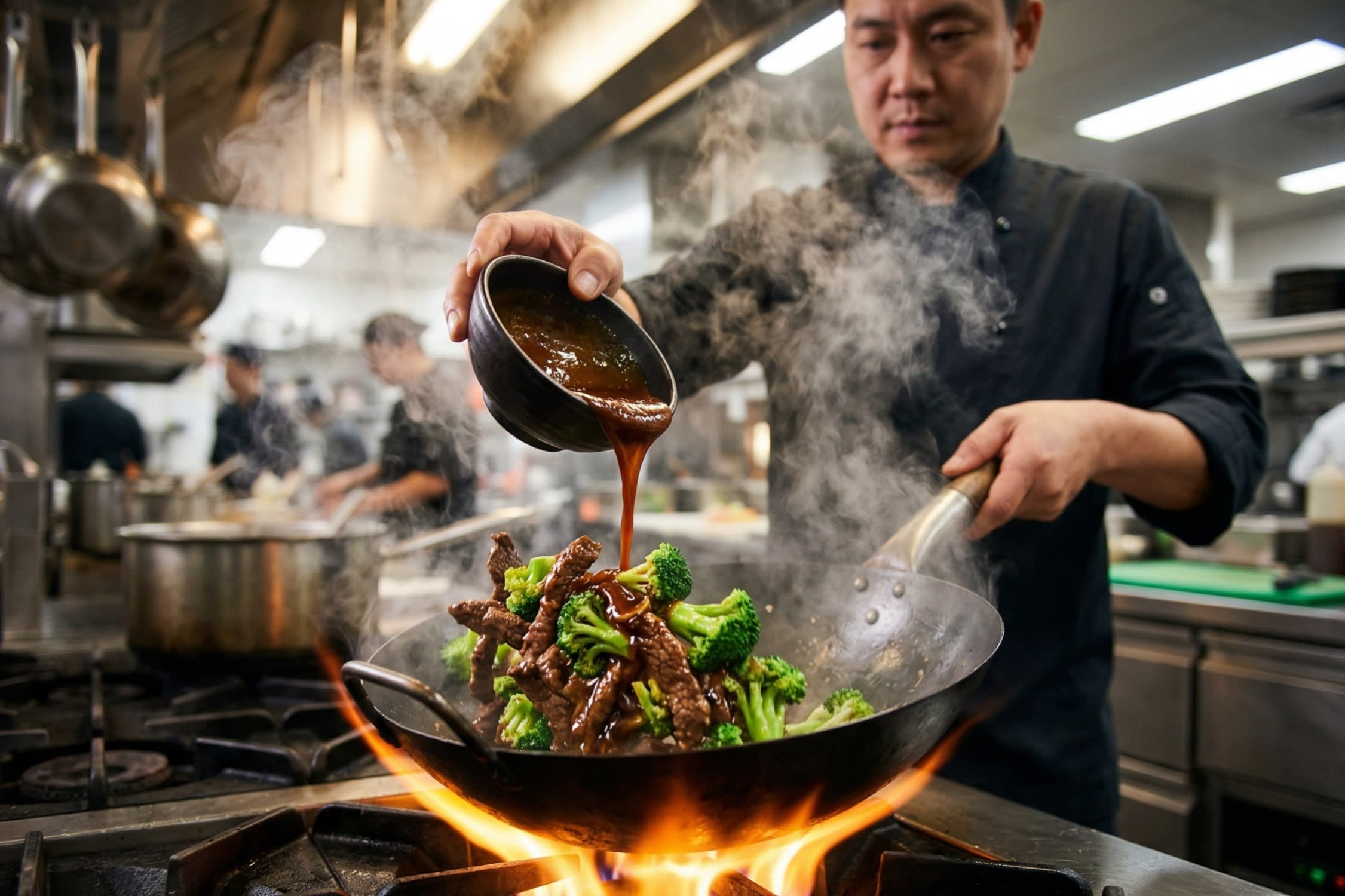
4. The Wok Sear: Heat your carbon steel wok or heavy-bottomed skillet until it is smoking hot. Add your oil, then spread the beef in a single layer. Resist the urge to move it! Let it sear undisturbed for 30 seconds to develop that rich, caramelized crust. Toss until 80% cooked.
5. Aromatics and Combine: Push the meat aside to create a “well” in the center of the wok. Drop in your ginger and garlic. They will sizzle instantly—breathe in that heavenly aroma.
6. The Final Toss: Add your blanched broccoli. Pour the sauce over everything. Keep the heat high and stir-fry constantly. The sauce will rapidly bubble and thicken into a mirror-like glaze that clings to every surface. Turn off the heat the moment it reaches the right consistency—don’t let it sit, or the residual heat will overcook the beef.
💡 Pro Tips for Beginners
- The Soul of the Sauce: Authentic flavor relies heavily on high-quality oyster sauce. It isn’t just salty; it provides a deep, oceanic sweetness that elevates the entire dish.
- Why Blanching Beats Stir-frying Raw: Stir-frying raw broccoli often results in burnt edges and raw, tough stems. Blanching guarantees perfect, uniform texture every time.
- High Heat is Non-Negotiable: If your pan isn’t hot enough, the beef will stew in its own juices. You want a sizzle, not a simmer!
If you’re looking for more ways to master the wok, check out my guide on Chinese Stir-Fry Basics to refine your technique even further. Whether you are cooking for a family gathering or a quick solo dinner, this Beef and Broccoli is a masterclass in how simple ingredients can yield restaurant-level results.
Disclaimer: As an Amazon Associate, ChinaCurator earns from qualifying purchases.