🍜 Introduction: The King of Chinese Takeout
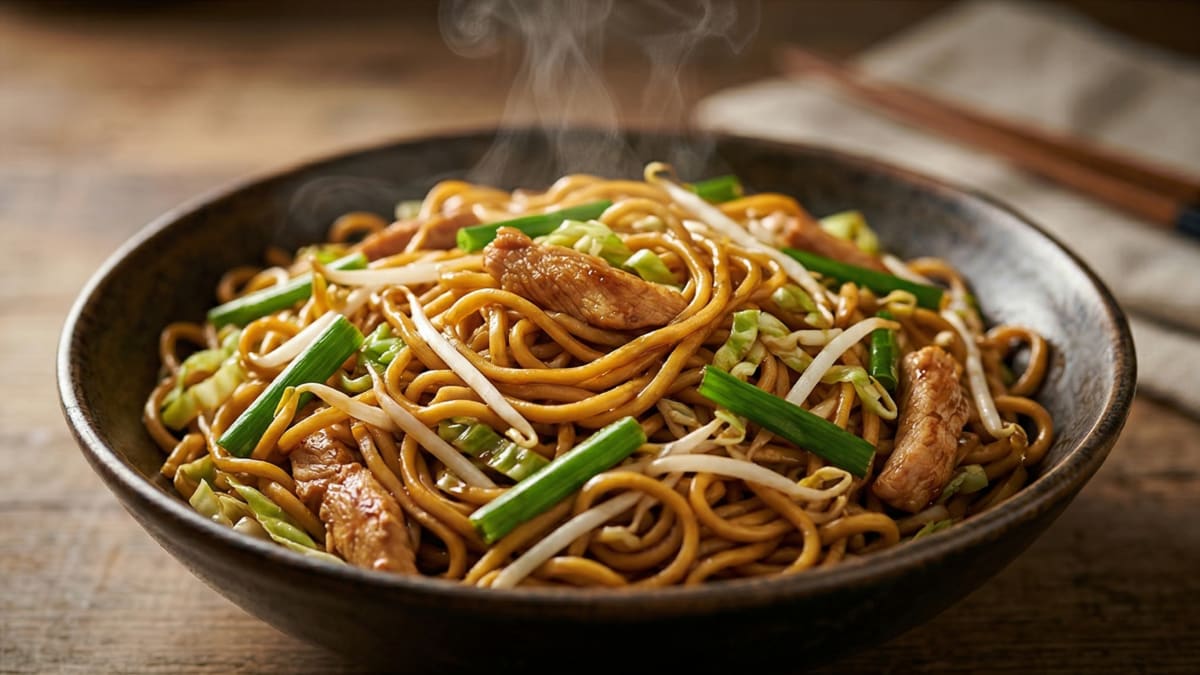
If there is one dish that acts as the global ambassador for Chinese takeout, it is Chow Mein (炒面 - Chǎomiàn). Whether you are navigating the neon-lit, bustling alleys of Guangzhou, grabbing a late-night bite from a steaming street stall in Beijing, or simply curling up on your sofa with a classic takeout container in London, these iconic, savory, stir-fried noodles are the ultimate comfort.
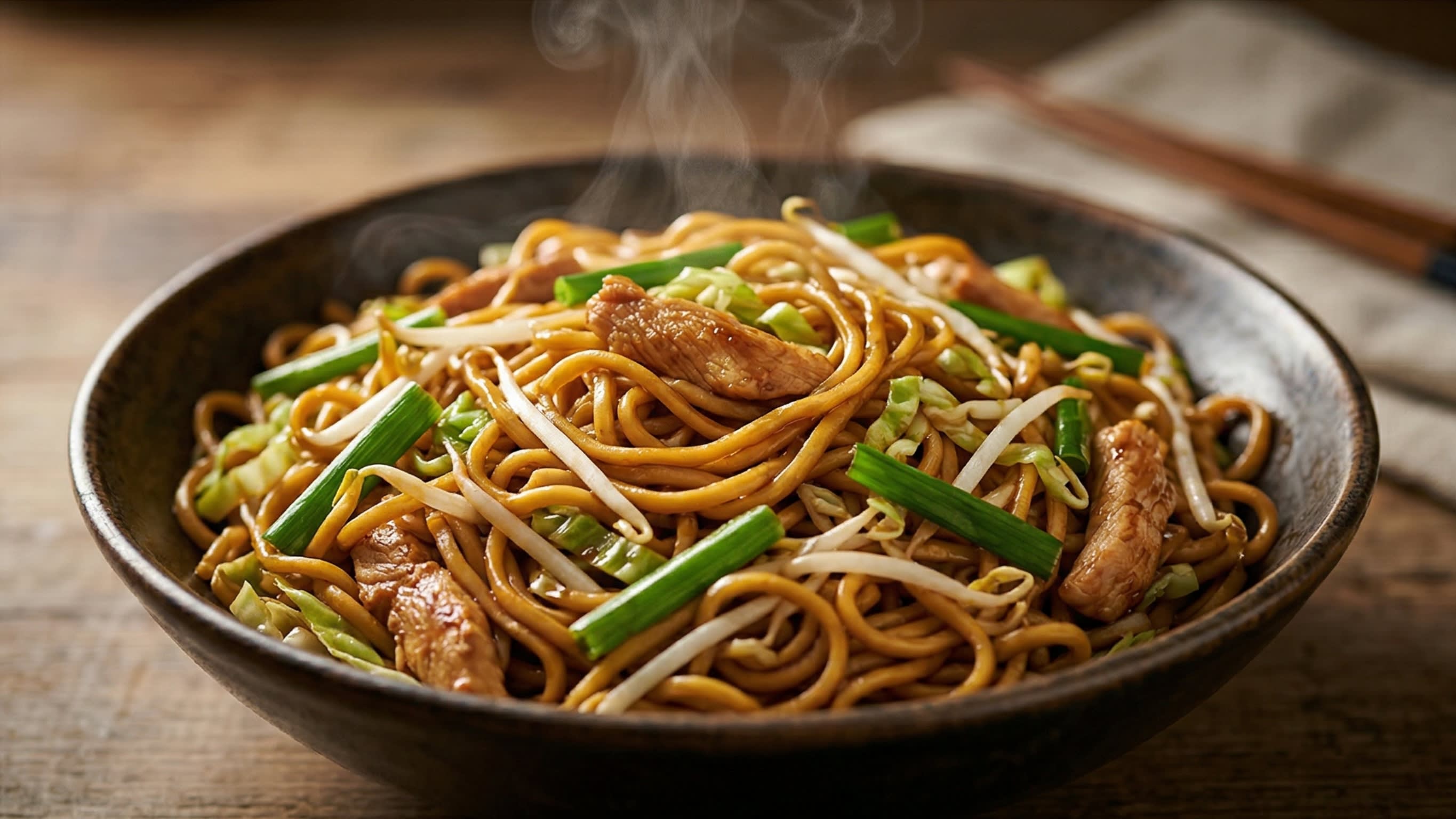
The brilliance of a truly authentic Chow Mein lies in the marriage of texture and depth. When prepared correctly, the noodles aren’t just cooked; they are transformed. They should be springy, slightly chewy, and kissed by the heat of the wok, resulting in a beautiful caramelization. Every strand is coated in a savory, umami-rich glaze that clings perfectly, never pooling into a sad, oily puddle at the bottom of the plate.
However, replicating this restaurant-quality experience at home is a frequent pain point for many. All too often, home cooks end up with a clumped, soggy mess that sticks to the skillet. I have spent years perfecting this recipe, and today, I am going to pull back the curtain. We will break down the fundamental techniques of Chinese stir-frying, ensuring your noodles remain firm, flavorful, and incredibly fast to prepare.
🆚 The Great Debate: Chow Mein vs. Lo Mein
Before we fire up the stove, let’s clear the air on the most common confusion in the Western Chinese food scene: What is the real difference between Chow Mein and Lo Mein?
While they share a pantry of ingredients, the methodology and the sensory results are worlds apart.
- Chow Mein (炒面 - Chǎomiàn): The term Chǎo translates directly to “to stir-fry.” Here, the noodles undergo a transformation through intense heat. They are parboiled, then aggressively tossed in a scorching wok with oil. The goal is to achieve a slight sear—a crisp exterior paired with a chewy heart and the elusive smoky aroma of the flame. The sauce here acts as a coat, not a bath.
- Lo Mein (捞面 - Lāomiàn): The term Lāo means “to toss” or “to mix.” For Lo Mein, the noodles are boiled until fully tender and then swirled into a generous amount of rich, thick sauce. It is a “wet” experience focused on the sauce, whereas Chow Mein is an experience focused on the structure and bite of the noodle itself.
If you crave that distinct, roasted, chewy texture, Chow Mein is your culinary soulmate.
🔬 The Secret Science: “Wok Hei” and “Duan Sheng”
To lift your kitchen skills to the level of a seasoned chef, you must embrace two pillars of Chinese culinary physics.
1. Wok Hei (锅气) - The Breath of the Wok
Wok Hei (锅气 - Guōqì) is effectively the holy grail of stir-frying. It represents the complex, nutty, and slightly caramelized flavor profile that only emerges when food is kissed by an extreme, roaring flame. While a home stove rarely replicates the intense power of a commercial burner, you can cheat the system. Use a high-quality carbon steel wok, get it smoking hot, and never—I repeat, never—overcrowd it. If you throw too much into the pan, the temperature plummets, and your noodles will boil in their own steam rather than frying.
2. Duan Sheng (断生) - Master the “Snap”
If your noodles turn into mush, you’ve likely overboiled them. We aim for Duànshēng (断生), or “breaking the rawness.” You want the noodles to be al dente—firm to the bite with a slight resistance in the center. They will complete their journey in the wok, soaking up the sauce without losing their structural integrity.
🛒 The Ingredients
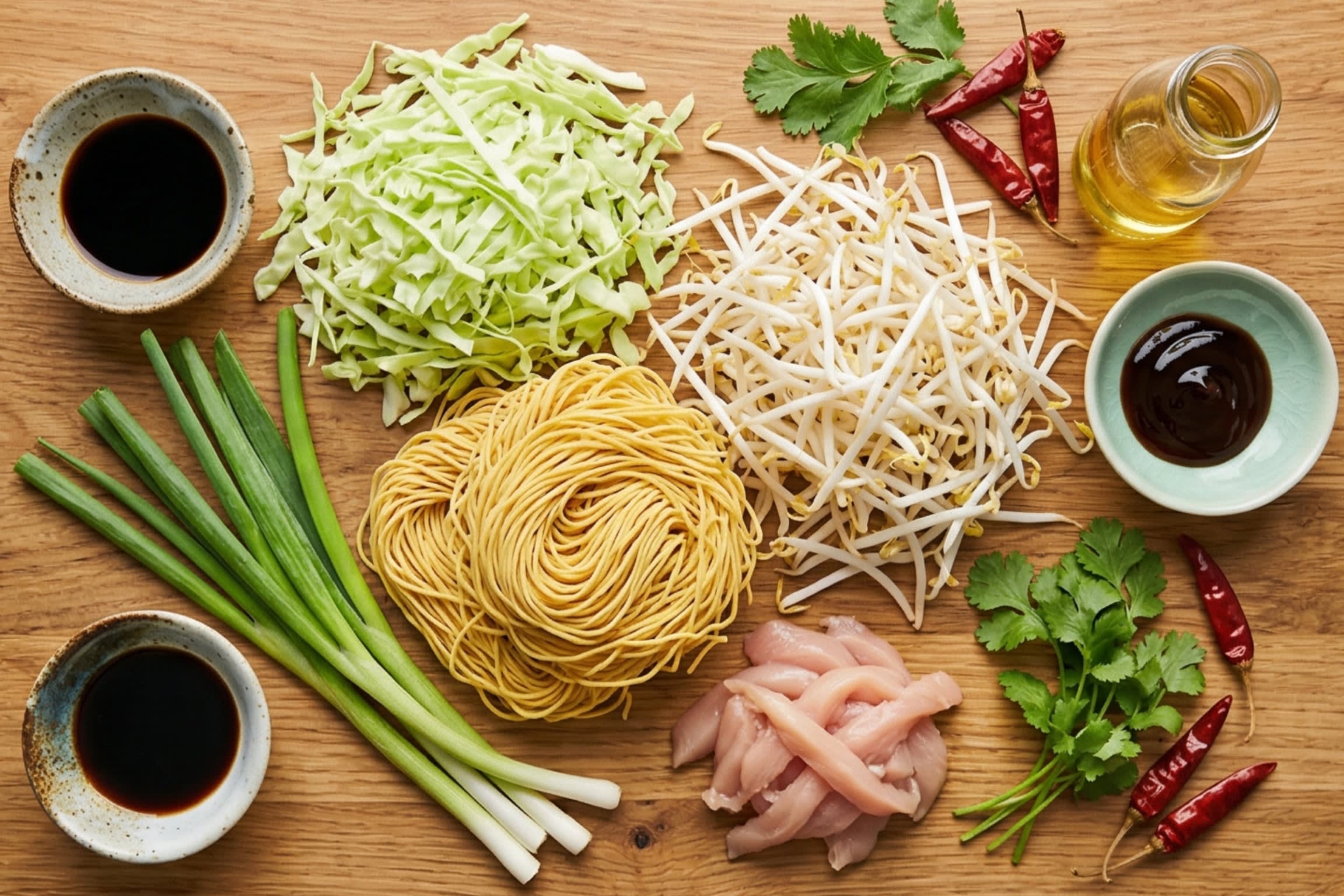
The vegetable trio used here is essential for contrast: the soft crunch of cabbage, the snap of the bean sprouts, and the sharp, aromatic bite of the scallions.
| Category | Components |
|---|---|
| Noodles & Protein | 200g Fresh Egg Noodles, 100g thinly sliced chicken, 3 tbsp high-heat oil. |
| Veggie Trio | 1.5 cups shredded cabbage, 1 cup mung bean sprouts, 3 stalks of long-cut scallions (葱段 - Cōngduàn). |
| Seasoning | 1.5 tbsp light soy sauce, 1 tsp dark soy sauce, 1 tbsp oyster sauce, pinch of white pepper, toasted sesame oil. |
🍳 Step-by-Step Instructions
1. Marinate the Chicken: Combine your chicken strips with a splash of soy sauce, cornstarch, and Shaoxing wine. Let this sit for 10 minutes. This creates a protective silken coating that keeps the meat succulent.
2. The Sauce Foundation: Whisk your soy sauces, oyster sauce, sugar, and white pepper in a small bowl. Having this ready is the secret to a stress-free, high-speed stir-fry.
3. Prepare the Noodles (断生): Boil your noodles to Duan Sheng. Drain immediately and shock them under cold running water to stop the cooking. Toss with a teaspoon of oil to prevent them from becoming a giant, sticky nest.
4. Sear the Chicken: Get your wok screaming hot. Add a tablespoon of oil and sear the chicken until golden. Remove it before it overcooks; we will return it later.
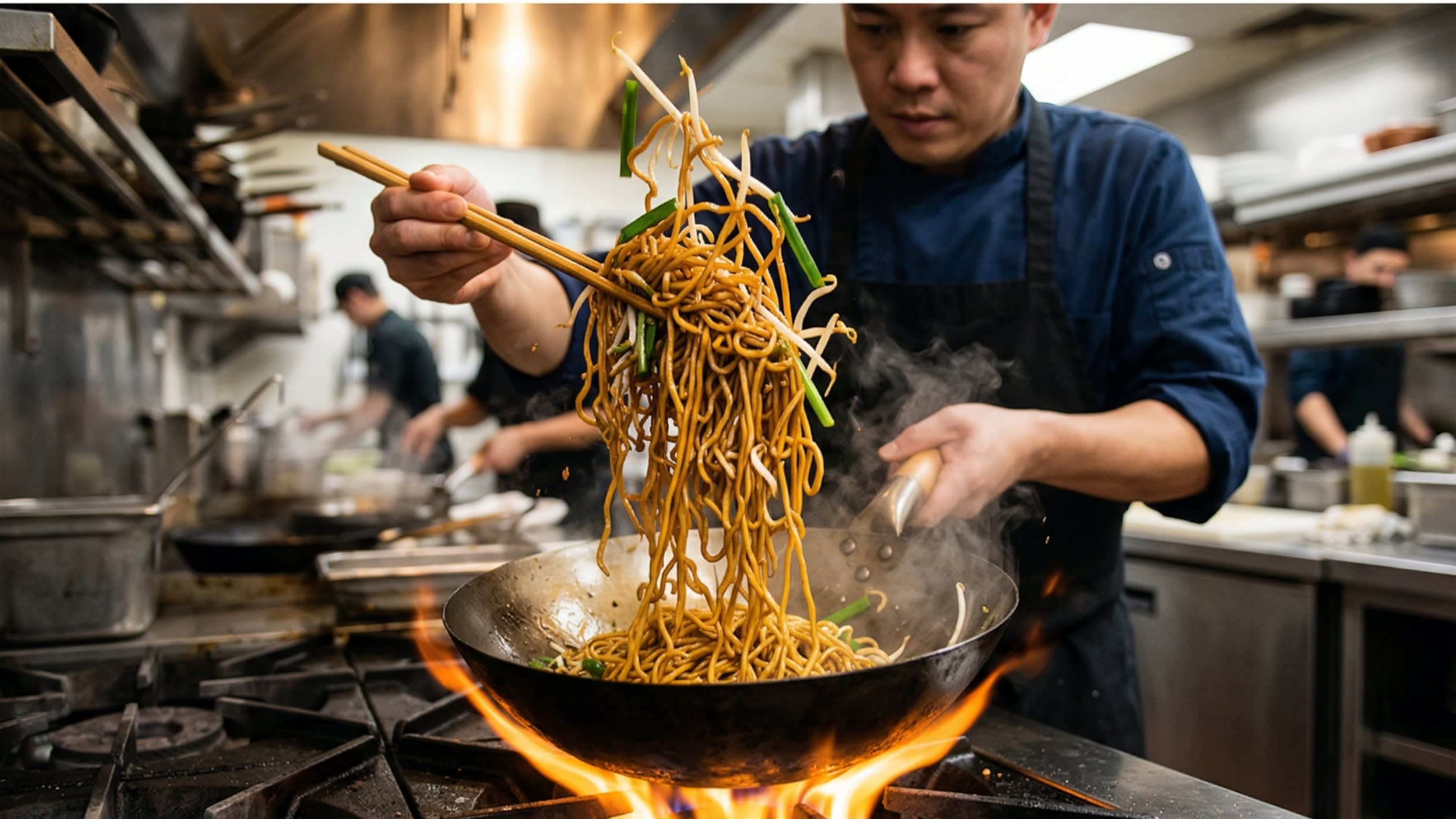
5. Stir-Fry the Aromatics: Add the white parts of the scallions and the cabbage to the wok. The sound should be a sharp, intense sizzle. Stir-fry until the cabbage just begins to wilt and char at the edges.
6. The Noodle Toss: Add your noodles. Here, resistance is key: don’t toss them immediately. Give them 15 seconds to bond with the hot surface of the wok. Then, using extra-long wooden cooking chopsticks, lift and toss them elegantly. This motion keeps them airy and intact.
7. Glaze and Finish: Pour the sauce over the noodles. Add the cooked chicken back in, toss in the bean sprouts and the green scallions. The residual heat will soften the sprouts just enough to keep their satisfying “snap.”
8. Serve: Plate immediately. The contrast between the smoky noodles, crunchy sprouts, and silky chicken makes for an incredible sensory experience.
💡 Pro-Tips for Perfection
- The Moisture Trap: Avoid washing your vegetables right before they hit the pan. Water is the enemy of Wok Hei. If they are damp, use a salad spinner or paper towels to ensure they are bone-dry.
- The “Chopstick” Rule: Forget your flat spatula. Use wooden cooking chopsticks to toss. They allow you to pull the noodles through the sauce without snapping them into fragments.
For those who want to dive deeper into the world of Chinese comfort food, check out my guides on Authentic Chinese Lo Mein or master the techniques behind Authentic Sichuan Mapo Tofu. Cooking is a journey, and every dish you master is a new layer of Chinese culture you get to experience firsthand.
Disclaimer: As an Amazon Associate, ChinaCurator earns from qualifying purchases.