🥣 Introduction: The Ultimate Chinese Comfort Soup
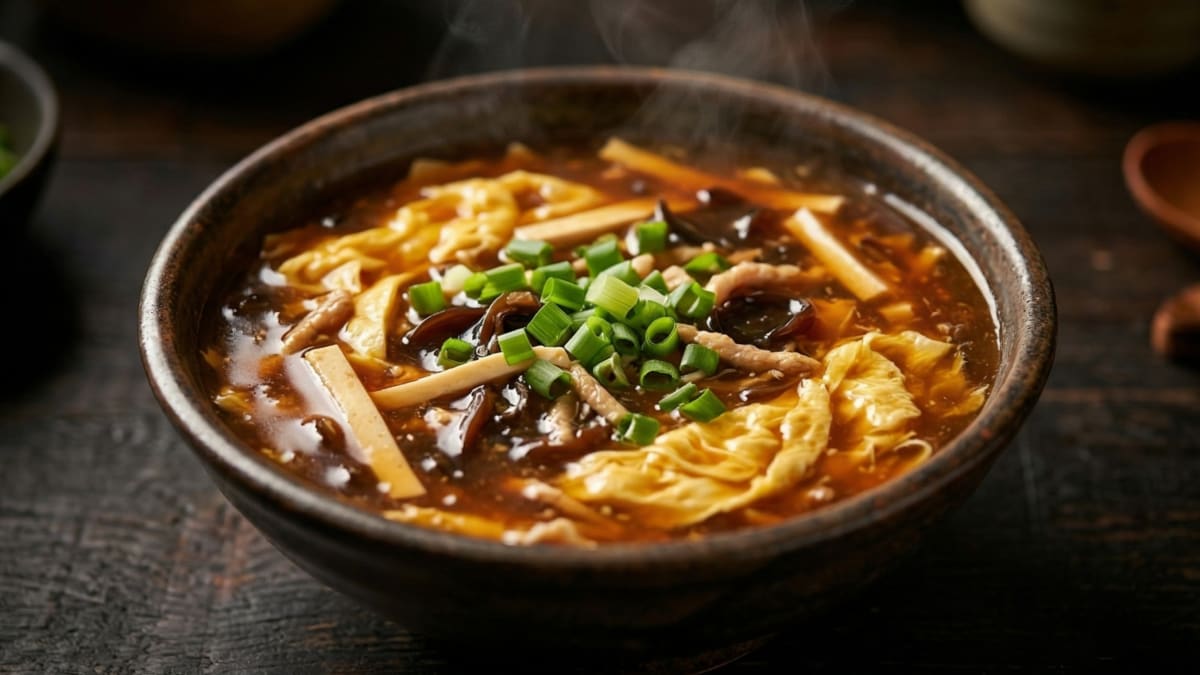
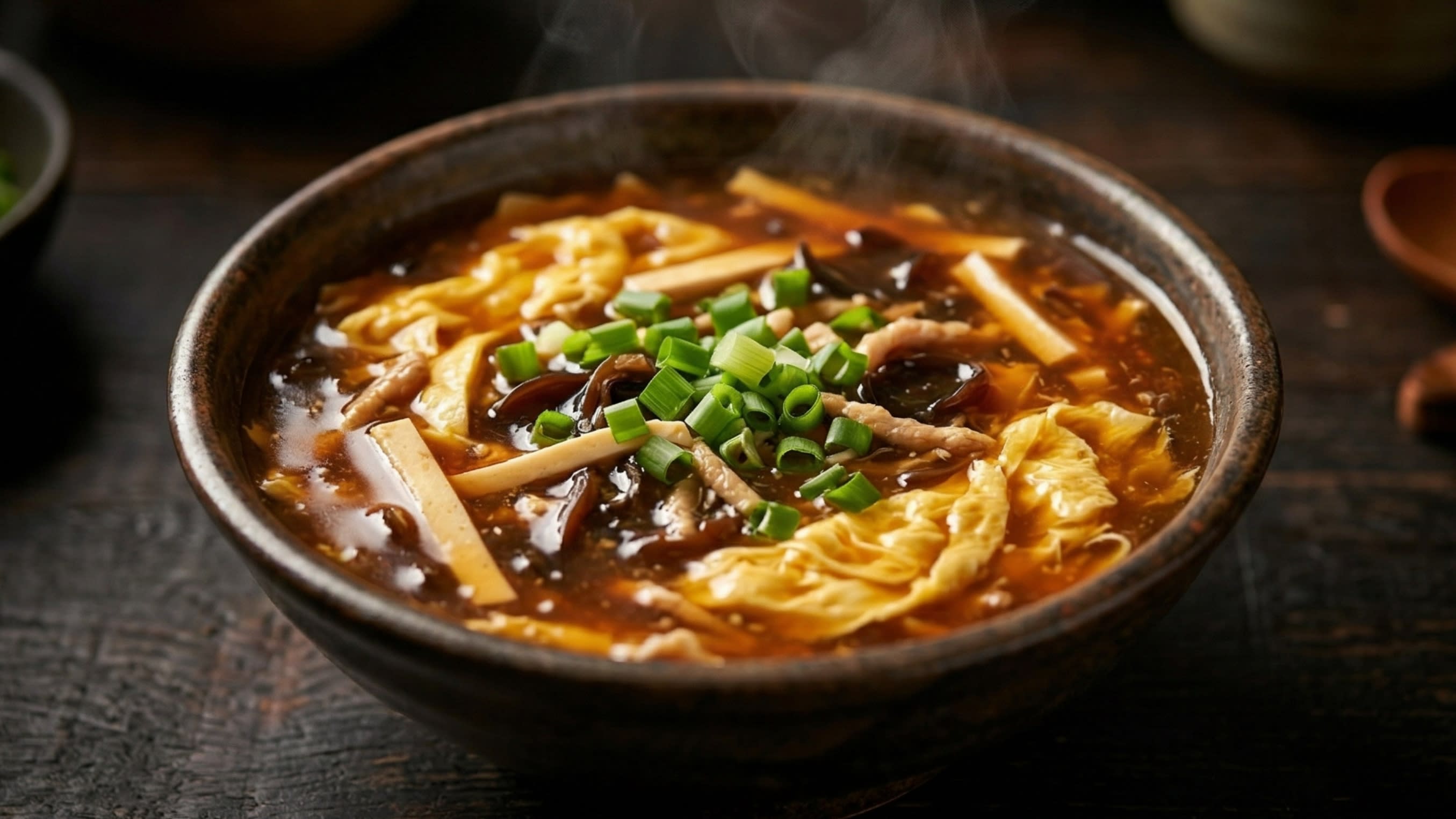
Walk into any neighborhood Chinese restaurant, and you will inevitably be met with the classic binary choice: “Egg Drop or Hot and Sour?” For me, the answer is etched in stone—it has to be Hot and Sour Soup (酸辣汤 - Suānlà Tāng). There is something deeply restorative about this dish. It’s a complex, multi-sensory experience that balances the sharp tang of aged vinegar with the creeping, earthy heat of white pepper, all held together by the silkiness of egg ribbons and the satisfying snap of wood ear mushrooms.
I still remember my first winter in Northern China. The wind was so biting that it felt like tiny needles against my skin, but after ducking into a small, steam-filled shop and finishing a bowl of this soup, the world felt right again. That is the true magic of Suānlà Tāng—it is not just a starter; it is a remedy. It was designed for those harsh, freezing winters, where the heat was meant to stimulate your circulation and make you sweat, effectively purging the body of the day’s chill.
Many home cooks are intimidated by the complexity of the flavor, assuming that restaurant-quality soup requires hours of slow-simmering stock. In my experience, the opposite is true. This is one of the fastest, most rewarding dishes you can master. Once you grasp the chemistry of the seasonings and the technique of “velveting” the broth, you will never look at takeout menus the same way again. If you have already mastered the bold, numbing heat of my Authentic Sichuan Mapo Tofu, you are going to feel right at home with the layering techniques I use here.
🌶️ The Science of “Hot” and “Sour”
If your homemade versions have ever fallen flat, it usually comes down to using the wrong pantry staples. The “takeout spark” everyone chases isn’t magic; it is ingredient selection.
Why White Pepper is Non-Negotiable
When I see recipes calling for Sriracha or red chili flakes, I genuinely wince. Red chilies provide a “front-of-mouth” burn that masks the subtle savory notes of the broth. In an authentic bowl, the heat must come from white pepper powder. It offers a sharp, sophisticated, and lingering warmth that hits the back of your throat. It’s an earthy, almost floral heat that persists without overpowering the delicate tofu.
The Complexity of Chinkiang Vinegar
White distilled vinegar is far too harsh, acidic, and one-dimensional to replicate the taste of a professional kitchen. You absolutely need Chinkiang black rice vinegar. Think of this as the “balsamic of China.” It is aged, dark, malty, and slightly sweet. Without it, you are just drinking hot, sour water; with it, you are drinking a deep, fermented masterpiece.
🍄 The Architecture of Textures
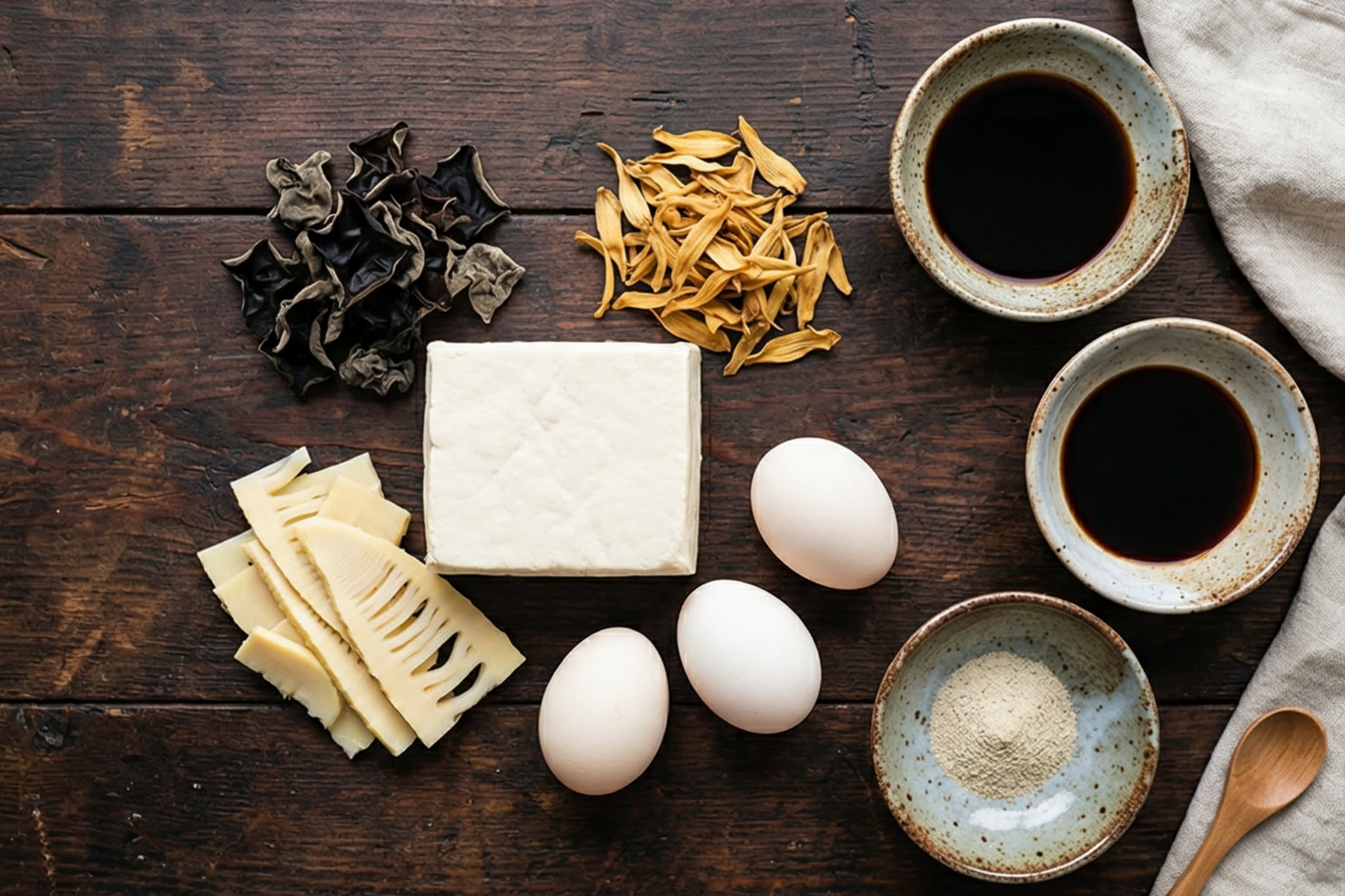
The hallmark of a great Suānlà Tāng is texture. Every spoonful should offer a varied mouthfeel—the snap of mushrooms, the softness of tofu, and the slight crunch of bamboo shoots. This requires the traditional technique of Qiēsī (切丝), or julienning. The ingredients must be cut into uniform, thin matchsticks to ensure they distribute evenly throughout the thickened broth.
| Ingredient | Role in the Soup |
|---|---|
| Firm Tofu (老豆腐) | Provides soft body; firm enough not to disintegrate. |
| Wood Ear Mushrooms (木耳) | Delivers the essential, signature "snappy" bite. |
| Lily Flowers (黄花菜) | Adds a subtle, earthy tartness and visual elegance. |
| Bamboo Shoots (竹笋) | Offers a neutral, crisp structural element. |
🛒 The Essential Pantry Checklist
- Protein: 100g of lean pork loin, thinly sliced.
- Base: 4 cups of high-quality chicken or vegetable broth.
- The “Crunch”: Dried wood ear mushrooms and dried lily flowers.
- Aromatics: Fresh scallions, ginger, and a splash of sesame oil.
- Seasoning: The “Big Four”—Chinkiang vinegar, light soy sauce, dark soy sauce, and white pepper.
🍳 The Professional Process
1. The Prep Work (Qiēsī)
Soak your dried ingredients in warm water for 20 minutes until they regain their bounce. While they hydrate, focus on your knife skills. Slice the pork, tofu, and rehydrated mushrooms into uniform matchsticks. If the pieces vary too much in size, the eating experience won’t be balanced.
2. Velveting the Pork
Marinate your pork shreds with a touch of soy sauce and cornstarch. This “velveting” technique protects the meat from the boiling broth, ensuring it stays succulent rather than turning into tough, rubbery strands.
3. The Build & The Skim
Bring your broth to a boil and add the pork. You’ll notice foam rising to the surface—this is just protein impurities. Skim it off with a fine-mesh ladle; this simple act of discipline is what separates a homemade soup from a professional restaurant dish. Once the broth is clear, introduce your mushrooms, lily flowers, and tofu.
4. The Art of the Slurry (Gōuqiàn)
The thick, glossy texture of the broth is not a result of simmering; it is the work of your cornstarch slurry. Stir your slurry (cornstarch and water) well before adding it. Pour it into the soup while stirring in a circular motion. Watch as the broth transforms from a thin liquid into a rich, clinging, velvety base.
5. Creating Silk Ribbons
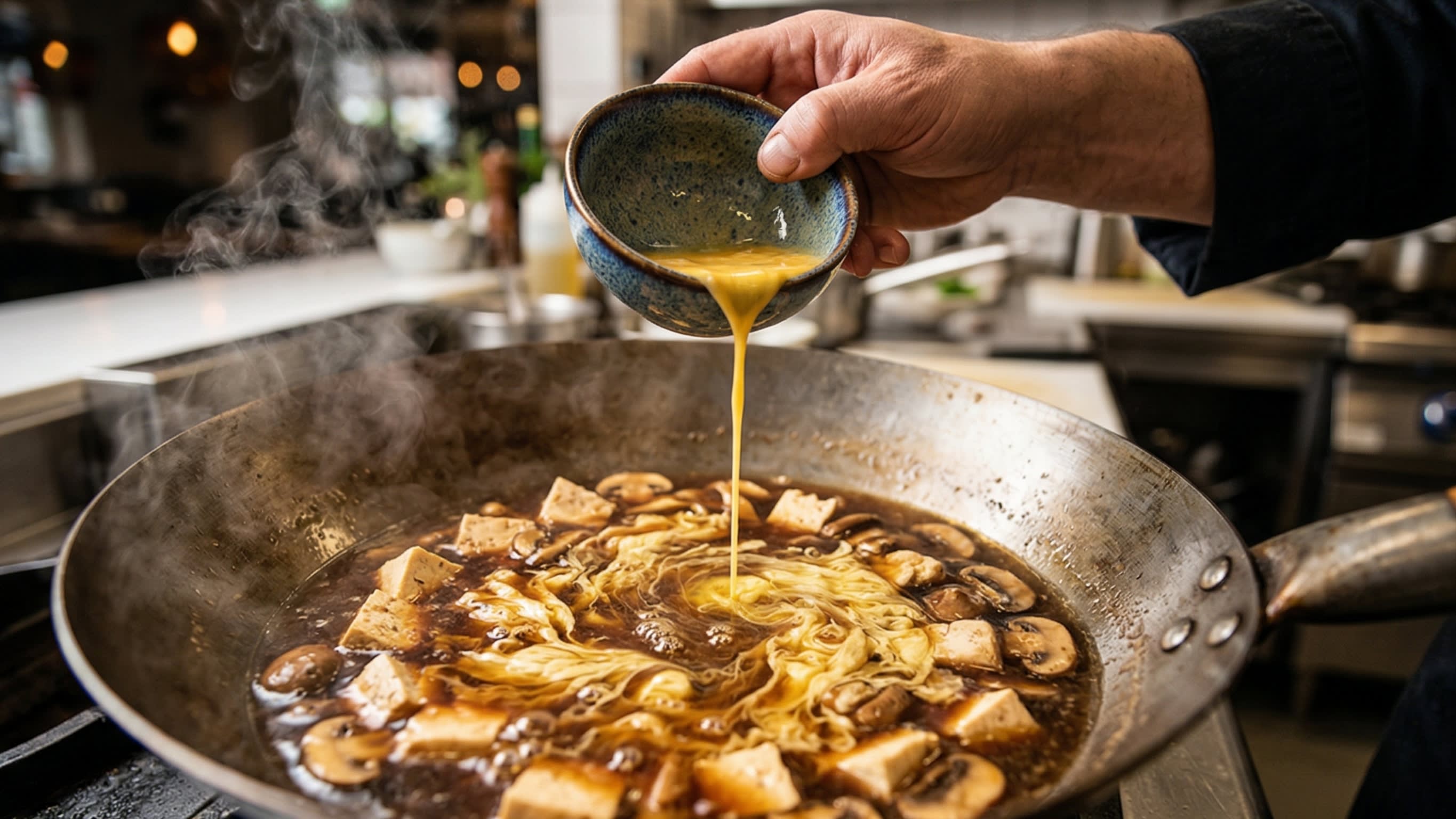
This is where many home cooks rush. Lower the heat until the soup is barely moving. Pour your beaten eggs in a thin, steady stream. Wait five seconds. Resist the urge to stir immediately! That pause is essential; it allows the egg to set into long, beautiful yellow ribbons.
6. The Final Balancing Act
Turn off the heat completely before adding your vinegar, white pepper, and sesame oil. If the vinegar hits boiling temperatures for too long, its complex, aged profile will evaporate, leaving behind a sharp, unpleasant acidity.
💡 Expert Culinary Secrets
- The Golden Ratio: I always suggest starting with a 1:1 ratio of vinegar to white pepper, then adjusting to your personal threshold. Remember, the cornstarch thickener will slightly mute the intensity of the seasonings, so always season after you have achieved your desired consistency.
- The Cooling Factor: If you enjoy this soup, you might also like exploring how we use food to balance body temperature, similar to how we use the Chinese cooling diet to survive heatwaves.
- Pairing: For a full, comforting meal, I love serving this alongside a portion of my Authentic Chinese Lo Mein. The chewy noodles and the silky, tangy soup provide the perfect contrast in texture.
Disclaimer: As an Amazon Associate, ChinaCurator earns from qualifying purchases.