🥢 The Soul of Sichuan: Rediscovering a Classic
If your baseline for Chinese food is sweet, battered Western takeout classics like the ultimate orange chicken recipe, taking your first bite of authentic Kung Pao Chicken (宫保鸡丁 - Gōngbǎo Jīdīng) will feel like stepping into a completely different world.
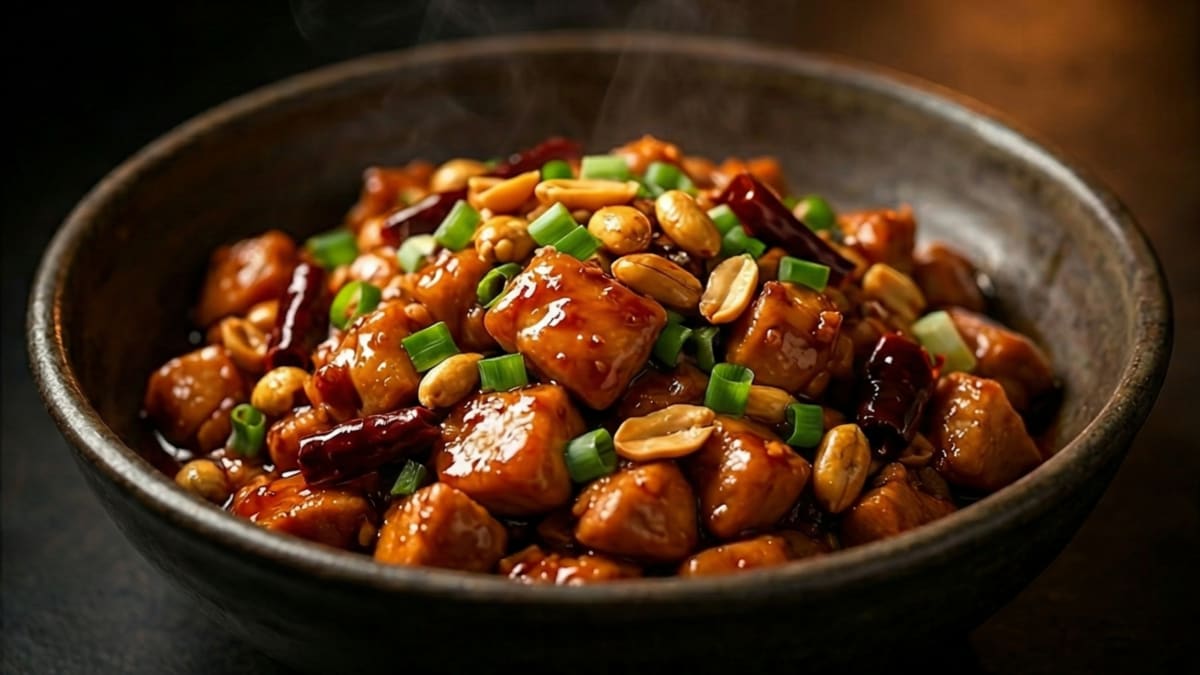
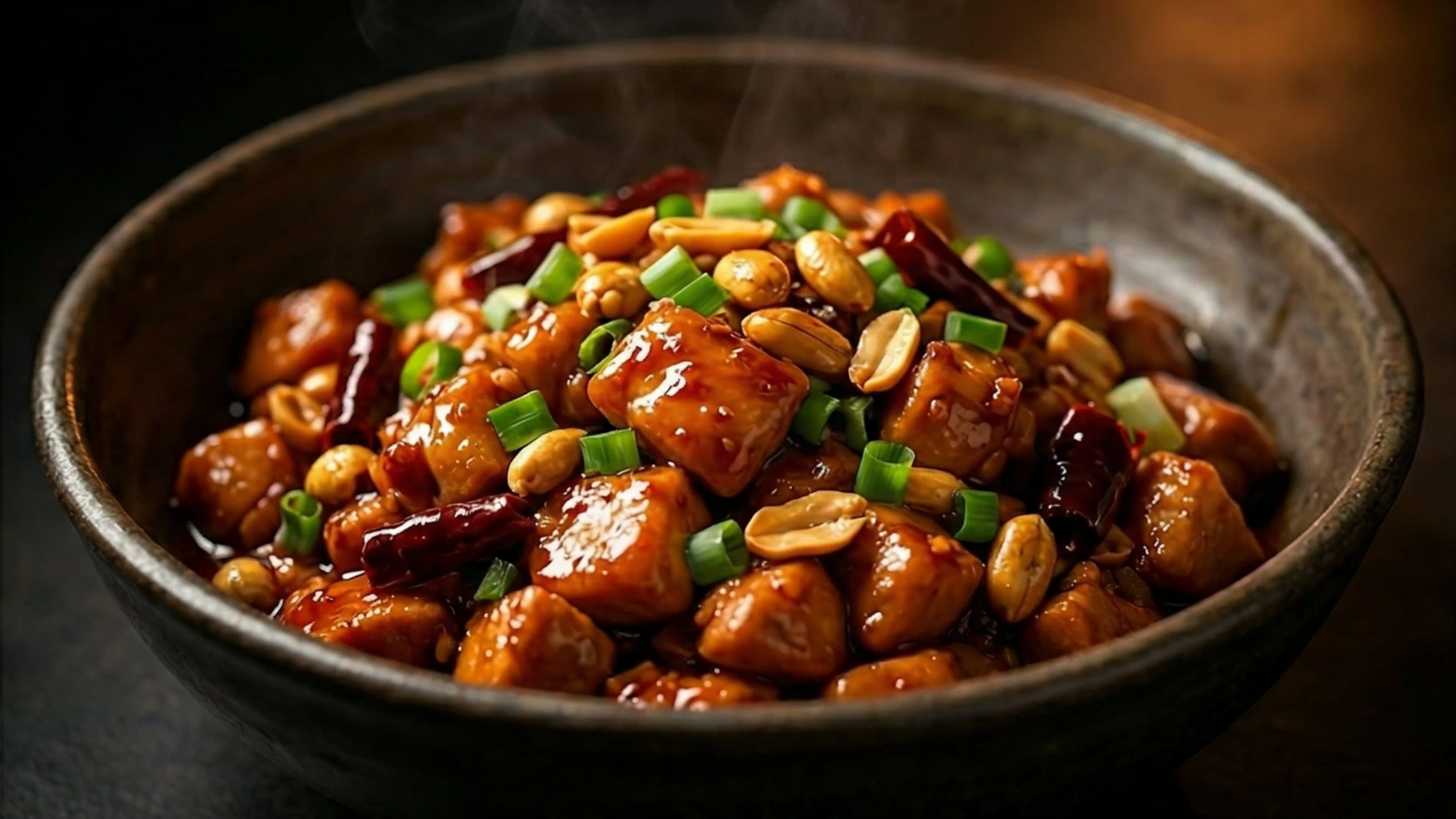
I still vividly remember sitting in a bustling, steam-filled tavern in Chengdu, the air thick with the prickle of frying chilies. When the dish arrived, it wasn’t a pool of heavy, syrupy-sweet sauce. Instead, it was a glistening, highly structured mountain of tender chicken cubes, pale green scallion barrels, and deeply toasted red peppers, all lightly bound together by a mahogany glaze that barely coated the ingredients. It smelled of sweet roasted garlic, aged vinegar, and the citrusy, electric hum of toasted Sichuan peppercorns.
In high-end Sichuan culinary tradition, this dish is the golden standard for a complex flavour profile known as Lìzhī Wèi (荔枝味) — the “lychee flavor.” This does not mean the dish contains actual lychees. Rather, it refers to a delicate, chef-level balance where sweet and sour are introduced in equal measure, hitting the front of your palate first. Then, as you chew, that fruity brightness melts into the deeply aromatic, numbing warmth of Málà (麻辣) spice.
Named in honor of Ding Baozhen, a Qing Dynasty governor who held the title of Gōngbǎo (宫保 - palace guardian), this dish represents the pinnacle of Chinese wok discipline. By understanding the chemical interplay of its ingredients and mastering the high-heat physics of your home stove, you can capture this breathtaking flavor profile in your own kitchen.
🛒 The Blueprint: Authentic Ingredients and Culinary Gear
To achieve the precise texture and flavor of a Chengdu tavern, we have to look past standard supermarket substitutes. Authentic Gōngbǎo Jīdīng depends entirely on the contrast of textures: velvety chicken thighs, crisp scallions, and brittle, crunchy peanuts.
Equally vital is your choice of cookware. While you can use a heavy skillet, stir-frying on a hot stove is infinitely more manageable when using a well-conditioned carbon steel wok, which allows you to toss the ingredients continuously without losing heat.
Ingredient Breakdown & Master Measurements
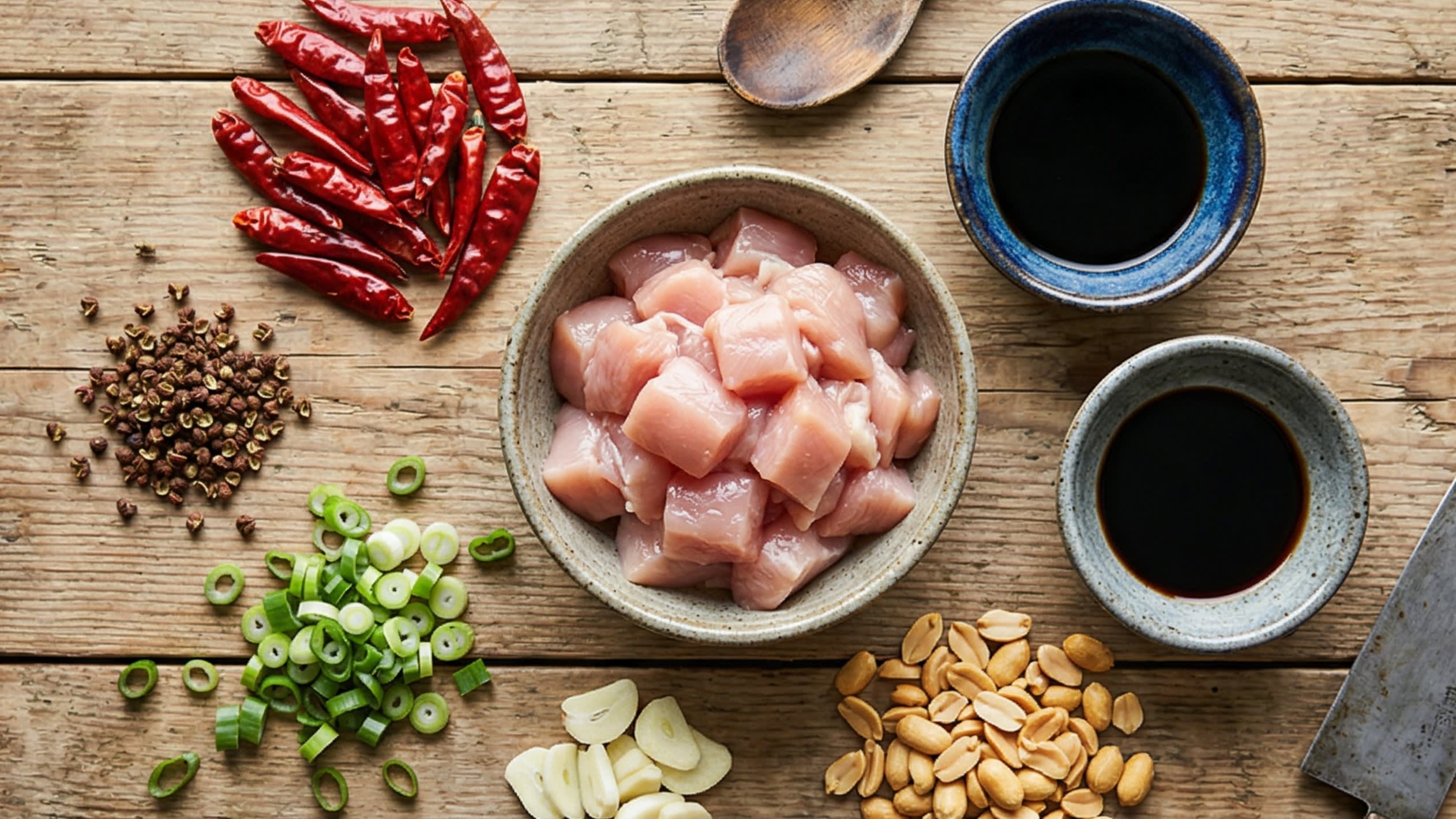
To keep your kitchen organized, I have structured the complete ingredient list below by prep category:
| Category | Ingredient Name (Pinyin) | Quantity & Preparation Notes |
|---|---|---|
| Chicken & Velvet Marinade | Boneless Chicken Thighs | 300g (10.5 oz), cut into uniform 1.5cm cubes |
| Light Soy Sauce (Shēngchóu) | 1 tbsp (for savory depth) | |
| Shaoxing Wine (Shàoxīngjiǔ) | 1 tsp (to eliminate gamey raw poultry notes) | |
| Cornstarch (Diànfěn) | 1 tsp (crucial for structural velvetting coating) | |
| Cooking Oil | 1 tsp (poured in last to seal the meat fibers) | |
| The "Lychee" Sauce Bowl | Chinkiang Vinegar (Zhènjiāng Xiāngcù) | 2 tbsp (fruity, malty black vinegar) |
| Granulated White Sugar | 2 tbsp (to perfectly balance the vinegar's tang) | |
| Light Soy Sauce (Shēngchóu) | 1 tbsp (adds savory salinity) | |
| Dark Soy Sauce (Lǎochóu) | 1 tsp (primarily used for color caramelization) | |
| Sesame Oil (Xiāngyóu) | 1 tsp (unrefined, for a nutty aromatic finish) | |
| Cornstarch Slurry | 1 tsp cornstarch whisked with 1 tbsp cold water | |
| Wok Aromatics & Finish | Sichuan Peppercorns (Huājiāo) | 1 tsp whole red peppercorns |
| Dried Facing Heaven Chilies | 10-15 dried pods, halved and seeds discarded | |
| Fresh Garlic Cloves | 3 cloves, peeled and sliced into clean medallions | |
| Fresh Ginger (Shēngjiāng) | A thumb-sized knob, sliced thin into matching coins | |
| Scallions (Cōngbái) | 4 stalks, white and pale-green parts only, cut in 2cm barrels | |
| Roasted Unsalted Peanuts | 1/2 cup, skins removed (fried fresh if raw) | |
| Peanut or Vegetable Oil | 3 tbsp (neutral, high-smoke-point oil) |
🍳 Step-by-Step Instructions
Cooking Gōngbǎo Jīdīng is a lesson in momentum. Much like mastering the art of wok hei in Cantonese cuisine, this Sichuan stir-fry moves incredibly fast once the oil is hot. You must have every single element measured and sitting at arm’s reach before turning on your stove.
Step 1: The Velvetting Technique
Using chicken thighs is highly recommended here, as they remain succulent under intense wok temperatures. Cut your meat into clean, bite-sized cubes. In a small bowl, combine the chicken with the light soy sauce and a splash of premium Shaoxing cooking wine to neutralize raw odors. Sprinkle with the cornstarch and massage the mixture with your fingers until the liquid is fully absorbed into the meat.
Finally, pour in one teaspoon of cooking oil. This forms a protective layer around the chicken, keeping the starch coating intact and preventing the meat cubes from sticking together in the hot wok. Let this marinate for 15 minutes at room temperature.
Step 2: Whisking the Sweet-and-Sour Glaze
In a clean bowl, whisk together your Chinkiang vinegar, white sugar, light soy sauce, dark soy sauce, sesame oil, and your pre-mixed cornstarch slurry. True Lìzhī Wèi relies on the complex, malty acidity of an authentic Chinkiang black rice vinegar. White vinegar is far too sharp and one-dimensional here; it will completely throw off the sweet-and-sour balance. Whisk this mixture thoroughly until the sugar granules have completely dissolved, and set it next to the stove.
Step 3: Preparing the Peanuts
If you are starting with raw, skin-on peanuts, add them to your cold wok alongside a tablespoon of oil. Turn the heat to low and toast them gently, stirring continuously. As they heat up, you will hear them crackle. The moment they turn a pale golden hue, transfer them to a bowl; they will continue to darken and crisp up as they cool down. If you are using pre-roasted, store-bought peanuts, you can skip this step entirely.
Step 4: Tempering the Spices
Wipe down your wok and place it back over medium-low heat. Pour in three tablespoons of fresh cooking oil. Drop in your whole, citrusy Sichuan peppercorns and the halved dried facing heaven chilies.
Watch them closely as they heat. You want the essential oils of the spices to slowly bleed into the fat. This process is complete when the chilies turn a dark, lustrous maroon and the kitchen smells wonderfully smoky and numbing. Do not let the chilies turn black, or they will taste bitter.
Step 5: High-Heat Stir-Frying
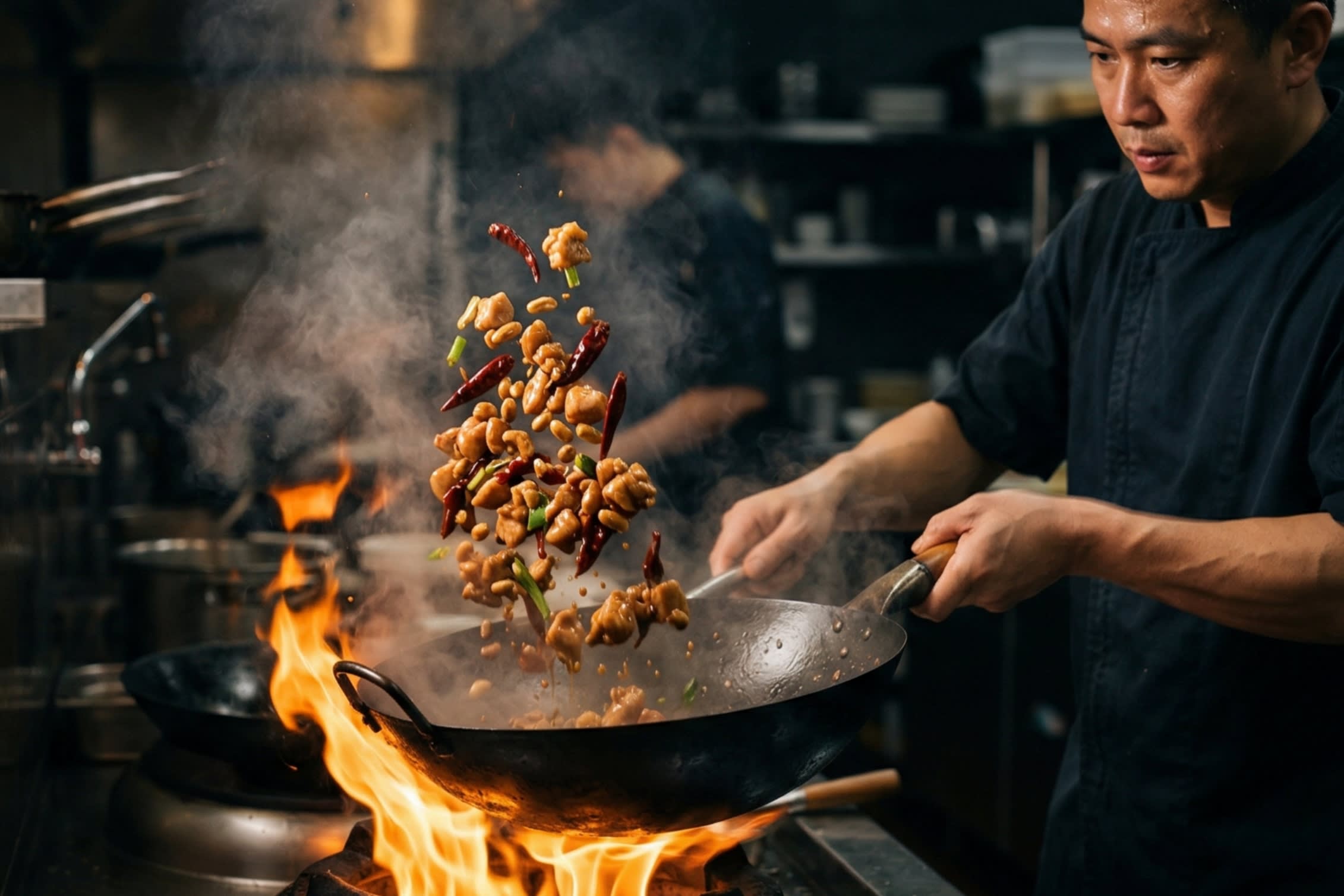
Turn your stove up to high heat. Once the oil begins to shimmer, slide the marinated chicken cubes into the wok. You should hear an immediate, loud hiss.
Using your spatula, spread the chicken into a single layer for the first 30 seconds to let a delicate golden crust develop. Then, stir-fry vigorously for 3 minutes until the meat turns opaque and is about eighty percent cooked through.
Step 6: Blooming the Aromatics
Push the chicken to the sides of your wok, leaving a small pool of hot oil in the center. Drop in your ginger coins, garlic medallions, and scallion barrels. Stir-fry these aromatics in the center of the wok for roughly 30 seconds. The heat will cause their moisture to flash off, releasing an incredibly appetizing fragrance that will blend beautifully with the seasoned chicken.
Step 7: The Masterful Glaze
Give your prepared sauce bowl one quick whisk to re-suspend any cornstarch that has settled to the bottom. Pour the sauce in a circular motion directly onto the dry metal sides of the screaming-hot wok.
As the liquid runs down the hot iron, it will instantly bubble, caramelize, and begin to thicken. Toss the chicken quickly to coat it in this glossy, mahogany lacquer. This should take no more than 10 to 15 seconds.
Step 8: The Finishing Touch
Turn off the heat entirely. Throw in your toasted peanuts and give the wok one final toss. It is absolutely vital that the peanuts go in after the heat is off, keeping them dry and extraordinarily crunchy. Transfer everything onto a warm plate immediately and serve with hot steamed rice.
💡 Pro Tips for Kitchen Success
- Mastering Wok Temperatures: If your home stove lacks the roaring power of a commercial kitchen, try stir-frying your chicken in smaller batches. Overcrowding a cooler home pan will cause the meat to release its juices and steam, ruining that beautiful velvet texture. This attention to heat management is just as critical here as it is when preparing authentic Sichuan mapo tofu.
- The Golden Scallion Rule: Authentic Gōngbǎo Jīdīng specifically calls for the thick, white, and pale-green sections of the scallion (known in Chinese as Cōngbái - 葱白). Cut them into uniform barrels that match the size of your chicken cubes. They act as sweet, juicy flavor sponges that balance the spicy heat of the dish.
- Taming the Heat: If you prefer a milder dish, you can easily control the heat level by shaking out all the seeds from your dried red peppers before they go into the wok. The skin of the chilies provides a wonderful, deep smoky aroma, while the seeds hold most of the fiery heat.
🎥 Watch the Technique
Watching a master handle a wok is the easiest way to understand the fast-paced rhythm of this recipe. Pay close attention to how quickly the sauce thickens and how the chef tosses the pan to keep the chicken beautifully tender.
Disclaimer: As an Amazon Associate, ChinaCurator earns from qualifying purchases.