
🍊 Introduction: The Undisputed Champion of the Food Court
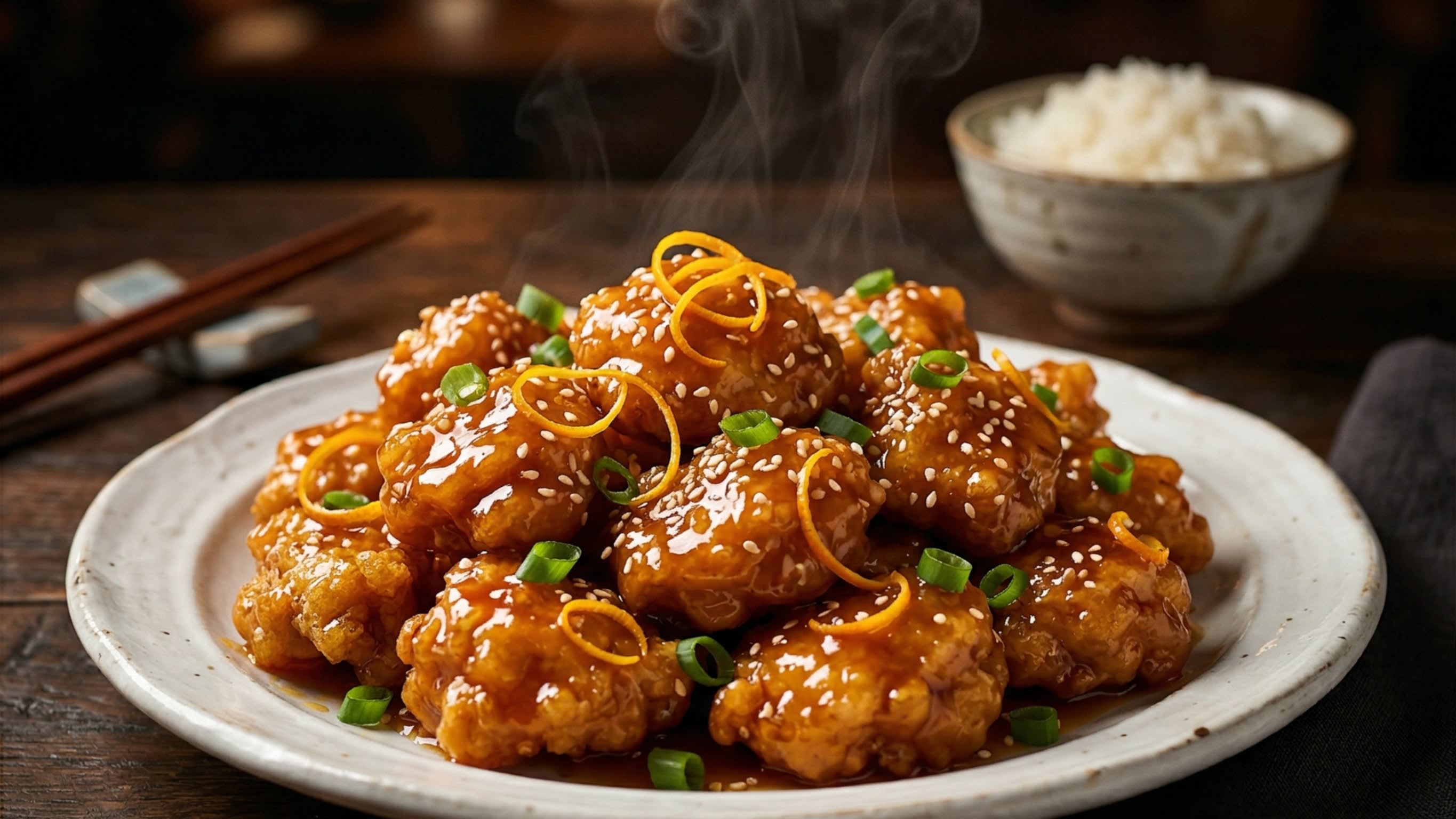
If there is a scent that instantly transports me back to the bustling energy of a suburban food court, it is the sweet, tangy, intoxicating aroma of Orange Chicken (香橙鸡 - Xiāngchéng Jī).
Famous worldwide as the flagship dish of Chinese-American takeout, it is a masterpiece of textures: massive, juicy chunks of chicken thigh encased in a shatteringly crisp, golden-brown crust, all enveloped in a sticky, bright citrus glaze. For years, I’ve tried to replicate that exact “Panda” style at home. Most attempts were tragic—soggy breading, bland sauce, and a kitchen that smelled like a deep-fryer explosion.
Today, we are putting an end to bad takeout. I’m going to share the restaurant science behind that legendary crunch and the secret to a glaze that tastes like actual fruit rather than corn syrup. Prepare yourself; this recipe might just ruin restaurant Orange Chicken for you forever.
📜 The History: Is Orange Chicken Authentic?
Before we dive into the wok, let’s address the elephant in the room: Would you find this in China?
The truth is, this specific version of Orange Chicken was born in the 1980s in Hawaii, a beautiful collision of culinary cultures. However, its spiritual ancestor is a deeply traditional dish from Hunan and Sichuan called Tangerine Peel Chicken (陈皮鸡 - Chénpí Jī).
Traditional Chenpi Ji doesn’t aim for the candy-like sweetness we crave in the West. It relies on dried, aged tangerine peels (陈皮 - Chénpí) that are stir-fried with Sichuan peppercorns, dried red chilies, and savory soy sauce. The result is earthy, spicy, and nuanced. When Chinese chefs immigrated to North America, they adapted this to local palates, swapping dried peels for fresh orange juice and sugar to create the iconic sticky glaze we adore today. It’s not “authentic” to Beijing, but it is deeply authentic to the Chinese-American experience.
🔬 The Science of the Perfect Citrus Glaze
The most common mistake home cooks make? Using bottled orange juice. Once pasteurized, orange juice loses the volatile essential oils that give it that “fresh-picked” aroma. If you reduce it in a pan, it just turns into flat, sweet water.
The Secret is the Zest (橙皮屑)
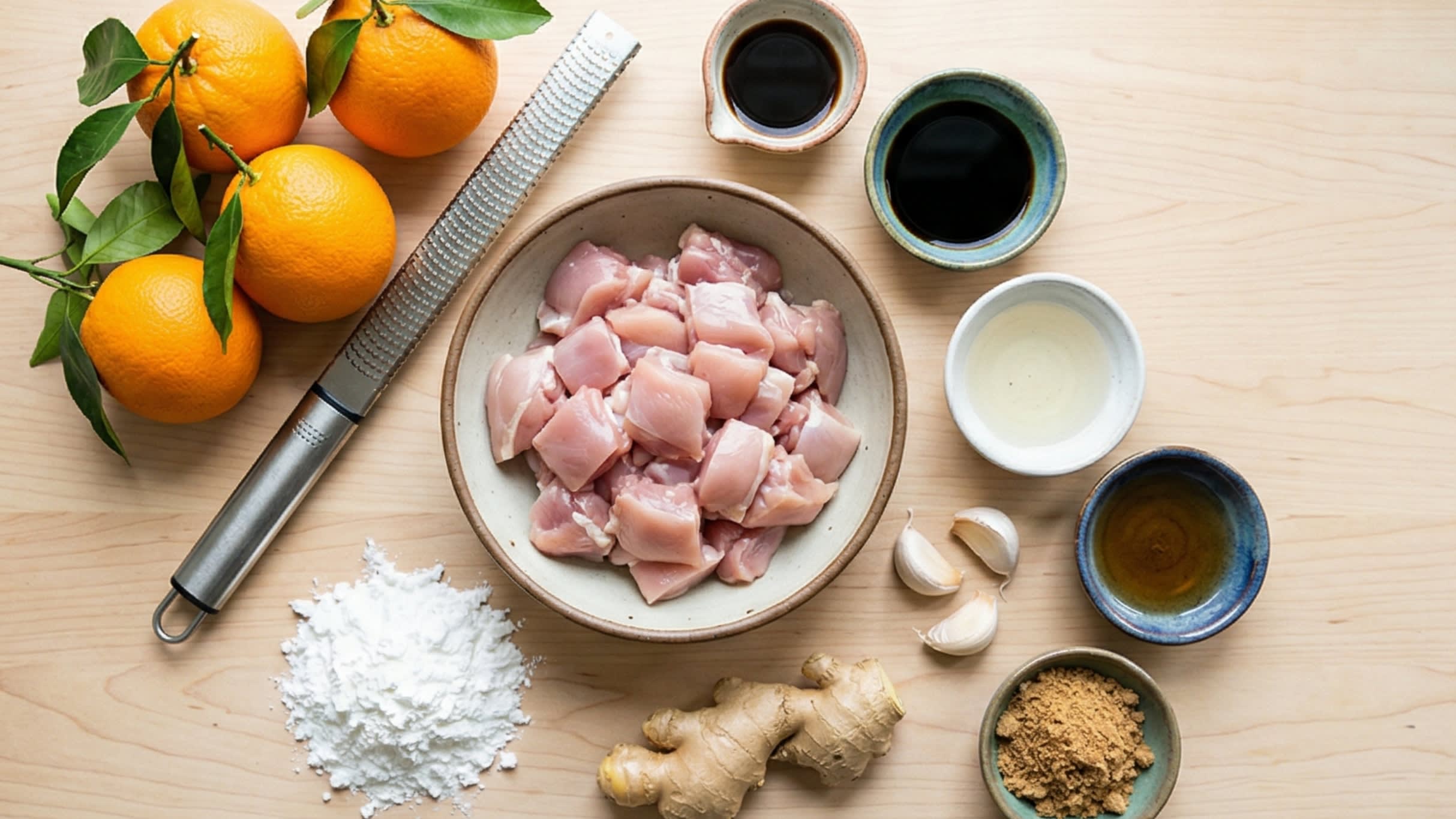
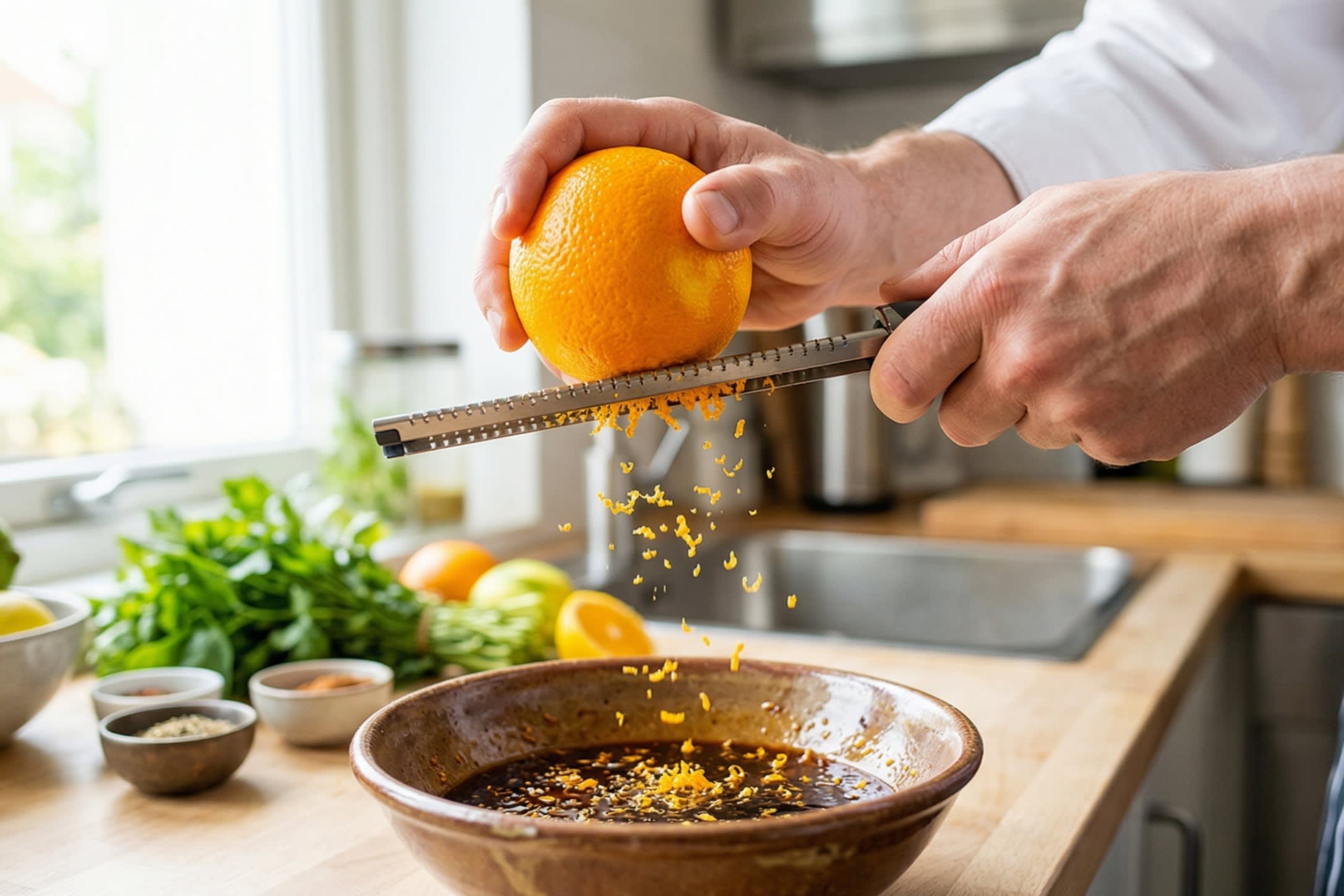
The secret to that “restaurant-quality” punch is the Orange Zest (橙皮屑 - Chéngpí xiè). The zest is where the essential oils live. By grating the bright, colorful outer rind into your sauce, you capture that floral, acidic perfume that makes your taste buds wake up. Using a reliable microplane zester to extract just the orange part (avoiding the bitter white pith!) is the absolute game-changer.
🍗 The Restaurant Secret: “Guahu” and the Double Fry
To achieve that legendary Wàisū lǐnèn (外酥里嫩 - crispy on the outside, tender on the inside) texture that survives being tossed in a heavy sauce, you must master two fundamental techniques.
1. The Batter (挂糊 - Guàhú)
Forget all-purpose flour. It contains gluten, which behaves like a sponge for sauce, turning your hard work into mush. Authentic Chinese frying uses Cornstarch (玉米淀粉). When mixed with egg and a splash of soy sauce, it creates a glass-like, non-absorbent shell around the meat. This process is called Guàhú.
2. The Double Fry (复炸 - Fùzhá)
This is the “cheat code” for elite-level crunch.
- The First Fry: Low temperature to cook the meat through.
- The Second Fry: A quick blast in 390°F (200°C) oil. This flash-frying forces moisture out of the crust, making it shatteringly brittle—the kind of crunch you hear across the room.
🛒 Ingredients List
The Chicken & Marinade:
- 1.5 lbs Boneless, skinless Chicken Thighs (鸡腿肉 - Jītuǐròu)
- 1 tbsp Light Soy Sauce (生抽 - Shēngchōu)
- 1 tbsp Shaoxing Cooking Wine
- 1 large Egg
The Crispy Coating:
- 1 cup Cornstarch (玉米淀粉)
- 1/2 tsp Salt
- 1/4 tsp White Pepper
The Fresh Orange Glaze:
- Zest of 1 large fresh Orange (橙皮屑)
- 1/2 cup Freshly Squeezed Orange Juice
- 3 tbsp Rice Vinegar (米醋)
- 3 tbsp Light Soy Sauce
- 4 tbsp Granulated Sugar
- 1 tbsp Brown Sugar (for depth)
- 1 tbsp Cornstarch (for thickening)
The Aromatics:
- 4 cups high-heat Cooking Oil
- 4 cloves Garlic, finely minced (蒜末 - Suànmò)
- 1 thumb-sized piece of Ginger, finely minced (姜末 - Jiāngmò)
- 1/2 tsp Red Chili Flakes (optional)
- Scallions & Sesame seeds for garnish
🍳 Step-by-Step Instructions
1. Prep: Cut chicken into 1.5-inch chunks. Massage in soy sauce, wine, and egg. Marinate for 15 minutes.
2. Coat: Toss in cornstarch, pressing firmly so it sticks like armor. Shake off excess.
3. Sauce: Whisk juice, zest, vinegar, soy, sugars, and cornstarch. Have this ready at the stove.
4. First Fry: Heat a traditional carbon steel wok with oil to 350°F. Fry in two batches for 4-5 minutes until pale and set. Let them rest.
5. Second Fry: Heat oil to 390°F. Flash fry for 60-90 seconds until deep golden. Use an Asian stainless steel spider strainer to remove them instantly—this prevents overcooking.
6. Aromatics: Remove most oil, leaving 1 tbsp. Sauté garlic, ginger, and chilies for 15 seconds until the kitchen smells incredible.
7. Thicken: Pour in the sauce. Stir until it bubbles into a thick, glossy syrup.
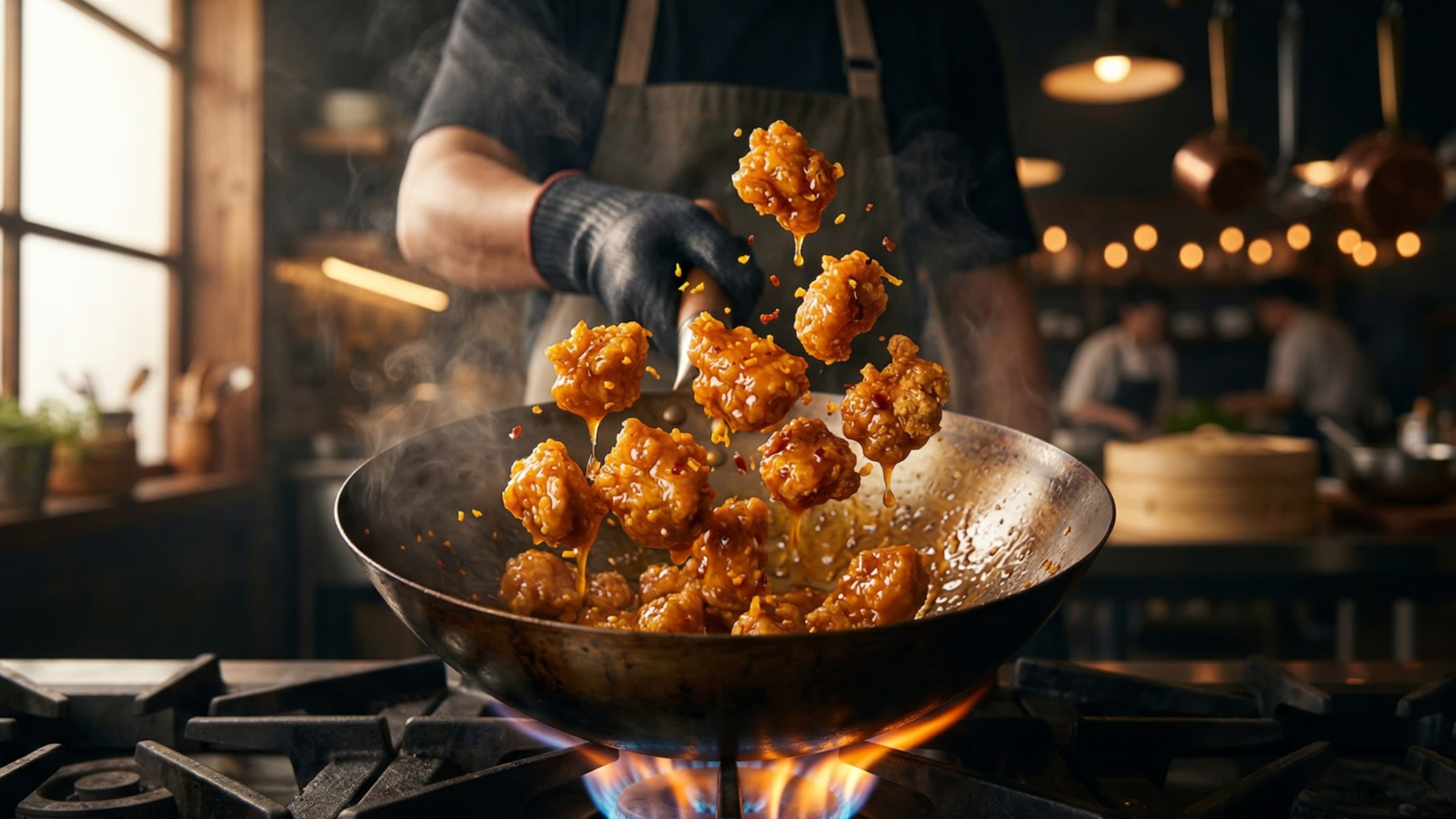
8. Toss: Turn off the heat. Add chicken and toss aggressively. Every piece should be shiny, not soggy.
9. Serve: Top with scallions and sesame seeds. Enjoy your masterpiece.
💡 Pro Tips
- Bitter Sauce? Only grate the bright orange part. If you include the white pith, your sauce will taste like grapefruit rind gone wrong.
- Why chicken thighs? Breast meat dries out in the double-fry process. Thigh meat stays succulent. Use high-quality soy sauce to get that deep savory balance.
- Want more variety? For another classic, try my Authentic Sichuan Mapo Tofu for that numbing spice, or learn how to master Wok Hei in Beef Chow Fun to round out your takeout feast.
| Ingredient | Why It Matters |
|---|---|
| Cornstarch | Creates a gluten-free, glass-like crunch. |
| Fresh Zest | The source of real citrus aromatics. |
| Dark Meat | Ensures juicy texture after high-heat frying. |
Disclaimer: As an Amazon Associate, ChinaCurator earns from qualifying purchases.