
🥡 Introduction: The Holy Trinity of Chinese Takeout
If I browse through a classic Chinese-American takeout menu, I inevitably land on the “Holy Trinity” of fried chicken: General Tso’s, Orange Chicken, and the crowd-favorite Sesame Chicken (芝麻鸡 - Zhīmá Jī).
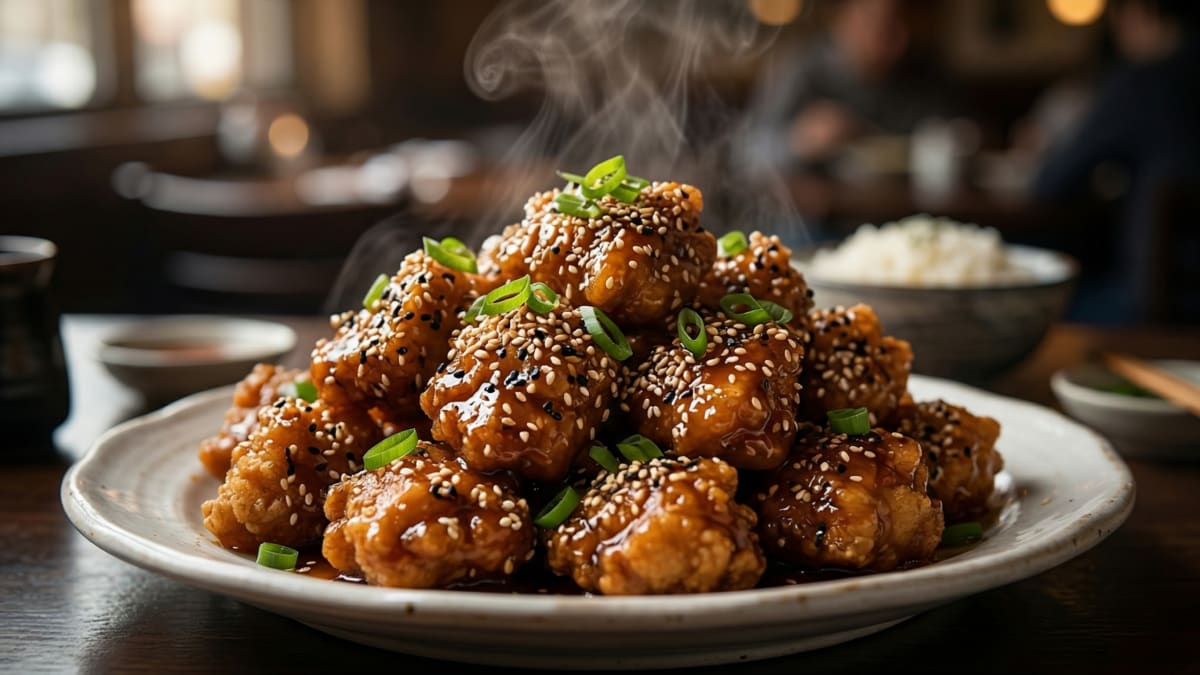
While General Tso’s brings a fiery heat and Orange Chicken offers a bright, citrusy zing, Sesame Chicken is my personal comfort go-to. It is the mellow, savory, and intensely nutty sibling of the bunch. When I nail this dish at home, I get massive, succulent chunks of chicken encased in a crust so crisp it shatters under my fork, all enveloped in a sticky, caramelized glaze that clings to every single sesame seed.
For years, my home-cooked attempts were disasters—soggy chicken drowning in flat, syrup-like bottled sauces. It took me a long time to learn that the secret wasn’t in the sauce aisle of the grocery store, but in the specific, time-honored techniques of the Chinese kitchen. Today, I’m pulling back the curtain on those professional secrets so you can stop relying on delivery.
🕵️ The Identity Crisis: Sesame vs. General Tso’s
I often hear the question, “Aren’t General Tso’s and Sesame Chicken basically the same thing?”
Visually, sure. They both feature crispy, deep-fried chicken tossed in a dark, glossy sauce. But if you’re a food lover like me, you know the flavor profiles are worlds apart.
- General Tso’s (左宗棠鸡): This dish is built on heat and tang, relying on dried red chilies and a sharp hit of rice vinegar to provide that aggressive, bold punch.
- Sesame Chicken (芝麻鸡): You won’t find any heat here. The architecture of this dish is built on sweetness, specifically from brown sugar and honey, and the earthy, aromatic depth of toasted sesame oil (香油 - Xiāngyóu). If your sauce tastes like plain soy sauce, you’re missing this critical aromatic backbone.
🔬 The Science of the Perfect Nutty Crunch
To elevate my kitchen game, I had to stop treating these ingredients as mere items on a list and start understanding the physics of the wok.
1. The Power of Toasted Sesame
I never use raw sesame seeds. To me, they are just flavorless pebbles. I always use white sesame seeds (白芝麻 - Bái zhīmá) and dry-toast them in a pan until they turn golden and smell like roasted nuts. The same applies to the sesame oil. I treat it like a perfume—I stir it in at the very end of the cooking process so the heat doesn’t strip away those volatile, nutty aromatics.

2. The Gluten-Free Shell
I used to use flour for my batter, but I learned the hard way that wheat flour is a gluten-sponge. It turns to mush the second it hits the sauce. Instead, I exclusively use cornstarch (玉米淀粉 - Yùmǐ Diànfěn). Because it’s gluten-free, it creates a microscopic, glass-like shell that repels moisture. This is the authentic Guàhú technique, and it is the reason my chicken stays crunchy for dinner.
3. The Double Fry (复炸 - Fùzhá)
If I’m being honest, the double-fry method is my least favorite step because of the cleanup, but it is non-negotiable for that Wàisū lǐnèn (外酥里嫩) texture—crispy outside, tender inside. The first fry cooks the meat; the second, shorter, high-heat fry creates that armor-like crunch that holds up against the sticky glaze.
🛒 Ingredients List
| Section | Ingredients |
|---|---|
| Chicken | 1.5 lbs Chicken Thighs (鸡腿肉), Soy Sauce, Shaoxing Wine, Egg White |
| Batter | 1 cup Cornstarch, Salt, White Pepper |
| Glaze | Chicken Broth, Light & Dark Soy Sauce, Brown Sugar, Honey, Rice Vinegar |
🍳 Step-by-Step Instructions
1. The Marinate: I cut my chicken thighs into 1.5-inch chunks and massage them with a tablespoon of soy sauce, Shaoxing wine, and an egg white. This adds moisture deep into the meat before the heat hits it.
2. Coating: I dredge the pieces in the cornstarch, pressing hard with my hands. I’m looking for a solid, uniform layer.
3. The First Fry: In my trusty carbon steel wok, I fry the chicken in batches at 350°F (175°C) until it’s pale and firm.

4. The Flash Fry: I crank the heat to 390°F (200°C) and drop the chicken back in for 60 seconds. This is where the magic happens—that deep, dark mahogany color appears.
5. The Glaze: I quickly sauté my garlic and ginger, then pour in the sauce mixture. As it bubbles, I watch the dark soy sauce (老抽 - Lǎochōu) transform the broth into a thick, glossy syrup.

6. Final Toss: I kill the heat. I toss in the fried chicken, the toasted sesame oil, and a handful of sesame seeds. Everything gets coated instantly. If I take too long, the chicken goes soft—so I move fast!
💡 Troubleshooting & Pro Tips
- Color: Don’t skip the dark soy sauce. Regular soy sauce gives you saltiness, but it lacks the depth of color that makes this dish look like it came straight from a professional kitchen.
- Texture: If you’re short on time, you can use an air fryer to crisp the chicken at 380°F, but it won’t have the same shattered-glass crunch as a traditional deep-fry.
- Serving: I serve this immediately, garnished with fresh scallions, usually alongside some Authentic Smashed Cucumber Salad (拍黄瓜 - Pāi Huángguā) to cut through the sweetness.
If you enjoy this, you might also want to try mastering Authentic Beef Chow Fun (干炒牛河)—it’s the next logical step in your journey to mastering Wok Hei.
🎥 Watch the Restaurant Technique
Disclaimer: As an Amazon Associate, ChinaCurator earns from qualifying purchases.