
🥟 Introduction: The Crown Jewel of Shanghai Street Food
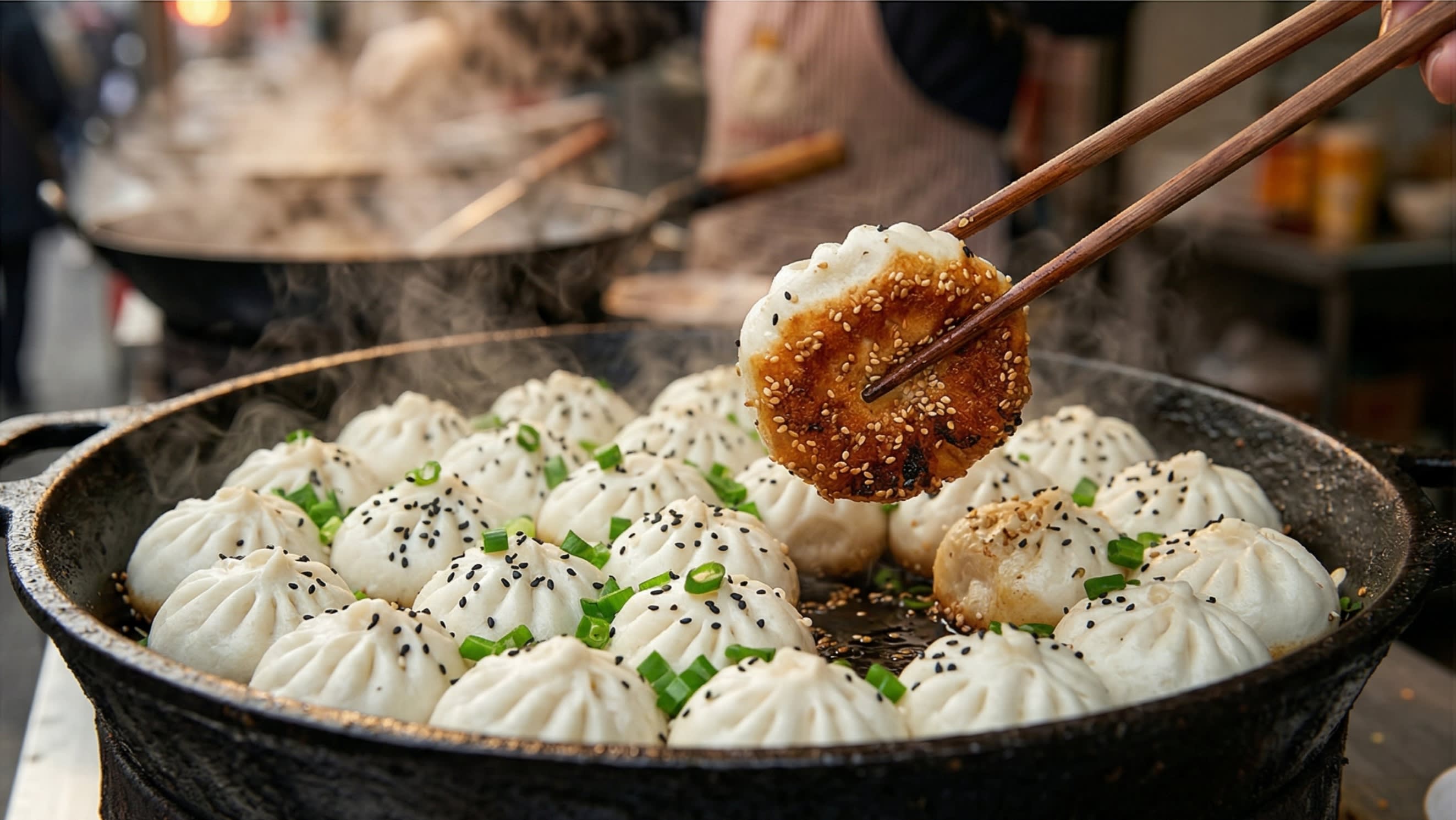
If you ever find yourself walking the vibrant, bustling streets of Shanghai in the early morning, you will inevitably hear a distinct, loud, and incredibly appetizing sound: the fierce, rhythmic sizzling of giant, heavy cast-iron pans. Follow that sound, and you will discover the undisputed king of Chinese breakfast: Sheng Jian Bao (生煎包 - Pan-Fried Pork Buns).
While Xiao Long Bao (Soup Dumplings) are famous worldwide for their delicate, translucent skins, Sheng Jian Bao is their bolder, louder, and arguably more satisfying cousin.
A perfectly executed Sheng Jian Bao is a masterpiece of extreme culinary contrasts. The top of the bun is soft, pillowy, and fluffy, speckled with toasted black sesame seeds and fresh green scallions. But the bottom is a different story entirely—it is pan-fried to a state of shatteringly crisp, deep golden-brown perfection. However, the true magic happens when you take your first bite. Hidden inside this fluffy, crispy shell is a rich, savory pork meatball surrounded by a reservoir of molten, incredibly flavorful, piping-hot soup. This explosive element is known in Chinese as Bàozhī (爆汁 - The Soup Burst).
For Western home cooks, attempting to recreate this street food legend is often plagued with disasters. The dough rises too much and becomes a giant, dry bread roll. The bottoms burn black before the meat is cooked. And most tragically, there is absolutely zero soup inside the bun.
Today, we are going to unlock the rigorous chemistry and physics of authentic Chinese pastry making. We will reveal the ingenious “Aspic” secret that creates the soup, teach you the critical concept of “Semi-Leavened” dough, and show you how to listen to your pan to achieve the ultimate crispy bottom without burning it.
💦 The Magic of the Molten Core: What is “Roupi Dong”?
The number one question beginners ask is: “How on earth do you get liquid soup inside a solid dough bun without it leaking everywhere while wrapping?”
The answer is a brilliant manipulation of temperature and collagen. You do not pour liquid soup into the bun. You put solid jelly into the bun. In traditional Shanghai kitchens, chefs spend hours boiling pork skin with ginger and scallions until the collagen breaks down. They then chill this incredibly rich broth until it sets into a firm, gelatinous block known as Ròupí Dòng (肉皮冻 - Pork Aspic).
This solid aspic is finely diced and mixed into the raw ground pork. Because it is solid, wrapping the bun is easy and mess-free. But when the bun hits the hot pan, the heat melts the gelatin back into a rich, savory, lip-smacking liquid soup.
The Modern Home-Cook Shortcut: We know you don’t have 6 hours to boil pork skins. You can achieve a near-identical, incredibly delicious result by using a high-quality, rich chicken or pork bone broth and setting it with unflavored gelatin or agar-agar powder in your fridge. Once it turns into a firm jelly, you mince it and fold it into your meat!
🍞 The Architecture of the Dough: “Banfa Mian” (半发面)
If your homemade Sheng Jian Bao tastes like a dry, heavy bread roll, you treated it like Western bread.
Standard steamed buns (Baozi) use fully fermented dough to become massive and airy. But Sheng Jian Bao dough must perform a much harder job: it has to be strong enough to hold a pool of boiling hot soup without tearing, firm enough to withstand aggressive pan-frying, yet soft enough on top to be enjoyable.
To achieve this, we use Bànfā Miàn (半发面 - Semi-Leavened Dough). We use less yeast than normal bread, and we only let the dough rest for a very short period (about 20-30 minutes). We do not want it to double in size. We want the gluten network to relax just enough to be pliable, but remain dense and chewy enough to lock the soup inside.
🍳 The Cooking Physics: The “Water-Frying” Method
You cannot simply fry a thick dough bun in oil; the bottom will burn to a crisp while the raw pork inside remains dangerously undercooked. Authentic Sheng Jian Bao utilizes a hybrid cooking technique known as Shuǐjiān Fǎ (水煎法 - Water-Frying).
It is a three-step symphony of heat:
- The Sear: You briefly fry the raw buns in oil to establish the flat bottom and prevent sticking.
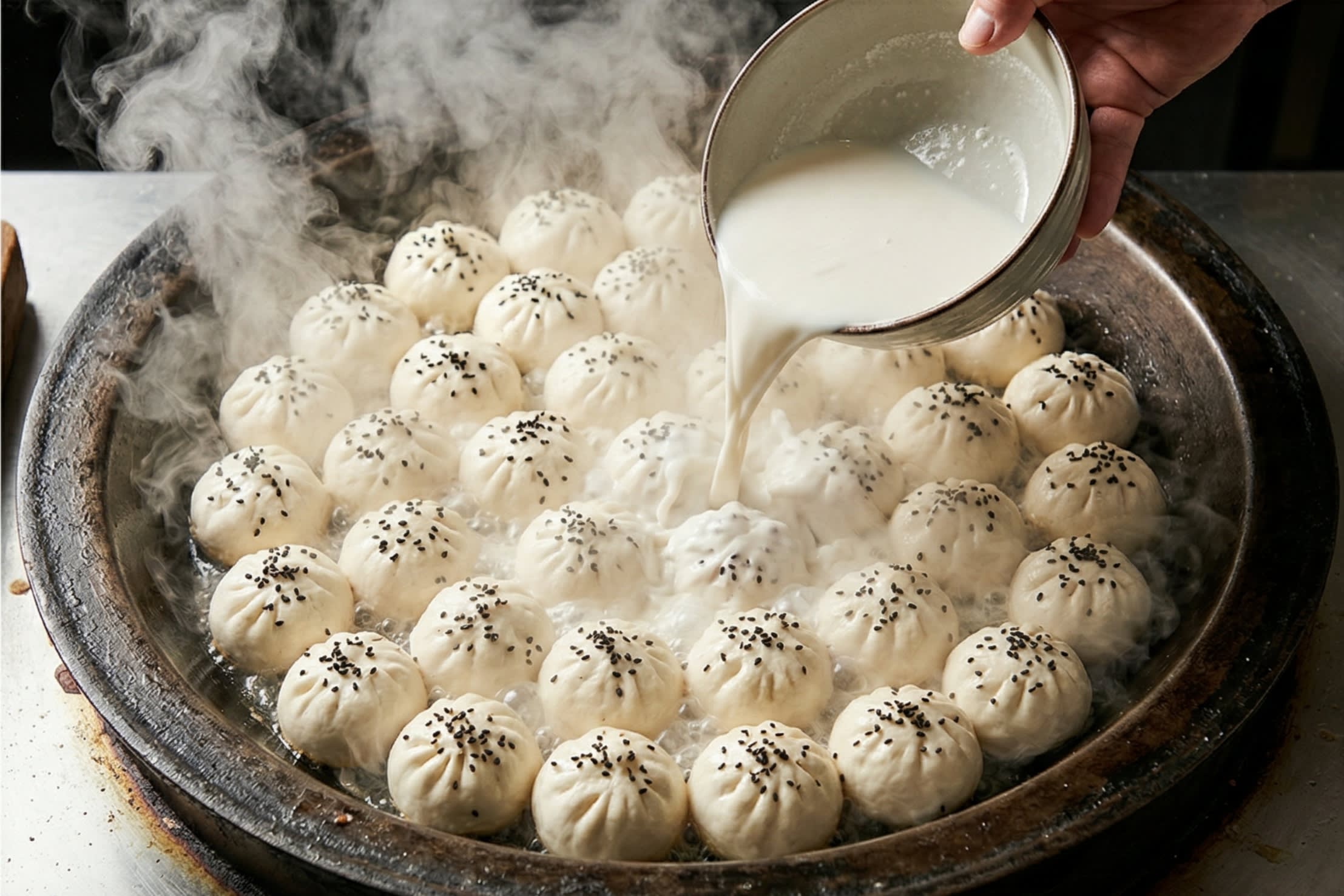
- The Steam: You pour a slurry of water and a tiny bit of flour into the screaming hot pan and immediately cover it with a tight lid. The violent steam cooks the fluffy dough and the raw pork all the way through.
- The Crisp: Once the water completely evaporates, only the original oil and the flour from the slurry remain. The buns go back to frying in the fat, creating a connected, lacy, shatteringly crisp golden crust known as the Bīnghuā (冰花 - Crispy Skirt/Ice Lace).
🛒 Ingredients List
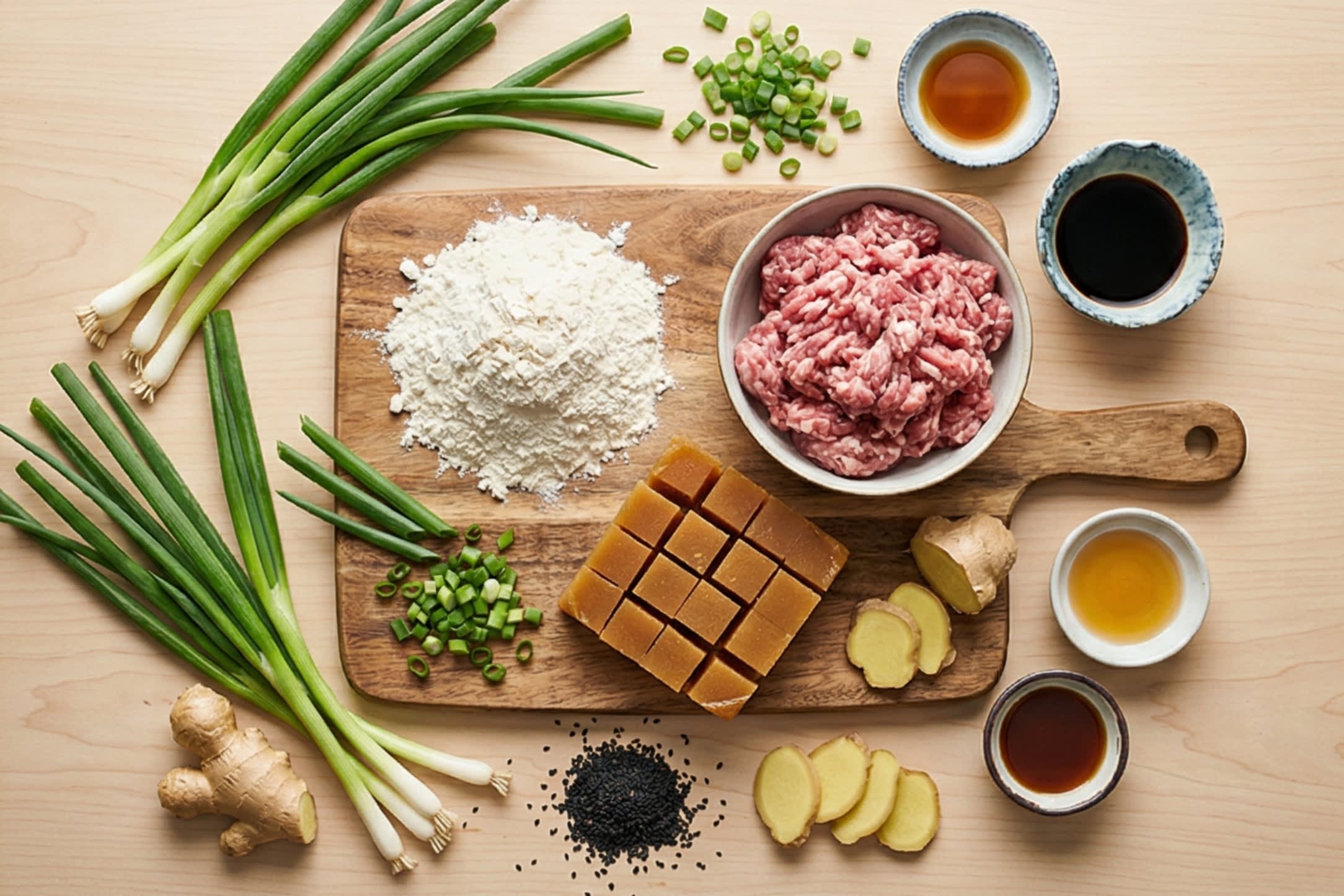
The Soup Jelly (Prep Ahead!):
- 1 cup High-Quality, rich Chicken or Pork Bone Broth
- 1 packet (about 2.5 tsp) Unflavored Gelatin powder
- Instructions: Bloom the gelatin in the cold broth, gently heat until completely dissolved, pour into a shallow container, and refrigerate for 4 hours until it forms a solid jelly block. Finely mince before using.
The Pork Filling:
- 1 lb (450g) Ground Pork (Ideally 70% lean, 30% fat. Do not use extra-lean pork!)
- 1 cup of the prepared, finely minced Soup Jelly
- 1 tbsp Light Soy Sauce (生抽)
- 1/2 tsp Dark Soy Sauce (老抽)
- 1 tbsp Shaoxing Cooking Wine (绍兴酒)
- 1 tsp Toasted Sesame Oil (芝麻油)
- 1 tsp Sugar (糖) & 1/2 tsp Salt
- 1/4 cup Cōngjiāng Shuǐ (葱姜水 - Scallion & Ginger Water). Made by soaking crushed ginger and scallions in water, then discarding the solids. This adds moisture and removes pork odors without the harsh bite of raw ginger!
The Semi-Leavened Dough (半发面):
- 3 cups (380g) All-Purpose Flour
- 1 tsp (3g) Active Dry Yeast
- 1 tsp Sugar
- 1 cup (240ml) Lukewarm Water
The Slurry & Garnish:
- 1/2 cup Water mixed with 1 tsp All-Purpose Flour
- 2 tbsp Black Sesame Seeds (黑芝麻)
- 3 stalks Scallions (葱花), finely chopped
- 3 tbsp Cooking Oil (for the pan)
🍳 Step-by-Step Instructions
1. The “Whip” Method for the Filling (搅打上劲): Place the ground pork in a large mixing bowl. Add the soy sauces, Shaoxing wine, sesame oil, sugar, and salt. Use a pair of chopsticks to stir the meat vigorously in one single direction. While stirring, slowly drizzle in the Scallion & Ginger Water. Keep stirring in that same direction for 3-5 minutes until the meat becomes incredibly sticky, pale, and elastic. Finally, gently fold in the finely minced cold Soup Jelly. Keep this mixture in the fridge so the jelly stays solid!
2. Knead the Semi-Leavened Dough: Dissolve the yeast and sugar in the lukewarm water. Pour it into the flour and mix until shaggy flakes form. Knead the dough for about 8-10 minutes until it is perfectly smooth and elastic. Cover the bowl with a damp towel and let it rest for only 20 to 30 minutes. Remember: We do not want it to double in size!
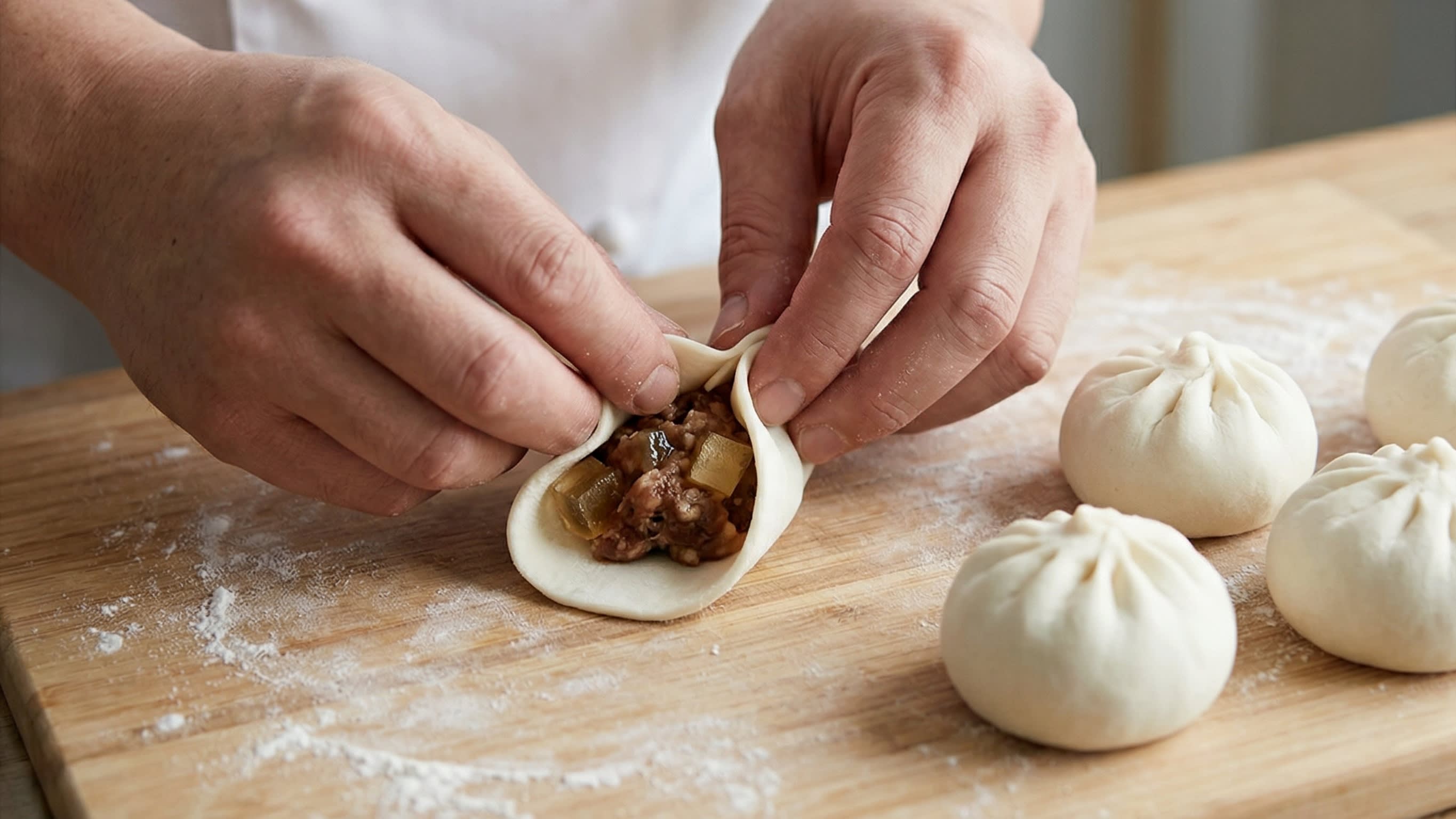
3. The Art of the Pleat: Punch down the dough and roll it into a long log. Cut it into 16 equal pieces (about 25g each). Take one piece and flatten it with the palm of your hand. Use a rolling pin to roll the edges thin while keeping the center slightly thicker (this thick center will become the bottom that holds the hot soup!). Place a generous tablespoon of the cold meat and jelly filling in the center. Pleat the edges up and pinch them tightly to seal the bun completely. Restaurant Secret: We place the bun pleat-side down on the counter. The gathered pleats create a thicker base, which prevents the crispy bottom from burning through and leaking the precious soup!
4. The Sear (水煎法 - Step 1): Heat a large, heavy-bottomed cast-iron pan or a non-stick skillet with a tight-fitting lid over medium heat. Add the 3 tbsp of cooking oil. Place the raw buns closely together in the pan, pleat-side down. Let them sizzle uncovered for 2 minutes until the bottoms are pale golden.
5. The Steam (水煎法 - Step 2): Give your flour-water slurry a quick stir. Pour it directly into the hot pan. It will sizzle and steam violently. Immediately cover the pan with a tight-fitting lid! Turn the heat to medium-low and let the buns steam for exactly 8 to 10 minutes. Do not open the lid! The steam is cooking the fluffy dough and melting the jelly inside.
6. Listen for the Crisp (水煎法 - Step 3): After 8 minutes, open the lid. The buns should be puffed up and fluffy. Now, sprinkle the black sesame seeds and chopped scallions generously over the tops. Leave the lid off and turn the heat up slightly. Listen closely to the pan. You will hear a bubbling, watery sound. After 2 to 3 minutes, the water will completely evaporate, and the sound will dramatically change to a sharp, high-pitched crackling and frying sound. This is the oil crisping up the flour slurry into a golden crust.
7. Serve and Savor: Once the bottoms are a deep, shatteringly crisp golden-brown, turn off the heat. Use a flat spatula to carefully lift the connected buns out of the pan. Warning: Bite a tiny hole near the top first to let the steam out, then gently slurp the rich, savory soup before eating the rest of the bun. Do not bite the whole thing at once, or the boiling soup will explode and burn your mouth!
💡 Troubleshooting & Pro Tips
- My buns leaked all their soup into the pan! You made one of two mistakes. Either you didn’t pinch the pleats tightly enough to seal the bun, or you rolled the dough too thin at the bottom. Remember to keep the center of the dough wrapper thicker, and always fry them pleat-side down for extra structural integrity!
- The dough is dense and hard as a rock. Even though it is “semi-leavened,” the dough still needs to rest for 20-30 minutes. If your kitchen is freezing cold, the yeast might be completely dormant. Also, ensure you steamed the buns with the lid tightly closed for the full 8-10 minutes.
- The bottoms burned black before the meat cooked. You used too much heat during the steaming phase. The pan should be on medium-low once the lid goes on. Let the steam do the gentle cooking. Only turn the heat up slightly at the very end when the lid is off to crisp the bottom.
📦 Shop Authentic Dim Sum Essentials
To capture the authentic, massive soup burst and shatteringly crisp bottom of a Shanghai street vendor, upgrading your kitchen tools is highly recommended. (As an Amazon Associate, ChinaCurator earns from qualifying purchases.)
- Unflavored Gelatin Powder - The absolute mandatory shortcut ingredient for home cooks to create the firm, savory "Soup Jelly" without boiling pork skins for 6 hours.
- Pearl River Bridge Light & Dark Soy Sauce - Essential for providing the deep, savory umami and the beautiful appetizing color to the pork filling.
- Pre-Seasoned Cast Iron Skillet (12-inch) - The ultimate, heavy heat-retaining vessel required to achieve a perfectly even, deep golden-brown, shatteringly crisp bottom crust without hot spots.
- Small Wooden Rolling Pin (Asian Style) - Essential for rolling the edges of the dough wrappers thin while keeping the center thick enough to hold the soup.