
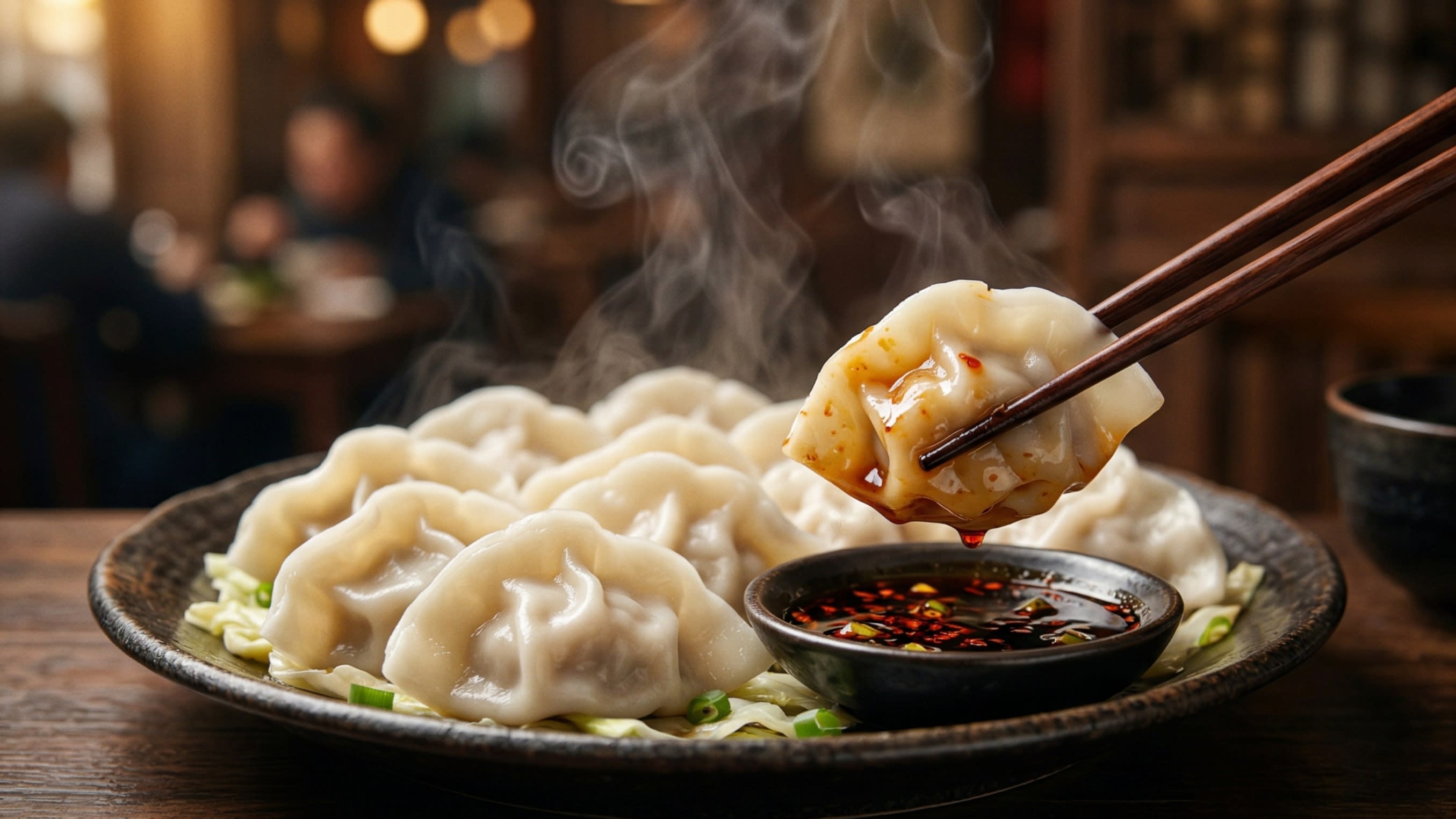
🥟 Introduction: The Taste of Reunion
In the vast and diverse culinary landscape of China, no single dish carries more emotional and cultural weight than Jiaozi (饺子)—the traditional Chinese boiled dumpling.
While Westerners might casually order them as a Tuesday night takeout appetizer, in China, Jiaozi is the ultimate symbol of family, warmth, and reunion. On the eve of the Chinese New Year (除夕 - Chúxī), millions of families across northern China gather around the dining table. The television plays the Spring Festival Gala in the background, while grandparents, parents, and children sit together for hours, talking and laughing while rolling dough and folding dumplings.
The shape of a traditional Jiaozi is intentionally designed to resemble a Yuánbǎo (元宝), an ancient Chinese silver ingot. Therefore, eating them during the New Year is believed to bring wealth and prosperity. Families will often hide a single clean coin or a peanut inside one random dumpling; whoever bites into it is guaranteed to have exceptional luck for the rest of the year!
Making Jiaozi from scratch might seem intimidating, but it is one of the most rewarding culinary projects you can undertake. Today, we will abandon the frozen supermarket bags. We will teach you the ancient techniques for making the perfect chewy wrapper, a famously juicy filling, and the ultimate “secret” boiling method that ensures your dumplings never break in the pot.
🌾 The Science of the Dough: Cold Water is King
The foundation of a great boiled dumpling is its wrapper (饺子皮 - Jiǎozipí). It must be thin enough to let the flavor of the filling shine, yet elastic and strong enough to survive a violent, rolling boil without exploding.
The secret is using a Cold Water Dough (冷水面 - Lěngshuǐ miàn). Unlike steamed soup dumplings (which use warm water) or baked pastries (which use hot water), boiled dumplings require cold or room-temperature water. Cold water does not cook the proteins in the flour. Instead, it allows the gluten network to develop its maximum strength and elasticity. This results in a wrapper that is delightfully chewy, slippery, and robust—what Chinese chefs call Jìndào (劲道).
After kneading, you must let the dough rest (醒面 - Xǐngmiàn). This resting period allows the flour to fully hydrate and the tight gluten strands to relax, making the dough incredibly supple and easy to roll out paper-thin.
🥬 The Legendary Filling: Pork and Chinese Chives
While you can fill a Jiaozi with almost anything, the undisputed king of all dumpling flavors in China is Pork and Chinese Chives (猪肉韭菜 - Zhūròu Jiǔcài).
Chinese chives (韭菜) are very different from the mild, hollow green chives found on baked potatoes in the West. They are flat, wide, and pack a massive, garlicky, pungent punch. When paired with rich ground pork, they create a flavor profile that is deeply savory and utterly intoxicating.
The “Da Shui” Secret for Juiciness: To ensure the filling isn’t a dry, hard meatball, you must use a technique called Dǎshuǐ (打水)—beating water into the meat. Before adding the vegetables, you slowly pour flavored liquid (like ginger-infused water or light soy sauce) into the ground pork while vigorously stirring in one single direction. This forces the meat proteins to absorb the liquid, turning it into a sticky paste that will release a flood of delicious juices when you take a bite!
🌊 The Ultimate Boiling Secret: “Dian Shui” (点水)
This is the most important paragraph in this entire recipe. If you boil dumplings like you boil Italian pasta, they will explode, leaving you with a pot of meat-and-dough soup.
Because the pork filling is raw and wrapped inside the dough, they cook at different rates. If you keep the water at a continuous, violent boil, the tumbling action will tear the wrappers apart long before the meat inside is cooked through.
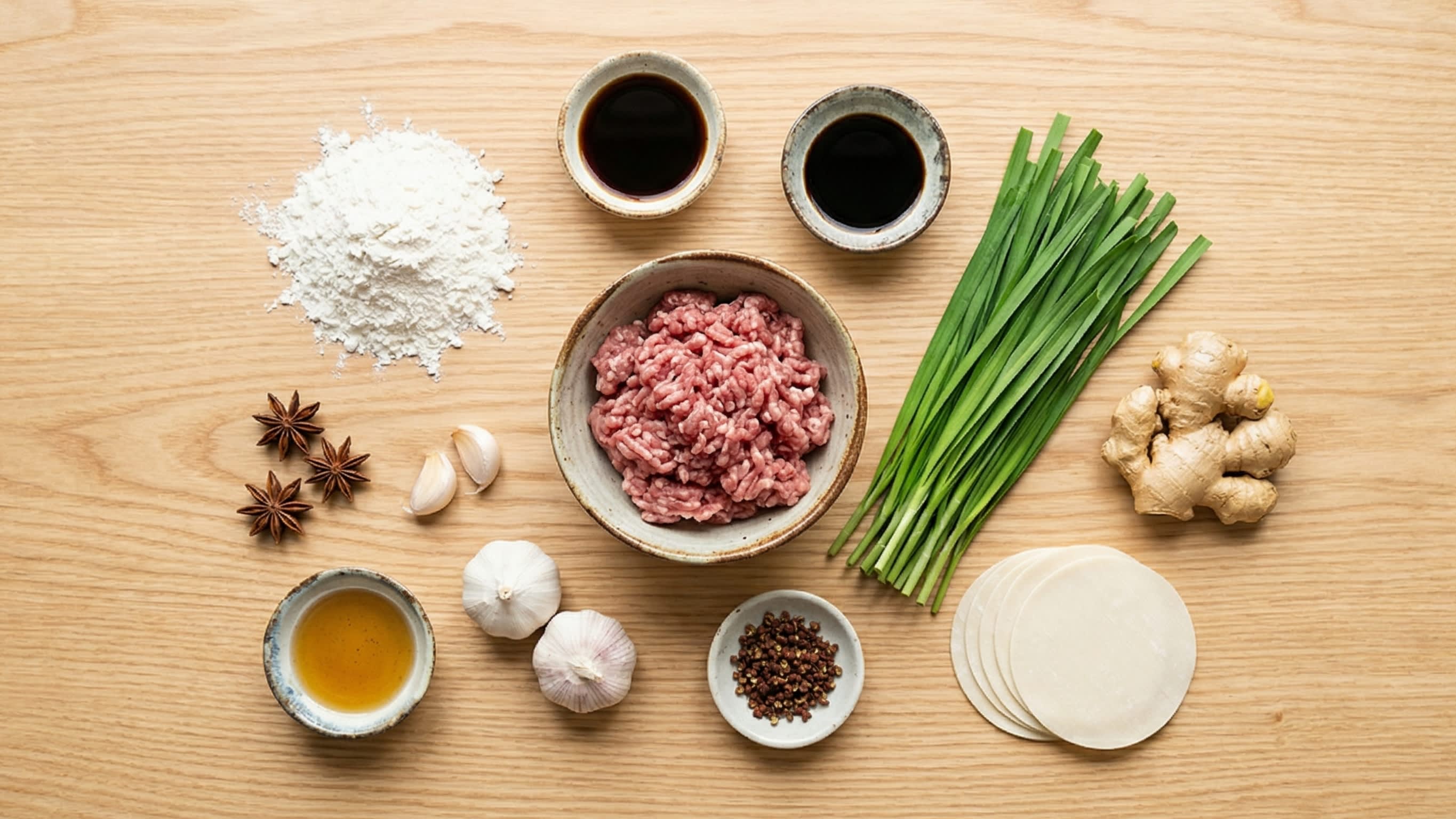
The ancient Chinese solution is called Diǎnshuǐ (点水)—adding cold water. When you drop the dumplings into boiling water, the water temperature drops. When the water comes back to a fierce boil, the wrappers are in danger. At this exact moment, you pour half a cup of cold water into the pot. This instantly stops the boiling, calming the water and protecting the wrappers, while the residual heat continues to gently cook the meat inside.
You repeat this process three times—a method known as “Three Boils” (煮三开). When the water boils for the third time, and the dumplings are swollen like little balloons floating on the surface, they are perfectly cooked!
🛒 Ingredients List
The Homemade Wrapper (饺子皮):
- 3 cups All-Purpose Flour (中筋面粉)
- 1 cup Cold Water (room temperature is fine)
- 1/4 tsp Salt (strengthens the gluten)
The Pork and Chive Filling (饺子馅):
- 1 lb (450g) Ground Pork (70% lean, 30% fat is ideal)
- 1/2 lb (225g) Chinese Chives (韭菜 - Jiǔcài), finely chopped
- 1 tbsp fresh Ginger, finely grated (姜末)
- 2 tbsp Light Soy Sauce (生抽)
- 1 tbsp Dark Soy Sauce (老抽 - for depth of color)
- 1 tbsp Shaoxing Cooking Wine (绍兴酒)
- 2 tbsp Toasted Sesame Oil (芝麻油)
- 1 tsp Salt
- 1/2 tsp White Pepper powder (白胡椒粉)
- 3 tbsp Cold Water (for the “Da Shui” technique)
The Essential Dipping Sauce (蘸料):
- 3 tbsp Chinkiang Black Vinegar (镇江香醋)
- 1 tbsp Light Soy Sauce
- 1 tsp Chili Crisp / Chili Oil (辣椒油)
- 2 cloves Garlic, finely minced (蒜末)
🍳 Step-by-Step Instructions
1. Make the Dough: In a large mixing bowl, combine the flour and salt. Slowly drizzle in the cold water while stirring with chopsticks until shaggy flakes form. Knead the dough with your hands for 10 minutes until it forms a smooth, somewhat firm ball. Cover it tightly with plastic wrap and let it rest (醒面) at room temperature for at least 30 minutes.
2. Mix the Filling (The One-Direction Rule): In a large bowl, add the ground pork, grated ginger, soy sauces, Shaoxing wine, salt, white pepper, and the 3 tablespoons of cold water. Using chopsticks, vigorously stir the mixture in one continuous direction (e.g., clockwise) for about 3 minutes until the meat absorbs all the liquid and becomes a sticky, pale paste. Finally, fold in the chopped Chinese chives and the sesame oil. (Adding the oil last seals the chives, preventing them from leaking water).
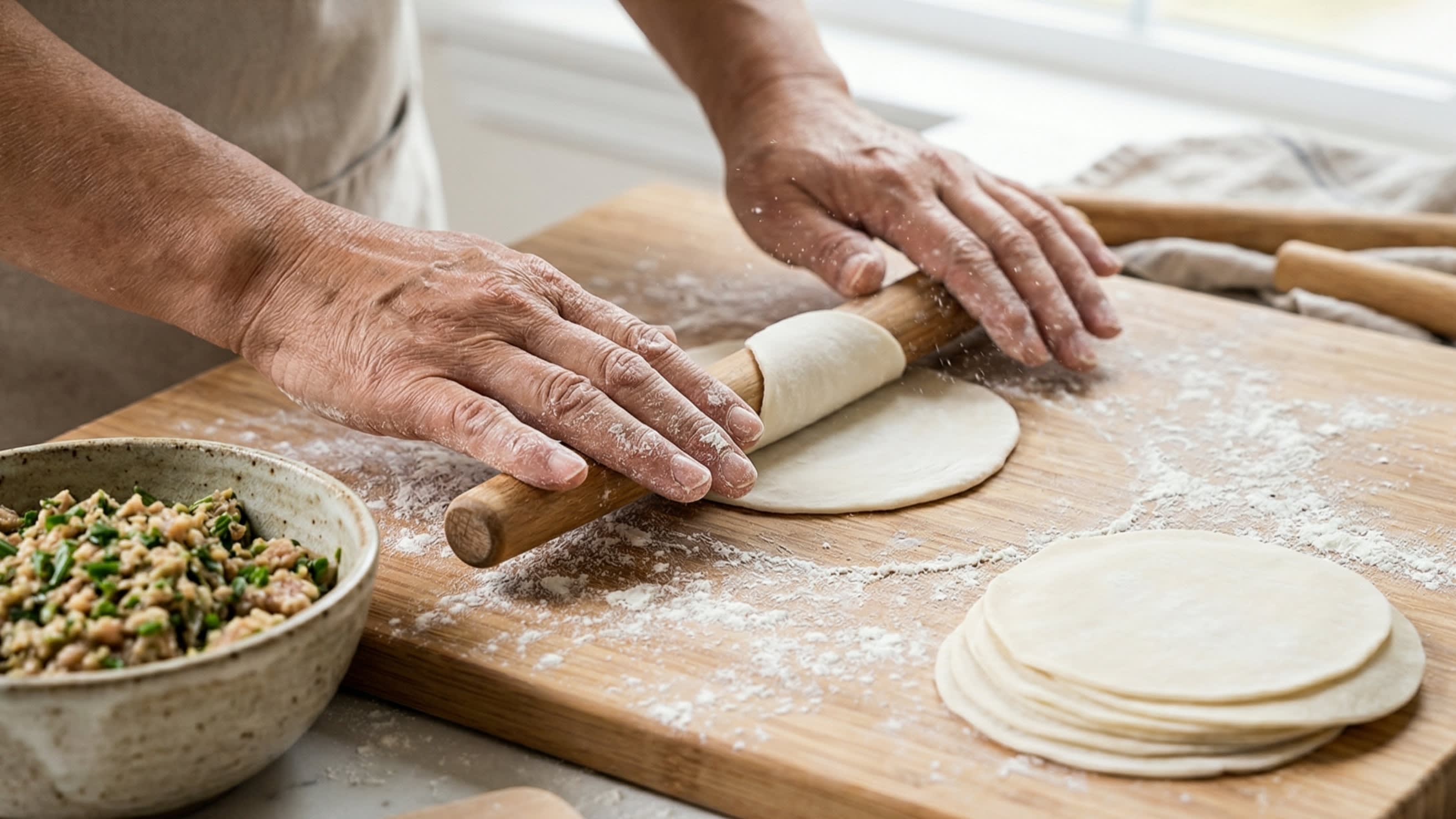
3. Roll the Wrappers: After resting, cut the dough into four equal sections. Take one section (keep the others covered) and roll it into a long rope about 1 inch thick. Cut the rope into small 10-gram pieces. Dust them generously with flour. Using a small rolling pin (擀面杖 - Gǎnmiànzhàng), roll each piece into a flat circle (about 3.5 inches wide). Pro tip: Try to make the edges thinner than the center!
4. Fold the Jiaozi: Place a wrapper flat in your palm. Add 1 heaping tablespoon of filling to the center. Fold the wrapper in half like a taco. Pinch the top center together. Now, use your thumbs and index fingers to firmly squeeze the edges together, sealing the dumpling completely. The traditional shape should have a plump belly and sit flat. Make sure there are no air pockets and no filling leaking out!
5. The “Three Boils” Cooking Method (点水): Bring a large pot of water to a rolling boil. Carefully drop in 15-20 dumplings (do not overcrowd). Give the water a very gentle stir with the back of a ladle to prevent them from sticking to the bottom.
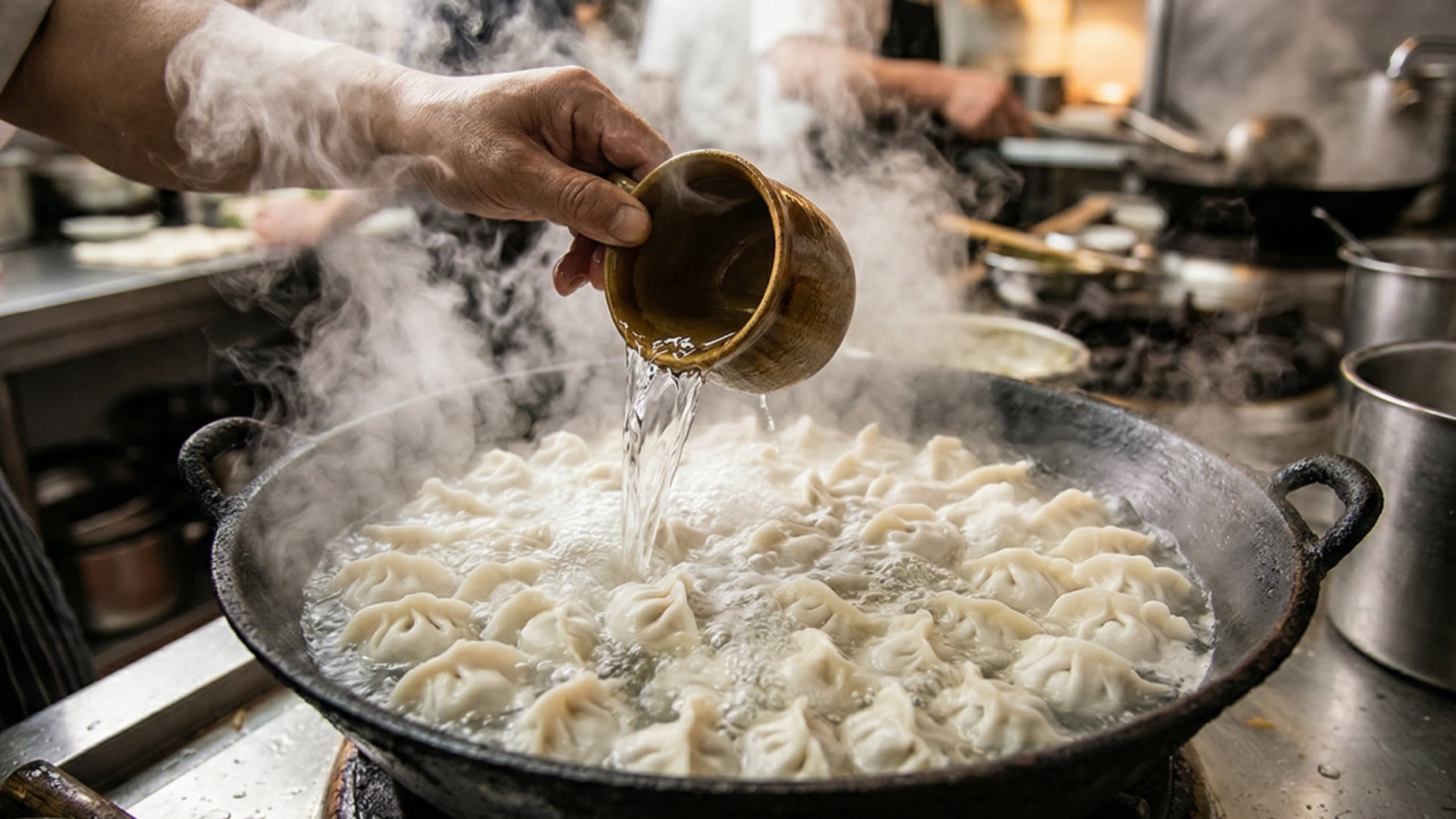
- Boil 1: Put the lid on. When the water comes to a violent, rolling boil, remove the lid and pour in 1/2 cup of cold water. The boiling will stop.
- Boil 2: Leave the lid off. Wait for the water to reach a rolling boil again. Pour in another 1/2 cup of cold water.
- Boil 3: Wait for the water to boil for a third and final time.
By now, the dumplings should be beautifully swollen, slightly translucent, and floating happily on the surface. They are perfectly cooked!
6. Serve: Use a slotted spoon or a spider strainer to scoop the dumplings out, shaking off excess water. Serve immediately on a large plate alongside individual bowls of your prepared dipping sauce. Enjoy the burst of flavor!
💡 Troubleshooting and Storage Tips
- Can I use store-bought wrappers? Yes! If you are short on time, buy white, round “Dumpling Wrappers” from an Asian market. Because they are drier than homemade dough, you must dip your finger in water and wet the edges of the wrapper so it seals properly, otherwise they will burst in the pot!
- How do I freeze them? Jiaozi freeze beautifully. Place uncooked, folded dumplings on a baking sheet lined with parchment paper in a single layer. Freeze for 2 hours until rock solid. Then, transfer them to a Ziplock bag. You can boil them directly from frozen—just add one extra “cold water” cycle to the cooking process!
- My filling is too dry. You either used pork that was too lean (like 90% lean), or you didn’t stir enough water into the meat during the Da Shui phase. Fat and water equal juiciness!
📦 Shop Authentic Dumpling Essentials
To experience the true flavor of a Chinese New Year, these traditional ingredients are mandatory for your pantry. (As an Amazon Associate, ChinaCurator earns from qualifying purchases.)
- Chinkiang Black Rice Vinegar (镇江香醋) - The complex, malty acidity is the only acceptable dipping vinegar for authentic Jiaozi.
- Small Wooden Rolling Pin (擀面杖) - Essential for rolling dumpling wrappers. Large Western rolling pins are too clumsy for this delicate work!
- Asian Stainless Steel Spider Strainer - The best tool for safely scooping delicate dumplings out of boiling water without tearing them.
- Lao Gan Ma Chili Crisp - The iconic spicy, crunchy topping to elevate your dipping sauce.