
🥢 Introduction: The Miracle of Chinese Dim Sum
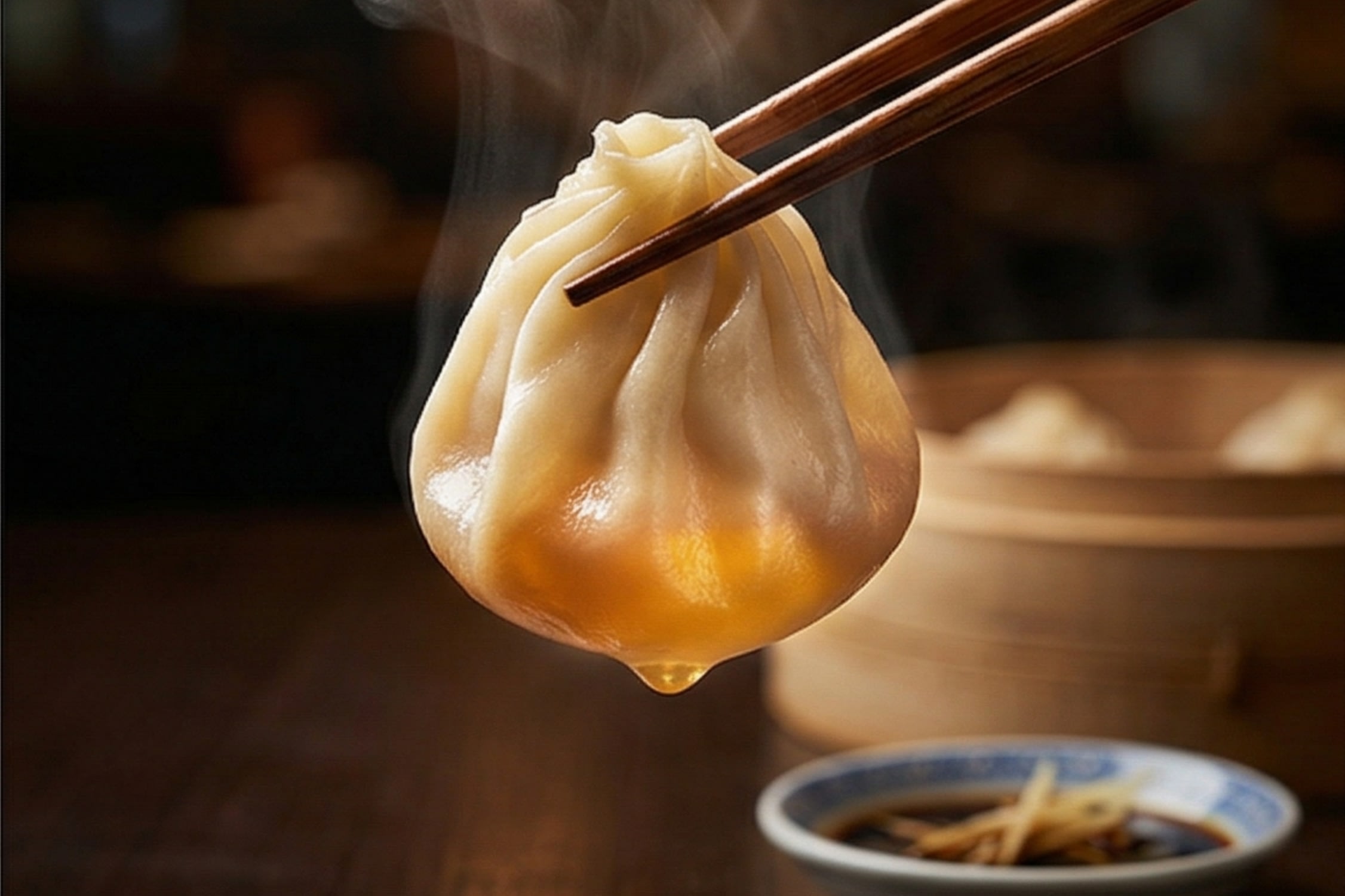
If there is a single dish that represents the pinnacle of Chinese culinary engineering, it is undeniably Xiao Long Bao (小笼包 - Xiǎolóngbāo), famously known in the West as Soup Dumplings.
Originating from the Jiangnan region of China (specifically the town of Nanxiang in Shanghai), Xiao Long Bao has evolved into a global obsession. At famous restaurant chains like Din Tai Fung, diners wait for hours just to experience the magic of biting into a delicate, paper-thin dough wrapper and having an explosion of rich, savory, steaming hot broth flood their palate.
For decades, the biggest mystery to foreigners eating this dish has been a question of physics: “How on earth do they get the liquid soup inside the dough?” Do they inject it with a syringe? Do they freeze the broth into ice cubes?
Today, we are going to demystify this legendary dish. We will reveal the ancient Chinese secret of Pídòng (皮冻), teach you the architectural rolling technique for the wrappers, and walk you through the famous “18 pleats” folding method. Making Xiao Long Bao at home is a labor of love, but it is an incredibly rewarding weekend project that will leave your friends and family absolutely speechless.
🔬 The Secret: The Magic of Aspic (皮冻)
The answer to the liquid soup mystery is a culinary technique known as Pídòng (皮冻 - Pork Aspic). You do not inject the soup; you fold it in as a solid!
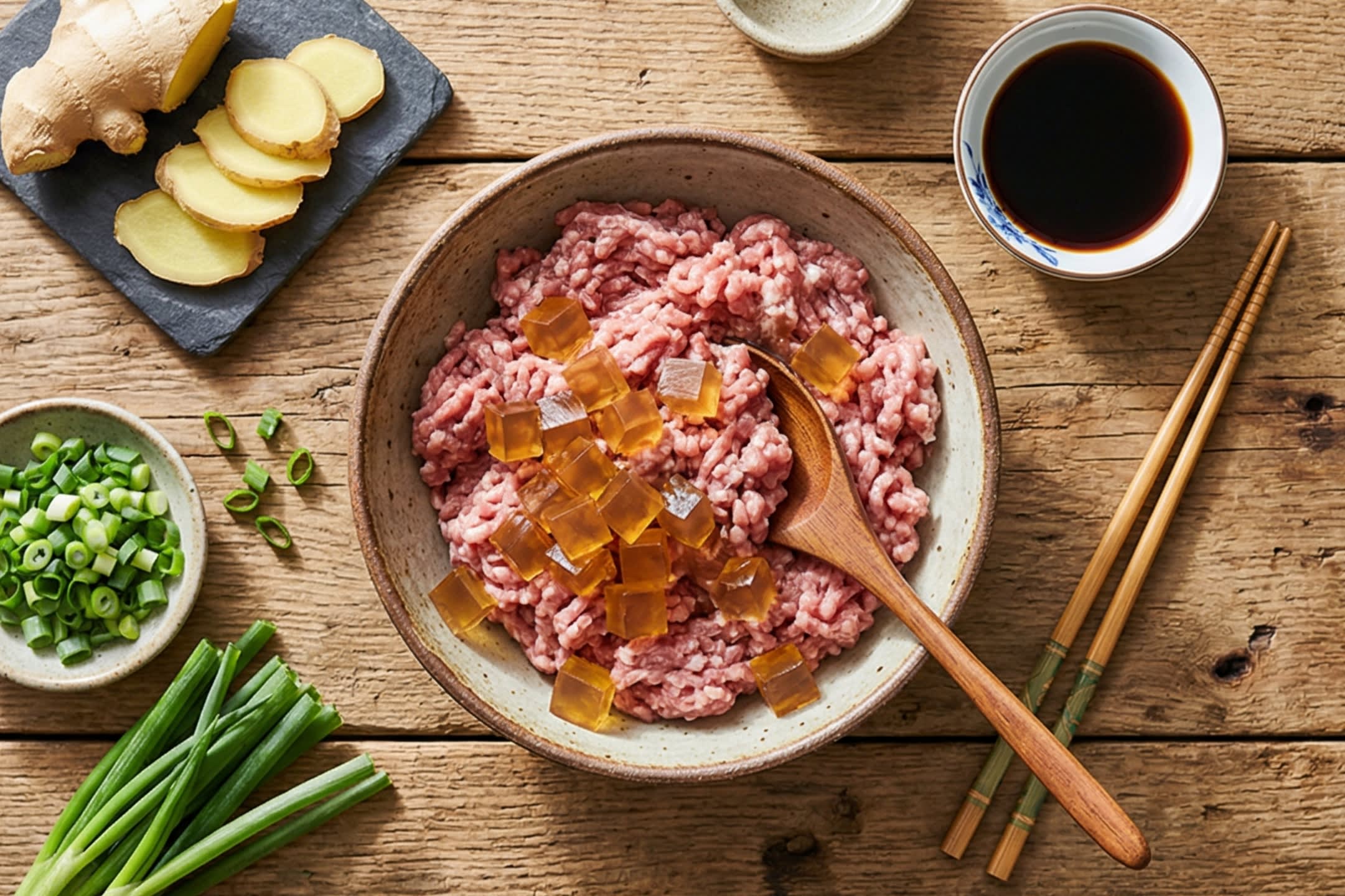
In traditional Chinese kitchens, chefs boil pork skin, pork bones, ginger, and scallions in water for several hours. Pork skin is densely packed with collagen. As it boils, the collagen breaks down into gelatin. The rich, savory broth is then strained and placed in the refrigerator. As it cools, the natural gelatin solidifies the liquid into a firm, jiggly jelly.
This jelly (Pidong) is then finely minced and folded directly into the raw ground pork filling. When the dumpling is placed into a hot bamboo steamer (蒸笼 - Zhēnglóng), the heat penetrates the dough. The meat cooks, and the solid jelly magically melts back into a rich, liquid soup (爆汁 - Bàozhī, meaning “explosive juice”).
🚨 The Modern Shortcut: Making traditional pork skin aspic takes hours. If you want to make Xiao Long Bao today, you can use our chef-approved shortcut: high-quality store-bought chicken broth activated with unflavored gelatin powder! It provides the exact same texture and a wonderfully rich flavor in a fraction of the time.
🏗️ The Architecture of the Dough
Making the wrapper for Xiao Long Bao is completely different from making wrappers for regular boiled dumplings or potstickers. The dough must be incredibly thin to be elegant, yet strong enough to hold a heavy tablespoon of boiling liquid without rupturing.
To achieve this, we use a warm-water dough. The warm water slightly denatures the proteins in the flour, making the dough exceptionally supple, soft, and stretchy.
Furthermore, when you roll out the wrappers (擀皮 - Gǎnpí), you cannot simply roll them flat. You must use a specific technique to make the edges paper-thin while leaving the very center slightly thicker. This thicker center acts as a reinforced foundation to support the heavy, sagging soup when the dumpling is lifted by chopsticks.
🛒 Ingredients List
The “Shortcut” Soup Jelly (皮冻):
- 1 cup high-quality rich Chicken Broth (or pork broth)
- 1 tbsp Unflavored Gelatin Powder (or Agar-Agar for a vegetarian substitute)
- 1 slice fresh Ginger
- 1 Scallion, cut into halves
The Dough:
- 2 cups All-Purpose Flour (中筋面粉)
- 3/4 cup Warm Water (about 120°F / 50°C)
- 1 tsp Cooking Oil (helps make the dough supple)
The Pork Filling:
- 1 lb (450g) Ground Pork (must be at least 30% fat. Do not use lean pork!)
- 1 tbsp fresh Ginger, finely grated
- 2 stalks Scallions, finely minced
- 2 tbsp Light Soy Sauce (生抽)
- 1 tbsp Shaoxing Cooking Wine (绍兴酒)
- 1 tsp Toasted Sesame Oil (芝麻油)
- 1 tsp Sugar
- 1/2 tsp Salt & 1/4 tsp White Pepper powder
The Mandatory Dipping Sauce (姜丝醋):
- 3 tbsp Chinkiang Black Vinegar (镇江香醋)
- 1 thumb-sized piece of fresh Ginger, julienned into needle-thin strips
🍳 Step-by-Step Instructions
1. Make the Aspic (Do this the night before, or 4 hours ahead): In a small saucepan, heat the chicken broth, ginger slice, and scallion until simmering. Remove from heat and discard the ginger and scallion. Sprinkle the unflavored gelatin powder over the hot broth and whisk vigorously until completely dissolved. Pour the liquid into a shallow container and refrigerate for at least 4 hours until it sets into a firm, bouncy jelly.
2. Make the Dough: Place the flour in a large mixing bowl. Slowly drizzle in the warm water and oil while stirring with chopsticks until shaggy flakes form. Knead the dough with your hands for about 10 minutes until it is perfectly smooth and elastic. Cover it tightly with plastic wrap and let it rest at room temperature for 30 minutes. (Resting relaxes the gluten, making it possible to roll paper-thin).
3. Mix the Filling: Take your solid aspic (jelly) out of the fridge and finely mince it into tiny cubes. In a large bowl, combine the ground pork, grated ginger, scallions, soy sauce, Shaoxing wine, sesame oil, sugar, salt, and pepper. Vigorously stir the meat in one direction only for 3 minutes until it becomes sticky. Finally, gently fold your minced jelly cubes into the meat mixture. Keep the filling in the fridge so the jelly doesn’t melt while you fold!
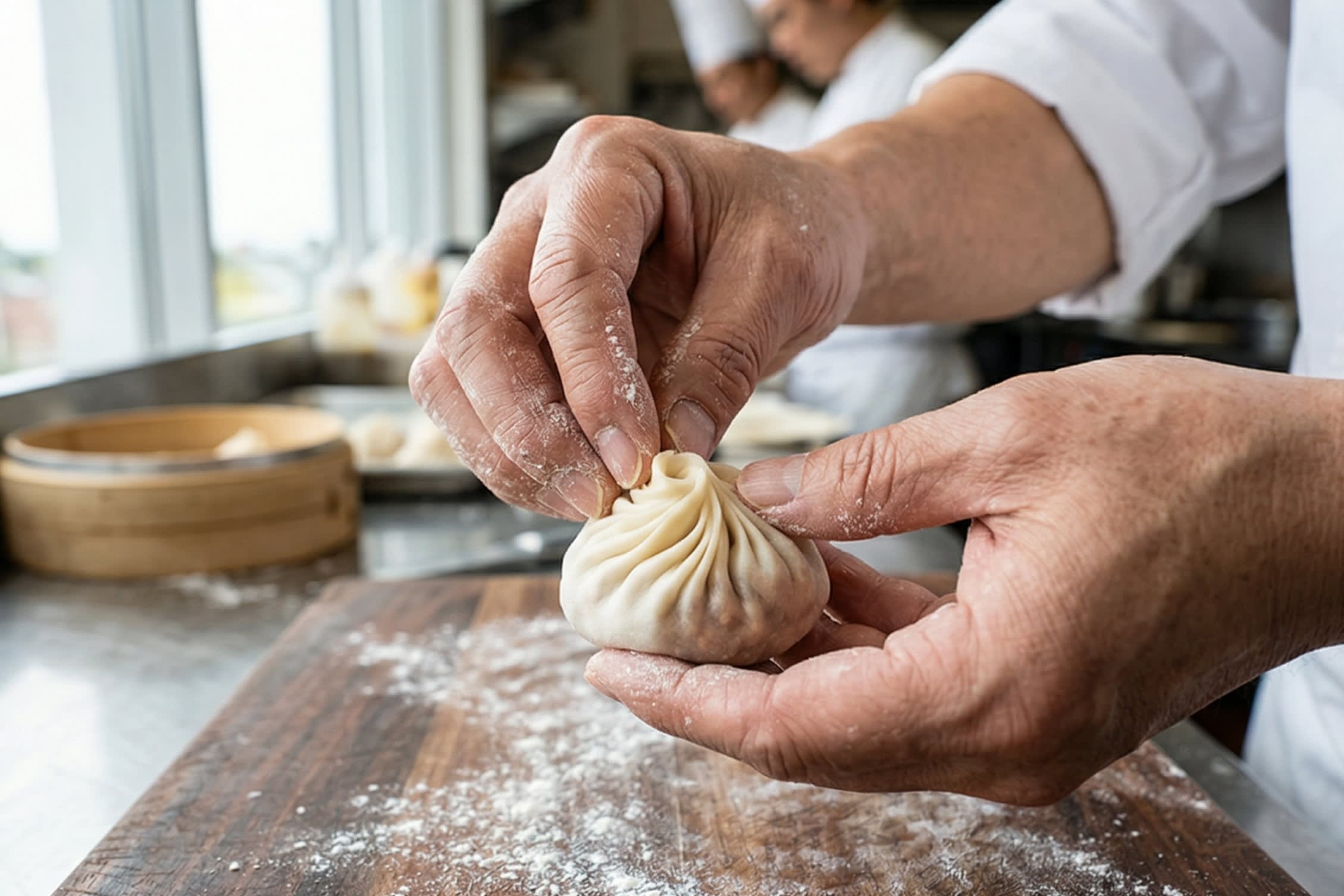
4. Roll and Fold (提褶 - Tízhě): Cut the dough into small, 10-gram pieces. Roll each piece into a circle about 3.5 inches in diameter. Remember to keep the center slightly thicker than the edges! Place 1 tablespoon of the chilled filling into the center. Use your thumb and index finger to pinch the edge of the dough, pleating and rotating the dumpling until you have created around 14 to 18 pleats (十八个褶). Twist the very top to seal the dumpling completely so no steam escapes.
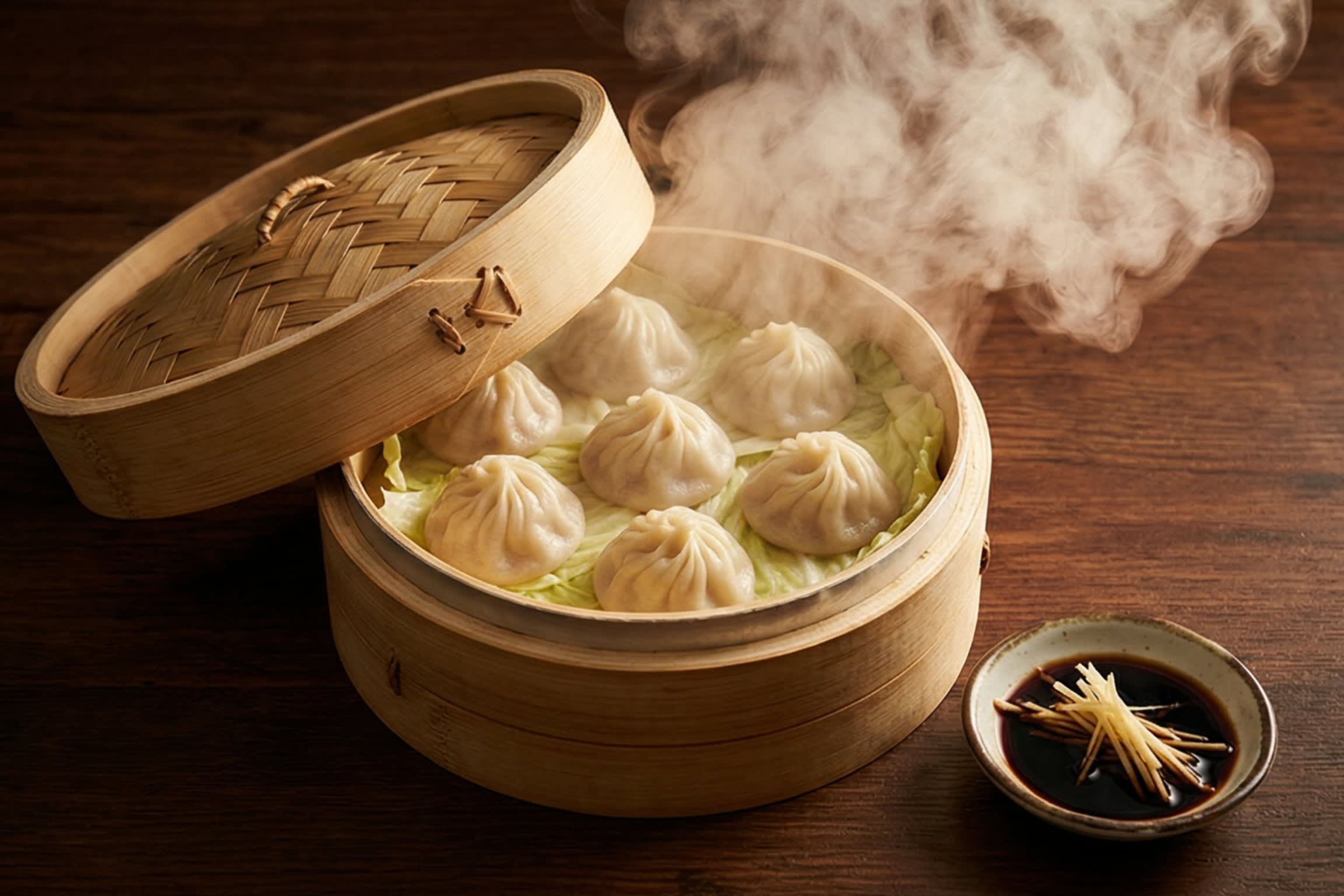
5. Steam to Perfection: Line a traditional bamboo steamer (蒸笼 - Zhēnglóng) with perforated parchment paper or Napa cabbage leaves. Place the dumplings inside, leaving at least 1.5 inches of space between them (they expand slightly). Bring a wok or pot of water to a rolling boil. Place the bamboo steamer on top, cover it with the bamboo lid, and steam on high heat for exactly 8 to 10 minutes. The dumplings will turn slightly translucent, and you will see the liquid soup sagging heavily at the bottom.
🥢 The Art of Eating Xiao Long Bao
Eating a soup dumpling directly out of the steamer without knowing the proper technique is a guaranteed way to burn your tongue and ruin a clean shirt. In China, there is a famous rhyming mantra for eating Xiao Long Bao:
轻轻提,慢慢移,先开窗,后喝汤 (Qīng qīng tí, màn màn yí, xiān kāi chuāng, hòu hē tāng)
Here is the translation and the ultimate guide:
- Lift Gently (轻轻提): Dip your chopsticks in the black vinegar and ginger sauce. Grasp the very top knot of the dumpling (the thickest part) and lift it gently out of the steamer.
- Move Slowly (慢慢移): Carefully transfer the sagging, soup-filled dumpling into your soup spoon.
- Open a Window (先开窗): Do not put the whole thing in your mouth! Take a tiny bite out of the side of the dough wrapper to let the scalding hot steam escape.
- Drink the Soup (后喝汤): Slurp the rich, savory broth directly out of the dumpling while it rests on your spoon. Finally, top the remaining meat and wrapper with a few strands of vinegary ginger, and eat the rest in one glorious bite!
📦 Shop Xiao Long Bao Essentials
To master this delicate art at home, having the right traditional tools and condiments will make the process infinitely easier. (As an Amazon Associate, ChinaCurator earns from qualifying purchases.)
- Traditional 10-Inch Bamboo Steamer (竹蒸笼) - Absolutely mandatory. Bamboo absorbs excess condensation, preventing water drops from falling and ruining the delicate dough.
- Chinkiang Black Rice Vinegar (镇江香醋) - The deep, complex, malty acidity is the only acceptable pairing to cut through the rich pork fat of the soup.
- Knox Unflavored Gelatin - The ultimate shortcut for creating perfect, sliceable soup jelly in a fraction of the time.
- Perforated Steamer Liners - Prevents the delicate dumpling bottoms from tearing and spilling your precious soup.