
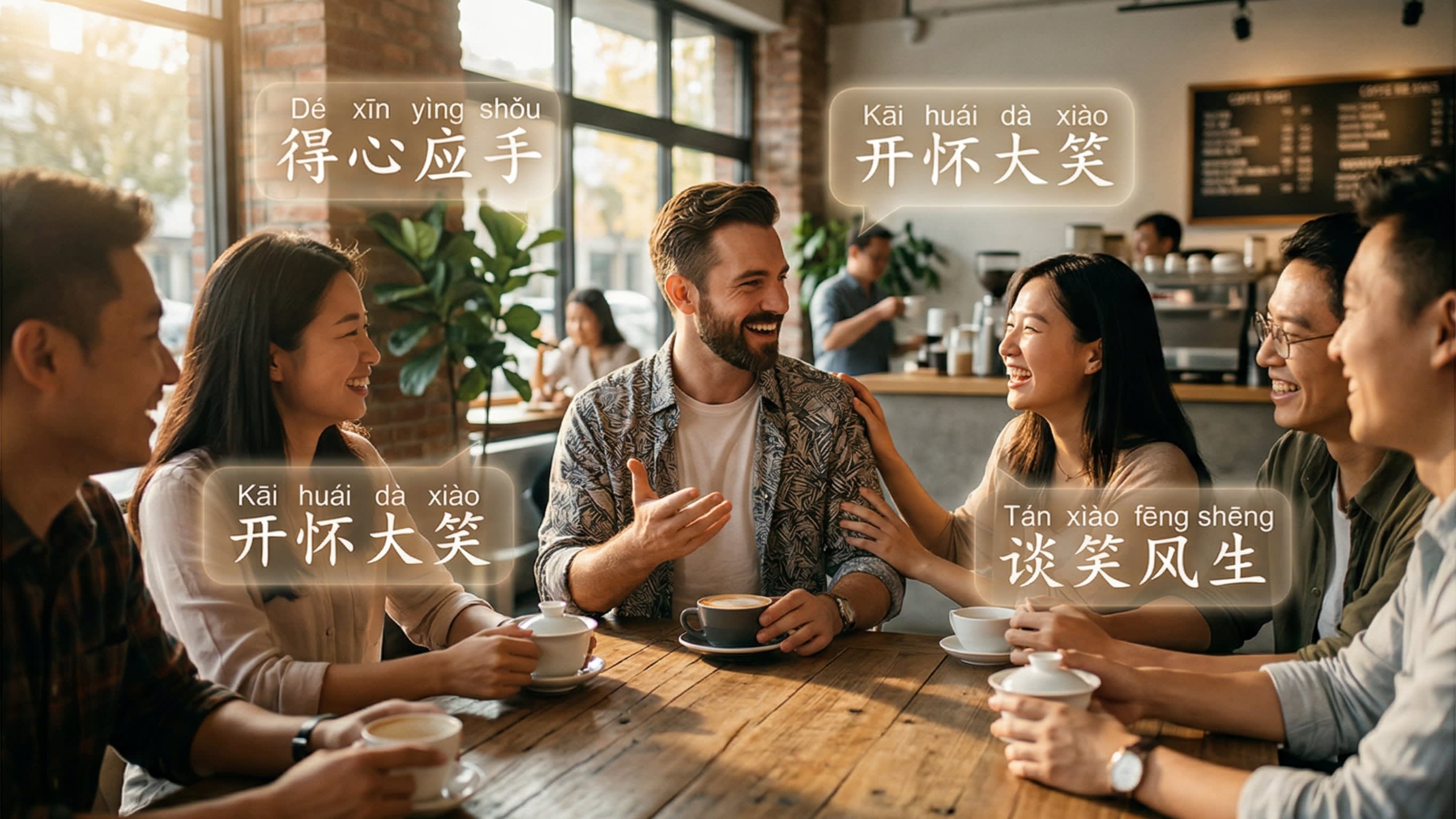
If you have studied Mandarin for more than a few months, you have inevitably encountered the most fascinating—and frustrating—aspect of the language: Chéngyǔ (成语).
Chengyu are four-character Chinese idioms. They are the concentrated essence of Chinese history, philosophy, and literature packed into just four syllables. There are over 30,000 Chengyu in the Chinese dictionary.
The problem? Most textbooks and language apps teach foreigners ancient, highly academic Chengyu that nobody uses in daily conversation. If you walk up to a barista and drop a dramatic historical idiom like Shǒuzhūdàitù (守株待兔 - waiting by a stump for a blind rabbit to crash into it), you will sound like a time-traveling poet from the Ming Dynasty. It is technically correct, but incredibly weird.
True fluency is not about memorizing ancient poetry; it is about knowing which idioms have survived the test of time to become modern, everyday slang. If you want to stop sounding like an HSK exam paper and start sounding like a local, you need to master the Chengyu that native speakers actually use when complaining about traffic, gossiping about friends, or navigating daily life.
Here are the 7 ultimate everyday Chinese idioms you need to add to your vocabulary today.
1. 人山人海 (Rén shān rén hǎi)
Literal Meaning: Mountains of people, seas of people. Actual Meaning: Incredibly crowded; packed with people.
If there is one Chengyu you learn from this list, make it this one. China is home to 1.4 billion people, which means “crowded” takes on an entirely different dimension here. Whether you are visiting a famous tourist attraction during a national holiday, or just trying to navigate a popular street food night market on a Friday evening, “very crowded” (hěn jǐ) just doesn’t capture the sheer scale of the human masses.
- How to use it: You use it as a descriptive phrase at the end of a sentence.
- Example: “昨天的夜市真是人山人海!”
- Pinyin: Zuótiān de yèshì zhēnshi rénshānrénhǎi!
- English: “Yesterday’s night market was absolutely packed with people!”

2. 乱七八糟 (Luàn qī bā zāo)
Literal Meaning: Messy seven, chaotic eight. Actual Meaning: A total mess; completely chaotic; a disaster.
Numbers in Chinese idioms often represent abstract concepts. Here, “seven” and “eight” represent a lack of order. Luanqibazao is arguably the most frequently spoken idiom by Chinese mothers complaining about their children’s bedrooms.
However, it is not just used for physical messes. You can use it to describe a chaotic situation, a badly managed project, or a brain full of confused thoughts.
- How to use it: It acts as an adjective. You often put a “的” (de) after it to describe a noun, or “得” (de) to describe a state.
- Example 1 (Physical): “你的房间怎么乱七八糟的?” (Nǐ de fángjiān zěnme luànqībāzāo de? - Why is your room such a total mess?)
- Example 2 (Mental): “我现在的脑子乱七八糟的。” (Wǒ xiànzài de nǎozi luànqībāzāo de. - My brain is a complete mess right now / I’m so confused.)

3. 莫名其妙 (Mò míng qí miào)
Literal Meaning: Unable to name its wonder/secret. Actual Meaning: Baffling; inexplicable; making absolutely no sense.
This is the ultimate idiom for expressing frustration or confusion when someone is acting crazy or a situation is entirely illogical. If your friend suddenly gets angry at you for no reason and storms off, you would turn to another friend and use this Chengyu.
It is the Chinese equivalent of saying, “What on earth is their problem?” or “That makes zero sense.”
- How to use it: You can use it to describe a person, a situation, or a feeling.
- Example: “他突然生气了,真是莫名其妙!”
- Pinyin: Tā tūrán shēngqì le, zhēnshi mòmíngqímiào!
- English: “He suddenly got angry, it’s completely baffling/makes no sense!”
4. 理所当然 (Lǐ suǒ dāng rán)
Literal Meaning: According to reason, it should be so. Actual Meaning: A matter of course; to take something for granted; naturally.
This is a high-EQ idiom. You use Lisuodangran when discussing something that is so obvious or fair that it doesn’t even need to be debated. It is often used in business or relationships to talk about expectations.
For instance, if you help a good friend move apartments and they thank you profusely, you could humbly reply that helping a friend is Lisuodangran (only natural). Alternatively, it is used negatively when someone takes your hard work for granted.
- How to use it: As an adjective or adverb.
- Example: “父母照顾孩子是理所当然的。”
- Pinyin: Fùmǔ zhàogù háizi shì lǐsuǒdāngrán de.
- English: “Parents taking care of their children is a matter of course (only natural).”
5. 一举两得 (Yì jǔ liǎng dé)
Literal Meaning: One lift, two gains. Actual Meaning: Killing two birds with one stone.
Chinese culture highly values efficiency and cleverness. Whenever you figure out a way to accomplish two goals with a single action, you proudly declare it Yijuliangde.
For example, if you decide to play your favorite video game but switch the audio and subtitles to Mandarin, you are having fun and studying at the same time. That is the perfect use of this idiom.
- How to use it: Usually standalone at the end of a sentence to summarize a great idea.
- Example: “看中国电影既能娱乐又能学中文,真是一举两得!”
- Pinyin: Kàn Zhōngguó diànyǐng jì néng yúlè yòu néng xué Zhōngwén, zhēnshi yìjǔliǎngdé!
- English: “Watching Chinese movies is entertaining and helps you learn Chinese, it’s truly killing two birds with one stone!”
6. 半途而废 (Bàn tú ér fèi)
Literal Meaning: To abandon half the journey. Actual Meaning: To give up halfway.
This is a slightly critical, motivational idiom. It is used when someone starts a project, a diet, or a language learning journey, but quits when things get slightly difficult. In a society that values resilience and “eating bitterness” (吃苦 - chīkǔ), giving up halfway is highly discouraged.
If your friend says they are quitting the gym after only two weeks, you would use this Chengyu to guilt-trip them back onto the treadmill.
- How to use it: Usually as a verb phrase.
- Example: “学中文很难,但你不能半途而废。”
- Pinyin: Xué Zhōngwén hěn nán, dàn nǐ bùnéng bàntú’érfèi.
- English: “Learning Chinese is hard, but you cannot give up halfway.”
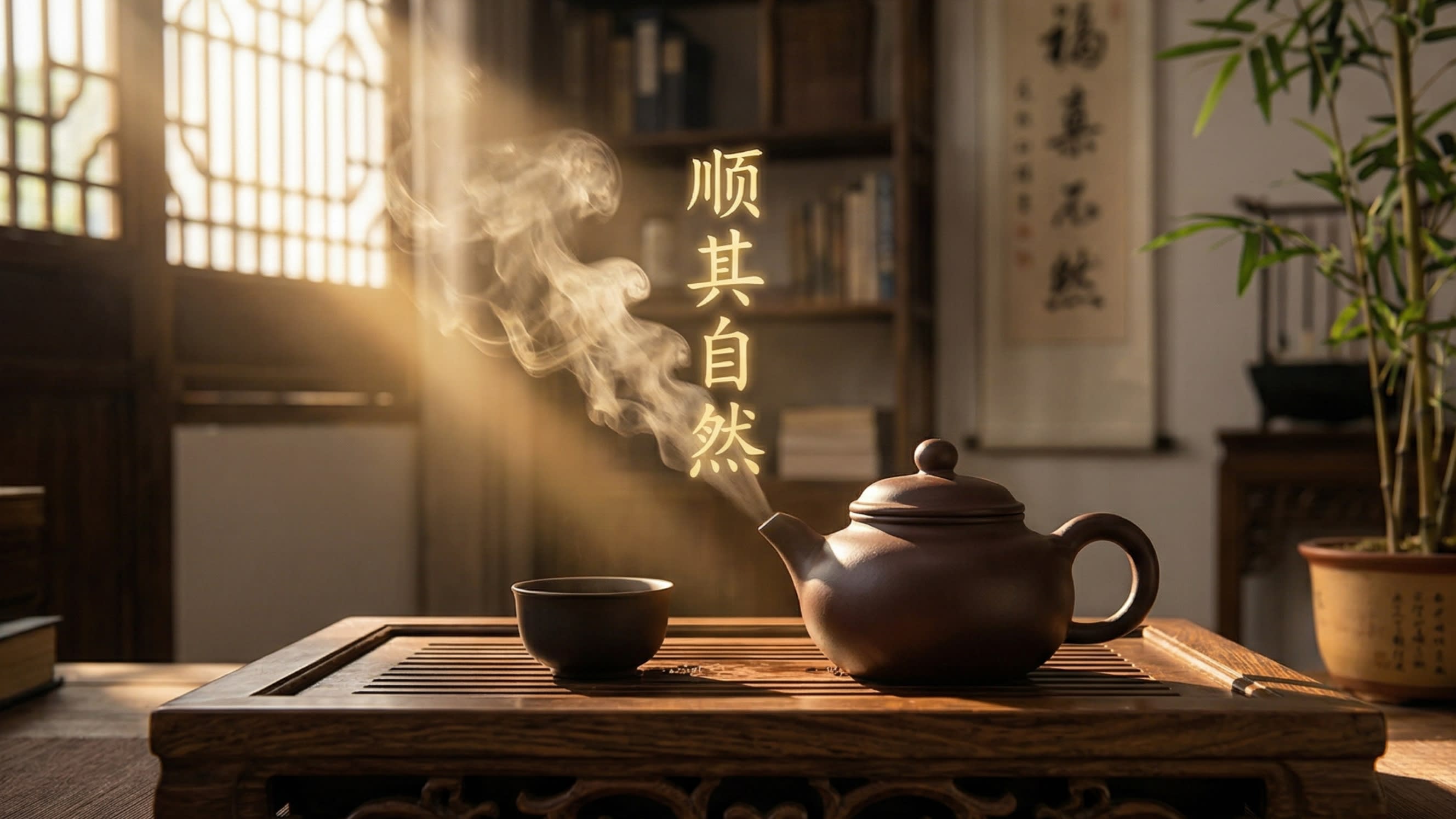
7. 顺其自然 (Shùn qí zì rán)
Literal Meaning: Follow its natural course. Actual Meaning: Let nature take its course; let it be; go with the flow.
We save the most beautiful and deeply philosophical idiom for last. Rooted in ancient Daoist philosophy (Taoism), Shunqiziran is the ultimate verbal sigh of relief.
Modern life in China can be incredibly stressful (often referred to as Nèijuǎn or “Involution”). When you have done everything you can do—whether it is studying for a massive exam, trying to force a romantic relationship to work, or stressing over a business deal—sometimes you just have to let go of the steering wheel. When a Chinese friend tells you to “Shunqiziran,” they are telling you to stop fighting the current and trust the universe.
- How to use it: As a piece of comforting advice or a personal philosophy.
- Example: “别太有压力,凡事顺其自然吧。”
- Pinyin: Bié tài yǒu yālì, fánshì shùnqízìrán ba.
- English: “Don’t be too stressed, just let nature take its course with everything.”
The Conversational Chengyu Cheat Sheet
| The Chengyu | Pinyin | The Vibe / Meaning | Best Situation to Use It |
|---|---|---|---|
| 人山人海 | Rén shān rén hǎi | Absurdly crowded. | Complaining about tourist spots or subways. |
| 乱七八糟 | Luàn qī bā zāo | A complete disaster/mess. | Describing a dirty room or a confused mind. |
| 莫名其妙 | Mò míng qí miào | Baffling / Crazy. | When someone does something illogical. |
| 理所当然 | Lǐ suǒ dāng rán | Obviously / Expected. | When discussing basic duties or fairness. |
| 一举两得 | Yì jǔ liǎng dé | Two birds, one stone. | Praising a highly efficient idea. |
| 半途而废 | Bàn tú ér fèi | Giving up halfway. | Motivating someone who wants to quit. |
| 顺其自然 | Shùn qí zì rán | Let it be / Go with the flow. | Comforting a stressed-out friend. |
Final Thoughts from Wei
The beauty of Chinese idioms is that they elevate your speech from “functional” to “native.” Using a Chengyu perfectly in context acts like a linguistic secret handshake. It shows local speakers that you haven’t just memorized vocabulary lists; you have absorbed the rhythm, humor, and philosophy of the culture.
Start small. The next time you walk into a crowded train station, just mutter “Ren shan ren hai” under your breath. The next time you are overwhelmed, pour a cup of tea and tell yourself “Shun qi zi ran.” Before you know it, these idioms will feel completely natural.
Want to master even more native vocabulary? Discover the visual logic in The Ultimate Guide to Chinese Measure Words or decode the matrix of 2026 Chinese Internet Slang.

