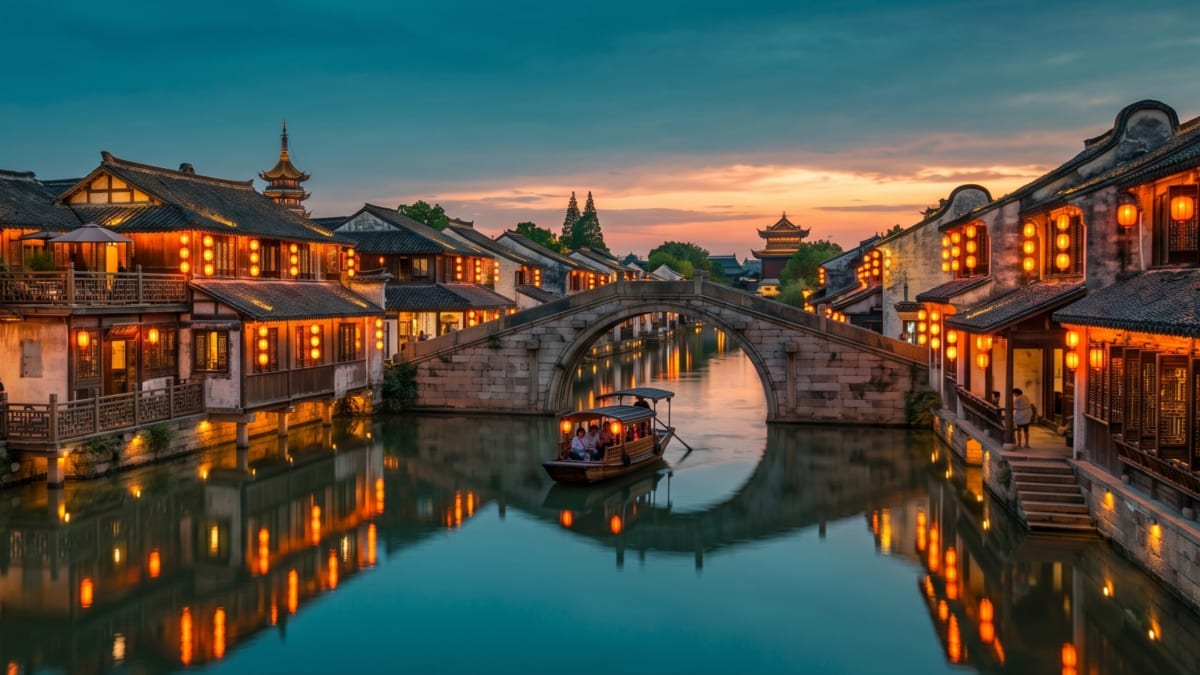
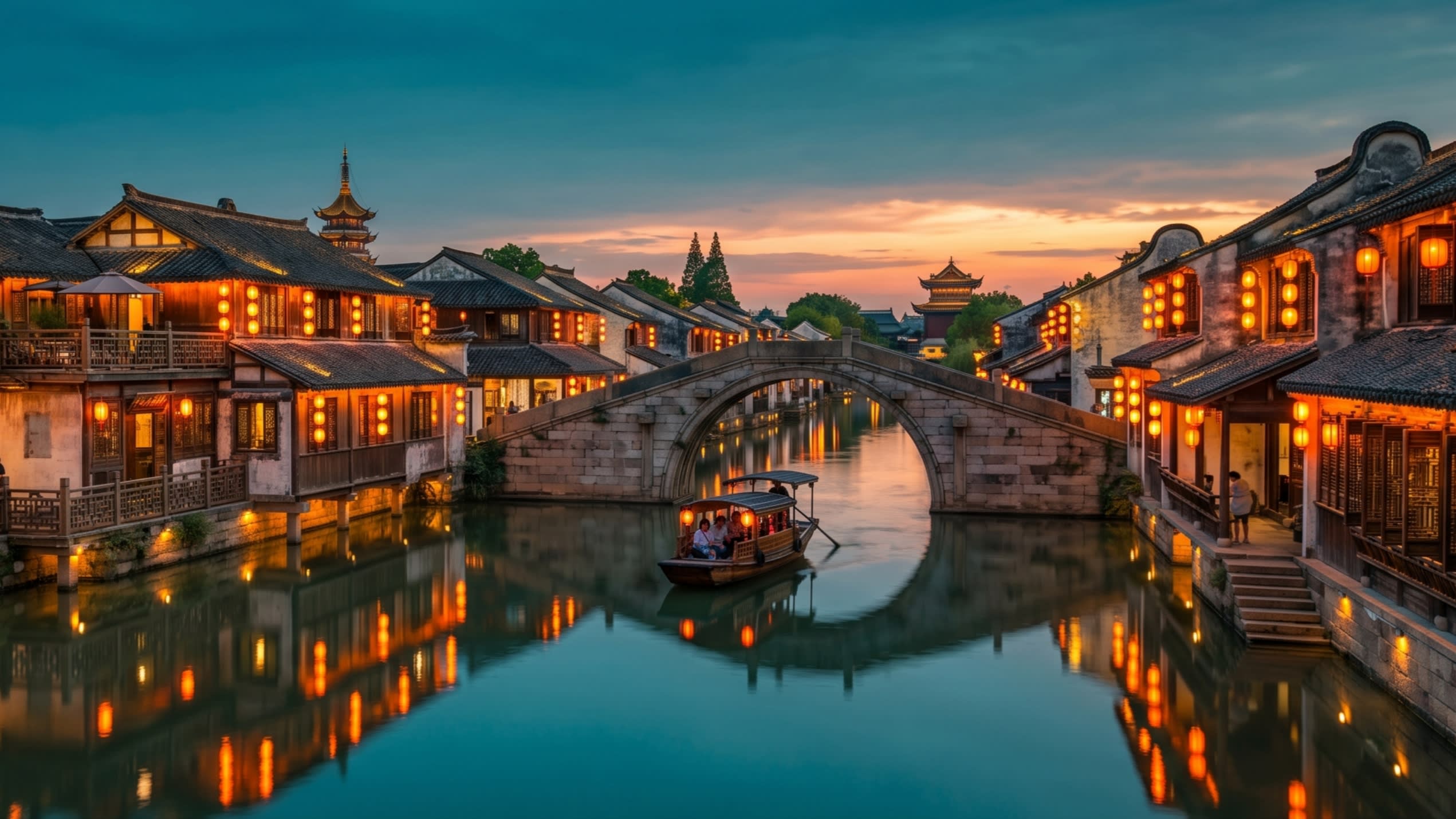
Shanghai is a portal to the year 2050—a neon-drenched fever dream of glass and steel. But just a short ride away, the pulse of the Yangtze River Delta slows down to the rhythmic dip of a wooden oar. For travelers utilizing the 144-hour visa-free transit in 2026, the true soul of the region isn’t found in a skyscraper; it’s hidden in the mist-veiled, willow-draped canals of the ancient water towns.
If you are looking to escape the urban roar, I have curated this guide to navigating the “Venice of the East” using China’s world-class high-speed rail network.
The 144-Hour “Magic” Window: 2026 Edition
The 144-hour Visa-Free Transit (TWOV) is a genuine travel hack. Whether you’re heading from London to Tokyo with a long layover in Shanghai, you have six full days to explore without the administrative headache of a traditional visa.
However, China is a hyper-digital ecosystem. To move seamlessly, you need more than a passport; you need a strategy. Before setting off, ensure you have your smartphone accessories ready, as you will be using your phone for everything from navigation to checking train schedules.
Phase 1: Your 2026 Digital Survival Kit
Before you board your first train, sync your digital life with the local infrastructure:
- Alipay (支付宝 - Zhīfùbǎo): This is your primary tool. Link your international credit card, and you’re set for everything from buying a subway ticket to paying for a bowl of noodles in a back-alley shop.
- 12306 (The Railway App): The official app is the only way to book trains reliably. I highly recommend registering your passport details weeks before your departure. If your verification is “Pending,” you can still visit the Manual Window (人工窗口 - Réngōng chuāngkǒu) at the station with your physical passport.
- Connectivity: For those who need constant access to Google Maps or Instagram, a roaming-based eSIM is often the path of least resistance. If you prefer a local SIM, remember that you’ll need a robust VPN to navigate the web as you do back home.
Town 1: Zhujiajiao (朱家角) – The “Convenient” Escape
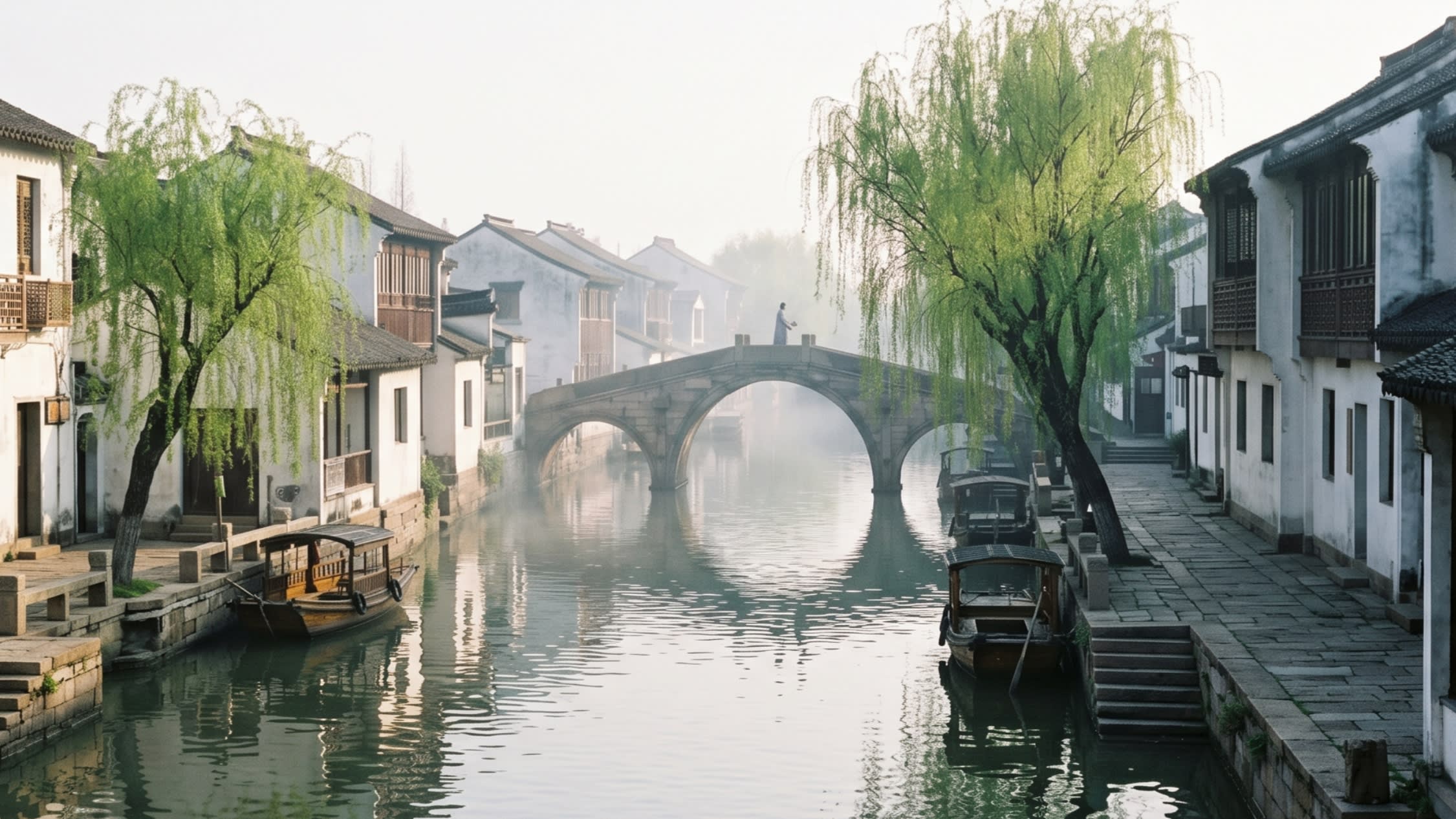
Zhujiajiao is the most accessible water town, sitting comfortably within the reach of Shanghai’s Metro Line 17. Despite its proximity to the city, the town’s Ming and Qing Dynasty architecture offers a poignant contrast.
- The Experience: Don’t stop at the tourist-heavy main street. I suggest ducking into the narrow, winding alleys of North Street (Bei Jie). Find a quiet teahouse, order some Bi Luo Chun (a delicate, floral green tea), and watch the locals go about their morning routines.
- Local Wisdom: As we say here, “去朱家角别只走大路” (Don’t just walk the main road in Zhujiajiao). You must duck into the alleys to find the Yānhuǒqì—that earthy, smoky, lived-in spirit of the town.
- Getting There: Take the metro from Hongqiao Railway Station. It takes about 45 minutes and costs less than $2.
Town 2: Zhouzhuang (周庄) – The “Poetic” Masterpiece
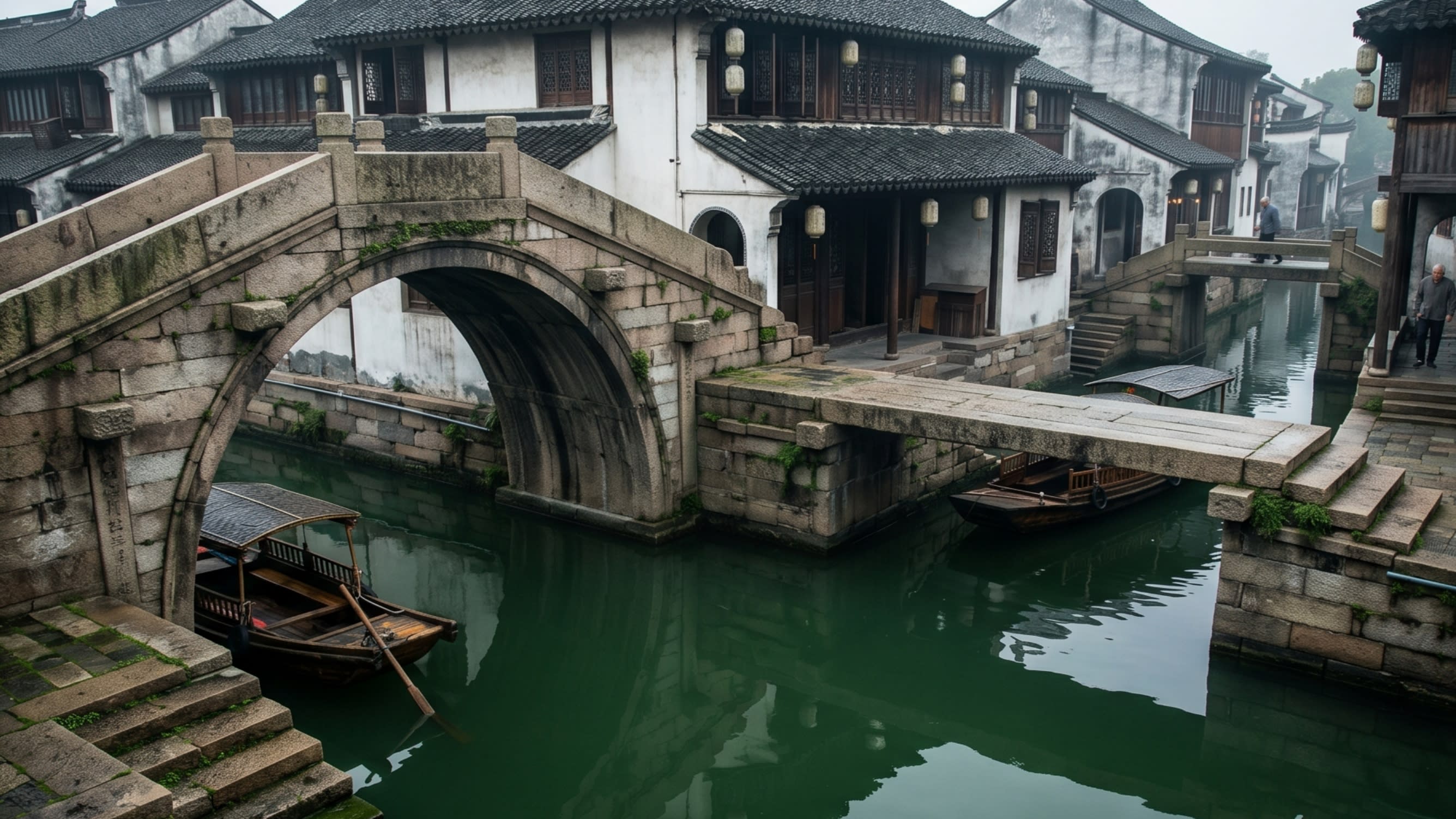
Zhouzhuang is the original poster child for the “Jiangnan water town” aesthetic. It feels like stepping into a traditional ink wash painting. The centerpiece here is the Double Bridges (双桥 - Shuāngqiáo), which form a perfect cross over the water.
- Pro Tip: Capacity limits are strictly enforced in 2026. Book your entry via the “Zhouzhuang Travel” WeChat mini-program at least 24 hours in advance to avoid being turned away at the gates.
- The Vibe: Visiting the Shen House is a must; it offers a glimpse into the life of the Ming Dynasty’s wealthiest merchant. It’s a masterclass in traditional woodwork and luxury.
- Getting There: Take the High-Speed Rail from Shanghai Hongqiao to Suzhou Station (25 minutes). From there, a 40-minute Didi or local tourist bus will drop you at the entrance.
Town 3: Wuzhen (乌镇) – Where “Cyberpunk” Meets Dynasty
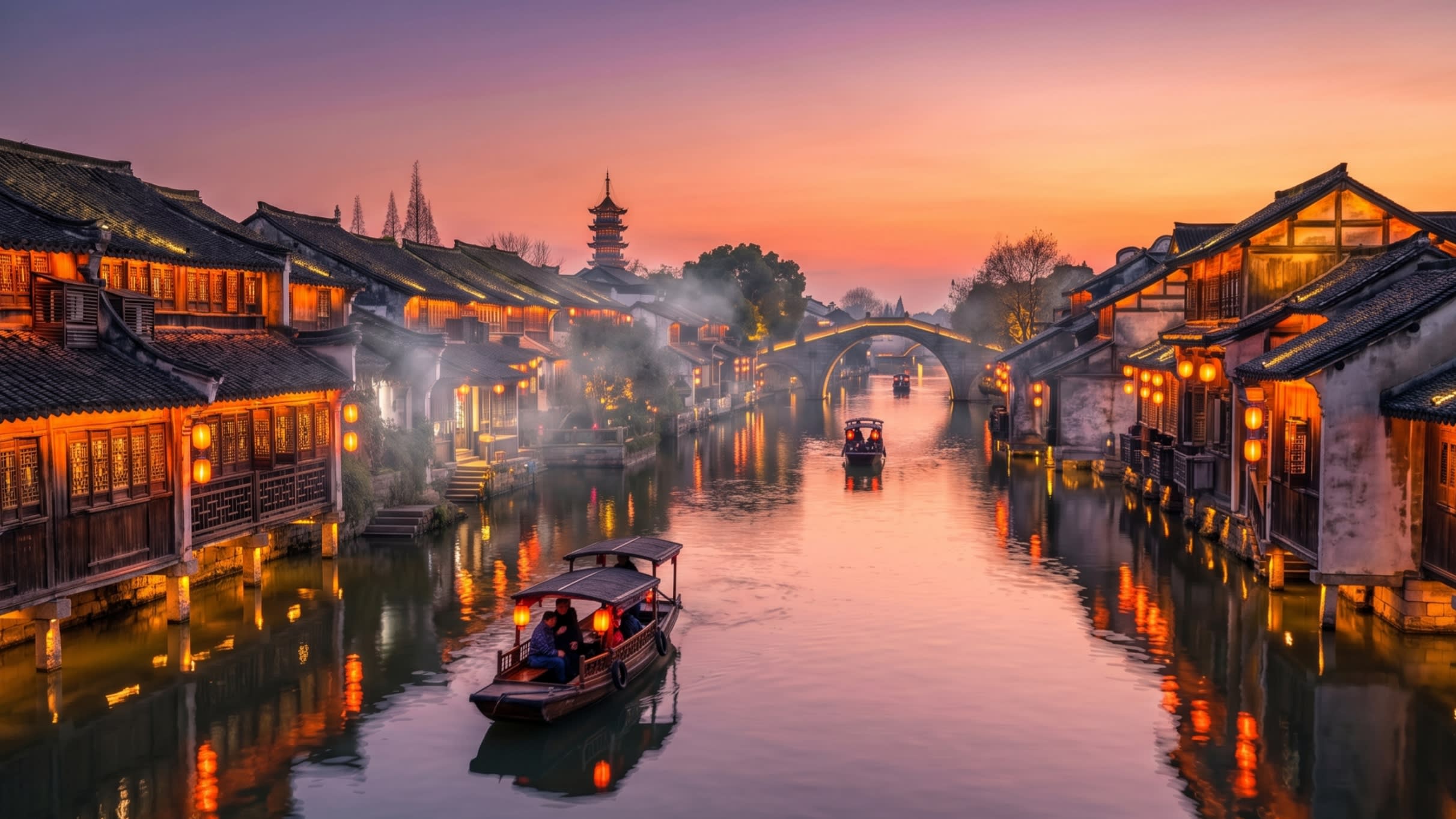
Wuzhen is, quite frankly, in a league of its own. It is perfectly managed, immaculately preserved, and hosts the World Internet Conference, meaning the infrastructure—and the Wi-Fi—is the best you’ll find in any ancient town.
- Curator’s Insight: You absolutely must stay the night in the West Gate (Xizha) zone. When the sun dips below the horizon, the town glows with soft amber lighting, turning the canals into something that feels more like a film set than real life.
- Culinary Note: Wake up early and beat the day-trippers to the riverbank for a steaming bowl of Scholar’s Mutton Noodles (书生羊肉面 - Shūshēng yángròu miàn). It is, in my opinion, a spiritual experience.
- Getting There: Take the HSR from Shanghai Hongqiao to Tongxiang Station (40 minutes). A quick K282 bus or Didi ride will bring you to the West Gate.
The “Curator’s” High-Speed Rail Survival Guide
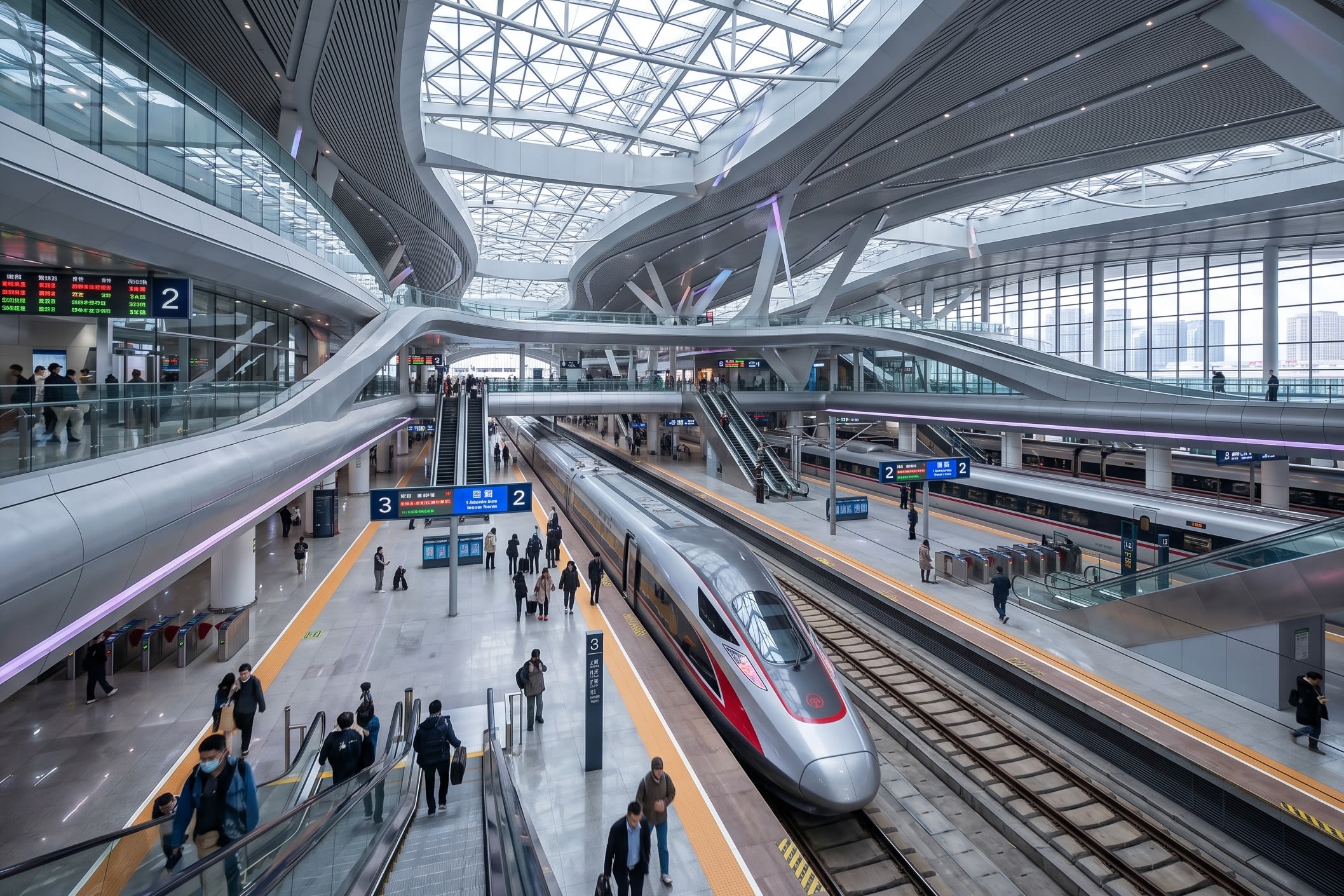
Navigating the train stations can be daunting. Treat Shanghai Hongqiao Station with the same seriousness as an international airport.
- Station Logistics: Always arrive at least 45 minutes before departure. Since facial recognition gates often don’t register foreign passports, head directly to the Manual Entry (人工通道) lane.
- Luggage Hack: If you are visiting multiple towns, leave your heavy suitcases in the station’s luggage storage (寄存处 - Jìcúnchù) and travel light. Cobblestone bridges are not friends with heavy roller bags.
- Dining: Don’t settle for station snacks. Through the 12306 app, you can order food delivery (Waimai) right to your train seat. If you have a long journey, you might want to look into collapsible food containers if you plan on packing your own local delicacies.
Traveler’s Language Survival Table
| English | Chinese | Pinyin |
|---|---|---|
| Where is the ticket office? | 售票处在哪里? | Shòupiàochù zài nǎlǐ? |
| I want to go to the station. | 我要去高铁站。 | Wǒ yào qù gāotiě zhàn. |
| This bridge is beautiful. | 这座桥很漂亮。 | Zhè zuò qiáo hěn piàoliang. |
Final Thoughts from the Curator
If you’re interested in more off-the-beaten-path experiences, I recommend checking out my guide on how to compare Shanghai water towns to avoid crowds.
The 144-hour visa-free window is a remarkable gift for travelers. It grants you the freedom to contrast the futuristic pace of Shanghai with the timeless, slow-water life of the nearby towns. If you find yourself in Wuzhen, please—put the camera away, grab a cup of local tea, and just breathe. That is where the real magic happens.
If you are just beginning your planning, make sure to read my best time to visit China guide to ensure your trip aligns with the most beautiful seasons for these water-bound escapes. Safe travels.
Disclaimer: As an Amazon Associate, ChinaCurator earns from qualifying purchases.