If you think dating in the West is exhausting with its endless swiping, ghosting, and “situationships,” dating in China will give you a severe case of cultural whiplash.
In China, marriage is rarely just a union between two individuals who fell in love; it is the merging of two families, two bank accounts, and two distinct sets of generational expectations. As a society caught between deeply rooted Confucian values and hyper-modern, fast-paced urban lifestyles, the Chinese dating scene is a fascinating, high-stakes ecosystem.
Young professionals in mega-cities like Shanghai and Beijing want romance, chemistry, and shared hobbies. Meanwhile, their parents want stability, property ownership, and grandchildren—preferably by yesterday. This clash of desires has created a unique dating culture filled with arranged blind dates, physical “marriage markets,” and a rich vocabulary of internet slang.
Whether you are looking to date a local, or just want to understand the extreme social pressure your Chinese friends are under, here is your ultimate guide to navigating the 2026 Chinese dating matrix.
1. 相亲 (Xiāngqīn): The Ultimate Blind Date
In the West, a “blind date” is usually a casual setup by a mutual friend over drinks. If there is no spark, you politely part ways. In China, a blind date is called Xiāngqīn (相亲), and it operates more like a corporate job interview mixed with a diplomatic negotiation.
Xiangqin is a formal matchmaking process usually orchestrated by parents, relatives, or professional matchmakers. Before the two young people even meet, their "resumes" have been rigorously vetted by the families.
What is on a Xiangqin Resume? When families set up a date, they aren’t talking about whether the couple shares a love for indie music or hiking. The initial screening is brutally pragmatic:
- Hùkǒu (户口): The official household registration system. Having a Beijing or Shanghai Hukou is incredibly valuable, as it grants access to better local schools and healthcare.
- Property & Car (有房有车 - Yǒu fáng yǒu chē): In traditional Chinese dating economics, it is widely expected that the man must own an apartment (or have a mortgage paid by his parents) before he is considered “marriage material.”
- Salary & Education: Stable jobs (especially government jobs, known as “iron rice bowls”) are highly prized.
When the couple finally meets for coffee or dinner, the pressure is immense. They both know exactly why they are there: to evaluate each other as potential lifelong spouses, not just to "see where things go."
2. The Infamous “Marriage Markets” (相亲角)
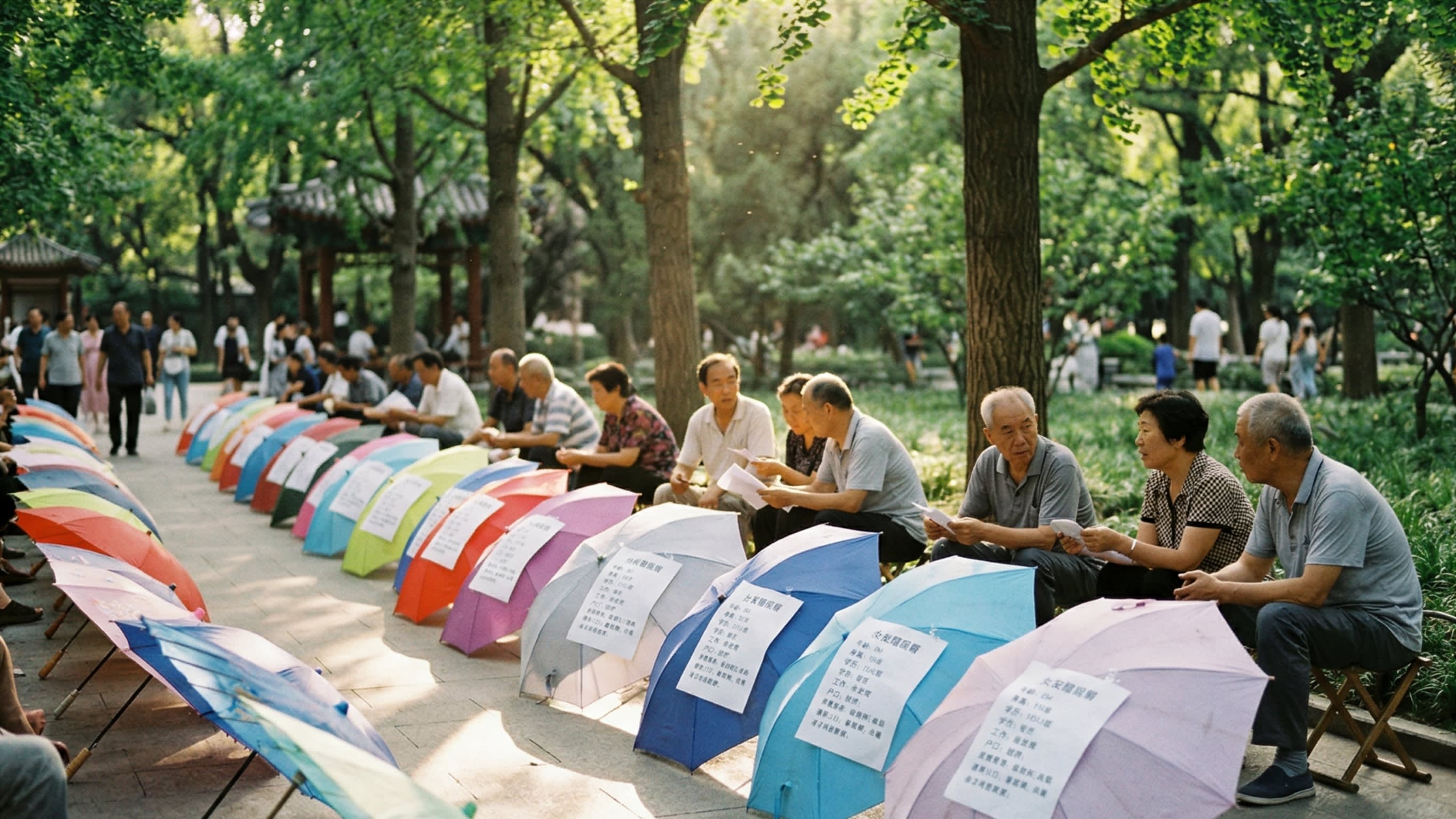
If you visit People’s Park in Shanghai or Zhongshan Park in Beijing on a weekend, you will witness one of the most surreal sights in modern China: The Matchmaking Corner (Xiāngqīn jiǎo - 相亲角).
Imagine a bustling outdoor stock exchange, but instead of trading shares, retired parents are trading their children. Hundreds of anxious parents line the pathways, sitting behind open umbrellas. Taped to these umbrellas are laminated sheets of paper detailing their son or daughter’s vital statistics: height, weight, zodiac sign, education, salary, and property ownership.
- The Reality: The vast majority of the young people whose resumes are taped to these umbrellas have absolutely no idea their parents are doing this. It is an act of desperate parental love, born out of the intense fear that their child will become a Shèngnǚ (剩女 - Leftover Woman) or Shèngnán (剩男 - Leftover Man)—derogatory terms for people who remain unmarried past their late twenties.
3. The Economics of Love: “Cai Li” (彩礼)
No conversation about Chinese dating and marriage is complete without mentioning Cǎilǐ (彩礼 - The Bride Price).
Historically, when a woman married, she left her family to join her husband’s family, meaning her parents lost a source of labor and eldercare. The Caili was a financial sum paid by the groom’s family to the bride’s parents to compensate them.
Today, Caili is still a massive, often controversial part of the marriage process, especially in rural areas and smaller cities. The amount can range from 100,000 RMB to over a million RMB, depending on the region and the groom’s wealth. If the groom’s family cannot afford the Caili demanded by the bride’s parents, the relationship will often end abruptly, regardless of how much the couple loves each other.
4. Where Young People ACTUALLY Meet (Escaping the Pressure)
With all this pressure, you might think romance is dead in China. It isn’t! Chinese Millennials and Gen Z are actively rebelling against the stiff, transactional nature of Xiangqin. They are finding their own ways to meet people organically.
- 剧本杀 (Jùběn shā - Murder Mystery Games): This is one of the most popular ways young people socialize in 2026. Groups of strangers lock themselves in a themed room for 4 hours to role-play and solve a mystery. It forces interaction, teamwork, and shows off someone’s personality far better than a stiff dinner date.
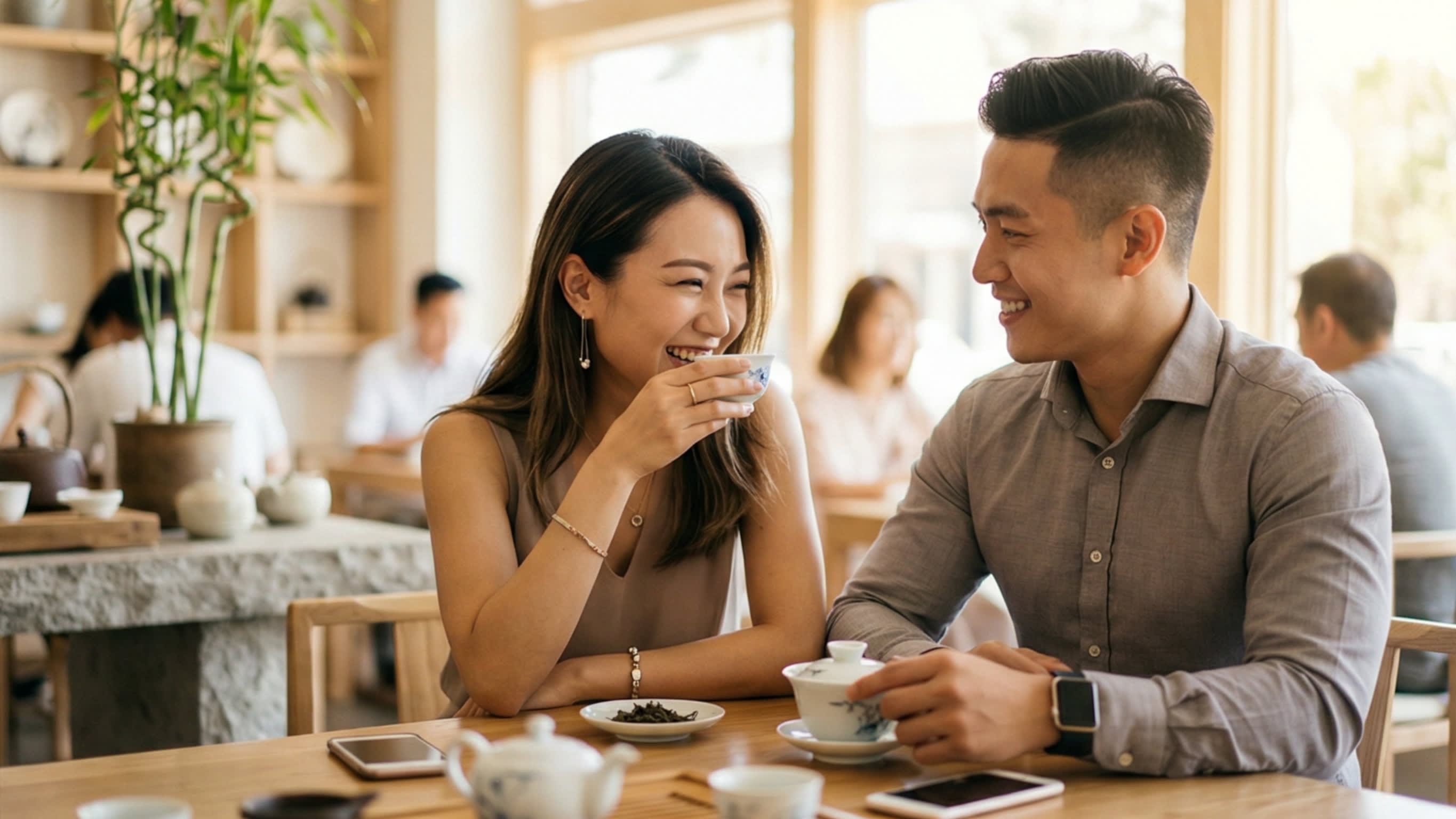
- Culture & Food Exploration: Instead of formal western restaurants, modern dates often revolve around shared passions. Couples will bond over hunting down the best authentic street food stalls for spicy skewers, or spending an afternoon brewing premium leaves in a traditional teahouse.
- Dating Apps: Apps like Tantan (the Chinese Tinder) and Soul (an app focused on personality matching rather than just photos) are massive.
5. 2026 Chinese Dating Slang You Need to Know
If you want to talk about dating in China, you need the vocabulary. Here is the modern slang that defines the digital dating era.
| The Slang | Pinyin | Literal Meaning | What It Actually Means |
|---|---|---|---|
| 脱单 | Tuō dān | To shed the single status | To finally get a boyfriend or girlfriend. The ultimate goal. |
| 催婚 | Cuī hūn | To urge marriage | The relentless pressure parents put on their kids to get married. (Peaks during Chinese New Year). |
| 母胎单身 | Mǔtāi dānshēn | Single since the womb | Someone who has literally never been in a relationship in their entire life. |
| 海王 | Hǎi wáng | King of the Sea (Aquaman) | A "Player" or "Fuckboy/Fuckgirl". Someone who casts a wide net and flirts with many people at once. |
| 吃狗粮 | Chī gǒuliáng | Eating dog food | Being forced to watch a happy couple show off their romance (PDA) while you sit there single. |
Final Thoughts from Xin
Dating in China is not for the faint of heart. It requires balancing deep respect for traditional family values with the universal human desire for genuine, romantic connection.
If you are an expat dating a local, the most important thing you can bring to the table is empathy. Understand that when your partner gets stressed after a phone call with their mother, it is because the weight of thousands of years of cultural duty is resting on their shoulders.
Be patient, avoid acting like a Haiwang (player), and maybe skip the stressful coffee interviews in favor of a relaxed street food crawl. Who knows? You might just be the reason someone finally gets to proudly announce that they have Tuodan (escaped singledom).
Want to learn more about navigating complex Chinese relationships? Read our guide on The 5 Gifts You Should NEVER Give a Chinese Person or master the art of What to Call People in China.

