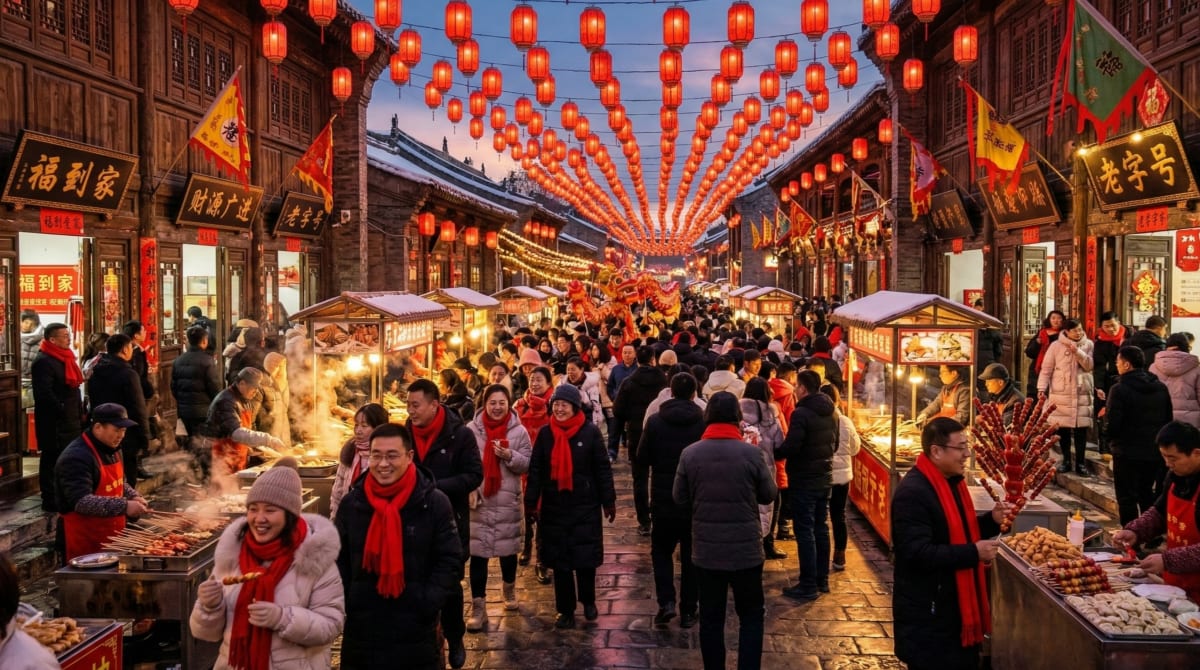
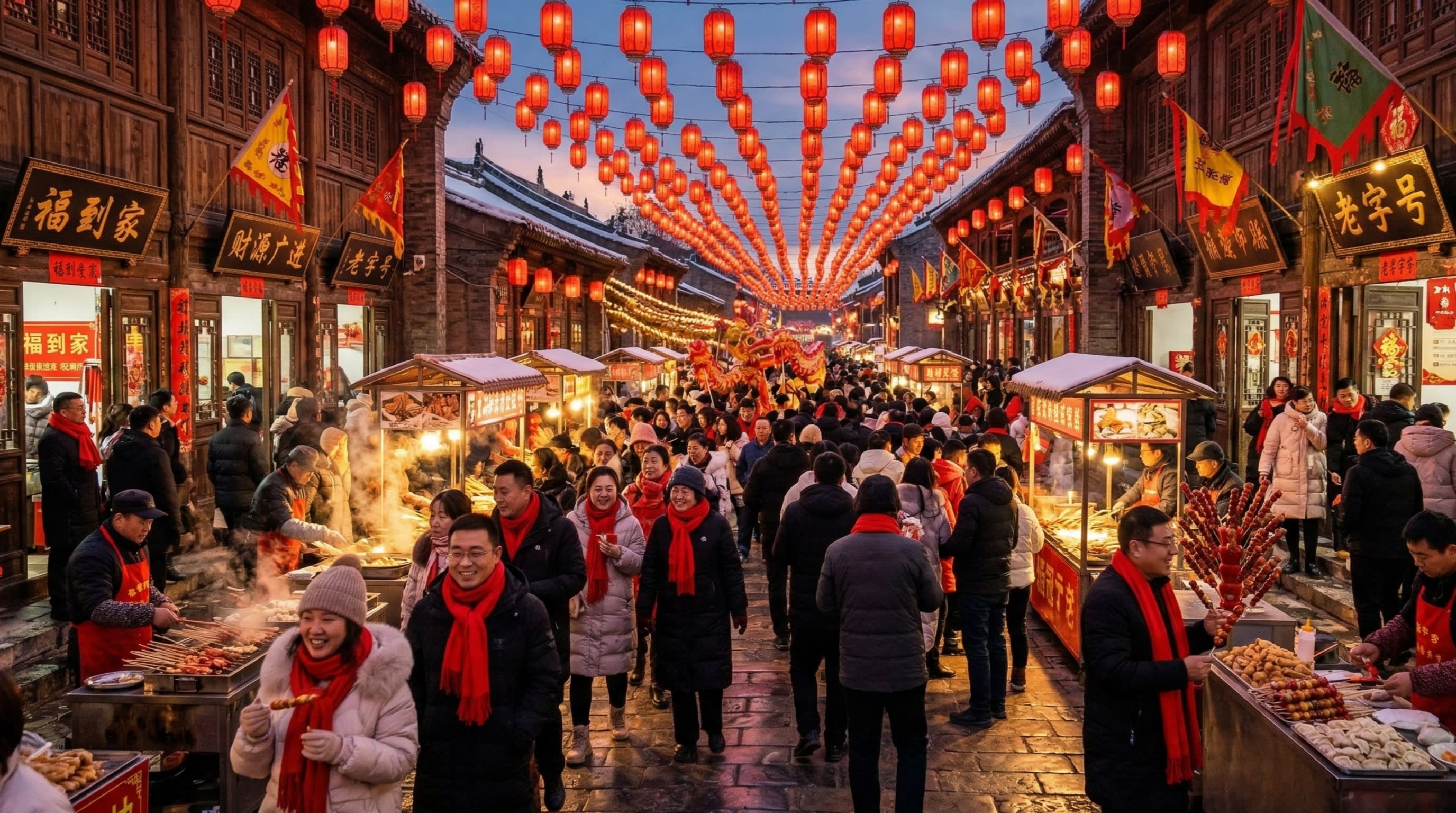
“If you ask a local living in a modern Chinese mega-city how they feel about the Spring Festival, you will often hear a nostalgic sigh followed by a common phrase: ‘Xiànzài de niánwèi yuè lái yuè dàn le’ (现在的年味越来越淡了)—’The New Year flavor is getting weaker these days.’ As skyscrapers replace courtyards and digital red envelopes replace physical ones, the raw, chaotic, and deeply traditional soul of the holiday can be hard to find in a Tier-1 concrete jungle. But make no mistake: the magic hasn’t disappeared; it has just relocated. In 2026, the Year of the Horse, if you want to experience the authentic heartbeat of the Chinese New Year, you need to know exactly where to look.”
🧨 The Elusive Concept of “Nian Wei” (年味)
Before you pack your bags, you need to understand what you are searching for. Niánwèi (年味) literally translates to “New Year Flavor,” but it has nothing to do with food. It is a sensory and emotional atmosphere.
It is the deafening crackle of firecrackers at midnight. It is the vivid red couplets pasted on wooden doors. It is the smell of incense burning in a packed temple, the sight of a golden dragon dancing through a crowded street, and the warmth of a family squeezing around a steaming hot pot.
To find Nian Wei in 2026, you must leave the futuristic business districts behind and dive into China’s historical capitals, ancient towns, and cultural heartlands. Here are the top four destinations to experience the ultimate Spring Festival.
📍 1. Beijing (北京): The Imperial Temple Fairs
If you want the classic, northern Chinese New Year experience, the capital is undefeated. While the modern CBDs of Beijing empty out as millions of migrant workers return to their hometowns, the ancient parks and hutongs come alive with a fiercely traditional energy.
The undisputed highlight of a Beijing New Year is the Miàohuì (庙会 - Temple Fair).
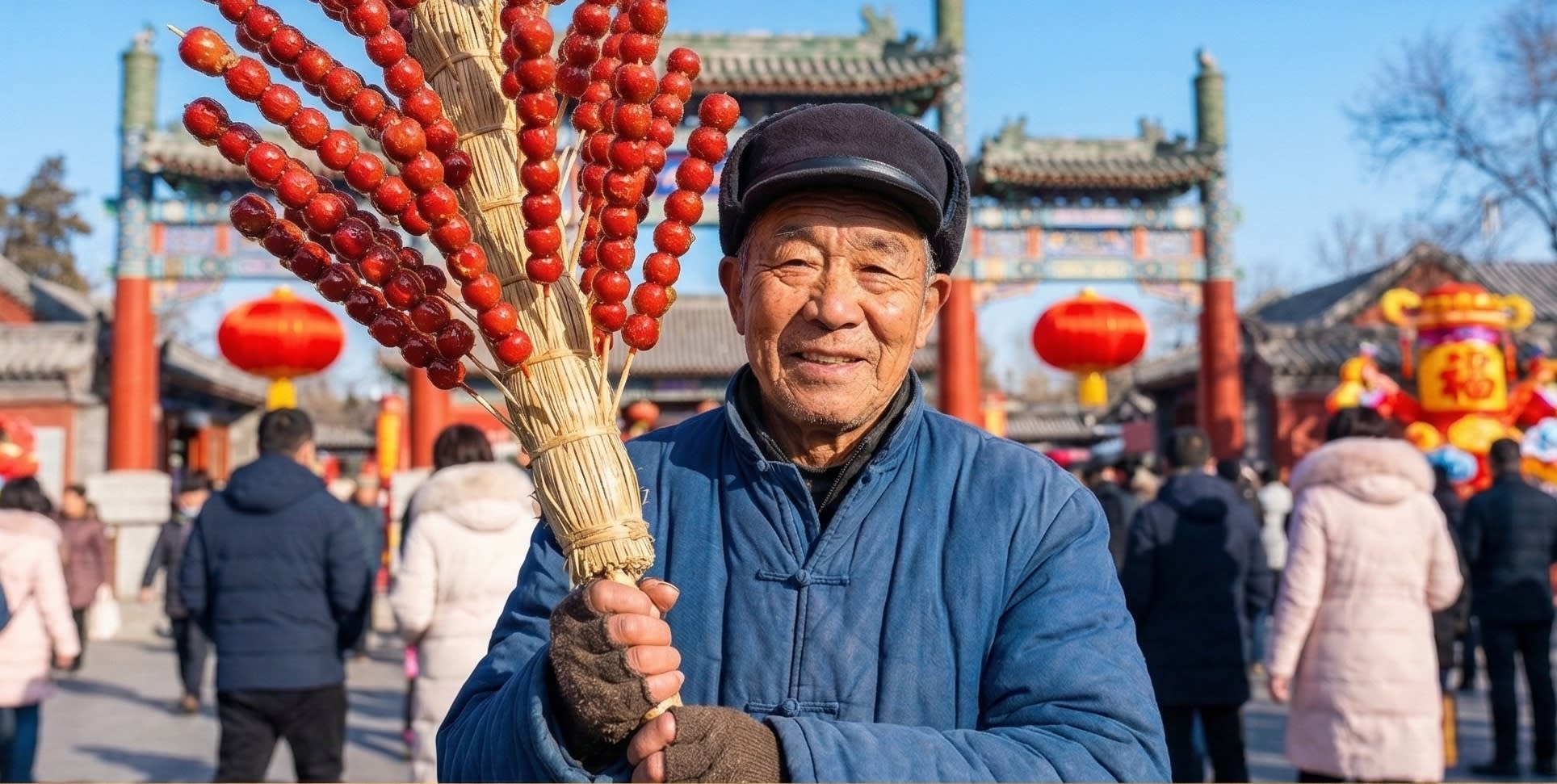
- The Ditan Temple Fair (地坛庙会): Held at the Temple of Earth, this is one of the largest and oldest fairs in the city. It is a spectacular sensory overload. You will see traditional imperial worship ceremonies re-enacted with hundreds of performers in Qing Dynasty robes.
- The Flavor of the North: The air here smells of roasted meat and caramelized sugar. You absolutely must buy a stick of Tánghúlu (糖葫芦)—bright red hawthorn berries coated in hardened, crunchy sugar syrup. Eating this sweet and sour treat while your breath turns to steam in the -5°C air is a quintessential Beijing memory.
- Shichahai Ice Skating: After the fair, head to the frozen lakes of Shichahai. Rent a traditional wooden ice sled and slide across the ice surrounded by ancient red walls and leafless willow trees. It is the exact winter playground that locals have enjoyed for centuries.
📍 2. Xi’an (西安): The Tang Dynasty Illumination
If Beijing is about the lively street atmosphere, Xi’an (the starting point of the Silk Road) is about pure, overwhelming visual majesty. Xi’an does not just celebrate the New Year; it illuminates it.
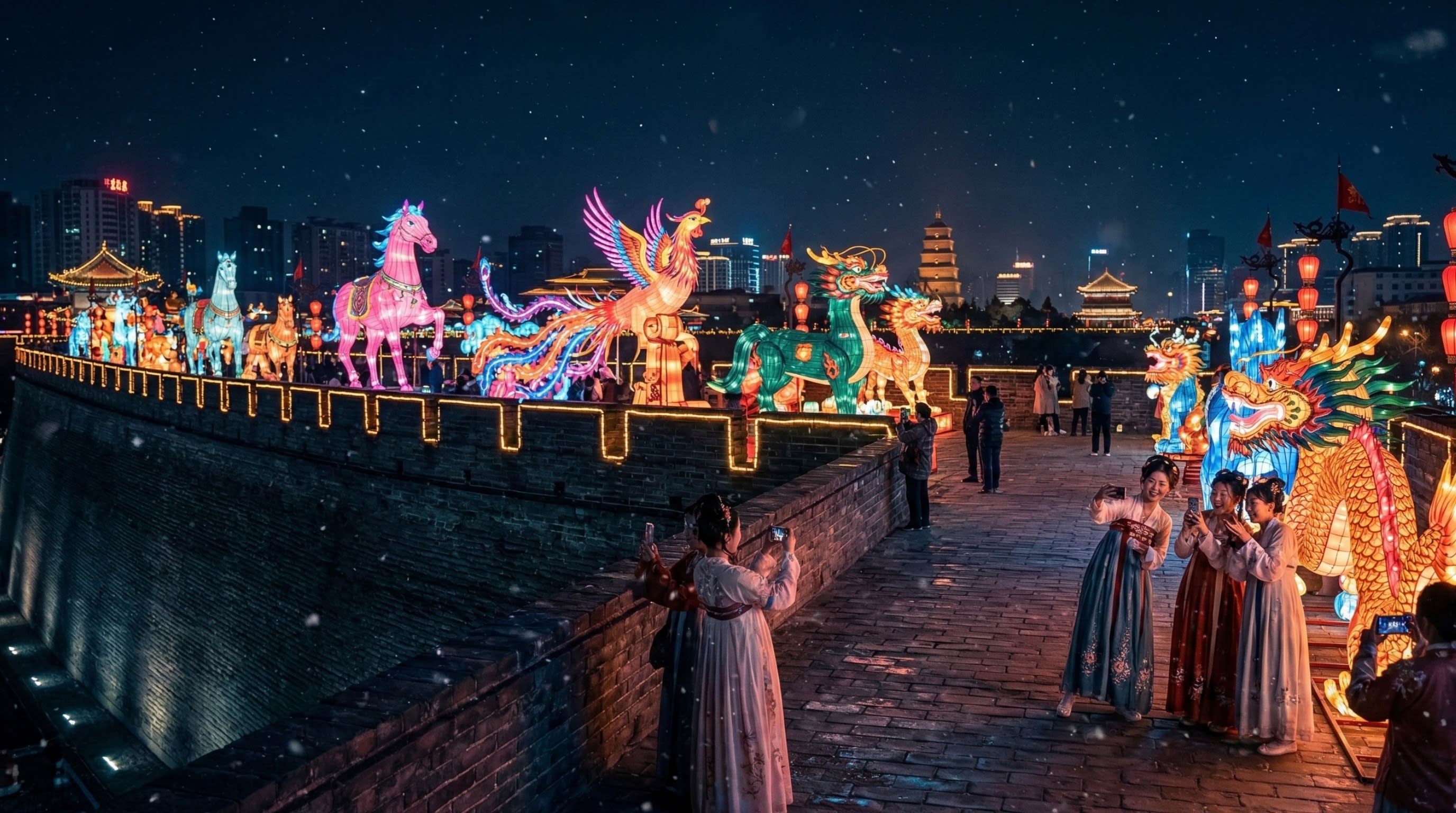
- The City Wall Lantern Festival: The ancient city wall of Xi’an is the most complete surviving city wall in China. During the Spring Festival, the entire 13.7-kilometer perimeter is transformed into a massive, glowing art exhibition. Massive silk lanterns—many shaped like the zodiac animal of the year (expect magnificent galloping horses in 2026)—light up the night sky.
- Datang Everbright City (大唐不夜城): This sprawling pedestrian street is designed to look exactly like the capital of the Tang Dynasty at its peak. During the holiday, it is packed with people wearing beautifully embroidered Hànfú (汉服 - traditional Han Chinese clothing). Walking through this area under the glow of a million lanterns feels like you have time-traveled back to the year 700 AD.
- The Feast: Xi’an is the carb capital of China. Warm your freezing hands with a steaming Ròujiāmó (肉夹馍 - Chinese hamburger) and a massive bowl of spicy, hand-pulled Biángbiáng miàn (Biangbiang noodles).
📍 3. Guangzhou (广州): The Spring Flower Markets
If you hate the cold, head south. The Spring Festival in Guangdong province is completely different from the north. Instead of snow and ice, the southern New Year is defined by lush greenery, warm weather (usually around 18°C), and endless oceans of flowers.
In Cantonese culture, water and flowers represent wealth. Therefore, the most important pre-New Year activity is Xíng huājiē (行花街 - Strolling the Flower Street).
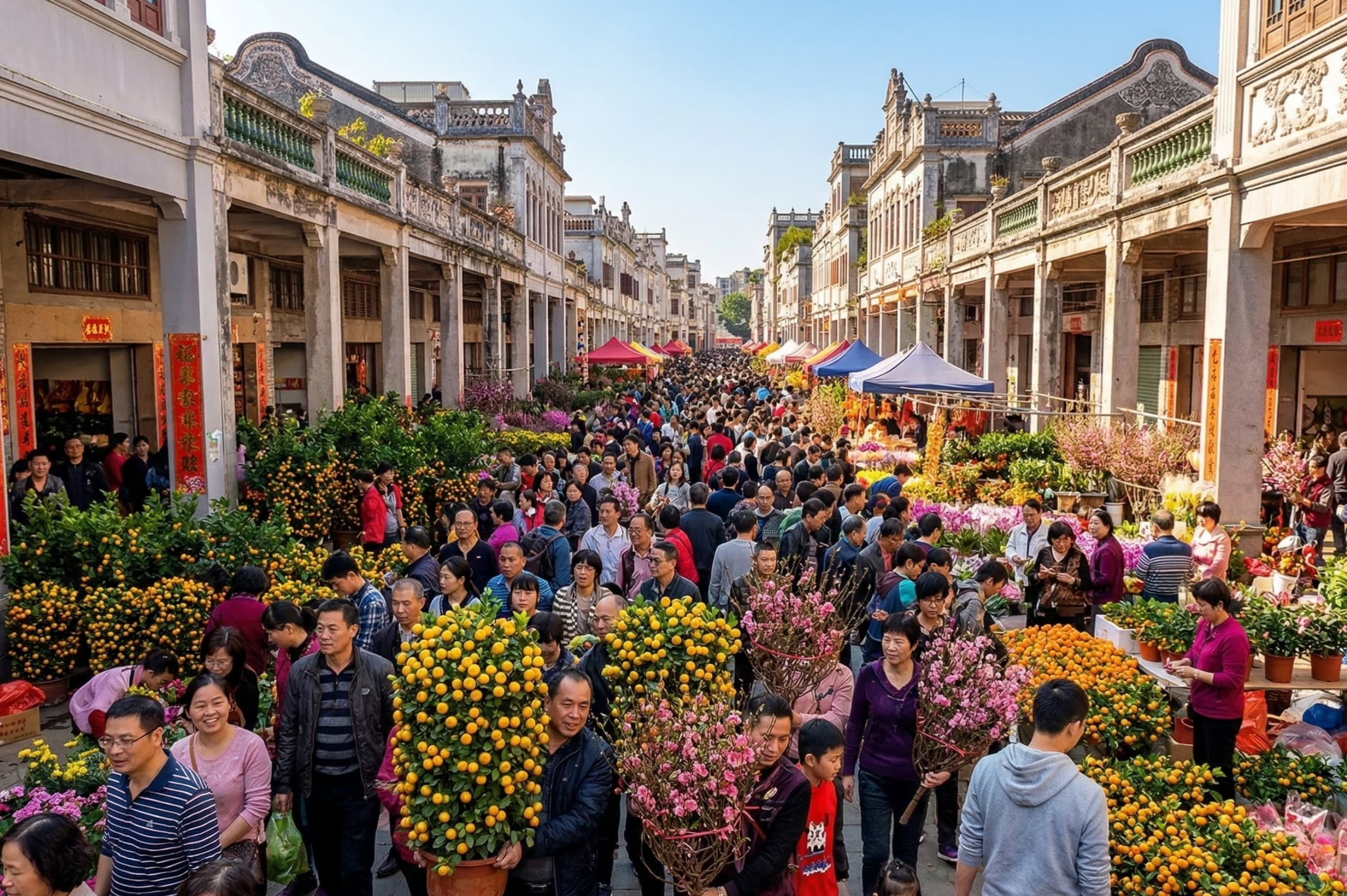
- The Flower Markets (迎春花市): Days before the New Year, massive temporary flower markets take over the main avenues of Guangzhou. The crowds are astonishing. Locals are not just buying decorations; they are buying fortune.
- The Botany of Luck: You will see thousands of Jīnjú (金桔 - Kumquat trees). The word for kumquat sounds like “luck” and “gold” in Cantonese. Families buy massive trees loaded with tiny orange fruits to place in their living rooms. You will also see branches of pink peach blossoms, which are believed to bring romantic luck to unmarried young people.
- The Lion Dance (舞狮 Wǔshī): Southern China is the home of the acrobatic lion dance. You will frequently hear the aggressive, rhythmic beating of drums in the streets as highly trained martial artists in elaborate lion costumes jump from pole to pole, bringing good luck to local businesses.
📍 4. Pingyao Ancient City (平遥古城): The Rural Winter Escape
For the most concentrated, untouched Nian Wei, you need to leave the provincial capitals and head to the ancient walled city of Pingyao in Shanxi province.
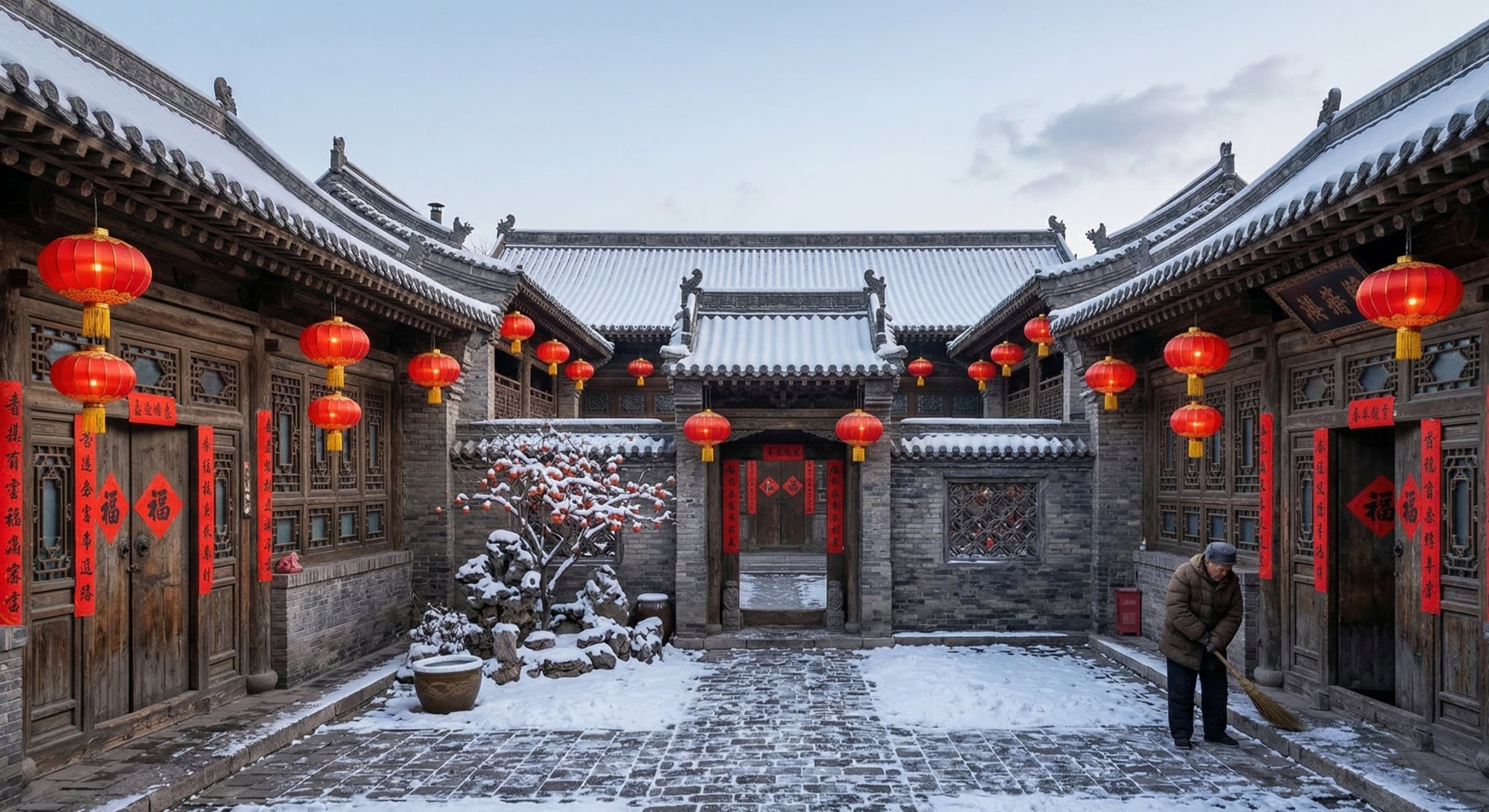
- A Living Museum: Pingyao is a UNESCO World Heritage site and looks exactly as it did during the Ming and Qing dynasties. During the Spring Festival, every single courtyard home hangs massive red lanterns. When the snow falls on the grey brick roofs, the contrast with the brilliant red decorations is a photographer’s absolute dream.
- The Kàng (炕): Experience a true northern winter by sleeping in a traditional courtyard hotel that features a Kang—a heated brick bed. After a day of exploring freezing streets, drinking hot tea on a roasting hot brick bed is a comfort you will never forget.
- Shehuo (社火): Pingyao is famous for its rural folk performances. You can witness stilt walkers, traditional paper-cutting artisans, and fiery dragon dances weaving through the narrow, 600-year-old cobblestone alleys.
🎒 The 2026 Spring Festival Survival Guide
Traveling in China during the Spring Festival is not a casual vacation; it is a logistical ballet. You will be participating in the Chūnyùn (春运 - Spring Festival Travel Rush), the largest annual human migration on Earth. Here is how to survive and thrive:
- The “Empty City” Phenomenon (Kōngchéng 空城): Migrant cities like Shenzhen and certain districts of Shanghai become surprisingly empty during the holiday. While it is incredibly peaceful and great for photos, be aware that many independent coffee shops and small restaurants will be closed for up to two weeks.
- Master the 12306 App: High-speed rail tickets go on sale exactly 15 days before the departure date. For travel dates around February 15-20 in 2026, tickets for popular routes will sell out in literal seconds. Set your alarms and have your passport verified on the app well in advance.
- Dining Logistics: If you want to eat at a famous restaurant on New Year’s Eve or New Year’s Day, you must book weeks in advance. Alternatively, stick to large shopping malls; chain restaurants rarely close during the holiday.
- Embrace the Chaos: Temples and tourist sites will be packed shoulder-to-shoulder (Rénshān rénhǎi 人山人海). Do not let the crowds frustrate you. The crowd is the culture. It is the manifestation of a billion people celebrating life together.
💬 Essential “Nian Wei” Vocabulary
To truly blend in with the locals and understand the festive environment, memorize these high-frequency phrases:
| The Term | Characters & Pinyin | What It Means in Practice |
|---|---|---|
| New Year Flavor | 年味 Niánwèi |
The festive, traditional atmosphere of the holiday. "The Nianwei here is so strong!" |
| Paying a Visit | 拜年 Bàinián |
The act of visiting friends or family to offer New Year greetings. |
| People Mountain, People Sea | 人山人海 Rénshān rénhǎi |
A highly common idiom to describe massive, overwhelming crowds. |
| Reunion Dinner | 年夜饭 Niányèfàn |
The all-important family feast on the eve of the New Year. |
Final Thoughts from Hao
The “Nian Wei” hasn’t faded; it has simply retreated to the places that protect it. Whether you are crunching on caramelized hawthorn in a freezing Beijing temple, wandering beneath the glowing lanterns of Xi’an, or carrying a kumquat tree through the warm streets of Guangzhou, the soul of the Spring Festival is waiting for you. Dive into the crowds, brave the cold, and let the 2026 Year of the Horse show you the true, unfiltered magic of China.
㊗️ Safe travels, and may your New Year be filled with authentic flavor and deep connections!
Ready to plan the logistics? Make sure you read our comprehensive guide on Mastering the Bullet Train: Booking High-Speed Rail in China before the Spring Festival travel rush begins!

