

“In the neon-lit alleys of China’s most famous 5A Cultural Streets (5A级文化街区 - 5A jí wénhuà jiēqū), the line between a ‘Masterpiece’ and a ‘Mass-produced’ imitation is thinner than a sheet of rice paper. In 2026, as domestic travel booms, these corridors of history have become sensory battlefields. As curators of the authentic, we know that what you carry home is a physical reflection of your journey. Let’s ensure your collection is as ‘Didao’ (地道 - authentic) as the ancient walls surrounding you.”
The 2026 Souvenir Dilemma: Why ‘Real’ is Hard to Find
By 2026, 5A sites like Pingjiang Road (平江路) in Suzhou, Jinli (锦里) in Chengdu, and the Muslim Quarter (回民街) in Xi’an have evolved into world-class commercial ecosystems. While they remain pulsing with ‘Yanhuoqi’ (烟火气 - the vibrant, smoky vibe of human life), they also present a maze for the uninitiated.
Whether you are a student hunting for a unique desk ornament or a seasoned globetrotter seeking a high-end heirloom, the secret to shopping in 2026 is not merely about the price tag—it is about the ‘Zhiguan’ (直观 - intuitive) quality and the ‘Dings’ (顶 - top-tier) craftsmanship that defines a true masterwork. If you are still bringing home the same plastic trinkets available on budget apps, you are missing the point of travel. I have spent years wandering these streets, and I have learned that the real treasures often hide in the quiet, dim corners, away from the neon lights.
Step 1: The Porcelain Protocol – Jingdezhen and Beyond (景德镇瓷器)
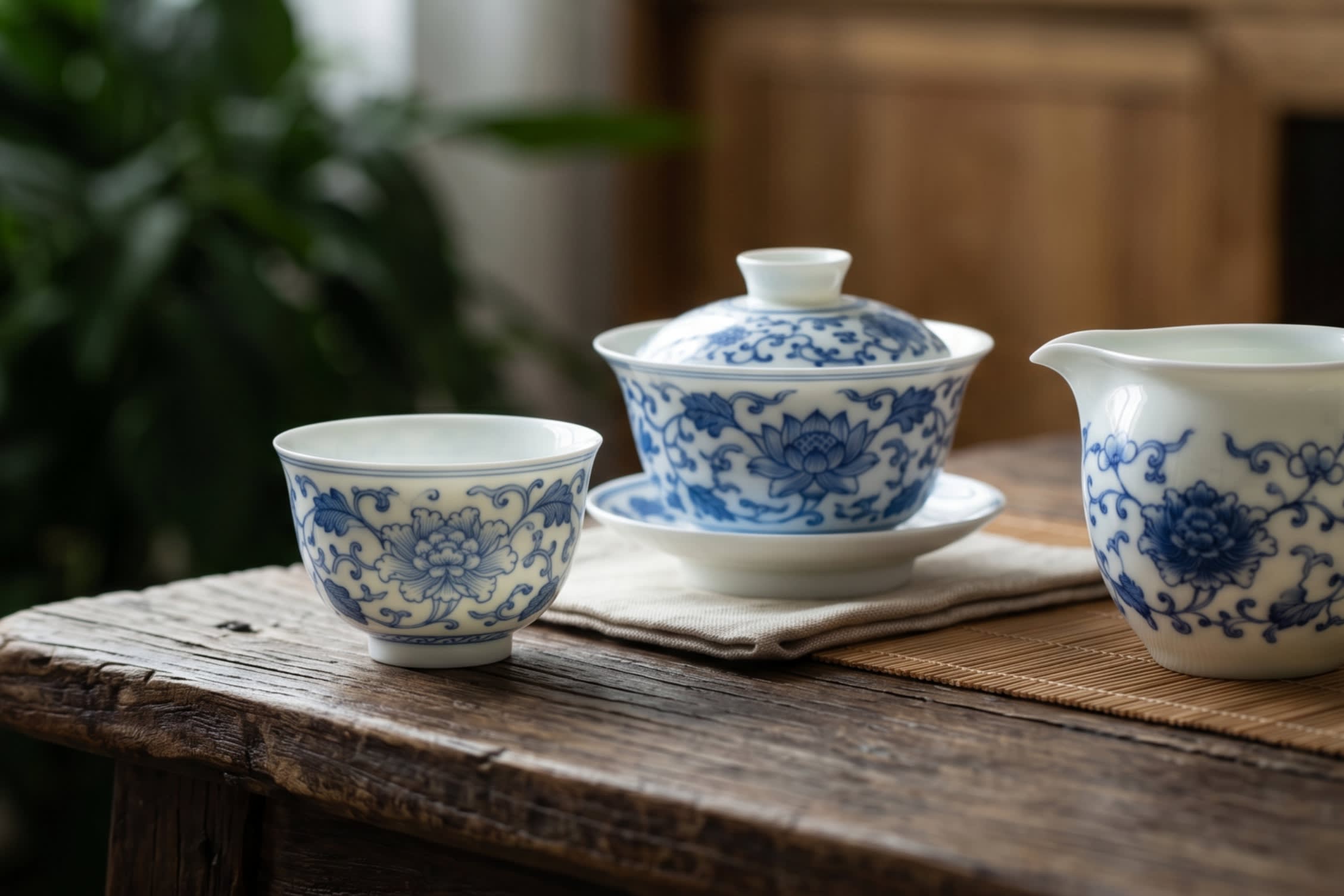
When you walk down an Anhui or Jiangxi cultural street, you will see ‘Jingdezhen’ signs hanging from almost every stall. But in 2026, true porcelain is a science, not a marketing label.
- The ‘Chime’ Test: Gently flick the edge of the bowl or plate with your fingernail. Authentic, high-fire porcelain should ring with a clear, sustained, bell-like tone that lingers in the air. If you hear a dull, flat ‘thud,’ you are likely holding mass-produced earthenware.
- The ‘Light’ Test: For eggshell-thin porcelain, hold it up to the sun. Real Jingdezhen work should exhibit a warm, even glow, with the intricate, hand-painted shadows of the internal pattern showing clearly. It’s a ghost-like dance of light that machines simply cannot replicate.
If you are looking to set up your own tea station at home, investing in a high-quality porcelain tea set is the first step toward bringing that authentic 5A experience to your own kitchen.
🤝 Found the Perfect Item? Now Learn the Art of Giving Picking the right porcelain is only half the battle. If you’re buying for a Chinese partner or friend, the way you present it is just as important as the gift itself. Avoid cultural faux pas and master the etiquette of ‘Face.’ Read More: The Art of Mianzi: How to Choose and Gift Authentic 5A Souvenirs
Step 2: The Silk Secret – Identifying the ‘Mulberry’ Quality (苏州丝绸)
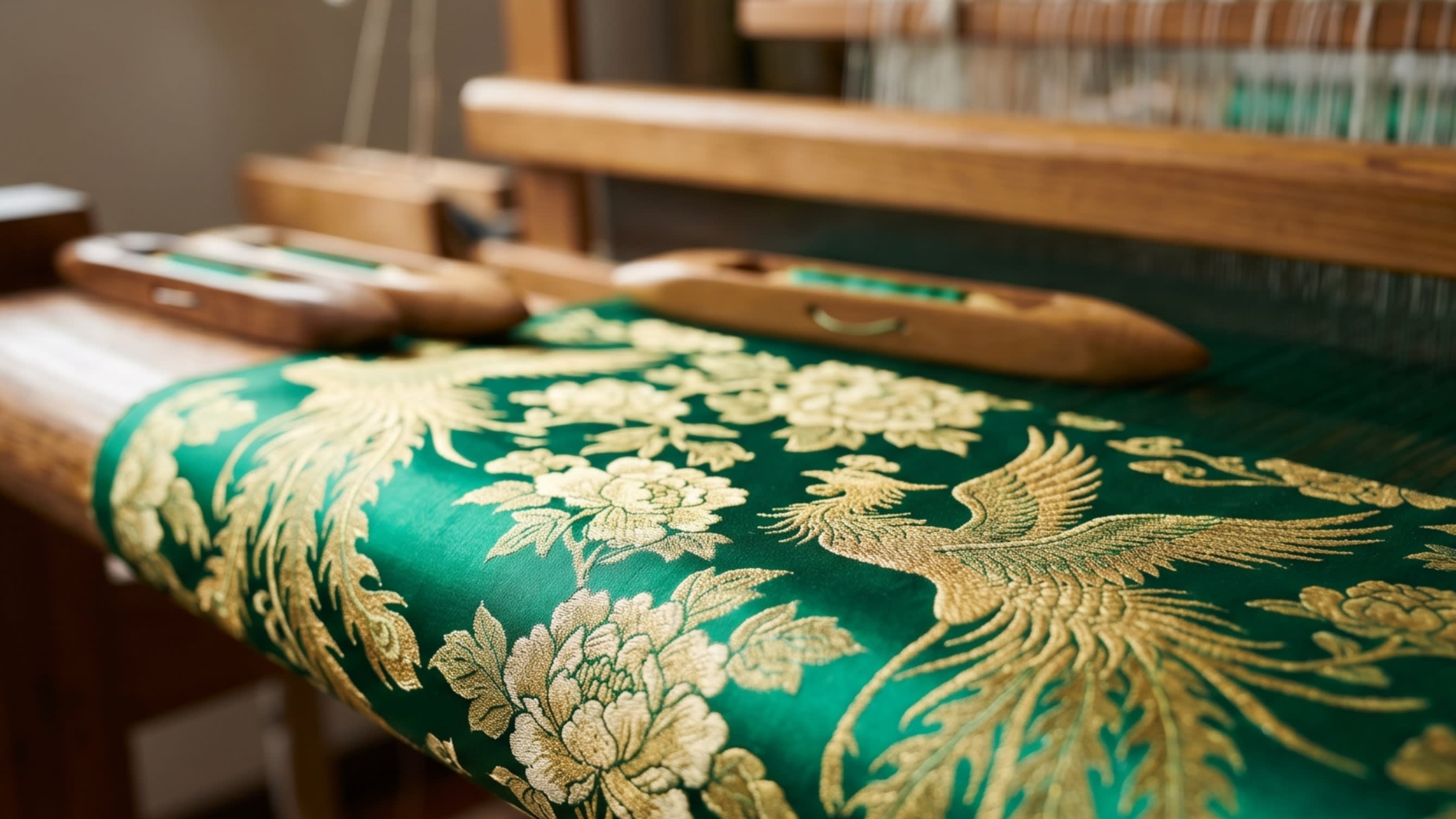
Near the Suzhou Gardens, silk is the undisputed queen of souvenirs. However, distinguishing between luxury Mulberry Silk (桑蚕丝 - sāng cán sī) and shiny polyester requires more than just a quick glance.
- The Lustre: Real silk possesses a soft, multi-dimensional sheen that shifts in tone as you change the light angle. Synthetic silk, by contrast, gives off a harsh, one-dimensional ‘plastic’ glare.
- The Burn Test (2026 Protocol): Many reputable shops now keep a small ‘Burn Station’ on hand. A single thread of real silk burns like singed hair and leaves behind a brittle, carbonized ash that crumbles between your fingers. Polyester melts, smells like burning chemicals, and leaves behind a hard, sticky bead.
- The 2026 Digital Tag: Always look for the ‘Heritage QR.’ In 2026, authentic high-end producers utilize blockchain-backed tags that trace the cocoons back to specific farms. If the vendor cannot provide proof of origin, keep walking.
For those who want to feel the difference, starting with a simple silk scarf can help you calibrate your senses to what real, organic fiber feels like.
Step 3: Woodcraft & Lacquer – Grain over Gloss (传统木作)
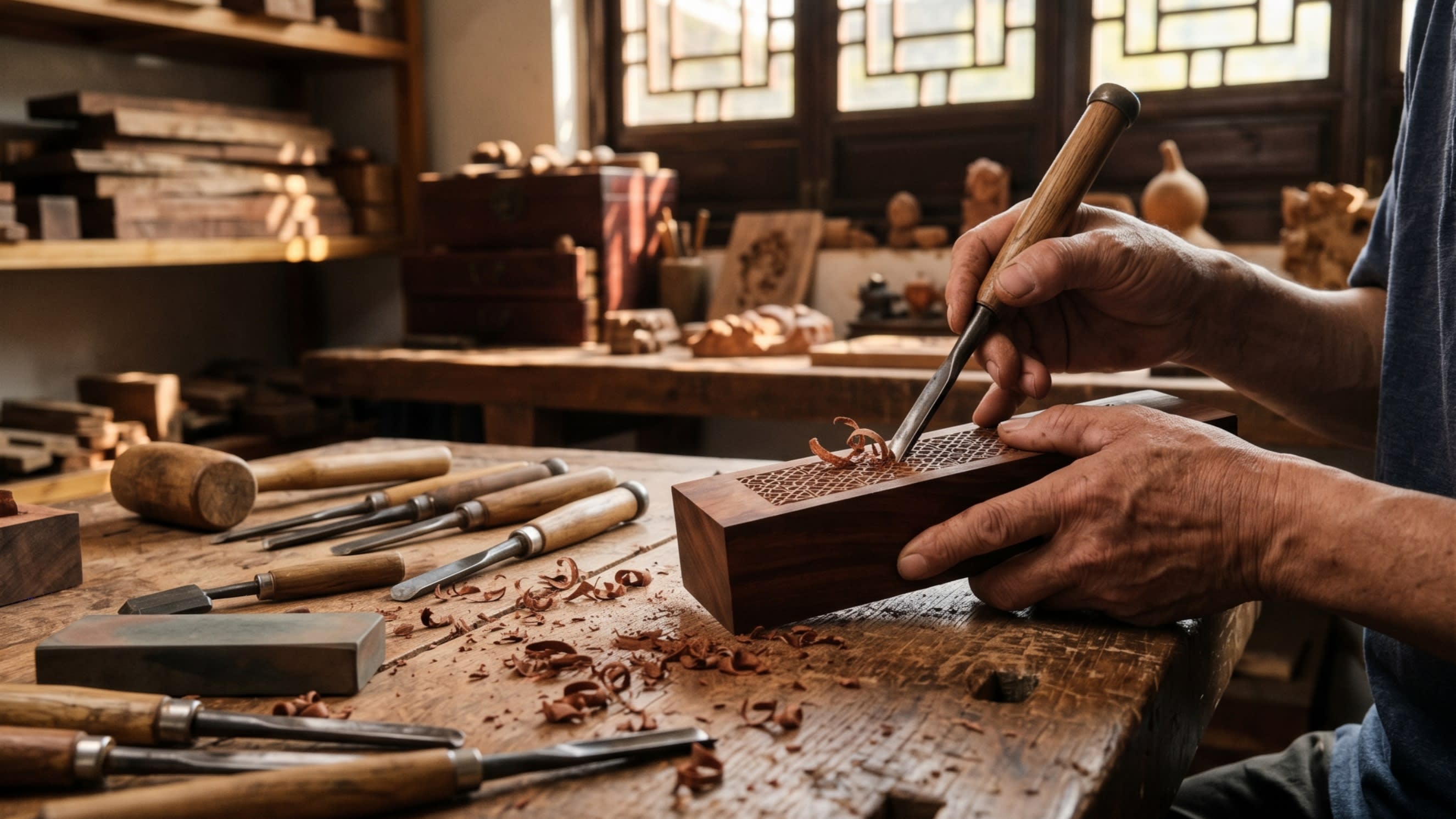
Whether it is a hand-carved screen in a Yunnan village or a small lacquer box in Dali or Lijiang, look for the human touch—the intentional imperfections of the blade.
- Scent: Natural wood, such as Sandalwood or Camphor, releases a subtle, deep, and earthy scent. If it smells like a chemical perfume, it has been sprayed.
- Detail: In 2026, machine carving is impressive, but it is ‘perfectly’ repetitive. Look for tiny, minute tool marks or slight asymmetries. These are the ‘Soul of the Hand’.
- Native View: “木雕讲究的是‘意境’ (yìjìng)。如果是那种油漆刷得厚厚亮亮的,通常是为了掩盖木头的‘劣质’。一定要挑那种能看清‘纹路’ (wénlù) 的,那才叫‘高级’。” (Wood carving focuses on artistic conception. If the lacquer is thick and mirror-like, it is usually hiding inferior wood. Always choose pieces where the grain is visible; that is where the true character of the wood lies.)
🗣️ Listen to the ‘Vibe’ Before You Buy The best way to find hidden artisan shops is to listen to the locals. Identifying the local dialect’s rhythm can help you spot the authentic spots where real masters work. Read More: Dialect Hunting: Can You Hear the Difference Between China’s 5A Regions?
Heritage Shopping Comparison Matrix (2026 Edition)
| Treasure Type | Primary 5A Hub | Authenticity Marker | Scam Risk |
|---|---|---|---|
| Porcelain (瓷器) | Jingdezhen | Bell-like Sound / Translucency | 🔴 High |
| Silk (丝绸) | Suzhou / Hangzhou | Lustre / Burn Test Result | 🔴 Extreme |
| Inkstone (歙砚) | Huangshan | Cold Touch / Gold Veins | 🟡 Medium |
The Art of the Bargain: A 2026 Strategy

In 2026, aggressive, public-shouting bargaining is considered gauche. ‘Cultural Respect’ is the new currency.
- The “Slow Walk”: Never purchase at the first stall. Walk the entire length of the 5A street once. The repetition of common items tells you what is mass-produced and what is truly unique.
- Ask for the “Studio”: Ask the vendor: “Is this made in your own studio?” (Zhè shì nǐmen zìjǐ de gōngzuòshì zuò de ma?). It signals you are an insider seeking craftsmanship, which shifts the interaction from “Tourist vs. Seller” to “Enthusiast vs. Master.”
- The ‘Mianzi’ Rule: If you are buying a significant heirloom (over 5,000 RMB), do it in the back room or a quiet tea area. Privacy is key to high-end Chinese deals.
- Native View: “讨价还价也要讲究‘技巧’。现在的匠人很有‘傲骨’ (àogǔ)。” (Bargaining requires technique. Artisans today possess a deep sense of integrity; if you slash the price by half immediately, they may simply decline the sale. Appreciate their craft first—that genuine praise is your greatest bargaining chip.)
Final Thoughts from Ruoxi
Collecting heritage treasures in 2026 is a masterclass in ‘Selective Attention’. In a world filled with digital noise, the quiet chime of a porcelain cup or the soft, cool touch of genuine silk is a grounding reminder of human history.
My advice? Do not buy a souvenir simply to mark a map. Buy it because the object itself carries a narrative you want to pass on. In the cultural streets of China, the best “souvenir” is the one that makes you pause, breathe, and recall the exact moment you found it.
💡 Master the Details Now that your bags are packed with treasures, are you prepared for the digital side of the journey? Master the tiny details that make travel in China flawless. Read More: The Invisible Essentials: 50 Mini-Tips for a Flawless China 5A Journey
🛍️ Curator’s Shopping Checklist
- Shipping: For porcelain, always use professional export wrapping services (often available via SF International).
- Digital Payments: Ensure your international card is linked to your mobile wallet. 5A streets in 2026 are 99% cashless.
- Verification: Use the 'China Heritage Hub' app to cross-reference authorized vendors.
- Etiquette: Always use a polite 'Nǐ hǎo, wǒ kěyǐ kànkan ma?' (Hello, may I take a look?) before handling fragile goods.
Disclaimer: As an Amazon Associate, ChinaCurator earns from qualifying purchases.