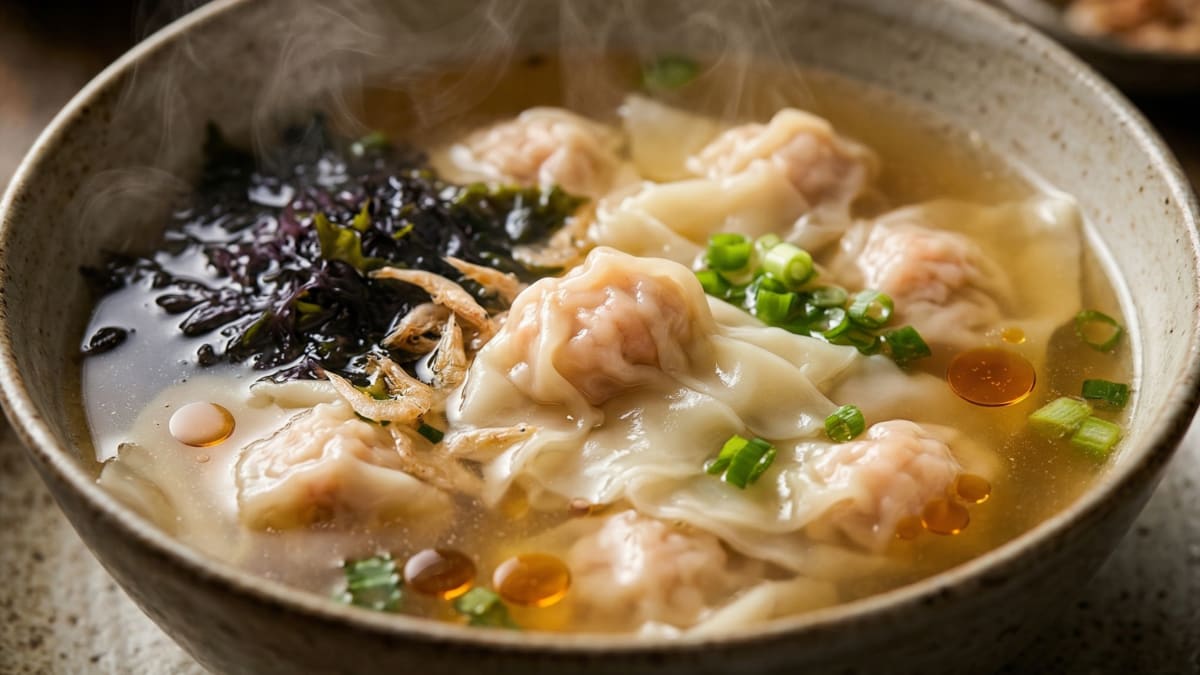

🥣 Introduction: The Ultimate Bowl of Comfort
If there is a universal cure for a cold winter day, a broken heart, or a craving for absolute comfort, it is a steaming bowl of authentic Chinese Wonton Soup (馄饨汤 - Húntun Tāng).
For millions of people around the world, Wonton Soup is the ultimate introduction to Chinese cuisine. However, if your only experience with this legendary dish comes from cheap takeout boxes, you are missing out on the true magic. Takeout wontons are often doughy, thick, and filled with a tiny, dry, dense ball of mystery meat, swimming in a bland, salty yellow water.
An authentic Chinese Wonton Soup is a culinary revelation. The wrappers should be so incredibly thin that they become translucent and silky, floating in the broth like delicate, flowing clouds. The filling—a perfect marriage of savory pork and sweet, crunchy shrimp—must be juicy, flavorful, and wonderfully bouncy. And the broth? It is not just boiled water; it is a meticulously crafted umami bomb that warms you from the inside out.
As someone who grew up watching my grandmother fold hundreds of these little “clouds” on Sunday afternoons, I can tell you that the secret isn’t just the recipe—it’s the rhythm and the technique. Today, we are going to dive deep into the authentic restaurant secrets that will change your perspective on homemade soups forever.
If you are a fan of these delicate bundles, you might also enjoy mastering my recipe for Authentic Chinese Potstickers (Guotie) or the comforting depth of Authentic Chinese Hot and Sour Soup.
🥟 Wonton vs. Jiaozi: What is the Difference?
Before we start wrapping, let’s clear up a massive point of confusion for Western home cooks. What is the difference between a Wonton and a traditional Chinese Dumpling (饺子 - Jiǎozi)?
| Feature | Wonton (馄饨) | Jiaozi (饺子) |
|---|---|---|
| Wrapper | Square, very thin, often contains egg. | Round, thicker, flour and water only. |
| Usage | Primarily for soup or chili oil. | Pan-fried, boiled, or steamed. |
| Folding | Loose, designed to trap broth. | Pleated and sealed tight. |
A Dish of Many Names
China is vast, and the beloved Wonton goes by many different names depending on the region you are visiting. In the north, they are Húntun (馄饨), while in the south, Cantonese speakers refer to them as Yúntūn (云吞), which translates poetically to “swallowing clouds.” In Sichuan, you will find them served as Chāoshǒu (抄手), meaning “crossed hands,” usually doused in a fiery, numbing chili oil that awakens every nerve ending in your mouth.
🔬 The Culinary Science: The Secret to a “Bouncy” Filling
The hallmark of a premium, authentic wonton is the texture of the filling. It should not crumble like a hamburger patty. It must have a satisfying, snappy, elastic chew. In Chinese culinary slang, this highly desirable texture is called Q-tán (Q弹).
To achieve this magical texture with a mixture of ground pork and shrimp (虾仁猪肉 - Xiārén zhūròu), Chinese chefs use two ancient techniques that I never skip:
1. The “Da Shui” Method (打水)
Lean pork is naturally dry. To make it juicy, you must vigorously stir cold water or ginger-scallion water into the meat in one single direction. By doing this, you are forcing the proteins to unwind and absorb the liquid, transforming crumbly meat into a sticky, unified paste that stays succulent after boiling.
2. The “Slapping” Technique (摔打 - Shuāidǎ)
This is the ultimate restaurant secret for that Q-tán bounce. Once your meat paste is mixed, gather it in your hand, lift it above the bowl, and literally slap or throw it down into the bowl repeatedly (about 20 to 30 times). This physical impact alters the myosin proteins in the meat, creating a firm, elastic texture that provides that signature “snap” when you bite into the cooked wonton. It feels a bit therapeutic, too—the perfect way to release some stress before dinner.

🌊 The Soup Base: The “Chong Tang” (冲汤) Street Food Method
Here is the biggest mistake home cooks make: they dump their seasonings directly into the pot of boiling water with the wontons.
If you go to a traditional street food stall in Shanghai or Guangzhou, you will notice the chef does not season the giant pot of boiling water. Instead, they build the flavor profile directly inside the serving bowl! This method is called Chōngtāng (冲汤).
You place all your aromatic garnishes—light soy sauce, toasted sesame oil, white pepper, and dried ingredients—into the bottom of an empty bowl. When the wontons are cooked, you pour boiling chicken broth or the starchy water from the wontons directly over these aromatics. The violent heat instantly releases their volatile oils, creating a clear, pristine, and unbelievably fragrant soup base.
🛒 Ingredients List
The Pork & Shrimp Filling:
- 1/2 lb (225g) Ground Pork (at least 20% fat is ideal for moisture)
- 1/2 lb (225g) Raw Shrimp, peeled, deveined, and roughly chopped into small chunks
- 1 tbsp Light Soy Sauce
- 1 tbsp Shaoxing Cooking Wine
- 1 tsp Toasted Sesame Oil
- 1/2 tsp Salt
- 1/4 tsp White Pepper powder
- 1 tsp Sugar
- 1 tbsp Fresh Ginger, finely grated
- 2 stalks Scallions, finely chopped
- 3 tbsp Cold Water or Chicken Broth
- 1 package (40-50 count) Square Wonton Wrappers
The Authentic Bowl Seasonings (Per Serving):
- 1 tsp Light Soy Sauce
- 1/2 tsp Toasted Sesame Oil
- A pinch of White Pepper
- A pinch of Dried Seaweed (紫菜 - Zǐcài)
- 1 tsp Dried Baby Shrimp (虾皮 - Xiāpí)
- 1 tbsp Fresh Scallions, chopped
The Broth:
- 4 cups High-quality Chicken Broth
🍳 Step-by-Step Instructions
1. Create the Filling: In a large mixing bowl, combine the pork, soy sauce, Shaoxing wine, sesame oil, salt, pepper, sugar, ginger, and cold water. Using chopsticks, stir in one direction for 2 minutes until it looks like a thick, pale paste.
2. The Slap and Fold: Take the paste, lift it, and slap it back into the bowl 20 times. Finally, fold in your shrimp chunks. By keeping the shrimp in chunks rather than a paste, you ensure every wonton has a distinct, juicy “pop” of seafood texture.

3. Fold the “Silver Ingot” (元宝 - Yuánbǎo): Place a teaspoon of filling in the center of the wrapper. Wet the edges with water, fold into a triangle, and press to seal. Bring the two opposite corners together, overlap them, and pinch tightly. The shape should resemble a traditional Chinese gold ingot.
4. Prepare the Bowls: Place your seasonings directly into each serving bowl. This allows the flavors to “bloom” when the hot broth hits them.
5. Boil: Drop your wontons into a large pot of boiling water. Give them a gentle stir to prevent sticking. Once they float (about 4 minutes), they are ready.
6. Assemble: Ladle the boiling chicken broth into your bowls and transfer the wontons. The seaweed will soften instantly, releasing an oceanic aroma that defines this dish. Serve immediately.
💡 Troubleshooting & Pro Tips
- Don’t overcook! Wonton wrappers are whisper-thin; once they float, they are usually done.
- Meal Prep: Freeze your folded wontons on a tray first, then bag them. They boil perfectly straight from frozen—just add 2 minutes to the cooking time.
- The Umami Boost: The dried seaweed and dried shrimp are the true “curator’s secrets” to making this taste like a high-end restaurant dish rather than a simple soup.
Disclaimer: As an Amazon Associate, ChinaCurator earns from qualifying purchases.