
🥟 Introduction: The Crown Jewel of Shanghai Street Food
If you ever find yourself walking the vibrant, bustling streets of Shanghai in the early morning, you will inevitably hear a distinct, rhythmic sound: the fierce, high-pitched sizzling of giant, heavy cast-iron pans. Follow that sound, and you will discover the undisputed king of Chinese breakfast: Sheng Jian Bao (生煎包 - Pan-Fried Pork Buns).
While the world often celebrates the delicate, translucent skin of the Authentic Xiao Long Bao (Soup Dumplings): The Ultimate Masterclass, Sheng Jian Bao is its bolder, louder, and arguably more satisfying cousin.
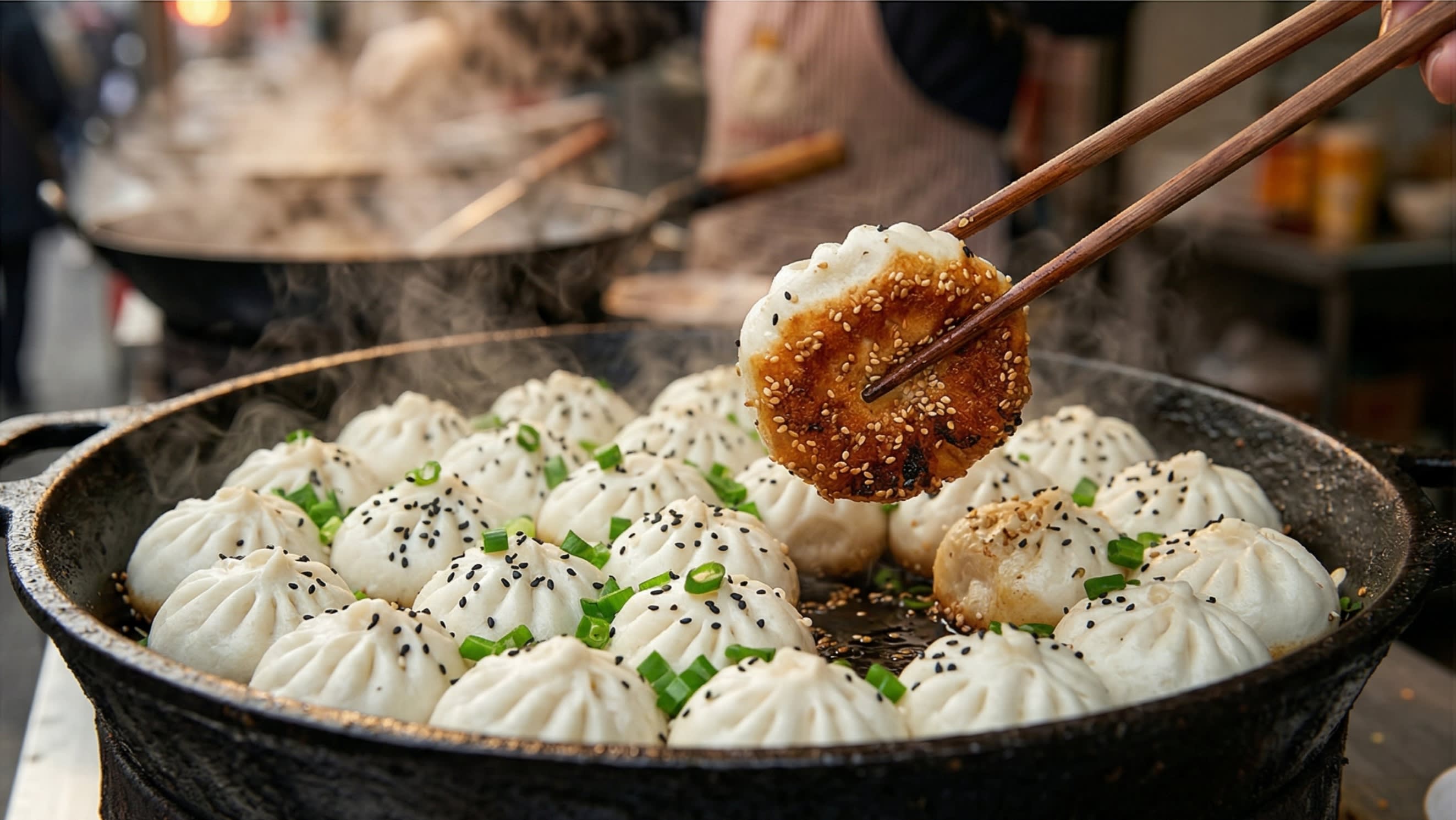
A perfectly executed bun is a masterpiece of extreme culinary contrasts. The top is soft, pillowy, and steamed to fluffy perfection, speckled with toasted black sesame seeds and fresh green scallions. But the base? It is a different story entirely—pan-fried to a state of shatteringly crisp, deep golden-brown glory. When you take that first cautious bite, you aren’t just tasting bread and meat; you are experiencing a reservoir of molten, savory soup. This explosive element, known as Bàozhī (爆汁 - The Soup Burst), is why these buns are legendary.
For many home cooks, recreating this street food icon feels like a culinary high-wire act. Your dough might end up dry and bread-like, your bottoms might turn into carbon before the pork cooks through, or—most tragically—the buns might be entirely dry inside. Today, we’re going to slow down and demystify the rigorous physics of Shanghai pastry. We will look at the ingenious “Aspic” trick, the necessity of semi-leavened dough, and the auditory cues that tell you exactly when your pan-fried masterpiece is ready.
💦 The Magic of the Molten Core: What is “Roupi Dong”?
How do you keep boiling liquid inside a dough wrapper without it leaking? You don’t. You put solid jelly inside.
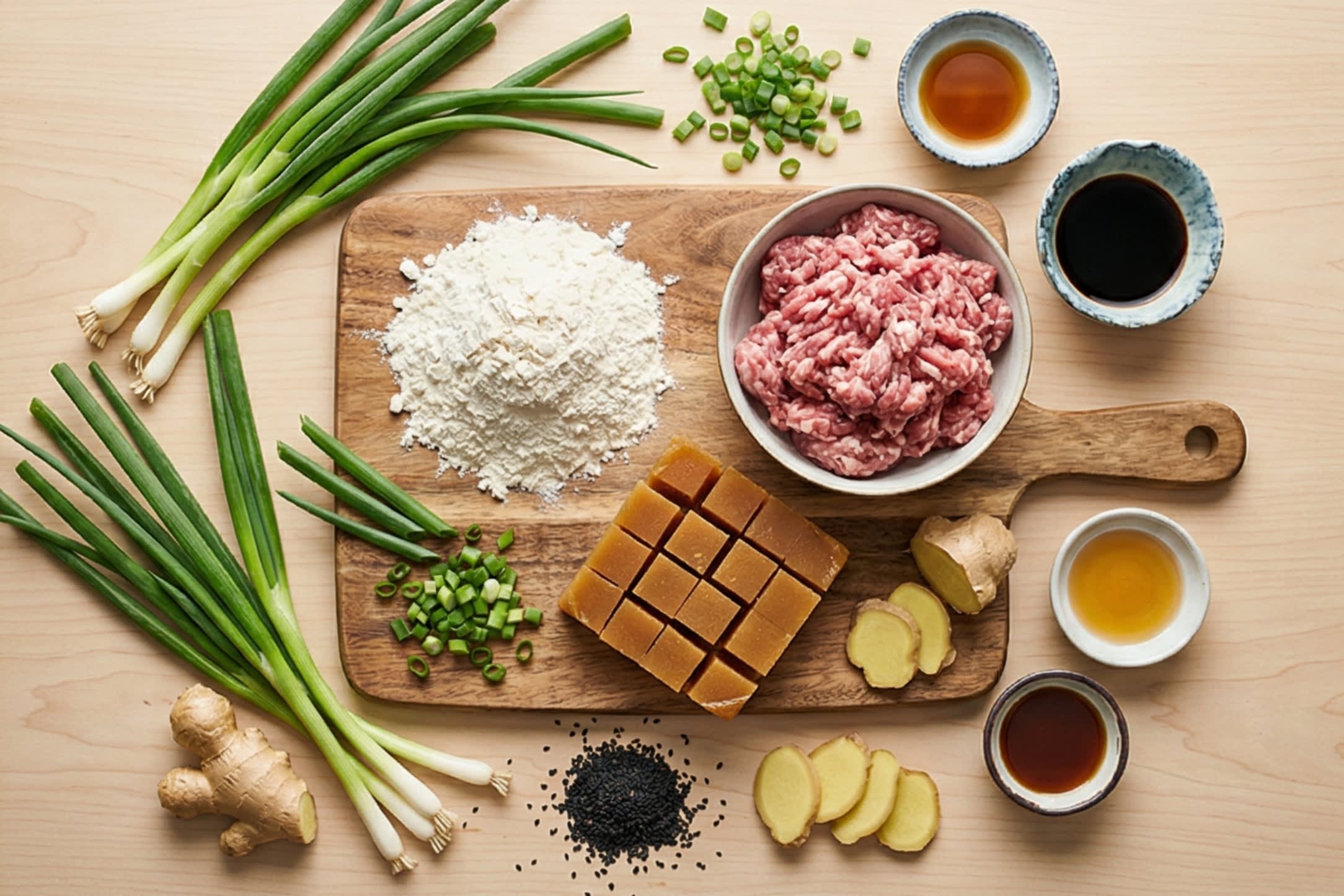
In traditional Shanghai kitchens, chefs boil pork skin for hours with ginger and scallions until the collagen breaks down into a rich, thick liquid. Once chilled, this becomes Ròupí Dòng (肉皮冻 - Pork Aspic), a firm, gelatinous block. We dice this into the raw ground pork filling. When the bun hits the screaming hot skillet, the heat melts the jelly back into the savory, soul-warming soup that defines the dish.
The Home-Cook Shortcut: Since most of us don’t have six hours to render pork skin, you can achieve the exact same effect by using a high-quality, rich chicken or pork bone broth. Simply bloom unflavored gelatin powder in the cold broth, dissolve it over gentle heat, and refrigerate it in a shallow container until it sets. Mincing this cold, firm jelly into your meat is the secret to professional results without the kitchen stress.
🍞 The Architecture of the Dough: “Banfa Mian” (半发面)
If your bun tastes like a heavy, dry dinner roll, you’ve likely treated it like Western bread. While standard steamed buns (Baozi) rely on full fermentation for a pillowy, airy texture, Sheng Jian Bao requires a specific structural integrity.
We use Bànfā Miàn (半发面 - Semi-Leavened Dough). By using less yeast and limiting the rest time to 20-30 minutes, we ensure the gluten network remains firm enough to hold the hot soup without tearing, yet pliable enough to puff up during the steam-fry phase. It’s a delicate balance: you want a soft top, but you need a base that can stand up to the heat of the pan.
🛒 Ingredients Table
| Component | Ingredients & Notes |
|---|---|
| The Soup Jelly | 1 cup bone broth, 2.5 tsp unflavored gelatin powder. Bloom, heat, and chill until set. |
| Pork Filling | 1 lb ground pork (70/30 split), 1 cup minced soup jelly, 1 tbsp light soy sauce, 1/2 tsp dark soy sauce, 1 tsp sesame oil, and 1/4 cup Cōngjiāng Shuǐ (scallion & ginger water). |
| The Dough | 3 cups all-purpose flour, 1 tsp yeast, 1 tsp sugar, 1 cup lukewarm water. |
| Cooking & Garnish | 1 tsp flour + 1/2 cup water (for slurry), black sesame seeds, chopped scallions, 3 tbsp oil. |
🍳 Step-by-Step Instructions
| Step | Process Details |
|---|---|
| 1 | Whipping the Filling (搅打上劲): Mix pork, soy sauces, sugar, and aromatics. Using chopsticks, stir in one direction while slowly adding the ginger-scallion water. Stir until the meat turns pale and sticky. Gently fold in the cold minced jelly. Chill until ready to wrap. |
| 2 | Kneading: Mix flour, yeast, sugar, and water. Knead for 8-10 minutes until smooth. Cover and let rest for only 20-30 minutes—this is key for the semi-leavened texture. |
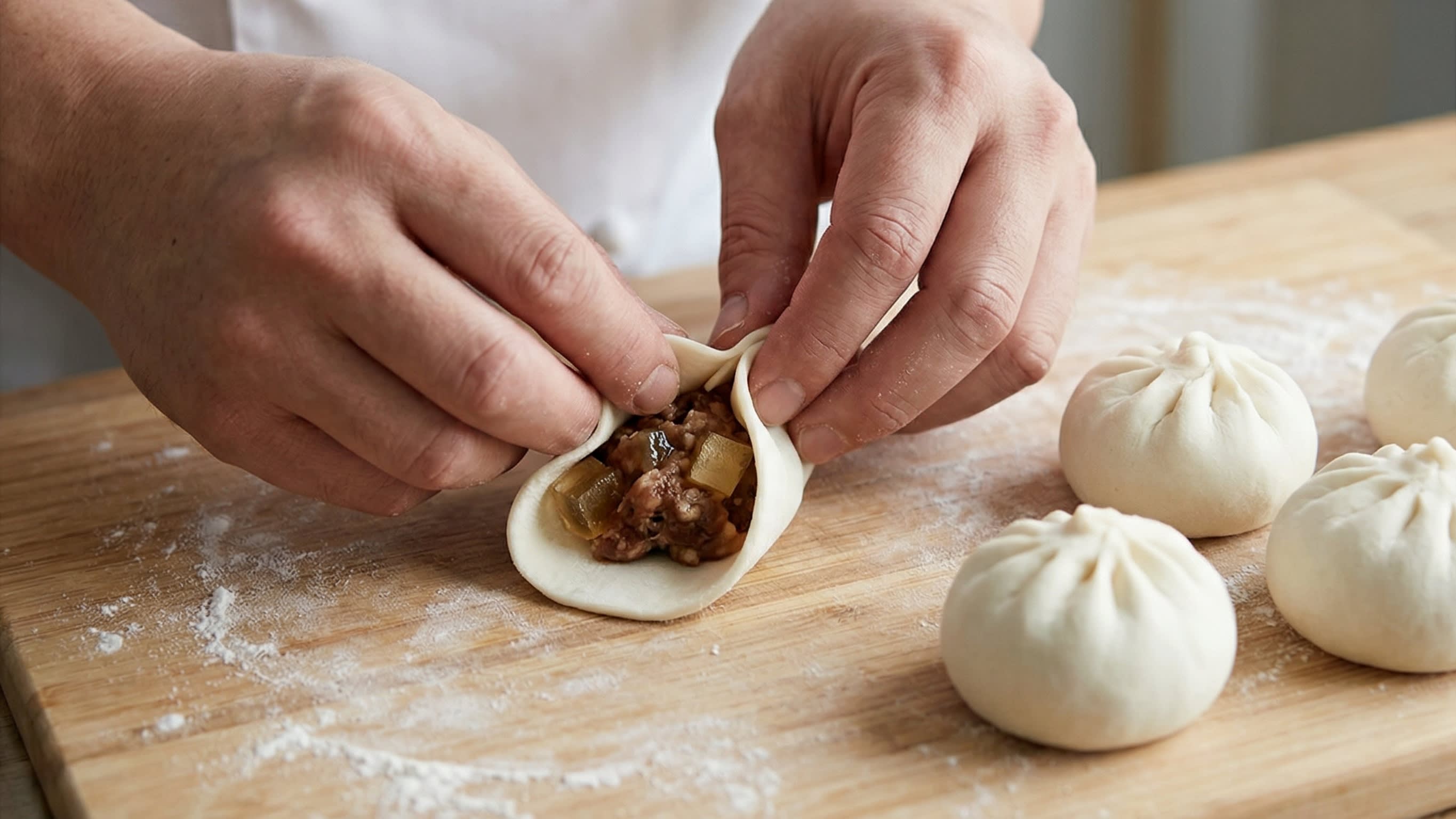
| 3 | Pleating: Divide dough into 16 pieces. Roll edges thin, leave the center slightly thick (to hold the liquid!). Seal pleats tightly. Place pleat-side down on the counter to create a thicker base. |
| 4 | The Sear: Add oil to a cast iron skillet over medium heat. Place buns pleat-side down, searing for 2 minutes until the bottoms are pale gold. |
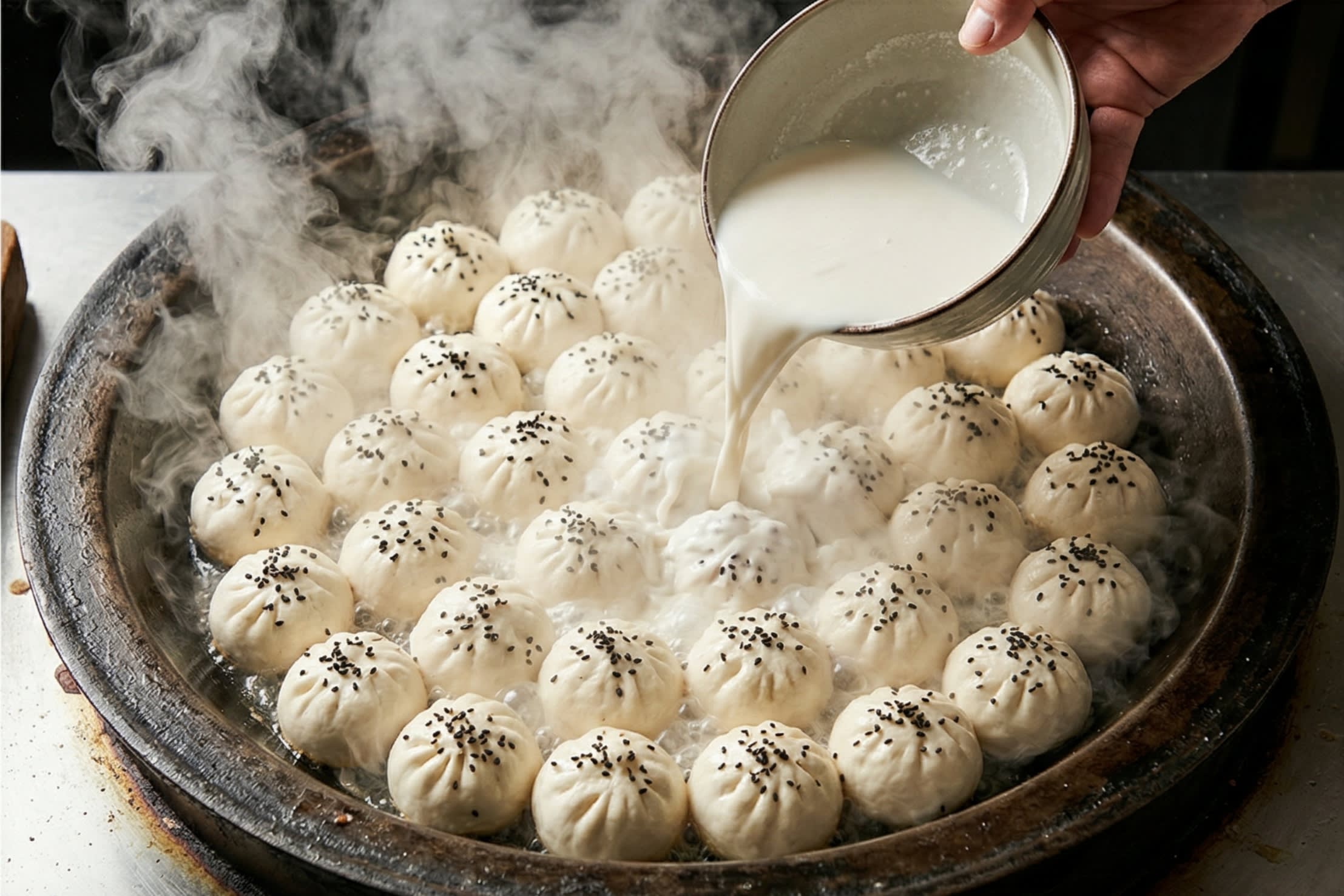
| 5 | The Steam: Pour in the flour-water slurry. Cover immediately with a tight lid. Steam for 8-10 minutes. Do not lift the lid! |
| 6 | The Crisp: Remove the lid. Sprinkle sesame and scallions. Increase heat. Listen for the sound change from bubbling water to a sharp, crackling fry. Once golden, remove from heat. |
As you remove these from the pan, the aroma of toasted sesame and savory pork will fill the kitchen. If you need a side dish to cut through the richness, try my The ULTIMATE Smashed Cucumber Salad (Pai Huang Gua).
⚠️ Essential Safety Note
Because these buns contain a liquid core, they are deceptive. When serving, always pierce a tiny hole in the top to let the steam escape for 30 seconds. Slurping the soup first is not just a polite way to avoid a burnt tongue—it is a mandatory part of the Sheng Jian Bao ritual.
If you enjoyed this, you might also like to master Authentic Chinese Potstickers (Guotie): The Secret to the Perfect Crispy Skirt, which uses a similar water-frying technique to achieve that lacy, golden crust. Cooking these dishes at home has become my favorite way to bring the spirit of Shanghai to my own kitchen. Whether you are using a small wooden rolling pin to prep your wrappers or perfecting the pleating technique, remember that the “perfect” bun is usually the one you enjoy most with friends. Happy frying!
Disclaimer: As an Amazon Associate, ChinaCurator earns from qualifying purchases.