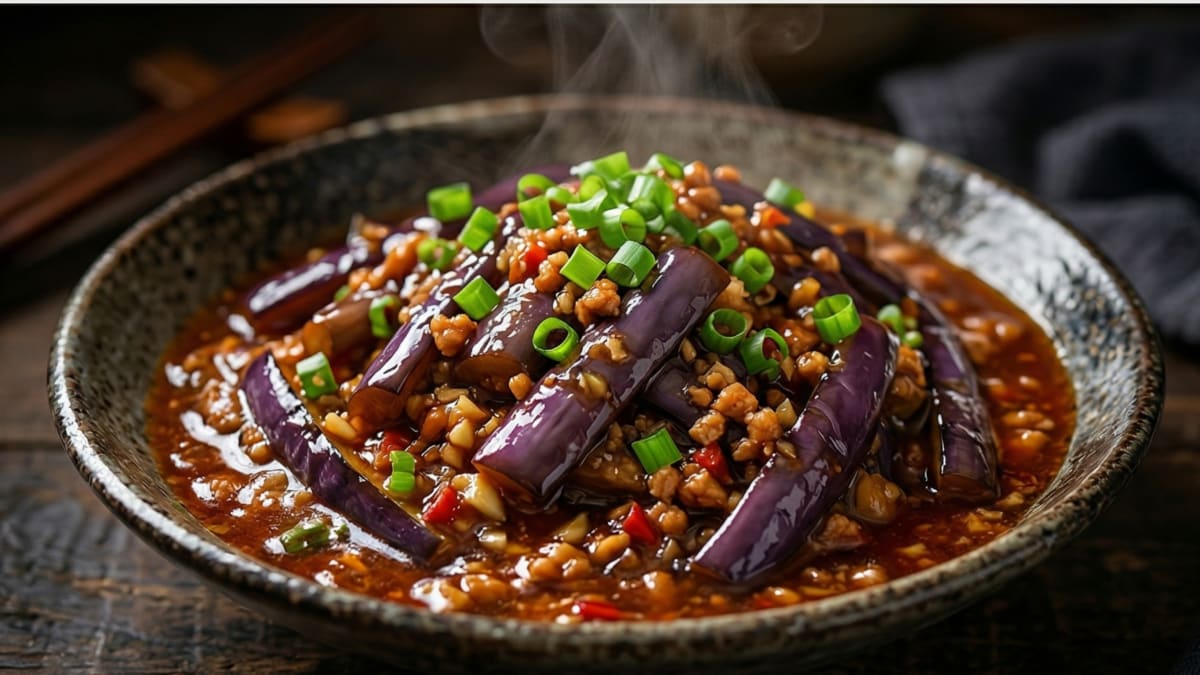
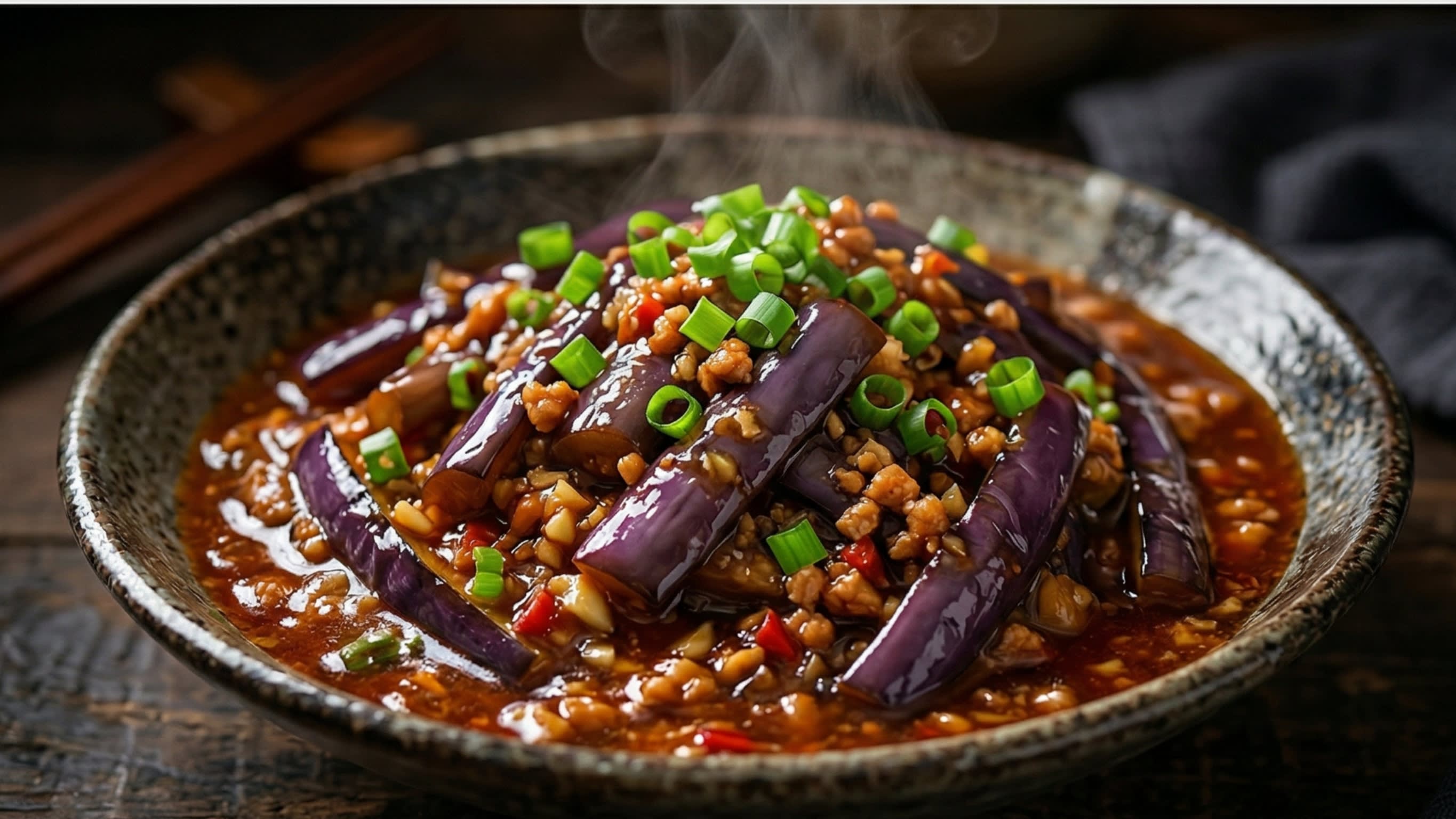
🍆 Introduction: The Vegetable that Tastes Like Meat
If you grew up in the West, there is a high probability that you have a complicated relationship with eggplant. Often served as dense, chewy, and rubbery slabs in Italian dishes, or as a bitter, watery afterthought in roasted vegetable medleys, eggplant is often misunderstood. I remember the first time my grandmother handed me a plate of this dish in Sichuan; I honestly thought she had prepared a slow-braised pork dish.
But when you order Eggplant with Garlic Sauce (鱼香茄子 - Yúxiāng Qiézi) at an authentic Chinese restaurant, your entire culinary worldview shifts.
In Chinese cooking, eggplant is transformed into pure velvet. The vibrant purple batons become so incredibly soft and tender that they literally melt in your mouth, carrying a flavor profile that is explosive: deeply savory, fiercely garlicky, slightly sweet, delightfully tangy, and finished with a gentle, warming spicy kick. It is so rich and satisfying that it essentially tastes and eats like a luxurious cut of meat.
However, replicating this at home is a notorious nightmare. Eggplants are essentially botanical sponges. If you toss raw eggplant into a hot wok with oil, it will instantly drink up every single drop in the pan, leaving you with a dry wok and a disgustingly greasy, oil-logged vegetable.
Today, we are going to fix that. We will unveil the ancient Sichuan technique to collapse the “sponge,” teach you the precise golden ratio for the legendary sauce, and help you create the ultimate bowl of comfort food. If you enjoy this, you might also want to try our Authentic Sichuan Mapo Tofu for another masterclass in Sichuan aromatics.
🐟 The Lore: Why is it Called “Fish-Fragrant” (鱼香)?
Before we start cooking, we must decode one of the most famous and confusing names in Chinese cuisine. The literal translation of Yúxiāng (鱼香) is “Fish Fragrance” or “Fish Flavor.”
When travelers in China order this dish and taste it, they are often bewildered. Where is the fish? Does it taste like fish? Is there fish sauce in it? The answer is no. There is absolutely zero fish or seafood in this dish!
The origin of the name lies in traditional Sichuan folklore. Hundreds of years ago, a resourceful housewife in Sichuan province had leftover seasoning paste from cooking a local river fish. Not wanting to waste the incredibly fragrant mixture of pickled red chilies, ginger, garlic, scallions, soy sauce, sugar, and vinegar, she used it the next day to stir-fry some plain vegetables and pork.
The resulting dish was an absolute masterpiece. The complex, sweet-sour-spicy-savory combination was so intoxicating that it became a foundational flavor profile in Sichuan cuisine. Chefs began using this “fish-cooking sauce” to flavor everything from shredded pork to, most famously, eggplant. So, “Yu Xiang” does not mean it tastes like fish; it means it uses the legendary aromatics originally designed to make fish taste amazing! For those who love this depth of flavor, I highly recommend checking out my guide on Authentic Chinese Hot and Sour Soup to explore similar flavor balancing.
🔬 The Culinary Science: Defeating the “Oil Sponge”
If you want a melt-in-your-mouth texture without consuming a cup of pure vegetable oil, you must conquer the cellular structure of the eggplant. An eggplant’s flesh is full of tiny air pockets. When heated in oil, the air escapes, and the oil rushes in to fill the empty space.
To prevent this, Chinese chefs use two brilliant techniques: Sha Shui and Guo Fen.
1. Salt Curing (杀水 - Shāshuǐ)
Sha Shui literally translates to “killing the water.” After cutting the eggplant into batons, you toss them generously with salt and let them sit for 15 minutes. The salt acts via osmosis, drawing out the moisture and the bitter compounds from inside the eggplant. More importantly, as the water leaves, those tiny air pockets collapse. The “sponge” is physically destroyed! You then squeeze the eggplant firmly to expel the dark, bitter water.
2. The Cornstarch Barrier (裹粉 - Guǒfěn)
Once the sponge is collapsed, you toss the slightly damp eggplant batons in a light dusting of Cornstarch. This creates a microscopic, invisible shield. When the eggplant hits the pan, the starch instantly crisps up, sealing the outside and preventing any oil from penetrating the flesh, while locking the remaining natural moisture inside to steam the vegetable to velvety perfection.
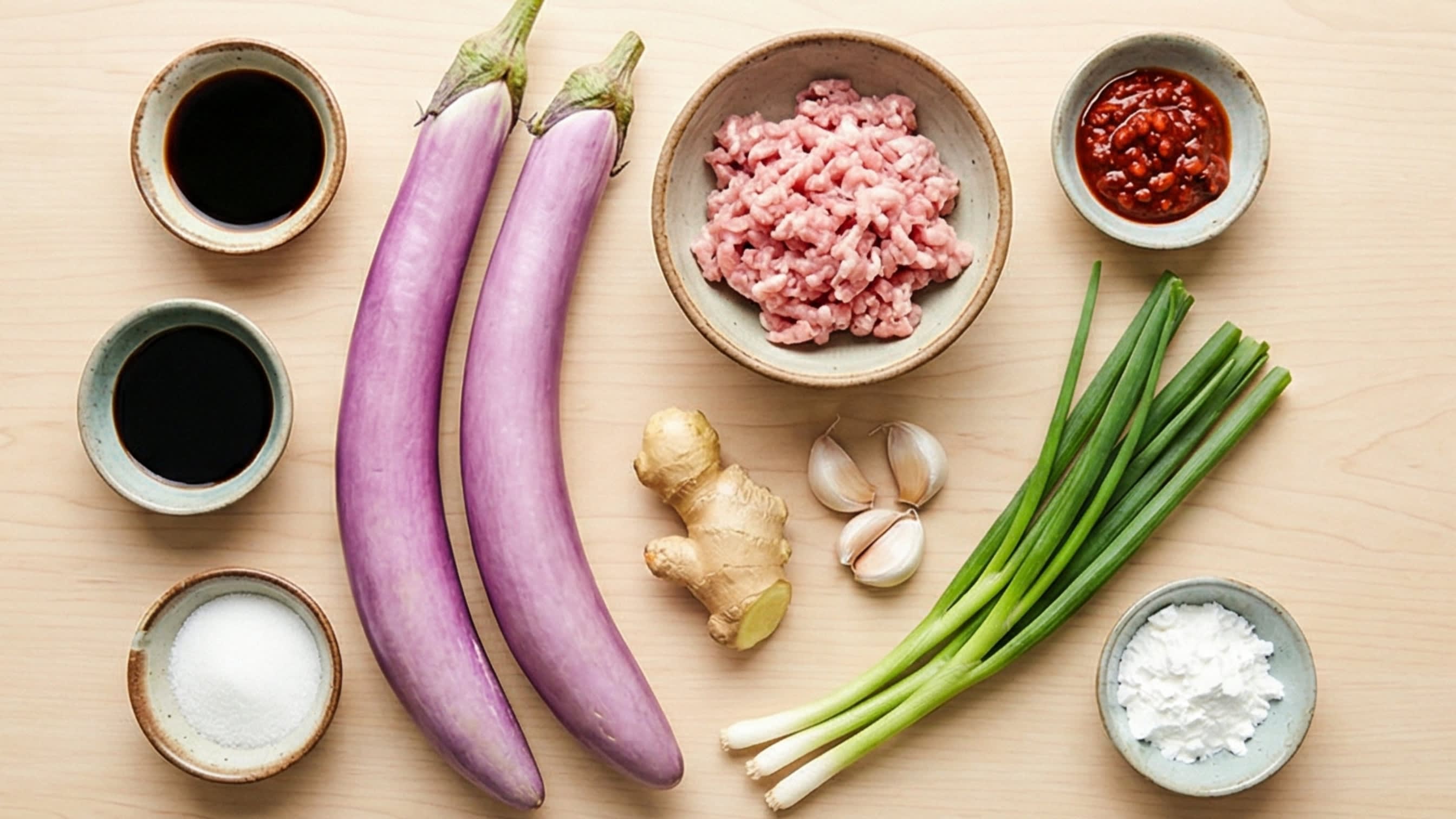
🛒 Ingredients List
The Eggplant Prep:
- 2 large Long Chinese Eggplants (长茄子 - Cháng qiézi). Do not use the giant, round globe eggplants! They have thick, tough skin and too many seeds.
- 1 tsp Salt (for the Sha Shui curing process)
- 2 tbsp Cornstarch, for dusting
- 3 tbsp Cooking Oil (for shallow frying)
The Aromatics & Meat:
- 1/4 lb (about 115g) Ground Pork (肉末 - Ròumò). Traditional for depth, but optional for a vegan version.
- 4 cloves Garlic, finely minced (蒜末) - Generosity with garlic is key!
- 1 thumb-sized piece of fresh Ginger, finely minced (姜末)
- 2 stalks Scallions (葱花), finely chopped
- 1 tbsp Pixian Doubanjiang - Sichuan fermented chili broad bean paste. The umami soul of the dish!
The “Yu Xiang” Sauce (鱼香汁):
- 1.5 tbsp Light Soy Sauce
- 1/2 tsp Dark Soy Sauce (for deep mahogany color)
- 1.5 tbsp Chinkiang Black Rice Vinegar - Crucial for the tangy flavor!
- 1.5 tbsp Granulated Sugar
- 1/2 cup Water or Chicken Broth
- 1 tsp Cornstarch (for thickening)
🍳 Step-by-Step Instructions
| Phase | The Action |
|---|---|
| Preparation | Salt the batons and let them rest for 15-20 minutes until the sponge texture collapses. |
| Coating | Squeeze out the bitter dark water and toss with cornstarch for a protective, crispy shield. |
| Cooking | Shallow fry until golden-brown, then stir-fry the pork and aromatic base before glazing. |
1. “Sha Shui” - Cure the Eggplant (杀水): Cut the eggplants into 2-inch long batons. Sprinkle with salt and toss well. Let them sit. You will see dark water pooling—this is the bitterness and oil-absorbing capacity leaving the vegetable.
2. Squeeze and Coat (裹粉): Squeeze the batons firmly over the sink. Don’t be afraid to crush them; they will hold their shape during the fry. Toss with cornstarch.
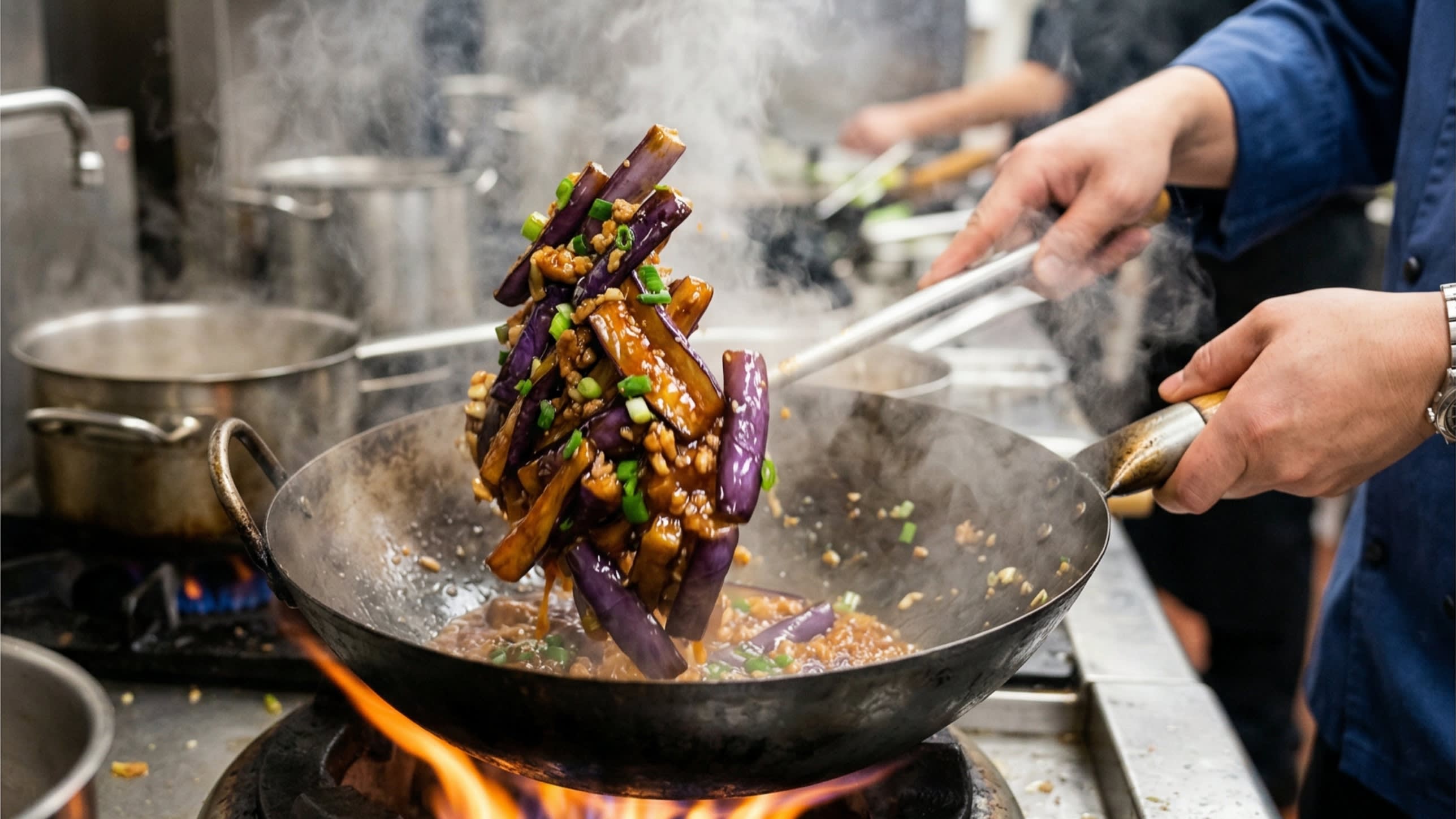
3. Shallow Fry: Heat your carbon steel wok with oil. Pan-fry until the skin is a glossy purple and the flesh is golden.
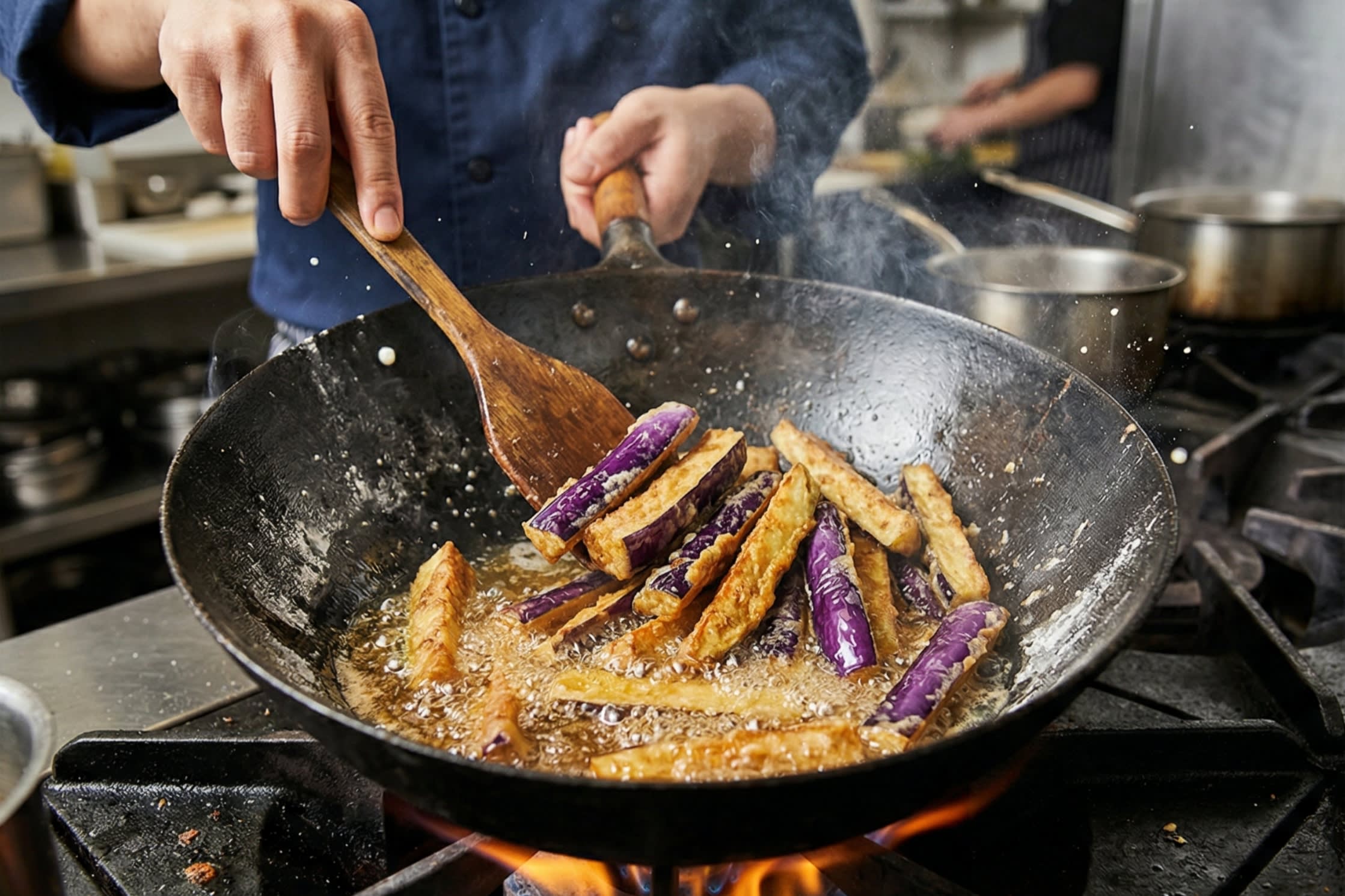
4. The Red Oil Base: Brown the pork, then add the aromatics and Pixian Doubanjiang. Stir-fry over medium-low heat until the oil turns a glowing, gorgeous ruby red. This is the authentic flavor release you need.
5. Glazing: Pour in the prepared sauce mixture. When it bubbles and thickens into a glossy glaze, toss the eggplant back in. Turn off the heat immediately. Garnish and serve with plenty of steaming white rice.
💡 Troubleshooting & Pro Tips
- Why did my eggplant turn brown? Oxidation happens fast! If you aren’t ready to fry, keep the prepared batons in a bowl of water until you are ready to apply the salt-cure.
- The “Yu Xiang” Balance: If you find the sauce too tangy, increase the sugar slightly. It is meant to be a delicate dance between the acid of the vinegar and the sweetness of the sugar.
- Texture Check: Your eggplant should be incredibly tender, almost like a savory mousse, while the exterior should offer a slight, satisfying resistance.
For those curious about how this ranks in the pantheon of Sichuan comfort, compare this texture against the crispness found in our Ultimate Dry Fried Green Beans. Both rely on the same fundamental high-heat principles.
Happy cooking, and may your wok always be properly seasoned!
🎥 Watch the Restaurant Technique
Disclaimer: As an Amazon Associate, ChinaCurator earns from qualifying purchases.