🥢 Introduction: The Vegetable That Outshines the Meat
For many people, green beans are the ultimate boring side dish. They are often boiled into a sad, mushy, olive-green paste or steamed until they squeak unpleasantly against your teeth, completely devoid of soul. I remember my first time dining in a hole-in-the-wall spot in Chengdu; the scent of frying chilies hit me before I even sat down, and when the plate of Gan Bian Si Ji Dou arrived, I realized I had been eating green beans wrong my entire life.
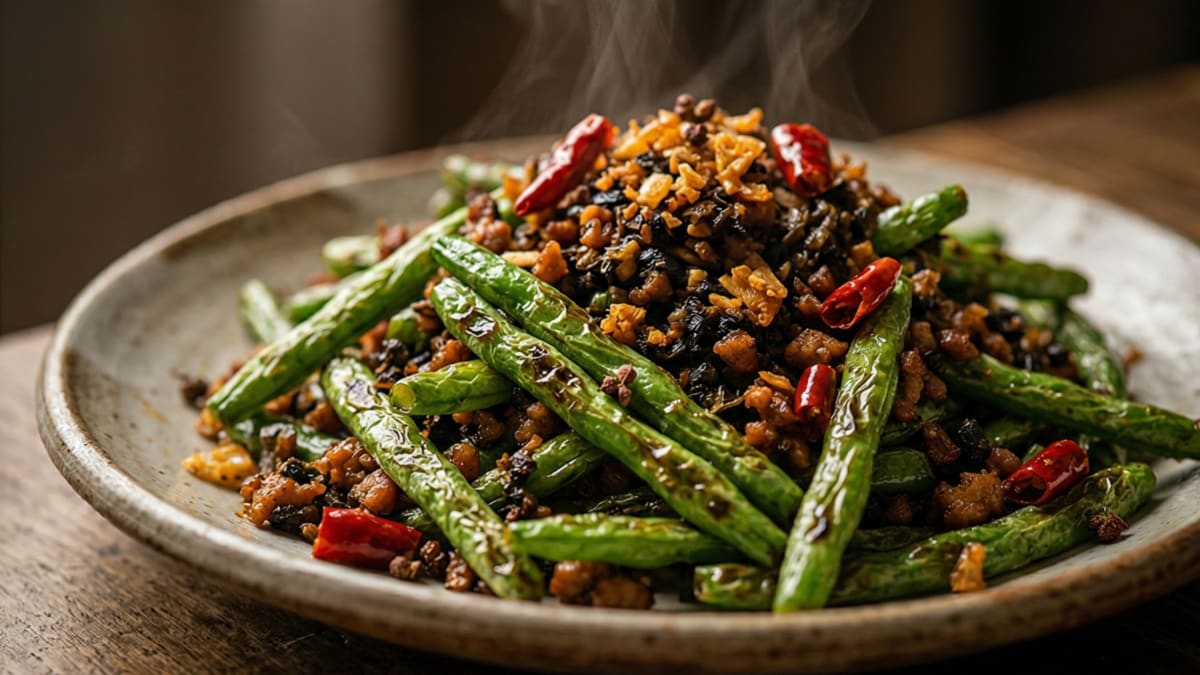
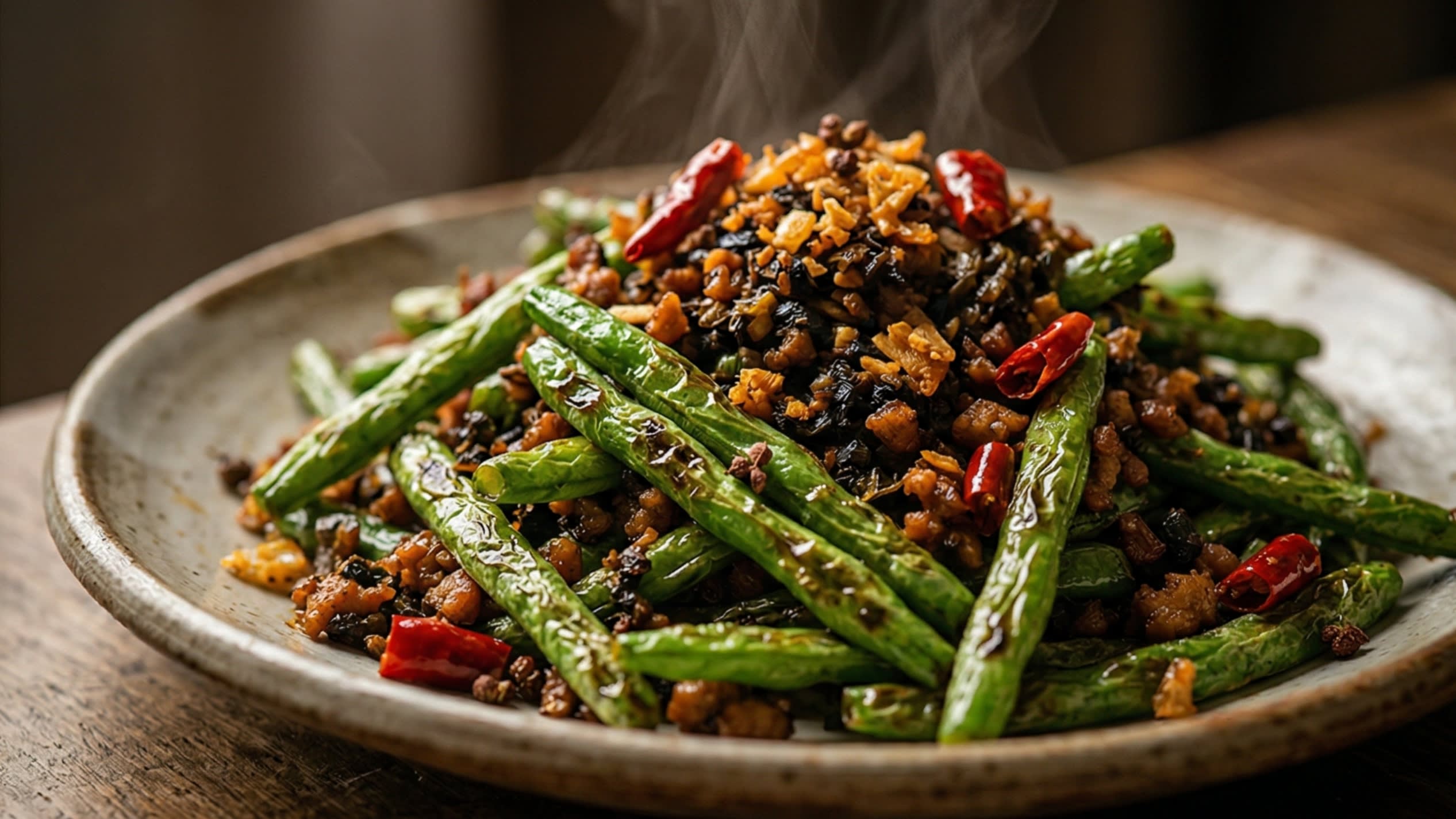
This iconic dish is a masterclass in textural transformation. The green beans are expertly cooked until their skins are beautifully blistered, wrinkled, and charred. They become incredibly tender and sweet on the inside, while the outside acts like a textured sponge, catching and holding onto a fiercely savory, intensely aromatic mixture of crispy minced pork, toasted garlic, and a secret fermented vegetable. It is a dish that makes you forget you are eating vegetables at all.
When Western home cooks try to recreate this, they usually fail at the first hurdle: they boil or steam the beans. This guarantees a watery, flavorless disaster. Today, I am going to unveil the physics behind the “Tiger Skin” blister, teach you the true meaning of the Gan Bian technique, and introduce you to the magical pantry staple—the fermented mustard greens—that makes this dish so dangerously addictive.
🔬 The Culinary Physics: Achieving the “Tiger Skin” (虎皮)
If your homemade beans taste like a healthy, watery salad, you are missing the fundamental architectural secret: Hǔpí (虎皮 - Tiger Skin).
In Chinese culinary terminology, Hupi refers to the beautifully wrinkled, blistered, and slightly charred appearance of the vegetable skin. This texture is mandatory. The wrinkles create hundreds of microscopic pockets that catch the seasoned oil, pork fat, and aromatics. Without these, your sauce simply slides off the smooth, waxy surface of the bean.
How do you achieve the Tiger Skin? You must dramatically dehydrate the surface. In professional kitchens, chefs use a rapid deep-fry in screaming hot oil. The high heat instantly vaporizes the water trapped just beneath the skin, causing it to separate from the flesh and shrivel. You don’t need a massive vat of oil, though; you can achieve this by shallow-frying in a well-seasoned wok. The golden rule is: Your beans must be bone-dry. If they are wet, the oil will explode, and the beans will steam instead of blister.
🔥 The Art of “Gan Bian” (干煸 - Dry Frying)
The name Gānbiān (干煸) translates to “Dry Stir-Frying.” This is a specific technique used to concentrate flavor by driving out moisture over steady heat.
We use this twice: first, to blister the beans, and second, to aggressively fry the minced pork until it loses its water and becomes dark, crispy, and fragrant (煸香 - Biānxiāng). If you love this method, you might also enjoy mastering the techniques used in our Ultimate Twice Cooked Pork or learning the secrets behind the Smashed Cucumber Salad.
🏺 The Secret Umami Bomb: Sui Mi Ya Cai (碎米芽菜)
If you have ever wondered what those tiny, savory, slightly sweet black specks are—they are Suìmǐ Yácài (碎米芽菜), or Sichuan fermented mustard greens. This is the same ingredient that defines the depth of our Authentic Dan Dan Noodles.
It provides an earthy, salty, umami profile that soy sauce alone cannot replicate. When you fry Ya Cai in pork fat, the aroma is transcendent. If you cannot source it, you can use minced preserved radish, but I highly recommend ordering the real thing to get that authentic “restaurant taste” at home.
🛒 Ingredients List
| Ingredient | Notes |
|---|---|
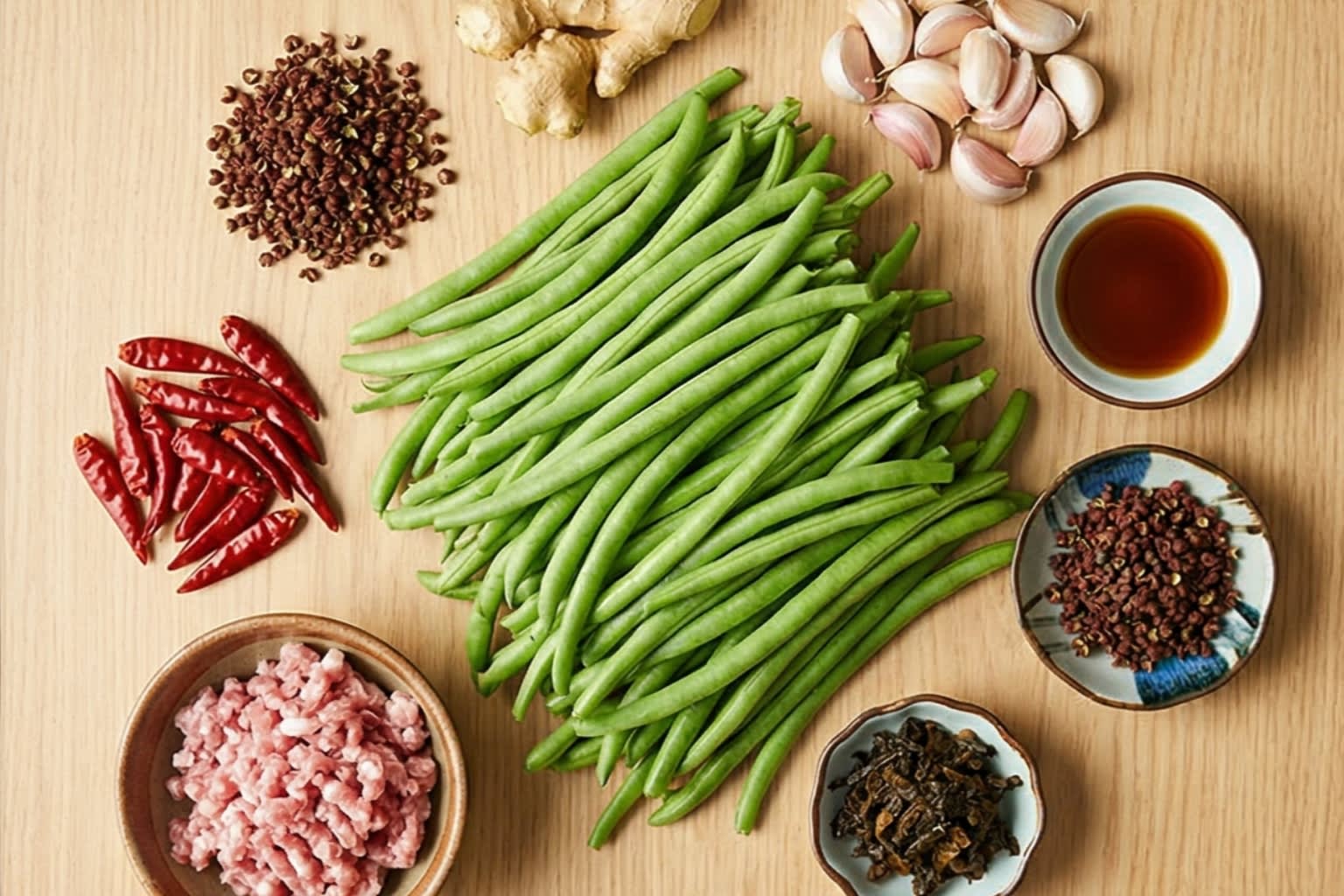
| 1 lb Fresh Green Beans (四季豆) | Snap off ends; pat completely dry. |
| 1/4 lb Ground Pork (肉沫) | Can be replaced with tofu for vegan version. |
| 2 tbsp Sui Mi Ya Cai | The soul of the dish. |
| Dried Red Chilies & Peppercorns | Adjust spice based on your preference. |
🍳 Step-by-Step Instructions
1. Prep and DRY: Snap off the stem ends and break any long beans in half. Do not skip drying. Use paper towels and ensure there is no visible moisture.
2. Shallow Fry to “Tiger Skin”: Heat 3 tablespoons of oil in a carbon steel wok over medium-high heat. Add the beans and stir-fry for 5–7 minutes. The skins should bubble and wrinkle until they are limp and bright green (断生 - Duan Sheng). Remove them, leaving the oil behind.
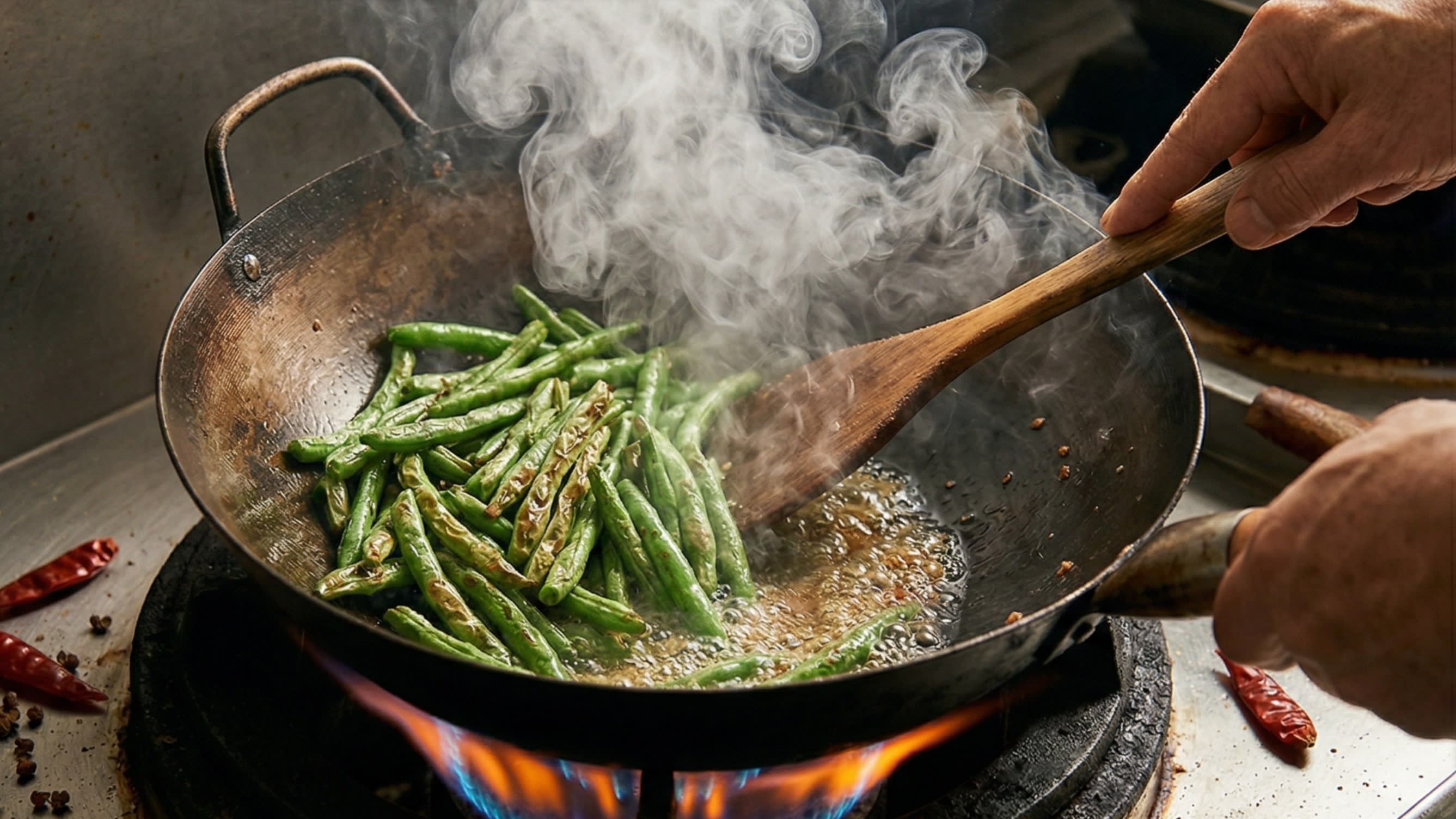
3. Render the Pork: Turn the heat to medium. Add the ground pork to the residual oil. Fry for 3 minutes until all water evaporates and it turns a crispy, caramelized brown.
4. Awaken the Aromatics: Push the pork to the side. Add the minced garlic, ginger, dried chilies, and Sichuan peppercorns. Sizzle for 15 seconds until fragrant.
5. Unleash the Ya Cai: Add a splash of Shaoxing wine to deglaze, then toss in the Ya Cai. Sauté for 30 seconds to infuse the oil with that deep, fermented umami goodness.
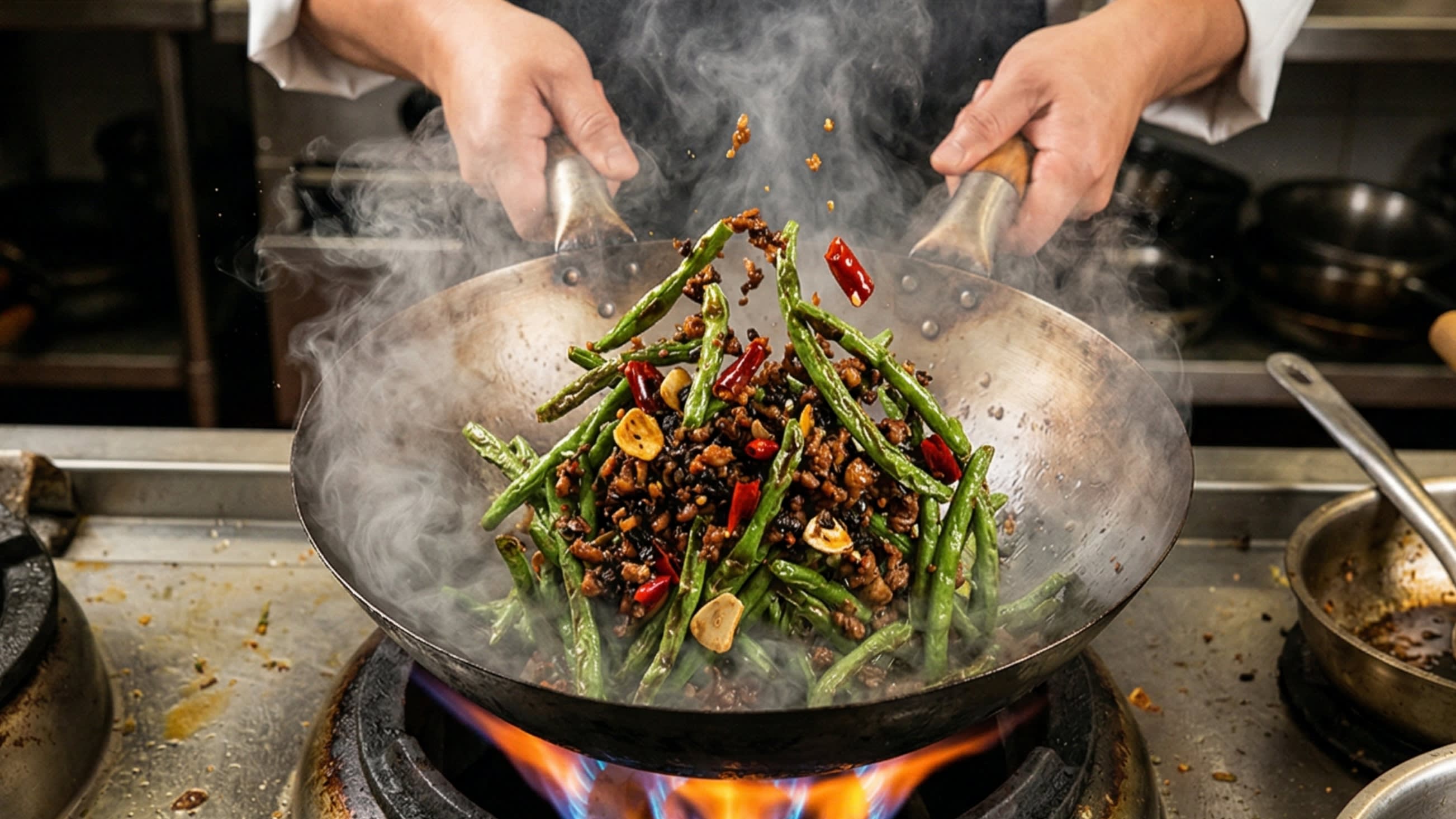
6. The Final Reunion: Return the beans to the wok. Add light soy sauce and sugar. Increase the heat and toss aggressively for 60 seconds so the pork mixture clings to the “Tiger Skin.” Serve immediately with steamed jasmine rice.
💡 Troubleshooting & Tips
- Tough beans? You likely rushed the blistering process. They should look “exhausted” and shriveled.
- Greasy? Drain the beans well after the initial fry and pour off excess pork fat if the meat releases too much.
- Air Fryer? Toss dry beans in 1 tbsp oil, air fry at 400°F (200°C) for 10 mins, then toss with the pork and aromatics in a pan at the end.
🎥 Watch the Blistering Technique
Disclaimer: As an Amazon Associate, ChinaCurator earns from qualifying purchases.