
🥢 Introduction: The Godfather of Chinese Takeout
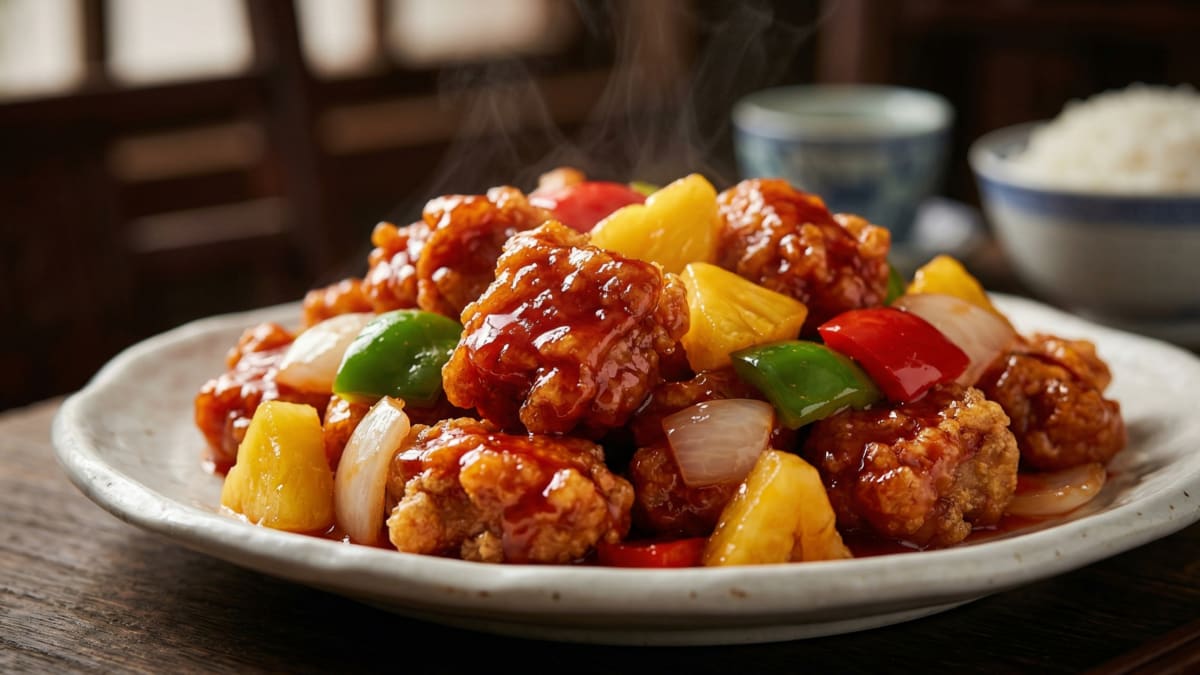
Long before Sweet and Sour Chicken became the default option for casual diners at shopping mall food courts across the West, there existed the original, undisputed king of the sweet and tangy flavor profile: Sweet and Sour Pork (咕噜肉 - Gūlūròu).
Hailing from the lush, humid Guangdong province of southern China, this dish is a true culinary masterpiece of balance. When executed by a skilled chef in a traditional Cantonese restaurant, it features chunks of heavily marbled pork hidden beneath a blistered, shatteringly crisp crust. When you bite into it, the rich, melting pork fat mingles with a brilliantly balanced Tángcùzhī (糖醋汁 - Sweet and Sour Sauce) that is vibrant, fruity, and deeply savory.
In the Western world, this classic dish has unfortunately been bastardized into dry, overcooked cubes of lean meat drowning in an overly-sweet, artificial, neon-red syrup. Today, I am taking you back to the roots. We are going to strip away those shortcuts and reveal the authentic Cantonese restaurant secrets to choosing the right cut of meat, formulating the perfect batter, and achieving a sauce that tastes like the dim sum parlors of old Guangzhou.
📜 The Legend: What Does “Gu Lu” Mean?
Have you ever wondered about the peculiar Chinese name, Gu Lu Rou?
In Chinese culture, Gūlū (咕噜) is an onomatopoeia—a word that mimics a specific sound. There are two charming, legendary explanations for this name, and both perfectly describe how incredibly appetizing this dish is:
- The Roar of the Wok: Some say it mimics the bubbling, popping sound that the rich, thick sauce makes when it is furiously reducing and caramelizing in a blazing hot wok.
- The Sound of Hunger: The more popular theory is that the dish smells so incredibly fragrant and tart as it comes out of the kitchen that it makes guests instantly salivate, creating a literal “gu lu” sound in their throats as they swallow in anticipation!
Whatever the true origin, one thing is certain: a properly made plate of Gu Lu Rou is an exercise in temptation. If you enjoy the art of classic Cantonese frying, you might also find my guide to Authentic Chinese Potstickers (Guotie) and The Ultimate Crispy Shredded Beef to be equally rewarding projects for your home kitchen.
🥩 The Culinary Science: Fat, Starch, and Acid
To elevate your homemade pork from “average” to “authentic restaurant quality,” you must master three fundamental elements of Chinese culinary physics.
1. The Golden Cut: Pork Collar (梅花肉)
The fastest way to ruin this dish is to use lean pork chops or loin. Deep-frying lean meat twice will inevitably turn it into tough, chewy leather. Authentic Gu Lu Rou requires fat. You must seek out Pork Collar, Pork Shoulder, or Pork Butt (梅花肉 - Méihuāròu). Often called “Plum Blossom Meat” by local butchers because of the beautiful, intricate marbling of intramuscular fat, this is the secret to success. When deep-fried, this fat renders, basting the meat from the inside out.
2. The Secret Batter: Sweet Potato Starch (地瓜粉)
While cornstarch is often the standard for home-fried chicken, legendary Cantonese chefs utilize Sweet Potato Starch (地瓜粉 - Dìguāfěn) or high-quality tapioca starch. These starches create a thicker, more craggy, and bubbly crust. These little crispy craters are essential; they act like tiny, edible pockets, catching and holding onto the sticky sweet and sour glaze. Achieving that signature crunch is much easier if you use a high-quality coarse sweet potato starch as your base.
3. The Authentic Sauce Base
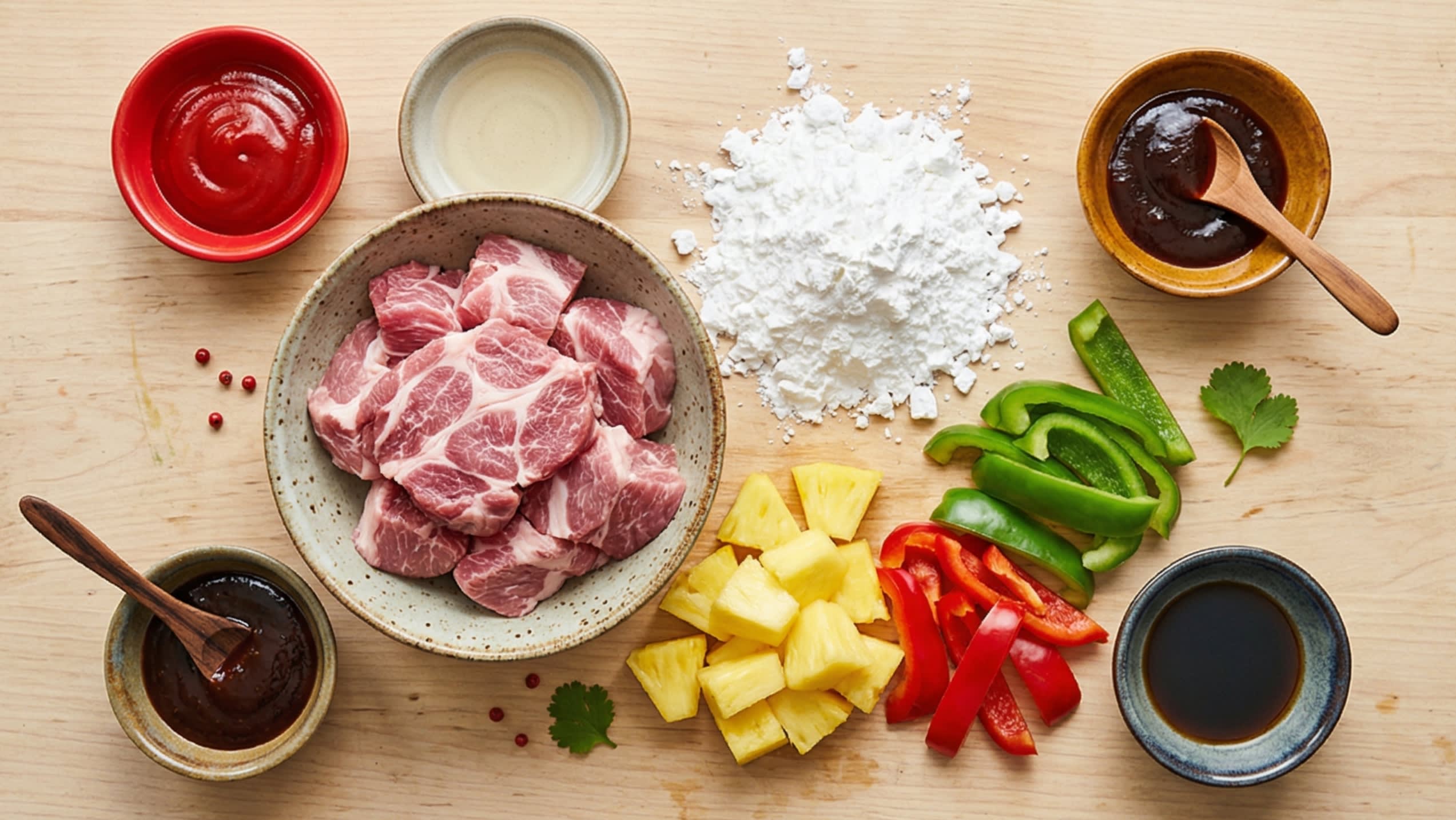
While Americanized versions rely heavily on sugar, an authentic Cantonese Tangcuzhi derives its complex fruitiness from deeper, more natural sources. We use ketchup for the base color, but we temper it with Rice Vinegar (米醋 - Mǐcù) for a sharp, clean tang, a splash of soy sauce for umami, and chunks of fresh Pineapple (菠萝 - Bōluó). If you want to replicate the depth found in high-end restaurants, I recommend keeping a bottle of traditional plum sauce in your pantry—it is the subtle “X-factor” that ties the entire flavor profile together.
🛒 Ingredients List
| Ingredient Category | Recommended Items |
|---|---|
| Meat | 1 lb Pork Shoulder or Butt (梅花肉), cut into 1-inch cubes |
| Batter | 1 cup Sweet Potato Starch (地瓜粉) |
| Veggies/Fruit | 1 cup fresh pineapple, 1/2 red pepper, 1/2 green pepper, 1/4 onion |
| Seasoning | Light soy sauce, Shaoxing wine, rice vinegar, ketchup, plum sauce |
🍳 Step-by-Step Instructions
1. Marinate the Pork: In a large bowl, combine your cubed marbled pork with light soy sauce, Shaoxing wine, salt, white pepper, and one large egg. Massage the mixture firmly with your hands. Let it sit for 20 minutes to soak up those aromatics.
2. The Craggy Batter (挂糊 - Guàhú): Pour your sweet potato starch into a shallow bowl. Toss the marinated pork into the starch, using your hands to press the powder into every crevice. It should feel chunky and pebble-like. This “rough” surface is what catches the sauce later.
3. Whisk the Magic Sauce: Combine ketchup, rice vinegar, sugar, plum sauce, light soy sauce, water, and a pinch of cornstarch. Whisk until perfectly smooth.
4. The First Fry: Heat your oil in a wok to 340°F (170°C). Use a sturdy stainless steel spider strainer to carefully drop the pork into the oil in two batches. Fry for 5 minutes until firm but pale. Remove and let them rest on a wire rack for 5 minutes.
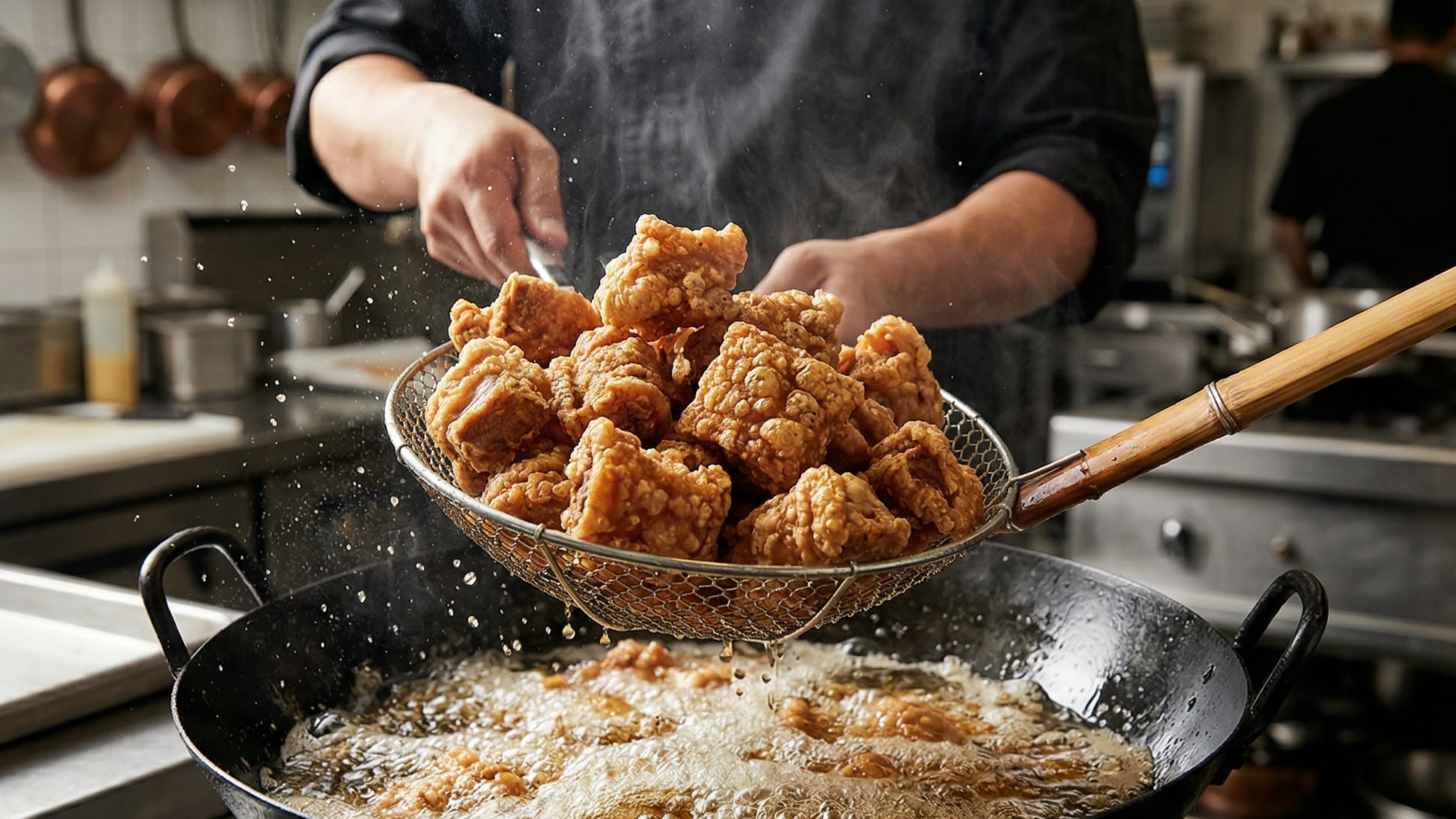
5. The Second Fry (复炸 - Fuzha): This is the secret to long-lasting crispiness. Crank your heat up until the oil reaches 390°F (200°C). Return all the pork to the oil for 60 to 90 seconds. The result should be a deep, bronzed gold and a shell that sounds like glass when tapped.
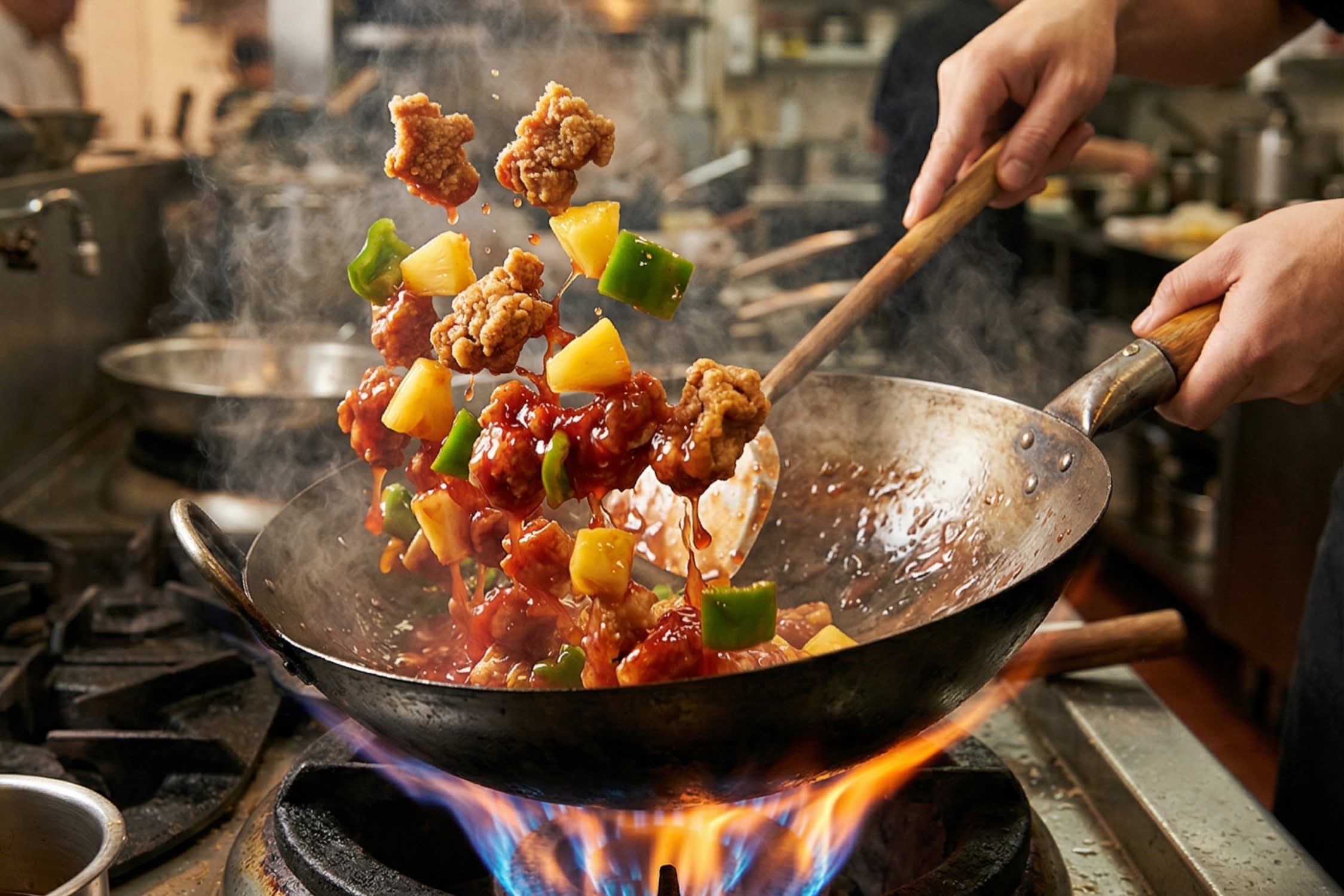
6. Stir-Fry the Aromatics: Drain all but 1 tablespoon of oil from the wok. Toss in your onions, peppers, and pineapple. Sear for 45 seconds—just until you smell the sweetness of the fruit and the sharp fragrance of the peppers.
7. Glazing the Pork: Pour in your sauce mixture. It will bubble and thicken instantly. Toss the crispy pork back in, turn off the heat, and fold everything together for 10 seconds until coated in a glossy ruby glaze.
8. Serve: Transfer to a warm plate and serve immediately. If you want to explore other iconic Cantonese comfort foods, I highly recommend learning how to make Authentic Cantonese Char Siu (Chinese BBQ Pork) for your next dinner party.
💡 Pro Tips for Success
If your breading ever feels soft, check your frying oil temperature—it must be hot enough to instantly seal the starch before it absorbs the oil. Even professional chefs in China practice their “wok work” for years, so take your time and enjoy the process. If you want to delve deeper into the culture behind Chinese food, you may also enjoy my article on why Chinese people value ‘drink more hot water’ as a cultural lifestyle.
🎥 Watch the Restaurant Technique
Disclaimer: As an Amazon Associate, ChinaCurator earns from qualifying purchases.