
🥡 Introduction: The Neon-Red Takeout Legend
When it comes to Westernized Chinese food, there is one dish that stands out across the globe with its unmistakable, vibrant, neon-red glow: Sweet and Sour Chicken (甜酸鸡 - Tiánsuān Jī).
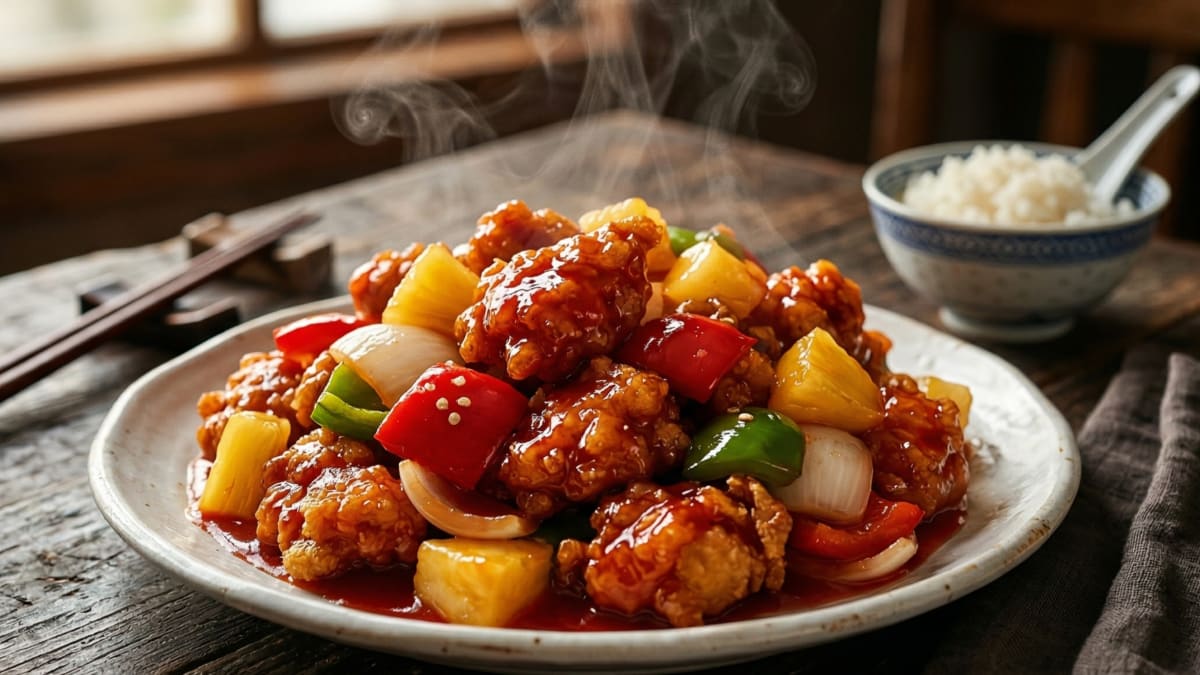
For generations, this dish has been the ultimate gateway into Chinese cuisine for millions of people. It is a kaleidoscope of flavors and textures—massive chunks of ultra-crispy fried chicken, juicy chunks of tropical pineapple, and crunchy bell peppers, all swimming in a thick, sweet, tangy, and incredibly sticky ruby-red glaze.
However, if you have ever tried making it at home using a jar of store-bought “sweet and sour sauce,” you likely ended up with a disastrously soggy plate of chicken sitting in a pool of artificial, sickly-sweet syrup.
Today, we are throwing away the bottled sauces. We are going to dive deep into the culinary science of authentic Chinese sweet and sour balancing, teach you the restaurant secret to an indestructible crispy batter, and help you create a homemade Sweet and Sour Chicken that will forever ruin your local takeout joint for you.
📜 The Ancestry: From “Gu Lu Rou” to Chicken
Before we start frying, let’s explore the fascinating history of this iconic flavor profile. Is Sweet and Sour Chicken actually eaten in China?
In traditional Chinese culinary arts, the “sweet and sour” flavor profile is known as Tángcù (糖醋), which literally translates to “sugar and vinegar.” It is one of the oldest and most respected flavor combinations in Chinese history, used to cook everything from whole carp fish to pork ribs.
The direct ancestor of the American Sweet and Sour Chicken is a world-famous traditional Cantonese dish called Sweet and Sour Pork (咕噜肉 - Gūlūròu). Authentic Gu Lu Rou uses heavily marbled pork, and the traditional sauce gets its tartness not from ketchup, but from Chinese black vinegar, hawthorn flakes, or preserved plums.
When early Cantonese immigrants opened restaurants in North America and Europe, they adapted this beloved dish. They swapped the pork for chicken (which was cheaper and universally loved by Westerners), and they replaced the traditional souring agents with tomato ketchup and white vinegar to create that bright, appetizing, iconic red color. The result was a massive culinary triumph that conquered the world.
🔬 The Science of the Perfect Glaze and Crunch
To master this dish at home, you must perfect two separate scientific processes: the “Golden Ratio” of the sauce, and the physics of the batter.
1. The “Golden Ratio” of Tangcu (糖醋汁)
The biggest mistake home cooks make is adding too much sugar, turning the dish into a dessert. A perfect Tángcùzhī (糖醋汁 - Sweet and Sour Sauce) must dance right on the edge of your palate. It should make your mouth water from the acidity, immediately followed by a comforting wave of sweetness. The restaurant secret to this balance is equal parts sugar and vinegar, grounded by the savory umami of soy sauce, and brightened by a dash of tomato ketchup for that signature takeout color and fruity acidity. We also use a splash of pineapple juice to naturally enhance the tropical sweetness.

2. The Pineapple Magic (菠萝)
In authentic Chinese cooking, Pineapple (菠萝 - Bōluó) is not just a garnish; it is a functional ingredient. Pineapple contains bromelain, an enzyme that naturally tenderizes meat. Furthermore, the burst of hot, juicy, acidic fruit provides a necessary palate cleanser that cuts through the rich, heavy fat of the deep-fried chicken. While canned pineapple works perfectly fine (and provides great juice for the sauce), using fresh pineapple will elevate this dish to Michelin-star levels.
3. The Indestructible Crunch: “Guahu” and Double Frying
If your chicken gets soggy the moment the sauce touches it, you are using the wrong batter.
- The Batter (挂糊 - Guàhú): You must use Cornstarch (玉米淀粉), not wheat flour! Cornstarch lacks gluten, meaning it fries up into a microscopic, glass-like shell that repels moisture.
- The Double Fry (复炸 - Fùzhá): You must fry the chicken twice. The first fry cooks the meat. You let it rest, then drop it into screaming hot oil for a second time. This violently drives out any remaining surface moisture, resulting in that legendary Wàisū lǐnèn (外酥里嫩 - crispy outside, tender inside) texture that can survive a bath in sticky sauce.
🛒 Ingredients List
The Chicken & Marinade:
- 1.5 lbs (about 700g) Boneless Chicken (Breast or Thighs, cut into 1-inch cubes). Thighs are juicier, but breasts are traditionally used in Western takeout.
- 1 tbsp Light Soy Sauce
- 1 tbsp Shaoxing Cooking Wine
- 1 large Egg
The Crispy Coating:
- 1 cup Cornstarch (玉米淀粉)
- 1/2 tsp Salt & 1/4 tsp White Pepper powder
The Veggies & Fruit:
- 1 cup Pineapple chunks (菠萝块) - Fresh or canned. Save 3 tbsp of the juice!
- 1/2 Red Bell Pepper (彩椒), cut into square chunks
- 1/2 Green Bell Pepper (青椒), cut into square chunks
- 1/2 White Onion (洋葱), cut into square chunks
The Ultimate Sweet and Sour Sauce (糖醋汁):
- 1/3 cup Granulated Sugar (糖)
- 1/3 cup Rice Vinegar (米醋) or Apple Cider Vinegar
- 1/4 cup Tomato Ketchup (番茄酱)
- 3 tbsp Pineapple Juice (from the can, or fresh orange juice)
- 1 tbsp Light Soy Sauce (生抽)
- 1 tbsp Cornstarch (for thickening)
The Frying:
- 4 cups high-heat Cooking Oil (peanut, canola, or vegetable oil)
🍳 Step-by-Step Instructions
1. Marinate the Chicken: Place the cubed chicken in a large bowl. Add the light soy sauce, Shaoxing wine, and the cracked egg. Massage the mixture thoroughly with your hands until the chicken absorbs the liquid. Let it sit for 15 minutes.
2. Prepare the Battering Station: In a separate wide bowl, mix the 1 cup of cornstarch with salt and white pepper. Toss the marinated chicken pieces into the cornstarch. Press the starch firmly into the meat to ensure a thick, even coating on every piece. Shake off the excess starch.
3. Whisk the Golden Ratio Sauce: In a small bowl, combine the sugar, rice vinegar, ketchup, pineapple juice, light soy sauce, and 1 tablespoon of cornstarch. Whisk vigorously until the sugar and cornstarch are completely dissolved. Set this aside.
4. The First Fry (Cooking the Meat): Heat your oil in a wok or deep Dutch oven to 350°F (175°C). Carefully drop the coated chicken pieces into the oil one by one. Fry in two batches so you don’t drop the oil temperature. Fry for about 4 to 5 minutes until the chicken is cooked through and has a pale, firm crust. Remove with a spider strainer and let them rest on a wire rack.

5. The Second Fry (The “Fuzha” Secret): Turn the heat up to high and let the oil hit 390°F (200°C). Drop all the chicken back into the hot oil for exactly 60 to 90 seconds. Watch as they turn a gorgeous, deep golden brown. Remove and drain. They are now shatteringly crisp!
6. Blister the Veggies: Carefully pour out all the hot frying oil, leaving just 1 tablespoon in the wok. Keep the heat on medium-high. Add the diced onions, red and green bell peppers, and pineapple chunks. Stir-fry for just 60 seconds. You want them to get slightly blistered and fragrant, but they must remain crisp. Do not cook them until they are mushy!
7. Thicken the Glaze (勾芡 - Gōuqiàn): Give your prepared sweet and sour sauce a quick stir, and pour it directly into the wok with the vegetables. Stir constantly. Within 30 seconds, the sauce will bubble, reduce, and miraculously transform into a thick, glossy, vibrant ruby-red syrup.

8. The Final Toss: The moment the sauce is thick and shiny, dump your crispy double-fried chicken into the wok. Turn off the heat immediately. Use your spatula to fold and toss everything aggressively until every single piece of chicken, pineapple, and pepper is beautifully coated in the sticky red glaze.
9. Serve: Plate the dish immediately. Serve piping hot alongside a massive mountain of freshly steamed white rice to soak up that incredible, tangy sauce. Enjoy the best takeout you’ve ever made!
💡 Troubleshooting & Pro Tips
- My sauce is too sour/too sweet! The beauty of homemade Tangcuzhi is that you are in control. If you prefer a sharper, more acidic bite, add an extra tablespoon of vinegar. If your pineapple was very tart, you might need an extra pinch of sugar. Taste the sauce mixture before you pour it into the wok!
- Why did the breading fall off in the pan? You didn’t press the cornstarch hard enough into the chicken during the battering phase, or your frying oil was not hot enough (350°F) when the chicken hit the pan. Always use a thermometer if you are unsure.
- Can I use an Air Fryer? Yes! While it won’t be as shatteringly crisp as deep-frying, you can generously spray the cornstarch-coated chicken with cooking oil and air fry at 380°F (190°C) for 12-15 minutes, flipping halfway, before tossing them in the wok with the sauce.
📦 Shop Authentic Kitchen Essentials
To achieve that legendary restaurant-quality crunch and perfectly balanced sauce, these specific tools and ingredients are absolute game-changers. (As an Amazon Associate, ChinaCurator earns from qualifying purchases.)
- Asian Stainless Steel Spider Strainer - The absolute mandatory tool for safely scooping crispy chicken out of boiling hot oil without losing the breading.
- Pearl River Bridge Light Soy Sauce (生抽) - The perfect, authentic savory base that anchors the sweetness of the sugar and ketchup.
- Traditional Carbon Steel Wok - The ultimate vessel for deep frying, searing the peppers, and rapidly tossing the chicken in the sticky glaze.