
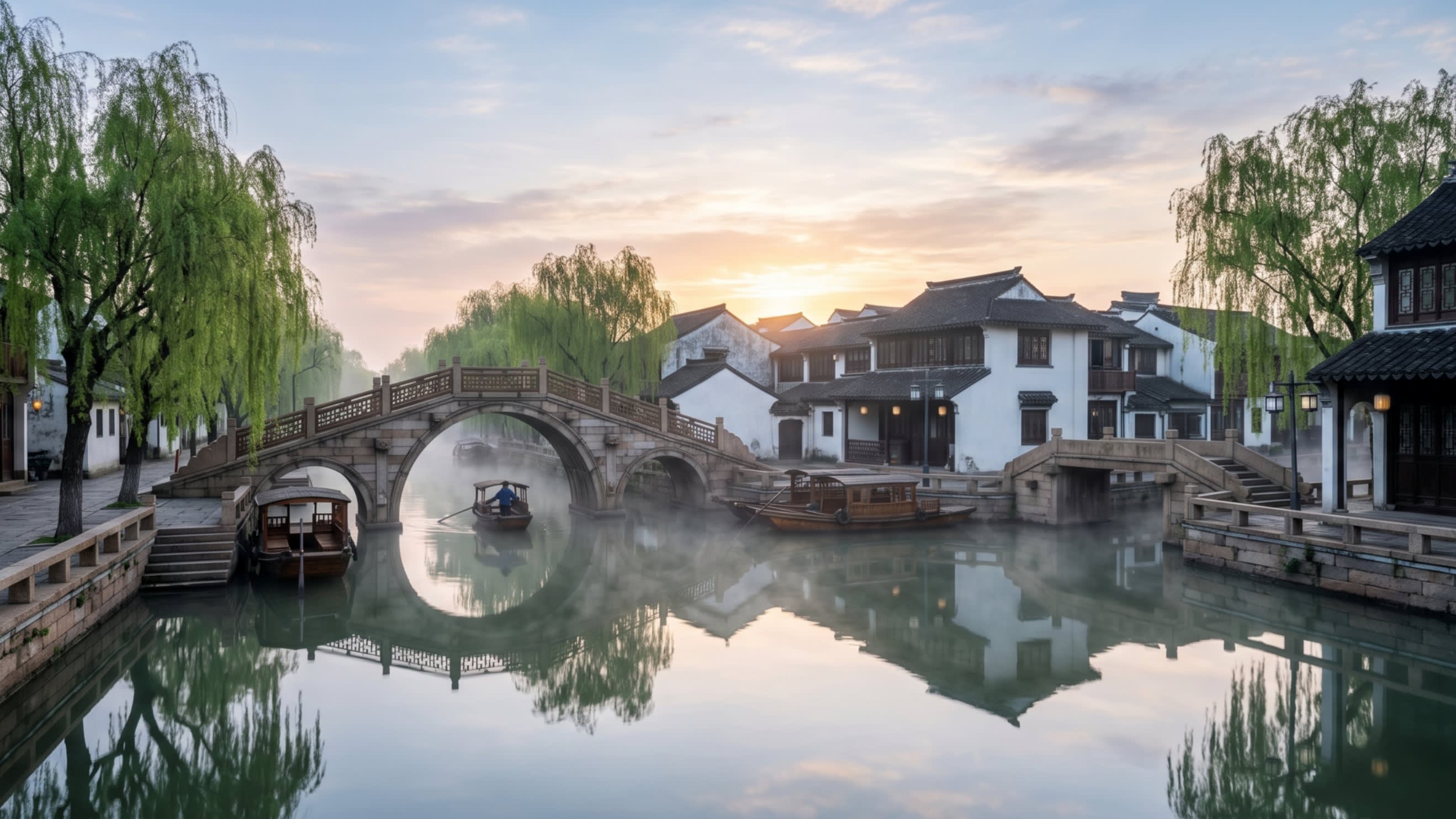
In the sprawling orbit of Shanghai (上海 - shàng hǎi), there exists a cluster of ancient water towns that collectively claim the title “Venice of the East.” Yet, for the modern traveler in 2026, the real challenge isn’t locating a photogenic stone bridge—it’s finding one where you aren’t shoulder-to-shoulder with thousands of selfie sticks.
Choosing the right Water Town (水乡 - shuǐ xiāng) is a delicate balancing act of accessibility, authentic charm, and personal threshold for crowds. Whether you are planning a quick citywalk or a soulful retreat, here is my definitive curator’s guide to navigating these liquid labyrinths. If you’re looking for broader context on timing your visit, check out my ultimate guide to the best time to travel to China in 2026.
The Jiangnan Dilemma: Authenticity vs. Convenience
The region south of the Yangtze River, known as Jiangnan (江南 - jiāng nán), was once the economic heartbeat of imperial China. These towns were the silk-trading hubs that fueled dynasties, their canals acting as the primary highways of commerce. Today, they are cultural preserves. However, a “curator’s warning”: some towns have become highly polished “Theme Parks of the Past,” while others—if you know where to look—still retain their lived-in, honest character.
1. Zhujiajiao (朱家角) — The “Express” Choice
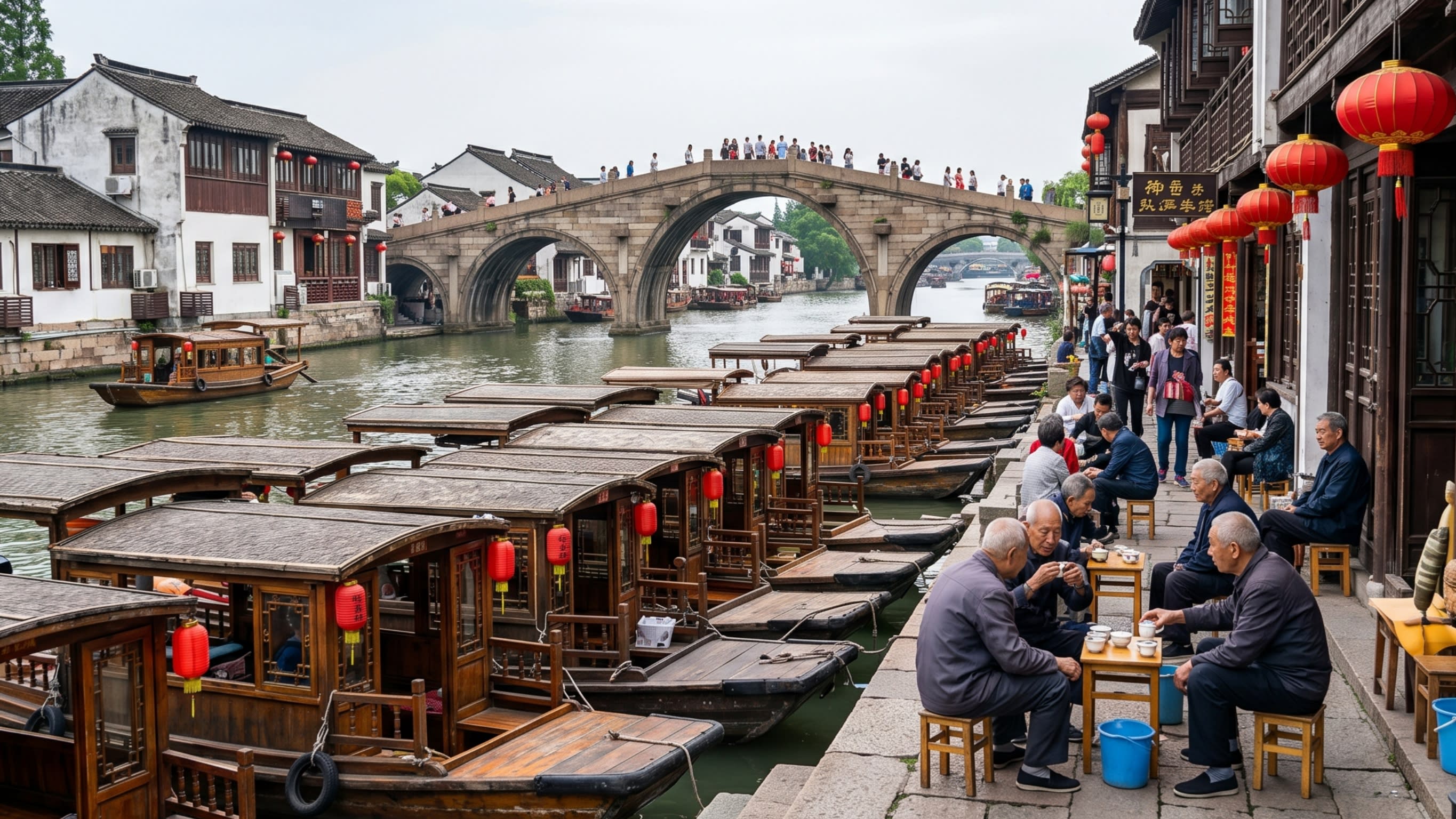
For the traveler pressed for time, Zhujiajiao (朱家角 - zhū jiā jiǎo) is your best friend. Situated at the terminus of the Shanghai Metro Line 17, it is arguably the most accessible 5A site in the region.
- The Vibe: Bustling, unfiltered, and deeply local. It retains a distinct ‘Smoke and Fire’ (烟火气 - yān huǒ qì)—that quintessentially Chinese term for the vibrant, sometimes noisy, pulse of daily life.
- Curator’s Tip: The main Fangsheng Bridge (放生桥 - fàng shēng qiáo) is a magnet for crowds. Instead, lose yourself in the quiet alleyways of North Street (北街 - běi jiē). You’ll find artisan teahouses that have been pouring jasmine tea for decades.
- The Experience: “朱家角 (zhū jiā jiǎo) 胜在方便。When I visit, I always grab a ‘Zharou’ (扎肉 - zhā ròu)—pork braised in bamboo leaves. The savory, herbal aroma wafting from the small steamers is simply addictive.”
2. Wuzhen (乌镇) — The “Premium” Resort

If Zhujiajiao is a street market, Wuzhen (乌镇 - wū zhèn) is a high-end gallery. Specifically, the West Gate (西栅 - xī zhà) area is a meticulously managed resort. It is a 5A masterpiece of lighting, infrastructure, and preservation.
- The Vibe: Fairytale-like and impeccably clean. Since Wuzhen hosts the World Internet Conference, it boasts some of the most reliable high-speed connectivity in the region.
- Curator’s Tip: Do not just visit for the day. Book a stay inside the scenic area. Once the day-trippers disperse after 6 PM, the town transforms into a silent, glowing dreamscape. It is, without question, the premier location for night photography. If you are staying in the city, remember to keep your Alipay and WeChat Pay ready, as these tools are essential for booking tickets and services here.
3. Nanxun (南浔) — The “Sophisticated” Hidden Gem
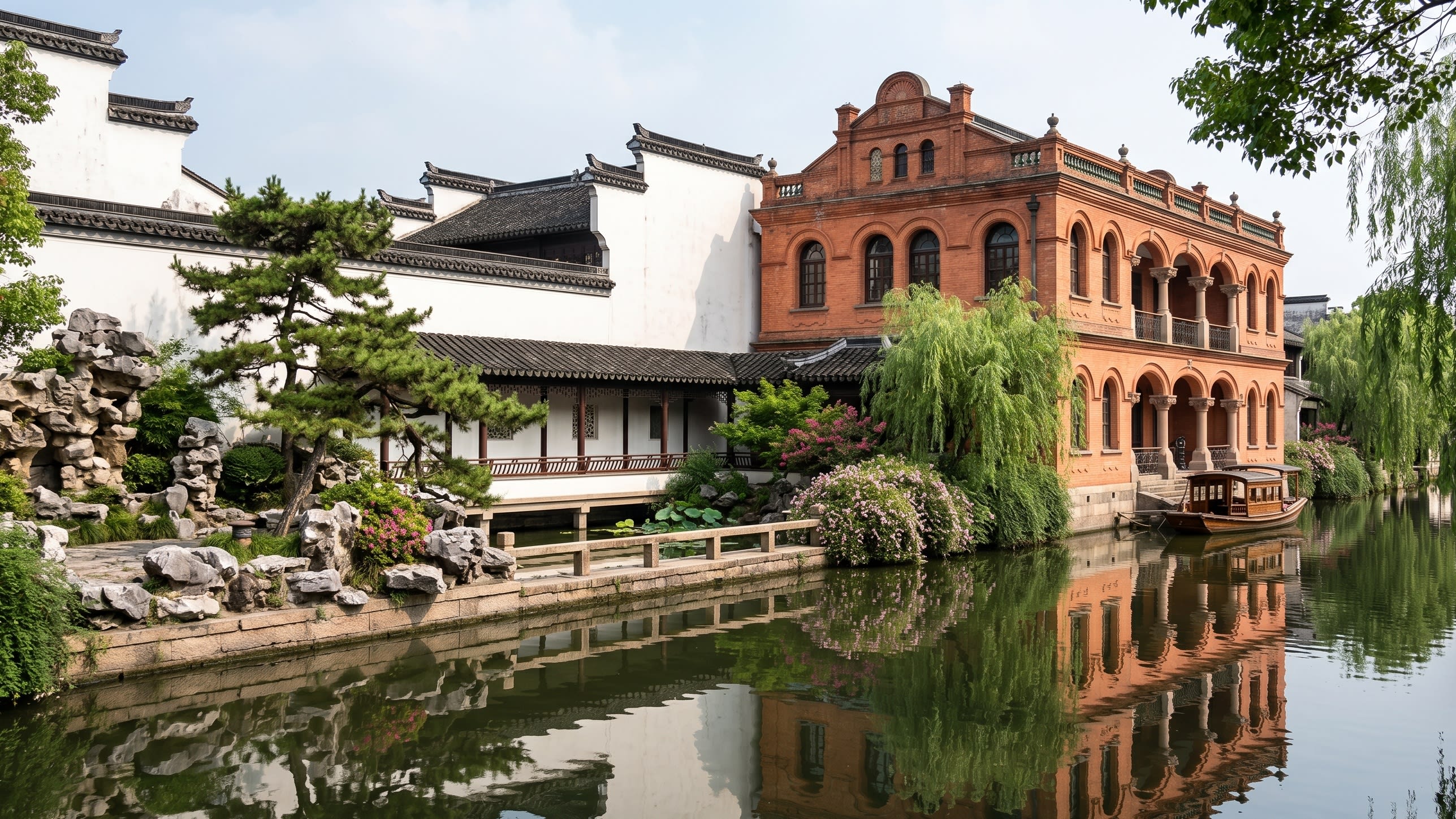
Nanxun (南浔 - nán xún) is the quietest of the “Big Six” water towns. During the late Qing Dynasty, it was the wealthiest town in the country thanks to the silk trade, which led to a unique architectural legacy: grand mansions that blend Chinese courtyards with Western Victorian (中西合璧 - zhōng xī hé bì) elements—think stained glass windows tucked inside traditional wooden frames.
- The Vibe: Academic, aristocratic, and serene. It feels like a scholarly retreat rather than a tourist destination.
- Curator’s Tip: Spend your time in the Little Lotus Garden (小莲庄 - xiǎo lián zhāng). It’s a masterclass in Chinese landscape design, offering a meditative peace that is hard to find in the larger hubs.
4. Xitang (西塘) — The “Rainy Day” Romantic
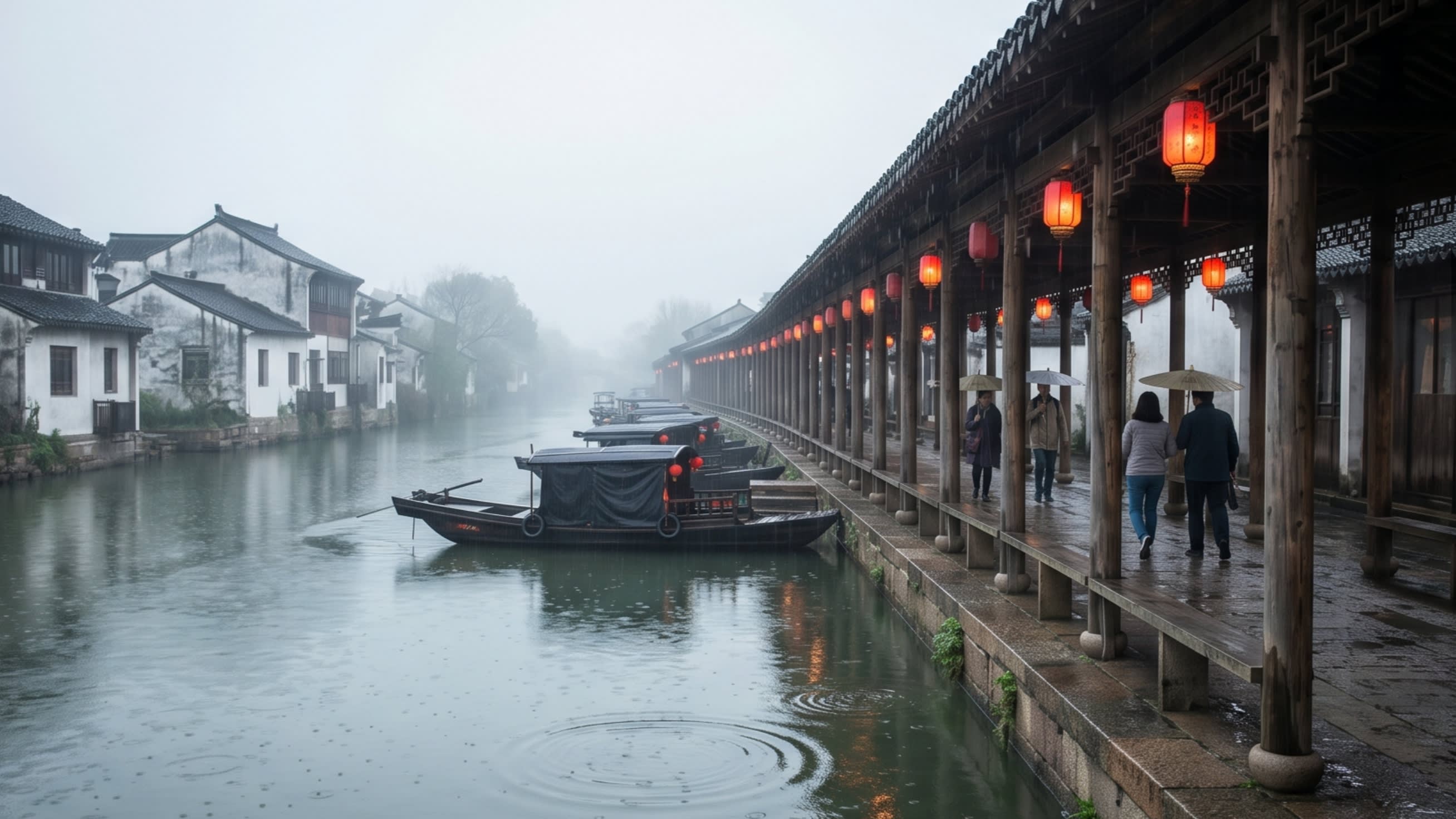
Xitang (西塘 - xī táng) is defined by its ‘Langpeng’ (廊棚 - láng péng)—covered corridors that run along the canal for over a kilometer. This architectural quirk makes it the only water town that is arguably better to visit when it is raining.
- The Vibe: Romantic by day, energetic by night. The “Bar Street” here attracts a younger crowd, perfect if you want to pair your history with a lively canal-side social scene.
- Curator’s Tip: Visit on a weekday afternoon during a light drizzle. The rhythmic sound of rain tapping on the tiled roofs while you walk under the protected corridors is the absolute pinnacle of Jiangnan romance.
5. Zhouzhuang (周庄) — The “Classic” Icon
Zhouzhuang (周庄 - zhōu zhuāng) is the town that sparked the global obsession with China’s water towns. Centered on the legacy of Shen Wansan (沈万三 - shěn wàn sān), a legendary Ming-era billionaire, the town is a museum of traditional folklore.
- The Vibe: Classic and profoundly “Old World.” It features the famous Double Bridges (双桥 - shuāng qiáo) that have been captured by countless artists.
- Curator’s Tip: Avoid weekends at all costs. As the most iconic town, it draws significant crowds. If you must go, arrive by 7:30 AM to catch the morning mist before the tour groups arrive.
2026 Comparison Matrix
| Water Town | Vibe | Accessibility | Best Feature |
|---|---|---|---|
| Zhujiajiao | Bustling/Local | Very Easy (Metro) | Convenience |
| Wuzhen | High-end/Resort | Medium (HSR+Bus) | Night Lighting |
| Nanxun | Quiet/Scholarly | Harder (Didi) | Fusion Architecture |
| Xitang | Romantic/Party | Medium (Bus) | Covered Corridors |
| Zhouzhuang | Iconic/Classic | Medium (Bus) | Historic Bridges |
Survival Tips & Final Thoughts
To make the most of your excursion, keep these essentials in mind:
- The HSR Hack: If heading to Wuzhen, use Tongxiang Station (桐乡站 - tóng xiàng zhàn). It is significantly more efficient than a long-distance bus from Shanghai.
- Footwear: These towns are paved with centuries-old stone that is often uneven or slippery. Leave the designer heels at your hotel and opt for comfortable, high-traction walking shoes.
- Digital Prep: Most 5A scenic spots now require entry registration via WeChat mini-programs. Ensure your travel app ecosystem is set up before you depart.
- Local Flavor: Whatever you do, look for “Grandma’s Zongzi” (阿婆肉粽 - ā pó ròu zòng). There is something incredibly comforting about these sticky rice dumplings, particularly when shared in a quiet teahouse.
Choosing a water town is ultimately about what kind of silence—or celebration—you are seeking. If the canals of Jiangnan move at the speed of a wooden oar, my best advice for 2026 is simple: turn off your notifications, find a riverside seat, and let the tea go cold while you watch the world float by.