
🍊 Introduction: The Undisputed Champion of the Food Court
If there is a scent that instantly transports any American back to a bustling shopping mall food court, it is the sweet, tangy, intoxicating aroma of Orange Chicken (香橙鸡 - Xiāngchéng Jī).
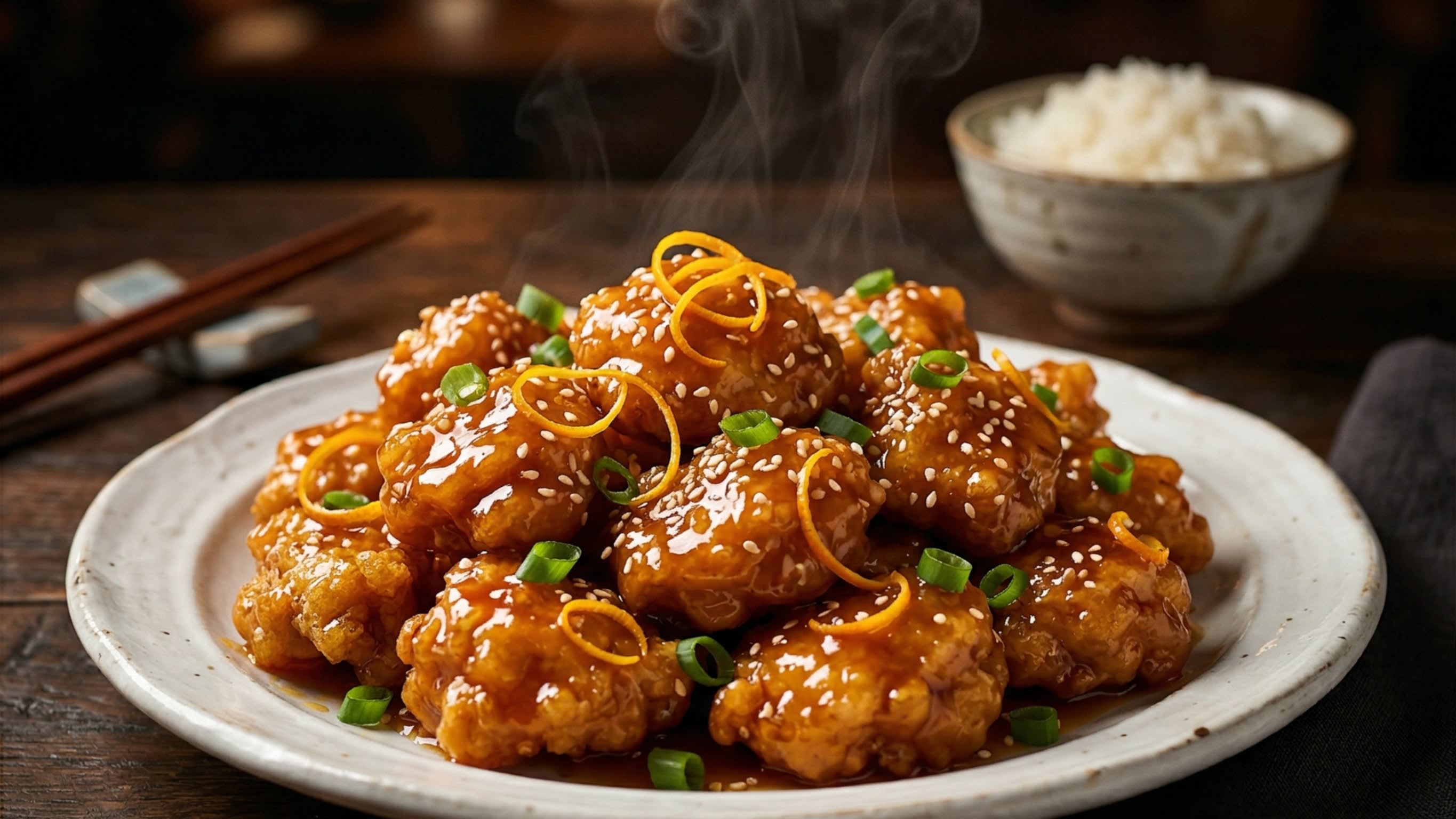
Famous worldwide as the flagship dish of Panda Express, Orange Chicken is a beautiful, irresistible masterpiece of Chinese-American cuisine. It features massive, juicy chunks of chicken thigh encased in a shatteringly crisp, golden-brown crust, all completely enveloped in a thick, sticky, sweet, and tangy citrus glaze.
For decades, millions of people have tried to recreate this addictive dish at home. Often, the results are deeply disappointing: the chicken turns out soggy, the breading falls off in the pan, and the sauce tastes like a cheap, artificial, overly sweet syrup.
Today, we are putting an end to bad homemade takeout. We are going to reveal the exact restaurant science behind that legendary crispy crust, and more importantly, the secret to a bright, vibrant sauce that uses real, fresh citrus. Prepare yourself, because this recipe will permanently ruin restaurant Orange Chicken for you—your homemade version will be exponentially better.
📜 The History: Is Orange Chicken Authentic?
Before we start cooking, let’s explore a fascinating culinary question: Would you find Orange Chicken in China?
The modern, sweet Orange Chicken we know today was actually invented in 1987 in Hawaii by Panda Express Executive Chef Andy Kao. He wanted to create a variation of General Tso’s Chicken that was slightly sweeter and more appealing to local tastes.
However, its true culinary ancestor is a highly traditional and deeply authentic dish from Hunan and Sichuan provinces called Tangerine Peel Chicken (陈皮鸡 - Chénpí Jī). Traditional Chenpi Ji does not use sticky, sweet orange juice. Instead, it relies on dried, aged tangerine peels (陈皮), which are stir-fried with dried red chilies, Sichuan peppercorns, soy sauce, and crispy chicken. The result is a savory, earthy, spicy, and intensely aromatic dish with only a subtle hint of bitter citrus.
When Chinese chefs immigrated to North America, they adapted this traditional recipe using fresh, locally abundant Florida and California oranges, added sugar, and created the iconic sticky glaze we adore today.
🔬 The Science of the Perfect Citrus Glaze
The number one mistake home cooks make with Orange Chicken is using bottled orange juice. Bottled juice has been pasteurized and stripped of its vibrant, volatile aromas. If you reduce it in a pan, it just tastes like flat, sweet water.
The Secret is the Zest (橙皮屑)
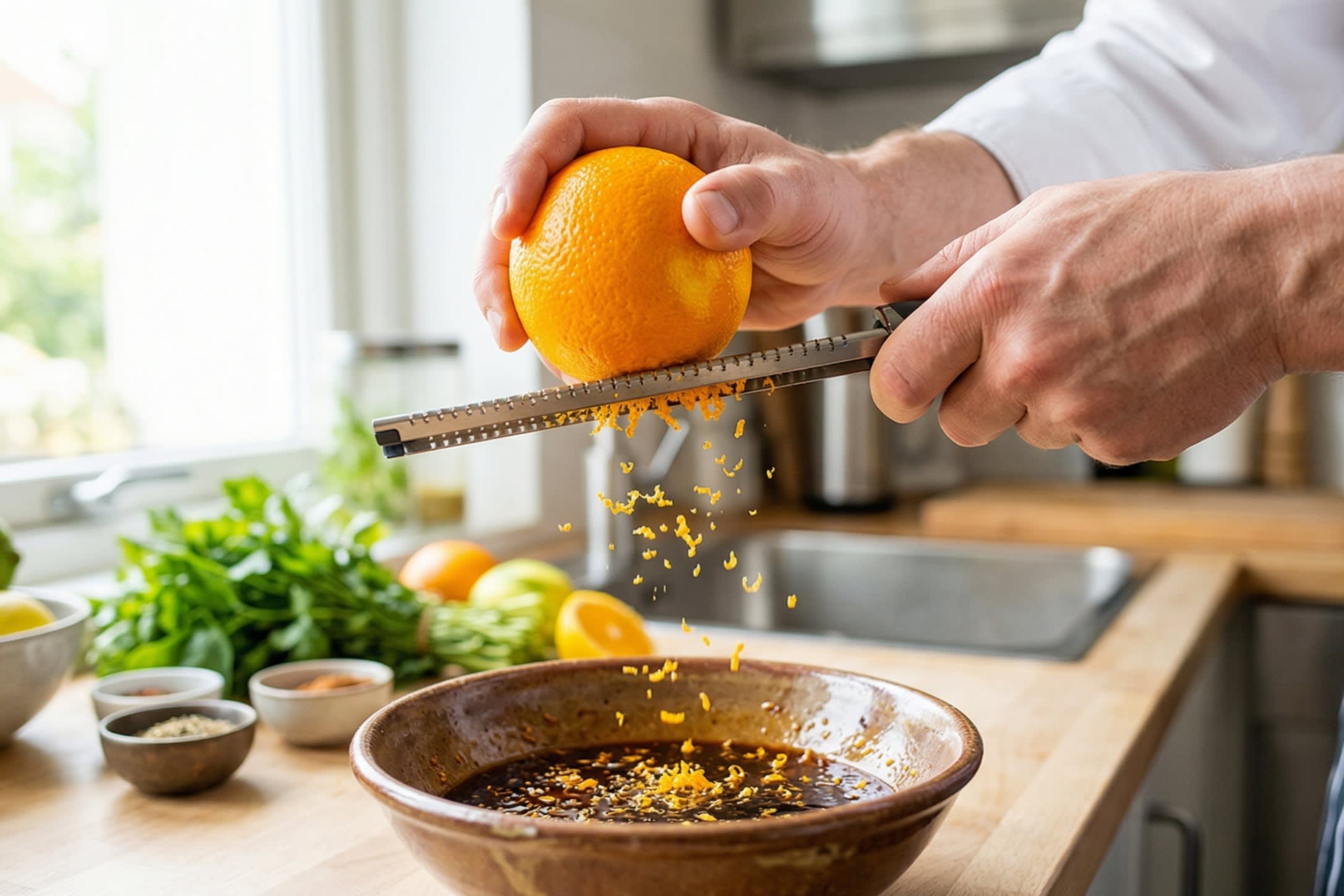
If you want that explosive, restaurant-quality citrus flavor, 90% of it does not come from the juice—it comes from the skin! The bright orange rind is packed with natural, highly aromatic essential oils. You must use a microplane to grate fresh Orange Zest (橙皮屑 - Chéngpí xiè) directly into your sauce. This is the ultimate game-changer that elevates the dish from “food court fast food” to gourmet Asian cuisine.
🍗 The Restaurant Secret: “Guahu” and the Double Fry
To achieve that legendary Wàisū lǐnèn (外酥里嫩 - crispy on the outside, tender on the inside) texture that can survive being tossed in a wet, sticky sauce, you must master two fundamental Chinese restaurant techniques.
1. The Batter (挂糊 - Guàhú)
Do not use Western all-purpose flour for your batter! Flour contains gluten, which absorbs wet sauces like a sponge and turns your crispy chicken into a heavy, soggy paste. Authentic Chinese deep-frying relies heavily on Cornstarch (玉米淀粉). Cornstarch contains no gluten. When mixed with a little soy sauce and egg, it creates a microscopic, glass-like shell around the chicken that stays crunchy for an incredibly long time. This battering technique is known as Guàhú.
2. The Double Fry (复炸 - Fùzhá)
This is the non-negotiable secret to restaurant-level crunch. You must fry the chicken twice!
- The First Fry (Lower Heat): Cooks the raw chicken all the way through and lightly sets the batter without burning it.
- The Second Fry (High Heat): After letting the chicken rest, you drop it back into screaming hot oil for just 60 seconds. This flash-frying vigorously drives out the remaining surface moisture, turning the crust dark golden-brown and shatteringly crisp. This technique is called Fùzhá.
🛒 Ingredients List
The Chicken & Marinade:
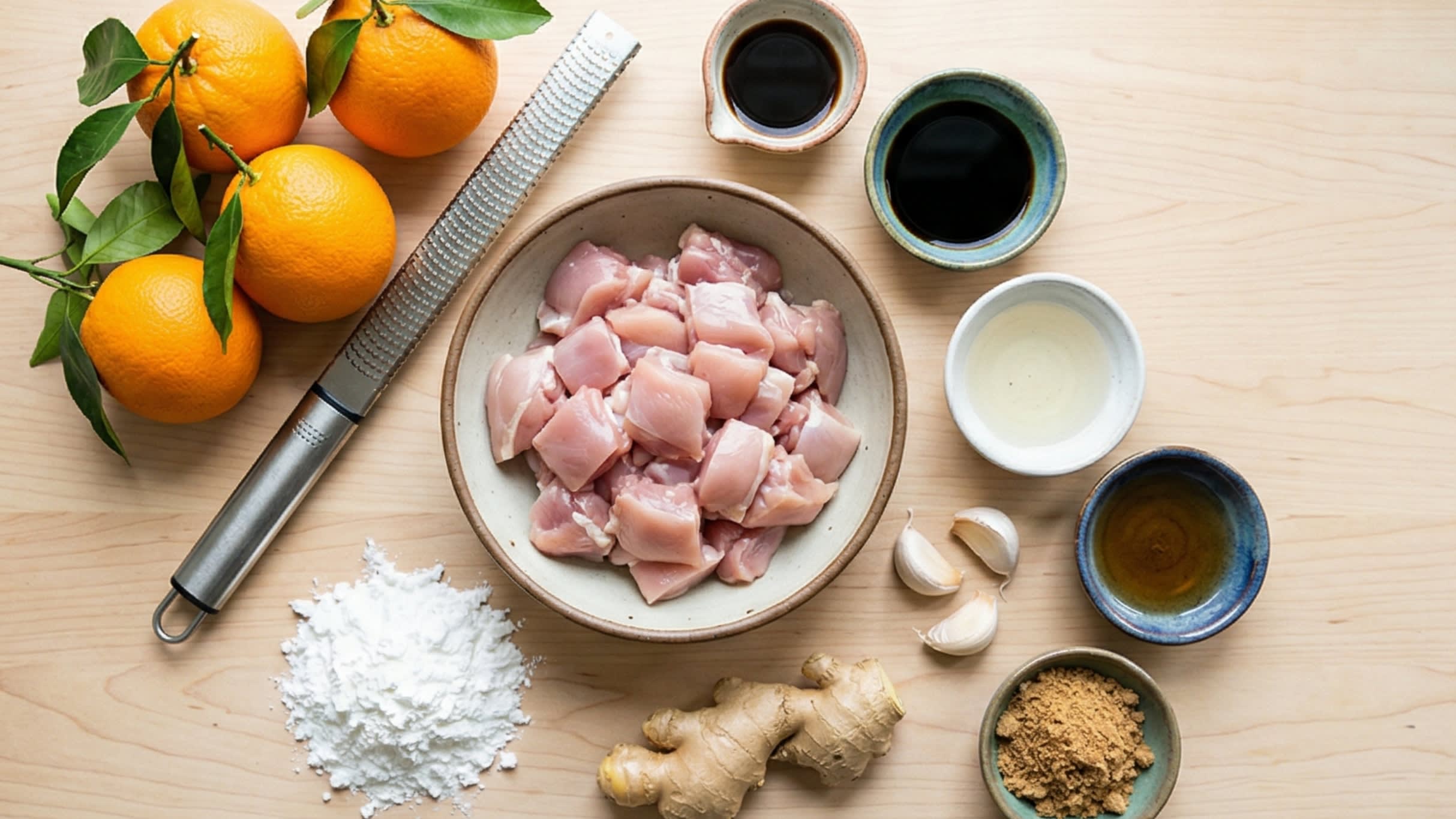
- 1.5 lbs (about 700g) Boneless, skinless Chicken Thighs (鸡腿肉 - Jītuǐròu). Dark meat is essential for maximum juiciness!
- 1 tbsp Light Soy Sauce
- 1 tbsp Shaoxing Cooking Wine
- 1 large Egg
The Crispy Coating (挂糊):
- 1 cup Cornstarch (玉米淀粉)
- 1/2 tsp Salt
- 1/4 tsp White Pepper powder
The Fresh Orange Glaze:
- The Zest of 1 large fresh Orange (橙皮屑) - Do not skip this!
- 1/2 cup Freshly Squeezed Orange Juice
- 3 tbsp Rice Vinegar (米醋) or Apple Cider Vinegar
- 3 tbsp Light Soy Sauce (生抽)
- 4 tbsp Granulated Sugar (糖)
- 1 tbsp Brown Sugar (adds a slight molasses depth)
- 1 tbsp Cornstarch (for thickening)
The Aromatics & Frying:
- 4 cups high-heat Cooking Oil (peanut, canola, or vegetable oil)
- 4 cloves Garlic, finely minced (蒜末)
- 1 thumb-sized piece of fresh Ginger, finely minced (姜末)
- 1/2 tsp Red Chili Flakes (optional, for a slight kick)
- 2 stalks of Scallions (葱花), chopped
- Toasted Sesame Seeds (for garnish)
🍳 Step-by-Step Instructions
1. Prep the Chicken: Cut the chicken thighs into large, bite-sized chunks (about 1.5 inches). In a large bowl, toss the chicken with 1 tbsp light soy sauce, Shaoxing wine, and the cracked egg. Massage it well so the chicken absorbs the liquids. Let it marinate for 15 minutes.
2. The Battering Station: Place 1 cup of cornstarch, salt, and white pepper in a large, wide bowl. Toss the marinated chicken chunks into the cornstarch. Use your hands to press the starch firmly into the meat, ensuring every single crevice is coated. Shake off the excess starch so it doesn’t burn in your frying oil.
3. Mix the Magic Citrus Sauce: In a small bowl, combine the freshly squeezed orange juice, fresh orange zest, rice vinegar, light soy sauce, white sugar, brown sugar, and 1 tbsp cornstarch. Whisk vigorously until the sugars and cornstarch are completely dissolved. Set this bowl right next to your stove.
4. The First Fry (Cooking the Meat): Heat 4 cups of oil in a wok or a heavy-bottomed Dutch oven to 350°F (175°C). Carefully drop the coated chicken chunks into the oil one by one to prevent them from clumping together. Fry them in two batches. Fry for about 4 to 5 minutes until they are cooked through and have a pale, firm crust. Use a spider strainer to remove them and let them rest on a wire cooling rack.
5. The Second Fry (The “Fuzha” Secret): Turn the heat up to high and let the oil temperature rise to 390°F (200°C). Carefully drop all the rested chicken back into the screaming hot oil. Fry for exactly 60 to 90 seconds. You will see them turn a gorgeous, deep golden brown. Scoop them out and drain well. They are now shatteringly crisp!
6. Build the Aromatics: Carefully pour the hot frying oil out of the wok (save it for later use!), leaving just 1 tablespoon of oil in the pan. Turn the heat down to medium. Add your minced garlic, ginger, and chili flakes. Stir-fry for 15 seconds until the oil is deeply fragrant.
7. Thicken the Glaze (勾芡 - Gōuqiàn): Give your prepared orange sauce bowl a quick stir to lift the settled cornstarch, and pour it into the wok. Turn the heat up to medium-high. Stir constantly. As the fresh orange juice reduces, the sauce will bubble furiously and transform into a thick, glossy, bright orange syrup.
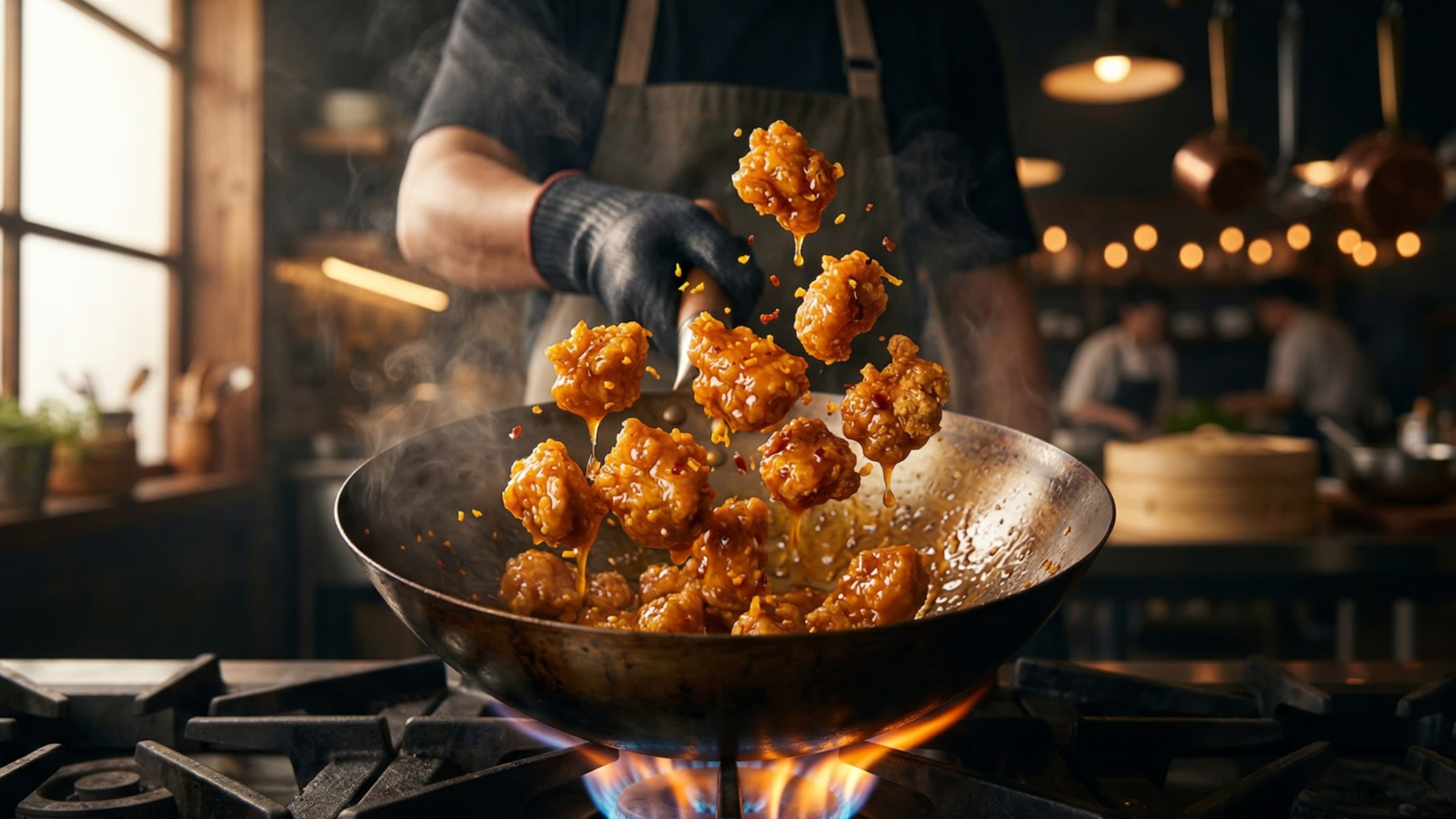
8. The Final Toss: The exact moment the sauce becomes thick and shiny, dump your crispy double-fried chicken into the wok. Turn off the heat immediately. Toss everything aggressively until every single piece of chicken is coated in that legendary shiny glaze.
9. Garnish and Serve: Plate it up immediately. Garnish generously with toasted sesame seeds and freshly chopped green scallions. Serve alongside steamed broccoli and a massive bowl of white rice.
💡 Troubleshooting & Pro Tips
- Why is my sauce bitter? When you are zesting your fresh orange, only grate the very outer, bright orange layer of the skin. If you grate too deeply into the white part (the pith), it will release a harsh, bitter flavor into your beautiful sauce.
- Why did my batter fall off? You didn’t press the cornstarch hard enough into the chicken, or your frying oil wasn’t hot enough when you dropped the chicken in. Use a kitchen thermometer to ensure it hits 350°F before frying!
- Can I use chicken breasts? You can, but chicken breasts are incredibly lean and can dry out quickly when deep-fried twice. Chicken thighs have more intramuscular fat, guaranteeing a juicy interior no matter how crispy the crust gets.
📦 Shop Authentic Kitchen Essentials
To achieve that legendary restaurant-quality crunch and vibrant citrus flavor, these specific tools and ingredients are absolute game-changers. (As an Amazon Associate, ChinaCurator earns from qualifying purchases.)
- Premium Stainless Steel Microplane Zester - The absolute mandatory tool for extracting the highly aromatic essential oils from fresh oranges.
- Asian Stainless Steel Spider Strainer - The best tool for safely scooping crispy chicken out of boiling hot oil without losing the breading.
- Pearl River Bridge Light Soy Sauce (生抽) - The perfect, authentic savory base that balances the sweetness of the sugar and citrus.
- Traditional Carbon Steel Wok - The ultimate vessel for deep frying and rapidly tossing the chicken in the sticky glaze.