
🥟 Introduction: The Ultimate Dumpling Experience
In the vast and glorious universe of Chinese dumplings, there is one variation that stands undisputed as the ultimate crowd-pleaser: Potstickers (锅贴 - Guōtiē).
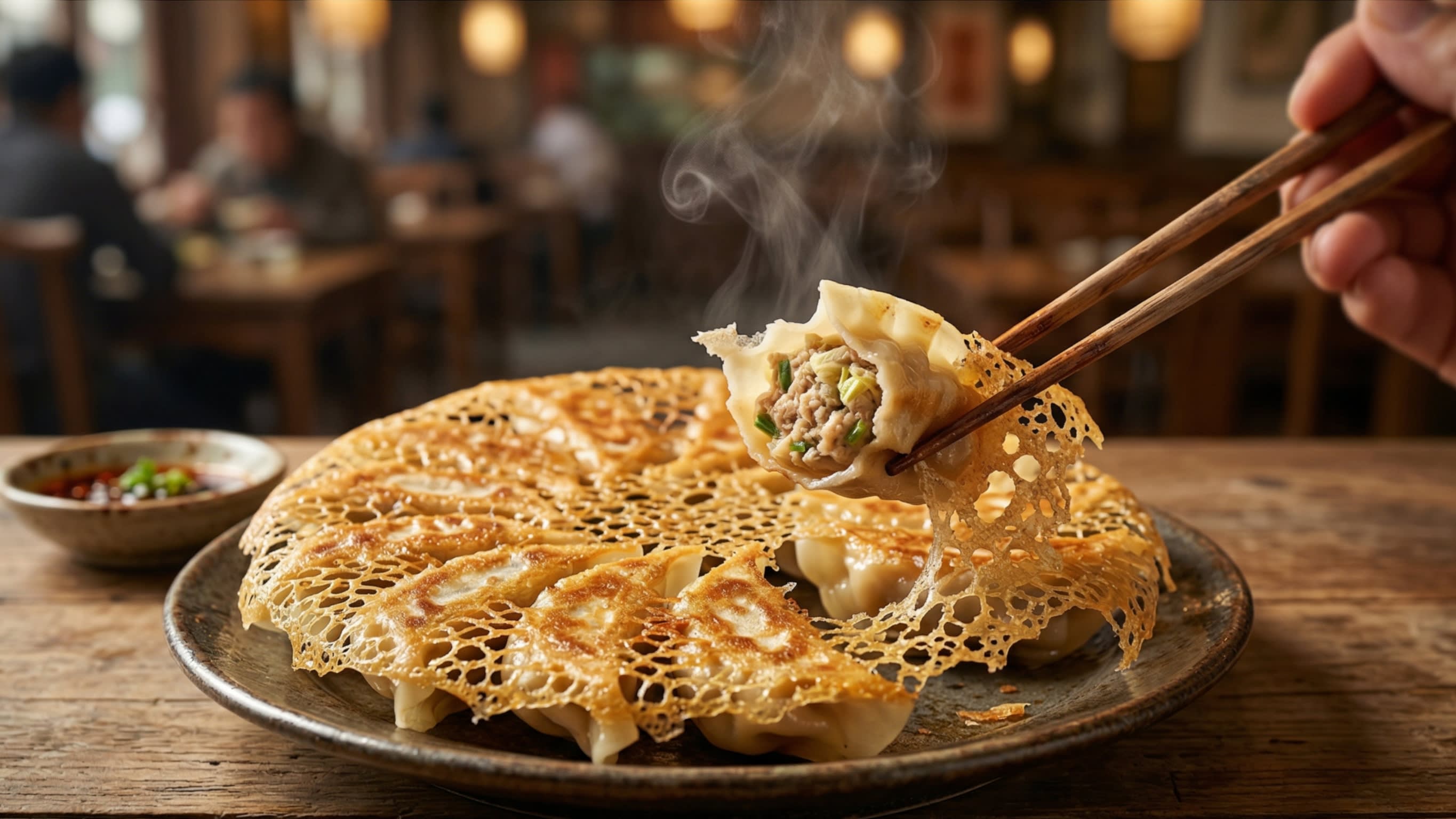
Imagine the perfect bite: your teeth first crack through a shatteringly crisp, golden-brown, pan-fried bottom. Then, they sink into a chewy, slightly translucent, steamed dough wrapper. Finally, you reach the center—a piping hot, savory pork and cabbage filling that bursts with rich, aromatic juices. It is a symphony of textures and flavors that makes it impossible to eat just one.
But what exactly is a potsticker? The Chinese name Guōtiē literally translates to “wok stick” or “stuck to the pan.” Legend has it that during the Song Dynasty, a chef in the imperial court accidentally left a batch of boiling dumplings on the stove for too long. The water boiled away, and the dumplings stuck to the bottom of the wok, crisping up in the residual fat. Terrified of being punished, the chef served them anyway. To his surprise, the emperor loved the crispy, chewy contrast, and a legendary dish was born.
Today, we are going to teach you how to make authentic Chinese Potstickers at home. We will cover the quintessential pork and cabbage filling, the secret to making them incredibly juicy, and the ultimate restaurant trick: how to create the beautiful, delicate “Ice Skirt” (冰花 - Bīnghuā) that connects all the dumplings together in the pan.
🆚 Guotie vs. Jiaozi vs. Gyoza: What’s the Difference?
Before we start cooking, let’s clear up a massive culinary confusion for Western home cooks. What is the difference between these three famous Asian dumplings?
- Shuǐjiǎo (水饺 - Boiled Dumplings): These are traditional Chinese dumplings boiled in water. They have a thicker, heartier wrapper designed to withstand boiling without breaking, and are the staple food of Chinese New Year.
- Guōtiē (锅贴 - Potstickers): These are pan-fried Chinese dumplings. They are typically longer and slightly more open at the ends than boiled dumplings. The wrappers are sturdy enough to handle the pan-frying process, yielding a chewy top and a crispy bottom.
- Gyoza (Japanese Pan-Fried Dumplings): Gyoza evolved from Chinese Guotie. However, Japanese Gyoza wrappers are significantly thinner and more delicate, and the filling is usually minced much finer, often with a heavier garlic flavor.
If you want a hearty, satisfying, incredibly juicy bite with a substantial chew, authentic Chinese Guotie is the undisputed king.
🔬 The Culinary Science: “Da Shui” and The “Fry-Steam-Fry” Method
To make restaurant-quality potstickers at home, you must master two ancient Chinese culinary secrets.
1. The Secret to a Juicy Filling: “Da Shui” (打水)
Why do homemade dumplings often taste like a dry, hard meatball wrapped in dough, while restaurant dumplings practically explode with soup? The secret is a technique called Dǎshuǐ (打水)—which means “beating water.” Lean pork does not have enough moisture on its own. When mixing your filling, you must slowly pour in a flavored liquid (usually water infused with ginger and scallions) while vigorously stirring the meat in only one direction. This single-direction stirring forces the meat proteins to unfold and bind with the water, creating a sticky, emulsified paste. When cooked, this trapped water turns into a rich, savory soup inside the dumpling!
2. The Cooking Technique: “Jiān” (煎)
You do not just fry a potsticker, nor do you just steam it. You use a hybrid method. First, you fry the raw dumplings in oil to crisp the bottoms. Then, you pour water into the hot pan and immediately cover it with a lid to steam the wrappers and cook the raw meat inside. Finally, you remove the lid, let the water evaporate completely, and let the dumplings fry one last time in the remaining oil to re-crisp the bottoms.
❄️ The Master Technique: The “Ice Skirt” (冰花 - Bīnghuā)
If you want to impress your guests, you must make the Bīnghuā (冰花), also known as a dumpling skirt or lace bottom. This is a delicate, web-like, golden-brown crust that connects all the dumplings in the pan.
To achieve this, you don’t just add plain water during the steaming phase. You add a slurry—a mixture of water, flour, cornstarch, and a tiny drop of oil. As the water boils away during the steaming process, the starches are left behind, frying in the residual oil to form a beautiful, shatteringly crisp lace.
🛒 Ingredients List
The Wrappers:
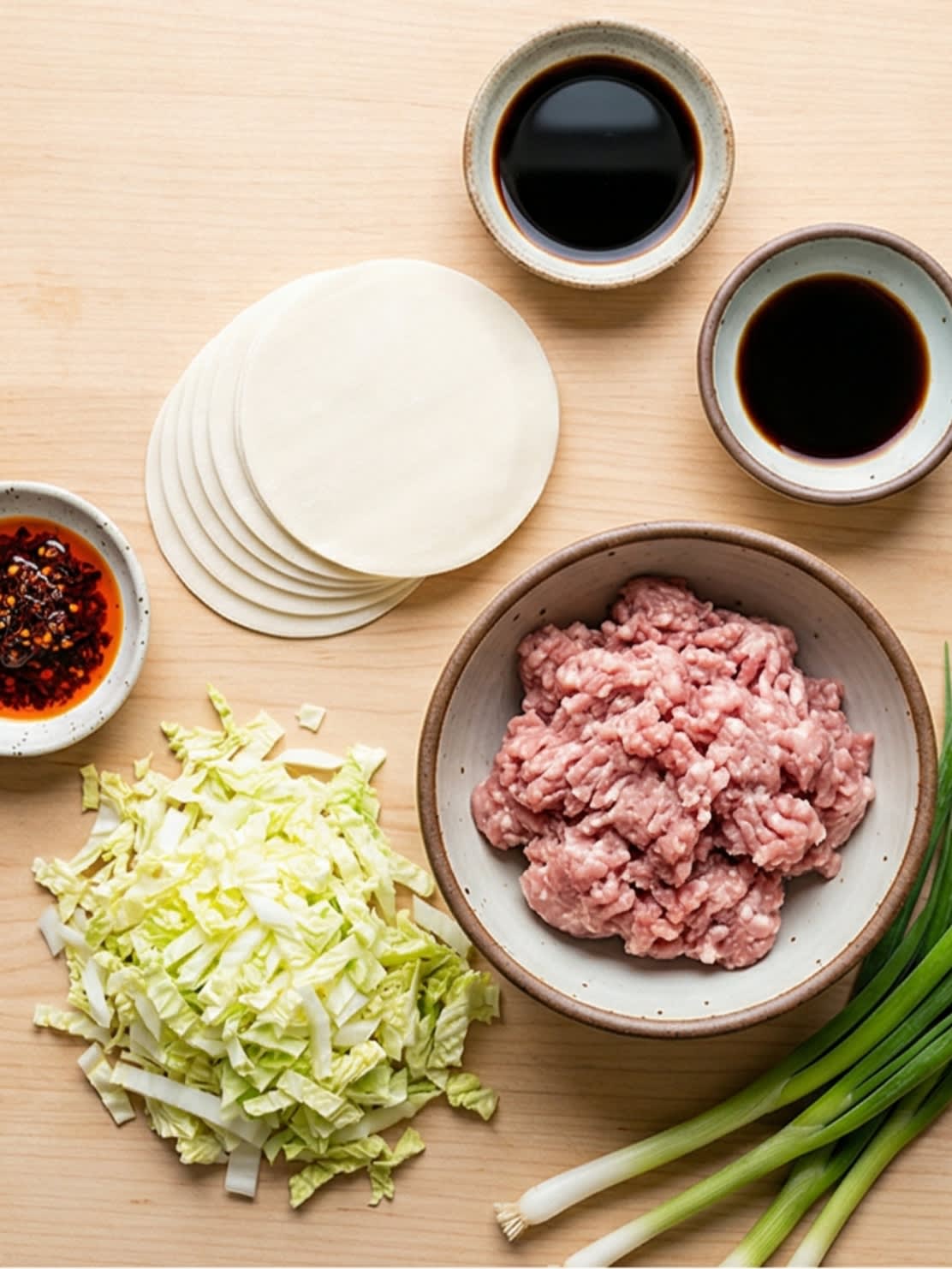
- 1 package (about 35-40) store-bought Dumpling Wrappers (饺子皮 - Jiǎozipí). Look for white, round wrappers in the refrigerated section of an Asian market. Do not buy yellow Wonton wrappers!
The Classic Pork & Cabbage Filling (猪肉白菜 - Zhūròu Báicài):
- 1 lb (450g) Ground Pork (not too lean; 70% lean / 30% fat is ideal)
- 2 cups Napa Cabbage (大白菜), very finely minced
- 1 tsp Salt (for drawing water out of the cabbage)
- 2 stalks of Scallions / Green onions (葱花), finely chopped
- 1 tbsp fresh Ginger, finely grated (姜末)
The “Da Shui” Seasoning Liquid:
- 1/4 cup Cold Water (or chicken broth)
- 2 tbsp Light Soy Sauce (生抽)
- 1 tbsp Dark Soy Sauce (老抽 - for color)
- 1 tbsp Shaoxing Cooking Wine (绍兴酒)
- 1 tbsp Toasted Sesame Oil (芝麻油)
- 1 tsp Sugar
- 1/2 tsp White Pepper powder (白胡椒粉)
The “Ice Skirt” Slurry (冰花水):
- 1/2 cup Cold Water
- 2 tsp All-Purpose Flour
- 1 tsp Cornstarch (玉米淀粉)
- 1 tsp Cooking Oil
The Dipping Sauce (蘸料 - Zhànliào):
- 2 tbsp Chinkiang Black Vinegar (镇江香醋)
- 1 tbsp Light Soy Sauce
- 1 tsp Chili Crisp / Chili Oil (辣椒油)
🍳 Step-by-Step Instructions
1. Prepare the Cabbage: Place the finely minced Napa cabbage in a bowl and sprinkle with 1 teaspoon of salt. Mix well and let it sit for 15 minutes. The salt will draw out the excess water. Place the cabbage in a clean kitchen towel and squeeze out as much water as humanly possible. If you skip this, your dumplings will be a soggy, broken mess!
2. The “Da Shui” Meat Mixing: In a large mixing bowl, combine the ground pork, grated ginger, and chopped scallions. In a separate small bowl, mix your seasoning liquid (cold water, soy sauces, wine, sesame oil, sugar, white pepper). Pour the liquid into the pork. Using a pair of chopsticks, vigorously stir the meat in one single direction (e.g., clockwise) for about 3 minutes. Do not stir back and forth! The meat will absorb the liquid and transform into a sticky, pale paste. Finally, fold the squeezed, dry cabbage into the meat paste.
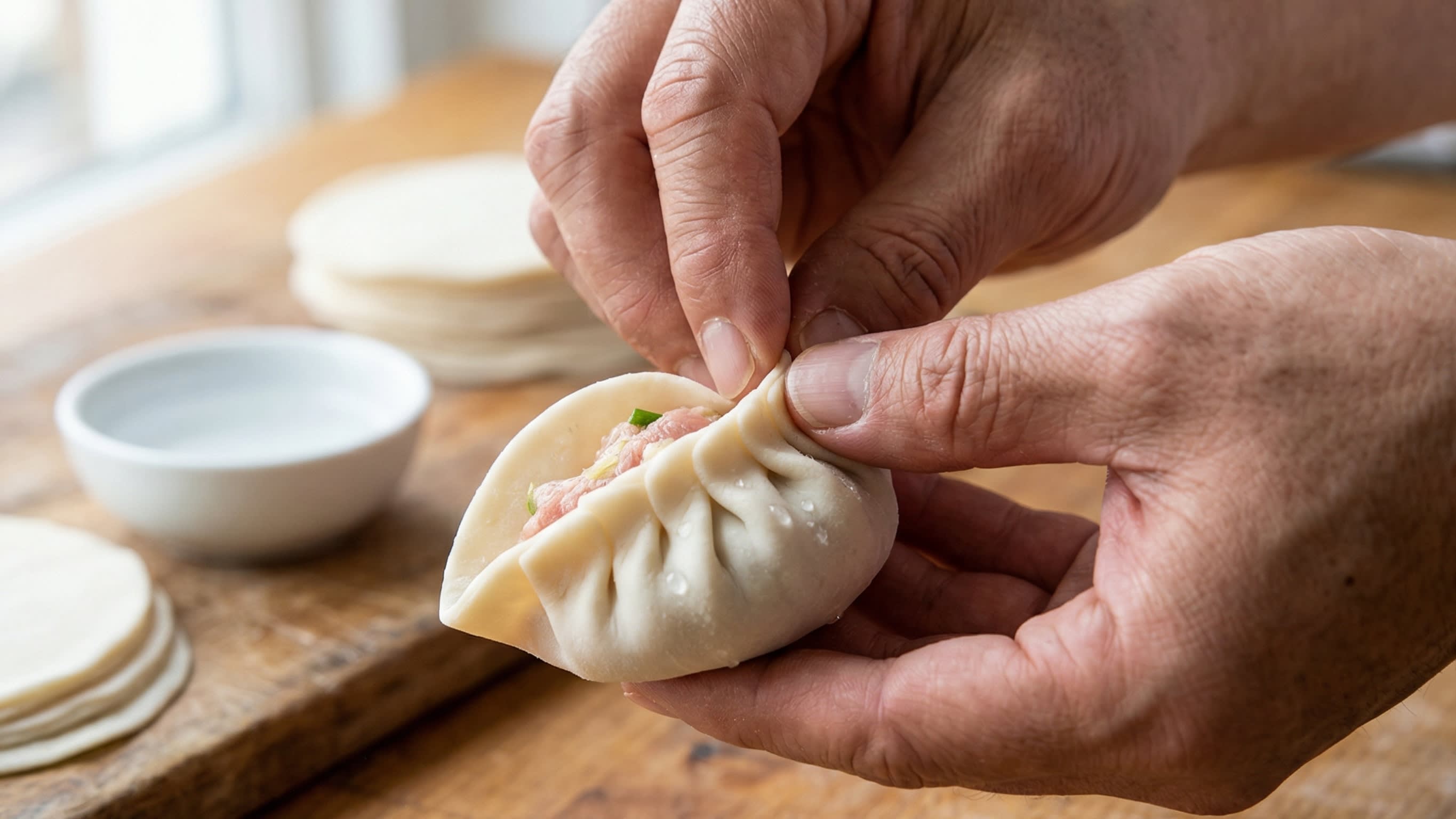
3. Fold the Potstickers (捏褶 - Niēzhě): Place a dumpling wrapper flat on your hand. Dip your finger in a little bowl of cold water and wet the entire outer edge of the wrapper (this is your glue). Place 1 heaping tablespoon of filling in the center. Fold the wrapper in half like a taco. Pinch the very top center together. Now, make 3 to 4 small pleats (folds) on the right side, pressing them against the flat back side of the wrapper. Repeat on the left side. Make sure the dumpling is completely sealed, and press it gently on the cutting board so it sits flat on its bottom.
4. The Fry-Steam-Fry Cooking Process: Use a large, high-quality non-stick pan with a tight-fitting lid. Heat 2 tablespoons of cooking oil over medium heat. Place the dumplings in the pan in a circular pattern, flat bottoms down. Fry them uncovered for 2 to 3 minutes until the bottoms are a light, golden brown.
5. Pour the “Ice Skirt”: Give your Slurry mixture (water, flour, cornstarch, oil) a quick stir so nothing is settled at the bottom. Pour the slurry directly into the hot pan (it will sizzle violently!). Immediately cover the pan with the lid to trap the steam. Let them steam over medium heat for about 6 to 8 minutes, or until the liquid is almost entirely evaporated.
6. Crisp the Bottoms: Remove the lid. You will see a starchy, bubbly layer at the bottom of the pan. Turn the heat down to medium-low. Let the pan continue to cook uncovered for another 2 to 3 minutes. The remaining water will evaporate, and the starch will fry in the oil, turning into a gorgeous, golden, crispy lace.
7. The Reveal: When the edges of the “ice skirt” start to pull away from the pan and turn deeply golden, turn off the heat. Place a large plate upside down over the pan. Carefully and confidently flip the pan over so the dumplings fall onto the plate, crispy bottoms facing up.
8. Serve: Mix your dipping sauce (black vinegar, soy sauce, and chili crisp). Serve the potstickers immediately while they are piping hot, shatteringly crisp, and bursting with juice!
💡 Troubleshooting and Pro Tips
- Why did my wrappers tear while folding? Store-bought wrappers dry out very quickly when exposed to air. Always keep your stack of wrappers covered with a damp paper towel while you are folding.
- My dumpling bottoms burned before the meat cooked! Your stove heat is too high. Potstickers need a steady medium to medium-low heat. The steam cooks the meat, not the direct heat of the pan.
- The “Ice Skirt” stuck to the pan and ruined the dumplings. You must use a high-quality non-stick skillet or a perfectly seasoned carbon steel pan for this recipe. If you use a standard stainless steel pan, the flour slurry will act like superglue.
📦 Shop Authentic Kitchen Essentials
To master authentic Chinese dumplings at home, these specific condiments are the key to unlocking true restaurant flavor. (As an Amazon Associate, ChinaCurator earns from qualifying purchases.)
- Chinkiang Black Rice Vinegar (镇江香醋) - The absolute mandatory dipping vinegar for dumplings. Do not use white vinegar!
- Lao Gan Ma Chili Crisp (老干妈) - The world-famous chili oil packed with crunchy soybeans and onions. Perfect for the dipping sauce.
- Kadoya 100% Pure Toasted Sesame Oil - Essential for flavoring the pork filling.
- Premium Non-Stick Skillet with Glass Lid - You cannot make the perfect "Ice Skirt" without a reliable non-stick surface and a tight-fitting lid.