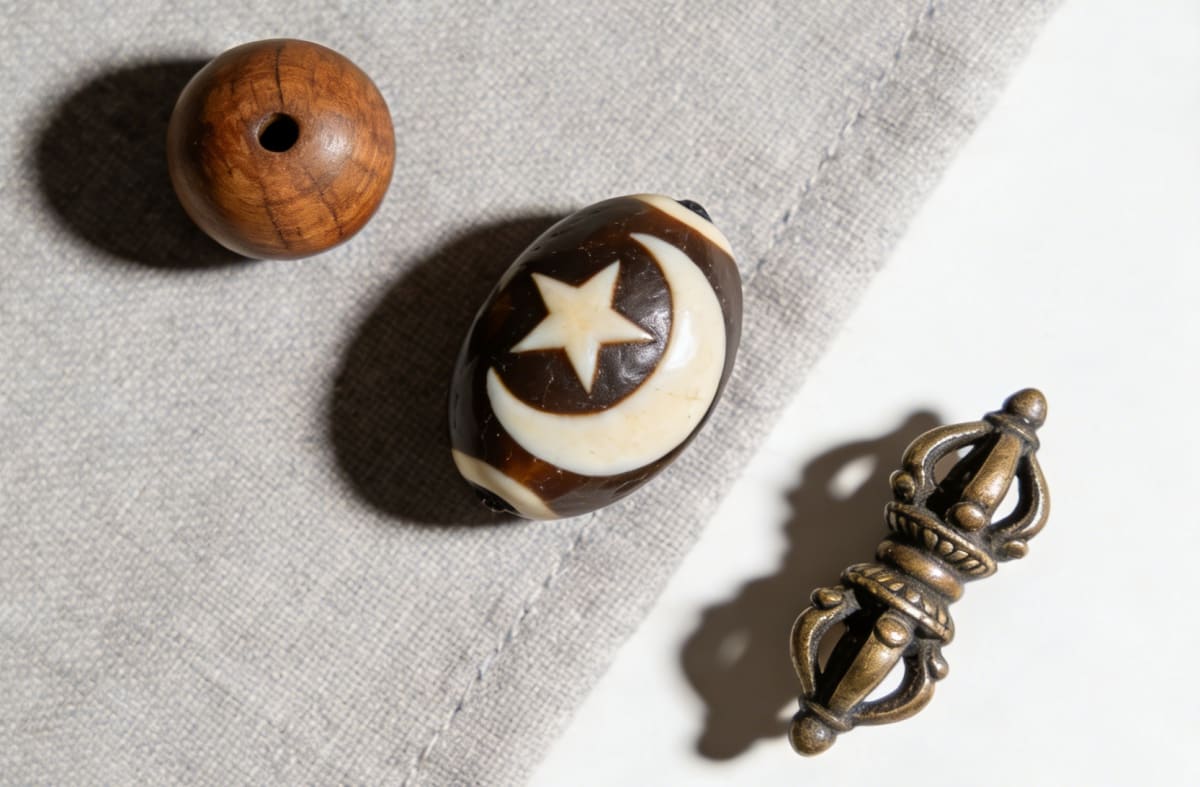
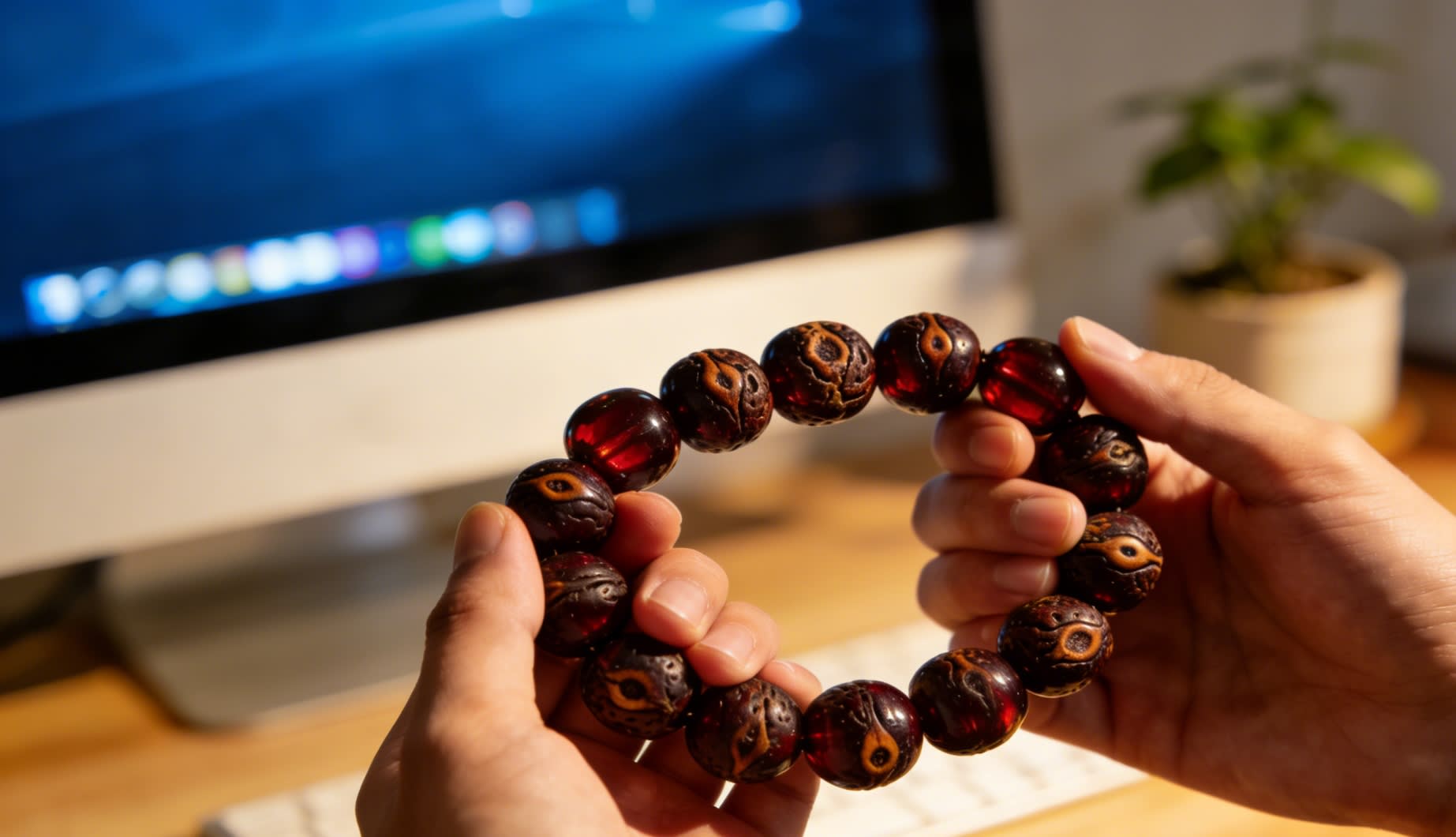
In the high-pressure environment of 2026, where professionals are constantly managing multi-floor office renovations, troubleshooting NAS accessibility, or optimizing web code for platforms like chinesecurator.com, the search for effective stress relief has taken an unexpected turn. While the West has seen the rise and fall of fidget spinners and weighted blankets, a growing number of global professionals are turning toward an 800-year-old Chinese tradition: Panwan (盘玩), or the art of bead rubbing.
Bead rubbing is more than just a tactile habit. It is a form of “dynamic meditation” that combines the rhythmic motion of the fingers with the long-term goal of transforming raw plant seeds into “living jewels.” This article analyzes the technical and psychological appeal of Panwan and provides a roadmap for those looking to build a mental health habit that leaves you with a tangible piece of art.
1. Why Gen Z is Ditching Fidget Spinners
The “fidget spinner” was a temporary solution to a permanent problem: the need for tactile feedback in a digital world. However, these plastic toys lack one critical element that Wenwan beads provide: Progress.
When you play with a fidget spinner, the object remains the same on Day 1 and Day 100. In contrast, the act of Panwan is a project with measurable milestones. As you rub a string of Bodhi seeds, your skin’s natural oils and the friction of your movement physically alter the object. It changes color, develops a glassy luster (Baojiang), and eventually takes on a translucent “jade-like” quality. For a project manager, this offers a satisfying sense of completion and growth that a static toy cannot replicate.
2. The Science of Tactical Satisfaction
The appeal of Panwan lies in the rich sensory feedback provided by different organic materials. The “Star and Moon” Bodhi seeds offer a slightly textured surface, while the “Vajra” seeds provide a sharp, stimulating pressure that can help ground a wandering mind during a stressful meeting.
| Bead Variety | Tactile Profile | Best For... |
|---|---|---|
| Star and Moon (Xingyue) | Smooth with subtle pitting; develops a "porcelain" feel over time. | Calming anxiety; long, meditative sessions. |
| Vajra (Jingang) | Deeply textured, rugged, and hard. Stimulates palm acupoints. | High-stress moments; seeking "sensory grounding." |
| Phoenix Eye (Fengyan) | Large, eye-shaped seeds with a smooth, waxy surface. | Deep focus; achieving a mahogany-red patina. |
| Old Wood (Zitan/Huali) | Silky, heavy, and often carries a faint natural fragrance. | Sensory relaxation; pairing with tea or reading. |
3. The Ritual: Building a Mental Health Habit
To turn bead rubbing into a genuine stress-management tool, one must move past “fidgeting” and into “ritual.” In the same way you might manage a server rack or a Tesla’s software updates, Panwan requires a disciplined environment.
Step 1: The “Pure Hand” Protocol
Just as we discussed in the Guide to Wenwan Gourds, cleanliness is the foundation of a professional patina. Before starting your session, wash your hands. This creates a psychological “boundary” between your work life and your relaxation time.
Step 2: The “Counting” Breath
Many practitioners use the beads as a physical anchor for breathing exercises. As your thumb moves over each bead, take one deep breath. A standard 108-bead mala represents exactly 108 breaths—a perfect 15-minute meditation cycle that can be performed even while sitting in a Tesla Model Y during a charging session.
Step 3: Tactical Rubbing Techniques
- The Single Roll: Using the thumb to rotate an individual bead against the index finger.
- The Slide: Passing the entire string through the palm, feeling the collective weight and texture.
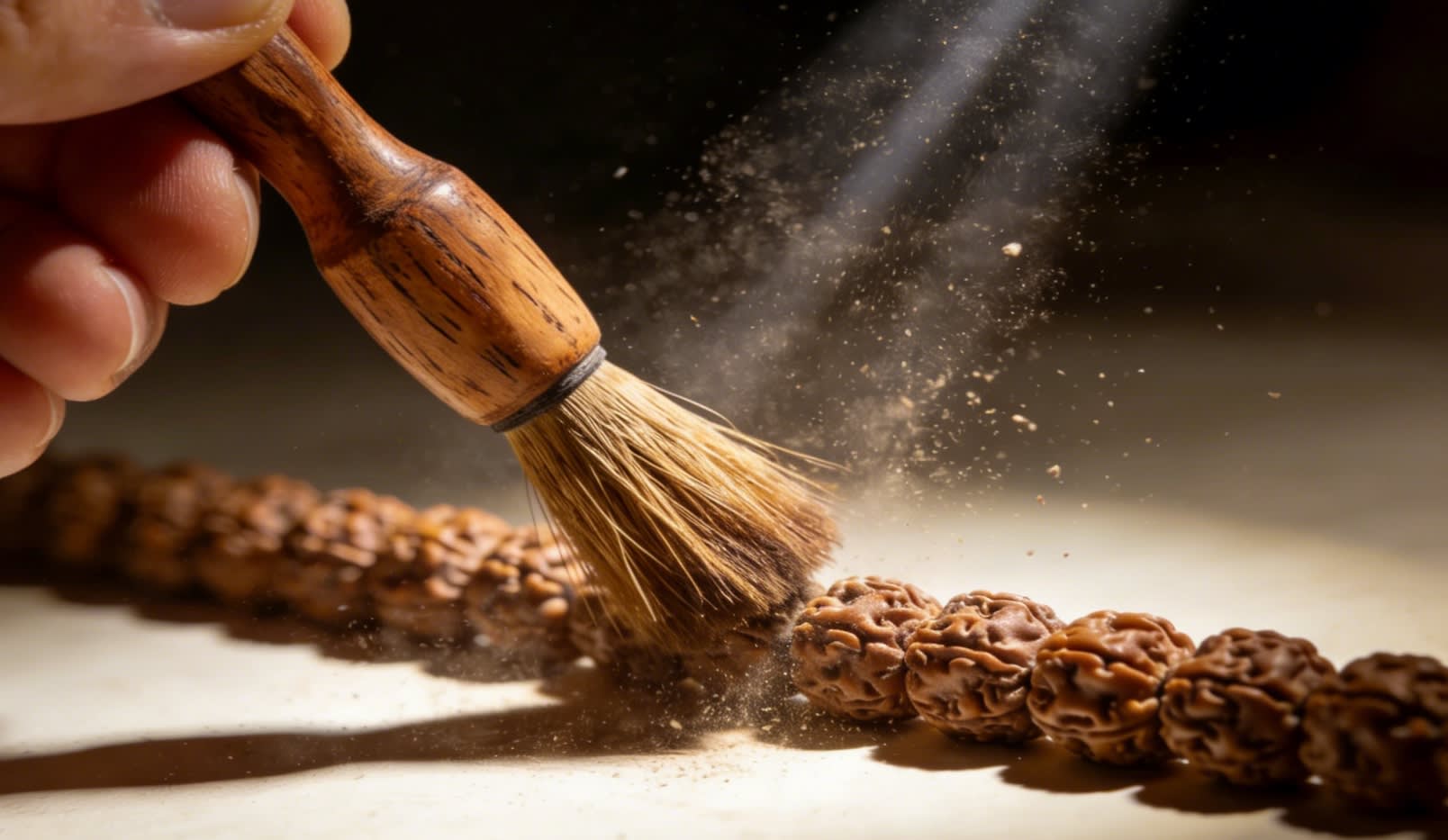
- The Polishing Brush: For textured seeds like Jingang, using a specialized hog-hair brush is essential. The repetitive motion of brushing the seeds is as therapeutic as the rubbing itself.
4. Baojiang: The Reward of Patience
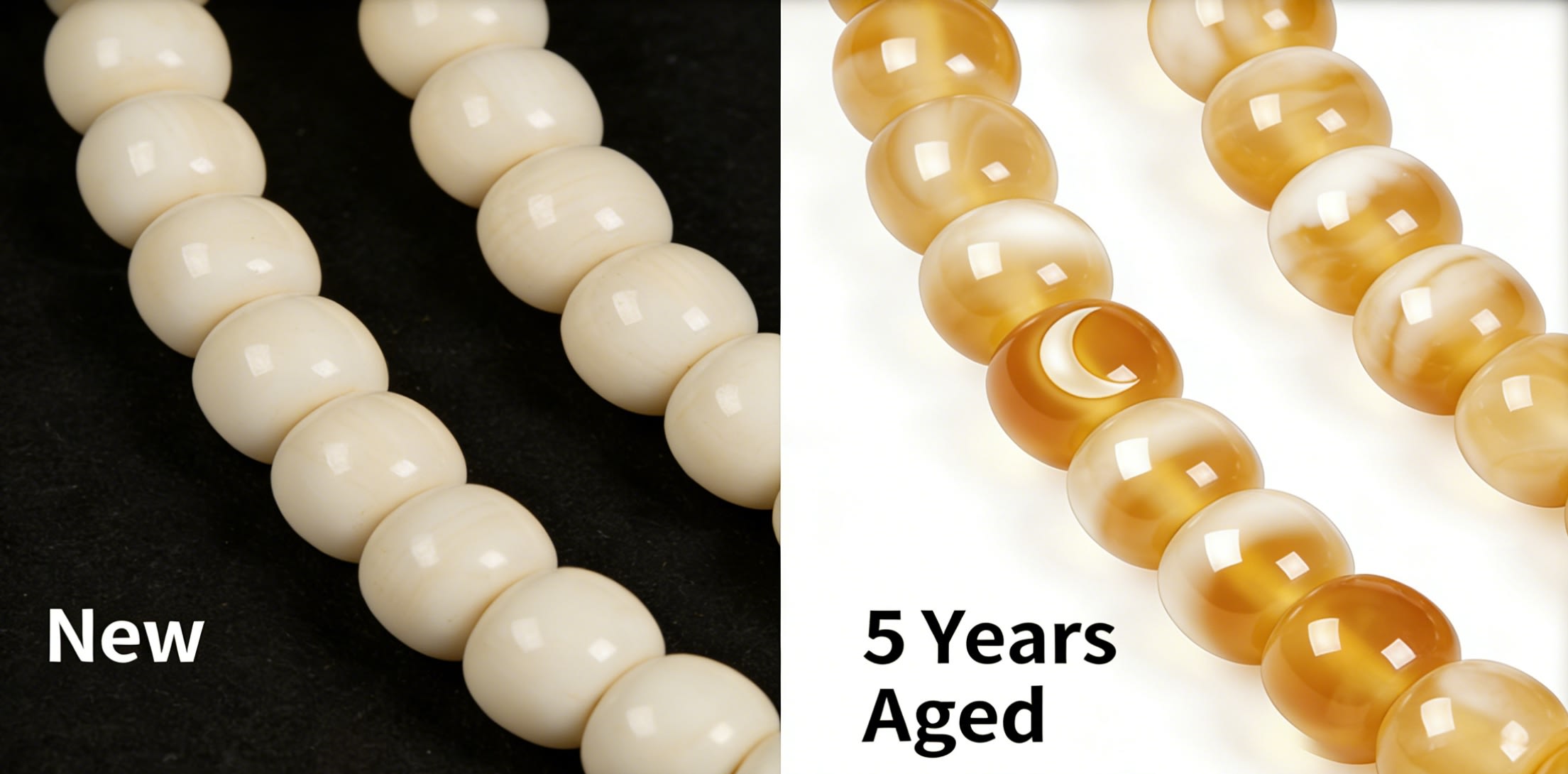
For the curator, the ultimate goal is Baojiang (包浆). This is a translucent, protective layer that forms when the natural oils of the hand oxidize on the surface of the bead.
In a world of instant gratification, Baojiang is the ultimate proof of commitment. It cannot be faked with chemicals or oils. Attempting to “cheat” by applying wax or artificial oils will result in a “dead” luster that lacks the depth and warmth of a naturally panned string. This mirrors the professional world: a project’s success is rarely about the final coat of paint, but about the quality of the foundation laid months earlier.
5. Maintenance: Protecting Your Investment
Like a home NAS or a high-end vehicle, Wenwan beads require periodic maintenance to prevent degradation.
- Temperature Control: Sudden shifts from a cold, air-conditioned office to a hot outdoor environment can cause seeds to crack. Store your beads in a fabric pouch when not in use.
- Sweat Management: While skin oils are good, excessive sweat contains salts that can turn beads gray. If your hands are particularly sweaty during a high-stakes call, use a soft cotton cloth to rub the beads instead of direct skin contact.
- The “Rest” Cycle: Beads need time to dry and oxidize. A common professional mistake is over-playing. Follow the “5-days on, 2-days off” rule to allow the patina to harden properly.
Final Thoughts
Panwan is the “slow-tech” answer to our high-tech stress. Whether you are navigating the complexities of an office renovation or simply trying to quiet your mind after a day of coding, the rhythmic click and the changing warmth of the beads offer a unique sanctuary.
The next time you feel the pressure rising, reach for your beads. Don’t just rub them—curate them. In the process of refining the wood or the seed, you might just find you are refining your own inner peace.
Interested in the deeper science of Wenwan materials? Check out our Introduction to Wenwan Culture or explore the specific art of Wenwan Gourds.

