
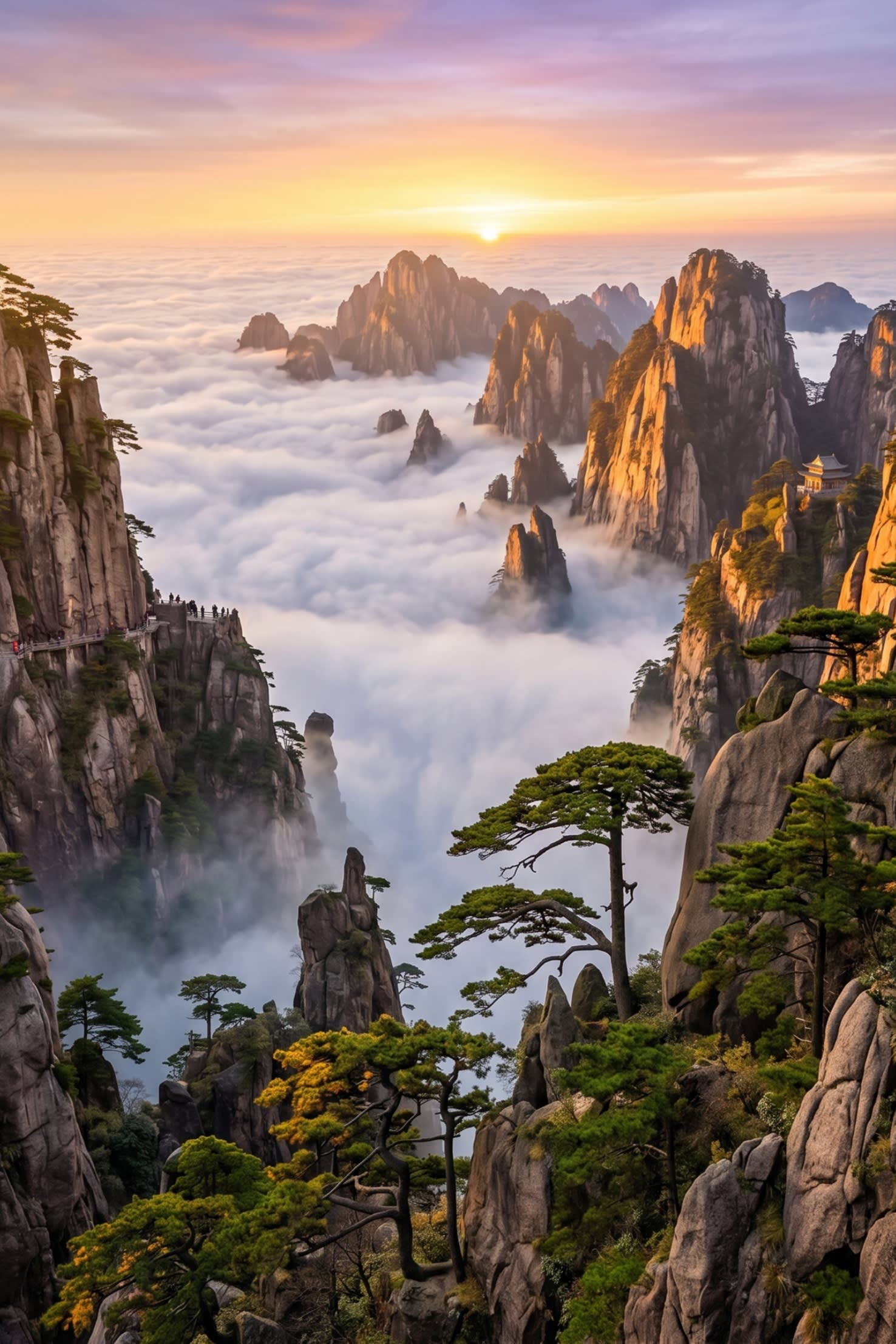
There is a local Chinese proverb that echoes through the valleys of Anhui: “Once you’ve climbed Huangshan, you’ll never want to climb another mountain.” As I stood on the precipice of Bright Top last year, legs trembling and lungs burning, I finally understood why.
In 2026, Huangshan (Yellow Mountain) remains the undisputed gold standard for Chinese landscape beauty. However, the romanticized photos of mist-covered pines hide a gritty reality. Between the jagged granite peaks and that legendary “Sea of Clouds” lies a physical gauntlet that will test your knees, your stamina, and your phone’s battery life. Is it worth the suffering? Let’s pull back the curtain on this UNESCO wonder.
The “60,000 Steps” Reality Check
For international travelers, Huangshan is often the crown jewel of a China itinerary. But many arrive woefully unprepared for the vertical scale. Despite the integration of modern “smart-trail” markers and high-speed logistics, the mountain remains a labyrinth of uneven, wind-whipped stone steps.
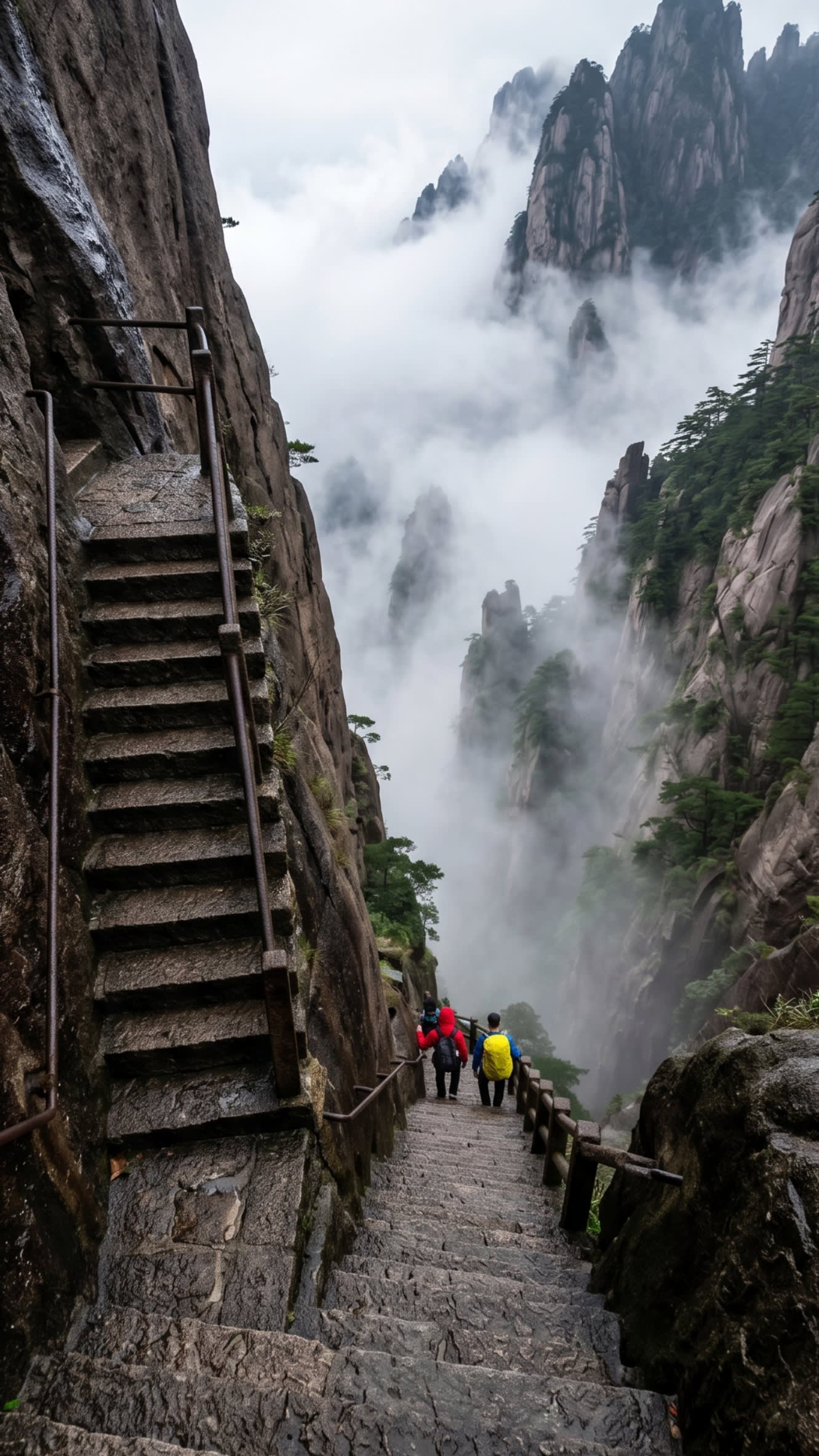
If you attempt a “purist” hike from the base to the summit—the legendary “Western Steps” or “Eastern Steps”—you are signing up for 6 to 8 hours of relentless verticality. As the locals say: “别被那些‘特种兵旅游’的视频骗了,黄山爬起来真的会‘废腿’。” (Don’t be fooled by those ‘Special Forces Travel’ videos; climbing Huangshan will really ‘waste your legs.’) If you aren’t an elite hiker, do yourself a favor and utilize the cable cars. Your future self will thank you.
Phase 1: Navigating the Hub (Huangshan North)
In 2026, the high-speed rail network makes the ascent significantly more accessible than in decades past.
- From Shanghai: 2.5 hours.
- From Hangzhou: 1.5 hours.
- The Transit: Arrive at Huangshan North Station (Huángshān Běizhàn). From here, hop on the “Blue Line” tourist bus (roughly 50 minutes) to reach the base at Tangkou Town.
If you find the transit logistics overwhelming, you can check my guide on mastering the high-speed rail system for stress-free travel tips.
Phase 2: Choosing Your Battle (Cable Car vs. Hardcore Hike)
“Conquering” Huangshan is a tactical game. To manage the massive 2026 foot traffic, officials employ a Smart Capacity System, but your route remains your most important decision:
- The “Efficient” Route (Back Mountain): Use the Yungu Cable Car (Yúngǔ Suǒdào). It bypasses the most punishing three-hour scramble, leaving you a relatively manageable—if still steep—40-minute walk to the summit hotels.
- The “Grand Canyon” Route (West Sea): This is the crown jewel. The West Sea Canyon Monorail—a glass-walled cabin sliding along the cliffside—offers the most dramatic, vertigo-inducing views of the vertical spires.
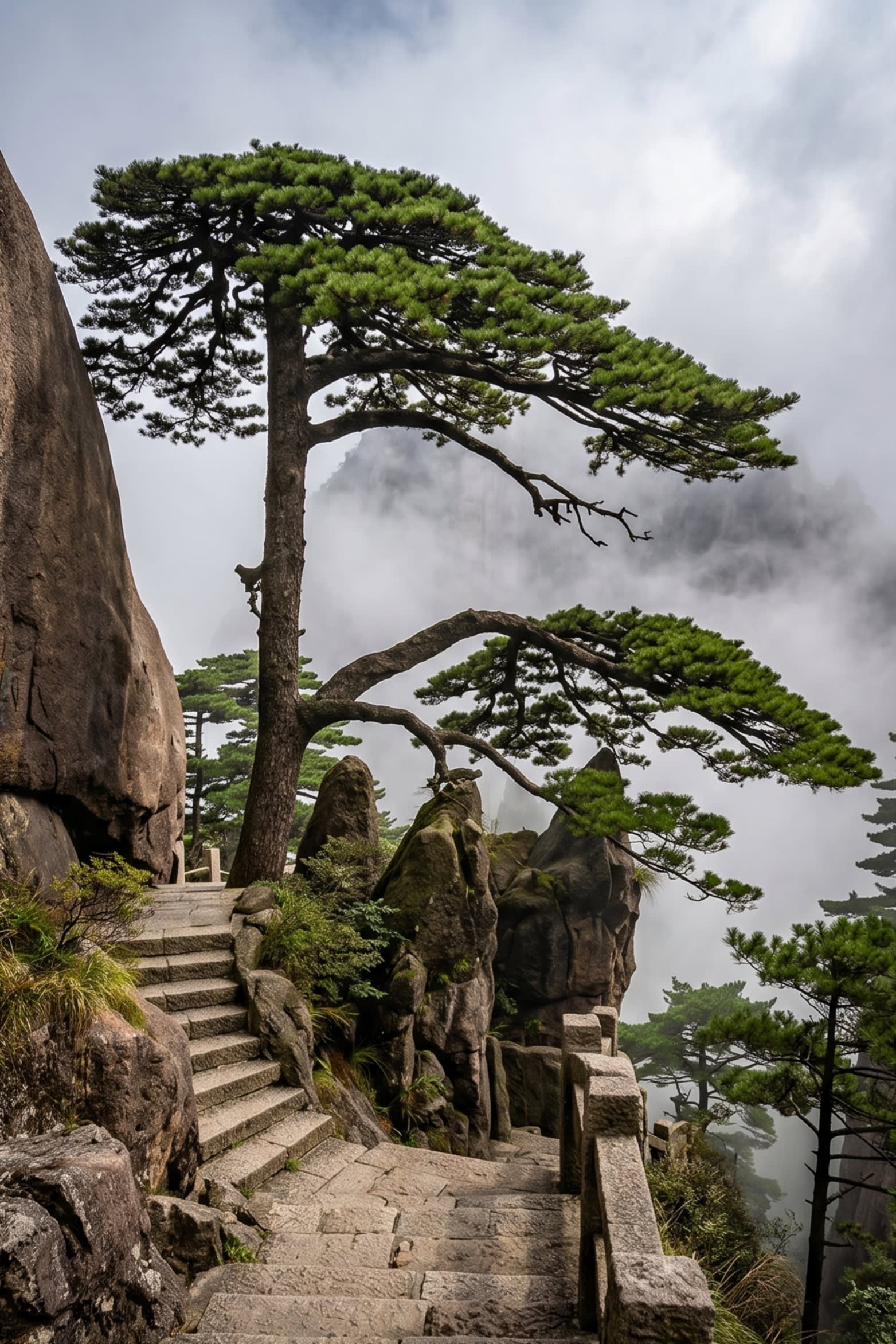
- The “Legendary” Route (Front Mountain): This is the domain of the famous Guest-Greeting Pine (Yíngkèsōng). It features the dreaded “Stairway to Heaven”—not for the faint of heart.
Pro-tip: To dodge the heaviest crowds, I always recommend the “Back Mountain up, Front Mountain down” strategy. It positions you perfectly to avoid the bulk of the tour groups that ascend during the morning hours.
Phase 3: The Payoff – Sunrise and the “Sea of Clouds”
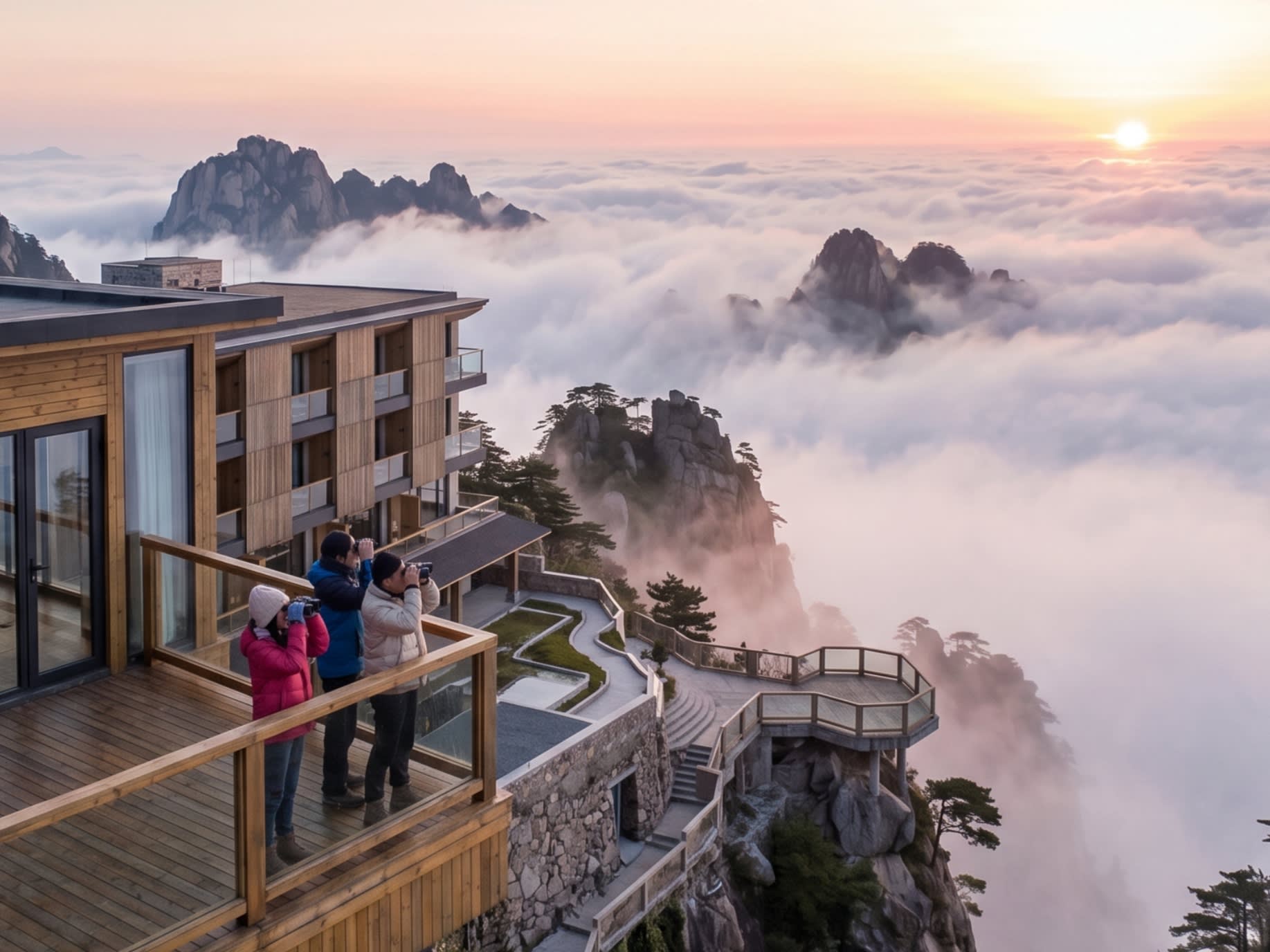
The number one question I receive is: Is the 4:30 AM wake-up call in freezing temperatures worth it?
When staying at summit-level accommodations like the Beihai Hotel or Xihai Hotel, you’ll often find them equipped with heavy down jackets for guests—a testament to the biting summit winds. You will hike in pitch-black darkness to reach vantage points like Bright Top (Guāngmíng Dǐng) or Lion Peak (Shīzi Fēng).
If luck is on your side, the Yúnhǎi (Sea of Clouds) unfolds below you. It is a surreal transformation where the fog settles beneath the peaks, turning the mountains into emerald islands adrift in an ocean of white velvet.
- The Reality: Expect a 40% chance of “White-out” (dense fog).
- The Verdict: When the clouds part, it is a spiritual, almost supernatural experience. If you’re craving more nature escapes after this, I highly recommend checking out the bamboo forests of Anhui to round out your trip.
Phase 4: Logistics and Survival
- Digital Reservations: You must secure your entry ticket and cable car slot via the official “Huangshan” WeChat mini-program 3–7 days in advance. Ensure your foreign passport is registered correctly within the system.
- Luggage Management: Please, leave the rolling suitcase at your hotel in Tangkou. Lugging a suitcase up these stairs is a social faux pas and a physical impossibility.
- The Porter Economy: Everything on the summit is carried by human shoulders. Prices for water and snacks will be 3-5x the city rate. Pack light, but consider bringing a high-quality insulated water bottle to stay hydrated without relying on single-use plastic.
A Culinary Reward: Hairy Tofu (毛豆腐)
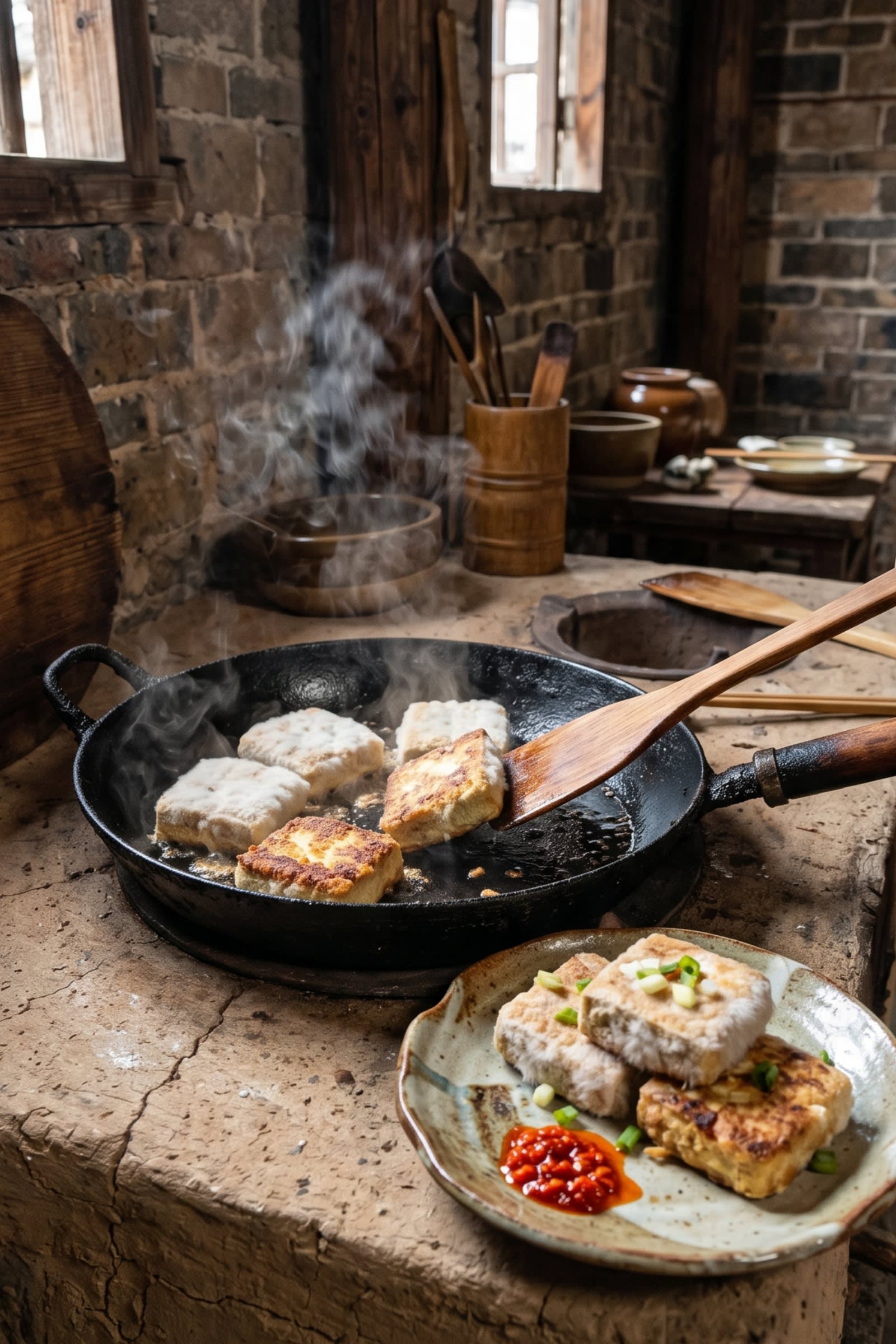
After your descent, head straight to Tunxi Old Street (Túnxī Lǎojiē). You are legally required (in my eyes) to try Máodòufu (Hairy Tofu). It sounds bizarre—a block of tofu fermented until it grows a white, fuzzy coat—but once deep-fried, it becomes creamy, rich, and intensely flavorful.
- Local Secret: “别被外表吓到,毛豆腐下锅油炸后真的‘香得掉渣’。一定要配上当地的辣酱!” (Don’t let the appearance scare you; once deep-fried, it’s fragrant enough to make you drool. You must pair it with the local chili sauce.)
Traveler’s Language Survival Table
| English | Chinese | Pinyin |
|---|---|---|
| Is there a sea of clouds today? | 今天有云海吗? | Jīntiān yǒu yúnhǎi ma? |
| When is the sunrise? | 几点出太阳? | Jǐdiǎn chū tàiyáng? |
| Where is the cable car? | 索道在哪里? | Suǒdào zài nǎlǐ? |
| My legs are sore. | 我腿疼。 | Wǒ tuǐ téng. |
Final Thoughts from the Curator
Huangshan demands respect—not just for its grandeur, but for the grit required to traverse it. Don’t just chase the sunrise. Chase the silence of the pines, the geometric patterns of the ancient stone, and that rare feeling of being truly “above the world.”
In 2026, technology eases the logistics, but the mountain itself remains untamed. My advice? Take the cable car up, wander as much as your heart desires on the summit, and glide back down. Your knees—and your memories—will thank you.
🛡️ Survivor's Packing List
- Knee Braces: Even if you’re a seasoned trekker, the thousands of stairs will test your joints.
- Power Bank: Cold temperatures drain smartphone batteries rapidly.
- Quick-Dry Layers: It’s humid during the climb but freezing at the peak.
- The "Magic" Stick: Pick up a cheap bamboo walking stick at the base; it provides essential balance on the steeper sections.
Disclaimer: As an Amazon Associate, ChinaCurator earns from qualifying purchases.