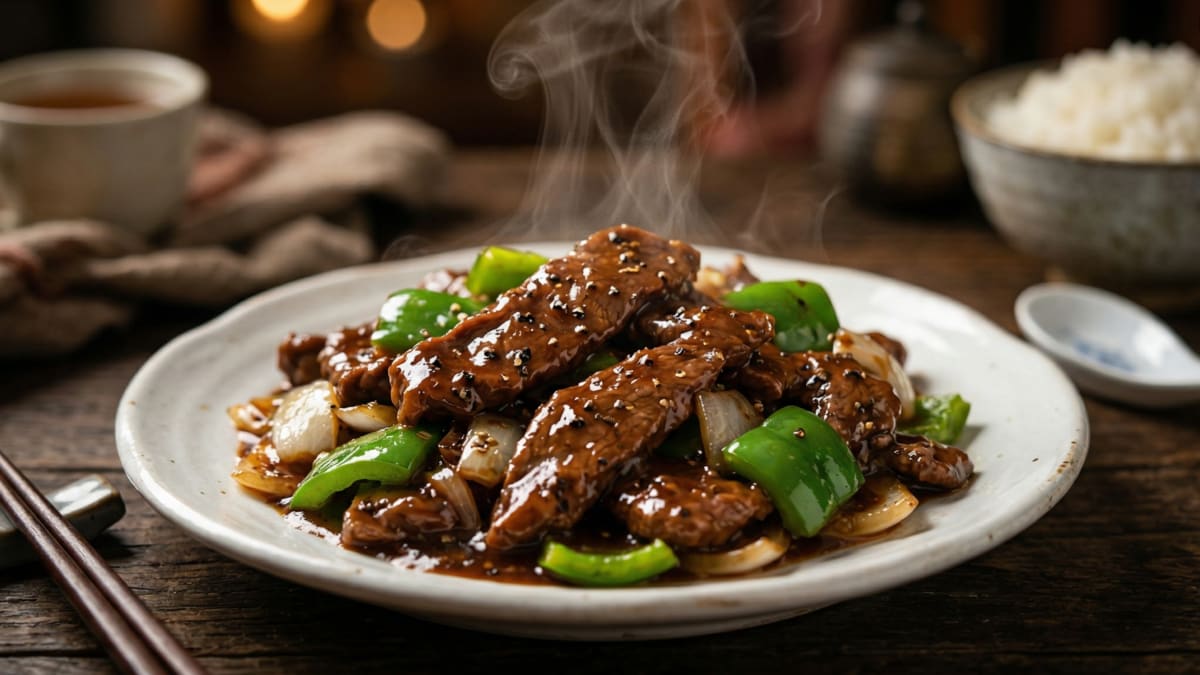

🥩 Introduction: The Ultimate Weeknight Takeout Classic
When you need a hearty, savory, and deeply satisfying dinner on the table in under 30 minutes, there is no better choice in the Chinese-American takeout arsenal than Pepper Steak (青椒炒牛柳 - Qīngjiāo chǎo niúliǔ).
Unlike dishes that require intense deep-frying or complex battering stations, Pepper Steak is a pure, unadulterated stir-fry. It celebrates the beautiful simplicity of three core ingredients: tender ribbons of beef, crisp bell peppers, and sweet white onions. These elements are bound together by a thick, umami-rich brown gravy that is heavily heavily accented with the sharp, aromatic bite of black pepper. Poured over a steaming bowl of Jasmine rice, it is the definition of comfort food.
But there is a catch. If you have ever tried making Pepper Steak at home without knowing traditional Chinese culinary techniques, you have probably experienced the “Curse of the Homemade Stir-Fry”: the beef turns out dry, grey, and as tough as a rubber tire, while the bell peppers cook down into a soggy, unappetizing mush.
Today, we are going to fix that forever. We are going to reveal the exact restaurant science behind incredibly velvety beef, explain the proper way to handle bell peppers, and teach you how to build a sauce that tastes like it came straight out of a professional wok.
🔬 The Science of Tenderness: Slicing, Baking Soda, and Velveting
The biggest difference between a home cook and a Chinese restaurant chef is how they treat their proteins. To get that legendary “melt-in-your-mouth” texture using an affordable cut like Flank Steak or Sirloin (牛里脊 - Niúlǐjǐ), you must master three steps.
1. Slicing Against the Grain (逆纹切 - Nì wén qiē)
Look at your raw steak. You will notice long, stringy muscle fibers running across the surface. If you slice parallel to these lines, your teeth will have to do the hard work of breaking them apart. You must practice Nì wén qiē (逆纹切)—slicing your knife perpendicular to those grain lines. By physically cutting the long muscle fibers into tiny segments, the meat instantly becomes easier to chew.
2. The Baking Soda Miracle
Here is a closely guarded restaurant secret: Baking Soda (小苏打 - Xiǎosūdǎ). Adding just a tiny pinch (1/4 teaspoon) of baking soda to your beef marinade fundamentally alters the pH level on the surface of the meat. This alkaline environment physically prevents the muscle proteins from bonding tightly together when they hit the hot wok. It is the ultimate tenderizer. Warning: Do not use too much, or your meat will taste metallic!
3. Velveting (上浆 - Shàngjiāng)
After the baking soda, you must coat the beef in water, soy sauce, and Cornstarch (玉米淀粉). The cornstarch creates a microscopic, protective gel layer around the beef. When you fry the meat, this barrier locks the natural juices inside, resulting in a texture that is impossibly soft, slippery, and velvety.

🫑 The Vegetable Strategy: “Duan Sheng” (断生)
The second most common mistake is overcooking the vegetables. In Chinese stir-frying, bell peppers should not be limp or soft. They must provide a vibrant, watery crunch that contrasts with the rich, heavy beef.
To achieve this, chefs use a concept called Duànshēng (断生), which means “just breaking the rawness.” You must sear the bell peppers and onions in a screaming hot wok for no more than 60 seconds. You want them to develop a slight, smoky blister on the outside while remaining completely raw and crunchy on the inside. You then remove them from the wok, build your sauce, and toss them back in at the very last second.
🛒 Ingredients List
The Beef & Velveting Marinade:
- 1 lb (about 450g) Flank Steak, Sirloin, or Round Steak (牛里脊), sliced 1/4-inch thick against the grain
- 1 tbsp Light Soy Sauce (生抽)
- 1 tbsp Shaoxing Cooking Wine (绍兴酒)
- 1/4 tsp Baking Soda (小苏打) - The ultimate tenderizing secret!
- 1 tbsp Cornstarch (玉米淀粉)
- 2 tbsp Water (the meat will absorb this for juiciness)
- 1 tbsp Cooking Oil (to seal the moisture and prevent sticking)
The Vegetables:
- 2 large Green Bell Peppers (青椒 - Qīngjiāo), seeds removed and cut into 1-inch squares. You can mix red and green for better color!
- 1 large White or Yellow Onion (洋葱), cut into 1-inch squares
- 3 cloves Garlic, finely minced (蒜末)
- 1 thumb-sized piece of fresh Ginger, finely minced (姜末)
The Savory Black Pepper Sauce:
- 3 tbsp Oyster Sauce (蚝油) - The thick, umami-rich soul of the sauce.
- 1.5 tbsp Light Soy Sauce (生抽)
- 1 tsp Dark Soy Sauce (老抽) - For that appetizing, dark restaurant color.
- 1 tbsp Granulated Sugar (糖)
- 1.5 tsp Freshly Cracked Black Pepper (黑胡椒碎 - Hēi hújiāo suì) - Do not use fine black pepper dust! You need coarse cracks for the right flavor.
- 1/2 tsp Toasted Sesame Oil (芝麻油)
- 1/2 cup Beef Broth or Water
- 1 tbsp Cornstarch (for thickening)
The Frying:
- 3 tbsp high-heat Cooking Oil (peanut, canola, or vegetable oil)
🍳 Step-by-Step Instructions
1. Slice and Velvet the Beef (上浆): Place your thinly sliced beef in a mixing bowl. Add the water, light soy sauce, Shaoxing wine, and baking soda. Use your hands to aggressively massage the liquids into the meat until the bowl is dry (the beef will drink it all up like a sponge). Add the cornstarch and massage again until sticky. Finally, pour in the 1 tbsp of cooking oil to coat the slices. Let it sit for 15 to 20 minutes.
2. Whisk the Sauce: In a small bowl, whisk together the oyster sauce, light soy sauce, dark soy sauce, sugar, freshly cracked black pepper, sesame oil, beef broth, and cornstarch. Ensure the sugar and cornstarch are completely dissolved. Set this aside.
3. Sear the Beef (滑炒 - Huáchǎo): Heat your wok or a large, heavy-bottomed skillet over high heat until it smokes. Add 1.5 tablespoons of cooking oil. Carefully drop the marinated beef slices into the hot wok. Do not stir immediately! Let them sit undisturbed for 30 seconds to develop a beautiful brown sear (Maillard reaction). Then, use a spatula to quickly stir-fry for another 60 to 90 seconds until the beef is about 80% cooked. Remove the beef and set it aside on a plate.

4. Blister the Vegetables: Wipe the wok clean if necessary, and place it back over high heat. Add the remaining 1.5 tablespoons of oil. Toss in the green bell pepper and onion squares. Stir-fry aggressively for just 60 seconds. You want to see slight blistering or charring on the edges of the onions, but the peppers must remain vibrant and crisp (断生).
5. Add the Aromatics: Push the peppers and onions to the side of the wok. In the center, add the minced garlic and ginger. Let them sizzle for 10 seconds until highly fragrant.
6. Thicken the Glaze (勾芡 - Gōuqiàn): Give your prepared black pepper sauce a quick stir to lift the settled cornstarch, and pour it directly into the wok with the vegetables. Stir constantly. Within 30 seconds, the sauce will bubble, reduce, and transform into a thick, glossy, dark brown gravy.

7. The Final Reunion: The moment the sauce is thick and glossy, dump your rested beef (and any juices from the plate) back into the wok. Turn off the heat immediately. Toss everything together for 15 seconds until the beef and vegetables are perfectly coated in the rich pepper glaze.
8. Serve: Plate it up immediately. The beef will be impossibly tender, the peppers will have a loud, satisfying crunch, and the black pepper sauce will warm you from the inside out. Serve with copious amounts of hot steamed rice!
💡 Troubleshooting & Pro Tips
- Why does my sauce taste flat? You probably used pre-ground, powdery black pepper from a tin. Pre-ground pepper loses its volatile aromatic oils almost instantly. For an authentic, punchy Pepper Steak, you absolutely must use a pepper grinder and use coarsely cracked black peppercorns (黑胡椒碎).
- My beef is still tough! You either sliced the beef parallel to the grain instead of against it, or you skipped the baking soda and cornstarch velveting process. Also, ensure your pan is screaming hot. If the pan is cold, the beef will boil in its own juices and turn rubbery.
- The sauce is watery. You either didn’t let the sauce boil long enough in Step 6 to activate the cornstarch, or your bell peppers released too much water because you cooked them for too long on low heat. Stir-fry vegetables fast and hot!
📦 Shop Authentic Kitchen Essentials
To achieve that legendary restaurant-quality velvety beef and perfectly balanced savory sauce, these specific ingredients are absolute game-changers. (As an Amazon Associate, ChinaCurator earns from qualifying purchases.)
- Lee Kum Kee Premium Oyster Sauce (蚝油) - The absolute soul of the sauce. It provides the thick body and massive umami flavor that soy sauce alone cannot achieve.
- Pearl River Bridge Dark Soy Sauce (老抽) - The mandatory ingredient for giving the beef that appetizing, dark mahogany restaurant color.
- Traditional Carbon Steel Wok - The ultimate vessel for searing the beef quickly and blistering the peppers without making them mushy.
- High-Quality Pepper Grinder - Essential for getting coarse, highly aromatic fresh black pepper cracks.