

No matter where you are in the world, the weather is the ultimate, universal icebreaker. Whether you are stepping into a taxi in Beijing, waiting for an elevator in Shenzhen, or buying breakfast from a street vendor, talking about the weather is the easiest way to strike up a conversation.
But if your entire weather vocabulary consists of “Hěn rè” (很热 - very hot) and “Hěn lěng” (很冷 - very cold), you are missing out on a massive cultural experience.
China is a geographically massive country. The weather here is not just a backdrop; it is a full-body experience. In the north, winters are so dry and freezing that rivers turn into ice rinks. In the south, summers are so humid that walking outside feels like swimming through hot soup.
To truly connect with native speakers, you need to upgrade your vocabulary. You need to know how to complain about the humidity, brag about the autumn breeze, and navigate the great “North vs. South” winter debate. Here is your ultimate guide to sounding like a true local when talking about the weather in Chinese.
1. The Basics: Moving Beyond “Good Weather”
First, let’s clear up the fundamentals. The word for weather is 天气 (tiānqì). When beginners want to say it is sunny or raining, they often try to literally translate English grammar, resulting in awkward sentences.
Here are the natural, everyday ways to describe the basic conditions:
- Sunny Day: 晴天 (Qíngtiān).
- Usage: “今天是个大晴天!” (Jīntiān shì ge dà qíngtiān! - Today is a beautifully sunny day!)
- Cloudy/Overcast: 阴天 (Yīntiān).
- Usage: “今天是阴天,好像要下雨。” (Jīntiān shì yīntiān, hǎoxiàng yào xiàyǔ. - It’s overcast today, looks like it’s going to rain.)
- Raining: 下雨 (Xiàyǔ). Notice this is a verb (to drop rain), not an adjective!
- Usage: “外面在下雨。” (Wàimiàn zài xiàyǔ. - It is raining outside.)
- Snowing: 下雪 (Xiàxuě).
- Usage: “明天下雪吗?” (Míngtiān xiàxuě ma? - Is it going to snow tomorrow?)
2. Summer Survival: The “Sauna Day” (桑拿天)
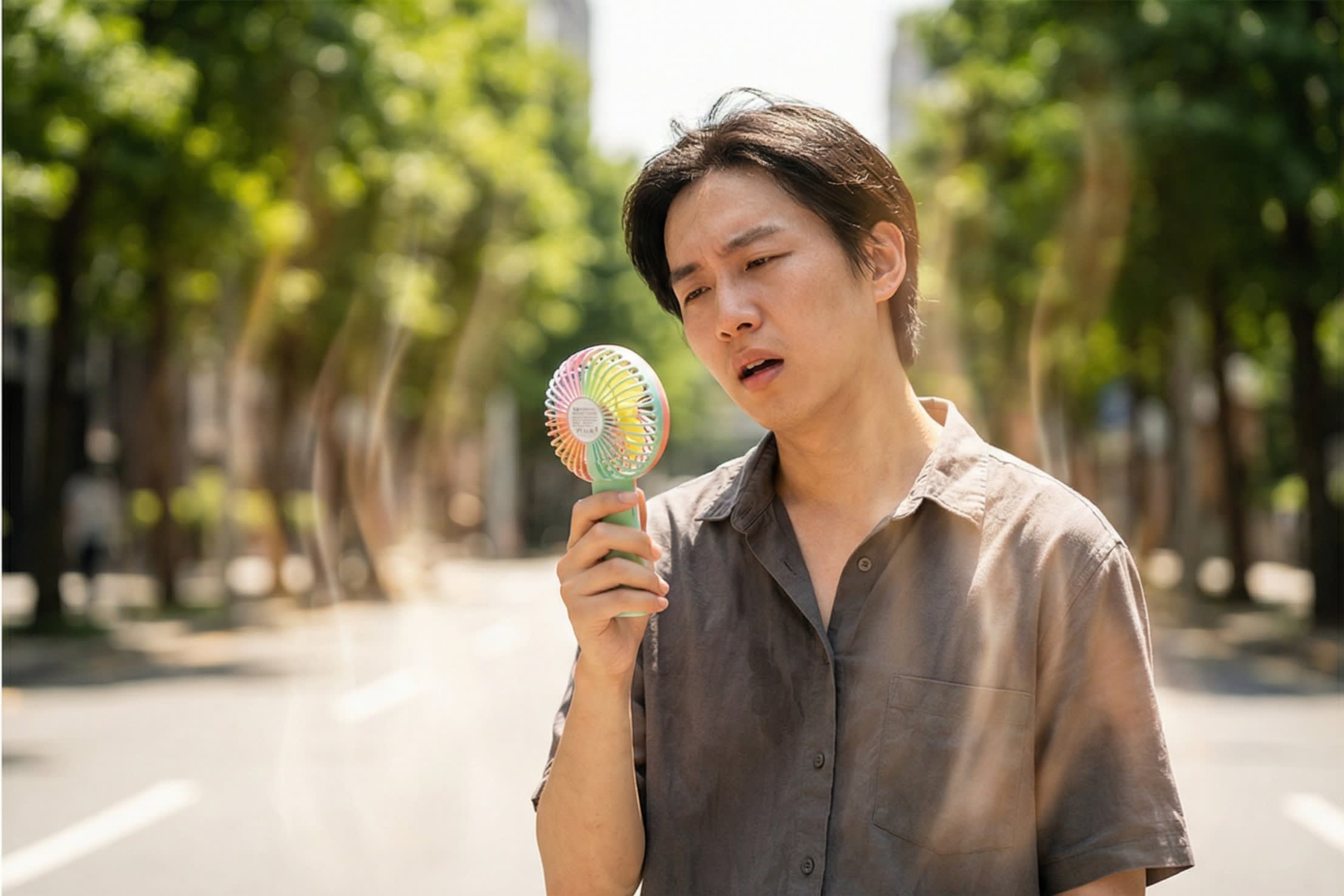
Summer in a large portion of China (especially cities like Shanghai, Guangzhou, and Chongqing) is not just hot. It is aggressively, violently humid. Saying “很热” (hěn rè) simply does not do it justice. If you want to impress a local, you need to use the vocabulary of suffering.
闷热 (Mēnrè) - Muggy and Stifling
This is the most important summer word you will ever learn. The character 闷 (mēn) literally depicts a heart (心) trapped inside a door (门). It represents that suffocating, stuffy feeling when the air is thick with moisture and there is zero breeze.
- Example: “今天太闷热了,我快喘不过气了。” (Jīntiān tài mēnrè le, wǒ kuài chuǎn bú guò qì le. - It’s so stiflingly hot today, I can barely breathe.)
桑拿天 (Sāngná tiān) - Sauna Weather
When the temperature hits 38°C (100°F) with 90% humidity, locals call it “Sauna Weather.” Stepping out of an air-conditioned mall into the street literally feels like opening the door to a steam room.
- Example: “又是桑拿天,出门五分钟,流汗两小时。” (Yòu shì sāngná tiān, chūmén wǔ fēnzhōng, liúhàn liǎng xiǎoshí. - It’s sauna weather again. Step outside for five minutes, sweat for two hours.)
3. The Great Winter Debate: Wet Cold vs. Dry Cold
Every winter, the Chinese internet erupts into a hilarious, never-ending debate between Northerners and Southerners about who has the worse winter. Understanding this debate is a masterkey to Chinese small talk.
Northern China: 干冷 (Gānlěng) - Dry Cold
In cities like Beijing and Harbin, the temperature easily drops to -15°C (5°F). However, the air is bone-dry. This is called 干冷 (gānlěng). Because it is a physical attack, you can defend against it by wearing heavy down jackets (羽绒服 - yǔróngfú). Most importantly, Northern China has a central heating system (暖气 - nuǎnqì), meaning indoors, people are walking around in T-shirts.
Southern China: 湿冷 (Shīlěng) - Wet Cold
In cities like Shanghai and Hangzhou, the temperature might only drop to 2°C (35°F), but it rains constantly. This is the dreaded 湿冷 (shīlěng). The freezing moisture penetrates your clothes, your bones, and your soul. It is a magical, magical attack. Worst of all? There is no central heating in the South.
-
The Southern Winter Joke: “In the North, you go indoors to get warm. In the South, you go outdoors to get warm (in the sun).”
-
Small Talk Example: “我不怕北方的干冷,但我真的受不了南方的湿冷!” (Wǒ bú pà běifāng de gānlěng, dàn wǒ zhēnde shòubuliǎo nánfāng de shīlěng! - I’m not afraid of the North’s dry cold, but I really cannot stand the South’s wet cold!)
4. Specific Phenomenons: Smog, Typhoons, and Perfect Autumns
To round out your vocabulary, you need to know a few specific weather events that dominate different seasons.
- 雾霾 (Wùmái) - Smog/Haze: While air quality in China has improved dramatically over the last decade, smoggy days still happen, especially in winter.
- Example: “今天雾霾很严重,记得戴口罩。” (Jīntiān wùmái hěn yánzhòng, jìde dài kǒuzhào. - The smog is very heavy today, remember to wear a mask.)
- 台风 (Táifēng) - Typhoon: If you live in coastal cities like Shenzhen or Hong Kong, late summer brings typhoons. Entire cities shut down, and people stay home.
- Example: “明天有台风,学校停课。” (Míngtiān yǒu táifēng, xuéxiào tíng kè. - There is a typhoon tomorrow, classes are suspended.)
- 秋高气爽 (Qiū gāo qì shuǎng): This is a beautiful four-character idiom (Chengyu) used exclusively for autumn. It literally means “The autumn sky is high and the air is crisp.” It is the highest compliment you can give to an October day in Beijing.
5. The Chinese Weather Cheat Sheet
Bookmark this matrix to effortlessly upgrade your small talk before your next outing.
| The Weather | Chinese & Pinyin | The Vibe / Meaning | Best Situation to Use It |
|---|---|---|---|
| Sunny Day | 晴天 (Qíngtiān) | Clear, blue skies. | Basic everyday observation. |
| Stifling / Muggy | 闷热 (Mēnrè) | Zero breeze, suffocating humidity. | Complaining about Southern summers. |
| Sauna Weather | 桑拿天 (Sāngná tiān) | Hot, thick, and sweaty. | When stepping outside instantly ruins your outfit. |
| Dry Cold | 干冷 (Gānlěng) | Freezing but dry (physical attack). | Describing winter in Beijing or Harbin. |
| Wet Cold | 湿冷 (Shīlěng) | Damp, bone-chilling (magical attack). | Describing winter in Shanghai or Hangzhou. |
| Crisp Autumn | 秋高气爽 (Qiū gāo qì shuǎng) | Perfect, refreshing autumn weather. | Praising a beautiful October day. |
Final Thoughts from Feng
In Chinese culture, talking about the weather is rarely just about the weather. It is a pathway to showing care and hospitality.
If you complain that it is shīlěng (wet cold), your Chinese friend will immediately tell you to “wear more clothes” (多穿点 - duō chuān diǎn). If you complain about the sāngná tiān (sauna weather), they will inevitably tell you to drink more warm water to protect your stomach.
By mastering these native weather terms, you aren’t just learning meteorology; you are unlocking the beautiful, caring rhythm of daily Chinese relationships. So, step outside, check the sky, and start complaining about the humidity like a true local!
Want to learn more about navigating daily life in China? Read our guide on Why Chinese People Drink Hot Water or master the ultimate 7 Chinese Idioms Natives Actually Use.