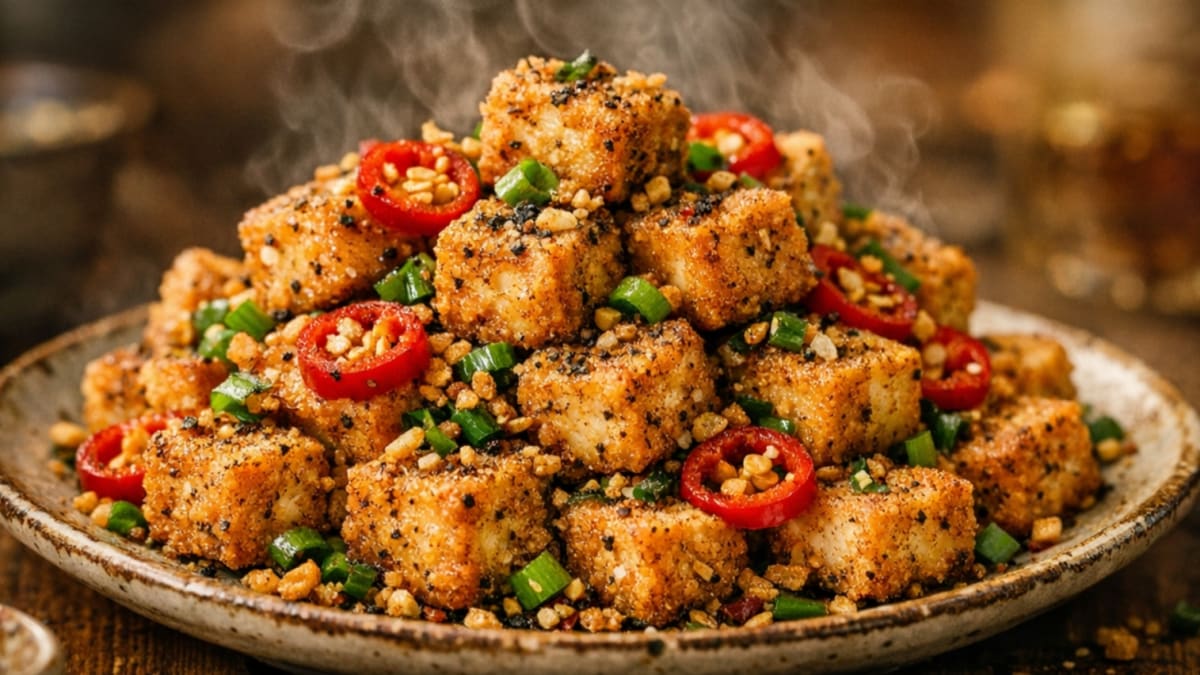
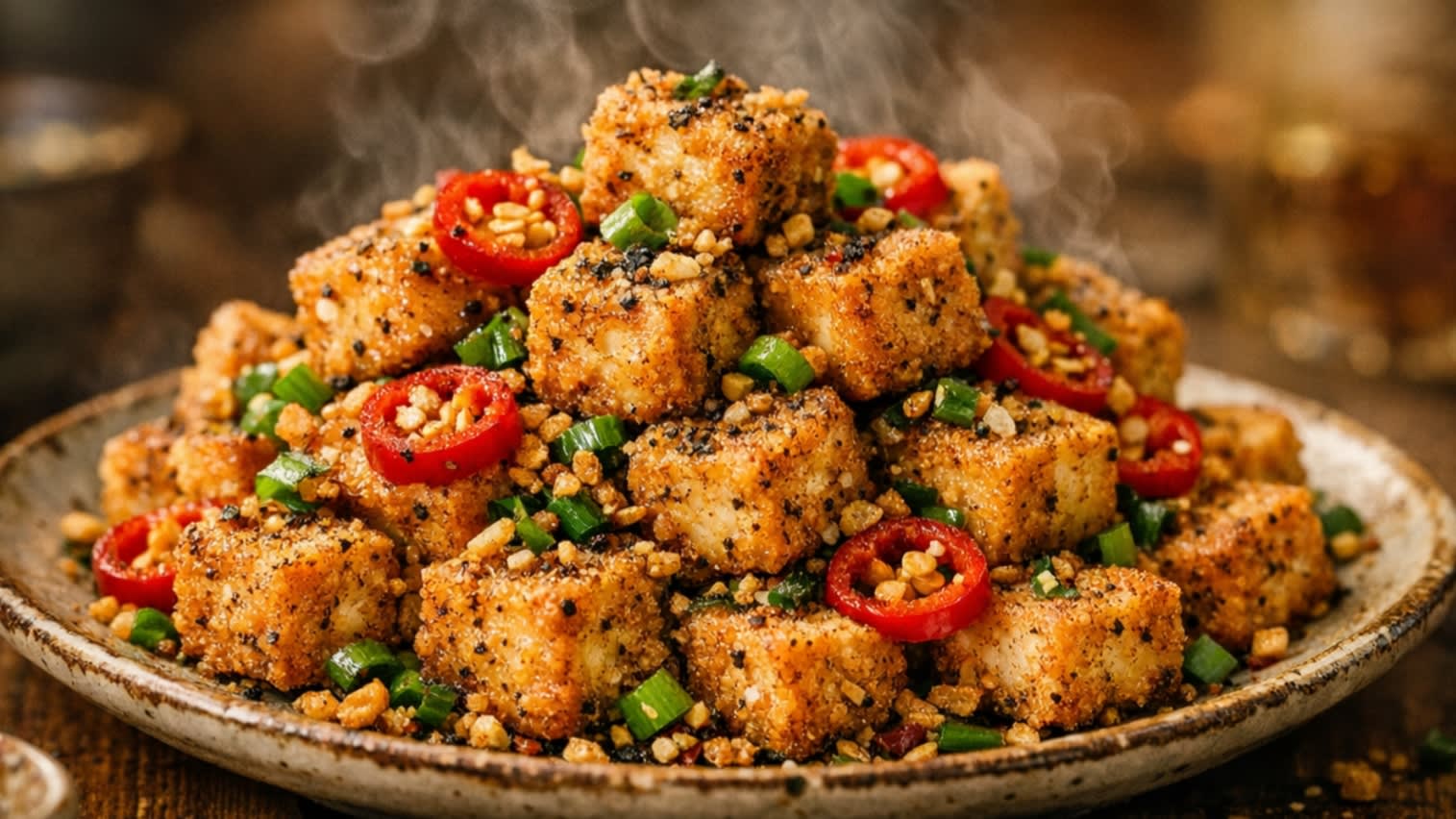
🧊 Introduction: The Undisputed King of Vegan Appetizers
When I first started exploring the noisy, crowded kitchens of Cantonese Dim Sum parlors, I was often overwhelmed by the sheer variety of dishes. Yet, there was one item that consistently drew me back—a humble appetizer that bridge the gap between dedicated meat-eaters and vegans. It is the legendary Salt and Pepper Tofu (椒盐豆腐 - Jiāoyán Dòufu).
In my own kitchen, my early attempts were, frankly, disastrous. I remember pulling out a tray of limp, greyish tofu squares that had absolutely no structural integrity, essentially turning into a sad puddle of starch. I realized then that Chinese cuisine isn’t just about throwing ingredients into a wok; it is about the physics of texture and heat.
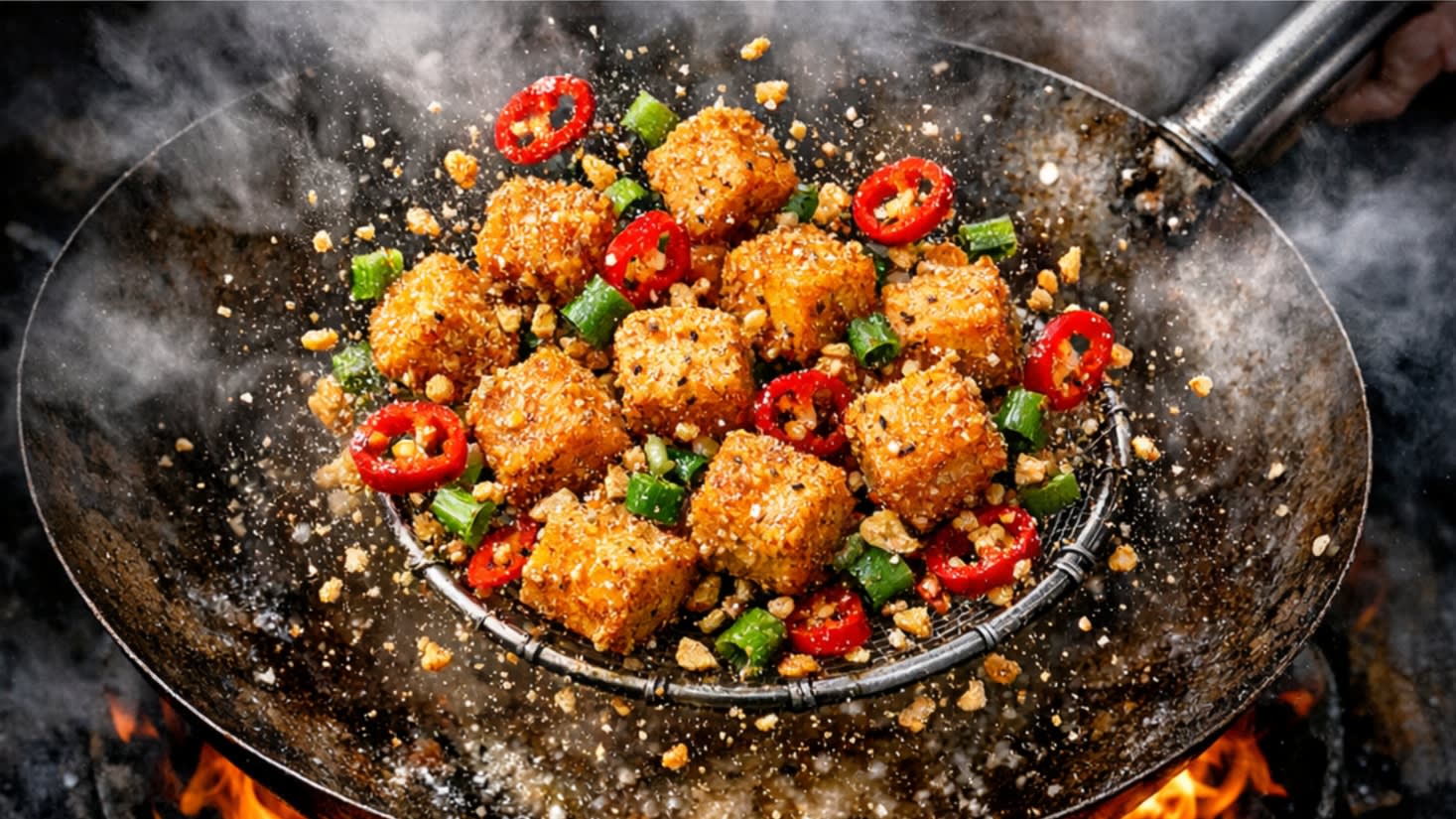
When executed by a master chef, this dish is a miracle of culinary contrast. The exterior of the cube is encased in a shatteringly crisp, craggy crust. As you bite through that delicate shell, you are met with a piping hot, silken interior that practically melts. It is the ultimate expression of the Chinese concept Wàisū lǐnèn (外酥里嫩 - Crispy on the outside, tender on the inside).
Today, I am going to guide you through the process of reclaiming this dish. We’ll look at the specific starch required for an indestructible crust and the roasted spice blend that elevates this simple soybean block into an umami-packed masterpiece.
🧱 The Foundation: Choosing and Pressing the Tofu
The first mistake I made was buying the wrong block. If you use “Silken” (嫩豆腐 - Nèn dòufu) tofu, it will disintegrate on contact with hot oil. Conversely, some “Extra-Firm” blocks are so dense that the interior turns rubbery during the frying process.
You want to look for standard Firm Tofu (老豆腐 / 北豆腐 - Lǎo dòufu), usually found in the refrigerated section in a tub of water.
The Physics of Pressing (压水 - Yā shuǐ)
Even with the right tofu, moisture is your enemy. If the tofu is wet, the steam generated by the internal water will blow the crust off the cube, leaving you with a soggy, unappealing mess.
I’ve found that pressing the tofu is the most crucial, non-negotiable step. Wrap the block in paper towels, set a cutting board over it, and add a heavy cast iron skillet on top for at least 20 minutes. This creates microscopic gaps within the tofu structure, which eventually allows the seasoning to penetrate deeper into the cube. If you enjoy authentic tofu textures, you might also want to try my Authentic Sichuan Mapo Tofu recipe, which uses a different but equally fascinating technique.
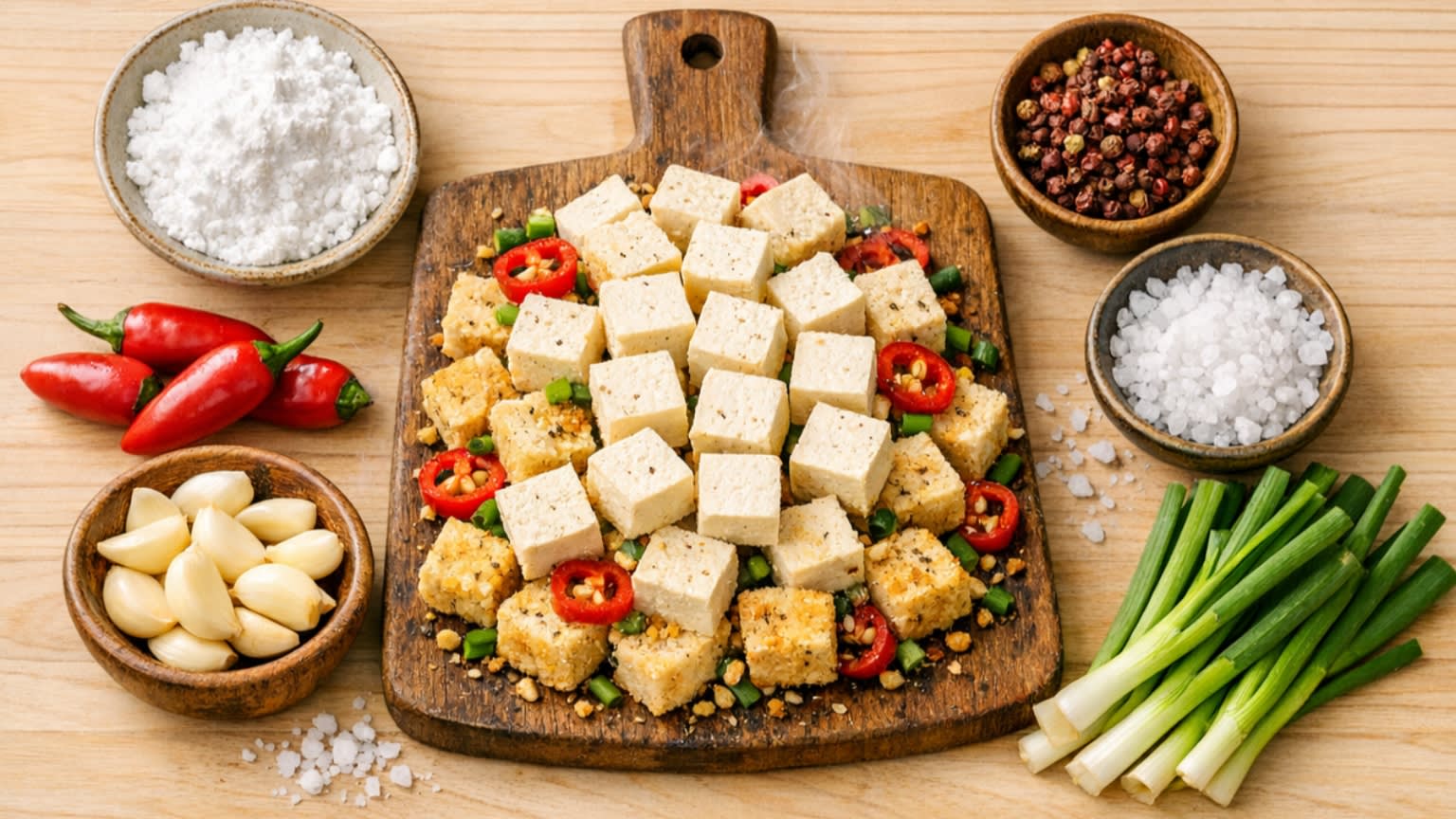
🔬 The Indestructible Crust: Sweet Potato Starch
When I first learned why my crust went soggy within minutes, I was shocked to find that standard wheat flour was the culprit. Wheat flour contains gluten, which acts like a sponge, soaking up oil and moisture.
To get that glass-like, craggy restaurant crust, you need Sweet Potato Starch (红薯淀粉 - Hóngshǔ diànfěn). Unlike fine cornstarch, this starch often comes in slightly coarse, tiny granules. When these hit the boiling oil, they expand and fry into a scaly, brittle shell. It is the secret weapon that separates a home cook from a street-food pro.
🧂 Decoding the “Jiao Yan” (椒盐): The Soul of the Dish
The label “Salt and Pepper” in Western grocery stores usually refers to standard table salt and cracked black pepper. In Chinese cooking, Jiāoyán (椒盐) is an entirely different beast—it is a toasted, fragrant, and slightly numbing spice powder.
I always toast whole Sichuan Peppercorns (花椒 - Huājiāo) and sea salt together in a dry carbon steel wok until the peppercorns are fragrant and the salt is slightly golden. Grinding this at home gives you a depth of flavor that store-bought powder simply cannot mimic.
| Ingredient Type | Common Chinese Name | Function |
|---|---|---|
| Firm Tofu | Lǎo dòufu (老豆腐) | Structural base |
| Sweet Potato Starch | Hóngshǔ diànfěn (红薯淀粉) | Shatteringly crisp crust |
| Sichuan Peppercorns | Huājiāo (花椒) | Numbing umami flavor |
🛒 Essential Ingredients
- Firm Tofu (老豆腐 - Lǎo dòufu): 1 block, pressed and cubed.
- Sweet Potato Starch (红薯淀粉 - Hóngshǔ diànfěn): 1 cup for coating.
- Sichuan Peppercorns (花椒 - Huājiāo): 1 tbsp for the spice blend.
- Aromatics: 5 cloves of minced garlic, 1-2 sliced red chilies, and fresh scallions.
🍳 Step-by-Step Instructions
1. Craft the Spice Blend: Toast your salt and peppercorns in a dry wok. Once they release a citrusy, floral scent, grind them with white pepper and five-spice powder. This is the “Jiao Yan” that makes the dish pop.
2. Coat and Rest: Toss your pressed tofu cubes in the starch. Do not rush this; ensure each side is fully coated. I like to let the cubes rest on a wire rack for five minutes. This lets the starch absorb a bit of surface moisture, creating a bond that won’t fall off during frying.
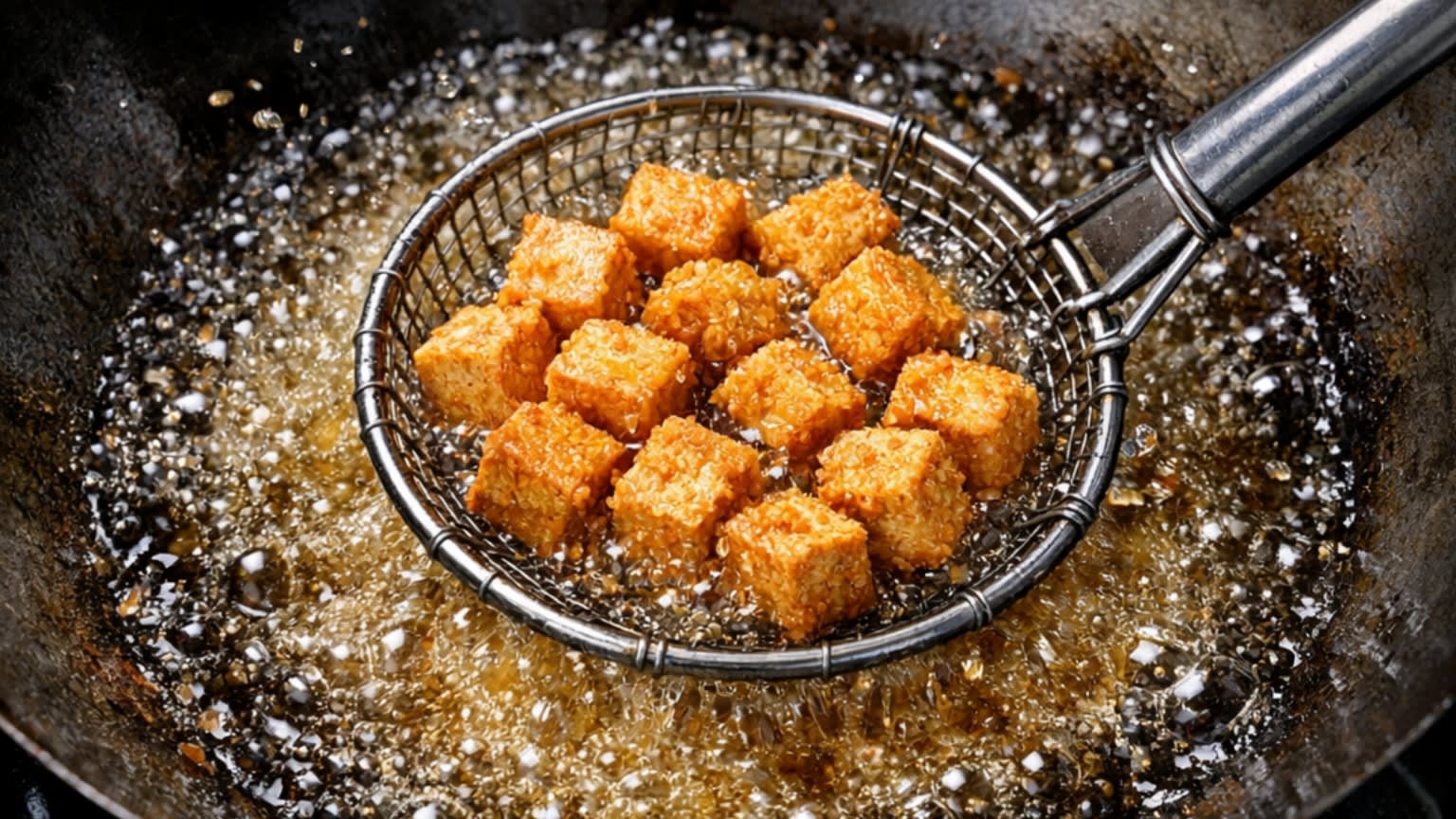
3. The Double Fry (复炸 - Fùzhá): I cannot emphasize this enough: you must fry twice. The first fry at 350°F (175°C) sets the structure. The second fry at 400°F (200°C) is where the magic happens. Use a sturdy stainless steel spider strainer to remove the tofu safely.
4. The Final Toss: After draining, stir-fry your garlic and chilies until fragrant. Turn off the heat, add the tofu back in, and toss with the spice blend and scallions. The residual heat will marry the spices to the crust perfectly.
💡 Troubleshooting My “Failures”
- The Batter Fell Off: You didn’t press the tofu long enough. Moisture is the enemy of the crust.
- Bitter Garlic: Keep your heat on medium-low when you toss in the garlic at the end. Garlic burns in seconds and turns sharp and acrid.
- Healthier Version: While deep frying is traditional, I’ve had success using an air fryer. Just spray the coated cubes generously with oil and fry at 400°F (200°C) for 15-18 minutes. It’s not quite the same as the wok-fried version, but it still delivers a satisfying crunch.
If you are looking for more ways to master the wok, check out my guide on The Ultimate Beef Chow Fun (Gon Chau Ngau Ho)—another dish that relies on the mastery of high-heat cooking. Happy cooking!
Disclaimer: As an Amazon Associate, ChinaCurator earns from qualifying purchases.