
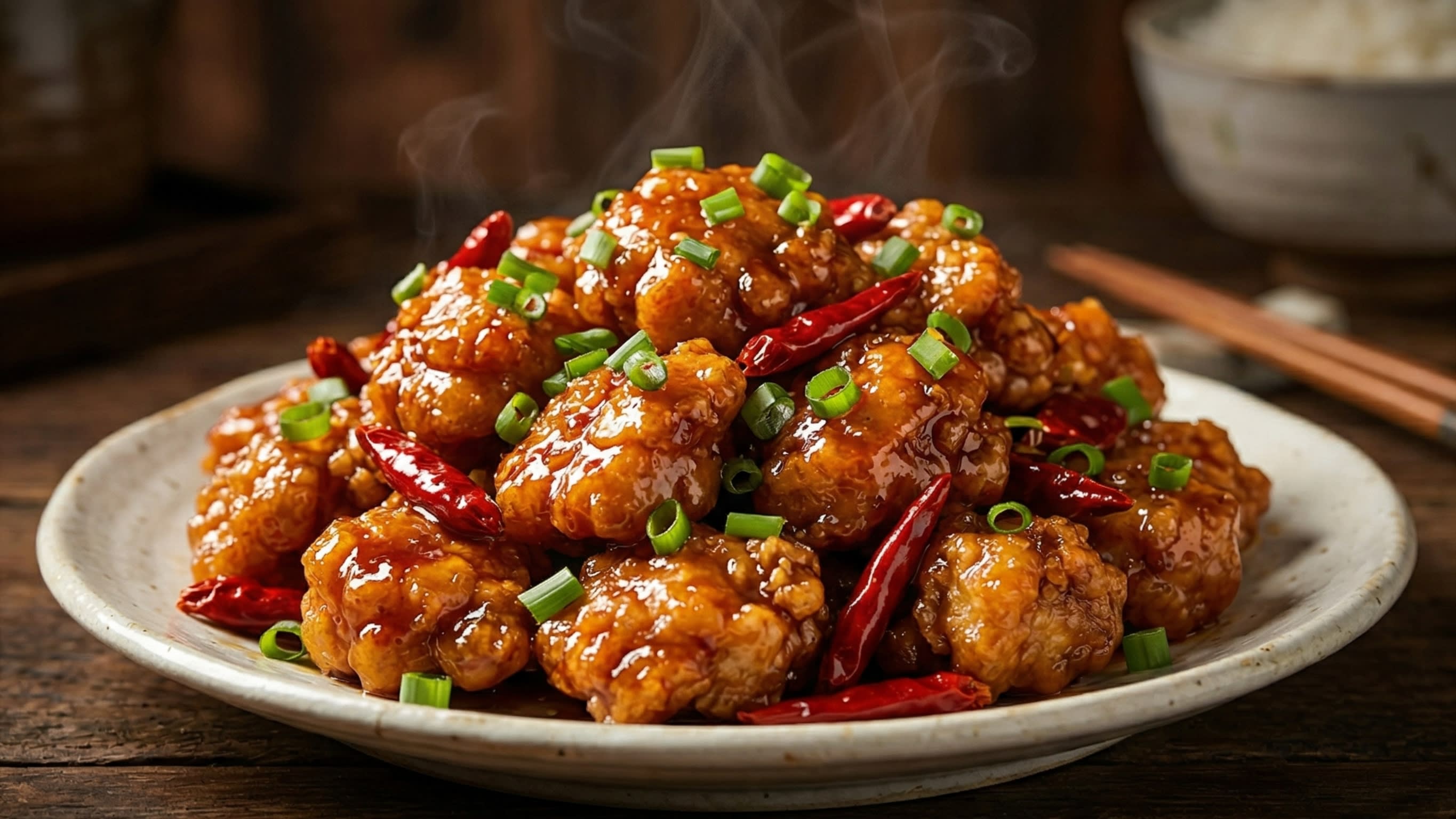
🥡 Introduction: My Quest for the Perfect Crunch
If you were to crown a single dish as the undisputed king of Chinese-American cuisine, the title would undoubtedly go to General Tso’s Chicken (左宗棠鸡 - Zuǒ Zōngtáng Jī).
I still remember the first time I attempted this in my own kitchen years ago. I walked in with the arrogance of a novice, tossing chicken chunks into plain flour and dropping them into a pan. The result? A soggy, clumpy nightmare. The breading turned into a limp, beige coat that slid right off the meat, leaving me with a plate of “mushy sadness.” I sat there, picking at the debris, wondering why the local takeout spots across the street could serve up chicken that stayed glass-like and crunchy even after sitting in a sauce for twenty minutes.
It took me months of ruined batches, oil-splattered counters, and a few burnt fingertips to realize that the magic wasn’t hidden in the sauce ingredients alone—it was in the structural chemistry of the starch and the brutal, high-heat physics of the fry. Today, I’m finally pulling back the curtain on the professional techniques that make this dish a legend. When you get this right, you achieve that coveted Wàisū lǐnèn (外酥里嫩 - crispy on the outside, tender on the inside) texture that defies gravity.
🕵️ The Great Mystery: Who Was General Tso?
Before we fire up the wok, we have to settle a funny historical misunderstanding. Was General Tso a famous chicken enthusiast?
The answer is a hard no. Zuo Zongtang (左宗棠) was a formidable military strategist from Hunan province during the Qing Dynasty, but he never tasted this dish in his life. If you were to walk into a restaurant in Hunan today and ask for his namesake chicken, the chef would likely look at you with genuine, mild confusion.
The true creator of this global sensation was Chef Peng Chang-kuei, who fled to Taiwan after the Chinese Civil War. He developed the original version, which was savory, sour, and significantly spicier—a much harsher profile than what we know today. When he later opened a restaurant in New York City, he adapted the flavor profile to suit the local palate, introducing that iconic, deep sweetness we all crave. It is a beautiful example of cross-cultural adaptation—a dish that traveled across oceans to evolve into the ultimate American comfort food.
🔬 The Restaurant Secret: “Guahu” and the Double Fry
To achieve that professional finish, you have to think like a line cook working a high-pressure Friday night shift.
1. The Batter (挂糊 - Guàhú)
Forget all-purpose flour. It contains gluten, which acts like a sponge, absorbing moisture and turning your crust into a heavy, limp paste. In Chinese kitchens, we rely exclusively on cornstarch. Because it is gluten-free, it creates a light, glass-like shell that hardens beautifully in hot oil. This is the essence of Guàhú.
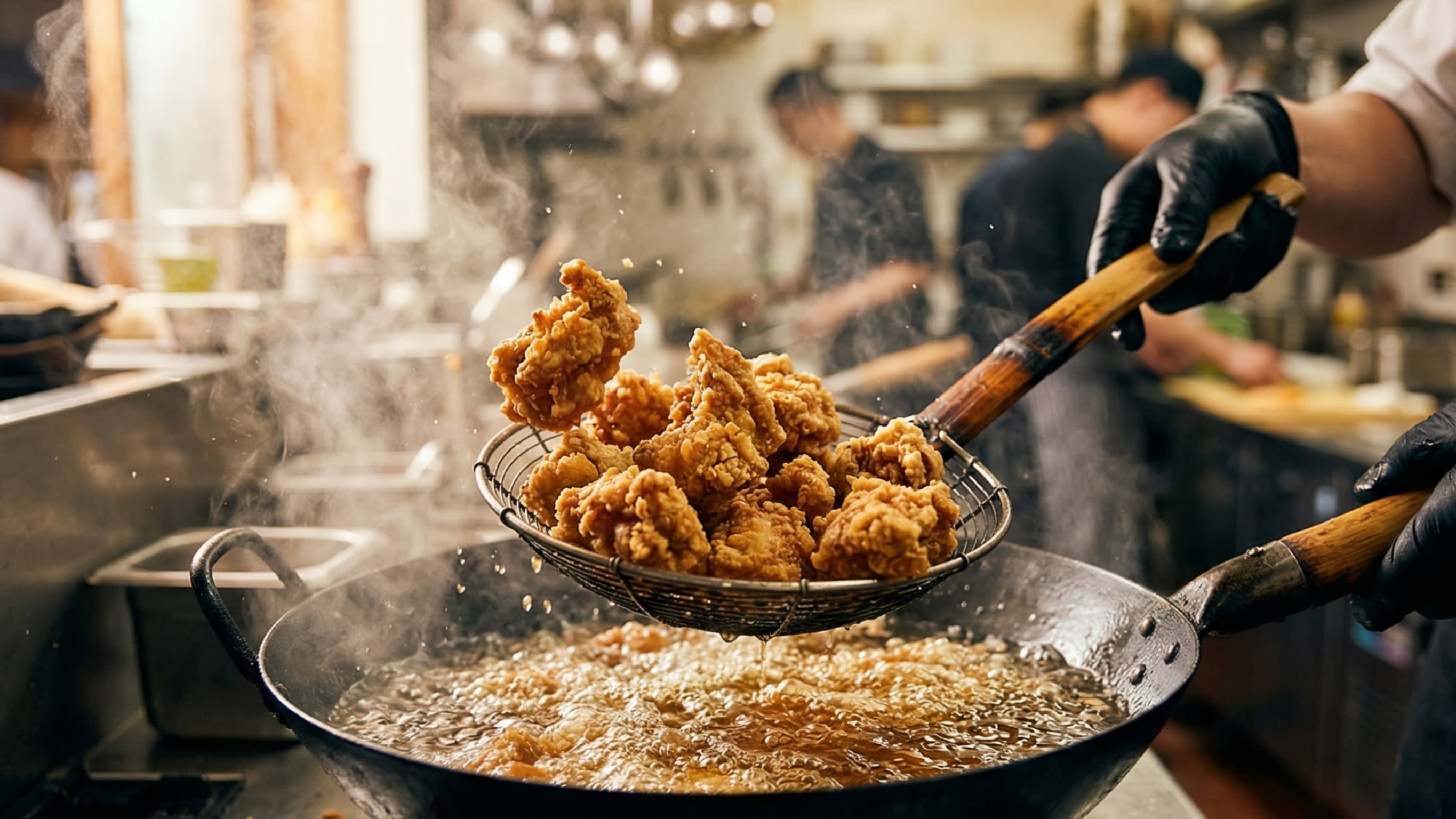
2. The Double Fry (复炸 - Fùzhá)
This is the step that separates the amateurs from the masters. The first fry is about internal cooking; the second fry, done at a scorching temperature, vaporizes any lingering surface moisture in the batter. This is the only way to ensure your chicken remains crunchy, not sodden, when it meets the glaze.
🛒 Ingredients List
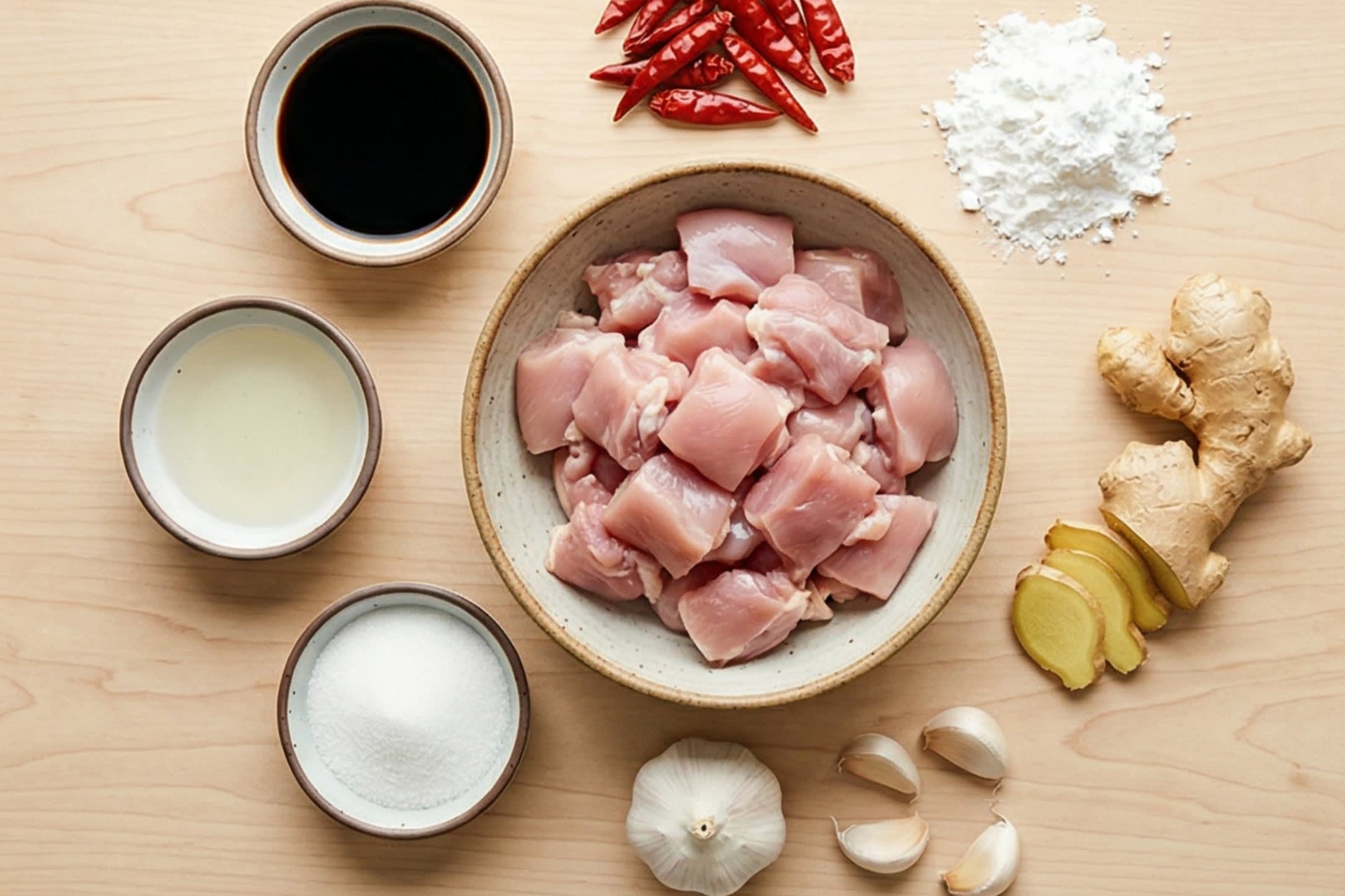
The Chicken & Marinade:
- 1.5 lbs Boneless, skinless chicken thighs. Always choose thighs over breasts—they contain enough fat to stay succulent under high heat.
- 1 tbsp Light Soy Sauce (生抽 - Shēngchōu)
- 1 tbsp Shaoxing Cooking Wine (绍兴酒 - Shàoxīng jiǔ)
- 1 large Egg White
The Crispy Coating:
- 1 cup cornstarch (玉米淀粉)
- 1/2 tsp Salt
- 1/4 tsp White Pepper powder
The Sauce:
- 3 tbsp Rice Vinegar (米醋)
- 3 tbsp Light Soy Sauce (生抽)
- 1 tbsp dark soy sauce (老抽 - essential for that deep mahogany color)
- 4 tbsp Sugar (糖)
- 1 tbsp hoisin sauce (海鲜酱)
- 1/4 cup Chicken Broth
- 1 tbsp Cornstarch (for thickening)
Aromatics & Frying:
- 4 cups neutral cooking oil
- 8-10 dried red chilies (干辣椒)
- 4 cloves Garlic, minced
- 1 thumb-sized piece Ginger, minced
- 2 stalks Scallions, chopped
- 1 tbsp Toasted Sesame Oil (芝麻油)
🍳 Step-by-Step Instructions
- Prep: Cut your chicken into 1.5-inch chunks. Toss with the soy sauce, wine, and egg white. Marinate for 15 minutes. It might look messy, but the proteins are binding, setting the stage for success.
- Coat: Dredge the chicken in the cornstarch, salt, and pepper mixture. Use your hands to press the starch firmly; you want a uniform, slightly dusty crust that clings to the meat.
- Fry (Round 1): Heat your oil in a carbon steel wok to 350°F. Fry in two batches for 4–5 minutes until pale and firm. Remove with a spider strainer.
- Fry (Round 2): Crank the heat to 390°F. Drop the chicken back in for exactly 60 seconds to shatter-crisp the exterior. Drain on a wire rack.
- Aromatics: In a clean wok with 1 tbsp of oil, sizzle the garlic, ginger, and chilies until the kitchen smells incredible.
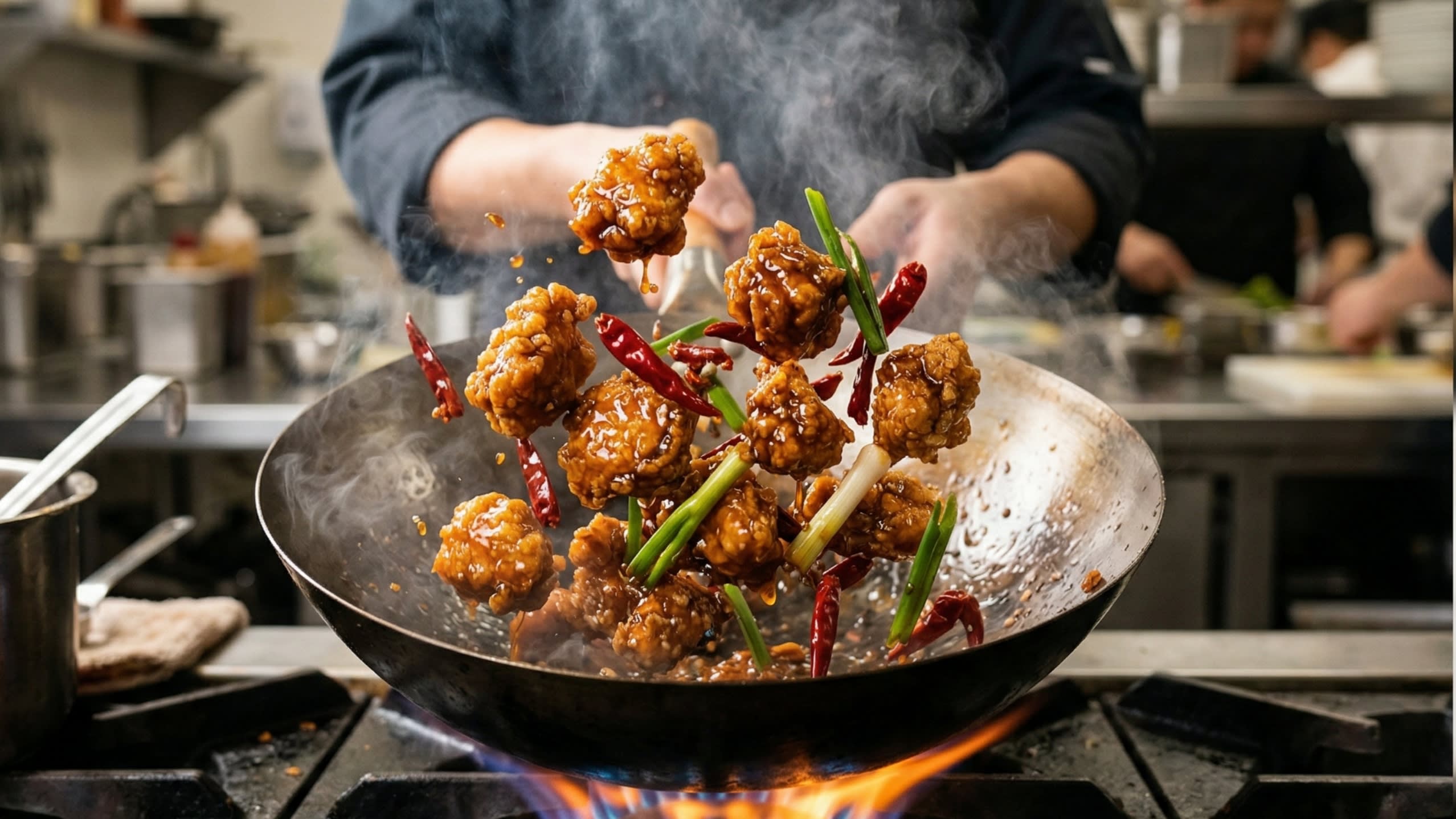
- Sauce: Whisk the sauce ingredients and pour them in. Let them bubble until they become a glossy, thick syrup.
- Combine: Turn off the heat. Toss the chicken into the sauce for exactly 15 seconds—no longer!—until coated. Add sesame oil and scallions. Serve immediately.
📝 Kitchen Wisdom & Troubleshooting
| Common Issue | The Cause | The Fix |
|---|---|---|
| Breading falls off | Starch wasn't pressed in | Use firm pressure when dredging the chicken. |
| Soggy crust | Sauce wasn't thick enough | Ensure cornstarch is fully dissolved in the liquid. |
| Meat is dry | Overcooked in round one | Stick to chicken thighs and use a thermometer. |
If you love exploring the classics, you might also enjoy refining your technique with Authentic Sichuan Mapo Tofu or trying your hand at Authentic Chinese Lo Mein. Cooking at home is about understanding the “why” behind the restaurant magic. Once you master these fundamentals, you’ll never look at a takeout menu the same way again. It truly is about patience and that second fry—don’t skip it!
Disclaimer: As an Amazon Associate, ChinaCurator earns from qualifying purchases.