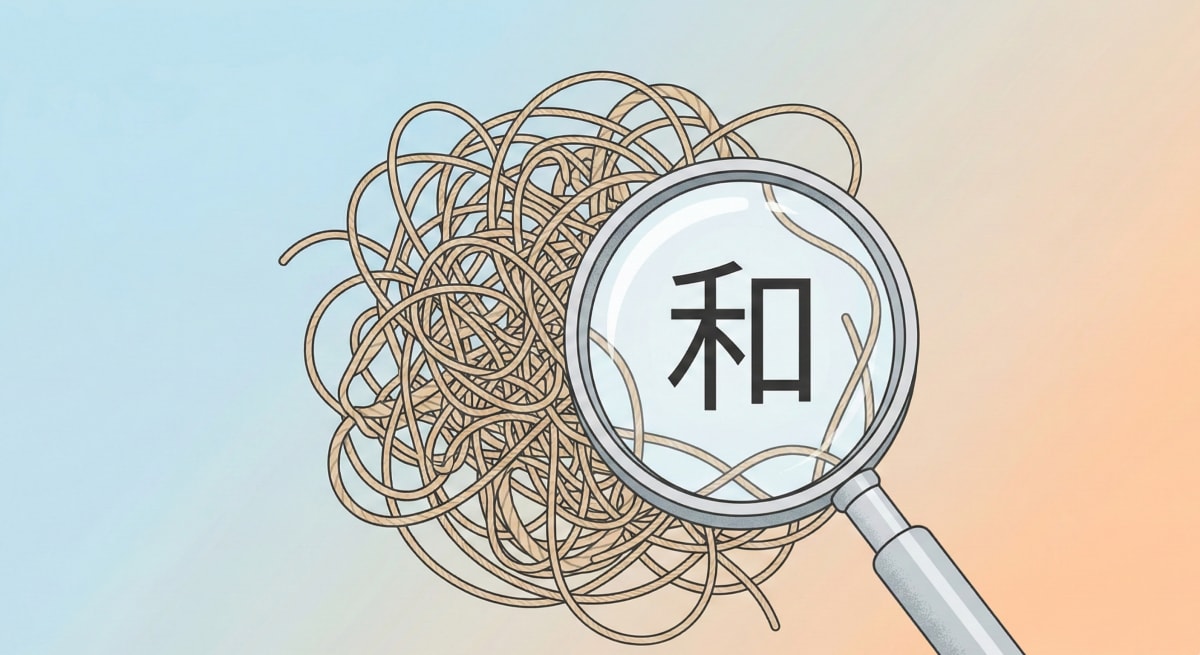

Let’s be honest: taking the first step to learn Mandarin Chinese feels incredibly intimidating. It looks less like learning a language and more like trying to decipher a secret code. If you are used to managing structured, predictable systems—like mapping out a massive commercial office renovation, maintaining a flawless home NAS network, or debugging the backend code of a website—the chaotic appearance of thousands of Chinese characters can trigger immediate panic.
For decades, Chinese has held the title of “the hardest language in the world.” But in 2026, with modern learning tools and a better understanding of how the language actually works, we need to set the record straight.
The truth is, Chinese is not inherently harder than English, Spanish, or French; it is just different. Much of the fear surrounding Mandarin is built on outdated advice and sheer exaggeration. Today, we are going to debunk the five biggest myths about learning Chinese and show you the underlying luóji (逻辑)—the logic—that makes it beautifully simple.
Myth 1: “Chinese has the most impossible grammar.”
When Western learners think of difficult grammar, they imagine the nightmare of conjugating verbs in French or memorizing gendered nouns in German. You will be thrilled to know that Chinese has absolutely none of that.
Chinese grammar is essentially a set of modular building blocks. It is highly logical, almost like writing clean, efficient software code.
- No Verb Conjugation: In English, the verb “to go” changes to “went” (past), “gone” (participle), or “going” (continuous). In Chinese, the verb is always qù (去).
- I go today: Wǒ jīntiān qù.
- I went yesterday: Wǒ zuótiān qù.
- I will go tomorrow: Wǒ míngtiān qù.
- No Genders or Plurals: A table is just a table. A phone is just a phone. You never have to guess if a noun is masculine or feminine, and you rarely have to change a word to make it plural.
- The Reality: Once you learn the basic Subject-Verb-Object sentence structure, you can start communicating immediately. You just plug new vocabulary into the existing formula.

Myth 2: “If you mess up a tone, no one will understand you.”
Mandarin is a tonal language. It has four main tones, plus a neutral tone. The classic nightmare scenario every beginner hears is the “Mother and Horse” example: mā (妈) means mother, while mǎ (马) means horse. “If you use the wrong tone, you’ll call your mother a horse!”
While tones absolutely matter, this fear is massively overblown.
In the real world, human communication relies heavily on yǔjìng (语境)—context. Native speakers do not listen to isolated syllables in a vacuum; they listen to the entire sentence and the situation around it.
If you walk into a coffee shop, point at a pastry, and say “Wǒ yào mài zhège” (using the 4th tone for sell) instead of “Wǒ yào mǎi zhège” (using the 3rd tone for buy), the barista is not going to assume you want to get behind the counter and sell pastries. The context dictates the meaning.
- The Reality: You should practice your tones, but do not let the fear of making a mistake paralyze you. Chinese people are incredibly forgiving and encouraging to foreigners learning their language. Speak confidently, use context, and the tones will naturally improve over time.
Myth 3: “You have to memorize 10,000 characters to survive.”
Looking at a Chinese newspaper, it is easy to assume you need to rely on sǐjì yìngbèi (死记硬背)—mindless, brute-force rote memorization—to learn thousands of random strokes.
First, you do not need 10,000 characters. To achieve conversational fluency and read 95% of everyday texts, you only need about 2,000 to 2,500 characters. In Chinese, we call this gòuyòng (够用)—”enough to use.”
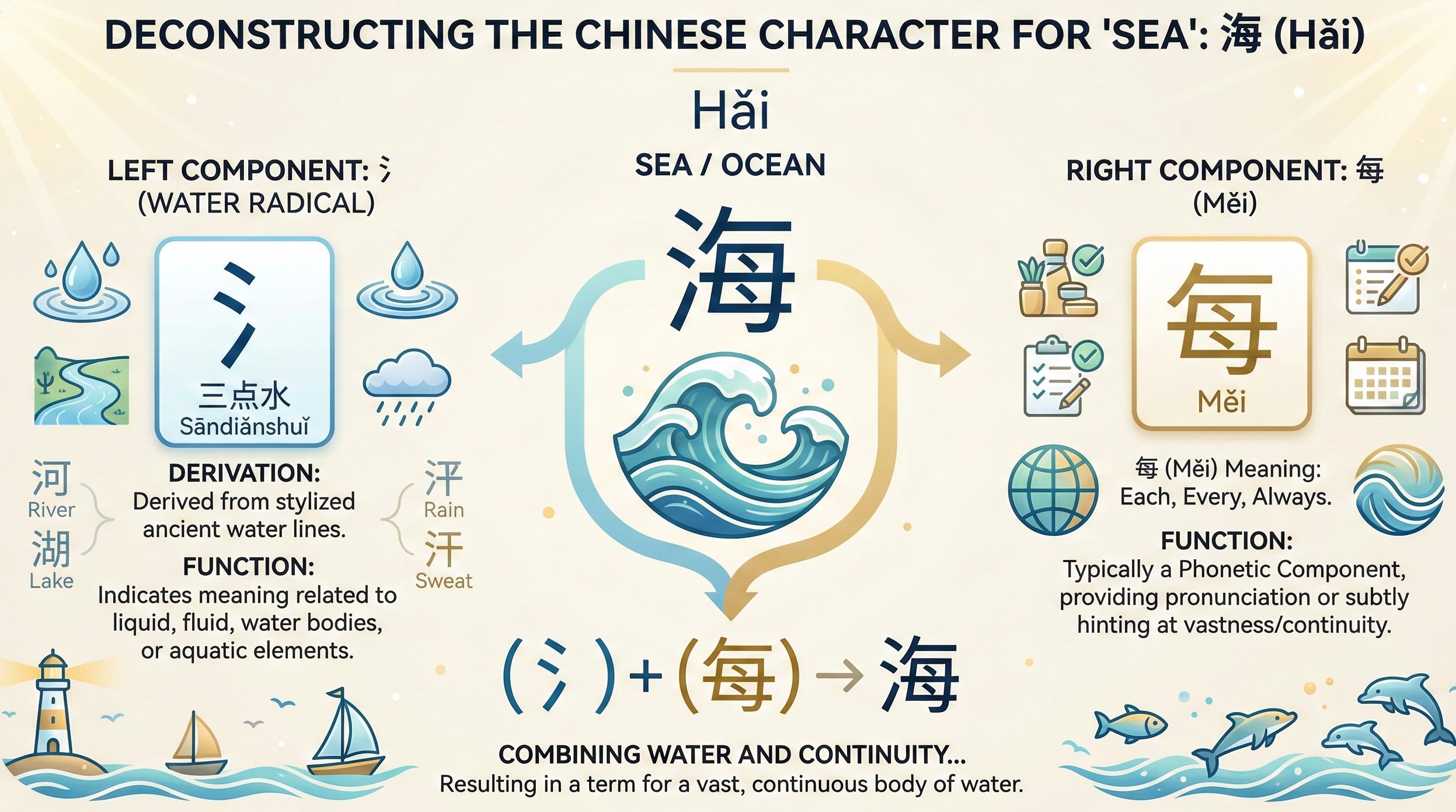
Second, characters are not random drawings. They are built using a highly structured system of “radicals” (components). Once you learn the basic components, learning new characters is like recognizing patterns in a puzzle.
- The Water Radical (氵): Whenever you see these three little drops on the left side of a character, it has something to do with water.
- 海 (hǎi) = Sea
- 泪 (lèi) = Tear
- 汗 (hàn) = Sweat
- The Wood Radical (木): * One wood = Tree (木)
- Two woods = Woods/Grove (林)
- Three woods = Forest (森)
Myth 4: “You must learn how to write characters by hand.”
In the 1990s, spending hours copying characters with a pen and paper was mandatory. In 2026, it is largely obsolete.
Unless you are planning to become a calligrapher or you simply enjoy the meditative focus of writing—much like the tactile joy of polishing an aged Wenwan gourd—you do not need to memorize how to write characters from scratch.
Today, 99% of communication in China is done by dǎzì (打字)—typing. Whether you are searching for a location on your car’s GPS screen, chatting on WeChat, or writing an email, you type using Pinyin (the phonetic Romanization of Chinese).
When you type “Xie xie” on your keyboard, the software automatically suggests “谢谢”.
- The Reality: Your goal as a modern learner should be character recognition, not character reproduction. If you can read the character on a screen, you can communicate fluently.

Myth 5: “Adults can’t learn Chinese; you have to start as a child.”
There is a persistent myth that if you did not grow up speaking a tonal language, your adult brain simply cannot process it. This is biologically false.
While children are better at mimicking accents, adults have a massive, distinct advantage: Pattern Recognition and Discipline. Adults know how to manage projects. You know how to break a massive, intimidating goal (like learning Mandarin) into small, actionable milestones. You can grasp the logical rules of grammar much faster than a child. You can systematically use flashcard apps (like Anki) to optimize your memory retention.
Learning Chinese as an adult is not about having a “language talent.” It is about consistency. If you spend just 20 minutes a day actively engaging with the language, you will see dramatic progress within six months.
The Verdict: A Change in Perspective
| The Myth | The 2026 Reality |
|---|---|
| Grammar is impossible. | Grammar is modular, with no conjugations or genders. It is pure luóji (logic). |
| Tones must be flawless. | Yǔjìng (context) does the heavy lifting. People will understand you. |
| Memorize 10,000 characters. | Learn 2,000 components (radicals) and you are set. It's about patterns. |
| Handwriting is required. | Digital typing (Pinyin) is king. Focus on character recognition. |
| Adults can't learn it. | Adults are better at systems and discipline. Consistency beats age. |
Final Thoughts
Chinese is a language of unparalleled depth and beauty. Yes, the initial learning curve feels steep, but once you break through the outer shell, you realize it is an incredibly efficient and logical system.
Stop relying on the myths of sǐjì yìngbèi (rote memorization) and start looking at the language as a fascinating new framework to explore. Whether you are ordering coffee in Shanghai or navigating a tech manual in Shenzhen, the matrix of Mandarin is well within your grasp.
Take a deep breath, download a good dictionary app, and start your journey.
Ready to start learning practical phrases? Bypass the textbooks and learn the real 2026 Chinese Internet Slang or master the art of Ordering Coffee and Milk Tea.

